885 Results for "

light

" in MedChemExpress (MCE) Product Catalog:
Products (885)

885 Results for "light" in MCE Product Catalog:

155
155 Publications Verification
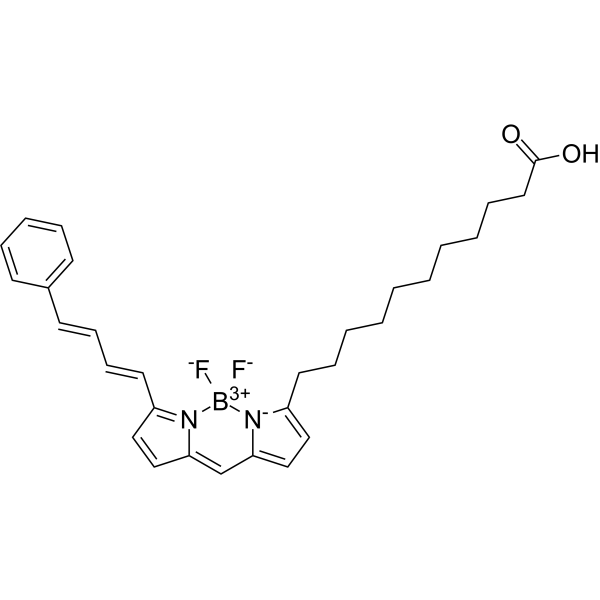
Cat. No.: HY-D1301
CAS No.: 217075-36-0
BODIPY 581/591 C11 is a BODIPY borofluoroprene derivative with good light stability and low fluorescence artifacts. BODIPY 581/591 C11 can be used for study lipid peroxidation and antioxidant properties in living cells, or detect ferroptosis by reaction with hydroxyl radicals. BODIPY 581/591 C11 is emitted at 591 nm (reduced prototype), or redshifted to 510 nm (oxidized type). The excitation wavelengths were 581 nm (reduced prototype) and 500 nm (oxidized type) .
loading...
    loading...
126
126 Cited Publications
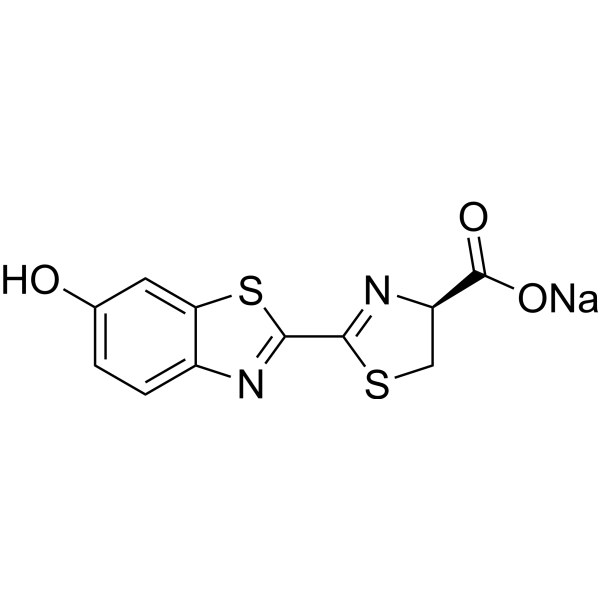
Cat. No.: HY-12591
CAS No.: 103404-75-7
Purity:  99.92%
Synonyms: D-(-)-Luciferin sodium; Firefly luciferin sodium; Beetle Luciferin sodium
D-luciferin sodium is the natural substrate of the enzyme luciferase (Luc) that catalyzes the production of the typical yellowgreen light of fireflies. The 560 nm chemiluminescence from this reaction peaks within seconds, with light output that is proportional to luciferase concentration when the substrate luciferin is present in excess. The luciferase (luc) gene is a popular reporter gene for research and agent screening. Chemiluminescent techniques are virtually background-free, making the luc reporter gene ideal for detecting low-level gene expression. As little as 0.02 pg of luciferase can be reliably measured in a standard scintillation counter. In addition to its role as a reporter of gene expression, luciferase is commonly used in an extremely sensitive assay for ATP . We of er the firefly luciferase (HY-P1004A), luciferin free acid (HY-12591A), as well as its water-soluble sodium salts (HY-12591) and potassium salts (HY-12591B) .
loading...
    loading...
126
126 Cited Publications
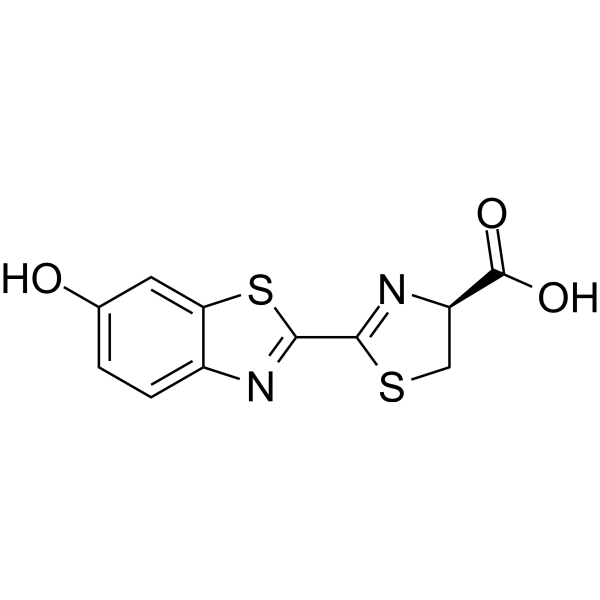
Cat. No.: HY-12591A
CAS No.: 2591-17-5
Purity:  99.54%
Synonyms: D-(-)-Luciferin; Firefly luciferin; Beetle Luciferin
D-luciferin is the natural substrate of the enzyme luciferase (Luc) that catalyzes the production of the typical yellowgreen light of fireflies. The 560 nm chemiluminescence from this reaction peaks within seconds, with light output that is proportional to luciferase concentration when the substrate luciferin is present in excess. The luciferase (luc) gene is a popular reporter gene for research and agent screening. Chemiluminescent techniques are virtually background-free, making the luc reporter gene ideal for detecting low-level gene expression. As little as 0.02 pg of luciferase can be reliably measured in a standard scintillation counter. In addition to its role as a reporter of gene expression, luciferase is commonly used in an extremely sensitive assay for ATP . We of er the firefly luciferase (HY-P1004A), luciferin free acid (HY-12591A), as well as its water-soluble sodium salts (HY-12591) and potassium salts (HY-12591B) .
loading...
    loading...
126
126 Cited Publications
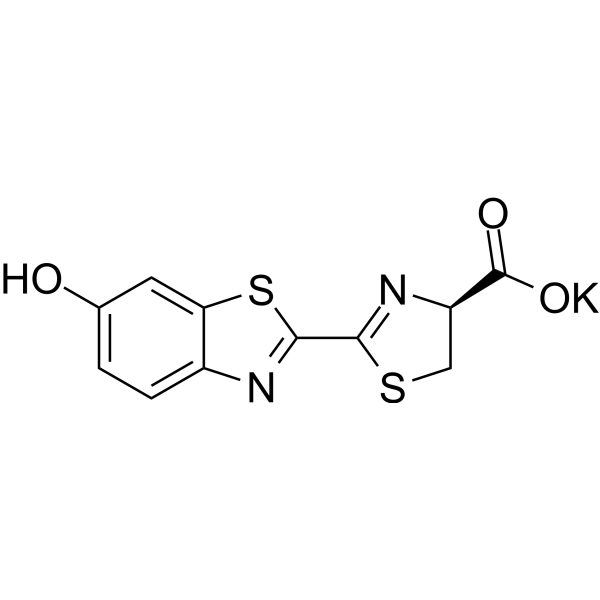
Cat. No.: HY-12591B
CAS No.: 115144-35-9
Purity:  99.97%
Synonyms: D-(-)-Luciferin potassium; Firefly luciferin potassium; Beetle Luciferin potassium
D-luciferin potassium is the natural substrate of the enzyme luciferase (Luc) that catalyzes the production of the typical yellowgreen light of fireflies. The 560 nm chemiluminescence from this reaction peaks within seconds, with light output that is proportional to luciferase concentration when the substrate luciferin is present in excess. The luciferase (luc) gene is a popular reporter gene for research and agent screening. Chemiluminescent techniques are virtually background-free, making the luc reporter gene ideal for detecting low-level gene expression. As little as 0.02 pg of luciferase can be reliably measured in a standard scintillation counter. In addition to its role as a reporter of gene expression, luciferase is commonly used in an extremely sensitive assay for ATP . We offer the firefly luciferase (HY-P1004A), luciferin free acid (HY-12591A), as well as its water-soluble sodium salts (HY-12591) and potassium salts (HY-12591B) .
loading...
    loading...
119
119 Cited Publications
Cat. No.: HY-D0938
CAS No.: 150347-59-4
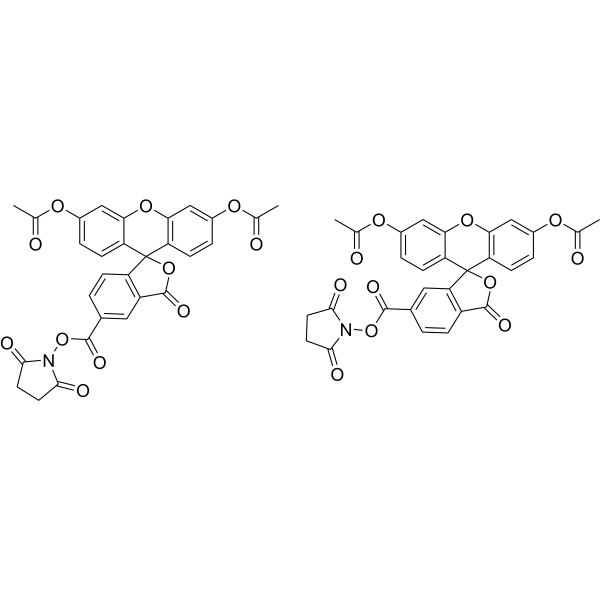
Synonyms: CFSE; 5(6)-Carboxyfluorescein diacetate succinimidyl ester; 5(6)-CFDA N-succinmidyl ester
CFDA-SE is a fluorescent dye that can penetrate the cell membrane. It can react with the free amine group in the cytoskeleton protein inside the cell, and finally form a protein complex with fluorescence. After entering the cell, CFDA-SE locates in the cell membrane, cytoplasm and nucleus, and the fluorescence staining is strongest in the nucleus . CFDA-SE dye can be uniformly inherited by the cells with cell division and proliferation, and its attenuation is proportional to the number of cell divisions. This phenomenon can be detected and analyzed by flow cytometry under the excitation light of 488 nm, and can be used to detect the proliferation of cells .
loading...
    loading...
42
42 Cited Publications
Cat. No.: HY-D0989
CAS No.: 145037-81-6
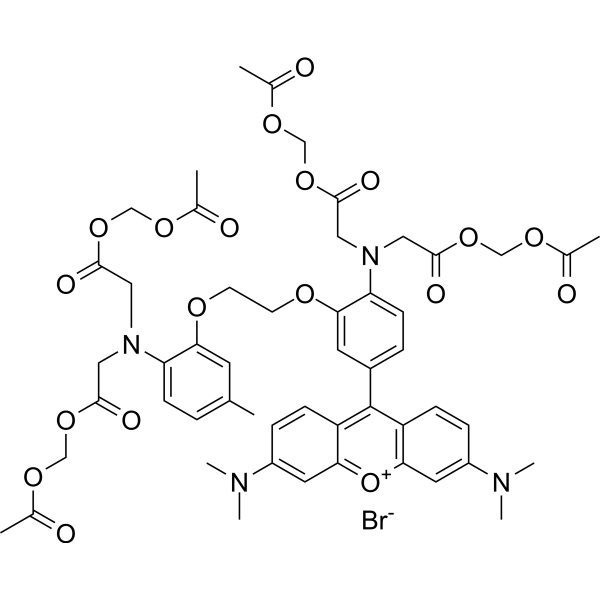
Rhod-2 is a high-affinity visible light excitation wavelength Ca 2+ fluorescent probe, Rhod-2, AM is an acetyl methyl ester derivative of Rhod-2, which has cell membrane permeability and can easily enter cells with simple culture. Once it enters the cell, it is sheared by its lactesterase to produce Rhod-2 without membrane permeability, which remains in the cell to perform the corresponding physiological functions. Maximum excitation/emission wavelength: 549/578 nm .
loading...
    loading...
24
24 Cited Publications
Cat. No.: HY-15417
CAS No.: 110448-33-4
Purity:  99.60%
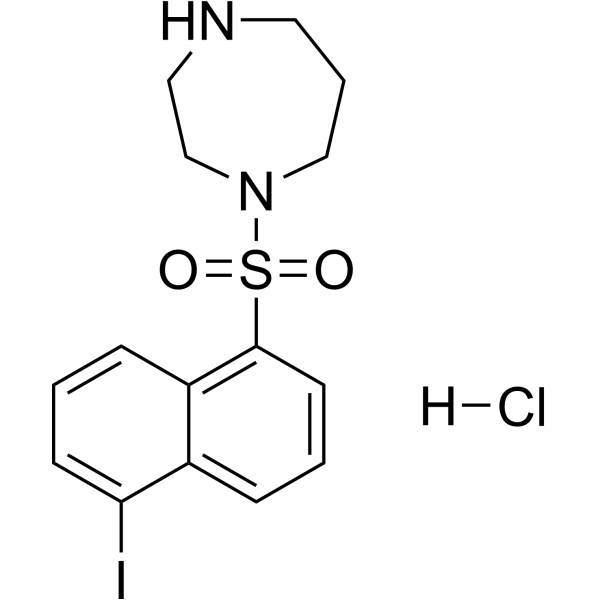
ML-7 hydrochloride is a selective and highly specific myosin light chain kinase (MLCK) inhibitor that acts as a trabecular meshwork (TM) relaxant. ML-7 hydrochloride enhances Quinocetone (HY-123581)-induced phosphorylation of ERK, p38 MAPK and JNK, attenuates Akt activation, and promotes apoptosis of hepatocellular carcinoma cells. ML-7 hydrochloride reduces Th2 cytokine secretion by inhibiting MLCK, while alleviating smooth muscle hyperplasia and collagen deposition . As a non-antibiotic adjuvant, ML-7 hydrochloride restores the sensitivity of drug-resistant bacteria to Tigecycline (HY-B0117) . ML-7 hydrochloride can be used in research related to glaucoma, hepatocellular carcinoma, asthma, and Klebsiella pneumoniae infection .
loading...
    loading...
22
22 Cited Publications
Cat. No.: HY-B1247
CAS No.: 553-12-8
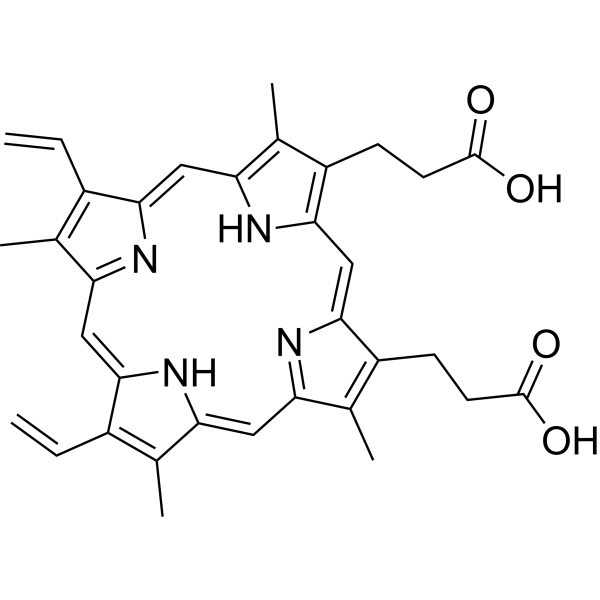
Synonyms: PPIX
Protoporphyrin IX is a final intermediate in the heme biosynthetic pathway, which acts as a radiation sensitizer enhancing ROS generation even in a hypoxic state and inducing DNA damage. Protoporphyrin IX also acts as a photo sensitizer undergoing photobleaching that occurs through direct degradation by light irradiation. Protoporphyrin IX is formed and accumulated following 5-aminolevulinic acid (5-ALA) (HY-W000450) administration in the tumor cells of rats. Protoporphyrin IX causes selective improvement of basal cell carcinoma when activated red fluorescence of a peak wavelength at 405 nm. Protoporphyrin IX is promising for research of sonodynamic and photodynamic agents for a wide range of cancers, such as bladder cancer and nodular basal cell carcinoma .
loading...
    loading...
22
22 Cited Publications
Cat. No.: HY-B1247A
CAS No.: 50865-01-5
Synonyms: PPIX disodium
Target:  

Endogenous Metabolite

Research Areas:  

Cancer

Protoporphyrin IX disodium is a final intermediate in the heme biosynthetic pathway, which acts as a radiation sensitizer enhancing ROS generation even in a hypoxic state and inducing DNA damage. Protoporphyrin IX disodium also acts as a photo sensitizer undergoing photobleaching that occurs through direct degradation by light irradiation. Protoporphyrin IX disodium is formed and accumulated following 5-aminolevulinic acid (5-ALA) (HY-W000450) administration in the tumor cells of rats. Protoporphyrin IX disodium causes selective improvement of basal cell carcinoma when activated red fluorescence of a peak wavelength at 405 nm. Protoporphyrin IX disodium is promising for research of sonodynamic and photodynamic agents for a wide range of cancers, such as bladder cancer and nodular basal cell carcinoma .
loading...
    loading...
21
21 Cited Publications
Cat. No.: HY-B0265
CAS No.: 66085-59-4
Synonyms: BAY-e 9736
Research Areas:  

Cardiovascular Disease Cancer

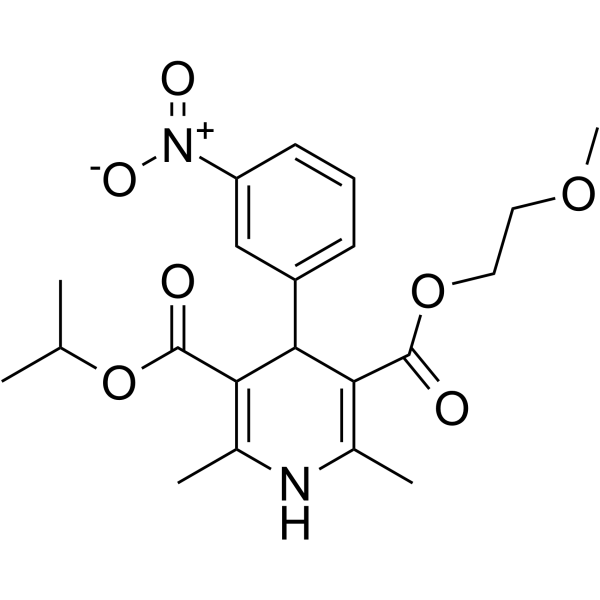
Nimodipine (BAY-e 9736) is an orally active, well-tolerated and light-sensitive dihydropyridine calcium antagonist. Nimodipine can be used for the research of cerebrovascular disorders .
loading...
    loading...
20
20 Cited Publications
Cat. No.: HY-W854659
CAS No.: 72984-36-2
Synonyms: Ce6 trisodium
Chlorin e6 Ce6 (trisodium) is a water-soluble derivative of chlorophyll, belonging to the chlorin class of photosensitizers with an absorption wavelength range of 600-670 nm. Chlorin e6 trisodium emits characteristic red fluorescence upon light excitation, enabling real-time identification of tumor boundaries and progression. Chlorin e6 trisodium can be used for the study of photodynamic therapy (PDT) of cancers (bladder cancer) and fluorescence diagnosis of neoplastic lesions .
loading...
    loading...
20
20 Cited Publications
Cat. No.: HY-N0305
CAS No.: 5451-09-2
Synonyms: 5-ALA hydrochloride; δ-Aminolevulinic acid hydrochloride; 5-Amino-4-oxopentanoic acid hydrochloride
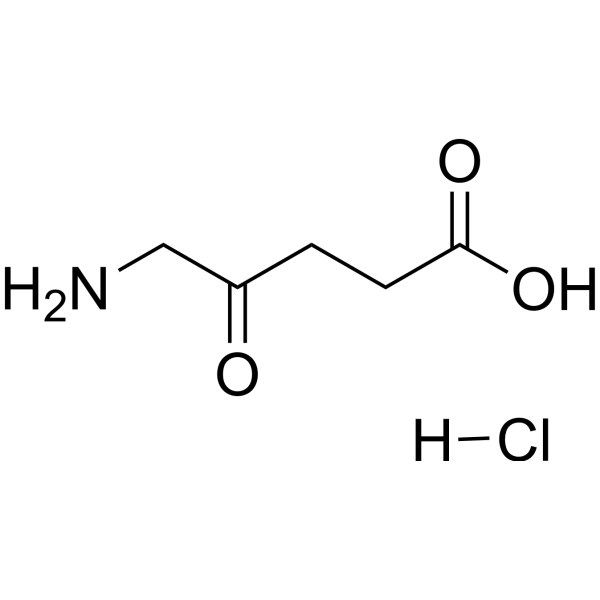
5-Aminolevulinic acid (5-ALA; δ-Aminolevulinic acid; 5-Amino-4-oxopentanoic acid) hydrochloride is an orally active heme precursor. 5-Aminolevulinic acid hydrochloride promotes aerobic energy metabolism and increases ATP levels by enhancing the activity of cytochrome c oxidase. 5-Aminolevulinic acid hydrochloride enhances LPS-induced proinflammatory cytokine production and gene activation, and restores the phagocytic activity and ROS generation capacity of neutrophils. 5-Aminolevulinic acid hydrochloride selectively accumulates protoporphyrin IX in tumor cells; as a photosensitizer and radiosensitizer, it induces ROS burst upon light or X-ray irradiation to inhibit tumor growth. 5-Aminolevulinic acid hydrochloride can be applied to the research of septic shock, melanoma, and cancer radiotherapy .
loading...
    loading...
20
20 Cited Publications
Cat. No.: HY-W000450
CAS No.: 106-60-5
Synonyms: 5-ALA; δ-Aminolevulinic acid; 5-Amino-4-oxopentanoic acid
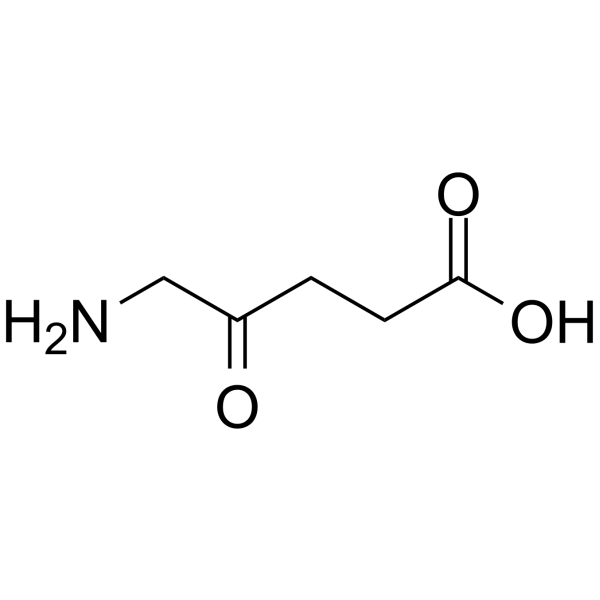
5-Aminolevulinic acid (5-ALA; δ-Aminolevulinic acid; 5-Amino-4-oxopentanoic acid) is an orally active heme precursor. 5-Aminolevulinic acid promotes aerobic energy metabolism and increases ATP levels by enhancing the activity of cytochrome c oxidase. 5-Aminolevulinic acid enhances LPS-induced proinflammatory cytokine production and gene activation, and restores the phagocytic activity and ROS generation capacity of neutrophils. 5-Aminolevulinic acid selectively accumulates protoporphyrin IX in tumor cells; as a photosensitizer and radiosensitizer, it induces ROS burst upon light or X-ray irradiation to inhibit tumor growth. 5-Aminolevulinic acid can be applied to the research of septic shock, melanoma, and cancer radiotherapy .
loading...
    loading...
15
15 Cited Publications
Cat. No.: HY-B0754A
CAS No.: 17696-69-4
Synonyms: Hematoporphyrin IX dihydrochloride
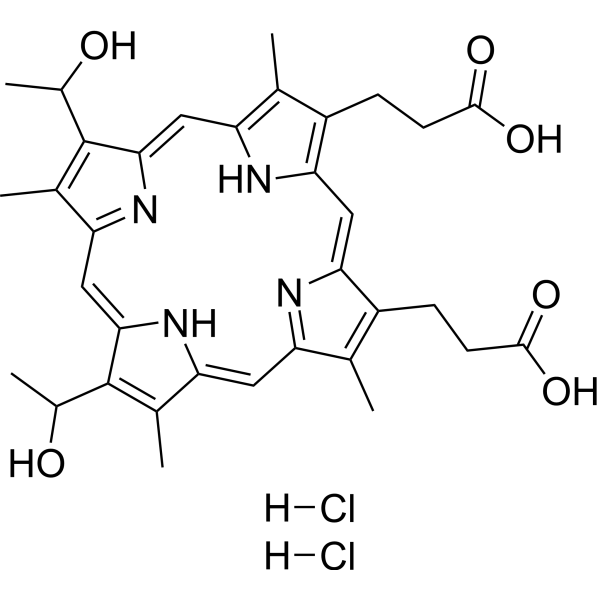
Hematoporphyrin dihydrochloride (Hematoporphyrin IX dihydrochloride), a photosensitizer, is a substrate for affinity chromatography of heme-binding proteins. Hematoporphyrin dihydrochloride can induce apoptosis in U87 glioma cells and decrease tumor growth in vivo when exposed to red light .
loading...
    loading...
14
14 Cited Publications
Cat. No.: HY-B1218
CAS No.: 526-08-9
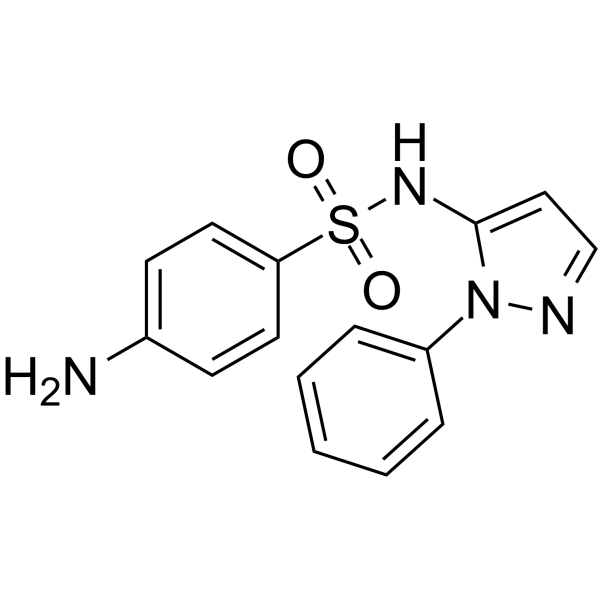
Sulfaphenazole is a selective inhibitor of human cytochrome P450 (CYP) 2C9 enzyme. Sulfaphenazole is a cytoprotective agent against light-induced death of photoreceptors. Sulfaphenazole inhibits light-induced necrosis and mitochondrial stress-initiated apoptosis. Sulfaphenazole is an off patent sulfonamide antibiotic and demonstrates bactericidal activity through enhanced M1 macrophage activity. Sulfaphenazole can significantly reduce infarct size and restore post-ischemic coronary flow following ischemia and reperfusion .
loading...
    loading...
12
12 Cited Publications
Cat. No.: HY-18676
CAS No.: 2070015-22-2
Research Areas:  

Cancer

OSU-T315 (ILK-IN-1) is a small Integrin-linked kinase (ILK) inhibitor with an IC50 of 0.6 μM, inhibiting PI3K/AKT signaling by dephosphorylation of AKT-Ser473 and other ILK targets (GSK-3β and myosin light chain) . OSU-T315 abrogates AKT activation by impeding AKT localization in lipid rafts and triggers caspase-dependent apoptosis in an ILK-independent manner . OSU-T315 causes cell death through apoptosis and autophagy .
loading...
    loading...
10
10 Cited Publications
Cat. No.: HY-101897
CAS No.: 108964-32-5
Purity:  99%
Synonyms: Fura-2 Acetoxymethyl ester
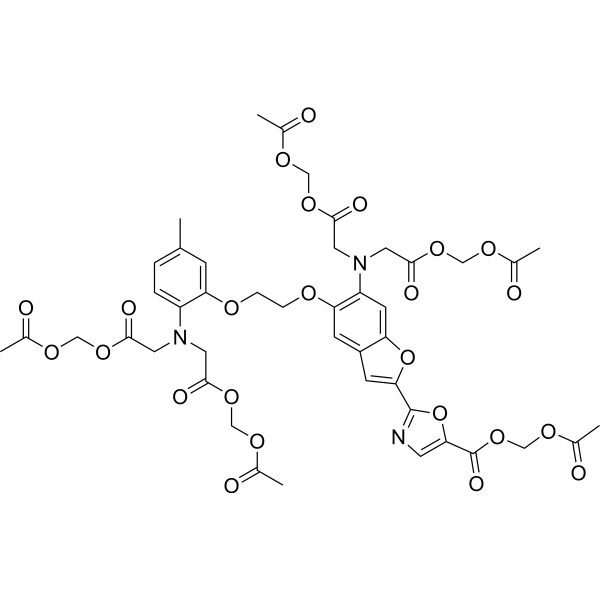
Fura-2 AM is a membrane permeable, intracellular, UV light-excitable and ratiometric fluorescent Ca 2+ (calcium ion) indicator. Fura-2 AM crosses cell membranes and is converted to Fura-2 (HY-D0110A) via cellular esterases. Fura-2 AM can be used to detect calcium in cells.
loading...
    loading...
9
9 Cited Publications
Cat. No.: HY-100912
CAS No.: 61714-27-0
Purity:  99.96%
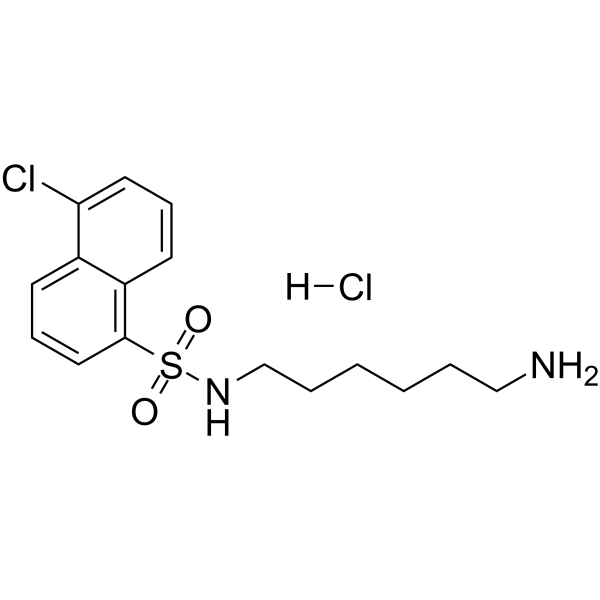
W-7 hydrochloride is a selective calmodulin antagonist. W-7 hydrochloride inhibits the Ca 2+-calmodulin-dependent phosphodiesterase and myosin light chain kinase with IC50 values of 28 μM and 51 μM, respectively. W-7 hydrochloride induces apoptosis and has antitumor and vascular relaxing activity. W-7 hydrochloride is a blocker of Kv4.3 and can be used for research of arrhythmias .
loading...
    loading...
9
9 Cited Publications
Cat. No.: HY-130368
CAS No.: 65595-90-6
W-7 is a selective calmodulin antagonist. W-7 inhibits the Ca 2+-calmodulin-dependent phosphodiesterase and myosin light chain kinase with IC50 values of 28 μM and 51 μM, respectively. W-7 induces apoptosis and has antitumor and vascular relaxing activity. W-7 is a blocker of Kv4.3 and can be used for research of arrhythmias .
loading...
    loading...
8
8 Cited Publications
Cat. No.: HY-P99977

Target:  

Inhibitory Antibodies

Research Areas:  

Inflammation/Immunology

Mouse IgG1 kappa, Isotype Control is a negative control reagent/isotype control for mouse-derived IgG1κ antibodies. Mouse IgG1 kappa, Isotype Control, by maintaining the same immunoglobulin structure (including isotype, light chain, etc.) as the specific mouse IgG1κ subtype primary antibody, eliminates false positive signals caused by non-specific binding in immunological experiments, thus playing a core role in verifying the specificity of the experiment. Mouse IgG1 kappa, Isotype Control can be applied to immunolocalization experiments in the field of cell biology, such as immunofluorescence staining and immunohistochemistry, assisting in research on protein subcellular localization and cell structure analysis, ensuring the reliability of experimental results .
loading...
    loading...

