
Search Result
Results for "
microscopy
" in MedChemExpress (MCE) Product Catalog:
21
Biochemical Assay Reagents
| Cat. No. |
Product Name |
Target |
Research Areas |
Chemical Structure |
-
- HY-W090090
-
|
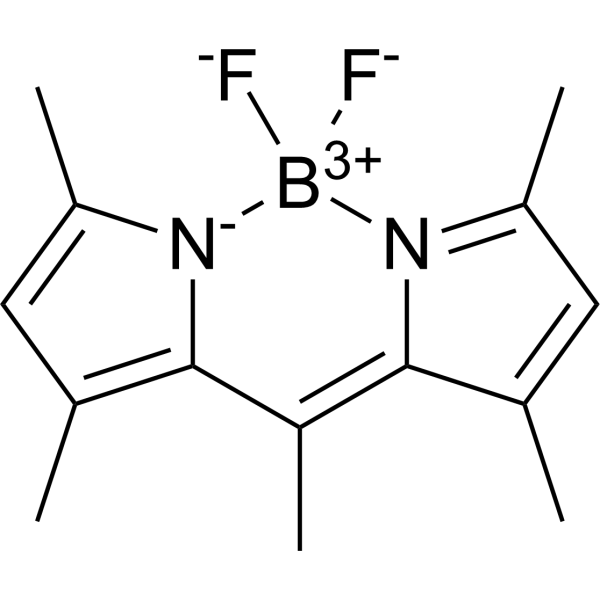
Pyrromethene 546
|
Fluorescent Dye
|
Others
|
|
BODIPY493/503 is a BODIPY dye. BODIPY dye is a small molecule dye with strong ultraviolet absorption ability, its fluorescence peak is relatively sharp, and the quantum yield is high. They are relatively insensitive to the polarity and pH of the environment and are relatively stable under different physiological conditions. Due to its structural asymmetry, BODIPY derives a variety of structural products. BODIPY lipid droplet dyes can well pass through the cell membrane into the cell, and localize the neutral lipids in the cell to specifically stain the lipid droplets, which can be used for labeling of live cells and fixed cells . Maximum excitation/emission wavelength: 493/503 nm .
|
-
-
- HY-103311
-
|
Ammoniated ruthenium oxychloride
|
Calcium Channel
|
Cardiovascular Disease
|
|
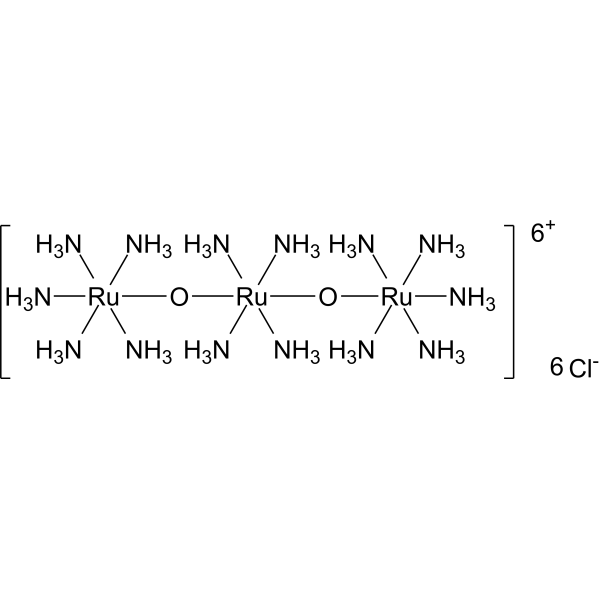
Ruthenium red (Ammoniated ruthenium oxychloride) is a polycationic dye widely used for electron microscopy (EM) of cells, tissues and vegetative bacteria. Ruthenium red strongly reacts with phospholipids and fatty acids and binds to acidic mucopolysaccharides. Ruthenium red is a L-type calcium current (ICa) blocker .
|
-
-
- HY-D0988
-
|
R-PE
|
Fluorescent Dye
Apoptosis
|
Cancer
|
|
R-Phycoerythrin is found in Heterosiphonia japonica. R-Phycoerythrin is an orange-red fluorescent probe with α, β, and γ subunits. R-Phycoerythrin can be used in photodynamic therapy (PDT) to induce apoptosis in tumor cells. R-Phycoerythrin can be used in fluorescence microscopy, flow cytometry, and immunofluorescence analysis (Ex: 495 nm).
|
-
-
- HY-162543
-
|
18:1 Lissamine rhodamine PE
|
Fluorescent Dye
|
Others
|
|
18:1 Liss Rhod (18:1 Lissamine rhodamine) PE is a fluorescent phospholipid and fluorescent probe.18:1 Liss Rhod PE admixes into phospholipid inks for large-scale monitoring of dip-pen nanolithography-generated lithographic structures via fluorescence microscopy.18:1 Liss Rhod PE undergoes phase separation or self-quenching under certain conditions in thin lipid membrane stacks .
|
-
-
- HY-D2001
-
|
|
Fluorescent Dye
|
Others
|
|
ATTO 488 NHS ester is a new fluorescent marker based on the Rhodamine structure. It has strong absorption, high fluorescence quantum yield, high thermal stability and photochemical stability, and is suitable for single molecule detection and high-resolution microscopy. ATTO 488 NHS ester is an NHS ester derivative of ATTO 488 that can be used to label proteins or antibodies.
|
-
-
- HY-DY1004
-
|
|
Fluorescent Dye
|
Others
|
BODIPY 493/503 (solution) is a BODIPY dye. BODIPY dye is a small molecule dye with strong ultraviolet absorption ability, its fluorescence peak is relatively sharp, and the quantum yield is high. They are relatively insensitive to the polarity and pH of the environment and are relatively stable under different physiological conditions. Due to its structural asymmetry, BODIPY derives a variety of structural products. BODIPY lipid droplet dyes can well pass through the cell membrane into the cell, and localize the neutral lipids in the cell to specifically stain the lipid droplets, which can be used for labeling of live cells and fixed cells . Maximum excitation/emission wavelength: 493/503 nm. Solvent and concentration: DMSO: 5 mM.
|
-
-
- HY-P10932A
-
|
|
Fluorescent Dye
|
Neurological Disease
|
|
pGk13a TFA is an azide (azide group can be combined with fluorophore)-containing amphiphilic membrane labeling probe. pGk13a TFA enables high-resolution imaging of cell membranes in the ultrastructural membrane expansion microscopy (umExM) technique, facilitating the observation of membrane-associated structures and proteins. pGk13a TFA can be used for neuronal structural studies .
|
-
-
- HY-DY3001
-
|
|
Biochemical Assay Reagents
|
Others
|
|
Glutaraldehyde Fixative (2.5%, For Electron Microscopy) is composed of glutaraldehyde, phosphate, deionized water, etc., with a pH range of 7.2-7.4. This fixative is effective in fixing fine structures of cell nuclei and cytoplasm and is commonly used for fixing electron microscopy specimens.
|
-
-
- HY-D0953
-
|
Solvent Blue 38
|
Environmental Pollutants
Fluorescent Dye
|
Neurological Disease
|
|
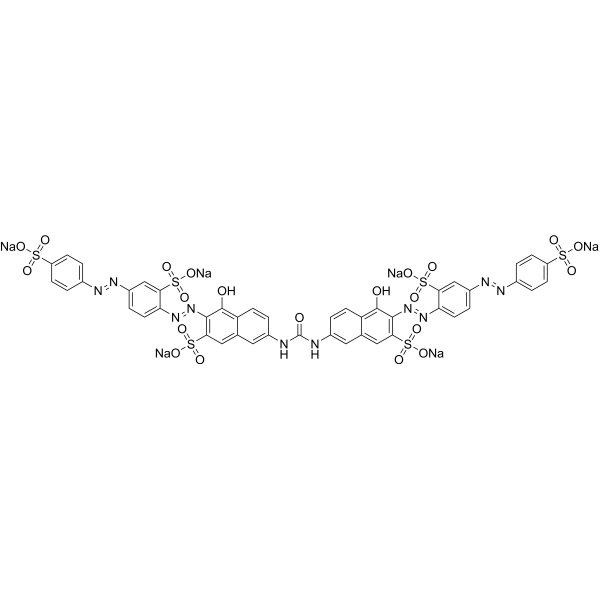
Direct Blue 86 (Solvent Blue 38) is a myelin-sheath stain, commonly utilized in microscopy to detect demyelination in the central nervous system. Direct Blue 86 also is a dye with various applications including as a commercial dye in the printing of cotton and mucilage glue fabrics .
|
-
-
- HY-D0163
-
|
|
DNA Stain
|
Others
|
|
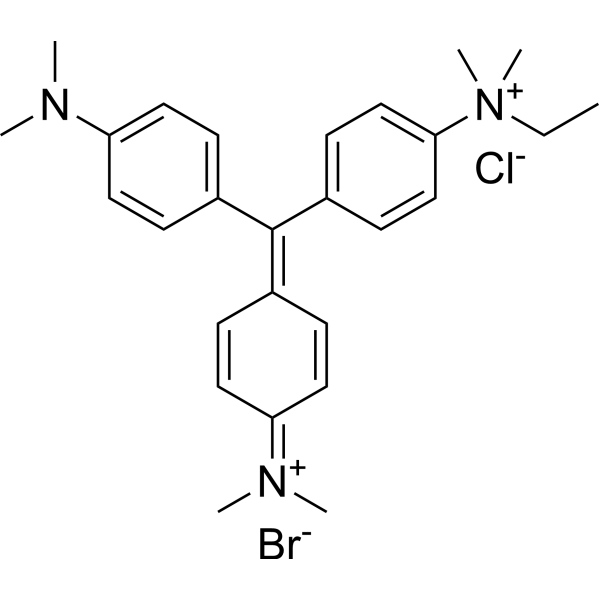
Methyl Green is a non-intercalating fluorescent labeling agent that selectively binds to the major groove of DNA. Methyl Green electrostatically interacts with the major groove of DNA through positively charged groups, exhibiting key activities such as high affinity, resistance to photobleaching, and stable fluorescence emission. Methyl Green can be directly measured by microscopy and flow cytometry, with peaks at 633 and 677 nm. Methyl Green can be used for fluorescent labeling of the nuclei of embryonic tissues or cells, or DNA staining and cell activity detection in gel electrophoresis[1][2][3].
|
-
-
- HY-D2381
-
|
|
Fluorescent Dye
|
Others
|
|
AF 488 maleimide is a thiol-reactive dye used to label SH groups of proteins, which can attach the AF 488 fluorophore to cysteine residue-containing proteins and peptides as well as other thiolated molecules. AF 488 maleimide enables real-time visualization of dynamic pilus extension and retraction in live bacterial cells via epifluorescence microscopy (Ex/Em = 470/520 nm) .
|
-
-
- HY-D0950A
-
|
|
DNA Stain
|
Others
|
|
Methyl Green zinc chloride is a potent fluorescent dye. Methyl Green zinc chloride is a DNA stains of cells and electrophoretic gels. Methyl Green zinc chloride can be used as direct measuring of viability by both microscopy and flow cytometry, with peaks at 633 and 677 nm .
|
-
-
- HY-NP163A
-
|
WGA-AF488
|
Fluorescent Dye
|
Cancer
|
Wheat germ agglutinin-AF488 (WGA-AF488) is a cell membrane-specific staining agent prepared by conjugating wheat germ agglutinin with the Alexa Fluor 488 (HY-D1304) fluorescent dye, and it binds to cell surface glycoproteins with high affinity. Wheat germ agglutinin-AF488 is applied in fluorescence microscopy and confocal imaging techniques, and it can clearly label the membrane structures of various cells including breast cancer cells, enabling high-resolution visual observation. Wheat germ agglutinin-AF488 is used in studies of breast cancer and triple-negative breast cancer to observe cell morphology and membrane dynamic changes .
|
-
-
- HY-DY3002
-
|
|
Biochemical Assay Reagents
|
Others
|
|
Glutaraldehyde Fixative (4%, For Electron Microscopy) is composed of glutaraldehyde, phosphate, deionized water, etc., with a pH range of 7.2-7.4. This fixative is effective in fixing fine structures of cell nuclei and cytoplasm and is commonly used for fixing electron microscopy specimens.
|
-
-
- HY-D2001A
-
|
|
Fluorescent Dye
|
Others
|
|
TTO 488 NHS ester TEA is a new fluorescent marker based on the Rhodamine structure. It has strong absorption, high fluorescence quantum yield, high thermal stability and photochemical stability, and is suitable for single molecule detection and high-resolution microscopy. TTO 488 NHS ester TEA is an NHS ester derivative of ATTO 488 that can be used to label proteins or antibodies.
|
-
-
- HY-131009
-
|
|
PARP
|
Others
|
|
Fluorescein-NAD+ is an alternative to radiolabeled NAD and a substrate for ADP-ribosylation. Fluorescein-NAD+ can be used in PARP assays by fluorescence microscopy. Extinction Coefficient: 262 nm.
|
-
-
- HY-D0954
-
|
|
Fluorescent Dye
|
Others
|
|
Jenner's Stain is a dye that is used in microscopy for staining blood smears. Jenner's Stain can be used for the chromosome stain by C-banding technique. Jenner's Stain can be used for the stain for routine blood examinations and malarial staining .
|
-
-
- HY-D1950
-
|
|
Fluorescent Dye
|
Others
|
|
ATTO 633 is a fluorescent dye with an absorption peak at approximately 630 nm and a fluorescence emission peak at 651 nm. ATTO 633 can be used in nanomechanical photothermal microscopy studies .
|
-
-
- HY-D1305
-
|
|
Fluorescent Dye
|
Others
|
|
ATTO 488 carboxylic acid is a new fluorescent label based on the Rhodamine structure. It has strong absorption, high fluorescence quantum yield, high thermal stability and photochemical stability, and is suitable for single molecule detection and high-resolution microscopy. ATTO 488 carboxylic acid is a carboxylic acid derivative of ATTO 488, which can be used to label proteins or antibodies.
|
-
-
- HY-P10932
-
|
|
Fluorescent Dye
|
Neurological Disease
|
|
pGk13a is an amphipathic membrane-labeling probe containing an azide group, which can bind to fluorophores. pGk13a enables high-resolution imaging of cell membranes in the ultrastructure expansion microscopy (umExM) technique, facilitating the observation of membrane-associated structures and proteins. pGk13a is applicable to neuronal structure research .
|
-
-
- HY-150743A
-
|
|
Toll-like Receptor (TLR)
|
Inflammation/Immunology
|
|
Biotin-labeled ODN 2395 (sodium), a C class oligodeoxynucleotide, is a TLR9 agonist. Biotin-labeled ODN 2395 (sodium) can be used to evaluate CpG ODN cellular uptake and localization using a biotin detection system and light microscopy.
|
-
-
- HY-146245F
-
|
|
Toll-like Receptor (TLR)
|
Inflammation/Immunology
Cancer
|
|
FAM-labeled ODN 1826 sodium, a class B CpG ODN (oligodeoxynucleotide), is a TLR9 agonist. FAM-labeled ODN 1826 sodium can be used to evaluate CpG ODN cellular uptake and localization by confocal laser-scanning microscopy or flow cytometry.
|
-
-
- HY-146245A
-
|
|
Toll-like Receptor (TLR)
|
Inflammation/Immunology
|
|
Biotin-labeled ODN 1826 (sodium), a class B CpG ODN (oligodeoxynucleotide), is a TLR9 agonist. Biotin-labeled ODN 1826 (sodium) can be used to evaluate CpG ODN cellular uptake and localization using a biotin detection system and light microscopy.
|
-
-
- HY-150743B
-
|
|
Toll-like Receptor (TLR)
|
Inflammation/Immunology
|
|
FITC-labeled ODN 2395 (sodium), a C class oligodeoxynucleotide, is a TLR9 agonist. FITC-labeled ODN 2395 (sodium) can be used to evaluate CpG ODN cellular uptake and localization by confocal laser-scanning microscopy (excitation 495 nm, emission 520 nm) or flow cytometry.
|
-
-
- HY-150724B
-
|
|
Toll-like Receptor (TLR)
|
Inflammation/Immunology
|
|
FITC-labeled ODN 1018 (sodium),an oligodeoxynucleotide, is a TLR-9 agonist. FITC-labeled ODN 1018 (sodium) can be used to evaluate CpG ODN cellular uptake and localization by confocal laser-scanning microscopy (excitation 495 nm, emission 520 nm) or flow cytometry.
|
-
-
- HY-D2438
-
|
|
Fluorescent Dye
|
Cancer
|
|
CDDP-PEG-Cy3 is a CDDP-PEG conjugate labeled with Cy3 (HY-D0822). The Cy3 fluorophore is commonly used in applications such as immunolabeling, nucleic acid labeling, fluorescence microscopy, and flow cytometry. The maximum emission wavelength of Cy3 is approximately 562-570 nm. Cisplatin (CDDP) (HY-17394) is an antineoplastic chemotherapy agent by cross-linking with DNA and causing DNA damage in cancer cells. Cisplatin activates ferroptosis and induces autophagy .
|
-
-
- HY-D2002
-
|
|
Fluorescent Dye
|
Others
|
|
ATTO 488 maleimide is a new fluorescent marker based on the Rhodamine structure. It has strong absorption, high fluorescence quantum yield, high thermal stability and photochemical stability, and is suitable for single molecule detection and high-resolution microscopy. ATTO 488 maleimide is a maleimide derivative of ATTO 488, which can be used to label proteins or antibodies.
|
-
-
- HY-D1959
-
|
|
Fluorescent Dye
|
Others
|
|
ATTO 565 NHS ester is a new fluorescent marker based on the Rhodamine structure. It has strong absorption, high fluorescence quantum yield, high thermal stability and photochemical stability, and is suitable for single molecule detection and high-resolution microscopy. ATTO 565 NHS ester is an NHS ester derivative of ATTO 565 that can be used to label proteins or antibodies.
|
-
-
- HY-105552
-
|
|
Biochemical Assay Reagents
|
Others
|
|
Prolonium (iodide) is membrane impermeant. Prolonium (iodide) can easily penetrate dead or damaged cells. Prolonium (iodide) is a probe that can be used for fluorescence microscopy and flow cytometry .
|
-
-
- HY-D1240
-
|
|
Biochemical Assay Reagents
|
Others
|
|
Rhodamine 101 inner salt is a bright fluorescent dye with excitation and emission maxima at 565 and 595 nm, respectively. It can be used in various biological applications such as fluorescence microscopy, flow cytometry, fluorescence correlation spectroscopy, and ELISA.
|
-
-
- HY-146244A
-
|
|
Toll-like Receptor (TLR)
|
Inflammation/Immunology
|
|
Biotin-labeled agatolimod (sodium), a class B CpG ODN (oligodeoxynucleotide), is a TLR9 agonist. Biotin-labeled agatolimod (sodium) can be used to evaluate CpG ODN cellular uptake and localization using a biotin detection system and light microscopy.
|
-
-
- HY-152901
-
|
|
Fluorescent Dye
|
Others
|
|
Chol-N3 is a bioorthogonal-based chol probe. Chol-N3 can combine with super-resolution fluorescence microscopy (SRM), providing direct visualization of nanoscale lipid heterogeneity in the cell surface of resting living cells . Chol-N3 is a click chemistry reagent, it contains an Azide group and can undergo copper-catalyzed azide-alkyne cycloaddition reaction (CuAAc) with molecules containing Alkyne groups. It can also undergo strain-promoted alkyne-azide cycloaddition (SPAAC) reactions with molecules containing DBCO or BCN groups.
|
-
-
- HY-153524
-
|
|
Fluorescent Dye
|
Others
|
|
ATTO 425 NHS ester is a new fluorescent marker based on the Rhodamine structure. It has strong absorption, high fluorescence quantum yield, high thermal stability and photochemical stability, and is suitable for single molecule detection and high-resolution microscopy. ATTO 425 NHS ester is an NHS ester derivative of ATTO 425 that can be used to label proteins or antibodies.
|
-
-
- HY-D1993
-
|
|
Fluorescent Dye
HIV
|
Infection
|
|
ATTO 647 NHS ester is a fluorescent label targeting free amino groups. ATTO 647 NHS ester can undergo a nucleophilic reaction with the free amino groups of EF-C peptide via its activated carboxylic acid group to form a stable covalent conjugate. ATTO 647 NHS ester-labeled nanofibers not only retain retroviral transduction-enhancing activity but also maintain stable fluorescent signals in both buffer and cell culture systems. ATTO 647 NHS ester is suitable for detection applications including fluorescence spectroscopy, microscopy and flow cytometry. ATTO 647 NHS ester has been used in studies related to HIV-1 infection .
|
-
-
- HY-174789
-
|
|
mRNA
|
Others
|
|
Gaussia luciferase (GLuc) mRNA will express a luciferase protein, derived from the Gaussia princeps. luciferases are widely used in biotechnology, for microscopy and as reporter genes, for many of the same applications as fluorescent proteins.
|
-
-
- HY-N16309
-
|
|
Fluorescent Dye
|
Others
|
|
Cyanine 7 free acid bromide is a near-infrared fluorescent probe for labelling amine groups such as those on antibodies, nucleic acids, and proteins and can be detected using a variety of fluorescence detection techniques such as microscopy and flow cytometry.
|
-
-
- HY-150741A
-
|
|
Toll-like Receptor (TLR)
|
Inflammation/Immunology
|
|
Biotin-labeled ODN 2216 (sodium) is a human-specific TLR9 (toll-like receptor 9) ligand or agonist. Biotin-labeled ODN 2216 (sodium) can be used to evaluate CpG ODN cellular uptake and localization using a biotin detection system and light microscopy.
|
-
-
- HY-D2760
-
|
|
Fluorescent Dye
|
Others
|
|
BP Fluor 488 acid is a powerful labeling dye. It will react with the amine group in antibody, proteins, peptides, amino-modified oligos, and other target molecules. The dye has an excitation peak at 499 nm and an emission peak at 520 nm. The conjugates are widely used in microscopy, flow cytometry, and other applications.
|
-
-
- HY-W110909
-
|
Titan yellow; Clayton Yellow
|
Biochemical Assay Reagents
|
Others
|
|
Thiazole yellow G, for microscopy is a cationic basic thiazine dye. Thiazole yellow G can be used for the determination of uranium and thorium .
|
-
-
- HY-D2341
-
|
|
Fluorescent Dye
|
Cancer
|
|
6FC-GABA-Taxol is a fluorescent probe with cell permeability, which is formed by connecting 6FC to the anticancer drug Taxol (HY-B0015) via γ-aminobutyric acid (GABA). 6FC-GABA-Taxol can bind to microtubules in living cells and image them through confocal microscopy. Additionally, 6FC-GABA-Taxol enables the quantification of microtubule binding using flow cytometry without the addition of efflux inhibitors .
|
-
-
- HY-D2422B
-
|
|
Fluorescent Dye
Microtubule/Tubulin
|
Cancer
|
|
Cy5-Paclitaxel is a Cyanine5 carboxylic acid bromide (HY-D1319) labeled Paclitaxel (HY-B0015) conjugate. Cyanine5 carboxylic acid bromide is a fluorescent dye containing a non-activated carboxylic acid (Ex=646 nm, Em=662 nm) that can be used for molecular labeling and microscopy imaging. Paclitaxel stabilizes tubulin polymerization. Paclitaxel can cause both mitotic arrest and apoptotic cell death. Paclitaxel also induces autophagy .
|
-
-
- HY-D1915
-
|
|
Fluorescent Dye
|
Others
|
|
ATTO 390 is a new fluorescent marker based on the Rhodamine structure. It has strong absorption, high fluorescence quantum yield, high thermal stability and photochemical stability, and is suitable for single molecule detection and high-resolution microscopy.
|
-
-
- HY-D2046
-
|
|
Fluorescent Dye
|
Others
|
|
ATTO 532 NHS ester is a new fluorescent marker based on the Rhodamine structure. It has strong absorption, high fluorescence quantum yield, high thermal stability and photochemical stability, and is suitable for single molecule detection and high-resolution microscopy. ATTO 532 NHS ester is an NHS ester derivative of ATTO 532 that can be used to label proteins or antibodies.
|
-
-
- HY-D1957
-
|
|
Fluorescent Dye
|
Others
|
|
ATTO 633 NHS ester is a new fluorescent marker based on the Rhodamine structure. It has strong absorption, high fluorescence quantum yield, high thermal stability and photochemical stability, and is suitable for single molecule detection and high-resolution microscopy. ATTO 633 NHS ester is an NHS ester derivative of ATTO 633 that can be used to label proteins or antibodies.
|
-
-
- HY-D2019
-
|
|
Fluorescent Dye
|
Others
|
|
ATTO 550 NHS ester is a new fluorescent marker based on the Rhodamine structure. It has strong absorption, high fluorescence quantum yield, high thermal stability and photochemical stability, and is suitable for single molecule detection and high-resolution microscopy. ATTO 550 NHS ester is an NHS ester derivative of ATTO 550 that can be used to label proteins or antibodies.
|
-
-
- HY-D2016
-
|
|
Fluorescent Dye
|
Others
|
|
ATTO 565 cadaverine is a new fluorescent marker based on the Rhodamine structure. It has strong absorption, high fluorescence quantum yield, high thermal stability and photochemical stability, and is suitable for single molecule detection and high-resolution microscopy. ATTO 565 cadaverine is a cadaverine derivative of ATTO 565, which can be used to label proteins or antibodies.
|
-
-
- HY-D2058
-
|
|
Fluorescent Dye
|
Others
|
|
ATTO 700 NHS ester is a new fluorescent marker based on the Rhodamine structure. It has strong absorption, high fluorescence quantum yield, high thermal stability and photochemical stability, and is suitable for single molecule detection and high-resolution microscopy. ATTO 700 NHS ester is an NHS ester derivative of ATTO 700 that can be used to label proteins or antibodies.
|
-
-
- HY-D2073
-
|
|
Fluorescent Dye
|
Others
|
|
ATTO 680 NHS ester is a new fluorescent marker based on the Rhodamine structure. It has strong absorption, high fluorescence quantum yield, high thermal stability and photochemical stability, and is suitable for single molecule detection and high-resolution microscopy. ATTO 680 NHS ester is an NHS ester derivative of ATTO 680 that can be used to label proteins or antibodies.
|
-
-
- HY-D2021
-
|
|
Fluorescent Dye
|
Others
|
|
ATTO 550 maleimide is a new fluorescent marker based on the Rhodamine structure. It has strong absorption, high fluorescence quantum yield, high thermal stability and photochemical stability, and is suitable for single molecule detection and high-resolution microscopy. ATTO 550 maleimide is a maleimide derivative of ATTO 550, which can be used to label proteins or antibodies.
|
-
-
- HY-D1935
-
|
|
Fluorescent Dye
|
Others
|
|
ATTO 465 NHS ester is a new fluorescent marker based on the Rhodamine structure. It has strong absorption, high fluorescence quantum yield, high thermal stability and photochemical stability, and is suitable for single molecule detection and high-resolution microscopy. ATTO 465 NHS ester is an NHS ester derivative of ATTO 465 that can be used to label proteins or antibodies.
|
-
- HY-131009A
-
|
|
PARP
|
Others
|
|
Fluorescein-NAD+ sodium is an alternative to radiolabeled NAD and a substrate for ADP-ribosylation. Fluorescein-NAD+ sodium can be used in PARP assays by fluorescence microscopy. Extinction Coefficient: 262 nm.
|
-
- HY-P11102
-
|
|
Bacterial
Fungal
HIV
Parasite
|
Infection
Cancer
|
|
Temporin-Sha is an antibacterial peptide with extensive biological activity. Temporin-Sha exhibits broad-spectrum antibacterial activity (e.g., against L. ivanovii, MIC = 6.25 μM), and is effective against Gram-negative bacteria (such as Escherichia coli, MIC = 10 μM), including drug-resistant strains (such as Methicillin (HY-121544)-resistant Staphylococcus aureus). Temporin-Sha also has inhibitory effects on Candida albicans (MIC = 25 μM), Saccharomyces cerevisiae (MIC = 12 μM), the pre-flagellated and non-flagellated forms of Leishmania infantum (IC50 = 5-20 μM), and Trypanosoma cruzi (IC50 = 17 μM). Temporin-Sha exhibits antiviral activity against HSV-1 and has anti-cancer effects (cytotoxicity against breast cancer cells MCF-7 and lung cancer cells H460, etc.) .
|
-
- HY-172269
-
|
|
Fluorescent Dye
|
Others
|
|
BP Fluor 488 is a bright, green-fluorescent dye widely used for labeling aldehydes or ketones in polysaccharides or glycoproteins. The dye has an excitation peak at 499 nm and an emission peak at 520 nm. The conjugates are widely used in microscopy, flow cytometry, and other applications.
|
-
- HY-160270
-
|
|
Liposome
|
Others
|
|
DSPE-PEG5000-Fluor 488 is a PEG-dye-lipid conjugate consists of a DSPE phospholipid which is an unsaturated phospholipid, a Fluor 488 dye which is a cyanine dye that is prominently used in fluorescence microscopy with excitation and emission maxima at 499 nm and 520 nm and a large PEG spacer which links the former substance together.
|
-
- HY-D2953
-
|
CLIP-CPY
|
Fluorescent Dye
|
Others
|
|
BC-CPY is a CLIP-tagged probe based on the pyridine-benzoanthrone (CPY) fluorophore (Ex/Em: 580 nm/610 nm). BC-CPY has excellent cell membrane permeability, enabling deep imaging, low phototoxicity and high signal-to-noise ratio. BC-CPY can be used for super-resolution microscopy imaging of living cells .
|
-
- HY-160276
-
|
|
Liposome
|
Others
|
|
DOPE-PEG5000-Fluor 555 is consist of a DOPE phospholipid which is an unsaturated phospholipid and a Fluor 555 dye which is a bright orange cyanine dye that can be used in fluorescence microscopy, FRET and other in vivo imaging techniques.
|
-
- HY-D2012
-
|
|
Fluorescent Dye
|
Others
|
|
ATTO 488 iodacetamid is a fluorescent dye suitable for single molecule detection applications and high-resolution microscopy for use in flow cytometry (FACS), fluorescence in situ hybridization (FISH) experiments. ATTO 488 iodacetamid has an effective excitation wavelength of 480-515 nm. When using an argon ion laser, the excitation wavelength is recommended to be 488 nm.
|
-
- HY-D2422C
-
|
|
Fluorescent Dye
Microtubule/Tubulin
Autophagy
|
Cancer
|
|
Cy5-Paclitaxel bromide is the bromide of Cy5-Paclitaxel (HY-D2422B). Cy5-Paclitaxel is a Cyanine5 carboxylic acid bromide (HY-D1319) labeled Paclitaxel (HY-B0015) conjugate. Cyanine5 carboxylic acid bromide is a fluorescent dye containing a non-activated carboxylic acid (Ex=646 nm, Em=662 nm) that can be used for molecular labeling and microscopy imaging. Paclitaxel stabilizes tubulin polymerization. Paclitaxel can cause both mitotic arrest and apoptotic cell death. Paclitaxel also induces autophagy .
|
-
- HY-D2435
-
|
|
Fluorescent Dye
|
Inflammation/Immunology
Cancer
|
|
CDDP-PEG-Cy3 is a MTX-PEG conjugate labeled with Cy3 (HY-D0822). The Cy3 fluorophore is commonly used in applications such as immunolabeling, nucleic acid labeling, fluorescence microscopy, and flow cytometry. The maximum emission wavelength of Cy3 is approximately 562-570 nm. Methotrexate (Amethopterin; MTX) (HY-14519), an antimetabolite and antifolate agent, inhibits the enzyme dihydrofolate reductase, thereby preventing the conversion of folic acid into tetrahydrofolate, and inhibiting DNA synthesis. Methotrexate, also an immunosuppressant and antineoplastic agent, is used for the research of rheumatoid arthritis and a number of different cancers (such as acute lymphoblastic leukemia) .
|
-
- HY-D1917
-
|
|
Fluorescent Dye
|
Others
|
|
ATTO 390 NHS ester is a new fluorescent marker based on the Rhodamine structure. It has strong absorption, high fluorescence quantum yield, high thermal stability and photochemical stability, and is suitable for single molecule detection and high-resolution microscopy. ATTO 390 NHS ester is an NHS ester derivative of ATTO 390 that can be used to label proteins or antibodies.
|
-
- HY-D2038
-
|
|
Fluorescent Dye
|
Others
|
|
ATTO 550 alkyne is a new fluorescent marker based on the Rhodamine structure. It has strong absorption, high fluorescence quantum yield, high thermal stability and photochemical stability, and is suitable for single molecule detection and high-resolution microscopy. ATTO 550 alkyne is an alkyne derivative of ATTO 550 and can be used to label proteins or antibodies.
|
-
- HY-D1961
-
|
|
Fluorescent Dye
|
Others
|
|
ATTO 565 maleimide is a new fluorescent marker based on the Rhodamine structure. It has strong absorption, high fluorescence quantum yield, high thermal stability and photochemical stability, and is suitable for single molecule detection and high-resolution microscopy. ATTO 565 maleimide is a maleimide derivative of ATTO 565, which can be used to label proteins or antibodies.
|
-
- HY-D1929
-
|
|
Fluorescent Dye
|
Others
|
|
ATTO 594 NHS ester is a new fluorescent marker based on the Rhodamine structure. It has strong absorption, high fluorescence quantum yield, high thermal stability and photochemical stability, and is suitable for single molecule detection and high-resolution microscopy. ATTO 594 NHS ester is an NHS ester derivative of ATTO 594 that can be used to label proteins or antibodies.
|
-
- HY-D2014
-
|
|
Fluorescent Dye
|
Others
|
|
ATTO 565 alkyne is a new fluorescent marker based on the Rhodamine structure. It has strong absorption, high fluorescence quantum yield, high thermal stability and photochemical stability, and is suitable for single molecule detection and high-resolution microscopy. ATTO 565 alkyne is an alkyne derivative of ATTO 565 and can be used to label proteins or antibodies.
|
-
- HY-D2035
-
|
|
Fluorescent Dye
|
Others
|
|
ATTO 514 alkyne is a new fluorescent marker based on the Rhodamine structure. It has strong absorption, high fluorescence quantum yield, high thermal stability and photochemical stability, and is suitable for single molecule detection and high-resolution microscopy. ATTO 514 alkyne is an alkyne derivative of ATTO 514 and can be used to label proteins or antibodies.
|
-
- HY-D2047
-
|
|
Fluorescent Dye
|
Others
|
|
ATTO 532 maleimide is a new fluorescent marker based on the Rhodamine structure. It has strong absorption, high fluorescence quantum yield, high thermal stability and photochemical stability, and is suitable for single molecule detection and high-resolution microscopy. ATTO 532 maleimide is a maleimide derivative of ATTO 532, which can be used to label proteins or antibodies.
|
-
- HY-D1939
-
|
|
Fluorescent Dye
|
Others
|
|
ATTO 465 amine is a new fluorescent marker based on the Rhodamine structure. It has strong absorption, high fluorescence quantum yield, high thermal stability and photochemical stability, and is suitable for single molecule detection and high-resolution microscopy. ATTO 465 amine is an amine derivative of ATTO 465 and can be used to label proteins or antibodies.
|
-
- HY-D2063
-
|
|
Fluorescent Dye
|
Others
|
|
ATTO 740 maleimide is a new fluorescent marker based on the Rhodamine structure. It has strong absorption, high fluorescence quantum yield, high thermal stability and photochemical stability, and is suitable for single molecule detection and high-resolution microscopy. ATTO 740 maleimide is a maleimide derivative of ATTO 740, which can be used to label proteins or antibodies.
|
-
- HY-D2015
-
|
|
Fluorescent Dye
|
Others
|
|
ATTO 488 alkyne is a new fluorescent marker based on the Rhodamine structure. It has strong absorption, high fluorescence quantum yield, high thermal stability and photochemical stability, and is suitable for single molecule detection and high-resolution microscopy. ATTO 488 alkyne is an alkyne derivative of ATTO 488 and can be used to label proteins or antibodies.
|
-
- HY-D1933
-
|
|
Fluorescent Dye
|
Others
|
|
ATTO 590 maleimide is a new fluorescent marker based on the Rhodamine structure. It has strong absorption, high fluorescence quantum yield, high thermal stability and photochemical stability, and is suitable for single molecule detection and high-resolution microscopy. ATTO 590 maleimide is a maleimide derivative of ATTO 590, which can be used to label proteins or antibodies.
|
-
- HY-D2059
-
|
|
Fluorescent Dye
|
Others
|
|
ATTO 700 maleimide is a new fluorescent marker based on the Rhodamine structure. It has strong absorption, high fluorescence quantum yield, high thermal stability and photochemical stability, and is suitable for single molecule detection and high-resolution microscopy. ATTO 700 maleimide is a maleimide derivative of ATTO 700, which can be used to label proteins or antibodies.
|
-
- HY-D2026
-
|
|
Fluorescent Dye
|
Others
|
|
ATTO 514 NHS ester is a new fluorescent marker based on the Rhodamine structure. It has strong absorption, high fluorescence quantum yield, high thermal stability and photochemical stability, and is suitable for single molecule detection and high-resolution microscopy. ATTO 514 NHS ester is an NHS ester derivative of ATTO 514 that can be used to label proteins or antibodies.
|
-
- HY-D1999
-
|
|
Fluorescent Dye
|
Others
|
|
ATTO 665 NHS ester is a new fluorescent marker based on the Rhodamine structure. It has strong absorption, high fluorescence quantum yield, high thermal stability and photochemical stability, and is suitable for single molecule detection and high-resolution microscopy. ATTO 665 NHS ester is an NHS ester derivative of ATTO 665 that can be used to label proteins or antibodies.
|
-
- HY-D1932
-
|
|
Fluorescent Dye
|
Others
|
|
ATTO 590 NHS ester is a new fluorescent marker based on the Rhodamine structure. It has strong absorption, high fluorescence quantum yield, high thermal stability and photochemical stability, and is suitable for single molecule detection and high-resolution microscopy. ATTO 590 NHS ester is an NHS ester derivative of ATTO 590 that can be used to label proteins or antibodies.
|
-
- HY-D2074
-
|
|
Fluorescent Dye
|
Others
|
|
ATTO 680 maleimide is a new fluorescent marker based on the Rhodamine structure. It has strong absorption, high fluorescence quantum yield, high thermal stability and photochemical stability, and is suitable for single molecule detection and high-resolution microscopy. ATTO 680 maleimide is a maleimide derivative of ATTO 680, which can be used to label proteins or antibodies.
|
-
- HY-D2052
-
|
|
Fluorescent Dye
|
Others
|
|
ATTO 532 iodacetamid is a new fluorescent marker based on the Rhodamine structure. It has strong absorption, high fluorescence quantum yield, high thermal stability and photochemical stability, and is suitable for single molecule detection and high-resolution microscopy. ATTO 532 iodacetamid is an iodoacetamide derivative of ATTO 532, which can be used to label proteins or antibodies.
|
-
- HY-D1946
-
|
|
Fluorescent Dye
|
Others
|
|
ATTO 590 alkyne is a new fluorescent marker based on the Rhodamine structure. It has strong absorption, high fluorescence quantum yield, high thermal stability and photochemical stability, and is suitable for single molecule detection and high-resolution microscopy. ATTO 590 alkyne is an alkyne derivative of ATTO 590 and can be used to label proteins or antibodies.
|
-
- HY-121364
-
|
|
Histamine Receptor
Fluorescent Dye
|
Others
|
|
Bodilisant is a histamine H3 receptor (hH3R) ligand and imaging/labeling agent, with a Ki value of 6.51 nM for hH3R. Bodilisant binds to hH3R to produce strong green fluorescence, localizes to the extracellular membrane without internalization, and generates clear, displaceable fluorescent labeling of hH3R in native human brain tissues. Bodilisant serves as a pharmacological tool to visualize the distribution of hH3R via fluorescence confocal laser scanning microscopy .
|
-
- HY-159841A
-
|
|
Fluorescent Dye
|
Others
|
|
Filricianine sodium is an hydrophilic fluorochrome. It can be conjugated to antibody with higher D/P ratio and widely used applications including western blotting, microscopy, flow cytometry, and cell based assays.
|
-
- HY-150724A
-
|
|
Toll-like Receptor (TLR)
|
Inflammation/Immunology
|
|
Biotin-labeled ODN 1018 (sodium), an oligodeoxynucleotide, is a TLR-9 agonist. Biotin-labeled ODN 1018 (sodium) can be used to evaluate CpG ODN cellular uptake and localization using a biotin detection system and light microscopy.
|
-
- HY-D2736
-
|
|
Fluorescent Dye
|
Others
|
|
BP Light 800 NHS ester is an amine reactive hydrophilic fluorochrome . It can be conjugated to antibody with higher D/P ratio and widely used applications including western blotting, microscopy, flow cytometry, and cell based assays.
|
-
- HY-D1349
-
|
|
Fluorescent Dye
|
|
|
Bodipy TR alkyneis one of a boron dipyrromethene fluorophore for the ROX (Texas Red) channel. This is a versatile fluorophore that can be used in microscopy, fluorescence polarization measurements, and other applications. This derivative is a terminal alkyne of copper-catalyzed click chemistry.
|
-
- HY-150725A
-
|
|
Toll-like Receptor (TLR)
|
Inflammation/Immunology
|
|
Biotin-labeled ODN 1585 (sodium) is a potent inducer of IFN and TNFα production. Biotin-labeled ODN 1585 (sodium) can be used to evaluate CpG ODN cellular uptake and localization using a biotin detection system and light microscopy.
|
-
- HY-174483
-
|
|
mRNA
|
Others
|
|
Renilla luciferase (RLuc) mRNA (5moU) will express a luciferase protein, originally isolated from the Renilla muelleri (Sea pansy). Luciferases are widely used in biotechnology, for microscopy and as reporter genes, for many of the same applications as fluorescent proteins.
|
-
- HY-150726A
-
|
|
Toll-like Receptor (TLR)
|
Inflammation/Immunology
|
|
Biotin-labeled ODN 1668 (sodium), a class B CpG ODN (oligodeoxynucleotide), is a TLR9 agonist. Biotin-labeled ODN 1668 (sodium) can be used to evaluate CpG ODN cellular uptake and localization using a biotin detection system and light microscopy.
|
-
- HY-150738A
-
|
|
Toll-like Receptor (TLR)
|
Inflammation/Immunology
|
|
Biotin-labeled ODN 2088 (sodium) is a potent TLR3, TLR7 and TLR9 inhibitor. Biotin-labeled ODN 2088 (sodium) can be used to evaluate CpG ODN cellular uptake and localization using a biotin detection system and light microscopy.
|
-
- HY-150751A
-
|
|
Toll-like Receptor (TLR)
|
Inflammation/Immunology
|
|
Biotin-labeled ODN TTAGGG (sodium), a inhibitory oligonucleotide (ODN), is a TLR9, AIM2 and cGAS antagonist. Biotin-labeled ODN TTAGGG (sodium) can be used to evaluate CpG ODN cellular uptake and localization using a biotin detection system and light microscopy.
|
-
- HY-D1745
-
|
fac-[Re(CO)3(phen)L]
|
Fluorescent Dye
|
Others
|
|
Liptracker-green (fac-[Re(CO)3(phen)L]) is a cell-permeable fluorogenic probe that localizes to polar lipids, and can be used to label lipid droplets and other high lipid-content compartments in live and fixed cells using fluorescent microscopy.
|
-
- HY-150725B
-
|
|
Toll-like Receptor (TLR)
IFNAR
|
Inflammation/Immunology
|
|
FITC-labeled ODN 1585 (sodium) is a potent inducer of IFN and TNFα production. FITC-labeled ODN 1585 (sodium) can be used to evaluate CpG ODN cellular uptake and localization by confocal laser-scanning microscopy (excitation 495 nm, emission 520 nm) or flow cytometry.
|
-
- HY-146244B
-
|
|
Toll-like Receptor (TLR)
|
Inflammation/Immunology
|
|
FITC-labeled agatolimod (sodium), a class B CpG ODN (oligodeoxynucleotide), is a TLR9 agonist. FITC-labeled agatolimod (sodium) can be used to evaluate CpG ODN cellular uptake and localization by confocal laser-scanning microscopy (excitation 495 nm, emission 520 nm) or flow cytometry.
|
-
- HY-W440934
-
|
|
Liposome
|
Others
|
|
Stearic acid-PEG2000-Rhodamine is an amphiphilic PEG polymer which can form micelles in water. The rhodamine can be used for staining sample and easily traced by fluorescence microscopy. Rhodamine has maximum absorption at 570 nm and emission around 595 nm.
|
-
- HY-146245B
-
|
|
Toll-like Receptor (TLR)
|
Inflammation/Immunology
|
|
FITC-labeled ODN 1826 (sodium), a class B CpG ODN (oligodeoxynucleotide), is a TLR9 agonist. FITC-labeled ODN 1826 (sodium) can be used to evaluate CpG ODN cellular uptake and localization by confocal laser-scanning microscopy (excitation 495 nm, emission 520 nm) or flow cytometry.
|
-
- HY-150726B
-
|
|
Toll-like Receptor (TLR)
|
Inflammation/Immunology
|
|
FITC-labeled ODN 1668 (sodium), a class B CpG ODN (oligodeoxynucleotide), is a TLR9 agonist. FITC-labeled ODN 1668 (sodium) can be used to evaluate CpG ODN cellular uptake and localization by confocal laser-scanning microscopy (excitation 495 nm, emission 520 nm) or flow cytometry.
|
-
- HY-150738B
-
|
|
Toll-like Receptor (TLR)
|
Inflammation/Immunology
|
|
FITC-labeled ODN 2088 (sodium) is a potent TLR3, TLR7 and TLR9 inhibitor. FITC-labeled ODN 2088 (sodium) can be used to evaluate CpG ODN cellular uptake and localization by confocal laser-scanning microscopy (excitation 495 nm, emission 520 nm) or flow cytometry.
|
-
- HY-D3252
-
|
|
Fluorescent Dye
|
Others
|
|
IR 650 maleimide is a near-infrared fluorescent dye. It should be noted that IR 650 maleimide‘s fluorescence stability is poor, with less than 16% of the fluorescence signal retained after the expansion microscopy experimental procedure .
|
-
- HY-D3446
-
|
|
Fluorescent Dye
|
Others
|
|
PA-SiR-Halo is a photoactivatable fluorophore targeting HaloTag. When bound to HaloTag, PA-SiR-Halo stabilizes its fluorescent form under physiological pH. After conjugation and photoactivation, it exhibits enhanced resistance to nucleophiles, and enables live-cell confocal imaging, fixed-cell single-molecule localization microscopy imaging, live-cell single-particle tracking, as well as live-cell single-molecule localization microscopy imaging of dynamic mitochondrial structures without the need for washing .
|
-
- HY-D2428
-
|
|
Fluorescent Dye
|
Cardiovascular Disease
Infection
Inflammation/Immunology
Cancer
|
|
OVA-PEG-Cy3 is a Cy3 (HY-D0822)-labeled OVA-PEG conjugate. The Cy3 fluorophore is commonly used in applications such as immunolabeling, nucleic acid labeling, fluorescence microscopy, and flow cytometry. The maximum emission wavelength of Cy3 is approximately 562-570 nm. Ovalbumins (OVA), the main protein found in egg whites, have various biological activities such as anticancer, antihypertensive, antibacterial, antioxidant and immunomodulatory activities. Ovalbumins are the most abundant proteins synthesized in progesterone- or estrogen-treated fallopian tubes and are commonly used as markers to study hormone regulation of gene expression in tissues .
|
-
- HY-203233
-
|
|
Fluorescent Dye
|
Others
|
|
Rhodamine-DHPE is a fluorescently labeled phosphatidylethanolamine lipid that labels phospholipid bilayers. Rhodamine-DHPE serves as a fluorescence quenching substrate and membrane stain. The fluorescence lifetime of Rhodamine-DHPE decreases significantly in the presence of Cu 2+-PS complexes. Rhodamine-DHPE effectively stains the membranes of human red blood cells and mouse fibroblasts, and supports lifetime-resolved imaging via pump-probe fluorescence microscopy .
|
-
- HY-150360
-
|
|
mRNA
|
Others
|
|
Renilla luciferase (RLuc) mRNA will express a luciferase protein, originally isolated from the Renilla muelleri (Sea pansy). Luciferases are widely used in biotechnology, for microscopy and as reporter genes, for many of the same applications as fluorescent proteins.
|
-
- HY-P0281F
-
|
Cy5-TAT(47-57) acetate; Cy5-HIV-1 TAT protein (47-57) acetate
|
Fluorescent Dye
|
Others
|
|
Cy5-TAT acetate is a TAT peptide labeled with CY5 (HY-D0821) (Ex= 600-620 nm, Em= 670 nm). Cy5-TAT acetate can be used for fluorescence microscopy especially single-molecule fluorescence imaging .
|
-
- HY-D2760A
-
|
|
Fluorescent Dye
|
Others
|
|
BP Fluor 488 acid triTEA is a powerful labeling dye. It will react with the amine group in antibody, proteins, peptides, amino-modified oligos, and other target molecules. The dye has an excitation peak at 499 nm and an emission peak at 520 nm. The conjugates are widely used in microscopy, flow cytometry, and other applications.
|
-
- HY-150751B
-
|
|
Toll-like Receptor (TLR)
|
Inflammation/Immunology
|
|
FITC-labeled ODN TTAGGG (sodium), a inhibitory oligonucleotide (ODN), is a TLR9, AIM2 and cGAS antagonist. FITC-labeled ODN TTAGGG (sodium) can be used to evaluate CpG ODN cellular uptake and localization by confocal laser-scanning microscopy (excitation 495 nm, emission 520 nm) or flow cytometry.
|
-
- HY-D2434
-
|
|
Fluorescent Dye
|
Others
|
|
HRP-PEG-Cy3 is a HRP and Cy3 (HY-D0822) labeled PEG. The Cy3 fluorophore is commonly used in applications such as immunolabeling, nucleic acid labeling, fluorescence microscopy, and flow cytometry. Cy3 has an emission maximum around 562-570 nm.
|
-
- HY-W133919
-
|
|
Environmental Pollutants
Biochemical Assay Reagents
|
Others
|
|
Aniline Blue sodium is a water-soluble dye commonly used as a biological stain for the detection of nucleic acids and proteins in various laboratory procedures such as electrophoresis and microscopy. Aniline Blue sodium has unique chemical properties that allow it to bind to specific cellular components, producing a color change that facilitates their visualization and analysis.
|
-
- HY-D0721
-
|
6-Carboxyfluorescein diacetate
|
Fluorescent Dye
|
Others
|
|
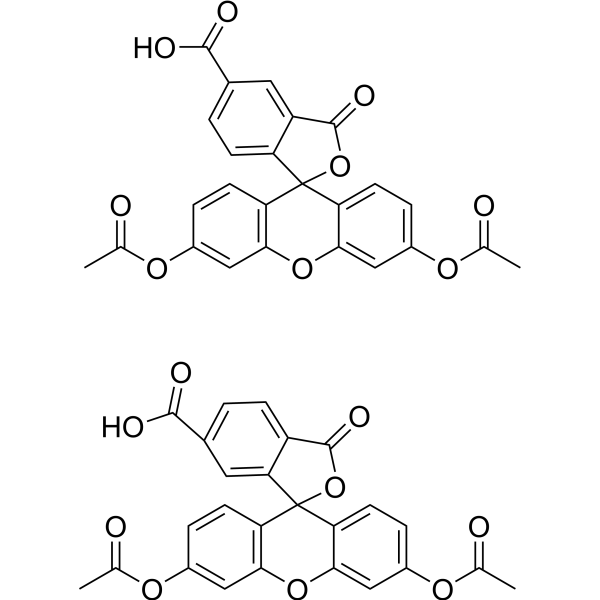
6-CFDA is a common aliphatic luciferin-line organism. CFDA conducts free diffusion into cells, and then it is hydrolyzed into carboxyl fluorescein (CF) by intracellular non-specific lipase. CF containing portion contains an additional negative charge so that it is better retained in cells, compared to fluorescein dyes .
|
-
- HY-150741B
-
|
|
Toll-like Receptor (TLR)
Interleukin Related
|
Inflammation/Immunology
|
|
FITC-labeled ODN 2216 (sodium) is a human-specific TLR9 (toll-like receptor 9) ligand or agonist. FITC-labeled ODN 2216 (sodium) can be used to evaluate CpG ODN cellular uptake and localization by confocal laser-scanning microscopy (excitation 495 nm, emission 520 nm) or flow cytometry.
|
-
- HY-D0090
-
|
|
Fluorescent Dye
|
Others
|
|
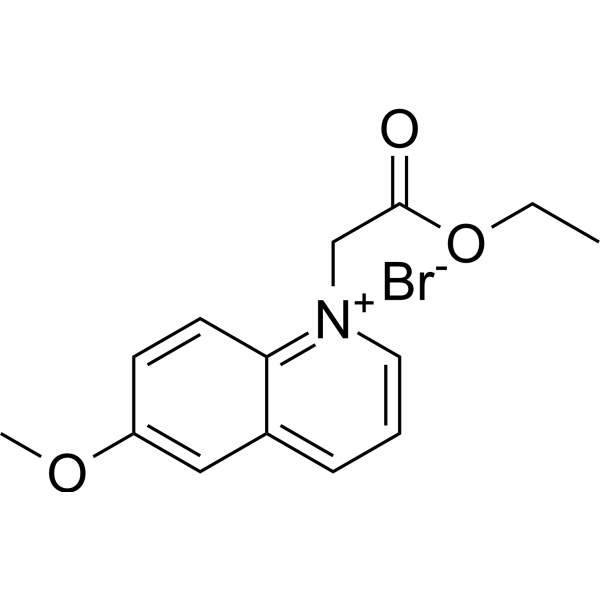
MQAE is a chloride ion (Cl -) fluorescent probe that can be used to measure chloride concentrations. The fluorescence intensity of MQAE decreases proportionally as Cl - ions increase. MQAE has high cell permeability and is suitable for fluorescence detection such as confocal microscopy and flow cytometry (Ex/Em=350/460 nm) .
|
-
- HY-DN0194F
-
|
|
Fluorescent Dye
|
Others
|
|
Cy3-Asiatic acid is a fluorescent labeling reagent that combines Cy3 (HY-D0822) and Asiatic acid (HY-N0194). Cy3-Asiatic acid can be used to observe and track Asiatic acid under fluorescence microscopy (Ex/Em = 550/570 nm).
|
-
- HY-W440910
-
|
|
Liposome
|
Others
|
|
DSPE-PEG5000-Cy3 is a phospholipid PEG polymer with Cy3 dye used in labeling and fluorescence microscopy. The polymer can self-assemble in aqueous solution to form micelles/lipid bilayer and used to prepare liposomes or nanoparticles for nutrients delivery such as mRNA or DNA vaccine.
|
-
- HY-W440909
-
|
|
Liposome
|
Others
|
|
DSPE-PEG3400-Cy3 is a phospholipid PEG polymer with Cy3 dye used in labeling and fluorescence microscopy. The polymer can self-assemble in aqueous solution to form micelles/lipid bilayer and used to prepare liposomes or nanoparticles for nutrients delivery such as mRNA or DNA vaccine.
|
-
- HY-W440912
-
|
|
Liposome
|
Others
|
|
DSPE-PEG3400-Cy5 is a PEG phospholipid with Cy5 dye used in protein/nucelic acid labeling and fluorescence microscopy. The polymer can self-assemble in aqueous solution to form micelles/lipid bilayer and used to prepare liposomes or nanoparticles for nutrients delivery such as mRNA or DNA vaccine.
|
-
- HY-P4900
-
|
|
Caspase
|
Others
|
|
Fluorescein-6-carbonyl-Asp(OMe)-Glu(OMe)-Val-DL-Asp(OMe)-fluoromethylketone is a cell-permeable, non-toxic inhibitor that binds irreversibly to activated caspase-3 in apoptotic cells. The fluorescence intensity can be measured by flow cytometry, microwell plate reader, or fluorescence microscopy .
|
-
- HY-D2743
-
|
|
Fluorescent Dye
|
Others
|
|
ROX alkyne, 6-isomer is an alkyne derivative of the bright red-emitting dye ROX (Rhodamine X, Rhodamine 101). Due to its quantum yield approaching unity, ROX is a popular dye for qPCR and microscopy applications. It is used for fluorescent labeling of azide-containing biomolecules via copper-catalyzed click reaction.
|
-
- HY-D2761
-
|
|
Fluorescent Dye
|
Others
|
|
DY-680-NHS ester is an amine reactive hydrophilic fluorochrome. It can be conjugated to an antibody with higher D/P ratio without causing fluorescence quenching and conjugate precipitation, and it is widely used in applications including western blotting, microscopy, flow cytometry, and cell-based assays. The spectrum has an excitation of 690nm and emission at 709nm.
|
-
- HY-N16316
-
|
|
Fluorescent Dye
|
Others
|
|
Meso-Cl cyanine 7 free acid chloride is a Meso-Cl cyanine fluorescent dye. Meso-Cl cyanine 7 free acid chloride can be used for labelling amine groups such as those on antibodies, nucleic acids, and proteins and can be detected using a variety of fluorescence detection techniques such as microscopy and flow cytometry (Ex/Em = 778/805 nm) .
|
-
- HY-D2940
-
|
SiR650-BG
|
Fluorescent Dye
|
Others
|
SiR-SNAP (SiR650-BG) is a SiR-labeled SNAP tag near-infrared fluorescent probe (Ex/Em: 645 nm/661 nm). SiR-SNAP combines excellent optical properties, good cell membrane permeability, and environmentally sensitive fluorescence characteristics, providing a powerful tool for the dynamic study of proteins in living cells .
|
-
- HY-114346A
-
|
|
Fluorescent Dye
|
Others
|
|
ODIPY FL EDA free base is an amine-based, green fluorescent probe. The R-NH2 of ODIPY FL EDA free base can be coupled with aldehydes or ketones to form reversible Schiff base products. Convert to stable amine derivatives using reducing agents such as sodium borohydride or sodium cyanoborohydride. ODIPY FL EDA free base can be used to detect modified or normal deoxynucleotides and demonstrate DNA damage and genomic DNA methylation.
|
-
- HY-149182
-
-
- HY-DY1074
-
|
|
Fluorescent Dye
|
Others
|
ER-Tracker dye is a derivative of BODIPY series dyes coupled with Glibenclamide (HY-15206) , highly selective binding to the endoplasmic reticulum, non-toxic to cells at low concentrations, this type of dye is an environmentally sensitive probe, and formaldehyde treatment can still retain part of the fluorescence, with high fluorescence life, good extinction coefficient and other characteristics. Glibenclamide is an atp-dependent K + channel blocker (Kir6, KATP) and CFTR Cl-channel blocker that binds in the endoplasmic reticulum. ER-Tracker is not suitable for staining fixed cells. Staining followed by fixation is possible, but cells fixed with aldehydes will only retain partial fluorescence . Solvent and concentration: DMSO: 1 mM
|
-
- HY-D1571
-
|
|
DNA Stain
|
Others
|
|
CellTracker Blue CMF2HC Dye is a blue dye, can be used in two-channel nuclei acid sequencing, with blue and purple excitation light (450-460 nm/400-405nm or 415-450 nm/480-525nm). CellTracker Blue CMF2HC Dye can be used to rapid determination of antibiotic sensitivity of microorganisms .
|
-
- HY-D1429
-
|
|
Fluorescent Dye
|
Others
|
|
ER-Tracker dye is a derivative of BODIPY series dyes coupled with Glibenclamide (HY-15206), highly selective binding to the endoplasmic reticulum, non-toxic to cells at low concentrations, this type of dye is an environmentally sensitive probe, and formaldehyde treatment can still retain part of the fluorescence, with high fluorescence life, good extinction coefficient and other characteristics. Glibenclamide is an atp-dependent K + channel blocker (Kir6, KATP) and CFTR Cl-channel blocker that binds in the endoplasmic reticulum. ER-Tracker is not suitable for staining fixed cells. Staining followed by fixation is possible, but cells fixed with aldehydes will only retain partial fluorescence (Ex/Em = 374/ 430-640 nm) .
|
-
- HY-D2526
-
|
|
Fluorescent Dye
Liposome
|
Others
|
|
Cy3 IRGD-PEG-DSPE is a PEG phospholipid with Cy3 (HY-D0822) dye used in protein/nucelic acid labeling and fluorescence microscopy. Cy3 IRGD-PEG-DSPE can self-assemble in aqueous solution to form micelles/lipid bilayer and used to prepare liposomes or nanoparticles for nutrients delivery such as mRNA or DNA vaccine.
|
-
- HY-N16307
-
|
|
Fluorescent Dye
|
Others
|
|
Meso-Cl cyanine 7.5 free acid chloride is a Meso-Cl cyanine fluorescent dye. Meso-Cl cyanine 7.5 free acid chloride can be used for labelling amine groups such as those on antibodies, nucleic acids, and proteins and can be detected using a variety of fluorescence detection techniques such as microscopy and flow cytometry (Ex/Em = 815/825 nm) .
|
-
- HY-W440938
-
|
|
Liposome
|
Others
|
|
Stearic acid-PEG2000-FITC is an amphiphatic polyPEG which can self assemble to form micelles in water. The polymer can be used to encapsulate therapeutic agent. FITC is a green dye with peak absorption at 494 nm and maximum emission at 520 nm and can be used for staining biological samples or nanoparticles. FITC can be easily traced by fluorescence microscopy.
|
-
- HY-W440936
-
|
|
Liposome
|
Others
|
|
Stearic acid-PEG5000-Rhodamine is a fatty acid containing PEG polymer which can self assemble in an aqueous solution to form micelles. The polymer can be used to prepare nanoparticles for drug encapsulation. The red dye rhodamine can be easily traced by fluorescence microscopy. Rhodamine has maximum absorption at 570 nm and emission around 595 nm.
|
-
- HY-W440908
-
|
|
Liposome
|
Others
|
|
DSPE-PEG2000-Cy3 is a PEG lipid conjugated with a fluorophore. The Cy3 fluorophore is commonly used in applications such as immunolabeling, nucleic acid labeling, fluorescence microscopy and flow cytometry. The absorption wavelength of the Cy3 fluorophore peaks at 548-552 nm, while its emission wavelength reaches a maximum at 562-570 nm .
|
-
- HY-W440935
-
|
|
Liposome
|
Others
|
|
Stearic acid-PEG3400-Rhodamine is a fatty acid containing PEG polymer which can self assemble in an aqueous solution to form micelles. The polymer can be used to prepare nanoparticles for drug encapsulation. The red dye rhodamine can be easily traced by fluorescence microscopy. Rhodamine has maximum absorption at 570 nm and emission around 595 nm.
|
-
- HY-110334
-
|
|
Fluorescent Dye
|
Others
|
|
FFN 206 dihydrochloride, a fluorescent probe, is used as an excellent Vesicular Monoamine Transporter 2 (VMAT2) substrate with an apparent Km of 1.16 μM. FFN 206 dihydrochloride is capable of detecting VMAT2 activity in intact cells using fluorescence microscopy, with subcellular localization to VMAT2-expressing acidic compartments without apparent labeling of other organelles .
|
-
- HY-D2440
-
|
|
Fluorescent Dye
|
Others
|
|
cRGD-PEG-Cy3 is a Cy3 (HY-D0822) labeled cRGD-PEG conjugate. The Cy3 fluorophore is commonly used in applications such as immunolabeling, nucleic acid labeling, fluorescence microscopy, and flow cytometry. Cy3 has an emission maximum around 562-570 nm. cRGD can be used to modify lipid for improved stability .
|
-
- HY-W440939
-
|
|
Liposome
|
Others
|
|
Stearic acid-PEG3400-FITC is a PEG lipid which forms micelles in water and can be used for drug delivery applications. The FITC fluorescent can be easily traced by miscroscopy. FITC is a green dye with peak absorption at 494 nm and maximum emission at 520 nm and can be used for staining biological samples or nanoparticles. FITC can be easily traced by fluorescence microscopy.
|
-
- HY-W440940
-
|
|
Liposome
|
Others
|
|
Stearic acid-PEG5000-FITC is a PEG lipid which forms micelles in water and can be used for drug delivery applications. The FITC fluorescent can be easily traced by miscroscopy. FITC is a green dye with peak absorption at 494 nm and maximum emission at 520 nm and can be used for staining biological samples or nanoparticles. FITC can be easily traced by fluorescence microscopy.
|
-
- HY-D2609
-
|
|
Fluorescent Dye
|
Others
|
|
ICG PEG1000 DSPE is a PEG phospholipid with Indocyanine green (ICG) (HY-D0711) dye used in protein/nucelic acid labeling and fluorescence microscopy. ICG PEG1000 DSPE can self-assemble in aqueous solution to form micelles/lipid bilayer and used to prepare liposomes or nanoparticles for nutrients delivery such as mRNA or DNA vaccine (Ex/Em=785/813 nm).
|
-
- HY-D2611
-
|
|
Fluorescent Dye
|
Others
|
|
ICG PEG3400 DSPE is a PEG phospholipid with Indocyanine green (ICG) (HY-D0711) dye used in protein/nucelic acid labeling and fluorescence microscopy. ICG PEG3400 DSPE can self-assemble in aqueous solution to form micelles/lipid bilayer and used to prepare liposomes or nanoparticles for nutrients delivery such as mRNA or DNA vaccine (Ex/Em=785/813 nm).
|
-
- HY-D2613
-
|
|
Fluorescent Dye
|
Others
|
|
ICG PEG10000 DSPE is a PEG phospholipid with Indocyanine green (ICG) (HY-D0711) dye used in protein/nucelic acid labeling and fluorescence microscopy. ICG PEG10000 DSPE can self-assemble in aqueous solution to form micelles/lipid bilayer and used to prepare liposomes or nanoparticles for nutrients delivery such as mRNA or DNA vaccine (Ex/Em=785/813 nm).
|
-
- HY-D2612
-
|
|
Fluorescent Dye
|
Others
|
|
ICG PEG5000 DSPE is a PEG phospholipid with Indocyanine green (ICG) (HY-D0711) dye used in protein/nucelic acid labeling and fluorescence microscopy. ICG PEG5000 DSPE can self-assemble in aqueous solution to form micelles/lipid bilayer and used to prepare liposomes or nanoparticles for nutrients delivery such as mRNA or DNA vaccine (Ex/Em=785/813 nm).
|
-
- HY-D2610
-
|
|
Fluorescent Dye
|
Others
|
|
ICG PEG2000 DSPE is a PEG phospholipid with Indocyanine green (ICG) (HY-D0711) dye used in protein/nucelic acid labeling and fluorescence microscopy. ICG PEG2000 DSPE can self-assemble in aqueous solution to form micelles/lipid bilayer and used to prepare liposomes or nanoparticles for nutrients delivery such as mRNA or DNA vaccine (Ex/Em=785/813 nm).
|
-
- HY-D0722
-
|
5-(6)-Carboxyfluorescein diacetate; CFDA
|
Fluorescent Dye
|
Others
|
|
5(6)-CFDA is a common aliphatic luciferin-line organism. CFDA conducts free diffusion into cells, and then it is hydrolyzed into carboxyl fluorescein (CF) by intracellular non-specific lipase. CF containing portion contains an additional negative charge so that it is better retained in cells, compared to fluorescein dyes .
|
-
- HY-160269
-
|
|
Fluorescent Dye
|
Others
|
|
DSPE-PEG2000-Fluor 488 is a PEG-dye-lipid conjugate consisting of a DSPE phospholipid and a Fluor 488 dye. DSPE is a phospholipid that spontaneously forms micelles in a water medium, and Fluor 488 is a cyanine dye that is widely used in fluorescence microscopy. Fluor 488 has excitation and emission maxima at 499 nm and 520 nm. Polyethylene glycol lipids are commonly used for the stabilization of lipid nanoparticles .
|
-
- HY-D2437
-
|
|
Fluorescent Dye
Antibiotic
|
Cardiovascular Disease
Cancer
|
|
DOX-PEG-Cy3 (Doxorubicin-PEG-Cy3) is a Cy3 (HY-D0822) labeled DOX-PEG conjugate. The Cy3 fluorophore is commonly used in applications such as immunolabeling, nucleic acid labeling, fluorescence microscopy, and flow cytometry. Cy3 has an emission maximum around 562-570 nm. DOX is a broad-spectrum anthracycline antibiotic with cytotoxic properties .
|
-
- HY-153232
-
|
|
Fluorescent Dye
Liposome
|
Others
|
|
eGFP circRNA-LNP is a lipid nanoparticle (LNP) containing eGFP circRNA, suitable for assays of RNA delivery, translation efficiency, cell viability, etc. eGFP circRNA carries Enhanced Green Fluorescent Protein (Enhanced Green Fluorescent Protein) eGFP, which will express green fluorescent protein after entering the cell. eGFP is commonly used as a reporter gene detectable by fluorescence microscopy or flow cytometry .
|
-
- HY-D2421
-
|
|
Fluorescent Dye
|
Cardiovascular Disease
Cancer
|
|
DEAE-dex-Cy5 is a fluorescent labeling reagent that combines Cy5 (HY-D0821) fluorescent dye, Dextran (dex) and Diethylaminoethyl (DEAE). Cy5 is a Cyanine dye (with a long wavelength about 662nm) that can be used for molecular labeling and microscopy imaging. Dex has an inhibitory effect on thrombocyte aggregation and coagulation factors and is used as a plasma volume expander .
|
-
- HY-111137
-
|
XC-302 free base
|
Akt
|
Cancer
|
|
Puquitinib (XC-302 free base) is a multi-target inhibitor with the activity of inducing autophagy in nasopharyngeal carcinoma cells by inhibiting the PI3K/AKT/mTOR signaling pathway. Puquitinib was able to inhibit the proliferation of CNE-2 cells, showing a dose-dependent antiproliferative effect. Puquitinib induced the formation of autophagosomes and autolysosomes in CNE-2 cells, which were observed by fluorescence microscopy and electron microscopy. Puquitinib promoted the formation of LC3-II and increased the expression of beclin 1, while reducing the level of p62. Puquitinib inhibited the PI3K/AKT/mTOR pathway by reducing the expression of p-AKT and p-mTOR. Puquitinib also induced apoptosis in CNE-2 cells, and when autophagy was inhibited, the apoptosis rate was reduced, which means that autophagy may interact with apoptosis to induce cell death .
|
-
- HY-D2706
-
|
|
Fluorescent Dye
|
Others
|
|
Cy3 Dextran (MW 3000) is a fluorescent labeling reagent that combines Cy3 (HY-D0822) fluorescent dye and Dextran (HY-112624). The Cy3 fluorophore is commonly used in applications such as immunolabeling, nucleic acid labeling, fluorescence microscopy, and flow cytometry. Dextran has an inhibitory effect on thrombocyte aggregation and coagulation factors and is used as a plasma volume expander (Ex/Em = 550/570 nm) .
|
-
- HY-D2836I
-
|
FITC-Hyaluronate (MW 5000)
|
Fluorescent Dye
|
Others
|
|
FITC-HA (MW 5000) is hyaluronic acid (HA) (HY-B0633A) labeled with FITC (HY-66019). FITC-HA retains the ability of HA to bind to receptors (such as CD44) and form extracellular matrices, while it can be detected by fluorescence microscopy or flow cytometry for tracing the localization, binding, internalization and metabolic pathways of HA in cells, tissues or living organisms (Ex/Em ≈ 490/520 nM) .
|
-
- HY-D2544
-
|
|
Fluorescent Dye
|
Others
|
|
Cy5-PEG5000-DSPE is a PEG phospholipid with Cy5 (HY-D0821) dye used in protein/nucelic acid labeling and fluorescence microscopy. Cy5-PEG5000-DSPE can self-assemble in aqueous solution to form micelles/lipid bilayer and used to prepare liposomes or nanoparticles for nutrients delivery such as mRNA or DNA vaccine.
|
-
- HY-D2542
-
|
|
Fluorescent Dye
|
Others
|
|
Cy5-PEG2000-DSPE is a PEG phospholipid with Cy5 (HY-D0821) dye used in protein/nucelic acid labeling and fluorescence microscopy. Cy5-PEG2000-DSPE can self-assemble in aqueous solution to form micelles/lipid bilayer and used to prepare liposomes or nanoparticles for nutrients delivery such as mRNA or DNA vaccine.
|
-
- HY-D2712
-
|
|
Fluorescent Dye
|
Others
|
|
Cy3 Dextran (MW 500000) is a fluorescent labeling reagent that combines Cy3 (HY-D0822) fluorescent dye and Dextran (HY-112624). The Cy3 fluorophore is commonly used in applications such as immunolabeling, nucleic acid labeling, fluorescence microscopy, and flow cytometry. Dextran has an inhibitory effect on thrombocyte aggregation and coagulation factors and is used as a plasma volume expander (Ex/Em = 550/570 nm) .
|
-
- HY-D2708
-
|
|
Fluorescent Dye
|
Others
|
|
Cy3 Dextran (MW 10000) is a fluorescent labeling reagent that combines Cy3 (HY-D0822) fluorescent dye and Dextran (HY-112624). The Cy3 fluorophore is commonly used in applications such as immunolabeling, nucleic acid labeling, fluorescence microscopy, and flow cytometry. Dextran has an inhibitory effect on thrombocyte aggregation and coagulation factors and is used as a plasma volume expander (Ex/Em = 550/570 nm) .
|
-
- HY-D2710
-
|
|
Fluorescent Dye
|
Others
|
|
Cy3 Dextran (MW 40000) is a fluorescent labeling reagent that combines Cy3 (HY-D0822) fluorescent dye and Dextran (HY-112624). The Cy3 fluorophore is commonly used in applications such as immunolabeling, nucleic acid labeling, fluorescence microscopy, and flow cytometry. Dextran has an inhibitory effect on thrombocyte aggregation and coagulation factors and is used as a plasma volume expander (Ex/Em = 550/570 nm) .
|
-
- HY-D2836B
-
|
FITC-Hyaluronate (MW 200000)
|
Fluorescent Dye
|
Others
|
|
FITC-HA (MW 200000) is hyaluronic acid (HA) (HY-B0633A) labeled with FITC (HY-66019). FITC-HA retains the ability of HA to bind to receptors (such as CD44) and form extracellular matrices, while it can be detected by fluorescence microscopy or flow cytometry for tracing the localization, binding, internalization and metabolic pathways of HA in cells, tissues or living organisms (Ex/Em ≈ 490/520 nM) .
|
-
- HY-D2541
-
|
|
Fluorescent Dye
|
Others
|
|
Cy5-PEG1000-DSPE is a PEG phospholipid with Cy5 (HY-D0821) dye used in protein/nucelic acid labeling and fluorescence microscopy. Cy5-PEG1000-DSPE can self-assemble in aqueous solution to form micelles/lipid bilayer and used to prepare liposomes or nanoparticles for nutrients delivery such as mRNA or DNA vaccine.
|
-
- HY-D2516
-
|
|
Fluorescent Dye
Liposome
|
Others
|
|
Cy3-PEG3400-DSPE is a PEG phospholipid with Cy3 (HY-D0822) dye used in protein/nucelic acid labeling and fluorescence microscopy. Cy3-PEG3400-DSPE can self-assemble in aqueous solution to form micelles/lipid bilayer and used to prepare liposomes or nanoparticles for nutrients delivery such as mRNA or DNA vaccine.
|
-
- HY-D2707
-
|
|
Fluorescent Dye
|
Others
|
|
Cy3 Dextran (MW 5000) is a fluorescent labeling reagent that combines Cy3 (HY-D0822) fluorescent dye and Dextran (HY-112624). The Cy3 fluorophore is commonly used in applications such as immunolabeling, nucleic acid labeling, fluorescence microscopy, and flow cytometry. Dextran has an inhibitory effect on thrombocyte aggregation and coagulation factors and is used as a plasma volume expander (Ex/Em = 550/570 nm) .
|
-
- HY-D2705
-
|
|
Fluorescent Dye
|
Others
|
|
Cy3 Dextran (MW 2000) is a fluorescent labeling reagent that combines Cy3 (HY-D0822) fluorescent dye and Dextran (HY-112624). The Cy3 fluorophore is commonly used in applications such as immunolabeling, nucleic acid labeling, fluorescence microscopy, and flow cytometry. Dextran has an inhibitory effect on thrombocyte aggregation and coagulation factors and is used as a plasma volume expander (Ex/Em = 550/570 nm) .
|
-
- HY-D2836E
-
|
FITC-Hyaluronate (MW 10000)
|
Fluorescent Dye
|
Others
|
|
FITC-HA (MW 10000) is hyaluronic acid (HA) (HY-B0633A) labeled with FITC (HY-66019). FITC-HA retains the ability of HA to bind to receptors (such as CD44) and form extracellular matrices, while it can be detected by fluorescence microscopy or flow cytometry for tracing the localization, binding, internalization and metabolic pathways of HA in cells, tissues or living organisms (Ex/Em ≈ 490/520 nM) .
|
-
- HY-D2836J
-
|
FITC-Hyaluronate (MW 3000)
|
Fluorescent Dye
|
Others
|
|
FITC-HA (MW 3000) is hyaluronic acid (HA) (HY-B0633A) labeled with FITC (HY-66019). FITC-HA retains the ability of HA to bind to receptors (such as CD44) and form extracellular matrices, while it can be detected by fluorescence microscopy or flow cytometry for tracing the localization, binding, internalization and metabolic pathways of HA in cells, tissues or living organisms (Ex/Em ≈ 490/520 nM) .
|
-
- HY-D2711
-
|
|
Fluorescent Dye
|
Others
|
|
Cy3 Dextran (MW 100000) is a fluorescent labeling reagent that combines Cy3 (HY-D0822) fluorescent dye and Dextran (HY-112624). The Cy3 fluorophore is commonly used in applications such as immunolabeling, nucleic acid labeling, fluorescence microscopy, and flow cytometry. Dextran has an inhibitory effect on thrombocyte aggregation and coagulation factors and is used as a plasma volume expander (Ex/Em = 550/570 nm) .
|
-
- HY-D2431
-
|
|
Fluorescent Dye
|
Others
|
|
Galactose-PEG-Cy3 is a Cy3 (HY-D0822) labeled Galactose-PEG conjugate. The Cy3 fluorophore is commonly used in applications such as immunolabeling, nucleic acid labeling, fluorescence microscopy, and flow cytometry. Cy3 has an emission maximum around 562-570 nm. Galactose-PEG improves drug cellular uptake and reduces endosomal degradation, and can be used in drug delivery .
|
-
- HY-D2543
-
|
|
Fluorescent Dye
|
Others
|
|
Cy5-PEG3400-DSPE is a PEG phospholipid with Cy5 (HY-D0821) dye used in protein/nucelic acid labeling and fluorescence microscopy. Cy5-PEG3400-DSPE can self-assemble in aqueous solution to form micelles/lipid bilayer and used to prepare liposomes or nanoparticles for nutrients delivery such as mRNA or DNA vaccine.
|
-
- HY-D2836D
-
|
FITC-Hyaluronate (MW 50000)
|
Fluorescent Dye
|
Others
|
|
FITC-HA (MW 50000) is hyaluronic acid (HA) (HY-B0633A) labeled with FITC (HY-66019). FITC-HA retains the ability of HA to bind to receptors (such as CD44) and form extracellular matrices, while it can be detected by fluorescence microscopy or flow cytometry for tracing the localization, binding, internalization and metabolic pathways of HA in cells, tissues or living organisms (Ex/Em ≈ 490/520 nM) .
|
-
- HY-D2836C
-
|
FITC-Hyaluronate (MW 100000)
|
Fluorescent Dye
|
Others
|
|
FITC-HA (MW 100000) is hyaluronic acid (HA) (HY-B0633A) labeled with FITC (HY-66019). FITC-HA retains the ability of HA to bind to receptors (such as CD44) and form extracellular matrices, while it can be detected by fluorescence microscopy or flow cytometry for tracing the localization, binding, internalization and metabolic pathways of HA in cells, tissues or living organisms (Ex/Em ≈ 490/520 nM) .
|
-
- HY-D2417
-
|
|
Fluorescent Dye
|
Others
|
|
SiRA 2 is a fluorescent inducer with a Kd value of 430 nM for binding to the SiRA RNA aptamer. When used in combination with the SiRA aptamer, SiRA 2 enables live-cell RNA imaging of aptamer-labeled mRNA as well as stimulated emission depletion super-resolution microscopy imaging. SiRA 2 has high photostability and forms a bright far-red light-up aptamer system upon binding to SiRA .
|
-
- HY-D2836A
-
|
FITC-Hyaluronate (MW 500000)
|
Fluorescent Dye
|
Others
|
|
FITC-HA (MW 500000) is hyaluronic acid (HA) (HY-B0633A) labeled with FITC (HY-66019). FITC-HA retains the ability of HA to bind to receptors (such as CD44) and form extracellular matrices, while it can be detected by fluorescence microscopy or flow cytometry for tracing the localization, binding, internalization and metabolic pathways of HA in cells, tissues or living organisms (Ex/Em ≈ 490/520 nM) .
|
-
- HY-D2430
-
|
|
Fluorescent Dye
Bacterial
Fungal
|
Infection
Cancer
|
|
Chitosan-PEG-Cy3 is a fluorescent labeling reagent that combines Cy3 (HY-D0822) fluorescent dye, Chitosan and polyethylene glycol (PEG). The Cy3 fluorophore is commonly used in applications such as immunolabeling, nucleic acid labeling, fluorescence microscopy, and flow cytometry. Cy3 has an emission maximum around 562-570 nm. Chitosan exhibits antimicrobial activity against various bacteria and fungi .
|
-
- HY-D2836H
-
|
FITC-Hyaluronate (MW 7000)
|
Fluorescent Dye
|
Others
|
|
FITC-HA (MW 7000) is hyaluronic acid (HA) (HY-B0633A) labeled with FITC (HY-66019). FITC-HA retains the ability of HA to bind to receptors (such as CD44) and form extracellular matrices, while it can be detected by fluorescence microscopy or flow cytometry for tracing the localization, binding, internalization and metabolic pathways of HA in cells, tissues or living organisms (Ex/Em ≈ 490/520 nM) .
|
-
- HY-D2836
-
|
FITC-Hyaluronate (MW 1000000)
|
Fluorescent Dye
|
Others
|
|
FITC-HA (MW 1000000) is hyaluronic acid (HA) (HY-B0633A) labeled with FITC (HY-66019). FITC-HA retains the ability of HA to bind to receptors (such as CD44) and form extracellular matrices, while it can be detected by fluorescence microscopy or flow cytometry for tracing the localization, binding, internalization and metabolic pathways of HA in cells, tissues or living organisms (Ex/Em ≈ 490/520 nM) .
|
-
- HY-D2545
-
|
|
Fluorescent Dye
|
Others
|
|
Cy5-PEG10000-DSPE is a PEG phospholipid with Cy5 (HY-D0821) dye used in protein/nucelic acid labeling and fluorescence microscopy. Cy5-PEG10000-DSPE can self-assemble in aqueous solution to form micelles/lipid bilayer and used to prepare liposomes or nanoparticles for nutrients delivery such as mRNA or DNA vaccine.
|
-
- HY-179540
-
|
5-BrUTP trisodium
|
DNA/RNA Synthesis
Nucleoside Antimetabolite/Analog
|
Others
|
|
5-Bromo-UTP (5-BrUTP) trisodium is a derivative of uridine triphosphate (UTP). 5-Bromo-UTP trisodium can be utilized by cells as a precursor for RNA synthesis. During transcription, it integrates into the newly synthesized RNA chain and replaces some UTP. 5-Bromo-UTP trisodium can be used to label newly synthesized RNA, thereby enabling high-resolution visualization of transcriptional sites and RNA transport .
|
-
- HY-137018
-
|
|
Biochemical Assay Reagents
|
Others
|
|
27-Alkyne cholesterol is a modified lipid containing an omega-terminal alkyne. The terminal alkyne group can be used in a highly specific linking reaction with azide-containing reagents, known as click chemistry, in the presence of a copper-containing catalyst.
Alkyne cholesterol represents a versatile, sensitive, and easy-to-use tool for tracking cellular cholesterol metabolism and localization as it allows for manifold detection methods including mass spectrometry, and fluorescence microscopy.
|
-
- HY-D0988A
-
|
R-PE (concentrated solution)
|
Fluorescent Dye
Apoptosis
|
Others
|
|
R-Phycoerythrin (R-PE) (concentrated solution) is found in Heterosiphonia japonica. R-Phycoerythrin (concentrated solution) is an orange-red fluorescent probe with α, β, and γ subunits. R-Phycoerythrin (concentrated solution) can be used in photodynamic therapy (PDT) to induce apoptosis in tumor cells. R-Phycoerythrin (concentrated solution) can be used in fluorescence microscopy, flow cytometry, and immunofluorescence analysis (Ex/Em = 496/578 nm) .
|
-
- HY-D2433
-
|
|
Fluorescent Dye
|
Others
|
|
Glucose-PEG2000-Cy3 is a Cy3 (HY-D0822) labeled Glucose-PEG conjugate. The Cy3 fluorophore is commonly used in applications such as immunolabeling, nucleic acid labeling, fluorescence microscopy, and flow cytometry. Cy3 has an emission maximum around 562-570 nm. Glucose-PEG improves drug cellular uptake and reduces endosomal degradation, and can be used in drug delivery .
|
-
- HY-D0718
-
|
Nile Blue A oxazone; Phenoxazone 9
|
Fluorescent Dye
|
Others
|
|
Nile red (Nile blue oxazone) is a lipophilic stain. Nile red has environment-sensitive fluorescence. Nile red is intensely fluorescent in a lipid-rich environment while it has minimal fluorescence in aqueous media. Nile red is an excellent vital stain for the detection of intracellular lipid droplets by fluorescence microscopy and flow cytof uorometry. Nile red stains intracellular lipid droplets red. The fluorescence wavelength is 559/635 nm .
|
-
- HY-D1540
-
|
Cy 5.5 amine; Lumiprobe Cy 5.5 amine
|
Fluorescent Dye
|
Others
|
|
Cyanine5.5 amine (Cy 5.5 amine), a Cy5.5 Analogue, is a near-infrared (NIR) fluorescent dye (Ex=648 nm, Em=710 nm). Cyanine5.5 amine can be used in the preparation of Cy5.5-labeled nanoparticles, which can be tracked and imaged with low fluorescence background using confocal microscopy .
|
-
- HY-D2466
-
|
|
Fluorescent Dye
|
Cardiovascular Disease
|
|
Cy3 Dextran (MW 70000) is a fluorescent labeling reagent that conjugates the Cy3 (HY-D0822) fluorescent dye with Dextran (HY-112624). The Cy3 fluorophore is commonly used in applications such as immunolabeling, nucleic acid labeling, fluorescence microscopy, and flow cytometry. The maximum emission wavelength of Cy3 is approximately 562-570 nm. Dextran inhibits platelet aggregation and coagulation factors, and serves as a plasma volume expander .
|
-
- HY-D2709
-
|
|
Fluorescent Dye
|
Others
|
|
Cy3 Dextran (MW 20000) is a fluorescent labeling reagent that combines Cy3 (HY-D0822) fluorescent dye and Dextran (HY-112624). The Cy3 fluorophore is commonly used in applications such as immunolabeling, nucleic acid labeling, fluorescence microscopy, and flow cytometry. Dextran has an inhibitory effect on thrombocyte aggregation and coagulation factors and is used as a plasma volume expander (Ex/Em = 550/570 nm) .
|
-
- HY-D0333
-
|
Sirius Red
|
Amyloid-β
|
Others
|
|
Direct Red 80 (Sirius Red) is a polyazo dye used principally in staining methods for collagen and amyloid. Direct Red 80 does not release benzidine upon degradation and is safer than many traditional direct dyes .
|
-
- HY-NP163C
-
|
WGA-AF555
|
Fluorescent Dye
|
Others
|
|
Wheat germ agglutinin-AF555 (WGA-AF555) is a membrane-staining lectin conjugate that combines wheat germ agglutinin with the Alexa Fluor 555 fluorescent dye. Wheat germ agglutinin-AF555 is used for precise staining and contour delineation of cell membranes. Wheat germ agglutinin-AF555 also effectively distinguishes between surface vimentin and intracellular vimentin in cells .
|
-
- HY-D2567
-
|
|
Fluorescent Dye
|
Others
|
|
Cy5.5-PEG5000-DSPE is a PEG phospholipid with Cy5.5 (HY-D0924) dye used in protein/nucelic acid labeling and fluorescence microscopy. Cy5.5-PEG5000-DSPE can self-assemble in aqueous solution to form micelles/lipid bilayer and used to prepare liposomes or nanoparticles for nutrients delivery such as mRNA or DNA vaccine.
|
-
- HY-D2601
-
|
|
Fluorescent Dye
|
Others
|
|
ICG PEG3400 NH2 is a polyethylene glycol derivative containing Indocyanine green (ICG) (HY-D0711) fluorescent dye and polyethylene glycol (PEG) and an amino group. The Indocyanine green fluorophore is commonly used in applications such as immunolabeling, nucleic acid labeling, fluorescence microscopy, and flow cytometry. ICG PEG3400 NH2 can be used for fluorescence imaging, fluorescence tracing and fluorescence labeling (Ex/Em=785/813 nm).
|
-
- HY-D2566
-
|
|
Fluorescent Dye
|
Others
|
|
Cy5.5-PEG3400-DSPE is a PEG phospholipid with Cy5.5 (HY-D0924) dye used in protein/nucelic acid labeling and fluorescence microscopy. Cy5.5-PEG3400-DSPE can self-assemble in aqueous solution to form micelles/lipid bilayer and used to prepare liposomes or nanoparticles for nutrients delivery such as mRNA or DNA vaccine.
|
-
- HY-D2565
-
|
|
Fluorescent Dye
|
Others
|
|
Cy5.5-PEG2000-DSPE is a PEG phospholipid with Cy5.5 (HY-D0924) dye used in protein/nucelic acid labeling and fluorescence microscopy. Cy5.5-PEG2000-DSPE can self-assemble in aqueous solution to form micelles/lipid bilayer and used to prepare liposomes or nanoparticles for nutrients delivery such as mRNA or DNA vaccine.
|
-
- HY-D2600
-
|
|
Fluorescent Dye
|
Others
|
|
ICG PEG2000 NH2 is a polyethylene glycol derivative containing Indocyanine green (ICG) (HY-D0711) fluorescent dye and polyethylene glycol (PEG) and an amino group. The Indocyanine green fluorophore is commonly used in applications such as immunolabeling, nucleic acid labeling, fluorescence microscopy, and flow cytometry. ICG PEG2000 NH2 can be used for fluorescence imaging, fluorescence tracing and fluorescence labeling (Ex/Em=785/813 nm).
|
-
- HY-D2564
-
|
|
Fluorescent Dye
|
Others
|
|
Cy5.5-PEG1000-DSPE is a PEG phospholipid with Cy5.5 (HY-D0924) dye used in protein/nucelic acid labeling and fluorescence microscopy. Cy5.5-PEG1000-DSPE can self-assemble in aqueous solution to form micelles/lipid bilayer and used to prepare liposomes or nanoparticles for nutrients delivery such as mRNA or DNA vaccine.
|
-
- HY-D2568
-
|
|
Fluorescent Dye
|
Others
|
|
Cy5.5-PEG10000-DSPE is a PEG phospholipid with Cy5.5 (HY-D0924) dye used in protein/nucelic acid labeling and fluorescence microscopy. Cy5.5-PEG10000-DSPE can self-assemble in aqueous solution to form micelles/lipid bilayer and used to prepare liposomes or nanoparticles for nutrients delivery such as mRNA or DNA vaccine.
|
-
- HY-D2602
-
|
|
Fluorescent Dye
|
Others
|
|
ICG PEG5000 NH2 is a polyethylene glycol derivative containing Indocyanine green (ICG) (HY-D0711) fluorescent dye and polyethylene glycol (PEG) and an amino group. The Indocyanine green fluorophore is commonly used in applications such as immunolabeling, nucleic acid labeling, fluorescence microscopy, and flow cytometry. ICG PEG5000 NH2 can be used for fluorescence imaging, fluorescence tracing and fluorescence labeling (Ex/Em=785/813 nm).
|
-
- HY-D0988B
-
|
R-PE ammonium sulfate precipitate
|
Fluorescent Dye
Apoptosis
|
Others
|
|
R-Phycoerythrin (R-PE) (ammonium sulfate precipitate) is found in Heterosiphonia japonica. R-Phycoerythrin (ammonium sulfate precipitate) is an orange-red fluorescent probe with α, β, and γ subunits. R-Phycoerythrin (concentrated solution) can be used in photodynamic therapy (PDT) to induce apoptosis in tumor cells. R-Phycoerythrin (ammonium sulfate precipitate) can be used in fluorescence microscopy, flow cytometry, and immunofluorescence analysis (Ex/Em = 496/578 nm) .
|
-
- HY-D2441
-
|
|
Fluorescent Dye
|
Cancer
|
|
TAT-PEG-Cy3 is a fluorescent labeling reagent that combines Cy3 fluorescent dye, Cell membrane penetrating peptide (TAT) and polyethylene glycol (PEG). The Cy3 fluorophore is commonly used in applications such as immunolabeling, nucleic acid labeling, fluorescence microscopy, and flow cytometry. Cy3 has an emission maximum around 562-570 nm. TAT-PEG-Cy3 can be used for cell targeted delivery and biological imaging .
|
-
- HY-DY1008
-
|
|
Fluorescent Dye
|
Others
|
Nile Red (solution) is a lipophilic stain. Nile red has environment-sensitive fluorescence. Nile red is intensely fluorescent in a lipid-rich environment while it has minimal fluorescence in aqueous media. Nile red is an excellent vital stain for the detection of intracellular lipid droplets by fluorescence microscopy and flow cytof uorometry. Nile red stains intracellular lipid droplets red. The fluorescence wavelength is 559/635 nm . Solvent and concentration: DMSO: 1 mM
|
-
- HY-D2599
-
|
|
Fluorescent Dye
|
Others
|
|
ICG PEG1000 NH2 is a polyethylene glycol derivative containing Indocyanine green (ICG) (HY-D0711) fluorescent dye and polyethylene glycol (PEG) and an amino group. The Indocyanine green fluorophore is commonly used in applications such as immunolabeling, nucleic acid labeling, fluorescence microscopy, and flow cytometry. ICG PEG1000 NH2 can be used for fluorescence imaging, fluorescence tracing and fluorescence labeling (Ex/Em=785/813 nm).
|
-
- HY-W800695
-
|
|
Fluorescent Dye
|
Others
|
|
BP Fluor 405 DBCO is a blue-fluorescent dye that often used in multi-color applications, including flow cytometry and super-resolution microscopy using STORM. Its excitation is ideally suited for the 407 nm spectral line of the krypton laser or the 408 nm violet laser diode. BP Fluor 405 DBCO reacts with azides via a copper-free click chemistry reaction to form a stable triazole and does not require a Cu-catalyst or elevated temperatures.
|
-
- HY-111330
-
|
HPF; 3'-p-(Hydroxyphenyl) fluorescein
|
Fluorescent Dye
Reactive Oxygen Species (ROS)
|
Others
|
|
Hydroxyphenyl Fluorescein (HPF) is a stable ROS fluorescent probe dye. Hydroxyphenyl Fluorescein has stronger specificity and stability than H2DCFDA (HY-D0940). Hydroxyphenyl Fluorescein can produce strong green fluorescence through hydroxyl radical reaction with intracellular peroxynitroso. Hydroxyphenyl Fluorescein can be applied for fluorescence microscopy, high-throughput imager, luciferase microplate reader or flow cytometry. Ex/Em=490/515 nm .
|
-
- HY-D2603
-
|
|
Fluorescent Dye
|
Others
|
|
ICG PEG10000 NH2 is a polyethylene glycol derivative containing Indocyanine green (ICG) (HY-D0711) fluorescent dye and polyethylene glycol (PEG) and an amino group. The Indocyanine green fluorophore is commonly used in applications such as immunolabeling, nucleic acid labeling, fluorescence microscopy, and flow cytometry. ICG PEG10000 NH2 can be used for fluorescence imaging, fluorescence tracing and fluorescence labeling (Ex/Em=785/813 nm).
|
-
- HY-P10322
-
|
|
Fluorescent Dye
|
Cancer
|
|
Z-IETD-R110 is a fluorescent substrate of caspases. Z-IETD-R110 acts as a substrate for caspase-8. When caspase-8 is activated, it can recognize and cut Z-IETD-R110, releasing fluorophore, which can be detected by fluorescence microscopy. Z-IETD-R110 can be used to study oxidative stress-induced apoptosis, particularly in pancreatic acinar cells .
|
-
- HY-D2588
-
|
|
Fluorescent Dye
|
Others
|
|
Cy7.5 PEG-NH2 is a polyethylene glycol derivative containing CY7.5 (HY-D0926) fluorescent dye and polyethylene glycol (PEG) and an amino group. The CY7.5 fluorophore is commonly used in applications such as immunolabeling, nucleic acid labeling, fluorescence microscopy, and flow cytometry. Cy7.5 PEG-NH2 can be used for fluorescence imaging, fluorescence tracing and fluorescence labeling.
|
-
- HY-W800680
-
|
|
Fluorescent Dye
|
Others
|
|
BP Fluor 488 DBCO is a popular labeling dye used in copper-free Click Chemistry reactions. It will react with the azide group in antibody, proteins, peptides, amino-modified oligos, and other target molecules. The dye has an excitation peak at 499 nm and an emission peak at 520 nm. The conjugates are widely used in microscopy, flow cytometry, and other applications. BP Fluor 488 is a pure 5-sulfonated rhodamine molecule and it eliminates the lot-to-lot variation caused by two isomers ratio differences.
|
-
- HY-W781921
-
|
|
Fluorescent Dye
|
Others
|
|
BP Fluor 488 Alkyne is a popular labeling dye used in Click Chemistry reactions. It will react with the azide group in antibody, proteins, peptides, amino-modified oligos, and other target molecules. The dye has an excitation peak at 499 nm and an emission peak at 520 nm. The conjugates are widely used in microscopy, flow cytometry, and other applications. BP Fluor 488 is a pure 5-sulfonated rhodamine molecule and it eliminates the lot-to-lot variation caused by two isomers ratio differences.
|
-
- HY-137855
-
|
|
Biochemical Assay Reagents
|
Others
|
|
4-Methylumbelliferyl sulfate (potassium), a fluorescent substrate, is commonly used to detect sulfatase activity in biochemical and biomedical research. It consists of a sulfate group attached to a fluorescent molecule, which can be cleaved by sulfatase enzymes. Upon cleavage, 4-Methylumbelliferyl sulfate releases a highly fluorescent product that can be detected using fluorescence microscopy or spectroscopy. The use of 4-Methylumbelliferyl sulfate as a substrate for sulfatase enzymes allows accurate detection and quantification of these enzymes in a variety of biological samples.
|
-
- HY-153231A
-
|
|
Fluorescent Dye
Liposome
|
Others
|
|
eGFP mRNA-LNP (500 ng/μL) is a lipid nanoparticle (LNP) containing eGFP mRNA. eGFP mRNA-LNP carries Enhanced Green Fluorescent Protein (eGFP), which will express green fluorescent protein after entering the cell. eGFP is commonly used as a reporter gene detectable by fluorescence microscopy or flow cytometry (excitation wavelength = 488 nm; emission wavelength = 535/40 bandpass). eGFP mRNA-LNP can be used for RNA delivery, translation efficiency and cell viability .
|
-
- HY-D2426
-
|
|
Fluorescent Dye
Transferrin Receptor
|
Cardiovascular Disease
|
|
Cy3-Transferrin is a fluorescent labeling reagent that combines Cy3 (HY-D0822) fluorescent dye and Transferrin (HY-P3267). The Cy3 fluorophore is commonly used in applications such as immunolabeling, nucleic acid labeling, fluorescence microscopy, and flow cytometry. Cy3 has an emission maximum around 562-570 nm. Transferrin, a blood-plasma glycoprotein, is a target ligand for transferrin receptor. Transferrin can bind to and mediate the transport of iron .
|
-
- HY-D2436
-
|
|
Fluorescent Dye
Microtubule/Tubulin
Apoptosis
|
Cardiovascular Disease
Cancer
|
|
PTX-PEG-Cy3 (Paclitaxel-PEG-Cy3) is a Cy3 (HY-D0822) labeled PTX-PEG conjugate. The Cy3 fluorophore is commonly used in applications such as immunolabeling, nucleic acid labeling, fluorescence microscopy, and flow cytometry. Cy3 has an emission maximum around 562-570 nm. PTX stabilizes tubulin polymerization. PTX can cause both mitotic arrest and apoptotic cell death. PTX also induces autophagy .
|
-
- HY-116215
-
|
|
Fluorescent Dye
|
Others
|
|
2-NBDG is a fluorescently-labeled deoxyglucose analog that is used primarily to directly monitor glucose uptake by living cells and tissues. It is also used as a topical contrast reagent for the detection of neoplasia. 2-NBDG can be used in real-time confocal, high-resolution, or wide-field fluorescence microscopy as well as in flow cytometry. The probe can be excited by the Argon laser at 488 nm to give the environment-sensitive fluorescence. It has lower photostability than the rhodamine-based fluorescent probes.
|
-
- HY-D2593
-
|
|
Fluorescent Dye
|
Others
|
|
Cy7.5-PEG2000-DSPE is a PEG phospholipid with CY7.5 (HY-D0926) dye used in protein/nucelic acid labeling and fluorescence microscopy. Cy7.5-PEG2000-DSPE can self-assemble in aqueous solution to form micelles/lipid bilayer and used to prepare liposomes or nanoparticles for nutrients delivery such as mRNA or DNA vaccine (Ex/Em=770/820 nm).
|
-
- HY-D3209
-
|
|
Fluorescent Dye
Quinone Reductase
|
Cancer
|
|
NIR-ASM is a near-infrared fluorescent probe that can cross cell membranes and be activated by NQO1. NIR-ASM can distinguish NQO1-expressing cancer cells from normal cells via fluorescence microscopy and flow cytometry. NIR-ASM generates near-infrared fluorescence with a high signal-to-noise ratio in tumor models with NQO1 activity, enabling the detection of endogenous NQO1 activity in vivo. NIR-ASM is applicable to the research of lung cancer and breast cancer .
|
-
- HY-D2596
-
|
|
Fluorescent Dye
|
Others
|
|
Cy7.5-PEG10000-DSPE is a PEG phospholipid with CY7.5 (HY-D0926) dye used in protein/nucelic acid labeling and fluorescence microscopy. Cy7.5-PEG10000-DSPE can self-assemble in aqueous solution to form micelles/lipid bilayer and used to prepare liposomes or nanoparticles for nutrients delivery such as mRNA or DNA vaccine (Ex/Em=770/820 nm).
|
-
- HY-P2031
-
|
|
Arp2/3 Complex
|
Others
|
|
Phallacidin is a natural bicyclic heptapeptide derived from the poisonous mushroom Amanita phalloides. Phallacidin binds to filamentous actin specifically with high affinity, with a Kd of 20 nM. After binding to F-actin, Phallacidin strongly inhibits its depolymerization, stabilizes microfilament structures, and prevents their disruption by drugs such as cytochalasins. When conjugated with a fluorophore, Phallacidin serves as a specific fluorescent probe for F-actin, which is used to clearly visualize the distribution of actin in the cytoskeleton (e.g., stress fibers, cortical peripheral bands) under fluorescence microscopy .
|
-
- HY-D2595
-
|
|
Fluorescent Dye
|
Others
|
|
Cy7.5-PEG5000-DSPE is a PEG phospholipid with CY7.5 (HY-D0926) dye used in protein/nucelic acid labeling and fluorescence microscopy. Cy7.5-PEG5000-DSPE can self-assemble in aqueous solution to form micelles/lipid bilayer and used to prepare liposomes or nanoparticles for nutrients delivery such as mRNA or DNA vaccine (Ex/Em=770/820 nm).
|
-
- HY-DY1035
-
|
|
Reactive Oxygen Species (ROS)
Fluorescent Dye
|
Others
|
Hydroxyphenyl Fluorescein (HPF) (solution) is a stable ROS fluorescent probe dye. Hydroxyphenyl Fluorescein has stronger specificity and stability than H2DCFDA (HY-D0940). Hydroxyphenyl Fluorescein can produce strong green fluorescence through hydroxyl radical reaction with intracellular peroxynitroso. Hydroxyphenyl Fluorescein can be applied for fluorescence microscopy, high-throughput imager, luciferase microplate reader or flow cytometry. Ex/Em=490/515 nm . Solvent and concentration: DMSO: 10 mM
|
-
- HY-D2439
-
|
|
Fluorescent Dye
|
Cancer
|
|
RGD-PEG-Cy3 is a fluorescent labeling reagent that combines Cy3 fluorescent dye, peptide (RGD) and polyethylene glycol (PEG). The Cy3 fluorophore is commonly used in applications such as immunolabeling, nucleic acid labeling, fluorescence microscopy, and flow cytometry. Cy3 has an emission maximum around 562-570 nm. RGD is a peptide sequence (CRGDKGPDCiRGD) that binds to αvβ3 and αvβ5 integrin receptors on tumor neovasculogenesis to achieve specific tumor tissue targeting .
|
-
- HY-D2327
-
|
|
Dipeptidyl Peptidase
|
Others
|
|
DPP-8/9 probe-1 (compound 20) is a fluorescent probe targeting Dipeptidyl Peptidase DPP8/9, which can be selectively labeled and visualized in vitro by fluorescence microscopy Active DPP8/9. DPP-8/9 probe-1 contains a nitrobenzoxadiazole (NBD) tag and has high affinity and selectivity for DPP8/9 over related S9 family members (IC50 of 210 nM and 15 nM, respectively) .
|
-
- HY-D0150A
-
|
|
Fluorescent Dye
|
Others
|
|
(Z)-Thiazole Orange iodide is an asymmetric cyanine dye whose fluorescence highly depends on the local environment.(Z)-Thiazole Orange iodide is essentially dark in solution; however, its fluorescence increases a thousandfold when (Z)-Thiazole Orange iodide is introduced into double-stranded DNA and RNA (dsDNA or dsRNA). The maximum absorption of Thiazole Orange in complex with DNA is 509 nm, and the maximum emission is 532 nm. Thiazole Orange solution is widely used for determining the percentage of reticulocytes in human peripheral blood with microscopy and flow cytometry.
|
-
- HY-D2592
-
|
|
Fluorescent Dye
|
Others
|
|
Cy7.5-PEG1000-DSPE is a PEG phospholipid with CY7.5 (HY-D0926) dye used in protein/nucelic acid labeling and fluorescence microscopy. Cy7.5-PEG1000-DSPE can self-assemble in aqueous solution to form micelles/lipid bilayer and used to prepare liposomes or nanoparticles for nutrients delivery such as mRNA or DNA vaccine (Ex/Em=770/820 nm).
|
-
- HY-D2594
-
|
|
Fluorescent Dye
|
Others
|
|
Cy7.5-PEG3400-DSPE is a PEG phospholipid with CY7.5 (HY-D0926) dye used in protein/nucelic acid labeling and fluorescence microscopy. Cy7.5-PEG3400-DSPE can self-assemble in aqueous solution to form micelles/lipid bilayer and used to prepare liposomes or nanoparticles for nutrients delivery such as mRNA or DNA vaccine (Ex/Em=770/820 nm).
|
-
- HY-133535
-
|
PA-JF646-NHS
|
Fluorescent Dye
|
Others
|
|
PA Janelia Fluor® 646, SE (PA-JF646-NHS) is a photo-activatable fluorescent dye. PA Janelia Fluor® 646, SE is a far-red light-excited, 405nm-activated NHS ester-based dye (λex/em = 650/664 nm). PA Janelia Fluor® 646, SE can achieve extremely low background and single-molecule-level ultra-high-resolution imaging through photo-controlled switching, making it a powerful tool for live cell super-resolution microscopy technology.
|
-
- HY-DY1019
-
|
|
Fluorescent Dye
|
Others
|
2-NBDG (solution) is a fluorescently-labeled deoxyglucose analog that is used primarily to directly monitor glucose uptake by living cells and tissues. It is also used as a topical contrast reagent for the detection of neoplasia. 2-NBDG can be used in real-time confocal, high-resolution, or wide-field fluorescence microscopy as well as in flow cytometry. The probe can be excited by the Argon laser at 488 nm to give the environment-sensitive fluorescence. It has lower photostability than the rhodamine-based fluorescent probes. Solvent and Concentration: Sterile PBS: 5 mM
|
-
- HY-W800694
-
|
|
Fluorescent Dye
|
Others
|
|
BP Fluor 405 alkyne triTEA is a blue-fluorescent dye that often used in multi-color applications, including flow cytometry and super-resolution microscopy using STORM. Its excitation is ideally suited for the 407 nm spectral line of the krypton laser or the 408 nm violet laser diode. BP Fluor 405 alkyne triTEA reacts with azides via a copper-catalyzed click reaction (CuAAC) to form a stable triazole linker. A probe for copper-less detection (BP Fluor 405 DBCO) is also available for application where the presence of copper is not acceptable.
|
-
- HY-P5295
-
|
|
Fluorescent Dye
|
Others
|
|
Cy3-Ova (323-339) is an Cy3 labled OVA Peptide (323-339) (HY-P0286). Cy3 is a fluorescent dye belonging to the Cyanine family and is a fluorescent light product of Cy5. Cyanine is commonly used in fluorescence microscopy, cell imaging, and molecular biology experiments. OVA Peptide (323-339) represents the T and B cell epitopes of ovalbumin (OVA). OVA Peptide (323-339) has limited immunogenic efficacy in activating OVA-sensitized and attacked mouse spleen cells .
|
-
- HY-D2505
-
|
|
Fluorescent Dye
|
Others
|
|
Cy3-PEG1000-NH2 is a polyethylene glycol derivative containing Cy3 (HY-D0822) fluorescent dye and polyethylene glycol (PEG) and an amino group. The Cy3 fluorophore is commonly used in applications such as immunolabeling, nucleic acid labeling, fluorescence microscopy, and flow cytometry. Cy3 has an emission maximum around 562-570 nm. Cy3-PEG1000-NH2 can be used for fluorescence imaging, fluorescence tracing and fluorescence labeling .
|
-
- HY-D2506
-
|
|
Fluorescent Dye
|
Others
|
|
Cy3-PEG3400-NH2 is a polyethylene glycol derivative containing Cy3 (HY-D0822) fluorescent dye and polyethylene glycol (PEG) and an amino group. The Cy3 fluorophore is commonly used in applications such as immunolabeling, nucleic acid labeling, fluorescence microscopy, and flow cytometry. Cy3 has an emission maximum around 562-570 nm. Cy3-PEG3400-NH2 can be used for fluorescence imaging, fluorescence tracing and fluorescence labeling .
|
-
- HY-131025
-
|
JF585, SE; JF585, NHS
|
Fluorescent Dye
|
Others
|
|
Janelia Fluor 585, SE (JF585, SE) is an orange fluorescent dye containing an NHS ester that can be conjugated with primary amine groups. Janelia Fluor 585, SE can be used immediately for structured illumination (SIM) and stimulated emission depletion (STED) imaging and could be converted to photoactivatable derivative for single-molecule localization microscopy (SMLM) experiments . Janelia Fluor products are licensed under U.S. Pat. Nos. 9,933,417, 10,018,624 and 10,161,932 and other patents from Howard Hughes Medical Institute.
|
-
- HY-D2508
-
|
|
Fluorescent Dye
|
Others
|
|
Cy3-PEG10000-NH2 is a polyethylene glycol derivative containing Cy3 (HY-D0822) fluorescent dye and polyethylene glycol (PEG) and an amino group. The Cy3 fluorophore is commonly used in applications such as immunolabeling, nucleic acid labeling, fluorescence microscopy, and flow cytometry. Cy3 has an emission maximum around 562-570 nm. Cy3-PEG10000-NH2 can be used for fluorescence imaging, fluorescence tracing and fluorescence labeling .
|
-
- HY-D2908
-
|
|
Fluorescent Dye
|
Others
|
SYTO9 is a green fluorescent nucleic acid dye (Ex = 485 nm, Em = 498 nm (DNA)/501 nm (RNA)). SYTO9 can penetrate the intact cell membrane of viable bacteria. When the cell membrane is damaged (cell death), its rate of entry into cells increases, and it competes with propidium iodide (PI) (HY-D0815), another membrane-impermeable dye, for nucleic acid binding sites. SYTO9 is widely used in fluorescence microscopy, flow cytometry, and fluorometric assays in microbiology for bacterial counting, viability assessment, and cell imaging .
|
-
- HY-137779
-
|
|
Biochemical Assay Reagents
|
Others
|
|
5-Bromo-4-chloro-3-indolyl β-D-glucopyranoside, a chromogenic substrate for the detection of β-galactosidase activity. It is commonly used in molecular biology techniques such as gene expression analysis and reporter gene analysis. When β-galactosidase cleaves X-Gluc, a blue precipitate is produced, which can be observed by microscopy or other detection methods. X-Gluc has high sensitivity and specificity for the detection of β-galactosidase activity, making it a widely used tool in molecular biology research.
|
-
- HY-D2507
-
|
|
Fluorescent Dye
|
Others
|
|
Cy3-PEG5000-NH2 is a polyethylene glycol derivative containing Cy3 (HY-D0822) fluorescent dye and polyethylene glycol (PEG) and an amino group. The Cy3 fluorophore is commonly used in applications such as immunolabeling, nucleic acid labeling, fluorescence microscopy, and flow cytometry. Cy3 has an emission maximum around 562-570 nm. Cy3-PEG5000-NH2 can be used for fluorescence imaging, fluorescence tracing and fluorescence labeling .
|
-
- HY-D1396
-
Br-DAPI
3 Publications Verification
|
Fluorescent Dye
DNA Stain
|
Others
|
|
Br-DAPI is a marker dye in DAPI series. DAPI is a fluorescent dye that binds strongly to DNA. It binds to the AT base pair of the double-stranded DNA minor groove, and one DAPI molecule can occupy three base pair positions. The fluorescence intensity of DAPI molecules bound to double-stranded DNA is increased by about 20 times, and it is commonly observed with fluorescence microscopy, and the amount of DNA can be determined based on the intensity of fluorescence. In addition, because DAPI can pass through intact cell membranes, it can be used to stain both live and fixed cells . Storage: Keep away from light.
|
-
- HY-D2765
-
|
|
Biochemical Assay Reagents
|
Others
|
|
BP Fluor 405 Cadaverine is a carbonyl-reactive building block used to modify carboxylic groups in the presence of activators (e.g. EDC or DCC) or activated esters (e.g. NHS esters) through a stable amide bond. Another common application for BP Fluor 405 Cadaverine is cell fixing by treatment with formaldehyde or glutaraldehyde.
BP Fluor 405 is a water-soluble, blue-fluorescent dye that is often used in multi-color applications, including flow cytometry and super-resolution microscopy using STORM. Its excitation is ideally suited for the 407 nm spectral line of the krypton laser or the 408 nm violet laser diode.
|
-
- HY-D2554
-
|
|
Fluorescent Dye
|
Others
|
|
Cy5.5-PEG5000-NH2 is a polyethylene glycol derivative containing Cy5.5 (HY-D0924) fluorescent dye and polyethylene glycol (PEG) and an amino group. The Cy5.5 fluorophore is commonly used in applications such as immunolabeling, nucleic acid labeling, fluorescence microscopy, and flow cytometry. Cy5.5 has an emission maximum around 710 nm. Cy5.5-PEG5000-NH2 can be used for fluorescence imaging, fluorescence tracing and fluorescence labeling.
|
-
- HY-121634
-
|
|
Polo-like Kinase (PLK)
|
Others
|
|
DAP-81 is an inhibitory agent targeting Polo-like kinases (Plks), a class of evolutionarily conserved serine/threonine kinases. DAP-81 dose-dependently increases the number of monopolar spindles in treated cells. High-resolution live-cell microscopy revealed that Plk activity is required for the assembly and maintenance of bipolar mitotic spindles. Plk inhibition destabilizes centromeric microtubules while stabilizing other spindle microtubules, leading to the formation of monopolar spindles. Further testing of compounds based on "privileged scaffolds" such as the DAP scaffold may lead to the discovery of new cell division probes and anti-microtubule agents.
|
-
- HY-W250179
-
|
Polyoxyethylene (6) cetyl ether
|
Biochemical Assay Reagents
|
Others
|
|
Hexaethylene glycol monohexadecyl ether, is a nonionic surfactant belonging to the polyethylene glycol (PEG) ether family. It has a hydrophilic head and a lipophilic tail, which makes it suitable for a wide range of applications. Specifically, Hexaethylene glycol monohexadecyl ether is commonly used in membrane protein research, for solubilization and stabilization of proteins, and for structural analysis techniques such as X-ray crystallography and electron microscopy. Additionally, Hexaethylene glycol monohexadecyl ether is used in a variety of other industrial and research applications, including drug delivery systems, nanotechnology, and diagnostic analysis. Its unique properties make it ideal for facilitating interactions between molecules with different physicochemical properties.
|
-
- HY-D2553
-
|
|
Fluorescent Dye
|
Others
|
|
Cy5.5-PEG3400-NH2 is a polyethylene glycol derivative containing Cy5.5 (HY-D0924) fluorescent dye and polyethylene glycol (PEG) and an amino group. The Cy5.5 fluorophore is commonly used in applications such as immunolabeling, nucleic acid labeling, fluorescence microscopy, and flow cytometry. Cy5.5 has an emission maximum around 710 nm. Cy5.5-PEG3400-NH2 can be used for fluorescence imaging, fluorescence tracing and fluorescence labeling.
|
-
- HY-173283
-
|
|
Fungal
|
Infection
|
|
Antifungal agent 129 (Compound 4g) is an inhibitor targeting Rhizoctonia solani, with an EC50 value of 4.27 mg/L. It has a good control effect against rice sheath blight in in vitro and in vivo experiments. Preliminary exploration through scanning electron microscopy, molecular docking, enzyme activity determination, and cytotoxicity experiments has revealed that Antifungal agent 129 may exert its inhibitory activity by affecting the cell structure or physiological processes of Rhizoctonia solani. Antifungal agent 129 can be used in the research of plant diseases in the agricultural field, such as rice sheath blight, which are caused by Rhizoctonia solani .
|
-
- HY-D2552
-
|
|
Fluorescent Dye
|
Others
|
|
Cy5.5-PEG1000-NH2 is a polyethylene glycol derivative containing Cy5.5 (HY-D0924) fluorescent dye and polyethylene glycol (PEG) and an amino group. The Cy5.5 fluorophore is commonly used in applications such as immunolabeling, nucleic acid labeling, fluorescence microscopy, and flow cytometry. Cy5.5 has an emission maximum around 710 nm. Cy5.5-PEG1000-NH2 can be used for fluorescence imaging, fluorescence tracing and fluorescence labeling.
|
-
- HY-D2555
-
|
|
Fluorescent Dye
|
Others
|
|
Cy5.5-PEG10000-NH2 is a polyethylene glycol derivative containing Cy5.5 (HY-D0924) fluorescent dye and polyethylene glycol (PEG) and an amino group. The Cy5.5 fluorophore is commonly used in applications such as immunolabeling, nucleic acid labeling, fluorescence microscopy, and flow cytometry. Cy5.5 has an emission maximum around 710 nm. Cy5.5-PEG10000-NH2 can be used for fluorescence imaging, fluorescence tracing and fluorescence labeling.
|
-
- HY-76779
-
|
|
Drug Derivative
|
Cancer
|
|
4-(Chloromethyl)-7-hydroxycoumarin (compound 4) is a hydroxycoumarin derivative with potent antioxidant effect and high hydroxyl radical-scavenging property. 4-(Chloromethyl)-7-hydroxycoumarin contains a methyl group and a chlorine group in the heterocyclic ring. A series of coumarins incorporating hydroxy-, chloro- and/or chloromethyl-moieties has been investigated as potent inhibitors of the zinc enzyme carbonic anhydrase, expecially tumor-associated isoforms CA IX and XII .
|
-
- HY-169197
-
|
|
Tau Protein
Amyloid-β
|
Neurological Disease
|
|
D-688 is an inhibitor of Tau and Aβ. D-688 can reverse Aβ1–42-induced toxicity in SH-SH5Y cells and has significant neuroprotective properties. D-688 can improve the survival rate of Drosophila melanogaster expressing the human tau protein isoform (2N4R) .
|
-
- HY-D3267
-
|
|
Fluorescent Dye
|
Others
|
|
ACu1 is a copper (I)-selective two-photon fluorescent probe that enables the visual imaging of Cu + distribution in living cells and tissues .
|
-
- HY-D2923
-
|
|
Fluorescent Dye
|
Others
|
|
PA-JF549-Halo ligand is a covalently linked conjugate comprising the photoactivatable fluorescent dye PA-JF549 and a ligand for the HaloTag protein. PA-JF549-Halo ligand exhibts inherent structural properties and predispose it to localize within mitochondria. PA-JF549-Halo ligand combines the exceptional brightness, photostability, and cell permeability of the JF549 dye with photoactivation capabilities and the high specificity characteristic of HaloTag protein labeling technology. PA-JF549-Halo ligand enables high-quality single-molecule imaging and super-resolution imaging of specific proteins within live cells .
|
-
- HY-D2004
-
|
|
Fluorescent Dye
|
Inflammation/Immunology
|
|
ATTO 488 streptavidin is a fluorescent reagent that specifically targets and binds to biotin (biotin), formed by the conjugation of ATTO 488 with streptavidin (HY-P3152). ATTO 488 streptavidin enables visualization of the activity of streptavidin immobilized on the surface of polymeric nanoparticles, or acts as a fluorescent probe to detect the selective binding and internalization process of anti-HB-EGF/NA with cells expressing HB-EGF (with no such effect on cells that do not express this receptor). ATTO 488 streptavidin effectively verifies the function of streptavidin conjugated to the surface of nanoparticles and is suitable for research related to atherosclerotic cardiovascular diseases .
|
-
- HY-P4948
-
|
|
Biochemical Assay Reagents
|
Others
|
|
Coumarin-phalloidin is a kind of phalloidin labeled with Coumarin (HY-N0709). Coumarin-phalloidin is a new type of actin probe that can be used for triple immunofluorescence microscopic observation of the cell skeleton .
|
-
- HY-137006
-
|
|
Fluorescent Dye
|
Others
|
|
MTT Formazan is a purple water-insoluble product formed by the reduction of yellow soluble MTT by succinate dehydrogenase in the mitochondria of viable cells. The amount of MTT Formazan produced is proportional to cellular metabolic activity, and it can serve as an indicator for evaluating cell viability and proliferation. MTT Formazan exhibits solvent-dependent solubility properties, and its absorbance value can be measured by spectrophotometry to reflect cellular status. MTT Formazan also supports the assessment of cell viability in bacterial MTT assays. MTT Formazan can be used in photoacoustic microscopy to enhance the imaging effect of viable cells, especially in applications in the fields of three-dimensional cell culture and tissue engineering .
|
-
- HY-D0952
-
|
|
Parasite
|
Others
|
|
Acridine Orange base is a cell-permeable fluorescent dye that stains organisms (bacteria, parasites, viruses, etc.) bright orange and, when used under appropriate conditions (pH=3.5, Ex=460 nm), distinguishes human cells in green for detection by fluorescence microscopy. Acridine Orange base fluoresces green when bound to dsDNA (Ex=488, Em=520-524) and red when bound to ssDNA (Ex=457, Em=630-644) or ssRNA (Ex=457, Em=630-644), also can be used in cell cycle assays .
|
-
- HY-138660
-
|
HM-JF526 NHS
|
Fluorescent Dye
|
Others
|
|
HM Janelia Fluor® 526, SE (HM-JF526 NHS) is a derivative of hydroxymethyl JF526 (HM-JF526). SMLM (single-molecule localization microscopy) imaging in standard phosphate-buffered saline (pH 7.4) revealed that the HM-JF526 label showed spontaneous blinking behavior throughout the imaging session and did not require short-wavelength activation light . Janelia Fluor® products are licensed under U.S. Pat. Nos. 9,933,417, 10,018,624 and 10,161,932 and other patents from Howard Hughes Medical Institute.
|
-
- HY-W250143
-
|
|
Biochemical Assay Reagents
|
Others
|
|
Toluidine blue (ZnCl2) is a basic thiazine dye commonly used as a biological stain for microscopy. It has a deep bluish-purple color and is commonly used to stain nucleic acids such as DNA and RNA, as well as to stain mast cells, cartilage, and other connective tissues. Toluidine blue (ZnCl2) stains the acidic components of these tissues, such as sulfated or carboxylated mucopolysaccharides. It is frequently used in histology, cytology, and pathology applications to aid in the diagnosis of various diseases and conditions. The dye is usually applied to tissue sections prior to microscopic examination and can be differentiated using an acidic alcohol solution. Toluidine blue (ZnCl2) is a relatively simple and inexpensive stain with good reproducibility, making it a popular choice for many laboratories.
|
-
- HY-D2768
-
|
|
Fluorescent Dye
|
Others
|
|
BP Fluor 430 NHS Ester is a water-soluble, green-fluorescent dye that is often used in multi-color applications, including flow cytometry and super-resolution microscopy using STORM. Its excitation is ideally suited for the 407 nm spectral line of the krypton laser or the 408 nm violet laser diode. BP Fluor 405 conjugates are pH-insensitive from pH 4 to pH 10.
The NHS ester (or succinimidyl ester) is the most popular amine reactive group for labeling the primary amines of proteins (Lys), amine-modified oligonucleotides, and other amine-containing molecules. Proteins can be labeled with BP Fluor 430 NHS Ester at high molar ratios without significant self-quenching, leading to brighter conjugates and more sensitive detection.
|
-
- HY-149764
-
|
|
Amyloid-β
|
Neurological Disease
|
|
Aβ42 agonist-2 (compound 7b) is a small molecule compound that can promote Aβ42 aggregation. Aβ42 agonist-2 can interact with Aβ42 oligomers and pentamers to promote nontoxic aggregate self-assembly and rapid fibril formation. Aβ42 agonist-2 prevents Aβ42-induced cytotoxicity in HT22 hippocampal neuronal cells .
|
-
- HY-19227
-
|
|
PPAR
|
Cardiovascular Disease
|
|
BM 170249 is a peroxisome proliferator, particularly in the perivenous region of the central acini in the liver. BM 170249 significantly reduces serum triglyceride and cholesterol levels in rats. BM 170249 strongly induces the activity of key enzymes in the peroxisome fatty acid β-oxidation system (such as acyl-CoA oxidase AOX, multifunctional enzyme PH, and thiolase PT), but leads to decreased activity of catalase and uricase in peroxisome components. BM 170249 could be used in lipid-lowering studies .
|
-
- HY-P5937
-
|
|
Apoptosis
|
Cancer
|
|
Caerin 1.1 TFA is a host defense peptide isolated from the glandular secretions of the Australian tree frog Litoria. Caerin 1.1 TFA inhibits HeLa cell proliferation and mediates apoptosis. Caerin 1.1 TFA may enhance adaptive T cell immune responses .
|
-
- HY-149763
-
|
|
Amyloid-β
|
Neurological Disease
|
|
Aβ42 agonist-1 is a compound that can promote Aβ42 aggregation. Aβ42 agonist-1 can interact with Aβ42 oligomers and pentamers to promote nontoxic aggregate self-assembly and rapid fibril formation. Aβ42 agonist-1 prevents Aβ42-induced cytotoxicity in HT22 hippocampal neuronal cells .
|
-
- HY-130736
-
|
JF549, SE; JF549, NHS
|
Fluorescent Dye
|
Others
|
|
Janelia Fluor® 549, SE (JF549, SE) is a cell-permeable fluorescent dye with an NHS ester (succinimidyl ester (SE)) reactive group. NHS esters react with primary amines and are commonly used to conjugate dyes to proteins, antibodies, amine-modified oligonucleotides, and other molecules. Janelia Fluor® 549, SE also acts as a ligand for self-labeling tags such as HaloTag and SNAP-tag, and can be used in live-cell imaging studies (Ex/Em = 549 nm/571 nm) .\n
|
-
- HY-D2771
-
|
|
Fluorescent Dye
|
Others
|
|
BP Fluor 405 NHS Ester is a water-soluble, blue-fluorescent dye that is often used in multi-color applications, including flow cytometry and super-resolution microscopy using STORM. Its excitation is ideally suited for the 407 nm spectral line of the krypton laser or the 408 nm violet laser diode. BP Fluor 405 conjugates are pH-insensitive from pH 4 to pH 10.
The NHS ester (or succinimidyl ester) is the most popular amine reactive group for labeling with the primary amines of proteins (Lys), amine-modified oligonucleotides, and other amine-containing molecules. Proteins can be labeled with BP Fluor 405 NHS Ester at high molar ratios without significant self-quenching, leading to brighter conjugates and more sensitive detection. BP Fluor 405 conjugates can also be used for the detection of abundance targets.
|
-
- HY-D1668
-
|
|
DNA Stain
Reverse Transcriptase
|
Infection
Neurological Disease
Cancer
|
|
Biotin-11-dCTP is a biotinylated deoxynucleoside triphosphate and an important DNA labeling reagent. In random primer DNA labeling reactions, Biotin-11-dCTP incorporates into newly synthesized DNA strands to generate labeled DNA probes suitable for hybridization applications. In addition, Biotin-11-dCTP can serve as a substrate for terminal deoxynucleotidyl transferase to end-label oligonucleotides for telomere sequence detection, or to label the cut ends of linearized DNA molecules, thereby supporting streptavidin-based electron microscopy analysis. For example, Biotin-11-dCTP can label the cut ends of linearized DNA molecules under the action of dGTP and avian myeloblastosis virus reverse transcriptase .
|
-
- HY-D1991
-
|
|
Fluorescent Dye
|
Others
|
|
ATTO 647 is a carborhodamine fluorophore and imaging tracer with photostable properties. ATTO 647 serves as a fluorescent probe to investigate cell membrane structure and diffusion characteristics. When conjugated with wheat germ agglutinin, ATTO 647 specifically binds to N-acetyl-β-D-glucosamine and sialic acid residues on membrane glycoproteins, enabling single-molecule tracing of glycoprotein diffusion. ATTO 647 exhibits highly stable fluorescence properties with significantly reduced blinking in mounting media such as ROXS (AA/MV) and ROXS (TX/TQ), whereas its brightness properties vary in Ibidi-MM and Vectashield. ATTO 647 can also be used to label histone H2B-GFP in fixed cells for confocal microscopy photobleaching experiments .
|
-
- HY-180780
-
-
- HY-D1459
-
|
|
Fluorescent Dye
|
Metabolic Disease
|
|
BODIPY 665/676 is a lipophilic radical-sensitive fluorescent probe that can be used to study radical-driven lipid autoxidation (Ex/Em=665/676 nm) .
|
-
- HY-164641
-
-
- HY-D3419
-
|
|
Fluorescent Dye
|
Neurological Disease
|
|
Neuro-DiO 4-chlorobenzenesulfonate is a hydrophobic C18 alkyl chain carbocyanine dye with green fluorescence, commonly used as a vascular marker, cell internalizer and deposition agent. Neuro-DiO 4-chlorobenzenesulfonate inserts its alkyl chain into the endothelial plasma membrane via liposome-mediated perfusion to achieve vascular labeling. Neuro-DiO chlorobenzenesulfonate can also stain the cell membrane and cytoplasm of cancer cells to assist in confocal microscopy observations. Neuro-DiO chlorobenzenesulfonate can be released from nanosponges and accumulate on the surface of mouse retina, then internalize into retinal ganglion cells, which is applicable to researches related to glaucoma and other diseases. It should be noted that during liposome-mediated vascular staining in mice, Neuro-DiO 4-chlorobenzenesulfonate may cause leakage of airway lavage fluid .
|
-
- HY-D1738
-
|
4',6-Diamidino-2-phenylindole dilactate
|
Fluorescent Dye
|
Others
|
|
DAPI (4',6-Diamidino-2-phenylindole) dilactate is a DAPI dye. DAPI is a fluorescent dye that binds strongly to DNA. It binds to the AT base pair of the double-stranded DNA minor groove, and one DAPI molecule can occupy three base pair positions. The fluorescence intensity of DAPI molecules bound to double-stranded DNA is increased by about 20 times, and it is commonly observed with fluorescence microscopy, and the amount of DNA can be determined based on the intensity of fluorescence. DAPI cannot penetrate intact cell membranes and is commonly used for staining both live and fixed cells . DAPI (Compound 3) is an acid-sensing ion channel 3 (ASIC3) inhibitor. DAPI binds to ASIC3 and blocks the channel function. DAPI can be used in the study of chronic pain treatment (Ex/Em = 356/451 nm) .
|
-
- HY-D0996
-
|
|
DNA Stain
|
Others
|
|
Lds-751 is a nucleic acid stain that mainly detects DNA. Lds-751 is a nucleic acid stain that mainly detects DNA. Lds-751 has a high affinity for DNA and fluorescence is enhanced after binding, but the maximum emission wavelength is 670nm. Lds-751 and Thiazole orange can be used for the differentiation of red blood cells, platelets, reticulocytes, and nucleated cells and can be stimulated at 488nm. Studies have shown that LDS-751 binds almost exclusively to mitochondria when incubated with nucleated living cells. After nucleated Acridine Orange (HY-101879) staining and LDS-751 treatment of cells, confocal microscopy revealed almost no co-location of the cells. Staining with Rhodamine 123 (HY-D0816), a dye known to bind polarized mitochondria, was almost identical to the pattern observed with LDS-751 .
|
-
- HY-D2868
-
|
4',6-Diamidino-2-phenylindole
|
DNA Stain
Sodium Channel
|
Neurological Disease
|
|
DAPI (4',6-Diamidino-2-phenylindole) is a DAPI dye. DAPI is a fluorescent dye that binds strongly to DNA. It binds to the AT base pair of the double-stranded DNA minor groove, and one DAPI molecule can occupy three base pair positions. The fluorescence intensity of DAPI molecules bound to double-stranded DNA is increased by about 20 times, and it is commonly observed with fluorescence microscopy, and the amount of DNA can be determined based on the intensity of fluorescence. In addition, because DAPI can pass through intact cell membranes, it can be used to stain both live and fixed cells . DAPI (Compound 3) is an acid-sensing ion channel 3 (ASIC3) inhibitor. DAPI binds to ASIC3 and blocks the channel function. DAPI can be used in the study of chronic pain treatment (Ex/Em = 356/451 nm).
|
-
- HY-D0917
-
|
|
DNA Stain
|
Cancer
|
|
NIR-Red Dead Cell-1 Dye is a DNA-binding fluorescent dye for non-living cells (Ex/Em=515 nm/531 nm). NIR-Red Dead Cell-1 Dye can intercalate into base pairs of double-stranded DNA and produce stronger fluorescence. NIR-Red Dead Cell-1 Dye is suitable for necrotic cells or late apoptotic cells with damaged cell membranes, showing green fluorescence under fluorescence microscopy or flow cytometry. NIR-Red Dead Cell-1 Dye can be used to distinguish live cells from dead cells and distinguish cell membrane integrity. NIR-Red Dead Cell-1 Dye can be attached to the surface of Feraheme (FH) nanoparticles (NPs) to obtain fluorescent dye-functionalized NPs for drug delivery studies .
|
-
- HY-D0814
-
|
4',6-Diamidino-2-phenylindole dihydrochloride
|
DNA Stain
Sodium Channel
|
Neurological Disease
|
|
DAPI (4',6-Diamidino-2-phenylindole) dihydrochloride is a DAPI dye. DAPI is a fluorescent dye that binds strongly to DNA. It binds to the AT base pair of the double-stranded DNA minor groove, and one DAPI molecule can occupy three base pair positions. The fluorescence intensity of DAPI molecules bound to double-stranded DNA is increased by about 20 times, and it is commonly observed with fluorescence microscopy, and the amount of DNA can be determined based on the intensity of fluorescence. In addition, because DAPI can pass through intact cell membranes, it can be used to stain both live and fixed cells . DAPI (Compound 3) is an acid-sensing ion channel 3 (ASIC3) inhibitor. DAPI binds to ASIC3 and blocks the channel function. DAPI can be used in the study of chronic pain treatment (Ex/Em = 356/451 nm).
|
-
- HY-D1737
-
|
|
Bacterial
|
Infection
|
|
RADA is a fluorescent D-amino acid (FDAA) with high photostability and thermostability, which emits yellow-to-orange fluorescence. RADA shows low outer membrane permeability in wild-type Gram-negative Escherichia coli, but it targets penicillin-binding proteins and L,D-transpeptidases, mimics the interaction between acyl acceptors and enzyme intermediates, and integrates into peptidoglycan during biosynthesis. As a peptidoglycan labeling reagent, RADA metabolically integrates into the nascent peptidoglycan of live bacterial cells, labels the peptidoglycan at the poles and lateral walls of mycobacteria, and enables visualization of peptidoglycan synthesis and remodeling processes. RADA serves as a non-specific stain for fixed cells, is non-toxic to bacterial cells, and its red-shifted excitation/emission spectra reduce phototoxicity. RADA also supports virtual pulse-chase labeling experiments and stochastic optical reconstruction microscopy for sub-diffraction-limited imaging of bacterial cell walls .
|
-
- HY-151292
-
|
|
DNA/RNA Synthesis
|
Cancer
|
|
Antitumor agent-74 (compound 13da) is a quinoxalines derivative, an antitumor agent. Antitumor agent-74 exhibits more potent efficacy on tumor inhibition, mixed with regioisomer Antitumor agent-75(HY-151295, compound 14 da) (mriBIQ 13da/14da). mriBIQ 13da/14da attests cell cycle at S phase, inhibits DNA synthesis, and induces mithochondrial apoptosis .
|
-
- HY-D3411
-
|
|
Fluorescent Dye
|
Others
|
|
Rhobo6 is a cell-impermeable glycan-binding, fluorescence turn-on imaging agent with a Kd of 53 µM for glycans. Rhobo6 reversibly binds target glycans and enables wash-free live ECM visualization. Rhobo6 can be used for fluorescent labeling of ECM in living samples or decellularized tissues (Ex/Em = 488/561 nm) .
|
-
- HY-D3230
-
|
|
Fluorescent Dye
|
Others
|
|
FLCS1 is a BODIPY-based Fluorescent probe and selective copper (I) ion binder (λex = 630 nm, λemis = 660 nm). Binding of FLCS1 to copper (I) ions induces fluorescence turn-on. Addition of copper (I) to a methanolic solution of FLCS1 causes a slight red shift (4 nm) in the maximum absorption wavelength (λmax) in the UV-Vis spectrum .
|
-
- HY-D3196
-
|
|
Fluorescent Dye
|
Cancer
|
|
AG2 is a glucose uptake tracer and two-photon fluorescent probe. AG2 is taken up by cells via glucose-specific transport systems, rather than passive diffusion; it preferentially accumulates in cancer cells and colon cancer tissues compared with normal cells and tissues; it mainly localizes to mitochondria, with a small amount also distributed in the cytoplasm and cell membrane. AG2 can be used for colon cancer research .
|
-
- HY-DY1081
-
|
4',6-Diamidino-2-phenylindole dihydrochloride (solution)
|
Sodium Channel
DNA Stain
|
Neurological Disease
|
DAPI (4',6-Diamidino-2-phenylindole) dihydrochloride (solution) is a DAPI dye. DAPI is a fluorescent dye that binds strongly to DNA. It binds to the AT base pair of the double-stranded DNA minor groove, and one DAPI molecule can occupy three base pair positions. The fluorescence intensity of DAPI molecules bound to double-stranded DNA is increased by about 20 times, and it is commonly observed with fluorescence microscopy, and the amount of DNA can be determined based on the intensity of fluorescence. In addition, because DAPI can pass through intact cell membranes, it can be used to stain both live and fixed cells . DAPI (Compound 3) is an acid-sensing ion channel 3 (ASIC3) inhibitor. DAPI binds to ASIC3 and blocks the channel function. DAPI can be used in the study of chronic pain treatment (Ex/Em = 356/451 nm). Solvent and concentration: ddH2O: 5 mg/mL
|
-
- HY-W129441
-
|
N-Ac-4-S-CAP
|
DNA/RNA Synthesis
Tyrosinase
Thymidylate Synthase
|
Others
|
|
N-Acetyl-4-S-mercaptoaminophenol (N-Ac-4-S-CAP) is a compound that is selectively cytotoxic to melanocytes of black mouse hair follicles. It can cause 98% depigmentation of black mouse hair follicles. N-Ac-4-S-CAP can produce visible changes in hair follicle melanocytes 4 hours after intraperitoneal injection, including aggregation of melanin granules and nuclear condensation. Electron microscopy observations showed that it caused progressive destruction of melanocytes, including swelling of membranous organelles, nuclear condensation, and cytoplasmic vacuolation, ultimately leading to complete cell necrosis. N-Ac-4-S-CAP has a specific cytotoxic effect on melanocytes that actively produce eumelanin, but may not affect precursor or dormant melanocytes. These properties suggest that N-Ac-4-S-CAP may have potential application value in the treatment of melanoma or skin whitening.
|
-
- HY-D2747
-
|
|
Fluorescent Dye
|
Others
|
|
BP Fluor 405 acid is a water-soluble, blue-fluorescent dye that is often used in multi-color applications, including flow cytometry and super-resolution microscopy using STORM. Its excitation is ideally suited for the 407 nm spectral line of the krypton laser or the 408 nm violet laser diode. BP Fluor 405 conjugates are pH-insensitive from pH 4 to pH 10.
The carboxylic acid of BP Fluor 405 is a reagent of choice for the preparation of custom activated esters that often are not commercially available. Examples of such activated esters include sulfo-NHS, TFP (2,3,5,6-Tetrafluorophenol), and STP (4-Sulfo-2,3,5,6-Tetrafluorophenol, Sodium Salt). Another common application for the non-activated carboxylic acid is peptide modification during solid phase synthesis, which usually requires in-situ activation with peptide coupling regents, e.g. HATU. BP Fluor 405 acid is also often used for control experiments, and for calibration.
|
-
- HY-D3389
-
|
|
Fluorescent Dye
Bacterial
|
Infection
|
|
sCy5DL-amide is an amidated fluorescent D-amino acid conjugated to Sulfo-Cyanine 5, and a peptidoglycan labeling agent. sCy5DL-amide incorporates into bacterial peptidoglycan cell wall via transpeptidase-mediated reactions, replacing the fourth or fifth D-amino acid of the peptidoglycan stem peptide for visualization of nascent peptidoglycan biosynthesis. sCy5DL-amide produces clear cell outline, septum labeling, and high localization density in Bacillus subtilis, including a 'V-shape' pattern at cell-cell contact areas. sCy5DL-amide exhibits robust incorporation into Gram-positive bacteria and mycobacteria, with reduced incorporation into Gram-negative bacteria (Ex/Em = 646/666 nm) .
|
-
- HY-P10027
-
|
|
Antibiotic
Bacterial
|
Infection
|
|
Clovibactin is an antibiotic for drug-resistant bacterial pathogens without detectable resistance. Clovibactin TFA inihibits cell wall synthesis by targeting pyrophosphate of peptidoglycan precursors .
|
-
- HY-D2946
-
|
BC-TMR
|
Fluorescent Dye
|
Infection
|
CLIP-TMR (BC-TMR) is a TMR-labeled CLIP tag fluorescent probe. CLIP-TMR combines the high specificity recognition ability of the CLIP-tag and the excellent optical performance of the TMR fluorophore, and can be used for the specific labeling and visualization of the HCV NS5A protein .
|
-
- HY-154487
-
|
|
Biochemical Assay Reagents
|
Neurological Disease
|
|
Glycerol dioleate is a lipid capable of forming Lyotropic Liquid Crystal (LLC). When formulated with phosphatidylcholine and exposed to aqueous media, glycerol dioleate constructs an inverted hexagonal (HII) phase structure with sustained-release properties. The in-situ forming gel prepared by optimizing glycerol dioleate with phosphatidylcholine and N-methyl-2-pyrrolidone enables stable release of Risperidone (HY-11018) for up to 60 days in vitro and in vivo. Glycerol dioleate causes minimal side effects in rabbits, making it an ideal carrier component for the development of antischizophrenia agents .Note: Lyotropic liquid crystals (Lyotropic Liquid Crystal, LLC) are ordered fluid phases self-assembled by amphipathic molecules (e.g., lipids, surfactants) in solvents (usually water) at specific concentrations .
|
-
- HY-182341
-
|
|
Drug Derivative
|
Infection
|
|
APD-209 is a sialic acid conjugate with a PEG4 polar linker and a PDA non-polar tail. APD-209 aggregates adenovirus type 37 particles, blocks the binding of viral particles to human corneal epithelial cells, and inhibits cellular entry of adenovirus type 37. APD-209 can be used for the research of epidemic keratoconjunctivitis .
|
-
- HY-W923198
-
|
Methacryloyloxy fluorescein
|
Fluorescent Dye
|
Others
|
|
Fluorescein O-methacrylate (Methacryloyloxy fluorescein) is a pH-responsive fluorescent monomeric dye. Fluorescein O-methacrylate exhibits pH-responsive fluorescence properties: its fluorescence is activated under alkaline conditions and quenched under neutral or acidic conditions; reversible switching of fluorescence is achievable by adjusting the pH of the solution. Fluorescein O-methacrylate can be used as a monomer for the synthesis of amphiphilic fluorescein polymers. These polymers can self-assemble into stable polymer nanoparticles with enhanced aqueous-phase fluorescence, and also enable the conjugation of nanoparticles with amine-containing biomolecules to support sensitive optical detection of biomarkers (Ex/Em = 490/520 nm) .
|
-
- HY-131682
-
|
3-Hexanoyl-NBD-cholesterol
|
Fluorescent Dye
|
Others
|
|
3-C6-NBD-cholesterol is a fluorescent analog of Chol that can be used to measure the kinetics of membrane and intracellular trafficking .
|
-
- HY-183342
-
|
|
NO Synthase
Drug Derivative
|
Metabolic Disease
|
|
DHEA Benzophenone-biotin is a photoactive DHEA (HY-14650) analog containing Biotin (HY-B0511) and Benzophenone (HY-Y0546) groups. DHEA Benzophenone-biotin inhibits plasma membrane binding of DHEA, activates endothelial NO synthase. DHEA Benzophenone-biotin cross-links to plasma membrane DHEA binding sites upon UV irradiation to identify associated proteins .
|
-
- HY-D3157
-
|
|
Fluorescent Dye
|
Others
|
|
Photoactive esterase probe is a photoactivatable fluorescent probe for esterase. Photoactive esterase probe is used for the detection and imaging of esterase activity in living cells .
|
-
- HY-115853
-
|
|
Biochemical Assay Reagents
|
Others
|
|
Pyclen forms kinetically and thermodynamically stable nine-coordinate Ln (III) complexes, as well as Mn (II)-based MRI contrast agents. Pyclen-Based Mn(II) Complexes can be used for liver-specific MRI .
|
-
- HY-D3208
-
|
|
Fluorescent Dye
|
Inflammation/Immunology
|
|
oLOX is a fluorescent activity reporter. oLOX can be activated by lysyl oxidase family (LOXF) enzymes, which in turn releases a luciferin fluorescent product that reports LOXF enzyme activity. After oLOX is activated in in vitro fibrotic lung tissues, the fluorescence intensity increases, enabling real-time detection of fibrotic activity. oLOX can be used in studies related to pulmonary fibrosis .
|
-
| Cat. No. |
Product Name |
Type |
-
- HY-W090090
-
|
Pyrromethene 546
|
Fluorescent Dye
|
|
BODIPY493/503 is a BODIPY dye. BODIPY dye is a small molecule dye with strong ultraviolet absorption ability, its fluorescence peak is relatively sharp, and the quantum yield is high. They are relatively insensitive to the polarity and pH of the environment and are relatively stable under different physiological conditions. Due to its structural asymmetry, BODIPY derives a variety of structural products. BODIPY lipid droplet dyes can well pass through the cell membrane into the cell, and localize the neutral lipids in the cell to specifically stain the lipid droplets, which can be used for labeling of live cells and fixed cells . Maximum excitation/emission wavelength: 493/503 nm .
|
-
- HY-103311
-
|
Ammoniated ruthenium oxychloride
|
Fluorescent Dye
|
|
Ruthenium red (Ammoniated ruthenium oxychloride) is a polycationic dye widely used for electron microscopy (EM) of cells, tissues and vegetative bacteria. Ruthenium red strongly reacts with phospholipids and fatty acids and binds to acidic mucopolysaccharides. Ruthenium red is a L-type calcium current (ICa) blocker .
|
-
- HY-D0090
-
|
|
Fluorescent Dye
|
|
MQAE is a chloride ion (Cl -) fluorescent probe that can be used to measure chloride concentrations. The fluorescence intensity of MQAE decreases proportionally as Cl - ions increase. MQAE has high cell permeability and is suitable for fluorescence detection such as confocal microscopy and flow cytometry (Ex/Em=350/460 nm) .
|
-
- HY-D0988
-
|
R-PE
|
Fluorescent Dye
|
|
R-Phycoerythrin is found in Heterosiphonia japonica. R-Phycoerythrin is an orange-red fluorescent probe with α, β, and γ subunits. R-Phycoerythrin can be used in photodynamic therapy (PDT) to induce apoptosis in tumor cells. R-Phycoerythrin can be used in fluorescence microscopy, flow cytometry, and immunofluorescence analysis (Ex: 495 nm).
|
-
- HY-D0722
-
|
5-(6)-Carboxyfluorescein diacetate; CFDA
|
Fluorescent Dye
|
|
5(6)-CFDA is a common aliphatic luciferin-line organism. CFDA conducts free diffusion into cells, and then it is hydrolyzed into carboxyl fluorescein (CF) by intracellular non-specific lipase. CF containing portion contains an additional negative charge so that it is better retained in cells, compared to fluorescein dyes .
|
-
- HY-D2001
-
|
|
Fluorescent Dye
|
|
ATTO 488 NHS ester is a new fluorescent marker based on the Rhodamine structure. It has strong absorption, high fluorescence quantum yield, high thermal stability and photochemical stability, and is suitable for single molecule detection and high-resolution microscopy. ATTO 488 NHS ester is an NHS ester derivative of ATTO 488 that can be used to label proteins or antibodies.
|
-
- HY-DY1004
-
|
|
Fluorescent Dye
|
BODIPY 493/503 (solution) is a BODIPY dye. BODIPY dye is a small molecule dye with strong ultraviolet absorption ability, its fluorescence peak is relatively sharp, and the quantum yield is high. They are relatively insensitive to the polarity and pH of the environment and are relatively stable under different physiological conditions. Due to its structural asymmetry, BODIPY derives a variety of structural products. BODIPY lipid droplet dyes can well pass through the cell membrane into the cell, and localize the neutral lipids in the cell to specifically stain the lipid droplets, which can be used for labeling of live cells and fixed cells . Maximum excitation/emission wavelength: 493/503 nm. Solvent and concentration: DMSO: 5 mM.
|
-
- HY-D0721
-
|
6-Carboxyfluorescein diacetate
|
Fluorescent Dye
|
|
6-CFDA is a common aliphatic luciferin-line organism. CFDA conducts free diffusion into cells, and then it is hydrolyzed into carboxyl fluorescein (CF) by intracellular non-specific lipase. CF containing portion contains an additional negative charge so that it is better retained in cells, compared to fluorescein dyes .
|
-
- HY-D1571
-
|
|
Fluorescent Dye
|
|
CellTracker Blue CMF2HC Dye is a blue dye, can be used in two-channel nuclei acid sequencing, with blue and purple excitation light (450-460 nm/400-405nm or 415-450 nm/480-525nm). CellTracker Blue CMF2HC Dye can be used to rapid determination of antibiotic sensitivity of microorganisms .
|
-
- HY-D1429
-
|
|
Fluorescent Dye
|
|
ER-Tracker dye is a derivative of BODIPY series dyes coupled with Glibenclamide (HY-15206), highly selective binding to the endoplasmic reticulum, non-toxic to cells at low concentrations, this type of dye is an environmentally sensitive probe, and formaldehyde treatment can still retain part of the fluorescence, with high fluorescence life, good extinction coefficient and other characteristics. Glibenclamide is an atp-dependent K + channel blocker (Kir6, KATP) and CFTR Cl-channel blocker that binds in the endoplasmic reticulum. ER-Tracker is not suitable for staining fixed cells. Staining followed by fixation is possible, but cells fixed with aldehydes will only retain partial fluorescence (Ex/Em = 374/ 430-640 nm) .
|
-
- HY-DY3001
-
|
|
Fluorescent Dye
|
|
Glutaraldehyde Fixative (2.5%, For Electron Microscopy) is composed of glutaraldehyde, phosphate, deionized water, etc., with a pH range of 7.2-7.4. This fixative is effective in fixing fine structures of cell nuclei and cytoplasm and is commonly used for fixing electron microscopy specimens.
|
-
- HY-D0163
-
|
|
Fluorescent Dye
|
|
Methyl Green is a non-intercalating fluorescent labeling agent that selectively binds to the major groove of DNA. Methyl Green electrostatically interacts with the major groove of DNA through positively charged groups, exhibiting key activities such as high affinity, resistance to photobleaching, and stable fluorescence emission. Methyl Green can be directly measured by microscopy and flow cytometry, with peaks at 633 and 677 nm. Methyl Green can be used for fluorescent labeling of the nuclei of embryonic tissues or cells, or DNA staining and cell activity detection in gel electrophoresis[1][2][3].
|
-
- HY-D2381
-
|
|
Fluorescent Dye
|
|
AF 488 maleimide is a thiol-reactive dye used to label SH groups of proteins, which can attach the AF 488 fluorophore to cysteine residue-containing proteins and peptides as well as other thiolated molecules. AF 488 maleimide enables real-time visualization of dynamic pilus extension and retraction in live bacterial cells via epifluorescence microscopy (Ex/Em = 470/520 nm) .
|
-
- HY-D0950A
-
|
|
Fluorescent Dye
|
|
Methyl Green zinc chloride is a potent fluorescent dye. Methyl Green zinc chloride is a DNA stains of cells and electrophoretic gels. Methyl Green zinc chloride can be used as direct measuring of viability by both microscopy and flow cytometry, with peaks at 633 and 677 nm .
|
-
- HY-W133919
-
|
|
Fluorescent Dye
|
|
Aniline Blue sodium is a water-soluble dye commonly used as a biological stain for the detection of nucleic acids and proteins in various laboratory procedures such as electrophoresis and microscopy. Aniline Blue sodium has unique chemical properties that allow it to bind to specific cellular components, producing a color change that facilitates their visualization and analysis.
|
-
- HY-DY1074
-
|
|
Fluorescent Dye
|
ER-Tracker dye is a derivative of BODIPY series dyes coupled with Glibenclamide (HY-15206) , highly selective binding to the endoplasmic reticulum, non-toxic to cells at low concentrations, this type of dye is an environmentally sensitive probe, and formaldehyde treatment can still retain part of the fluorescence, with high fluorescence life, good extinction coefficient and other characteristics. Glibenclamide is an atp-dependent K + channel blocker (Kir6, KATP) and CFTR Cl-channel blocker that binds in the endoplasmic reticulum. ER-Tracker is not suitable for staining fixed cells. Staining followed by fixation is possible, but cells fixed with aldehydes will only retain partial fluorescence . Solvent and concentration: DMSO: 1 mM
|
-
- HY-DY3002
-
|
|
Fluorescent Dye
|
|
Glutaraldehyde Fixative (4%, For Electron Microscopy) is composed of glutaraldehyde, phosphate, deionized water, etc., with a pH range of 7.2-7.4. This fixative is effective in fixing fine structures of cell nuclei and cytoplasm and is commonly used for fixing electron microscopy specimens.
|
-
- HY-D2001A
-
|
|
Fluorescent Dye
|
|
TTO 488 NHS ester TEA is a new fluorescent marker based on the Rhodamine structure. It has strong absorption, high fluorescence quantum yield, high thermal stability and photochemical stability, and is suitable for single molecule detection and high-resolution microscopy. TTO 488 NHS ester TEA is an NHS ester derivative of ATTO 488 that can be used to label proteins or antibodies.
|
-
- HY-D0954
-
|
|
Fluorescent Dye
|
|
Jenner's Stain is a dye that is used in microscopy for staining blood smears. Jenner's Stain can be used for the chromosome stain by C-banding technique. Jenner's Stain can be used for the stain for routine blood examinations and malarial staining .
|
-
- HY-D2708
-
|
|
Fluorescent Dye
|
|
Cy3 Dextran (MW 10000) is a fluorescent labeling reagent that combines Cy3 (HY-D0822) fluorescent dye and Dextran (HY-112624). The Cy3 fluorophore is commonly used in applications such as immunolabeling, nucleic acid labeling, fluorescence microscopy, and flow cytometry. Dextran has an inhibitory effect on thrombocyte aggregation and coagulation factors and is used as a plasma volume expander (Ex/Em = 550/570 nm) .
|
-
- HY-D1950
-
|
|
Fluorescent Dye
|
|
ATTO 633 is a fluorescent dye with an absorption peak at approximately 630 nm and a fluorescence emission peak at 651 nm. ATTO 633 can be used in nanomechanical photothermal microscopy studies .
|
-
- HY-D1305
-
|
|
Fluorescent Dye
|
|
ATTO 488 carboxylic acid is a new fluorescent label based on the Rhodamine structure. It has strong absorption, high fluorescence quantum yield, high thermal stability and photochemical stability, and is suitable for single molecule detection and high-resolution microscopy. ATTO 488 carboxylic acid is a carboxylic acid derivative of ATTO 488, which can be used to label proteins or antibodies.
|
-
- HY-D2438
-
|
|
Fluorescent Dye
|
|
CDDP-PEG-Cy3 is a CDDP-PEG conjugate labeled with Cy3 (HY-D0822). The Cy3 fluorophore is commonly used in applications such as immunolabeling, nucleic acid labeling, fluorescence microscopy, and flow cytometry. The maximum emission wavelength of Cy3 is approximately 562-570 nm. Cisplatin (CDDP) (HY-17394) is an antineoplastic chemotherapy agent by cross-linking with DNA and causing DNA damage in cancer cells. Cisplatin activates ferroptosis and induces autophagy .
|
-
- HY-D2002
-
|
|
Fluorescent Dye
|
|
ATTO 488 maleimide is a new fluorescent marker based on the Rhodamine structure. It has strong absorption, high fluorescence quantum yield, high thermal stability and photochemical stability, and is suitable for single molecule detection and high-resolution microscopy. ATTO 488 maleimide is a maleimide derivative of ATTO 488, which can be used to label proteins or antibodies.
|
-
- HY-D1959
-
|
|
Fluorescent Dye
|
|
ATTO 565 NHS ester is a new fluorescent marker based on the Rhodamine structure. It has strong absorption, high fluorescence quantum yield, high thermal stability and photochemical stability, and is suitable for single molecule detection and high-resolution microscopy. ATTO 565 NHS ester is an NHS ester derivative of ATTO 565 that can be used to label proteins or antibodies.
|
-
- HY-D1240
-
|
|
Fluorescent Dye
|
|
Rhodamine 101 inner salt is a bright fluorescent dye with excitation and emission maxima at 565 and 595 nm, respectively. It can be used in various biological applications such as fluorescence microscopy, flow cytometry, fluorescence correlation spectroscopy, and ELISA.
|
-
- HY-DN0194F
-
|
|
Fluorescent Dye
|
|
Cy3-Asiatic acid is a fluorescent labeling reagent that combines Cy3 (HY-D0822) and Asiatic acid (HY-N0194). Cy3-Asiatic acid can be used to observe and track Asiatic acid under fluorescence microscopy (Ex/Em = 550/570 nm).
|
-
- HY-153524
-
|
|
Fluorescent Dye
|
|
ATTO 425 NHS ester is a new fluorescent marker based on the Rhodamine structure. It has strong absorption, high fluorescence quantum yield, high thermal stability and photochemical stability, and is suitable for single molecule detection and high-resolution microscopy. ATTO 425 NHS ester is an NHS ester derivative of ATTO 425 that can be used to label proteins or antibodies.
|
-
- HY-D1993
-
|
|
Fluorescent Dye
|
|
ATTO 647 NHS ester is a fluorescent label targeting free amino groups. ATTO 647 NHS ester can undergo a nucleophilic reaction with the free amino groups of EF-C peptide via its activated carboxylic acid group to form a stable covalent conjugate. ATTO 647 NHS ester-labeled nanofibers not only retain retroviral transduction-enhancing activity but also maintain stable fluorescent signals in both buffer and cell culture systems. ATTO 647 NHS ester is suitable for detection applications including fluorescence spectroscopy, microscopy and flow cytometry. ATTO 647 NHS ester has been used in studies related to HIV-1 infection .
|
-
- HY-D2760
-
|
|
Fluorescent Dye
|
|
BP Fluor 488 acid is a powerful labeling dye. It will react with the amine group in antibody, proteins, peptides, amino-modified oligos, and other target molecules. The dye has an excitation peak at 499 nm and an emission peak at 520 nm. The conjugates are widely used in microscopy, flow cytometry, and other applications.
|
-
- HY-D2440
-
|
|
Fluorescent Dye
|
|
cRGD-PEG-Cy3 is a Cy3 (HY-D0822) labeled cRGD-PEG conjugate. The Cy3 fluorophore is commonly used in applications such as immunolabeling, nucleic acid labeling, fluorescence microscopy, and flow cytometry. Cy3 has an emission maximum around 562-570 nm. cRGD can be used to modify lipid for improved stability .
|
-
- HY-D2610
-
|
|
Fluorescent Dye
|
|
ICG PEG2000 DSPE is a PEG phospholipid with Indocyanine green (ICG) (HY-D0711) dye used in protein/nucelic acid labeling and fluorescence microscopy. ICG PEG2000 DSPE can self-assemble in aqueous solution to form micelles/lipid bilayer and used to prepare liposomes or nanoparticles for nutrients delivery such as mRNA or DNA vaccine (Ex/Em=785/813 nm).
|
-
- HY-D2437
-
|
|
Fluorescent Dye
|
|
DOX-PEG-Cy3 (Doxorubicin-PEG-Cy3) is a Cy3 (HY-D0822) labeled DOX-PEG conjugate. The Cy3 fluorophore is commonly used in applications such as immunolabeling, nucleic acid labeling, fluorescence microscopy, and flow cytometry. Cy3 has an emission maximum around 562-570 nm. DOX is a broad-spectrum anthracycline antibiotic with cytotoxic properties .
|
-
- HY-D2706
-
|
|
Fluorescent Dye
|
|
Cy3 Dextran (MW 3000) is a fluorescent labeling reagent that combines Cy3 (HY-D0822) fluorescent dye and Dextran (HY-112624). The Cy3 fluorophore is commonly used in applications such as immunolabeling, nucleic acid labeling, fluorescence microscopy, and flow cytometry. Dextran has an inhibitory effect on thrombocyte aggregation and coagulation factors and is used as a plasma volume expander (Ex/Em = 550/570 nm) .
|
-
- HY-D2836I
-
|
FITC-Hyaluronate (MW 5000)
|
Fluorescent Dye
|
|
FITC-HA (MW 5000) is hyaluronic acid (HA) (HY-B0633A) labeled with FITC (HY-66019). FITC-HA retains the ability of HA to bind to receptors (such as CD44) and form extracellular matrices, while it can be detected by fluorescence microscopy or flow cytometry for tracing the localization, binding, internalization and metabolic pathways of HA in cells, tissues or living organisms (Ex/Em ≈ 490/520 nM) .
|
-
- HY-D2341
-
|
|
Fluorescent Dye
|
|
6FC-GABA-Taxol is a fluorescent probe with cell permeability, which is formed by connecting 6FC to the anticancer drug Taxol (HY-B0015) via γ-aminobutyric acid (GABA). 6FC-GABA-Taxol can bind to microtubules in living cells and image them through confocal microscopy. Additionally, 6FC-GABA-Taxol enables the quantification of microtubule binding using flow cytometry without the addition of efflux inhibitors .
|
-
- HY-D2422B
-
|
|
Fluorescent Dye
|
|
Cy5-Paclitaxel is a Cyanine5 carboxylic acid bromide (HY-D1319) labeled Paclitaxel (HY-B0015) conjugate. Cyanine5 carboxylic acid bromide is a fluorescent dye containing a non-activated carboxylic acid (Ex=646 nm, Em=662 nm) that can be used for molecular labeling and microscopy imaging. Paclitaxel stabilizes tubulin polymerization. Paclitaxel can cause both mitotic arrest and apoptotic cell death. Paclitaxel also induces autophagy .
|
-
- HY-D1915
-
|
|
Fluorescent Dye
|
|
ATTO 390 is a new fluorescent marker based on the Rhodamine structure. It has strong absorption, high fluorescence quantum yield, high thermal stability and photochemical stability, and is suitable for single molecule detection and high-resolution microscopy.
|
-
- HY-D2046
-
|
|
Fluorescent Dye
|
|
ATTO 532 NHS ester is a new fluorescent marker based on the Rhodamine structure. It has strong absorption, high fluorescence quantum yield, high thermal stability and photochemical stability, and is suitable for single molecule detection and high-resolution microscopy. ATTO 532 NHS ester is an NHS ester derivative of ATTO 532 that can be used to label proteins or antibodies.
|
-
- HY-D1957
-
|
|
Fluorescent Dye
|
|
ATTO 633 NHS ester is a new fluorescent marker based on the Rhodamine structure. It has strong absorption, high fluorescence quantum yield, high thermal stability and photochemical stability, and is suitable for single molecule detection and high-resolution microscopy. ATTO 633 NHS ester is an NHS ester derivative of ATTO 633 that can be used to label proteins or antibodies.
|
-
- HY-D2019
-
|
|
Fluorescent Dye
|
|
ATTO 550 NHS ester is a new fluorescent marker based on the Rhodamine structure. It has strong absorption, high fluorescence quantum yield, high thermal stability and photochemical stability, and is suitable for single molecule detection and high-resolution microscopy. ATTO 550 NHS ester is an NHS ester derivative of ATTO 550 that can be used to label proteins or antibodies.
|
-
- HY-D2016
-
|
|
Fluorescent Dye
|
|
ATTO 565 cadaverine is a new fluorescent marker based on the Rhodamine structure. It has strong absorption, high fluorescence quantum yield, high thermal stability and photochemical stability, and is suitable for single molecule detection and high-resolution microscopy. ATTO 565 cadaverine is a cadaverine derivative of ATTO 565, which can be used to label proteins or antibodies.
|
-
- HY-D2058
-
|
|
Fluorescent Dye
|
|
ATTO 700 NHS ester is a new fluorescent marker based on the Rhodamine structure. It has strong absorption, high fluorescence quantum yield, high thermal stability and photochemical stability, and is suitable for single molecule detection and high-resolution microscopy. ATTO 700 NHS ester is an NHS ester derivative of ATTO 700 that can be used to label proteins or antibodies.
|
-
- HY-D2073
-
|
|
Fluorescent Dye
|
|
ATTO 680 NHS ester is a new fluorescent marker based on the Rhodamine structure. It has strong absorption, high fluorescence quantum yield, high thermal stability and photochemical stability, and is suitable for single molecule detection and high-resolution microscopy. ATTO 680 NHS ester is an NHS ester derivative of ATTO 680 that can be used to label proteins or antibodies.
|
-
- HY-D2021
-
|
|
Fluorescent Dye
|
|
ATTO 550 maleimide is a new fluorescent marker based on the Rhodamine structure. It has strong absorption, high fluorescence quantum yield, high thermal stability and photochemical stability, and is suitable for single molecule detection and high-resolution microscopy. ATTO 550 maleimide is a maleimide derivative of ATTO 550, which can be used to label proteins or antibodies.
|
-
- HY-D1935
-
|
|
Fluorescent Dye
|
|
ATTO 465 NHS ester is a new fluorescent marker based on the Rhodamine structure. It has strong absorption, high fluorescence quantum yield, high thermal stability and photochemical stability, and is suitable for single molecule detection and high-resolution microscopy. ATTO 465 NHS ester is an NHS ester derivative of ATTO 465 that can be used to label proteins or antibodies.
|
-
- HY-172269
-
|
|
Fluorescent Dye
|
|
BP Fluor 488 is a bright, green-fluorescent dye widely used for labeling aldehydes or ketones in polysaccharides or glycoproteins. The dye has an excitation peak at 499 nm and an emission peak at 520 nm. The conjugates are widely used in microscopy, flow cytometry, and other applications.
|
-
- HY-D2940
-
|
SiR650-BG
|
Fluorescent Dye
|
SiR-SNAP (SiR650-BG) is a SiR-labeled SNAP tag near-infrared fluorescent probe (Ex/Em: 645 nm/661 nm). SiR-SNAP combines excellent optical properties, good cell membrane permeability, and environmentally sensitive fluorescence characteristics, providing a powerful tool for the dynamic study of proteins in living cells .
|
-
- HY-149182
-
|
|
Fluorescent Dye
|
|
Lucifer yellow iodoacetamide dipotassium is a thiol-reactive fluorescent tracer.
|
-
- HY-D2710
-
|
|
Fluorescent Dye
|
|
Cy3 Dextran (MW 40000) is a fluorescent labeling reagent that combines Cy3 (HY-D0822) fluorescent dye and Dextran (HY-112624). The Cy3 fluorophore is commonly used in applications such as immunolabeling, nucleic acid labeling, fluorescence microscopy, and flow cytometry. Dextran has an inhibitory effect on thrombocyte aggregation and coagulation factors and is used as a plasma volume expander (Ex/Em = 550/570 nm) .
|
- HY-D2836B
-
|
FITC-Hyaluronate (MW 200000)
|
Fluorescent Dye
|
|
FITC-HA (MW 200000) is hyaluronic acid (HA) (HY-B0633A) labeled with FITC (HY-66019). FITC-HA retains the ability of HA to bind to receptors (such as CD44) and form extracellular matrices, while it can be detected by fluorescence microscopy or flow cytometry for tracing the localization, binding, internalization and metabolic pathways of HA in cells, tissues or living organisms (Ex/Em ≈ 490/520 nM) .
|
- HY-D2953
-
|
CLIP-CPY
|
Fluorescent Dye
|
|
BC-CPY is a CLIP-tagged probe based on the pyridine-benzoanthrone (CPY) fluorophore (Ex/Em: 580 nm/610 nm). BC-CPY has excellent cell membrane permeability, enabling deep imaging, low phototoxicity and high signal-to-noise ratio. BC-CPY can be used for super-resolution microscopy imaging of living cells .
|
- HY-D2012
-
|
|
Fluorescent Dye
|
|
ATTO 488 iodacetamid is a fluorescent dye suitable for single molecule detection applications and high-resolution microscopy for use in flow cytometry (FACS), fluorescence in situ hybridization (FISH) experiments. ATTO 488 iodacetamid has an effective excitation wavelength of 480-515 nm. When using an argon ion laser, the excitation wavelength is recommended to be 488 nm.
|
- HY-D2422C
-
|
|
Fluorescent Dye
|
|
Cy5-Paclitaxel bromide is the bromide of Cy5-Paclitaxel (HY-D2422B). Cy5-Paclitaxel is a Cyanine5 carboxylic acid bromide (HY-D1319) labeled Paclitaxel (HY-B0015) conjugate. Cyanine5 carboxylic acid bromide is a fluorescent dye containing a non-activated carboxylic acid (Ex=646 nm, Em=662 nm) that can be used for molecular labeling and microscopy imaging. Paclitaxel stabilizes tubulin polymerization. Paclitaxel can cause both mitotic arrest and apoptotic cell death. Paclitaxel also induces autophagy .
|
- HY-D2435
-
|
|
Fluorescent Dye
|
|
CDDP-PEG-Cy3 is a MTX-PEG conjugate labeled with Cy3 (HY-D0822). The Cy3 fluorophore is commonly used in applications such as immunolabeling, nucleic acid labeling, fluorescence microscopy, and flow cytometry. The maximum emission wavelength of Cy3 is approximately 562-570 nm. Methotrexate (Amethopterin; MTX) (HY-14519), an antimetabolite and antifolate agent, inhibits the enzyme dihydrofolate reductase, thereby preventing the conversion of folic acid into tetrahydrofolate, and inhibiting DNA synthesis. Methotrexate, also an immunosuppressant and antineoplastic agent, is used for the research of rheumatoid arthritis and a number of different cancers (such as acute lymphoblastic leukemia) .
|
- HY-D1917
-
|
|
Fluorescent Dye
|
|
ATTO 390 NHS ester is a new fluorescent marker based on the Rhodamine structure. It has strong absorption, high fluorescence quantum yield, high thermal stability and photochemical stability, and is suitable for single molecule detection and high-resolution microscopy. ATTO 390 NHS ester is an NHS ester derivative of ATTO 390 that can be used to label proteins or antibodies.
|
- HY-D2038
-
|
|
Fluorescent Dye
|
|
ATTO 550 alkyne is a new fluorescent marker based on the Rhodamine structure. It has strong absorption, high fluorescence quantum yield, high thermal stability and photochemical stability, and is suitable for single molecule detection and high-resolution microscopy. ATTO 550 alkyne is an alkyne derivative of ATTO 550 and can be used to label proteins or antibodies.
|
- HY-D1961
-
|
|
Fluorescent Dye
|
|
ATTO 565 maleimide is a new fluorescent marker based on the Rhodamine structure. It has strong absorption, high fluorescence quantum yield, high thermal stability and photochemical stability, and is suitable for single molecule detection and high-resolution microscopy. ATTO 565 maleimide is a maleimide derivative of ATTO 565, which can be used to label proteins or antibodies.
|
- HY-D1929
-
|
|
Fluorescent Dye
|
|
ATTO 594 NHS ester is a new fluorescent marker based on the Rhodamine structure. It has strong absorption, high fluorescence quantum yield, high thermal stability and photochemical stability, and is suitable for single molecule detection and high-resolution microscopy. ATTO 594 NHS ester is an NHS ester derivative of ATTO 594 that can be used to label proteins or antibodies.
|
- HY-D2014
-
|
|
Fluorescent Dye
|
|
ATTO 565 alkyne is a new fluorescent marker based on the Rhodamine structure. It has strong absorption, high fluorescence quantum yield, high thermal stability and photochemical stability, and is suitable for single molecule detection and high-resolution microscopy. ATTO 565 alkyne is an alkyne derivative of ATTO 565 and can be used to label proteins or antibodies.
|
- HY-D2035
-
|
|
Fluorescent Dye
|
|
ATTO 514 alkyne is a new fluorescent marker based on the Rhodamine structure. It has strong absorption, high fluorescence quantum yield, high thermal stability and photochemical stability, and is suitable for single molecule detection and high-resolution microscopy. ATTO 514 alkyne is an alkyne derivative of ATTO 514 and can be used to label proteins or antibodies.
|
- HY-D2047
-
|
|
Fluorescent Dye
|
|
ATTO 532 maleimide is a new fluorescent marker based on the Rhodamine structure. It has strong absorption, high fluorescence quantum yield, high thermal stability and photochemical stability, and is suitable for single molecule detection and high-resolution microscopy. ATTO 532 maleimide is a maleimide derivative of ATTO 532, which can be used to label proteins or antibodies.
|
- HY-D1939
-
|
|
Fluorescent Dye
|
|
ATTO 465 amine is a new fluorescent marker based on the Rhodamine structure. It has strong absorption, high fluorescence quantum yield, high thermal stability and photochemical stability, and is suitable for single molecule detection and high-resolution microscopy. ATTO 465 amine is an amine derivative of ATTO 465 and can be used to label proteins or antibodies.
|
- HY-D2063
-
|
|
Fluorescent Dye
|
|
ATTO 740 maleimide is a new fluorescent marker based on the Rhodamine structure. It has strong absorption, high fluorescence quantum yield, high thermal stability and photochemical stability, and is suitable for single molecule detection and high-resolution microscopy. ATTO 740 maleimide is a maleimide derivative of ATTO 740, which can be used to label proteins or antibodies.
|
- HY-D2015
-
|
|
Fluorescent Dye
|
|
ATTO 488 alkyne is a new fluorescent marker based on the Rhodamine structure. It has strong absorption, high fluorescence quantum yield, high thermal stability and photochemical stability, and is suitable for single molecule detection and high-resolution microscopy. ATTO 488 alkyne is an alkyne derivative of ATTO 488 and can be used to label proteins or antibodies.
|
- HY-D1933
-
|
|
Fluorescent Dye
|
|
ATTO 590 maleimide is a new fluorescent marker based on the Rhodamine structure. It has strong absorption, high fluorescence quantum yield, high thermal stability and photochemical stability, and is suitable for single molecule detection and high-resolution microscopy. ATTO 590 maleimide is a maleimide derivative of ATTO 590, which can be used to label proteins or antibodies.
|
- HY-D2059
-
|
|
Fluorescent Dye
|
|
ATTO 700 maleimide is a new fluorescent marker based on the Rhodamine structure. It has strong absorption, high fluorescence quantum yield, high thermal stability and photochemical stability, and is suitable for single molecule detection and high-resolution microscopy. ATTO 700 maleimide is a maleimide derivative of ATTO 700, which can be used to label proteins or antibodies.
|
- HY-D2026
-
|
|
Fluorescent Dye
|
|
ATTO 514 NHS ester is a new fluorescent marker based on the Rhodamine structure. It has strong absorption, high fluorescence quantum yield, high thermal stability and photochemical stability, and is suitable for single molecule detection and high-resolution microscopy. ATTO 514 NHS ester is an NHS ester derivative of ATTO 514 that can be used to label proteins or antibodies.
|
- HY-D1999
-
|
|
Fluorescent Dye
|
|
ATTO 665 NHS ester is a new fluorescent marker based on the Rhodamine structure. It has strong absorption, high fluorescence quantum yield, high thermal stability and photochemical stability, and is suitable for single molecule detection and high-resolution microscopy. ATTO 665 NHS ester is an NHS ester derivative of ATTO 665 that can be used to label proteins or antibodies.
|
- HY-D1932
-
|
|
Fluorescent Dye
|
|
ATTO 590 NHS ester is a new fluorescent marker based on the Rhodamine structure. It has strong absorption, high fluorescence quantum yield, high thermal stability and photochemical stability, and is suitable for single molecule detection and high-resolution microscopy. ATTO 590 NHS ester is an NHS ester derivative of ATTO 590 that can be used to label proteins or antibodies.
|
- HY-D2074
-
|
|
Fluorescent Dye
|
|
ATTO 680 maleimide is a new fluorescent marker based on the Rhodamine structure. It has strong absorption, high fluorescence quantum yield, high thermal stability and photochemical stability, and is suitable for single molecule detection and high-resolution microscopy. ATTO 680 maleimide is a maleimide derivative of ATTO 680, which can be used to label proteins or antibodies.
|
- HY-D2052
-
|
|
Fluorescent Dye
|
|
ATTO 532 iodacetamid is a new fluorescent marker based on the Rhodamine structure. It has strong absorption, high fluorescence quantum yield, high thermal stability and photochemical stability, and is suitable for single molecule detection and high-resolution microscopy. ATTO 532 iodacetamid is an iodoacetamide derivative of ATTO 532, which can be used to label proteins or antibodies.
|
- HY-D1946
-
|
|
Fluorescent Dye
|
|
ATTO 590 alkyne is a new fluorescent marker based on the Rhodamine structure. It has strong absorption, high fluorescence quantum yield, high thermal stability and photochemical stability, and is suitable for single molecule detection and high-resolution microscopy. ATTO 590 alkyne is an alkyne derivative of ATTO 590 and can be used to label proteins or antibodies.
|
- HY-D2736
-
|
|
Fluorescent Dye
|
|
BP Light 800 NHS ester is an amine reactive hydrophilic fluorochrome . It can be conjugated to antibody with higher D/P ratio and widely used applications including western blotting, microscopy, flow cytometry, and cell based assays.
|
- HY-D1349
-
|
|
Fluorescent Dye
|
|
Bodipy TR alkyneis one of a boron dipyrromethene fluorophore for the ROX (Texas Red) channel. This is a versatile fluorophore that can be used in microscopy, fluorescence polarization measurements, and other applications. This derivative is a terminal alkyne of copper-catalyzed click chemistry.
|
- HY-D1745
-
|
fac-[Re(CO)3(phen)L]
|
Fluorescent Dye
|
|
Liptracker-green (fac-[Re(CO)3(phen)L]) is a cell-permeable fluorogenic probe that localizes to polar lipids, and can be used to label lipid droplets and other high lipid-content compartments in live and fixed cells using fluorescent microscopy.
|
- HY-D2760A
-
|
|
Fluorescent Dye
|
|
BP Fluor 488 acid triTEA is a powerful labeling dye. It will react with the amine group in antibody, proteins, peptides, amino-modified oligos, and other target molecules. The dye has an excitation peak at 499 nm and an emission peak at 520 nm. The conjugates are widely used in microscopy, flow cytometry, and other applications.
|
- HY-D2434
-
|
|
Fluorescent Dye
|
|
HRP-PEG-Cy3 is a HRP and Cy3 (HY-D0822) labeled PEG. The Cy3 fluorophore is commonly used in applications such as immunolabeling, nucleic acid labeling, fluorescence microscopy, and flow cytometry. Cy3 has an emission maximum around 562-570 nm.
|
- HY-D2743
-
|
|
Fluorescent Dye
|
|
ROX alkyne, 6-isomer is an alkyne derivative of the bright red-emitting dye ROX (Rhodamine X, Rhodamine 101). Due to its quantum yield approaching unity, ROX is a popular dye for qPCR and microscopy applications. It is used for fluorescent labeling of azide-containing biomolecules via copper-catalyzed click reaction.
|
- HY-D2761
-
|
|
Fluorescent Dye
|
|
DY-680-NHS ester is an amine reactive hydrophilic fluorochrome. It can be conjugated to an antibody with higher D/P ratio without causing fluorescence quenching and conjugate precipitation, and it is widely used in applications including western blotting, microscopy, flow cytometry, and cell-based assays. The spectrum has an excitation of 690nm and emission at 709nm.
|
- HY-114346A
-
|
|
Fluorescent Dye
|
|
ODIPY FL EDA free base is an amine-based, green fluorescent probe. The R-NH2 of ODIPY FL EDA free base can be coupled with aldehydes or ketones to form reversible Schiff base products. Convert to stable amine derivatives using reducing agents such as sodium borohydride or sodium cyanoborohydride. ODIPY FL EDA free base can be used to detect modified or normal deoxynucleotides and demonstrate DNA damage and genomic DNA methylation.
|
- HY-D2526
-
|
|
Fluorescent Dye
|
|
Cy3 IRGD-PEG-DSPE is a PEG phospholipid with Cy3 (HY-D0822) dye used in protein/nucelic acid labeling and fluorescence microscopy. Cy3 IRGD-PEG-DSPE can self-assemble in aqueous solution to form micelles/lipid bilayer and used to prepare liposomes or nanoparticles for nutrients delivery such as mRNA or DNA vaccine.
|
- HY-D2609
-
|
|
Fluorescent Dye
|
|
ICG PEG1000 DSPE is a PEG phospholipid with Indocyanine green (ICG) (HY-D0711) dye used in protein/nucelic acid labeling and fluorescence microscopy. ICG PEG1000 DSPE can self-assemble in aqueous solution to form micelles/lipid bilayer and used to prepare liposomes or nanoparticles for nutrients delivery such as mRNA or DNA vaccine (Ex/Em=785/813 nm).
|
- HY-D2611
-
|
|
Fluorescent Dye
|
|
ICG PEG3400 DSPE is a PEG phospholipid with Indocyanine green (ICG) (HY-D0711) dye used in protein/nucelic acid labeling and fluorescence microscopy. ICG PEG3400 DSPE can self-assemble in aqueous solution to form micelles/lipid bilayer and used to prepare liposomes or nanoparticles for nutrients delivery such as mRNA or DNA vaccine (Ex/Em=785/813 nm).
|
- HY-D2613
-
|
|
Fluorescent Dye
|
|
ICG PEG10000 DSPE is a PEG phospholipid with Indocyanine green (ICG) (HY-D0711) dye used in protein/nucelic acid labeling and fluorescence microscopy. ICG PEG10000 DSPE can self-assemble in aqueous solution to form micelles/lipid bilayer and used to prepare liposomes or nanoparticles for nutrients delivery such as mRNA or DNA vaccine (Ex/Em=785/813 nm).
|
- HY-D2421
-
|
|
Fluorescent Dye
|
|
DEAE-dex-Cy5 is a fluorescent labeling reagent that combines Cy5 (HY-D0821) fluorescent dye, Dextran (dex) and Diethylaminoethyl (DEAE). Cy5 is a Cyanine dye (with a long wavelength about 662nm) that can be used for molecular labeling and microscopy imaging. Dex has an inhibitory effect on thrombocyte aggregation and coagulation factors and is used as a plasma volume expander .
|
- HY-D2544
-
|
|
Fluorescent Dye
|
|
Cy5-PEG5000-DSPE is a PEG phospholipid with Cy5 (HY-D0821) dye used in protein/nucelic acid labeling and fluorescence microscopy. Cy5-PEG5000-DSPE can self-assemble in aqueous solution to form micelles/lipid bilayer and used to prepare liposomes or nanoparticles for nutrients delivery such as mRNA or DNA vaccine.
|
- HY-D2542
-
|
|
Fluorescent Dye
|
|
Cy5-PEG2000-DSPE is a PEG phospholipid with Cy5 (HY-D0821) dye used in protein/nucelic acid labeling and fluorescence microscopy. Cy5-PEG2000-DSPE can self-assemble in aqueous solution to form micelles/lipid bilayer and used to prepare liposomes or nanoparticles for nutrients delivery such as mRNA or DNA vaccine.
|
- HY-D2712
-
|
|
Fluorescent Dye
|
|
Cy3 Dextran (MW 500000) is a fluorescent labeling reagent that combines Cy3 (HY-D0822) fluorescent dye and Dextran (HY-112624). The Cy3 fluorophore is commonly used in applications such as immunolabeling, nucleic acid labeling, fluorescence microscopy, and flow cytometry. Dextran has an inhibitory effect on thrombocyte aggregation and coagulation factors and is used as a plasma volume expander (Ex/Em = 550/570 nm) .
|
- HY-D2516
-
|
|
Fluorescent Dye
|
|
Cy3-PEG3400-DSPE is a PEG phospholipid with Cy3 (HY-D0822) dye used in protein/nucelic acid labeling and fluorescence microscopy. Cy3-PEG3400-DSPE can self-assemble in aqueous solution to form micelles/lipid bilayer and used to prepare liposomes or nanoparticles for nutrients delivery such as mRNA or DNA vaccine.
|
- HY-D2707
-
|
|
Fluorescent Dye
|
|
Cy3 Dextran (MW 5000) is a fluorescent labeling reagent that combines Cy3 (HY-D0822) fluorescent dye and Dextran (HY-112624). The Cy3 fluorophore is commonly used in applications such as immunolabeling, nucleic acid labeling, fluorescence microscopy, and flow cytometry. Dextran has an inhibitory effect on thrombocyte aggregation and coagulation factors and is used as a plasma volume expander (Ex/Em = 550/570 nm) .
|
- HY-D2705
-
|
|
Fluorescent Dye
|
|
Cy3 Dextran (MW 2000) is a fluorescent labeling reagent that combines Cy3 (HY-D0822) fluorescent dye and Dextran (HY-112624). The Cy3 fluorophore is commonly used in applications such as immunolabeling, nucleic acid labeling, fluorescence microscopy, and flow cytometry. Dextran has an inhibitory effect on thrombocyte aggregation and coagulation factors and is used as a plasma volume expander (Ex/Em = 550/570 nm) .
|
- HY-D2836E
-
|
FITC-Hyaluronate (MW 10000)
|
Fluorescent Dye
|
|
FITC-HA (MW 10000) is hyaluronic acid (HA) (HY-B0633A) labeled with FITC (HY-66019). FITC-HA retains the ability of HA to bind to receptors (such as CD44) and form extracellular matrices, while it can be detected by fluorescence microscopy or flow cytometry for tracing the localization, binding, internalization and metabolic pathways of HA in cells, tissues or living organisms (Ex/Em ≈ 490/520 nM) .
|
- HY-D2836J
-
|
FITC-Hyaluronate (MW 3000)
|
Fluorescent Dye
|
|
FITC-HA (MW 3000) is hyaluronic acid (HA) (HY-B0633A) labeled with FITC (HY-66019). FITC-HA retains the ability of HA to bind to receptors (such as CD44) and form extracellular matrices, while it can be detected by fluorescence microscopy or flow cytometry for tracing the localization, binding, internalization and metabolic pathways of HA in cells, tissues or living organisms (Ex/Em ≈ 490/520 nM) .
|
- HY-D3252
-
|
|
Fluorescent Dye
|
|
IR 650 maleimide is a near-infrared fluorescent dye. It should be noted that IR 650 maleimide‘s fluorescence stability is poor, with less than 16% of the fluorescence signal retained after the expansion microscopy experimental procedure .
|
- HY-D3446
-
|
|
Fluorescent Dye
|
|
PA-SiR-Halo is a photoactivatable fluorophore targeting HaloTag. When bound to HaloTag, PA-SiR-Halo stabilizes its fluorescent form under physiological pH. After conjugation and photoactivation, it exhibits enhanced resistance to nucleophiles, and enables live-cell confocal imaging, fixed-cell single-molecule localization microscopy imaging, live-cell single-particle tracking, as well as live-cell single-molecule localization microscopy imaging of dynamic mitochondrial structures without the need for washing .
|
- HY-D2428
-
|
|
Fluorescent Dye
|
|
OVA-PEG-Cy3 is a Cy3 (HY-D0822)-labeled OVA-PEG conjugate. The Cy3 fluorophore is commonly used in applications such as immunolabeling, nucleic acid labeling, fluorescence microscopy, and flow cytometry. The maximum emission wavelength of Cy3 is approximately 562-570 nm. Ovalbumins (OVA), the main protein found in egg whites, have various biological activities such as anticancer, antihypertensive, antibacterial, antioxidant and immunomodulatory activities. Ovalbumins are the most abundant proteins synthesized in progesterone- or estrogen-treated fallopian tubes and are commonly used as markers to study hormone regulation of gene expression in tissues .
|
- HY-203233
-
|
|
Fluorescent Dye
|
|
Rhodamine-DHPE is a fluorescently labeled phosphatidylethanolamine lipid that labels phospholipid bilayers. Rhodamine-DHPE serves as a fluorescence quenching substrate and membrane stain. The fluorescence lifetime of Rhodamine-DHPE decreases significantly in the presence of Cu 2+-PS complexes. Rhodamine-DHPE effectively stains the membranes of human red blood cells and mouse fibroblasts, and supports lifetime-resolved imaging via pump-probe fluorescence microscopy .
|
- HY-D2612
-
|
|
Fluorescent Dye
|
|
ICG PEG5000 DSPE is a PEG phospholipid with Indocyanine green (ICG) (HY-D0711) dye used in protein/nucelic acid labeling and fluorescence microscopy. ICG PEG5000 DSPE can self-assemble in aqueous solution to form micelles/lipid bilayer and used to prepare liposomes or nanoparticles for nutrients delivery such as mRNA or DNA vaccine (Ex/Em=785/813 nm).
|
- HY-D2541
-
|
|
Fluorescent Dye
|
|
Cy5-PEG1000-DSPE is a PEG phospholipid with Cy5 (HY-D0821) dye used in protein/nucelic acid labeling and fluorescence microscopy. Cy5-PEG1000-DSPE can self-assemble in aqueous solution to form micelles/lipid bilayer and used to prepare liposomes or nanoparticles for nutrients delivery such as mRNA or DNA vaccine.
|
- HY-D2711
-
|
|
Fluorescent Dye
|
|
Cy3 Dextran (MW 100000) is a fluorescent labeling reagent that combines Cy3 (HY-D0822) fluorescent dye and Dextran (HY-112624). The Cy3 fluorophore is commonly used in applications such as immunolabeling, nucleic acid labeling, fluorescence microscopy, and flow cytometry. Dextran has an inhibitory effect on thrombocyte aggregation and coagulation factors and is used as a plasma volume expander (Ex/Em = 550/570 nm) .
|
- HY-D2431
-
|
|
Fluorescent Dye
|
|
Galactose-PEG-Cy3 is a Cy3 (HY-D0822) labeled Galactose-PEG conjugate. The Cy3 fluorophore is commonly used in applications such as immunolabeling, nucleic acid labeling, fluorescence microscopy, and flow cytometry. Cy3 has an emission maximum around 562-570 nm. Galactose-PEG improves drug cellular uptake and reduces endosomal degradation, and can be used in drug delivery .
|
- HY-D2543
-
|
|
Fluorescent Dye
|
|
Cy5-PEG3400-DSPE is a PEG phospholipid with Cy5 (HY-D0821) dye used in protein/nucelic acid labeling and fluorescence microscopy. Cy5-PEG3400-DSPE can self-assemble in aqueous solution to form micelles/lipid bilayer and used to prepare liposomes or nanoparticles for nutrients delivery such as mRNA or DNA vaccine.
|
- HY-D2836D
-
|
FITC-Hyaluronate (MW 50000)
|
Fluorescent Dye
|
|
FITC-HA (MW 50000) is hyaluronic acid (HA) (HY-B0633A) labeled with FITC (HY-66019). FITC-HA retains the ability of HA to bind to receptors (such as CD44) and form extracellular matrices, while it can be detected by fluorescence microscopy or flow cytometry for tracing the localization, binding, internalization and metabolic pathways of HA in cells, tissues or living organisms (Ex/Em ≈ 490/520 nM) .
|
- HY-D2836C
-
|
FITC-Hyaluronate (MW 100000)
|
Fluorescent Dye
|
|
FITC-HA (MW 100000) is hyaluronic acid (HA) (HY-B0633A) labeled with FITC (HY-66019). FITC-HA retains the ability of HA to bind to receptors (such as CD44) and form extracellular matrices, while it can be detected by fluorescence microscopy or flow cytometry for tracing the localization, binding, internalization and metabolic pathways of HA in cells, tissues or living organisms (Ex/Em ≈ 490/520 nM) .
|
- HY-D2417
-
|
|
Fluorescent Dye
|
|
SiRA 2 is a fluorescent inducer with a Kd value of 430 nM for binding to the SiRA RNA aptamer. When used in combination with the SiRA aptamer, SiRA 2 enables live-cell RNA imaging of aptamer-labeled mRNA as well as stimulated emission depletion super-resolution microscopy imaging. SiRA 2 has high photostability and forms a bright far-red light-up aptamer system upon binding to SiRA .
|
- HY-D2836A
-
|
FITC-Hyaluronate (MW 500000)
|
Fluorescent Dye
|
|
FITC-HA (MW 500000) is hyaluronic acid (HA) (HY-B0633A) labeled with FITC (HY-66019). FITC-HA retains the ability of HA to bind to receptors (such as CD44) and form extracellular matrices, while it can be detected by fluorescence microscopy or flow cytometry for tracing the localization, binding, internalization and metabolic pathways of HA in cells, tissues or living organisms (Ex/Em ≈ 490/520 nM) .
|
- HY-D2430
-
|
|
Fluorescent Dye
|
|
Chitosan-PEG-Cy3 is a fluorescent labeling reagent that combines Cy3 (HY-D0822) fluorescent dye, Chitosan and polyethylene glycol (PEG). The Cy3 fluorophore is commonly used in applications such as immunolabeling, nucleic acid labeling, fluorescence microscopy, and flow cytometry. Cy3 has an emission maximum around 562-570 nm. Chitosan exhibits antimicrobial activity against various bacteria and fungi .
|
- HY-D2836H
-
|
FITC-Hyaluronate (MW 7000)
|
Fluorescent Dye
|
|
FITC-HA (MW 7000) is hyaluronic acid (HA) (HY-B0633A) labeled with FITC (HY-66019). FITC-HA retains the ability of HA to bind to receptors (such as CD44) and form extracellular matrices, while it can be detected by fluorescence microscopy or flow cytometry for tracing the localization, binding, internalization and metabolic pathways of HA in cells, tissues or living organisms (Ex/Em ≈ 490/520 nM) .
|
- HY-D2836
-
|
FITC-Hyaluronate (MW 1000000)
|
Fluorescent Dye
|
|
FITC-HA (MW 1000000) is hyaluronic acid (HA) (HY-B0633A) labeled with FITC (HY-66019). FITC-HA retains the ability of HA to bind to receptors (such as CD44) and form extracellular matrices, while it can be detected by fluorescence microscopy or flow cytometry for tracing the localization, binding, internalization and metabolic pathways of HA in cells, tissues or living organisms (Ex/Em ≈ 490/520 nM) .
|
- HY-D2545
-
|
|
Fluorescent Dye
|
|
Cy5-PEG10000-DSPE is a PEG phospholipid with Cy5 (HY-D0821) dye used in protein/nucelic acid labeling and fluorescence microscopy. Cy5-PEG10000-DSPE can self-assemble in aqueous solution to form micelles/lipid bilayer and used to prepare liposomes or nanoparticles for nutrients delivery such as mRNA or DNA vaccine.
|
- HY-D0988A
-
|
R-PE (concentrated solution)
|
Fluorescent Dye
|
|
R-Phycoerythrin (R-PE) (concentrated solution) is found in Heterosiphonia japonica. R-Phycoerythrin (concentrated solution) is an orange-red fluorescent probe with α, β, and γ subunits. R-Phycoerythrin (concentrated solution) can be used in photodynamic therapy (PDT) to induce apoptosis in tumor cells. R-Phycoerythrin (concentrated solution) can be used in fluorescence microscopy, flow cytometry, and immunofluorescence analysis (Ex/Em = 496/578 nm) .
|
- HY-D2433
-
|
|
Fluorescent Dye
|
|
Glucose-PEG2000-Cy3 is a Cy3 (HY-D0822) labeled Glucose-PEG conjugate. The Cy3 fluorophore is commonly used in applications such as immunolabeling, nucleic acid labeling, fluorescence microscopy, and flow cytometry. Cy3 has an emission maximum around 562-570 nm. Glucose-PEG improves drug cellular uptake and reduces endosomal degradation, and can be used in drug delivery .
|
- HY-D0718
-
|
Nile Blue A oxazone; Phenoxazone 9
|
Fluorescent Dye
|
|
Nile red (Nile blue oxazone) is a lipophilic stain. Nile red has environment-sensitive fluorescence. Nile red is intensely fluorescent in a lipid-rich environment while it has minimal fluorescence in aqueous media. Nile red is an excellent vital stain for the detection of intracellular lipid droplets by fluorescence microscopy and flow cytof uorometry. Nile red stains intracellular lipid droplets red. The fluorescence wavelength is 559/635 nm .
|
- HY-D1540
-
|
Cy 5.5 amine; Lumiprobe Cy 5.5 amine
|
Fluorescent Dye
|
|
Cyanine5.5 amine (Cy 5.5 amine), a Cy5.5 Analogue, is a near-infrared (NIR) fluorescent dye (Ex=648 nm, Em=710 nm). Cyanine5.5 amine can be used in the preparation of Cy5.5-labeled nanoparticles, which can be tracked and imaged with low fluorescence background using confocal microscopy .
|
- HY-D2466
-
|
|
Fluorescent Dye
|
|
Cy3 Dextran (MW 70000) is a fluorescent labeling reagent that conjugates the Cy3 (HY-D0822) fluorescent dye with Dextran (HY-112624). The Cy3 fluorophore is commonly used in applications such as immunolabeling, nucleic acid labeling, fluorescence microscopy, and flow cytometry. The maximum emission wavelength of Cy3 is approximately 562-570 nm. Dextran inhibits platelet aggregation and coagulation factors, and serves as a plasma volume expander .
|
- HY-D2709
-
|
|
Fluorescent Dye
|
|
Cy3 Dextran (MW 20000) is a fluorescent labeling reagent that combines Cy3 (HY-D0822) fluorescent dye and Dextran (HY-112624). The Cy3 fluorophore is commonly used in applications such as immunolabeling, nucleic acid labeling, fluorescence microscopy, and flow cytometry. Dextran has an inhibitory effect on thrombocyte aggregation and coagulation factors and is used as a plasma volume expander (Ex/Em = 550/570 nm) .
|
- HY-D0333
-
|
Sirius Red
|
Fluorescent Dye
|
|
Direct Red 80 (Sirius Red) is a polyazo dye used principally in staining methods for collagen and amyloid. Direct Red 80 does not release benzidine upon degradation and is safer than many traditional direct dyes .
|
- HY-D2567
-
|
|
Fluorescent Dye
|
|
Cy5.5-PEG5000-DSPE is a PEG phospholipid with Cy5.5 (HY-D0924) dye used in protein/nucelic acid labeling and fluorescence microscopy. Cy5.5-PEG5000-DSPE can self-assemble in aqueous solution to form micelles/lipid bilayer and used to prepare liposomes or nanoparticles for nutrients delivery such as mRNA or DNA vaccine.
|
- HY-D2601
-
|
|
Fluorescent Dye
|
|
ICG PEG3400 NH2 is a polyethylene glycol derivative containing Indocyanine green (ICG) (HY-D0711) fluorescent dye and polyethylene glycol (PEG) and an amino group. The Indocyanine green fluorophore is commonly used in applications such as immunolabeling, nucleic acid labeling, fluorescence microscopy, and flow cytometry. ICG PEG3400 NH2 can be used for fluorescence imaging, fluorescence tracing and fluorescence labeling (Ex/Em=785/813 nm).
|
- HY-D2566
-
|
|
Fluorescent Dye
|
|
Cy5.5-PEG3400-DSPE is a PEG phospholipid with Cy5.5 (HY-D0924) dye used in protein/nucelic acid labeling and fluorescence microscopy. Cy5.5-PEG3400-DSPE can self-assemble in aqueous solution to form micelles/lipid bilayer and used to prepare liposomes or nanoparticles for nutrients delivery such as mRNA or DNA vaccine.
|
- HY-D2565
-
|
|
Fluorescent Dye
|
|
Cy5.5-PEG2000-DSPE is a PEG phospholipid with Cy5.5 (HY-D0924) dye used in protein/nucelic acid labeling and fluorescence microscopy. Cy5.5-PEG2000-DSPE can self-assemble in aqueous solution to form micelles/lipid bilayer and used to prepare liposomes or nanoparticles for nutrients delivery such as mRNA or DNA vaccine.
|
- HY-D2600
-
|
|
Fluorescent Dye
|
|
ICG PEG2000 NH2 is a polyethylene glycol derivative containing Indocyanine green (ICG) (HY-D0711) fluorescent dye and polyethylene glycol (PEG) and an amino group. The Indocyanine green fluorophore is commonly used in applications such as immunolabeling, nucleic acid labeling, fluorescence microscopy, and flow cytometry. ICG PEG2000 NH2 can be used for fluorescence imaging, fluorescence tracing and fluorescence labeling (Ex/Em=785/813 nm).
|
- HY-D2564
-
|
|
Fluorescent Dye
|
|
Cy5.5-PEG1000-DSPE is a PEG phospholipid with Cy5.5 (HY-D0924) dye used in protein/nucelic acid labeling and fluorescence microscopy. Cy5.5-PEG1000-DSPE can self-assemble in aqueous solution to form micelles/lipid bilayer and used to prepare liposomes or nanoparticles for nutrients delivery such as mRNA or DNA vaccine.
|
- HY-D2568
-
|
|
Fluorescent Dye
|
|
Cy5.5-PEG10000-DSPE is a PEG phospholipid with Cy5.5 (HY-D0924) dye used in protein/nucelic acid labeling and fluorescence microscopy. Cy5.5-PEG10000-DSPE can self-assemble in aqueous solution to form micelles/lipid bilayer and used to prepare liposomes or nanoparticles for nutrients delivery such as mRNA or DNA vaccine.
|
- HY-D2602
-
|
|
Fluorescent Dye
|
|
ICG PEG5000 NH2 is a polyethylene glycol derivative containing Indocyanine green (ICG) (HY-D0711) fluorescent dye and polyethylene glycol (PEG) and an amino group. The Indocyanine green fluorophore is commonly used in applications such as immunolabeling, nucleic acid labeling, fluorescence microscopy, and flow cytometry. ICG PEG5000 NH2 can be used for fluorescence imaging, fluorescence tracing and fluorescence labeling (Ex/Em=785/813 nm).
|
- HY-D0988B
-
|
R-PE ammonium sulfate precipitate
|
Fluorescent Dye
|
|
R-Phycoerythrin (R-PE) (ammonium sulfate precipitate) is found in Heterosiphonia japonica. R-Phycoerythrin (ammonium sulfate precipitate) is an orange-red fluorescent probe with α, β, and γ subunits. R-Phycoerythrin (concentrated solution) can be used in photodynamic therapy (PDT) to induce apoptosis in tumor cells. R-Phycoerythrin (ammonium sulfate precipitate) can be used in fluorescence microscopy, flow cytometry, and immunofluorescence analysis (Ex/Em = 496/578 nm) .
|
- HY-D2441
-
|
|
Fluorescent Dye
|
|
TAT-PEG-Cy3 is a fluorescent labeling reagent that combines Cy3 fluorescent dye, Cell membrane penetrating peptide (TAT) and polyethylene glycol (PEG). The Cy3 fluorophore is commonly used in applications such as immunolabeling, nucleic acid labeling, fluorescence microscopy, and flow cytometry. Cy3 has an emission maximum around 562-570 nm. TAT-PEG-Cy3 can be used for cell targeted delivery and biological imaging .
|
- HY-DY1008
-
|
|
Fluorescent Dye
|
Nile Red (solution) is a lipophilic stain. Nile red has environment-sensitive fluorescence. Nile red is intensely fluorescent in a lipid-rich environment while it has minimal fluorescence in aqueous media. Nile red is an excellent vital stain for the detection of intracellular lipid droplets by fluorescence microscopy and flow cytof uorometry. Nile red stains intracellular lipid droplets red. The fluorescence wavelength is 559/635 nm . Solvent and concentration: DMSO: 1 mM
|
- HY-D2599
-
|
|
Fluorescent Dye
|
|
ICG PEG1000 NH2 is a polyethylene glycol derivative containing Indocyanine green (ICG) (HY-D0711) fluorescent dye and polyethylene glycol (PEG) and an amino group. The Indocyanine green fluorophore is commonly used in applications such as immunolabeling, nucleic acid labeling, fluorescence microscopy, and flow cytometry. ICG PEG1000 NH2 can be used for fluorescence imaging, fluorescence tracing and fluorescence labeling (Ex/Em=785/813 nm).
|
- HY-W800695
-
|
|
Fluorescent Dye
|
|
BP Fluor 405 DBCO is a blue-fluorescent dye that often used in multi-color applications, including flow cytometry and super-resolution microscopy using STORM. Its excitation is ideally suited for the 407 nm spectral line of the krypton laser or the 408 nm violet laser diode. BP Fluor 405 DBCO reacts with azides via a copper-free click chemistry reaction to form a stable triazole and does not require a Cu-catalyst or elevated temperatures.
|
- HY-111330
-
|
HPF; 3'-p-(Hydroxyphenyl) fluorescein
|
Fluorescent Dye
|
|
Hydroxyphenyl Fluorescein (HPF) is a stable ROS fluorescent probe dye. Hydroxyphenyl Fluorescein has stronger specificity and stability than H2DCFDA (HY-D0940). Hydroxyphenyl Fluorescein can produce strong green fluorescence through hydroxyl radical reaction with intracellular peroxynitroso. Hydroxyphenyl Fluorescein can be applied for fluorescence microscopy, high-throughput imager, luciferase microplate reader or flow cytometry. Ex/Em=490/515 nm .
|
- HY-D2603
-
|
|
Fluorescent Dye
|
|
ICG PEG10000 NH2 is a polyethylene glycol derivative containing Indocyanine green (ICG) (HY-D0711) fluorescent dye and polyethylene glycol (PEG) and an amino group. The Indocyanine green fluorophore is commonly used in applications such as immunolabeling, nucleic acid labeling, fluorescence microscopy, and flow cytometry. ICG PEG10000 NH2 can be used for fluorescence imaging, fluorescence tracing and fluorescence labeling (Ex/Em=785/813 nm).
|
- HY-D2588
-
|
|
Fluorescent Dye
|
|
Cy7.5 PEG-NH2 is a polyethylene glycol derivative containing CY7.5 (HY-D0926) fluorescent dye and polyethylene glycol (PEG) and an amino group. The CY7.5 fluorophore is commonly used in applications such as immunolabeling, nucleic acid labeling, fluorescence microscopy, and flow cytometry. Cy7.5 PEG-NH2 can be used for fluorescence imaging, fluorescence tracing and fluorescence labeling.
|
- HY-W800680
-
|
|
Fluorescent Dye
|
|
BP Fluor 488 DBCO is a popular labeling dye used in copper-free Click Chemistry reactions. It will react with the azide group in antibody, proteins, peptides, amino-modified oligos, and other target molecules. The dye has an excitation peak at 499 nm and an emission peak at 520 nm. The conjugates are widely used in microscopy, flow cytometry, and other applications. BP Fluor 488 is a pure 5-sulfonated rhodamine molecule and it eliminates the lot-to-lot variation caused by two isomers ratio differences.
|
- HY-D2426
-
|
|
Fluorescent Dye
|
|
Cy3-Transferrin is a fluorescent labeling reagent that combines Cy3 (HY-D0822) fluorescent dye and Transferrin (HY-P3267). The Cy3 fluorophore is commonly used in applications such as immunolabeling, nucleic acid labeling, fluorescence microscopy, and flow cytometry. Cy3 has an emission maximum around 562-570 nm. Transferrin, a blood-plasma glycoprotein, is a target ligand for transferrin receptor. Transferrin can bind to and mediate the transport of iron .
|
- HY-D2436
-
|
|
Fluorescent Dye
|
|
PTX-PEG-Cy3 (Paclitaxel-PEG-Cy3) is a Cy3 (HY-D0822) labeled PTX-PEG conjugate. The Cy3 fluorophore is commonly used in applications such as immunolabeling, nucleic acid labeling, fluorescence microscopy, and flow cytometry. Cy3 has an emission maximum around 562-570 nm. PTX stabilizes tubulin polymerization. PTX can cause both mitotic arrest and apoptotic cell death. PTX also induces autophagy .
|
- HY-116215
-
|
|
Fluorescent Dye
|
|
2-NBDG is a fluorescently-labeled deoxyglucose analog that is used primarily to directly monitor glucose uptake by living cells and tissues. It is also used as a topical contrast reagent for the detection of neoplasia. 2-NBDG can be used in real-time confocal, high-resolution, or wide-field fluorescence microscopy as well as in flow cytometry. The probe can be excited by the Argon laser at 488 nm to give the environment-sensitive fluorescence. It has lower photostability than the rhodamine-based fluorescent probes.
|
- HY-D2593
-
|
|
Fluorescent Dye
|
|
Cy7.5-PEG2000-DSPE is a PEG phospholipid with CY7.5 (HY-D0926) dye used in protein/nucelic acid labeling and fluorescence microscopy. Cy7.5-PEG2000-DSPE can self-assemble in aqueous solution to form micelles/lipid bilayer and used to prepare liposomes or nanoparticles for nutrients delivery such as mRNA or DNA vaccine (Ex/Em=770/820 nm).
|
- HY-D3209
-
|
|
Fluorescent Dye
|
|
NIR-ASM is a near-infrared fluorescent probe that can cross cell membranes and be activated by NQO1. NIR-ASM can distinguish NQO1-expressing cancer cells from normal cells via fluorescence microscopy and flow cytometry. NIR-ASM generates near-infrared fluorescence with a high signal-to-noise ratio in tumor models with NQO1 activity, enabling the detection of endogenous NQO1 activity in vivo. NIR-ASM is applicable to the research of lung cancer and breast cancer .
|
- HY-D2596
-
|
|
Fluorescent Dye
|
|
Cy7.5-PEG10000-DSPE is a PEG phospholipid with CY7.5 (HY-D0926) dye used in protein/nucelic acid labeling and fluorescence microscopy. Cy7.5-PEG10000-DSPE can self-assemble in aqueous solution to form micelles/lipid bilayer and used to prepare liposomes or nanoparticles for nutrients delivery such as mRNA or DNA vaccine (Ex/Em=770/820 nm).
|
- HY-D2595
-
|
|
Fluorescent Dye
|
|
Cy7.5-PEG5000-DSPE is a PEG phospholipid with CY7.5 (HY-D0926) dye used in protein/nucelic acid labeling and fluorescence microscopy. Cy7.5-PEG5000-DSPE can self-assemble in aqueous solution to form micelles/lipid bilayer and used to prepare liposomes or nanoparticles for nutrients delivery such as mRNA or DNA vaccine (Ex/Em=770/820 nm).
|
- HY-DY1035
-
|
|
Fluorescent Dye
|
Hydroxyphenyl Fluorescein (HPF) (solution) is a stable ROS fluorescent probe dye. Hydroxyphenyl Fluorescein has stronger specificity and stability than H2DCFDA (HY-D0940). Hydroxyphenyl Fluorescein can produce strong green fluorescence through hydroxyl radical reaction with intracellular peroxynitroso. Hydroxyphenyl Fluorescein can be applied for fluorescence microscopy, high-throughput imager, luciferase microplate reader or flow cytometry. Ex/Em=490/515 nm . Solvent and concentration: DMSO: 10 mM
|
- HY-D2439
-
|
|
Fluorescent Dye
|
|
RGD-PEG-Cy3 is a fluorescent labeling reagent that combines Cy3 fluorescent dye, peptide (RGD) and polyethylene glycol (PEG). The Cy3 fluorophore is commonly used in applications such as immunolabeling, nucleic acid labeling, fluorescence microscopy, and flow cytometry. Cy3 has an emission maximum around 562-570 nm. RGD is a peptide sequence (CRGDKGPDCiRGD) that binds to αvβ3 and αvβ5 integrin receptors on tumor neovasculogenesis to achieve specific tumor tissue targeting .
|
- HY-D2327
-
|
|
Fluorescent Dye
|
|
DPP-8/9 probe-1 (compound 20) is a fluorescent probe targeting Dipeptidyl Peptidase DPP8/9, which can be selectively labeled and visualized in vitro by fluorescence microscopy Active DPP8/9. DPP-8/9 probe-1 contains a nitrobenzoxadiazole (NBD) tag and has high affinity and selectivity for DPP8/9 over related S9 family members (IC50 of 210 nM and 15 nM, respectively) .
|
- HY-D0150A
-
|
|
Fluorescent Dye
|
|
(Z)-Thiazole Orange iodide is an asymmetric cyanine dye whose fluorescence highly depends on the local environment.(Z)-Thiazole Orange iodide is essentially dark in solution; however, its fluorescence increases a thousandfold when (Z)-Thiazole Orange iodide is introduced into double-stranded DNA and RNA (dsDNA or dsRNA). The maximum absorption of Thiazole Orange in complex with DNA is 509 nm, and the maximum emission is 532 nm. Thiazole Orange solution is widely used for determining the percentage of reticulocytes in human peripheral blood with microscopy and flow cytometry.
|
- HY-D2592
-
|
|
Fluorescent Dye
|
|
Cy7.5-PEG1000-DSPE is a PEG phospholipid with CY7.5 (HY-D0926) dye used in protein/nucelic acid labeling and fluorescence microscopy. Cy7.5-PEG1000-DSPE can self-assemble in aqueous solution to form micelles/lipid bilayer and used to prepare liposomes or nanoparticles for nutrients delivery such as mRNA or DNA vaccine (Ex/Em=770/820 nm).
|
- HY-D2594
-
|
|
Fluorescent Dye
|
|
Cy7.5-PEG3400-DSPE is a PEG phospholipid with CY7.5 (HY-D0926) dye used in protein/nucelic acid labeling and fluorescence microscopy. Cy7.5-PEG3400-DSPE can self-assemble in aqueous solution to form micelles/lipid bilayer and used to prepare liposomes or nanoparticles for nutrients delivery such as mRNA or DNA vaccine (Ex/Em=770/820 nm).
|
- HY-133535
-
|
PA-JF646-NHS
|
Fluorescent Dye
|
|
PA Janelia Fluor® 646, SE (PA-JF646-NHS) is a photo-activatable fluorescent dye. PA Janelia Fluor® 646, SE is a far-red light-excited, 405nm-activated NHS ester-based dye (λex/em = 650/664 nm). PA Janelia Fluor® 646, SE can achieve extremely low background and single-molecule-level ultra-high-resolution imaging through photo-controlled switching, making it a powerful tool for live cell super-resolution microscopy technology.
|
- HY-DY1019
-
|
|
Fluorescent Dye
|
2-NBDG (solution) is a fluorescently-labeled deoxyglucose analog that is used primarily to directly monitor glucose uptake by living cells and tissues. It is also used as a topical contrast reagent for the detection of neoplasia. 2-NBDG can be used in real-time confocal, high-resolution, or wide-field fluorescence microscopy as well as in flow cytometry. The probe can be excited by the Argon laser at 488 nm to give the environment-sensitive fluorescence. It has lower photostability than the rhodamine-based fluorescent probes. Solvent and Concentration: Sterile PBS: 5 mM
|
- HY-W800694
-
|
|
Fluorescent Dye
|
|
BP Fluor 405 alkyne triTEA is a blue-fluorescent dye that often used in multi-color applications, including flow cytometry and super-resolution microscopy using STORM. Its excitation is ideally suited for the 407 nm spectral line of the krypton laser or the 408 nm violet laser diode. BP Fluor 405 alkyne triTEA reacts with azides via a copper-catalyzed click reaction (CuAAC) to form a stable triazole linker. A probe for copper-less detection (BP Fluor 405 DBCO) is also available for application where the presence of copper is not acceptable.
|
- HY-D2505
-
|
|
Fluorescent Dye
|
|
Cy3-PEG1000-NH2 is a polyethylene glycol derivative containing Cy3 (HY-D0822) fluorescent dye and polyethylene glycol (PEG) and an amino group. The Cy3 fluorophore is commonly used in applications such as immunolabeling, nucleic acid labeling, fluorescence microscopy, and flow cytometry. Cy3 has an emission maximum around 562-570 nm. Cy3-PEG1000-NH2 can be used for fluorescence imaging, fluorescence tracing and fluorescence labeling .
|
- HY-D2506
-
|
|
Fluorescent Dye
|
|
Cy3-PEG3400-NH2 is a polyethylene glycol derivative containing Cy3 (HY-D0822) fluorescent dye and polyethylene glycol (PEG) and an amino group. The Cy3 fluorophore is commonly used in applications such as immunolabeling, nucleic acid labeling, fluorescence microscopy, and flow cytometry. Cy3 has an emission maximum around 562-570 nm. Cy3-PEG3400-NH2 can be used for fluorescence imaging, fluorescence tracing and fluorescence labeling .
|
- HY-131025
-
|
JF585, SE; JF585, NHS
|
Fluorescent Dye
|
|
Janelia Fluor 585, SE (JF585, SE) is an orange fluorescent dye containing an NHS ester that can be conjugated with primary amine groups. Janelia Fluor 585, SE can be used immediately for structured illumination (SIM) and stimulated emission depletion (STED) imaging and could be converted to photoactivatable derivative for single-molecule localization microscopy (SMLM) experiments . Janelia Fluor products are licensed under U.S. Pat. Nos. 9,933,417, 10,018,624 and 10,161,932 and other patents from Howard Hughes Medical Institute.
|
- HY-D2508
-
|
|
Fluorescent Dye
|
|
Cy3-PEG10000-NH2 is a polyethylene glycol derivative containing Cy3 (HY-D0822) fluorescent dye and polyethylene glycol (PEG) and an amino group. The Cy3 fluorophore is commonly used in applications such as immunolabeling, nucleic acid labeling, fluorescence microscopy, and flow cytometry. Cy3 has an emission maximum around 562-570 nm. Cy3-PEG10000-NH2 can be used for fluorescence imaging, fluorescence tracing and fluorescence labeling .
|
- HY-D2908
-
|
|
Fluorescent Dye
|
SYTO9 is a green fluorescent nucleic acid dye (Ex = 485 nm, Em = 498 nm (DNA)/501 nm (RNA)). SYTO9 can penetrate the intact cell membrane of viable bacteria. When the cell membrane is damaged (cell death), its rate of entry into cells increases, and it competes with propidium iodide (PI) (HY-D0815), another membrane-impermeable dye, for nucleic acid binding sites. SYTO9 is widely used in fluorescence microscopy, flow cytometry, and fluorometric assays in microbiology for bacterial counting, viability assessment, and cell imaging .
|
- HY-D2507
-
|
|
Fluorescent Dye
|
|
Cy3-PEG5000-NH2 is a polyethylene glycol derivative containing Cy3 (HY-D0822) fluorescent dye and polyethylene glycol (PEG) and an amino group. The Cy3 fluorophore is commonly used in applications such as immunolabeling, nucleic acid labeling, fluorescence microscopy, and flow cytometry. Cy3 has an emission maximum around 562-570 nm. Cy3-PEG5000-NH2 can be used for fluorescence imaging, fluorescence tracing and fluorescence labeling .
|
- HY-D2765
-
|
|
Fluorescent Dye
|
|
BP Fluor 405 Cadaverine is a carbonyl-reactive building block used to modify carboxylic groups in the presence of activators (e.g. EDC or DCC) or activated esters (e.g. NHS esters) through a stable amide bond. Another common application for BP Fluor 405 Cadaverine is cell fixing by treatment with formaldehyde or glutaraldehyde.
BP Fluor 405 is a water-soluble, blue-fluorescent dye that is often used in multi-color applications, including flow cytometry and super-resolution microscopy using STORM. Its excitation is ideally suited for the 407 nm spectral line of the krypton laser or the 408 nm violet laser diode.
|
- HY-D2554
-
|
|
Fluorescent Dye
|
|
Cy5.5-PEG5000-NH2 is a polyethylene glycol derivative containing Cy5.5 (HY-D0924) fluorescent dye and polyethylene glycol (PEG) and an amino group. The Cy5.5 fluorophore is commonly used in applications such as immunolabeling, nucleic acid labeling, fluorescence microscopy, and flow cytometry. Cy5.5 has an emission maximum around 710 nm. Cy5.5-PEG5000-NH2 can be used for fluorescence imaging, fluorescence tracing and fluorescence labeling.
|
- HY-D2553
-
|
|
Fluorescent Dye
|
|
Cy5.5-PEG3400-NH2 is a polyethylene glycol derivative containing Cy5.5 (HY-D0924) fluorescent dye and polyethylene glycol (PEG) and an amino group. The Cy5.5 fluorophore is commonly used in applications such as immunolabeling, nucleic acid labeling, fluorescence microscopy, and flow cytometry. Cy5.5 has an emission maximum around 710 nm. Cy5.5-PEG3400-NH2 can be used for fluorescence imaging, fluorescence tracing and fluorescence labeling.
|
- HY-D2552
-
|
|
Fluorescent Dye
|
|
Cy5.5-PEG1000-NH2 is a polyethylene glycol derivative containing Cy5.5 (HY-D0924) fluorescent dye and polyethylene glycol (PEG) and an amino group. The Cy5.5 fluorophore is commonly used in applications such as immunolabeling, nucleic acid labeling, fluorescence microscopy, and flow cytometry. Cy5.5 has an emission maximum around 710 nm. Cy5.5-PEG1000-NH2 can be used for fluorescence imaging, fluorescence tracing and fluorescence labeling.
|
- HY-D2555
-
|
|
Fluorescent Dye
|
|
Cy5.5-PEG10000-NH2 is a polyethylene glycol derivative containing Cy5.5 (HY-D0924) fluorescent dye and polyethylene glycol (PEG) and an amino group. The Cy5.5 fluorophore is commonly used in applications such as immunolabeling, nucleic acid labeling, fluorescence microscopy, and flow cytometry. Cy5.5 has an emission maximum around 710 nm. Cy5.5-PEG10000-NH2 can be used for fluorescence imaging, fluorescence tracing and fluorescence labeling.
|
- HY-D3267
-
|
|
Fluorescent Dye
|
|
ACu1 is a copper (I)-selective two-photon fluorescent probe that enables the visual imaging of Cu + distribution in living cells and tissues .
|
- HY-D2923
-
|
|
Fluorescent Dye
|
|
PA-JF549-Halo ligand is a covalently linked conjugate comprising the photoactivatable fluorescent dye PA-JF549 and a ligand for the HaloTag protein. PA-JF549-Halo ligand exhibts inherent structural properties and predispose it to localize within mitochondria. PA-JF549-Halo ligand combines the exceptional brightness, photostability, and cell permeability of the JF549 dye with photoactivation capabilities and the high specificity characteristic of HaloTag protein labeling technology. PA-JF549-Halo ligand enables high-quality single-molecule imaging and super-resolution imaging of specific proteins within live cells .
|
- HY-D2004
-
|
|
Fluorescent Dye
|
|
ATTO 488 streptavidin is a fluorescent reagent that specifically targets and binds to biotin (biotin), formed by the conjugation of ATTO 488 with streptavidin (HY-P3152). ATTO 488 streptavidin enables visualization of the activity of streptavidin immobilized on the surface of polymeric nanoparticles, or acts as a fluorescent probe to detect the selective binding and internalization process of anti-HB-EGF/NA with cells expressing HB-EGF (with no such effect on cells that do not express this receptor). ATTO 488 streptavidin effectively verifies the function of streptavidin conjugated to the surface of nanoparticles and is suitable for research related to atherosclerotic cardiovascular diseases .
|
- HY-D0952
-
|
|
Fluorescent Dye
|
|
Acridine Orange base is a cell-permeable fluorescent dye that stains organisms (bacteria, parasites, viruses, etc.) bright orange and, when used under appropriate conditions (pH=3.5, Ex=460 nm), distinguishes human cells in green for detection by fluorescence microscopy. Acridine Orange base fluoresces green when bound to dsDNA (Ex=488, Em=520-524) and red when bound to ssDNA (Ex=457, Em=630-644) or ssRNA (Ex=457, Em=630-644), also can be used in cell cycle assays .
|
- HY-W250143
-
|
|
Fluorescent Dye
|
|
Toluidine blue (ZnCl2) is a basic thiazine dye commonly used as a biological stain for microscopy. It has a deep bluish-purple color and is commonly used to stain nucleic acids such as DNA and RNA, as well as to stain mast cells, cartilage, and other connective tissues. Toluidine blue (ZnCl2) stains the acidic components of these tissues, such as sulfated or carboxylated mucopolysaccharides. It is frequently used in histology, cytology, and pathology applications to aid in the diagnosis of various diseases and conditions. The dye is usually applied to tissue sections prior to microscopic examination and can be differentiated using an acidic alcohol solution. Toluidine blue (ZnCl2) is a relatively simple and inexpensive stain with good reproducibility, making it a popular choice for many laboratories.
|
- HY-D2768
-
|
|
Fluorescent Dye
|
|
BP Fluor 430 NHS Ester is a water-soluble, green-fluorescent dye that is often used in multi-color applications, including flow cytometry and super-resolution microscopy using STORM. Its excitation is ideally suited for the 407 nm spectral line of the krypton laser or the 408 nm violet laser diode. BP Fluor 405 conjugates are pH-insensitive from pH 4 to pH 10.
The NHS ester (or succinimidyl ester) is the most popular amine reactive group for labeling the primary amines of proteins (Lys), amine-modified oligonucleotides, and other amine-containing molecules. Proteins can be labeled with BP Fluor 430 NHS Ester at high molar ratios without significant self-quenching, leading to brighter conjugates and more sensitive detection.
|
- HY-130736
-
|
JF549, SE; JF549, NHS
|
Fluorescent Dye
|
|
Janelia Fluor® 549, SE (JF549, SE) is a cell-permeable fluorescent dye with an NHS ester (succinimidyl ester (SE)) reactive group. NHS esters react with primary amines and are commonly used to conjugate dyes to proteins, antibodies, amine-modified oligonucleotides, and other molecules. Janelia Fluor® 549, SE also acts as a ligand for self-labeling tags such as HaloTag and SNAP-tag, and can be used in live-cell imaging studies (Ex/Em = 549 nm/571 nm) .\n
|
- HY-D2771
-
|
|
Fluorescent Dye
|
|
BP Fluor 405 NHS Ester is a water-soluble, blue-fluorescent dye that is often used in multi-color applications, including flow cytometry and super-resolution microscopy using STORM. Its excitation is ideally suited for the 407 nm spectral line of the krypton laser or the 408 nm violet laser diode. BP Fluor 405 conjugates are pH-insensitive from pH 4 to pH 10.
The NHS ester (or succinimidyl ester) is the most popular amine reactive group for labeling with the primary amines of proteins (Lys), amine-modified oligonucleotides, and other amine-containing molecules. Proteins can be labeled with BP Fluor 405 NHS Ester at high molar ratios without significant self-quenching, leading to brighter conjugates and more sensitive detection. BP Fluor 405 conjugates can also be used for the detection of abundance targets.
|
- HY-D1668
-
|
|
Fluorescent Dye
|
|
Biotin-11-dCTP is a biotinylated deoxynucleoside triphosphate and an important DNA labeling reagent. In random primer DNA labeling reactions, Biotin-11-dCTP incorporates into newly synthesized DNA strands to generate labeled DNA probes suitable for hybridization applications. In addition, Biotin-11-dCTP can serve as a substrate for terminal deoxynucleotidyl transferase to end-label oligonucleotides for telomere sequence detection, or to label the cut ends of linearized DNA molecules, thereby supporting streptavidin-based electron microscopy analysis. For example, Biotin-11-dCTP can label the cut ends of linearized DNA molecules under the action of dGTP and avian myeloblastosis virus reverse transcriptase .
|
- HY-D1991
-
|
|
Fluorescent Dye
|
|
ATTO 647 is a carborhodamine fluorophore and imaging tracer with photostable properties. ATTO 647 serves as a fluorescent probe to investigate cell membrane structure and diffusion characteristics. When conjugated with wheat germ agglutinin, ATTO 647 specifically binds to N-acetyl-β-D-glucosamine and sialic acid residues on membrane glycoproteins, enabling single-molecule tracing of glycoprotein diffusion. ATTO 647 exhibits highly stable fluorescence properties with significantly reduced blinking in mounting media such as ROXS (AA/MV) and ROXS (TX/TQ), whereas its brightness properties vary in Ibidi-MM and Vectashield. ATTO 647 can also be used to label histone H2B-GFP in fixed cells for confocal microscopy photobleaching experiments .
|
- HY-D1459
-
|
|
Fluorescent Dye
|
|
BODIPY 665/676 is a lipophilic radical-sensitive fluorescent probe that can be used to study radical-driven lipid autoxidation (Ex/Em=665/676 nm) .
|
- HY-D3419
-
|
|
Fluorescent Dye
|
|
Neuro-DiO 4-chlorobenzenesulfonate is a hydrophobic C18 alkyl chain carbocyanine dye with green fluorescence, commonly used as a vascular marker, cell internalizer and deposition agent. Neuro-DiO 4-chlorobenzenesulfonate inserts its alkyl chain into the endothelial plasma membrane via liposome-mediated perfusion to achieve vascular labeling. Neuro-DiO chlorobenzenesulfonate can also stain the cell membrane and cytoplasm of cancer cells to assist in confocal microscopy observations. Neuro-DiO chlorobenzenesulfonate can be released from nanosponges and accumulate on the surface of mouse retina, then internalize into retinal ganglion cells, which is applicable to researches related to glaucoma and other diseases. It should be noted that during liposome-mediated vascular staining in mice, Neuro-DiO 4-chlorobenzenesulfonate may cause leakage of airway lavage fluid .
|
- HY-D1738
-
|
4',6-Diamidino-2-phenylindole dilactate
|
Fluorescent Dye
|
|
DAPI (4',6-Diamidino-2-phenylindole) dilactate is a DAPI dye. DAPI is a fluorescent dye that binds strongly to DNA. It binds to the AT base pair of the double-stranded DNA minor groove, and one DAPI molecule can occupy three base pair positions. The fluorescence intensity of DAPI molecules bound to double-stranded DNA is increased by about 20 times, and it is commonly observed with fluorescence microscopy, and the amount of DNA can be determined based on the intensity of fluorescence. DAPI cannot penetrate intact cell membranes and is commonly used for staining both live and fixed cells . DAPI (Compound 3) is an acid-sensing ion channel 3 (ASIC3) inhibitor. DAPI binds to ASIC3 and blocks the channel function. DAPI can be used in the study of chronic pain treatment (Ex/Em = 356/451 nm) .
|
- HY-D0996
-
|
|
Fluorescent Dye
|
|
Lds-751 is a nucleic acid stain that mainly detects DNA. Lds-751 is a nucleic acid stain that mainly detects DNA. Lds-751 has a high affinity for DNA and fluorescence is enhanced after binding, but the maximum emission wavelength is 670nm. Lds-751 and Thiazole orange can be used for the differentiation of red blood cells, platelets, reticulocytes, and nucleated cells and can be stimulated at 488nm. Studies have shown that LDS-751 binds almost exclusively to mitochondria when incubated with nucleated living cells. After nucleated Acridine Orange (HY-101879) staining and LDS-751 treatment of cells, confocal microscopy revealed almost no co-location of the cells. Staining with Rhodamine 123 (HY-D0816), a dye known to bind polarized mitochondria, was almost identical to the pattern observed with LDS-751 .
|
- HY-D2868
-
|
4',6-Diamidino-2-phenylindole
|
Fluorescent Dye
|
|
DAPI (4',6-Diamidino-2-phenylindole) is a DAPI dye. DAPI is a fluorescent dye that binds strongly to DNA. It binds to the AT base pair of the double-stranded DNA minor groove, and one DAPI molecule can occupy three base pair positions. The fluorescence intensity of DAPI molecules bound to double-stranded DNA is increased by about 20 times, and it is commonly observed with fluorescence microscopy, and the amount of DNA can be determined based on the intensity of fluorescence. In addition, because DAPI can pass through intact cell membranes, it can be used to stain both live and fixed cells . DAPI (Compound 3) is an acid-sensing ion channel 3 (ASIC3) inhibitor. DAPI binds to ASIC3 and blocks the channel function. DAPI can be used in the study of chronic pain treatment (Ex/Em = 356/451 nm).
|
- HY-D0917
-
|
|
Fluorescent Dye
|
|
NIR-Red Dead Cell-1 Dye is a DNA-binding fluorescent dye for non-living cells (Ex/Em=515 nm/531 nm). NIR-Red Dead Cell-1 Dye can intercalate into base pairs of double-stranded DNA and produce stronger fluorescence. NIR-Red Dead Cell-1 Dye is suitable for necrotic cells or late apoptotic cells with damaged cell membranes, showing green fluorescence under fluorescence microscopy or flow cytometry. NIR-Red Dead Cell-1 Dye can be used to distinguish live cells from dead cells and distinguish cell membrane integrity. NIR-Red Dead Cell-1 Dye can be attached to the surface of Feraheme (FH) nanoparticles (NPs) to obtain fluorescent dye-functionalized NPs for drug delivery studies .
|
- HY-D0814
-
|
4',6-Diamidino-2-phenylindole dihydrochloride
|
Fluorescent Dye
|
|
DAPI (4',6-Diamidino-2-phenylindole) dihydrochloride is a DAPI dye. DAPI is a fluorescent dye that binds strongly to DNA. It binds to the AT base pair of the double-stranded DNA minor groove, and one DAPI molecule can occupy three base pair positions. The fluorescence intensity of DAPI molecules bound to double-stranded DNA is increased by about 20 times, and it is commonly observed with fluorescence microscopy, and the amount of DNA can be determined based on the intensity of fluorescence. In addition, because DAPI can pass through intact cell membranes, it can be used to stain both live and fixed cells . DAPI (Compound 3) is an acid-sensing ion channel 3 (ASIC3) inhibitor. DAPI binds to ASIC3 and blocks the channel function. DAPI can be used in the study of chronic pain treatment (Ex/Em = 356/451 nm).
|
- HY-D1737
-
|
|
Fluorescent Dye
|
|
RADA is a fluorescent D-amino acid (FDAA) with high photostability and thermostability, which emits yellow-to-orange fluorescence. RADA shows low outer membrane permeability in wild-type Gram-negative Escherichia coli, but it targets penicillin-binding proteins and L,D-transpeptidases, mimics the interaction between acyl acceptors and enzyme intermediates, and integrates into peptidoglycan during biosynthesis. As a peptidoglycan labeling reagent, RADA metabolically integrates into the nascent peptidoglycan of live bacterial cells, labels the peptidoglycan at the poles and lateral walls of mycobacteria, and enables visualization of peptidoglycan synthesis and remodeling processes. RADA serves as a non-specific stain for fixed cells, is non-toxic to bacterial cells, and its red-shifted excitation/emission spectra reduce phototoxicity. RADA also supports virtual pulse-chase labeling experiments and stochastic optical reconstruction microscopy for sub-diffraction-limited imaging of bacterial cell walls .
|
- HY-D3411
-
|
|
Fluorescent Dye
|
|
Rhobo6 is a cell-impermeable glycan-binding, fluorescence turn-on imaging agent with a Kd of 53 µM for glycans. Rhobo6 reversibly binds target glycans and enables wash-free live ECM visualization. Rhobo6 can be used for fluorescent labeling of ECM in living samples or decellularized tissues (Ex/Em = 488/561 nm) .
|
- HY-D3230
-
|
|
Fluorescent Dye
|
|
FLCS1 is a BODIPY-based Fluorescent probe and selective copper (I) ion binder (λex = 630 nm, λemis = 660 nm). Binding of FLCS1 to copper (I) ions induces fluorescence turn-on. Addition of copper (I) to a methanolic solution of FLCS1 causes a slight red shift (4 nm) in the maximum absorption wavelength (λmax) in the UV-Vis spectrum .
|
- HY-D3196
-
|
|
Fluorescent Dye
|
|
AG2 is a glucose uptake tracer and two-photon fluorescent probe. AG2 is taken up by cells via glucose-specific transport systems, rather than passive diffusion; it preferentially accumulates in cancer cells and colon cancer tissues compared with normal cells and tissues; it mainly localizes to mitochondria, with a small amount also distributed in the cytoplasm and cell membrane. AG2 can be used for colon cancer research .
|
- HY-DY1081
-
|
4',6-Diamidino-2-phenylindole dihydrochloride (solution)
|
Fluorescent Dye
|
DAPI (4',6-Diamidino-2-phenylindole) dihydrochloride (solution) is a DAPI dye. DAPI is a fluorescent dye that binds strongly to DNA. It binds to the AT base pair of the double-stranded DNA minor groove, and one DAPI molecule can occupy three base pair positions. The fluorescence intensity of DAPI molecules bound to double-stranded DNA is increased by about 20 times, and it is commonly observed with fluorescence microscopy, and the amount of DNA can be determined based on the intensity of fluorescence. In addition, because DAPI can pass through intact cell membranes, it can be used to stain both live and fixed cells . DAPI (Compound 3) is an acid-sensing ion channel 3 (ASIC3) inhibitor. DAPI binds to ASIC3 and blocks the channel function. DAPI can be used in the study of chronic pain treatment (Ex/Em = 356/451 nm). Solvent and concentration: ddH2O: 5 mg/mL
|
- HY-D2747
-
|
|
Fluorescent Dye
|
|
BP Fluor 405 acid is a water-soluble, blue-fluorescent dye that is often used in multi-color applications, including flow cytometry and super-resolution microscopy using STORM. Its excitation is ideally suited for the 407 nm spectral line of the krypton laser or the 408 nm violet laser diode. BP Fluor 405 conjugates are pH-insensitive from pH 4 to pH 10.
The carboxylic acid of BP Fluor 405 is a reagent of choice for the preparation of custom activated esters that often are not commercially available. Examples of such activated esters include sulfo-NHS, TFP (2,3,5,6-Tetrafluorophenol), and STP (4-Sulfo-2,3,5,6-Tetrafluorophenol, Sodium Salt). Another common application for the non-activated carboxylic acid is peptide modification during solid phase synthesis, which usually requires in-situ activation with peptide coupling regents, e.g. HATU. BP Fluor 405 acid is also often used for control experiments, and for calibration.
|
- HY-D3389
-
|
|
Fluorescent Dye
|
|
sCy5DL-amide is an amidated fluorescent D-amino acid conjugated to Sulfo-Cyanine 5, and a peptidoglycan labeling agent. sCy5DL-amide incorporates into bacterial peptidoglycan cell wall via transpeptidase-mediated reactions, replacing the fourth or fifth D-amino acid of the peptidoglycan stem peptide for visualization of nascent peptidoglycan biosynthesis. sCy5DL-amide produces clear cell outline, septum labeling, and high localization density in Bacillus subtilis, including a 'V-shape' pattern at cell-cell contact areas. sCy5DL-amide exhibits robust incorporation into Gram-positive bacteria and mycobacteria, with reduced incorporation into Gram-negative bacteria (Ex/Em = 646/666 nm) .
|
- HY-D2946
-
|
BC-TMR
|
Fluorescent Dye
|
CLIP-TMR (BC-TMR) is a TMR-labeled CLIP tag fluorescent probe. CLIP-TMR combines the high specificity recognition ability of the CLIP-tag and the excellent optical performance of the TMR fluorophore, and can be used for the specific labeling and visualization of the HCV NS5A protein .
|
- HY-W923198
-
|
Methacryloyloxy fluorescein
|
Fluorescent Dye
|
|
Fluorescein O-methacrylate (Methacryloyloxy fluorescein) is a pH-responsive fluorescent monomeric dye. Fluorescein O-methacrylate exhibits pH-responsive fluorescence properties: its fluorescence is activated under alkaline conditions and quenched under neutral or acidic conditions; reversible switching of fluorescence is achievable by adjusting the pH of the solution. Fluorescein O-methacrylate can be used as a monomer for the synthesis of amphiphilic fluorescein polymers. These polymers can self-assemble into stable polymer nanoparticles with enhanced aqueous-phase fluorescence, and also enable the conjugation of nanoparticles with amine-containing biomolecules to support sensitive optical detection of biomarkers (Ex/Em = 490/520 nm) .
|
- HY-D3157
-
|
|
Fluorescent Dye
|
|
Photoactive esterase probe is a photoactivatable fluorescent probe for esterase. Photoactive esterase probe is used for the detection and imaging of esterase activity in living cells .
|
- HY-D3208
-
|
|
Fluorescent Dye
|
|
oLOX is a fluorescent activity reporter. oLOX can be activated by lysyl oxidase family (LOXF) enzymes, which in turn releases a luciferin fluorescent product that reports LOXF enzyme activity. After oLOX is activated in in vitro fibrotic lung tissues, the fluorescence intensity increases, enabling real-time detection of fibrotic activity. oLOX can be used in studies related to pulmonary fibrosis .
|
| Cat. No. |
Product Name |
Type |
-
- HY-NP163A
-
|
WGA-AF488
|
Biochemical Assay Reagents
|
Wheat germ agglutinin-AF488 (WGA-AF488) is a cell membrane-specific staining agent prepared by conjugating wheat germ agglutinin with the Alexa Fluor 488 (HY-D1304) fluorescent dye, and it binds to cell surface glycoproteins with high affinity. Wheat germ agglutinin-AF488 is applied in fluorescence microscopy and confocal imaging techniques, and it can clearly label the membrane structures of various cells including breast cancer cells, enabling high-resolution visual observation. Wheat germ agglutinin-AF488 is used in studies of breast cancer and triple-negative breast cancer to observe cell morphology and membrane dynamic changes .
|
-
- HY-153232
-
|
|
Biochemical Assay Reagents
|
|
eGFP circRNA-LNP is a lipid nanoparticle (LNP) containing eGFP circRNA, suitable for assays of RNA delivery, translation efficiency, cell viability, etc. eGFP circRNA carries Enhanced Green Fluorescent Protein (Enhanced Green Fluorescent Protein) eGFP, which will express green fluorescent protein after entering the cell. eGFP is commonly used as a reporter gene detectable by fluorescence microscopy or flow cytometry .
|
-
- HY-NP163C
-
|
WGA-AF555
|
Biochemical Assay Reagents
|
|
Wheat germ agglutinin-AF555 (WGA-AF555) is a membrane-staining lectin conjugate that combines wheat germ agglutinin with the Alexa Fluor 555 fluorescent dye. Wheat germ agglutinin-AF555 is used for precise staining and contour delineation of cell membranes. Wheat germ agglutinin-AF555 also effectively distinguishes between surface vimentin and intracellular vimentin in cells .
|
-
- HY-137855
-
|
|
Biochemical Assay Reagents
|
|
4-Methylumbelliferyl sulfate (potassium), a fluorescent substrate, is commonly used to detect sulfatase activity in biochemical and biomedical research. It consists of a sulfate group attached to a fluorescent molecule, which can be cleaved by sulfatase enzymes. Upon cleavage, 4-Methylumbelliferyl sulfate releases a highly fluorescent product that can be detected using fluorescence microscopy or spectroscopy. The use of 4-Methylumbelliferyl sulfate as a substrate for sulfatase enzymes allows accurate detection and quantification of these enzymes in a variety of biological samples.
|
-
- HY-137779
-
|
|
Biochemical Assay Reagents
|
|
5-Bromo-4-chloro-3-indolyl β-D-glucopyranoside, a chromogenic substrate for the detection of β-galactosidase activity. It is commonly used in molecular biology techniques such as gene expression analysis and reporter gene analysis. When β-galactosidase cleaves X-Gluc, a blue precipitate is produced, which can be observed by microscopy or other detection methods. X-Gluc has high sensitivity and specificity for the detection of β-galactosidase activity, making it a widely used tool in molecular biology research.
|
-
- HY-W440908
-
|
|
Biochemical Assay Reagents
|
|
DSPE-PEG2000-Cy3 is a PEG lipid conjugated with a fluorophore. The Cy3 fluorophore is commonly used in applications such as immunolabeling, nucleic acid labeling, fluorescence microscopy and flow cytometry. The absorption wavelength of the Cy3 fluorophore peaks at 548-552 nm, while its emission wavelength reaches a maximum at 562-570 nm .
|
-
- HY-153231A
-
|
|
Biochemical Assay Reagents
|
|
eGFP mRNA-LNP (500 ng/μL) is a lipid nanoparticle (LNP) containing eGFP mRNA. eGFP mRNA-LNP carries Enhanced Green Fluorescent Protein (eGFP), which will express green fluorescent protein after entering the cell. eGFP is commonly used as a reporter gene detectable by fluorescence microscopy or flow cytometry (excitation wavelength = 488 nm; emission wavelength = 535/40 bandpass). eGFP mRNA-LNP can be used for RNA delivery, translation efficiency and cell viability .
|
-
- HY-W440910
-
|
|
Biochemical Assay Reagents
|
|
DSPE-PEG5000-Cy3 is a phospholipid PEG polymer with Cy3 dye used in labeling and fluorescence microscopy. The polymer can self-assemble in aqueous solution to form micelles/lipid bilayer and used to prepare liposomes or nanoparticles for nutrients delivery such as mRNA or DNA vaccine.
|
-
- HY-W440939
-
|
|
Biochemical Assay Reagents
|
|
Stearic acid-PEG3400-FITC is a PEG lipid which forms micelles in water and can be used for drug delivery applications. The FITC fluorescent can be easily traced by miscroscopy. FITC is a green dye with peak absorption at 494 nm and maximum emission at 520 nm and can be used for staining biological samples or nanoparticles. FITC can be easily traced by fluorescence microscopy.
|
-
- HY-160269
-
|
|
Biochemical Assay Reagents
|
|
DSPE-PEG2000-Fluor 488 is a PEG-dye-lipid conjugate consisting of a DSPE phospholipid and a Fluor 488 dye. DSPE is a phospholipid that spontaneously forms micelles in a water medium, and Fluor 488 is a cyanine dye that is widely used in fluorescence microscopy. Fluor 488 has excitation and emission maxima at 499 nm and 520 nm. Polyethylene glycol lipids are commonly used for the stabilization of lipid nanoparticles .
|
-
- HY-W440912
-
|
|
Biochemical Assay Reagents
|
|
DSPE-PEG3400-Cy5 is a PEG phospholipid with Cy5 dye used in protein/nucelic acid labeling and fluorescence microscopy. The polymer can self-assemble in aqueous solution to form micelles/lipid bilayer and used to prepare liposomes or nanoparticles for nutrients delivery such as mRNA or DNA vaccine.
|
-
- HY-W110909
-
|
Titan yellow; Clayton Yellow
|
Biochemical Assay Reagents
|
|
Thiazole yellow G, for microscopy is a cationic basic thiazine dye. Thiazole yellow G can be used for the determination of uranium and thorium .
|
-
- HY-160270
-
|
|
Biochemical Assay Reagents
|
|
DSPE-PEG5000-Fluor 488 is a PEG-dye-lipid conjugate consists of a DSPE phospholipid which is an unsaturated phospholipid, a Fluor 488 dye which is a cyanine dye that is prominently used in fluorescence microscopy with excitation and emission maxima at 499 nm and 520 nm and a large PEG spacer which links the former substance together.
|
-
- HY-160276
-
|
|
Biochemical Assay Reagents
|
|
DOPE-PEG5000-Fluor 555 is consist of a DOPE phospholipid which is an unsaturated phospholipid and a Fluor 555 dye which is a bright orange cyanine dye that can be used in fluorescence microscopy, FRET and other in vivo imaging techniques.
|
-
- HY-W440934
-
|
|
Biochemical Assay Reagents
|
|
Stearic acid-PEG2000-Rhodamine is an amphiphilic PEG polymer which can form micelles in water. The rhodamine can be used for staining sample and easily traced by fluorescence microscopy. Rhodamine has maximum absorption at 570 nm and emission around 595 nm.
|
-
- HY-W440909
-
|
|
Biochemical Assay Reagents
|
|
DSPE-PEG3400-Cy3 is a phospholipid PEG polymer with Cy3 dye used in labeling and fluorescence microscopy. The polymer can self-assemble in aqueous solution to form micelles/lipid bilayer and used to prepare liposomes or nanoparticles for nutrients delivery such as mRNA or DNA vaccine.
|
-
- HY-W440938
-
|
|
Biochemical Assay Reagents
|
|
Stearic acid-PEG2000-FITC is an amphiphatic polyPEG which can self assemble to form micelles in water. The polymer can be used to encapsulate therapeutic agent. FITC is a green dye with peak absorption at 494 nm and maximum emission at 520 nm and can be used for staining biological samples or nanoparticles. FITC can be easily traced by fluorescence microscopy.
|
-
- HY-W440936
-
|
|
Biochemical Assay Reagents
|
|
Stearic acid-PEG5000-Rhodamine is a fatty acid containing PEG polymer which can self assemble in an aqueous solution to form micelles. The polymer can be used to prepare nanoparticles for drug encapsulation. The red dye rhodamine can be easily traced by fluorescence microscopy. Rhodamine has maximum absorption at 570 nm and emission around 595 nm.
|
-
- HY-W440935
-
|
|
Biochemical Assay Reagents
|
|
Stearic acid-PEG3400-Rhodamine is a fatty acid containing PEG polymer which can self assemble in an aqueous solution to form micelles. The polymer can be used to prepare nanoparticles for drug encapsulation. The red dye rhodamine can be easily traced by fluorescence microscopy. Rhodamine has maximum absorption at 570 nm and emission around 595 nm.
|
-
- HY-W440940
-
|
|
Biochemical Assay Reagents
|
|
Stearic acid-PEG5000-FITC is a PEG lipid which forms micelles in water and can be used for drug delivery applications. The FITC fluorescent can be easily traced by miscroscopy. FITC is a green dye with peak absorption at 494 nm and maximum emission at 520 nm and can be used for staining biological samples or nanoparticles. FITC can be easily traced by fluorescence microscopy.
|
-
- HY-W250179
-
|
Polyoxyethylene (6) cetyl ether
|
Biochemical Assay Reagents
|
|
Hexaethylene glycol monohexadecyl ether, is a nonionic surfactant belonging to the polyethylene glycol (PEG) ether family. It has a hydrophilic head and a lipophilic tail, which makes it suitable for a wide range of applications. Specifically, Hexaethylene glycol monohexadecyl ether is commonly used in membrane protein research, for solubilization and stabilization of proteins, and for structural analysis techniques such as X-ray crystallography and electron microscopy. Additionally, Hexaethylene glycol monohexadecyl ether is used in a variety of other industrial and research applications, including drug delivery systems, nanotechnology, and diagnostic analysis. Its unique properties make it ideal for facilitating interactions between molecules with different physicochemical properties.
|
| Cat. No. |
Product Name |
Target |
Research Area |
-
- HY-P10932A
-
|
|
Fluorescent Dye
|
Neurological Disease
|
|
pGk13a TFA is an azide (azide group can be combined with fluorophore)-containing amphiphilic membrane labeling probe. pGk13a TFA enables high-resolution imaging of cell membranes in the ultrastructural membrane expansion microscopy (umExM) technique, facilitating the observation of membrane-associated structures and proteins. pGk13a TFA can be used for neuronal structural studies .
|
-
- HY-P2031
-
|
|
Arp2/3 Complex
|
Others
|
|
Phallacidin is a natural bicyclic heptapeptide derived from the poisonous mushroom Amanita phalloides. Phallacidin binds to filamentous actin specifically with high affinity, with a Kd of 20 nM. After binding to F-actin, Phallacidin strongly inhibits its depolymerization, stabilizes microfilament structures, and prevents their disruption by drugs such as cytochalasins. When conjugated with a fluorophore, Phallacidin serves as a specific fluorescent probe for F-actin, which is used to clearly visualize the distribution of actin in the cytoskeleton (e.g., stress fibers, cortical peripheral bands) under fluorescence microscopy .
|
-
- HY-P10932
-
|
|
Fluorescent Dye
|
Neurological Disease
|
|
pGk13a is an amphipathic membrane-labeling probe containing an azide group, which can bind to fluorophores. pGk13a enables high-resolution imaging of cell membranes in the ultrastructure expansion microscopy (umExM) technique, facilitating the observation of membrane-associated structures and proteins. pGk13a is applicable to neuronal structure research .
|
-
- HY-P10027
-
|
|
Antibiotic
Bacterial
|
Infection
|
|
Clovibactin is an antibiotic for drug-resistant bacterial pathogens without detectable resistance. Clovibactin TFA inihibits cell wall synthesis by targeting pyrophosphate of peptidoglycan precursors .
|
-
- HY-P11102
-
|
|
Bacterial
Fungal
HIV
Parasite
|
Infection
Cancer
|
|
Temporin-Sha is an antibacterial peptide with extensive biological activity. Temporin-Sha exhibits broad-spectrum antibacterial activity (e.g., against L. ivanovii, MIC = 6.25 μM), and is effective against Gram-negative bacteria (such as Escherichia coli, MIC = 10 μM), including drug-resistant strains (such as Methicillin (HY-121544)-resistant Staphylococcus aureus). Temporin-Sha also has inhibitory effects on Candida albicans (MIC = 25 μM), Saccharomyces cerevisiae (MIC = 12 μM), the pre-flagellated and non-flagellated forms of Leishmania infantum (IC50 = 5-20 μM), and Trypanosoma cruzi (IC50 = 17 μM). Temporin-Sha exhibits antiviral activity against HSV-1 and has anti-cancer effects (cytotoxicity against breast cancer cells MCF-7 and lung cancer cells H460, etc.) .
|
-
- HY-P10322
-
|
|
Fluorescent Dye
|
Cancer
|
|
Z-IETD-R110 is a fluorescent substrate of caspases. Z-IETD-R110 acts as a substrate for caspase-8. When caspase-8 is activated, it can recognize and cut Z-IETD-R110, releasing fluorophore, which can be detected by fluorescence microscopy. Z-IETD-R110 can be used to study oxidative stress-induced apoptosis, particularly in pancreatic acinar cells .
|
-
- HY-P4900
-
|
|
Caspase
|
Others
|
|
Fluorescein-6-carbonyl-Asp(OMe)-Glu(OMe)-Val-DL-Asp(OMe)-fluoromethylketone is a cell-permeable, non-toxic inhibitor that binds irreversibly to activated caspase-3 in apoptotic cells. The fluorescence intensity can be measured by flow cytometry, microwell plate reader, or fluorescence microscopy .
|
-
- HY-122297
-
|
|
Peptides
|
Others
|
|
H-Arg-Phe-OH is an amphipathic peptide. H-Arg-Phe-OH has the ability to induce native-like protein aggregation. H-Arg-Phe-OH can induce aggregation of the neutral model protein yeast alcohol dehydrogenase (ADH) .
|
-
- HY-P5295
-
|
|
Fluorescent Dye
|
Others
|
|
Cy3-Ova (323-339) is an Cy3 labled OVA Peptide (323-339) (HY-P0286). Cy3 is a fluorescent dye belonging to the Cyanine family and is a fluorescent light product of Cy5. Cyanine is commonly used in fluorescence microscopy, cell imaging, and molecular biology experiments. OVA Peptide (323-339) represents the T and B cell epitopes of ovalbumin (OVA). OVA Peptide (323-339) has limited immunogenic efficacy in activating OVA-sensitized and attacked mouse spleen cells .
|
-
- HY-P5937
-
|
|
Apoptosis
|
Cancer
|
|
Caerin 1.1 TFA is a host defense peptide isolated from the glandular secretions of the Australian tree frog Litoria. Caerin 1.1 TFA inhibits HeLa cell proliferation and mediates apoptosis. Caerin 1.1 TFA may enhance adaptive T cell immune responses .
|
-
- HY-P0281F
-
|
Cy5-TAT(47-57) acetate; Cy5-HIV-1 TAT protein (47-57) acetate
|
Fluorescent Dye
|
Others
|
|
Cy5-TAT acetate is a TAT peptide labeled with CY5 (HY-D0821) (Ex= 600-620 nm, Em= 670 nm). Cy5-TAT acetate can be used for fluorescence microscopy especially single-molecule fluorescence imaging .
|
-
- HY-P4948
-
|
|
Biochemical Assay Reagents
|
Others
|
|
Coumarin-phalloidin is a kind of phalloidin labeled with Coumarin (HY-N0709). Coumarin-phalloidin is a new type of actin probe that can be used for triple immunofluorescence microscopic observation of the cell skeleton .
|
-
- HY-K0610
-
|
|
|
MCE Sirius Red Staining Kit consists of hematoxylin staining solution and Sirius Red staining solution and is mainly used to observe abnormal collagen deposition or fibrosis in various pathological tissues. Under a conventional light microscope, collagen fibers in tissues such as the heart and blood vessels appear red. Under polarized light microscopy, this method is useful for the classification and evaluation of different types of fibrotic lesions.
|
| Cat. No. |
Product Name |
Category |
Target |
Chemical Structure |
-
- HY-P2031
-
|
|
Structural Classification
Microorganisms
Classification of Application Fields
Ketones, Aldehydes, Acids
Other Diseases
Disease Research Fields
Source Classification
|
Arp2/3 Complex
|
|
Phallacidin is a natural bicyclic heptapeptide derived from the poisonous mushroom Amanita phalloides. Phallacidin binds to filamentous actin specifically with high affinity, with a Kd of 20 nM. After binding to F-actin, Phallacidin strongly inhibits its depolymerization, stabilizes microfilament structures, and prevents their disruption by drugs such as cytochalasins. When conjugated with a fluorophore, Phallacidin serves as a specific fluorescent probe for F-actin, which is used to clearly visualize the distribution of actin in the cytoskeleton (e.g., stress fibers, cortical peripheral bands) under fluorescence microscopy .
|
-
-
- HY-N16309
-
|
|
Lipid
|
Fluorescent Dye
|
|
Cyanine 7 free acid bromide is a near-infrared fluorescent probe for labelling amine groups such as those on antibodies, nucleic acids, and proteins and can be detected using a variety of fluorescence detection techniques such as microscopy and flow cytometry.
|
-
-
- HY-N16316
-
|
|
Lipid
|
Fluorescent Dye
|
|
Meso-Cl cyanine 7 free acid chloride is a Meso-Cl cyanine fluorescent dye. Meso-Cl cyanine 7 free acid chloride can be used for labelling amine groups such as those on antibodies, nucleic acids, and proteins and can be detected using a variety of fluorescence detection techniques such as microscopy and flow cytometry (Ex/Em = 778/805 nm) .
|
-
-
- HY-N16307
-
|
|
Lipid
|
Fluorescent Dye
|
|
Meso-Cl cyanine 7.5 free acid chloride is a Meso-Cl cyanine fluorescent dye. Meso-Cl cyanine 7.5 free acid chloride can be used for labelling amine groups such as those on antibodies, nucleic acids, and proteins and can be detected using a variety of fluorescence detection techniques such as microscopy and flow cytometry (Ex/Em = 815/825 nm) .
|
-
| Cat. No. |
Product Name |
|
Classification |
-
- HY-D1668
-
|
|
|
Labeling and Fluorescence Imaging
|
|
Biotin-11-dCTP is a biotinylated deoxynucleoside triphosphate and an important DNA labeling reagent. In random primer DNA labeling reactions, Biotin-11-dCTP incorporates into newly synthesized DNA strands to generate labeled DNA probes suitable for hybridization applications. In addition, Biotin-11-dCTP can serve as a substrate for terminal deoxynucleotidyl transferase to end-label oligonucleotides for telomere sequence detection, or to label the cut ends of linearized DNA molecules, thereby supporting streptavidin-based electron microscopy analysis. For example, Biotin-11-dCTP can label the cut ends of linearized DNA molecules under the action of dGTP and avian myeloblastosis virus reverse transcriptase .
|
-
- HY-P10932
-
|
|
|
Azide
|
|
pGk13a is an amphipathic membrane-labeling probe containing an azide group, which can bind to fluorophores. pGk13a enables high-resolution imaging of cell membranes in the ultrastructure expansion microscopy (umExM) technique, facilitating the observation of membrane-associated structures and proteins. pGk13a is applicable to neuronal structure research .
|
-
- HY-152901
-
|
|
|
Azide
Labeling and Fluorescence Imaging
|
|
Chol-N3 is a bioorthogonal-based chol probe. Chol-N3 can combine with super-resolution fluorescence microscopy (SRM), providing direct visualization of nanoscale lipid heterogeneity in the cell surface of resting living cells . Chol-N3 is a click chemistry reagent, it contains an Azide group and can undergo copper-catalyzed azide-alkyne cycloaddition reaction (CuAAc) with molecules containing Alkyne groups. It can also undergo strain-promoted alkyne-azide cycloaddition (SPAAC) reactions with molecules containing DBCO or BCN groups.
|
-
- HY-D1349
-
|
|
|
Alkynes
|
|
Bodipy TR alkyneis one of a boron dipyrromethene fluorophore for the ROX (Texas Red) channel. This is a versatile fluorophore that can be used in microscopy, fluorescence polarization measurements, and other applications. This derivative is a terminal alkyne of copper-catalyzed click chemistry.
|
-
- HY-D2743
-
|
|
|
Alkynes
|
|
ROX alkyne, 6-isomer is an alkyne derivative of the bright red-emitting dye ROX (Rhodamine X, Rhodamine 101). Due to its quantum yield approaching unity, ROX is a popular dye for qPCR and microscopy applications. It is used for fluorescent labeling of azide-containing biomolecules via copper-catalyzed click reaction.
|
-
- HY-137018
-
|
|
|
Alkynes
|
|
27-Alkyne cholesterol is a modified lipid containing an omega-terminal alkyne. The terminal alkyne group can be used in a highly specific linking reaction with azide-containing reagents, known as click chemistry, in the presence of a copper-containing catalyst.
Alkyne cholesterol represents a versatile, sensitive, and easy-to-use tool for tracking cellular cholesterol metabolism and localization as it allows for manifold detection methods including mass spectrometry, and fluorescence microscopy.
|
-
- HY-W800694
-
|
|
|
Alkynes
|
|
BP Fluor 405 alkyne triTEA is a blue-fluorescent dye that often used in multi-color applications, including flow cytometry and super-resolution microscopy using STORM. Its excitation is ideally suited for the 407 nm spectral line of the krypton laser or the 408 nm violet laser diode. BP Fluor 405 alkyne triTEA reacts with azides via a copper-catalyzed click reaction (CuAAC) to form a stable triazole linker. A probe for copper-less detection (BP Fluor 405 DBCO) is also available for application where the presence of copper is not acceptable.
|
| Cat. No. |
Product Name |
|
Classification |
-
- HY-162543
-
|
18:1 Lissamine rhodamine PE
|
|
Phospholipids
|
|
18:1 Liss Rhod (18:1 Lissamine rhodamine) PE is a fluorescent phospholipid and fluorescent probe.18:1 Liss Rhod PE admixes into phospholipid inks for large-scale monitoring of dip-pen nanolithography-generated lithographic structures via fluorescence microscopy.18:1 Liss Rhod PE undergoes phase separation or self-quenching under certain conditions in thin lipid membrane stacks .
|
-
- HY-154487
-
|
|
|
Solvents
|
|
Glycerol dioleate is a lipid capable of forming Lyotropic Liquid Crystal (LLC). When formulated with phosphatidylcholine and exposed to aqueous media, glycerol dioleate constructs an inverted hexagonal (HII) phase structure with sustained-release properties. The in-situ forming gel prepared by optimizing glycerol dioleate with phosphatidylcholine and N-methyl-2-pyrrolidone enables stable release of Risperidone (HY-11018) for up to 60 days in vitro and in vivo. Glycerol dioleate causes minimal side effects in rabbits, making it an ideal carrier component for the development of antischizophrenia agents .Note: Lyotropic liquid crystals (Lyotropic Liquid Crystal, LLC) are ordered fluid phases self-assembled by amphipathic molecules (e.g., lipids, surfactants) in solvents (usually water) at specific concentrations .
|
-
- HY-153232
-
|
|
|
Liposome
|
|
eGFP circRNA-LNP is a lipid nanoparticle (LNP) containing eGFP circRNA, suitable for assays of RNA delivery, translation efficiency, cell viability, etc. eGFP circRNA carries Enhanced Green Fluorescent Protein (Enhanced Green Fluorescent Protein) eGFP, which will express green fluorescent protein after entering the cell. eGFP is commonly used as a reporter gene detectable by fluorescence microscopy or flow cytometry .
|
-
- HY-150743A
-
|
|
|
CpG ODNs
|
|
Biotin-labeled ODN 2395 (sodium), a C class oligodeoxynucleotide, is a TLR9 agonist. Biotin-labeled ODN 2395 (sodium) can be used to evaluate CpG ODN cellular uptake and localization using a biotin detection system and light microscopy.
|
-
- HY-146245F
-
|
|
|
CpG ODNs
|
|
FAM-labeled ODN 1826 sodium, a class B CpG ODN (oligodeoxynucleotide), is a TLR9 agonist. FAM-labeled ODN 1826 sodium can be used to evaluate CpG ODN cellular uptake and localization by confocal laser-scanning microscopy or flow cytometry.
|
-
- HY-146245A
-
|
|
|
CpG ODNs
|
|
Biotin-labeled ODN 1826 (sodium), a class B CpG ODN (oligodeoxynucleotide), is a TLR9 agonist. Biotin-labeled ODN 1826 (sodium) can be used to evaluate CpG ODN cellular uptake and localization using a biotin detection system and light microscopy.
|
-
- HY-150743B
-
|
|
|
CpG ODNs
|
|
FITC-labeled ODN 2395 (sodium), a C class oligodeoxynucleotide, is a TLR9 agonist. FITC-labeled ODN 2395 (sodium) can be used to evaluate CpG ODN cellular uptake and localization by confocal laser-scanning microscopy (excitation 495 nm, emission 520 nm) or flow cytometry.
|
-
- HY-150724B
-
|
|
|
CpG ODNs
|
|
FITC-labeled ODN 1018 (sodium),an oligodeoxynucleotide, is a TLR-9 agonist. FITC-labeled ODN 1018 (sodium) can be used to evaluate CpG ODN cellular uptake and localization by confocal laser-scanning microscopy (excitation 495 nm, emission 520 nm) or flow cytometry.
|
-
- HY-W440908
-
|
|
|
Pegylated Lipids
Fluorescent Lipids
|
|
DSPE-PEG2000-Cy3 is a PEG lipid conjugated with a fluorophore. The Cy3 fluorophore is commonly used in applications such as immunolabeling, nucleic acid labeling, fluorescence microscopy and flow cytometry. The absorption wavelength of the Cy3 fluorophore peaks at 548-552 nm, while its emission wavelength reaches a maximum at 562-570 nm .
|
-
- HY-153231A
-
|
|
|
Liposome
|
|
eGFP mRNA-LNP (500 ng/μL) is a lipid nanoparticle (LNP) containing eGFP mRNA. eGFP mRNA-LNP carries Enhanced Green Fluorescent Protein (eGFP), which will express green fluorescent protein after entering the cell. eGFP is commonly used as a reporter gene detectable by fluorescence microscopy or flow cytometry (excitation wavelength = 488 nm; emission wavelength = 535/40 bandpass). eGFP mRNA-LNP can be used for RNA delivery, translation efficiency and cell viability .
|
-
- HY-146244A
-
|
|
|
CpG ODNs
|
|
Biotin-labeled agatolimod (sodium), a class B CpG ODN (oligodeoxynucleotide), is a TLR9 agonist. Biotin-labeled agatolimod (sodium) can be used to evaluate CpG ODN cellular uptake and localization using a biotin detection system and light microscopy.
|
-
- HY-150741B
-
|
|
|
CpG ODNs
|
|
FITC-labeled ODN 2216 (sodium) is a human-specific TLR9 (toll-like receptor 9) ligand or agonist. FITC-labeled ODN 2216 (sodium) can be used to evaluate CpG ODN cellular uptake and localization by confocal laser-scanning microscopy (excitation 495 nm, emission 520 nm) or flow cytometry.
|
-
- HY-W440910
-
|
|
|
Pegylated Lipids
Fluorescent Lipids
|
|
DSPE-PEG5000-Cy3 is a phospholipid PEG polymer with Cy3 dye used in labeling and fluorescence microscopy. The polymer can self-assemble in aqueous solution to form micelles/lipid bilayer and used to prepare liposomes or nanoparticles for nutrients delivery such as mRNA or DNA vaccine.
|
-
- HY-W440939
-
|
|
|
Pegylated Lipids
Fluorescent Lipids
|
|
Stearic acid-PEG3400-FITC is a PEG lipid which forms micelles in water and can be used for drug delivery applications. The FITC fluorescent can be easily traced by miscroscopy. FITC is a green dye with peak absorption at 494 nm and maximum emission at 520 nm and can be used for staining biological samples or nanoparticles. FITC can be easily traced by fluorescence microscopy.
|
-
- HY-160269
-
|
|
|
Pegylated Lipids
Fluorescent Lipids
|
|
DSPE-PEG2000-Fluor 488 is a PEG-dye-lipid conjugate consisting of a DSPE phospholipid and a Fluor 488 dye. DSPE is a phospholipid that spontaneously forms micelles in a water medium, and Fluor 488 is a cyanine dye that is widely used in fluorescence microscopy. Fluor 488 has excitation and emission maxima at 499 nm and 520 nm. Polyethylene glycol lipids are commonly used for the stabilization of lipid nanoparticles .
|
-
- HY-174789
-
|
|
|
mRNA
Reporter Genes
|
|
Gaussia luciferase (GLuc) mRNA will express a luciferase protein, derived from the Gaussia princeps. luciferases are widely used in biotechnology, for microscopy and as reporter genes, for many of the same applications as fluorescent proteins.
|
-
- HY-150741A
-
|
|
|
CpG ODNs
|
|
Biotin-labeled ODN 2216 (sodium) is a human-specific TLR9 (toll-like receptor 9) ligand or agonist. Biotin-labeled ODN 2216 (sodium) can be used to evaluate CpG ODN cellular uptake and localization using a biotin detection system and light microscopy.
|
-
- HY-W440912
-
|
|
|
Pegylated Lipids
Fluorescent Lipids
|
|
DSPE-PEG3400-Cy5 is a PEG phospholipid with Cy5 dye used in protein/nucelic acid labeling and fluorescence microscopy. The polymer can self-assemble in aqueous solution to form micelles/lipid bilayer and used to prepare liposomes or nanoparticles for nutrients delivery such as mRNA or DNA vaccine.
|
-
- HY-160270
-
|
|
|
Pegylated Lipids
Fluorescent Lipids
|
|
DSPE-PEG5000-Fluor 488 is a PEG-dye-lipid conjugate consists of a DSPE phospholipid which is an unsaturated phospholipid, a Fluor 488 dye which is a cyanine dye that is prominently used in fluorescence microscopy with excitation and emission maxima at 499 nm and 520 nm and a large PEG spacer which links the former substance together.
|
-
- HY-160276
-
|
|
|
Pegylated Lipids
Fluorescent Lipids
|
|
DOPE-PEG5000-Fluor 555 is consist of a DOPE phospholipid which is an unsaturated phospholipid and a Fluor 555 dye which is a bright orange cyanine dye that can be used in fluorescence microscopy, FRET and other in vivo imaging techniques.
|
-
- HY-150724A
-
|
|
|
CpG ODNs
|
|
Biotin-labeled ODN 1018 (sodium), an oligodeoxynucleotide, is a TLR-9 agonist. Biotin-labeled ODN 1018 (sodium) can be used to evaluate CpG ODN cellular uptake and localization using a biotin detection system and light microscopy.
|
-
- HY-150725A
-
|
|
|
CpG ODNs
|
|
Biotin-labeled ODN 1585 (sodium) is a potent inducer of IFN and TNFα production. Biotin-labeled ODN 1585 (sodium) can be used to evaluate CpG ODN cellular uptake and localization using a biotin detection system and light microscopy.
|
-
- HY-174483
-
|
|
|
mRNA
Reporter Genes
|
|
Renilla luciferase (RLuc) mRNA (5moU) will express a luciferase protein, originally isolated from the Renilla muelleri (Sea pansy). Luciferases are widely used in biotechnology, for microscopy and as reporter genes, for many of the same applications as fluorescent proteins.
|
-
- HY-150726A
-
|
|
|
CpG ODNs
|
|
Biotin-labeled ODN 1668 (sodium), a class B CpG ODN (oligodeoxynucleotide), is a TLR9 agonist. Biotin-labeled ODN 1668 (sodium) can be used to evaluate CpG ODN cellular uptake and localization using a biotin detection system and light microscopy.
|
-
- HY-150738A
-
|
|
|
CpG ODNs
|
|
Biotin-labeled ODN 2088 (sodium) is a potent TLR3, TLR7 and TLR9 inhibitor. Biotin-labeled ODN 2088 (sodium) can be used to evaluate CpG ODN cellular uptake and localization using a biotin detection system and light microscopy.
|
-
- HY-150751A
-
|
|
|
CpG ODNs
|
|
Biotin-labeled ODN TTAGGG (sodium), a inhibitory oligonucleotide (ODN), is a TLR9, AIM2 and cGAS antagonist. Biotin-labeled ODN TTAGGG (sodium) can be used to evaluate CpG ODN cellular uptake and localization using a biotin detection system and light microscopy.
|
-
- HY-150725B
-
|
|
|
CpG ODNs
|
|
FITC-labeled ODN 1585 (sodium) is a potent inducer of IFN and TNFα production. FITC-labeled ODN 1585 (sodium) can be used to evaluate CpG ODN cellular uptake and localization by confocal laser-scanning microscopy (excitation 495 nm, emission 520 nm) or flow cytometry.
|
-
- HY-146244B
-
|
|
|
CpG ODNs
|
|
FITC-labeled agatolimod (sodium), a class B CpG ODN (oligodeoxynucleotide), is a TLR9 agonist. FITC-labeled agatolimod (sodium) can be used to evaluate CpG ODN cellular uptake and localization by confocal laser-scanning microscopy (excitation 495 nm, emission 520 nm) or flow cytometry.
|
-
- HY-W440934
-
|
|
|
Pegylated Lipids
Fluorescent Lipids
|
|
Stearic acid-PEG2000-Rhodamine is an amphiphilic PEG polymer which can form micelles in water. The rhodamine can be used for staining sample and easily traced by fluorescence microscopy. Rhodamine has maximum absorption at 570 nm and emission around 595 nm.
|
-
- HY-146245B
-
|
|
|
CpG ODNs
|
|
FITC-labeled ODN 1826 (sodium), a class B CpG ODN (oligodeoxynucleotide), is a TLR9 agonist. FITC-labeled ODN 1826 (sodium) can be used to evaluate CpG ODN cellular uptake and localization by confocal laser-scanning microscopy (excitation 495 nm, emission 520 nm) or flow cytometry.
|
-
- HY-150726B
-
|
|
|
CpG ODNs
|
|
FITC-labeled ODN 1668 (sodium), a class B CpG ODN (oligodeoxynucleotide), is a TLR9 agonist. FITC-labeled ODN 1668 (sodium) can be used to evaluate CpG ODN cellular uptake and localization by confocal laser-scanning microscopy (excitation 495 nm, emission 520 nm) or flow cytometry.
|
-
- HY-150738B
-
|
|
|
CpG ODNs
|
|
FITC-labeled ODN 2088 (sodium) is a potent TLR3, TLR7 and TLR9 inhibitor. FITC-labeled ODN 2088 (sodium) can be used to evaluate CpG ODN cellular uptake and localization by confocal laser-scanning microscopy (excitation 495 nm, emission 520 nm) or flow cytometry.
|
-
- HY-150751B
-
|
|
|
CpG ODNs
|
|
FITC-labeled ODN TTAGGG (sodium), a inhibitory oligonucleotide (ODN), is a TLR9, AIM2 and cGAS antagonist. FITC-labeled ODN TTAGGG (sodium) can be used to evaluate CpG ODN cellular uptake and localization by confocal laser-scanning microscopy (excitation 495 nm, emission 520 nm) or flow cytometry.
|
-
- HY-W440909
-
|
|
|
Pegylated Lipids
Fluorescent Lipids
|
|
DSPE-PEG3400-Cy3 is a phospholipid PEG polymer with Cy3 dye used in labeling and fluorescence microscopy. The polymer can self-assemble in aqueous solution to form micelles/lipid bilayer and used to prepare liposomes or nanoparticles for nutrients delivery such as mRNA or DNA vaccine.
|
-
- HY-D2526
-
|
|
|
Fluorescent Lipids
|
|
Cy3 IRGD-PEG-DSPE is a PEG phospholipid with Cy3 (HY-D0822) dye used in protein/nucelic acid labeling and fluorescence microscopy. Cy3 IRGD-PEG-DSPE can self-assemble in aqueous solution to form micelles/lipid bilayer and used to prepare liposomes or nanoparticles for nutrients delivery such as mRNA or DNA vaccine.
|
-
- HY-W440938
-
|
|
|
Pegylated Lipids
Fluorescent Lipids
|
|
Stearic acid-PEG2000-FITC is an amphiphatic polyPEG which can self assemble to form micelles in water. The polymer can be used to encapsulate therapeutic agent. FITC is a green dye with peak absorption at 494 nm and maximum emission at 520 nm and can be used for staining biological samples or nanoparticles. FITC can be easily traced by fluorescence microscopy.
|
-
- HY-W440936
-
|
|
|
Pegylated Lipids
Fluorescent Lipids
|
|
Stearic acid-PEG5000-Rhodamine is a fatty acid containing PEG polymer which can self assemble in an aqueous solution to form micelles. The polymer can be used to prepare nanoparticles for drug encapsulation. The red dye rhodamine can be easily traced by fluorescence microscopy. Rhodamine has maximum absorption at 570 nm and emission around 595 nm.
|
-
- HY-W440935
-
|
|
|
Pegylated Lipids
Fluorescent Lipids
|
|
Stearic acid-PEG3400-Rhodamine is a fatty acid containing PEG polymer which can self assemble in an aqueous solution to form micelles. The polymer can be used to prepare nanoparticles for drug encapsulation. The red dye rhodamine can be easily traced by fluorescence microscopy. Rhodamine has maximum absorption at 570 nm and emission around 595 nm.
|
-
- HY-W440940
-
|
|
|
Pegylated Lipids
Fluorescent Lipids
|
|
Stearic acid-PEG5000-FITC is a PEG lipid which forms micelles in water and can be used for drug delivery applications. The FITC fluorescent can be easily traced by miscroscopy. FITC is a green dye with peak absorption at 494 nm and maximum emission at 520 nm and can be used for staining biological samples or nanoparticles. FITC can be easily traced by fluorescence microscopy.
|
-
- HY-D2516
-
|
|
|
Fluorescent Lipids
|
|
Cy3-PEG3400-DSPE is a PEG phospholipid with Cy3 (HY-D0822) dye used in protein/nucelic acid labeling and fluorescence microscopy. Cy3-PEG3400-DSPE can self-assemble in aqueous solution to form micelles/lipid bilayer and used to prepare liposomes or nanoparticles for nutrients delivery such as mRNA or DNA vaccine.
|
-
- HY-150360
-
|
|
|
mRNA
Reporter Genes
|
|
Renilla luciferase (RLuc) mRNA will express a luciferase protein, originally isolated from the Renilla muelleri (Sea pansy). Luciferases are widely used in biotechnology, for microscopy and as reporter genes, for many of the same applications as fluorescent proteins.
|
Your information is safe with us. * Required Fields.
Inquiry Information
- Product Name:
- Cat. No.:
- Quantity:
- MCE Japan Authorized Agent:

