
27 Results for "

middle cerebral artery occlusion

" in MedChemExpress (MCE) Product Catalog:
Products (27)

27 Results for "middle cerebral artery occlusion" in MCE Product Catalog:

5
5 Cited Publications
Cat. No.: HY-N2255
CAS No.: 25127-29-1
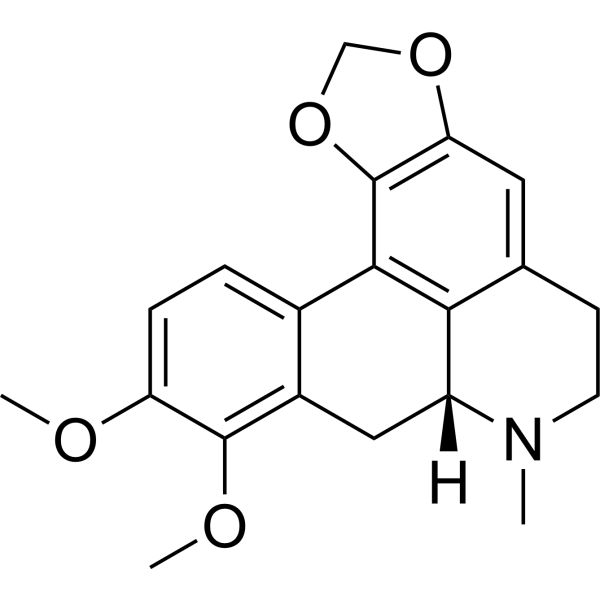
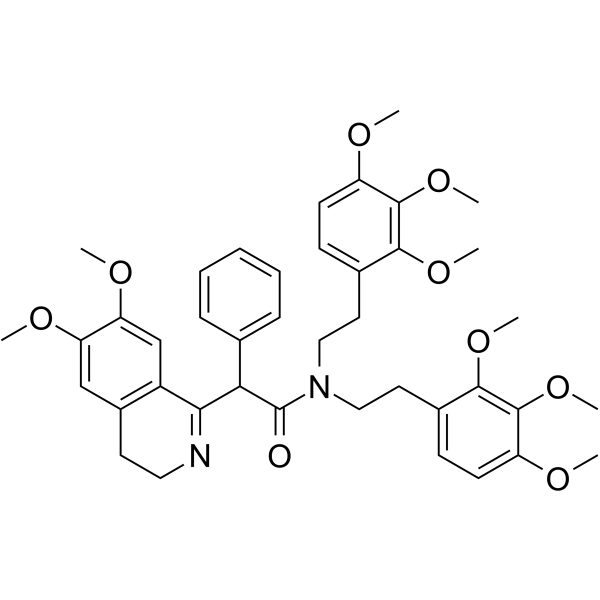
Crebanine is an isoquinoline-like alkaloid that can be derived from Stephania. Crebanine is an antagonist of the α7-nAChR with an IC50 of 19.1 μM. Crebanine suppresses the proliferation, migration, and invasion of cancer cells, triggers reactive oxygen species (ROS) burst, and promotes apoptosis. Crebanine inhibits the AKT/FoxO3a, NF-κB and MAPK signaling pathways. Crebanine attenuates NOX2 hyperactivation, exhibits antioxidant properties by reducing reactive oxygen species and peroxidation in microglia cells. Crebanine inhibits voltage-dependent Na + current in guinea-pig ventricular myocytes. Crebanine has high inhibitory activity against gram-positive animal pathogenic bacteria. Crebanine ameliorates ischemia-reperfusion brain damage in middle cerebral artery occlusion and reperfusion (MCAO/R) rats. Crebanine significantly improves Scopolamine (HY-N0296)-induced cognitive deficits in ICR mice. Crebanine can be used for the study of hepatocellular carcinoma (HCC), cerebral ischemia and Alzheimer's disease .
loading...
    loading...
1
1 Cited Publications
Cat. No.: HY-120380
CAS No.: 133314-07-5
Purity:  99.8%
Target:  

MOFs PARP

Research Areas:  

Neurological Disease

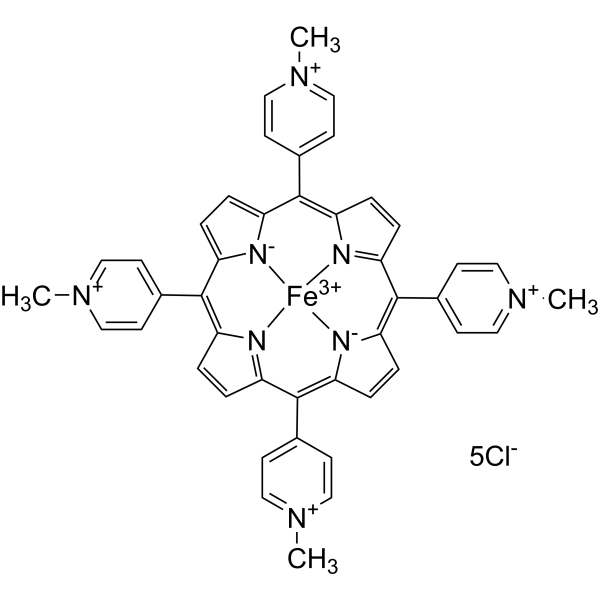
FeTMPyP is an orally active poly (ADP-ribose) polymerase (PARP) inhibitor. FeTMPyP inhibits cell death, nitrotyrosine formation, and depolarization of mitochondrial transmembrane potential. FeTMPyP reduces homocysteine-induced nitrosative stress and partially restores TFEB protein and mRNA levels. FeTMPyP improves functional and behavioral deficits caused by chronic constriction injury in rats. FeTMPyP alleviates acute cerebral infarction in a rat model of middle cerebral artery occlusion with mild hyperglycemia. FeTMPyP can be used in studies related to neuropathic pain, renal aging, ischemic penumbra, and hyperglycemic stroke .
loading...
    loading...
1
1 Cited Publications
Cat. No.: HY-13056
CAS No.: 1065559-56-9
Purity:  96.81%
Target:  

Drug Metabolite

Research Areas:  

Neurological Disease

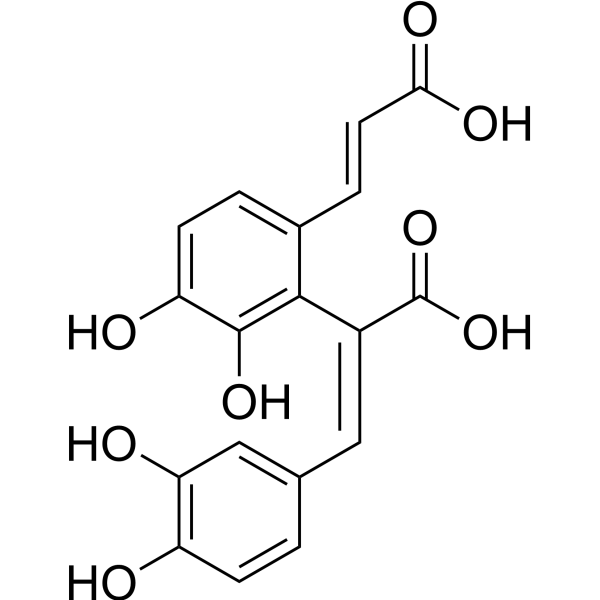
SMND-309 is a metabolite of salvianolic acid B, and exhibits neuroprotective effects in cultured neurons and in permanent middle cerebral artery occlusion rats .
loading...
    loading...
1
1 Cited Publications
Cat. No.: HY-161104
CAS No.: 2252448-93-2
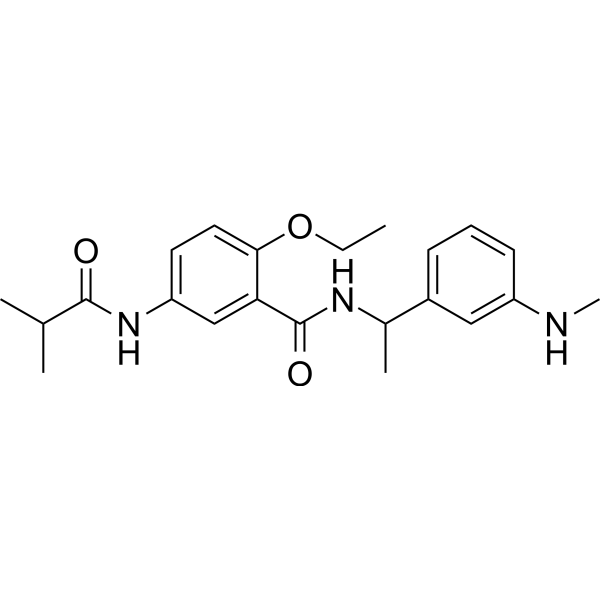
Kv2.1-IN-1 is an orally active and blood-brain barrier penetrant Kv2.1 inhibitor with an IC50 of 0.07 μM. Kv2.1-IN-1 exhibits a selectivity >130 fold over other K +, Na +, and Ca 2+ ion channels. Kv2.1-IN-1 decreases the apoptosis of HEK293 cells induced by H2O2. Kv2.1-IN-1 produces significant neuroprotection efficacy in middle cerebral artery occlusion (MCAO) rat. Kv2.1-IN-1 can be used for the study of ischemic stroke .
loading...
    loading...
Cat. No.: HY-P5883
CAS No.: 2126166-03-6
Synonyms: tatM2NX
Target:  

TRP Channel

TAT-M2NX (tatM2NX) is a selective inhibitor targeting human TRPM2 channels and exerts inhibitory effects on ischemic stroke. TAT-M2NX reduces H2O2-induced calcium influx via TRPM2 channels. After traumatic brain injury in mice, TAT-M2NX preserves hippocampal long-term potentiation, improves memory function, and reduces infarct volume after middle cerebral artery occlusion, but it shows no effect on female mice. TAT-M2NX can be used in studies related to traumatic brain injury and ischemic stroke .
loading...
    loading...
Cat. No.: HY-N7905
CAS No.: 520-14-9
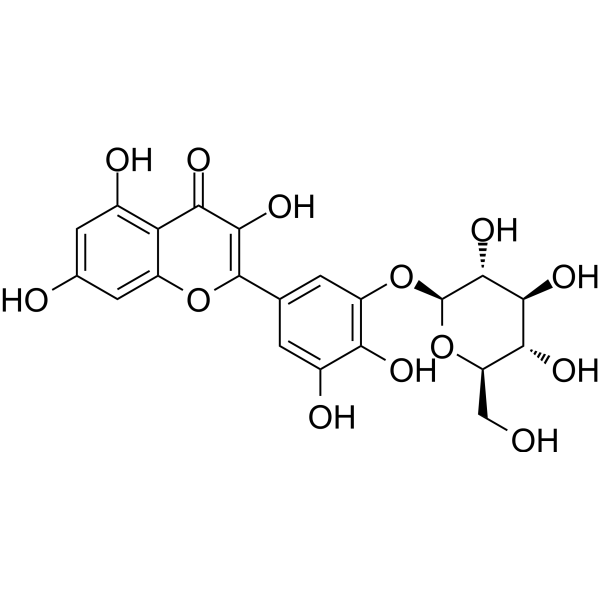
Myricetin 3'-glucoside is an orally active glycosylated flavonoid. Myricetin 3'-glucoside inhibits the cerebral ischemia-induced elevation of inflammatory cytokine levels, including TNF-α, IL-6 and IL-1β. Myricetin 3'-glucoside reverses the cerebral ischemia-mediated downregulation of Bcl-2 protein levels and reduces the cerebral ischemia-induced upregulation of Bax protein levels. Myricetin 3'-glucoside reduces cerebral infarct volume, increases the number of Nissl bodies, and improves neurological function scores in a rat model of middle cerebral artery occlusion (MCAO). Myricetin 3'-glucoside can be used in cerebral ischemia-related research .

loading...
    loading...
Cat. No.: HY-121833
CAS No.: 286935-60-2
Purity:  95.76%
Target:  

Trk Receptor Akt ERK

Research Areas:  

Neurological Disease Cancer

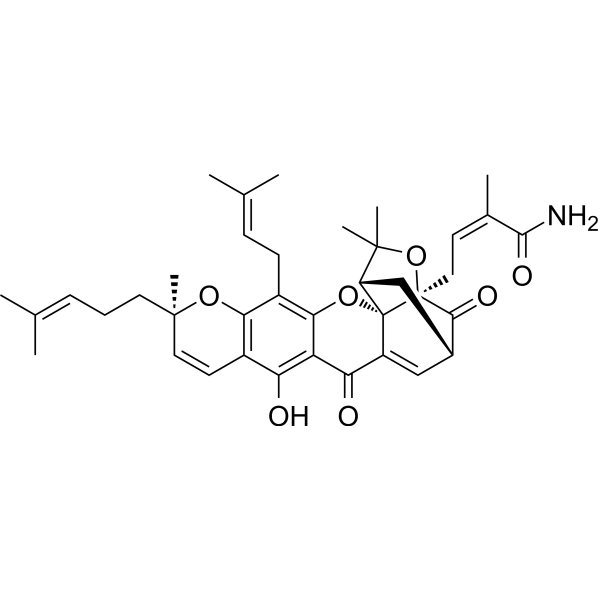
Gambogic amide is a potent and selective agonist of TrkA and also induces its tyrosine phosphorylation and activation of downstream signaling, including Akt and MAPK. Gambogic amide specifically interacts with the cytoplasmic juxtamembrane domain of the TrkA receptor and triggers its dimerization, leading to activation. Gambogic amide has neuroprotective activity preventing glutamate-induced neuronal cell death. Gambogic amide has improved efficacy in a transient middle cerebral artery occlusion model of stroke and could be used to study neurodegenerative diseases and stroke .
loading...
    loading...
Cat. No.: HY-162359
CAS No.: 2573211-25-1
Target:  

IRAK

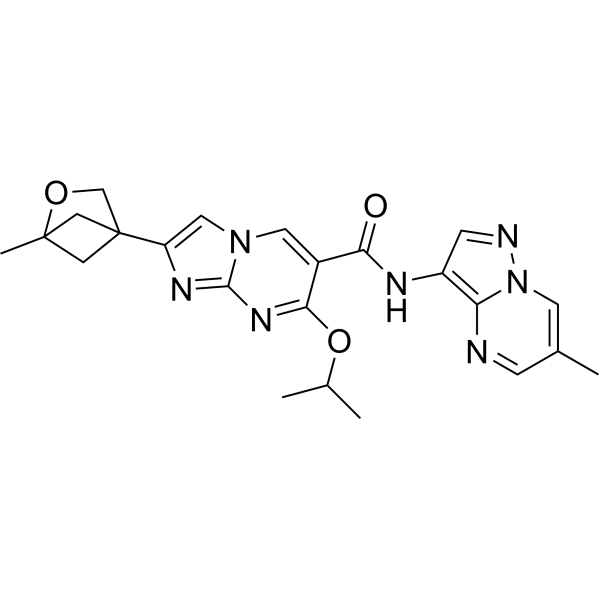
BIO-7488 is an orally active, selective and blood-brain barrier permeable IRAK4 inhibitor, with an IC50 value of 0.5 nM. BIO-7488 inhibits the production of pro-inflammatory cytokines (IL-1β, TNFα, IL-6) and demonstrates anti-inflammatory effects in both LPS (HY-D1056) and distal hypoxic-middle cerebral artery occlusion (DH-MCAO) ischemic stroke model. BIO-7488 can be used for the study of neuroinflammatory-related diseases, particularly ischemic stroke .
loading...
    loading...
Cat. No.: HY-124304
CAS No.: 149759-26-2
Purity:  99.09%
Synonyms: LOE-908
Target:  

TRP Channel SARS-CoV

Research Areas:  

Neurological Disease

Pinokalant is a broad-spectrum and non-selectivecation channel inhibitor. Pinokalant significantly reduces cortical infarct volume. Pinokalant o improves the metabolic and electrophysiologic status of the ischemic penumbra. Pinokalant reduces lesion size on magnetic resonance images in the acute phase following middle cerebral artery occlusion in rats. Pinokalant has the potential for the research of stroke. Pinokalant also shows anti-SARS-CoV-2 activity .
loading...
    loading...
Cat. No.: HY-126049
CAS No.: 88929-35-5
Purity:  98.78%
Synonyms: (S)-(-)-Oxiracetam; (S)-ISF2522
Target:  

Apoptosis

Research Areas:  

Neurological Disease

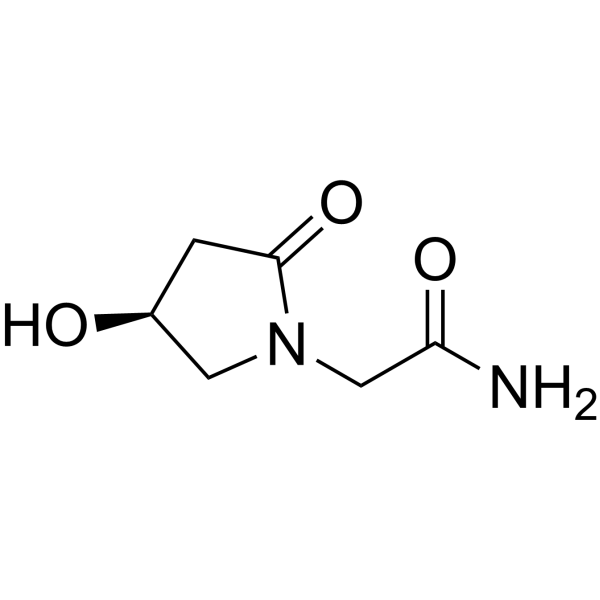
(S)-oxiracetam (S-ORC) is an inhibitor targeting apoptosis. S-ORC reduces brain infarct size and lessens neurological dysfunction in middle cerebral artery occlusion/reperfusion (MCAO/R) models. S-ORC prevents neuronal apoptosis via activating PI3K/Akt/GSK3β signaling pathway via α7 nAChR after ischemic stroke. S-ORC can prevent neuronal death after ischemic stroke .
loading...
    loading...
Cat. No.: HY-100206
CAS No.: 4725-51-3
Purity:  99.74%
Synonyms: 5α-Androstane-3β,5,6β-triol
Target:  

AMPK

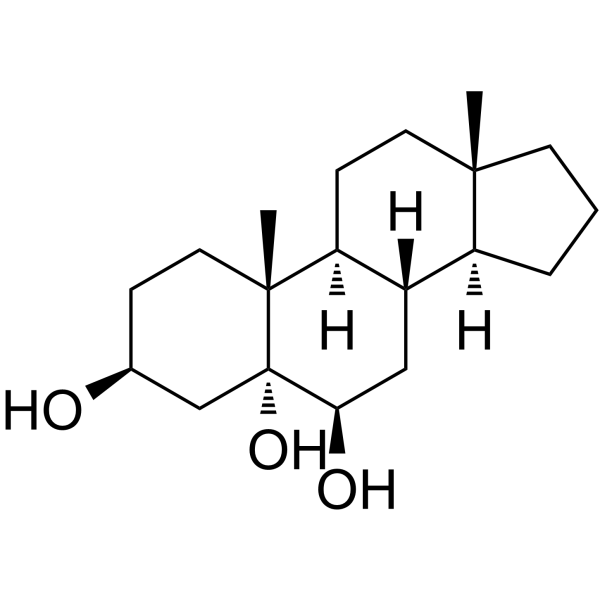
Sipasterol (5α-Androstane-3β,5,6β-triol) is a neuroprotectant. Sipasterol can remarkably reverse intracellular acidification and alleviate neuronal injury through the inhibition of AMPK signaling. Sipasterol remarkably reduced the infarct volume and attenuated neurologic impairment in acute ischemic stroke models of middle cerebral artery occlusion in vivo .
loading...
    loading...
Cat. No.: HY-178393
Target:  

TRP Channel

TRPM2-IN-2 is a potent and selective TRPM2 inhibitor (IC50 = 0.66 μM) with minimal activity against TRPM8 and TRPV1 (IC50 >10 μM). TRPM2-IN-2 exhibits robust neuroprotective effects in both in vitro oxygen-glucose deprivation/reperfusion (OGD/R) model and in vivo transient middle cerebral artery occlusion (tMCAO) mouse model. TRPM2-IN-2 can be used for ischemic stroke research .
loading...
    loading...
Cat. No.: HY-178464
CAS No.: 3065634-19-4
RIPK1-IN-34 is a selective, brain-penetrant RIPK1 inhibitor (IC50 = 126.70 nM) with almost no inhibitory effect on RIPK3 (IC50 > 10, 000 nM). RIPK1-IN-34 offers substantial neuroprotection by inhibiting the phosphorylation of RIPK1, RIPK3, and mixed lineage kinase domain-like pseudokinase (MLKL) within the necroptosis pathway. RIPK1-IN-34 shows the neuroprotective effect in a rat middle cerebral artery occlusion (MCAO) model. RIPK1-IN-34 can be used for the study of anti-acute ischemic stroke (AIS) .
loading...
    loading...
Cat. No.: HY-19248
CAS No.: 165948-72-1
Target:  

Integrin

ME-3277 is a potent GPIIb/IIIa antagonist. ME-3277 reduces cerebral infarction without enhancing intracranial hemorrhage in photothrombotic occlusion of rabbit middle cerebral artery (MCA). ME-3277 can be used for the acute cerebral infarction research .
loading...
    loading...
Cat. No.: HY-114659
CAS No.: 199467-52-2
AM-36 is a neuroprotective agent with combined antioxidant and sodium channel blocking actions. AM-36 can inhibit cell apoptosis and ROS prodiction. AM-36 can reduce neuronal damage and DA release after middle cerebral artery occlusion in rats. AM-36 can be used for the researches of inflammation and neurological disease, such as stroke .
loading...
    loading...
Cat. No.: HY-174127
Target:  

P2Y Receptor

Research Areas:  

Neurological Disease

P2Y1 antagonist 3 (compound 36b) is a blood-brain barrier (BBB)-penetrant P2Y1 antagonist with an IC50 of 0.50 μM. P2Y1 antagonist 3 exhibits protective effects in a rat middle cerebral artery occlusion (MCAO) model and demonstrates neuroprotective activity against oxidative stress by upregulating nuclear Nrf2 protein levels .
loading...
    loading...
Cat. No.: HY-168501
Neuroprotective Agent 6 (Compound Y12) is a neuroprotective agent with antioxidant activity and capabilities in DPPH, ABTS radical scavenging. Neuroprotective Agent 6 demonstrates superior neuroprotective effects in both cellular models induced by oxygen-glucose deprivation/reoxygenation (OGD/R) and animal models induced by transient middle cerebral artery occlusion (tMCAO). Additionally, Neuroprotective Agent 6 exhibits significant metal chelating activity towards Cu 2+ .
loading...
    loading...
Cat. No.: HY-100458
CAS No.: 2185855-51-8
Target:  

NO Synthase

Research Areas:  

Neurological Disease

SCR-4026 is a neuroprotective agent with blood-brain barrier penetration ability. SCR-4026 exerts neuroprotective effects by disrupting the interaction between neuronal nNOS and PSD9, with an IC50 of 6.3 μM. SCR-4026 alleviates N-methyl-D-aspartate (NMDA)-induced excitotoxic damage in primary cortical neurons, and also protects neurons in the oxygen-glucose deprivation (OGD) model. SCR-4026 can reduce the cerebral infarct volume in the rat middle cerebral artery occlusion (MCAO) reperfusion model. SCR-4026 can be used for the study of stroke .
loading...
    loading...
Cat. No.: HY-175027
Target:  

RIP kinase Ferroptosis

Research Areas:  

Neurological Disease

RIPK1-IN-33 is a blood-brain barrier-permeable and orally active RIPK1 inhibitor, with an IC50 of 0.115 μM. RIPK1-IN-33 demonstrates remarkable anti-ferroptosis activity, radical scavenging capacity (IC50 = 123.3 μM), and anti-lipid peroxidation effects (IC50 = 9.72 μM). RIPK1-IN-33 markedly reduces cerebral infarction volume and improves neurological function scores in transient middle cerebral artery occlusion (tMCAO) model. RIPK1-IN-33 can be used for the study of ischemic stroke .
loading...
    loading...
Cat. No.: HY-172455
CAS No.: 3023854-95-4
Target:  

Potassium Channel

Research Areas:  

Neurological Disease

TREK inhibitor-3 (Cpd8l) is a selective and BBB-permeable TREK-1 inhibitor with an IC50 of 0.81 μM. TREK inhibitor-3 has neuroprotective effects, which can significantly reduce the death of cortical neurons induced by oxygen-glucose deprivation/reoxygenation (OGD/R) and improve brain injury in mice models of middle cerebral artery occlusion/reperfusion (MCAO/R). TREK inhibitor-3 can be used in the research of ischemic stroke .
loading...
    loading...

