26 Results for "

mutagen

" in MedChemExpress (MCE) Product Catalog:
Products (26)

26 Results for "mutagen" in MCE Product Catalog:

24
24 Publications Verification
Cat. No.: HY-34758
CAS No.: 684-93-5
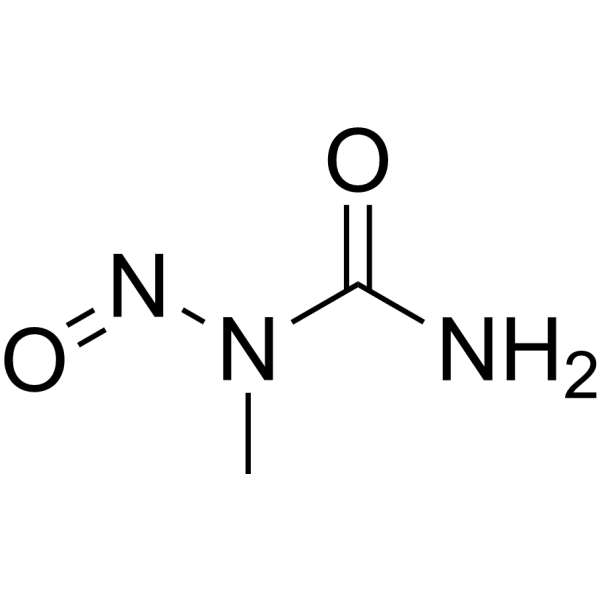
N-Nitroso-N-methylurea (NMU;MNU;NMH) is a potent carcinogen, mutagen and teratogenand. N-Nitroso-N-methylurea is a direct-acting alkylating agent that interacts with DNA. N-Nitroso-N-methylurea targets multiple animal organs to cause various cancer and/or degenerative disease. N-Nitroso-N-methylurea is also a precursor in the synthesis of diazomethane .
loading...
    loading...
15
15 Cited Publications
Cat. No.: HY-128612
CAS No.: 70-25-7
Purity:  99.96%
Synonyms: MNNG
Research Areas:  

Cancer

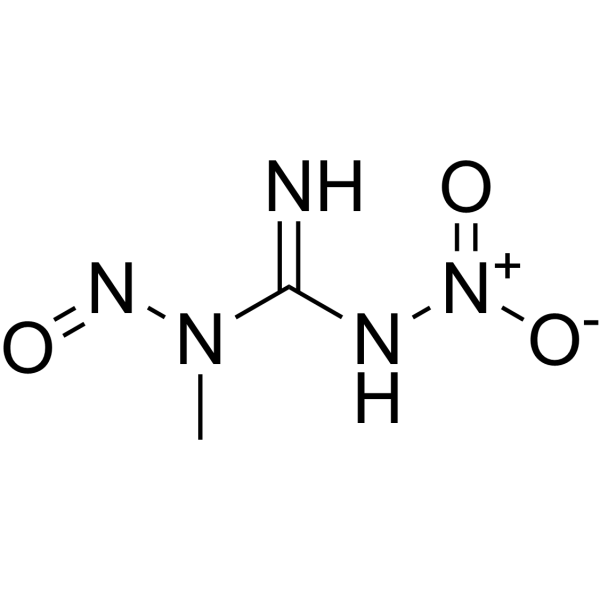
Methylnitronitrosoguanidine (MNNG) is an orally active alkylating agent with toxic and mutagenic effects. Methylnitronitrosoguanidine can as a carcinogen and mutagen . 50% water content, specifications are based on dry weight.
loading...
    loading...
4
4 Cited Publications
Cat. No.: HY-W011950
CAS No.: 52417-22-8
Target:  

DNA/RNA Synthesis

Research Areas:  

Others

Acridin-9-amine (9-Aminoacridine) hydrochloride hydrate is a mutagen and DNA modifier. Acridin-9-amine hydrochloride hydrate induces mutagenic lesions during DNA replication .
loading...
    loading...
Cat. No.: HY-W755252
CAS No.: 3817-11-6
Synonyms: BBN
Research Areas:  

Cancer

N-Butyl-N-(4-hydroxybutyl)nitrosamine is a potent mutagen that can cause high-level of mutagenesis specifically in the epithelial cells (urothelial) of the urinary bladder. N-Butyl-N-(4-hydroxybutyl)nitrosamine is used to induce bladder cancer in rodents .
loading...
    loading...
Cat. No.: HY-W014118
CAS No.: 101-86-0
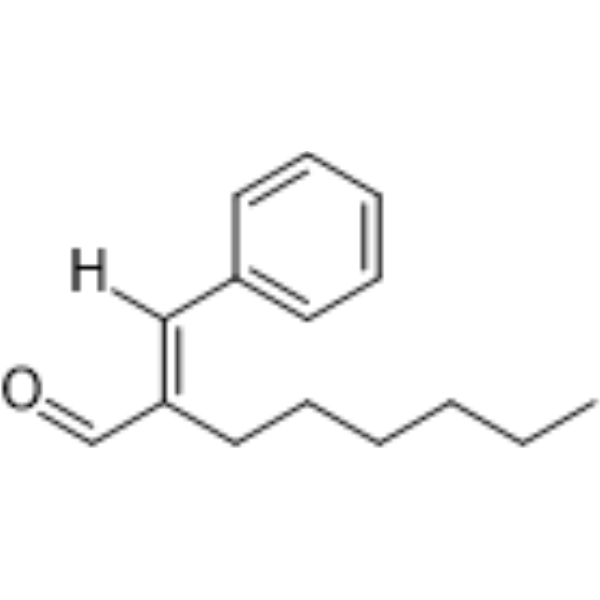
α-Hexylcinnamaldehyde is an O-acetyltransferase (OAT) inhibitor. α-Hexylcinnamaldehyde inhibits OAT-mediated bioactivation of nitroarene mutagens, exerts antimutagenic activity through demutagenic and bioantimutagenic mechanisms, and interferes with ATP-binding cassette (ABC) transporter function to reduce substrate efflux. α-Hexylcinnamaldehyde alters membrane permeability, fluidizes phospholipid membranes, exerts antioxidant effects, and enhances the antiproliferative effect of Doxorubicin on human cancer cells. α-Hexylcinnamaldehyde can be used in the research of colorectal adenocarcinoma, T-cell leukemia, and multidrug-resistant cancers .
loading...
    loading...
Cat. No.: HY-N7065
CAS No.: 7327-87-9
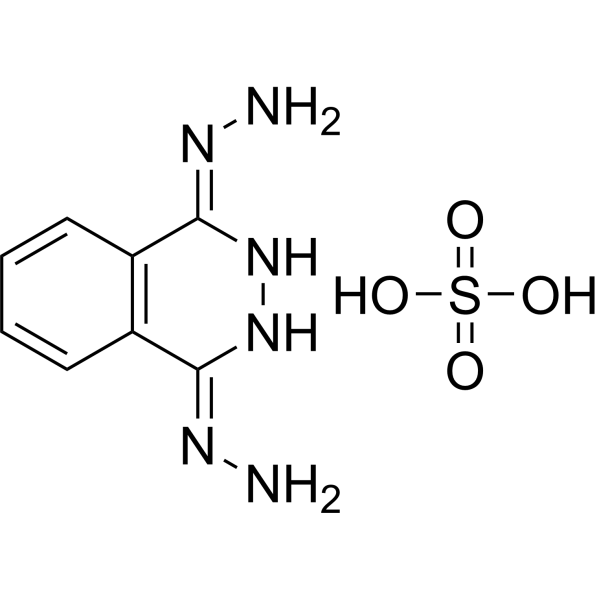
Dihydralazine sulfate is an antihypertensive hydrazine derivative and also a low-potency genotoxic agent. Dihydralazine sulfate is a direct-acting mutagen with a mixed gene mutation mechanism, which induces DNA fragmentation in the lung, kidney and spleen of mice, and induces sister chromatid exchange in mouse bone marrow cells. Dihydralazine sulfate specifically kills DNA repair-deficient bacteria. Dihydralazine sulfate is a vasodilator and antihypertensive agent that reduces systemic vascular resistance, increases cardiac output and heart rate, thereby lowering blood pressure. Dihydralazine sulfate can be used in research related to hypertension and severe early-onset preeclampsia .
loading...
    loading...
Cat. No.: HY-112817
CAS No.: 139307-94-1
Synonyms: 8-Oxo-Deoxyguanosine triphosphate
8-Oxo-dGTP (8-Oxo-Deoxyguanosine triphosphate) is an oxidized guanine nucleotide formed by ROS-mediated oxidative modification of dGTP, and it also serves as a key substrate for 8-oxo-dGTP pyrophosphohydrolases (such as hMTH1 and E. coli MutT). 8-Oxo-dGTP acts as a DNA mutagen, inserts into nascent DNA and pairs with adenine and cytosine, inducing A:T to C:G transversion mutations. Furthermore, 8-Oxo-dGTP causes oxidative DNA base modification, strand breakage and S-phase arrest, and ultimately triggers AIF-mediated apoptosis and promotes spontaneous carcinogenesis in mth1-deficient mice. Accumulation of 8-Oxo-dGTP in cells induces genomic instability, but it exhibits a tumor-suppressive effect that reduces tumor incidence in mouse models instead. 8-Oxo-dGTP is widely used in studies related to spontaneous carcinogenesis, Parkinson's disease, Alzheimer's disease, heart failure and tumor mechanisms .
loading...
    loading...
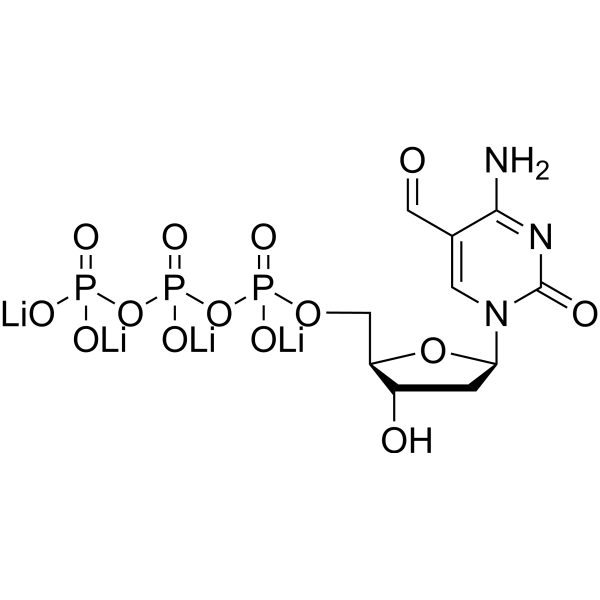
Cat. No.: HY-160596
CAS No.: 2409156-19-8
Synonyms: 5-Formyl-deoxycytidine lithium
Target:  

DNA/RNA Synthesis

Research Areas:  

Others

5-Formyl-dCTP (5-Formyl-deoxycytidine) lithium is a DCTPP1 substrate. 5-Formyl-dCTP lithium acts as a mutagen/epigenetic disruptor via DNA polymerase incorporation, mutagenic mispairings, and disturbed epigenetic programming. 5-Formyl-dCTP lithium can be used for research on genotoxicity .
loading...
    loading...
Cat. No.: HY-N12851
CAS No.: 2492-43-5
Synonyms: (E)-4-Oxo-2-hexenal
4-OHE ((E)-4-Oxo-2-hexenal) is a mutagen formed by omega-3 lipid peroxidation. 4-OHE reacts with deoxyguanosine, deoxycytidine and 5-methyldeoxycytidine to form covalent adducts. 4-OHE induces apoptosis and exhibits genotoxicity. 4-OHE inhibits the growth of Gram-positive and Gram-negative bacteria, which correlates with its electrophilic reactivity towards nucleophilic biomolecules. 4-OHE is a chemical defense component of Dolycoris baccarum (sloe bug), and acts as a deterrent and toxin against insect predators .
loading...
    loading...
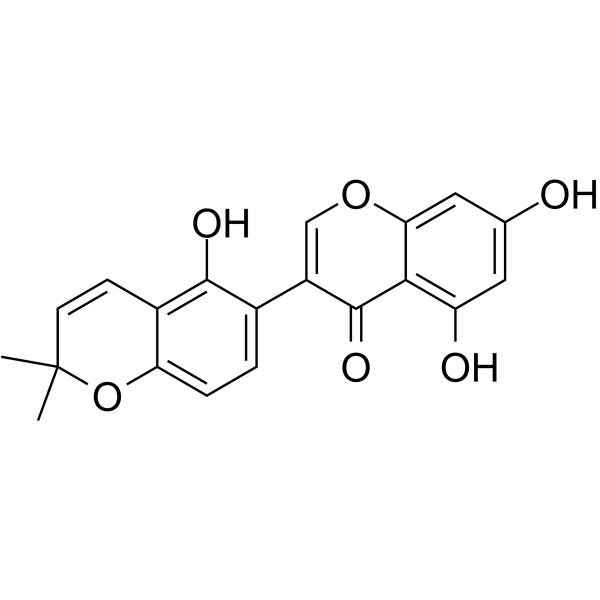
Cat. No.: HY-N3388
CAS No.: 66056-30-2
Licoisoflavone B is an orally active flavonoid found in licorice. Licoisoflavone B alleviates psoriasis via SCD1-targeted lipid metabolism reprogramming and suppression of Th17/IL-17-mediated inflammation. Licoisoflavone B inhiibits superoxide anion generation and superoxide anion-induced lipid peroxidation. Licoisoflavone B binds tightly to Lassa virus nucleoprotein and can be used as a nucleoprotein antagonist of Lassa virus. Licoisoflavone B exhibits anti-mutagenic activity
against carcinogenic mutagen, by preventing DNA damage. Licoisoflavone B can be used for the research of psoriasis, Lassa fever, inflammation and cancer .
loading...
    loading...
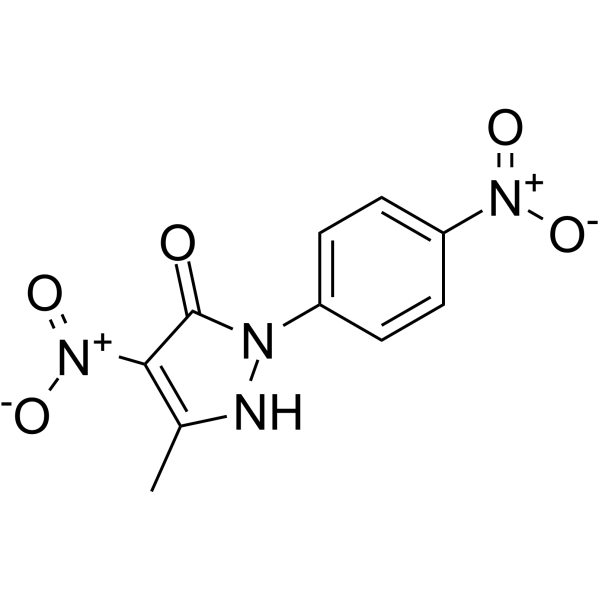
Cat. No.: HY-W127746
CAS No.: 550-74-3
Research Areas:  

Infection

Picrolonic acid is a nematode hatching agent and bacterial frameshift mutagen. Picrolonic acid induces egg hatching in various nematodes. Picrolonic acid induces frameshift mutations in Salmonella. Picrolonic acid preferentially inhibits the growth of DNA polymerase-deficient E. coli . Picrolonic acid also serves as an analytical reagent for the determination of calcium, magnesium, lead, strontium, and thorium, and for the analysis of alkaloids, tryptophan, and phenylalanine. Picrolonic acid is used in research related to bacterial and parasitic infections .
loading...
    loading...
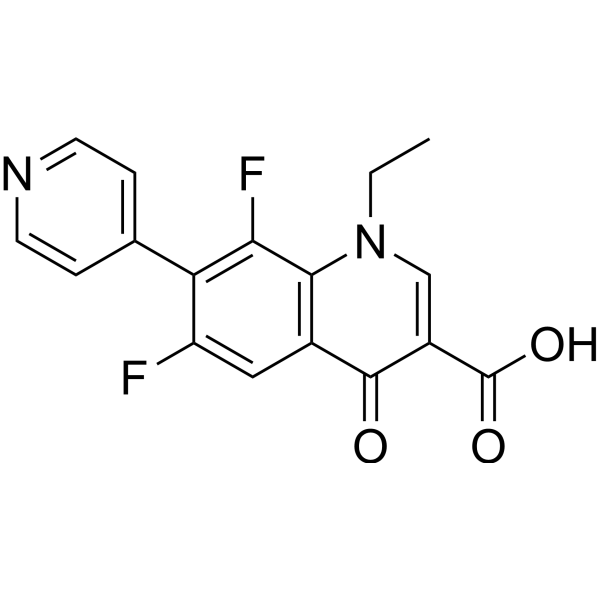
Cat. No.: HY-109855
CAS No.: 100325-51-7
Research Areas:  

Infection

CP-67015, a quinolone antibiotic, is a potent topoisomerase II inhibitor. CP-67015 is a positive direct-acting mutagen in mammalian cells with both gene and chromosomal level effects .
loading...
    loading...
Cat. No.: HY-133787
CAS No.: 117678-38-3
Purity:  98.28%
Target:  

Drug Metabolite

Research Areas:  

Infection Others

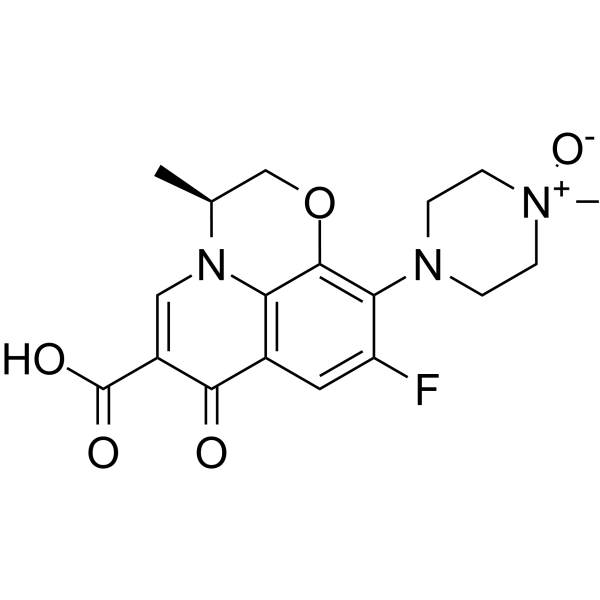
Levofloxacin N-oxide is an oxidation product and impurity of Levofloxacin (HY-B0330), and it is a non-mutagen. Under specific concentration conditions with the addition of S-9 mixture, Levofloxacin N-oxide increases structural chromosomal aberrations in hamster lung cells .
loading...
    loading...
Cat. No.: HY-120002
CAS No.: 14088-71-2
Synonyms: Kilacar; R 8284
Target:  

Parasite

Research Areas:  

Infection

Proclonol (Kilacar) is an insecticide-acaricide. Proclonol is a weak mutagen in the TA97 strain of S. typhimurium .
loading...
    loading...
Cat. No.: HY-W717139
CAS No.: 2733722-92-2
N-Nitroso-N-methylurea-d5 is the deuterium labeled N-Nitroso-N-methylurea (HY-34758). N-Nitroso-N-methylurea (NMU;MNU;NMH) is a potent carcinogen, mutagen and teratogenand. N-Nitroso-N-methylurea is a direct-acting alkylating agent that interacts with DNA. N-Nitroso-N-methylurea targets multiple animal organs to cause various cancer and/or degenerative disease. N-Nitroso-N-methylurea is also a precursor in the synthesis of diazomethane .
loading...
    loading...
Cat. No.: HY-W014118R
CAS No.: 101-86-0
α-Hexylcinnamaldehyde (Standard) is the analytical standard of α-Hexylcinnamaldehyde. This product is intended for research and analytical applications. α-Hexylcinnamaldehyde is an O-acetyltransferase (OAT) inhibitor. α-Hexylcinnamaldehyde inhibits OAT-mediated bioactivation of nitroarene mutagens, exerts antimutagenic activity through demutagenic and bioantimutagenic mechanisms, and interferes with ATP-binding cassette (ABC) transporter function to reduce substrate efflux. α-Hexylcinnamaldehyde alters membrane permeability, fluidizes phospholipid membranes, exerts antioxidant effects, and enhances the antiproliferative effect of Doxorubicin on human cancer cells. α-Hexylcinnamaldehyde can be used in the research of colorectal adenocarcinoma, T-cell leukemia, and multidrug-resistant cancers .
loading...
    loading...
Cat. No.: HY-P86690
Synonyms: Cyclin; DNA polymerase delta auxiliary protein; HGCN8729; MGC8367; mutagen-sensitive 209 protein; Pcna/cyclin; PCNAR; Polymerase delta accessory protein; Proliferating Cell Nuclear Antigen

Host:  

Rabbit

Application:  

WB, IHC-P, IHC-F, IF-Tissue

Reactivity:  

Human, Mouse, Rat

loading...
    loading...
Cat. No.: HY-117237
CAS No.: 2764-56-9
Synonyms: MD 1
Research Areas:  

Cancer

Hisphen is a chemical mutagen that can affect the grain protein content . Hisphen also has antileukemic activities .
loading...
    loading...
Cat. No.: HY-W585908
CAS No.: 108354-47-8
Research Areas:  

Others

2-Amino-3-Methylimidazo[4,5-f]quinoxaline is a food mutagen with mutagenic activity.
loading...
    loading...
Cat. No.: HY-121173
CAS No.: 578-06-3
Synonyms: 1-Acridinamine
Target:  

Bacterial

Research Areas:  

Infection

1-Aminoacridine (1-Acridinamine) is a bright fluorescent dye. 1-Aminoacridine acts as an anti-infective agent and mutagen due to its ability to interact with DNA .
loading...
    loading...

