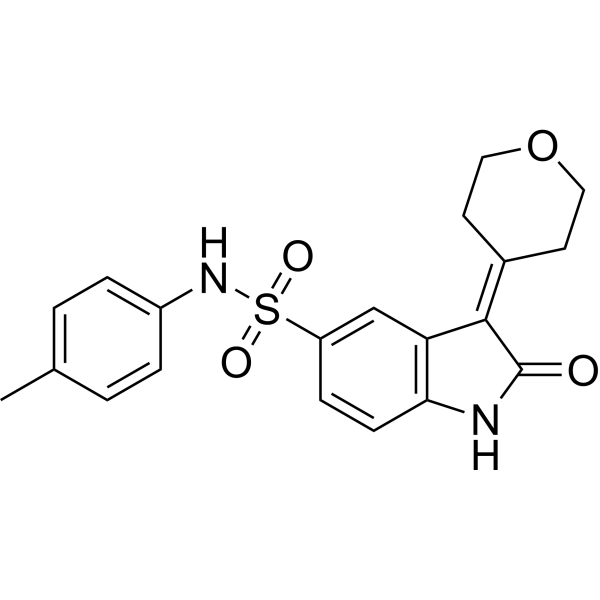
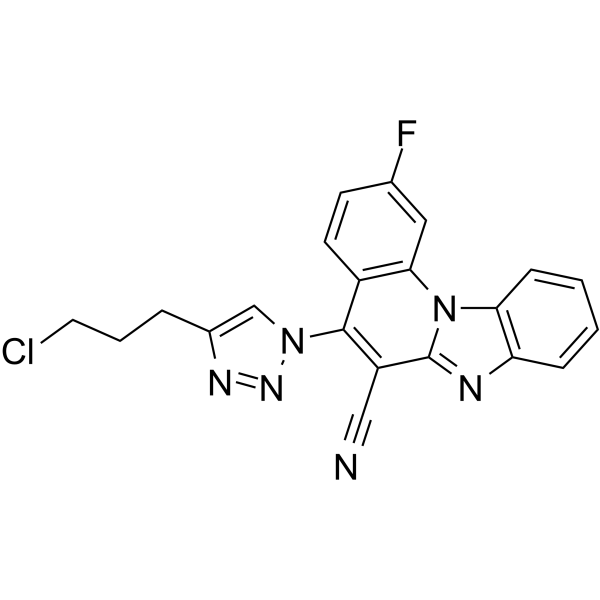
1. Search Result
Search Result
Pathways Recommended: Stem Cell/Wnt Cell Cycle/DNA Damage
Results for "

non-tumor cells

" in MedChemExpress (MCE) Product Catalog:

20

Inhibitors & Agonists

1

Screening Libraries

1

Biochemical Assay Reagents

1

Inhibitory Antibodies

4

Natural
Products

Cat. No. Product Name Target Research Areas Chemical Structure
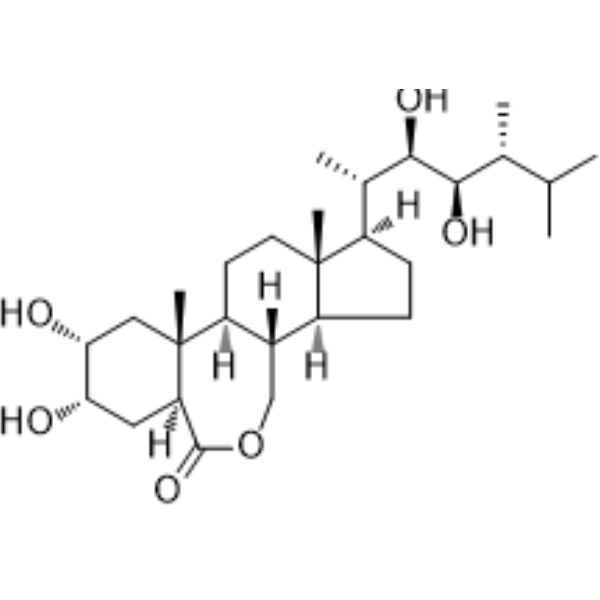
  • HY-N0848
    Epibrassinolide
    Maximum Cited Publications
    16 Publications Verification

    24-Epibrassinolide; B1105; BP55

    Environmental Pollutants Apoptosis Cancer
    Epibrassinolide (24-Epibrassinolide) is a ubiquitously occurring plant growth hormone which shows great potential to alleviate heavy metals and pesticide stress in plants . Epibrassinolide is a potential apoptotic inducer in various cancer cells without affecting the non-tumor cell growth .
    Epibrassinolide
  • HY-124295

    ABT-301; MPT0E028; TMU-C-0012

    HDAC Akt Apoptosis Inflammation/Immunology Cancer
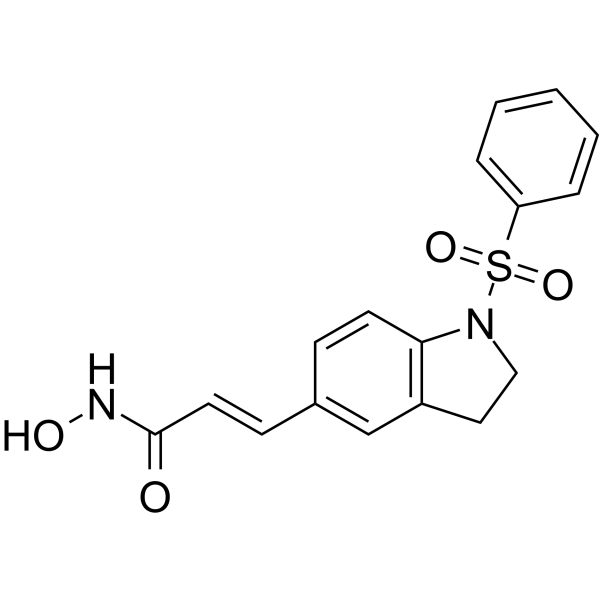
    Imofinostat (ABT-301; MPT0E028) is an orally active and selective HDAC inhibitor with IC50s of 53.0 nM, 106.2 nM, 29.5 nM for HDAC1, HDAC2 and HDAC6, respectively. Imofinostat has a weak inhibitory effect on HDAC8 (IC50 of 2.5 ​​μM), but no inhibitory effect on HDAC4 (IC50>10 μM). Imofinostat reduces the viability of B-cell lymphomas by inducing apoptosis and possesses potent direct Akt targeting ability and reduces Akt phosphorylation in B-cell lymphoma. Imofinostat has a broad-spectrum antitumor activity, including colorectal cancer, B-cell lymphoma, non-small cell lung carcinoma (NSCLC), and pancreatic cancer, while also showing therapeutic potential in non-tumor diseases like emphysema and pulmonary fibrosis .
    Imofinostat
  • HY-100867A

    TAK-659 monohydrochloride; CB-659 monohydrochloride

    Syk FLT3 Cancer
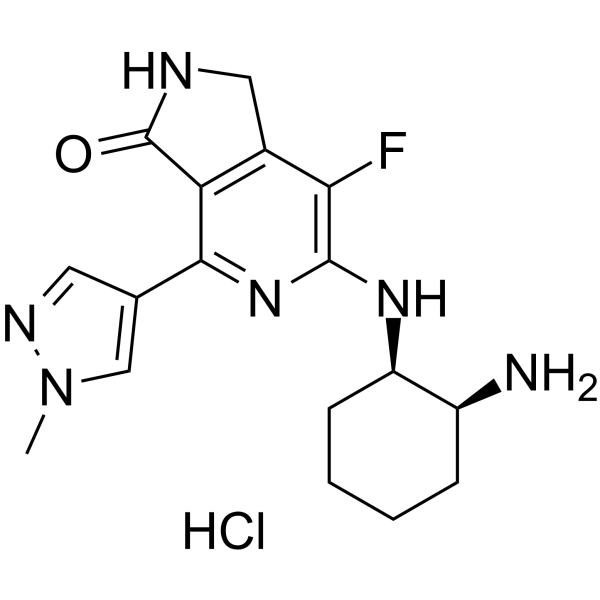
    TAK-659 hydrochloride is a highly potent, selective, reversible and orally available dual inhibitor of spleen tyrosine kinase (SYK) and fms related tyrosine kinase 3 (FLT3), with an IC50 of 3.2 nM and 4.6 nM for SYK and FLT3, respectively. TAK-659 hydrochloride induces cell death in tumor cells but not in nontumor cells, and with potential for the treatment of chronic lymphocytic leukemia (CLL) .
    Mivavotinib monohydrochloride
  • HY-B1817A

    Zinc(II) acetate, 99.99% trace metals basis

    CDK Heme Oxygenase (HO) Apoptosis Others
    Zinc (Zinc (II)) acetate, 99.99% trace metals basis is a heme oxygenase 1 (HO-1) activator and apoptosis inducer with cytotoxic and anticancer activities. Zinc acetate, 99.99% trace metals basis enhances HO-1 expression, alters the microRNA profile, and increases the level of caspase-cleaved cytokeratin 18. Zinc acetate, 99.99% trace metals basis also regulates the expression of Cdk2/cyclin E and interferes with cell cycle progression. Zinc acetate, 99.99% trace metals basis effectively inhibits cancer cell proliferation and induces their rapid death, with no significant cytotoxicity to non-tumor tissues. Zinc acetate, 99.99% trace metals basis has been widely used in studies related to hepatocellular carcinoma, prostate cancer, and other conditions .
    Zinc acetate, 99.99% trace metals basis
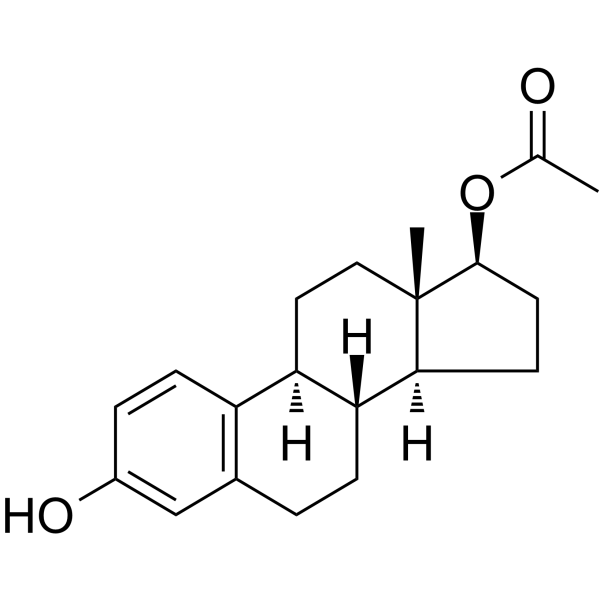
  • HY-B0708
    β-Estradiol 17-acetate
    1 Publications Verification

    1,3,5(10)-Estratriene-3,17β-diol 17-acetate

    Estrogen Receptor/ERR Endocrinology
    β-Estradiol 17-acetate (1,3,5(10)-Estratriene-3,17β-diol 17-acetate) is a long-acting endogenous estrogen precursor and also a cell viability and proliferation enhancer. β-Estradiol 17-acetate promotes the adhesion and proliferation of freshly isolated and revived female-derived human brain microvascular endothelial cells, and reverses the decreased viability of revived male-derived human brain microvascular endothelial cells. β-Estradiol 17-acetate exerts the microvascular protective effect of estrogen, enabling non-tumor human brain microvascular endothelial cells to be cultured in vitro for 2 months after cryopreservation. β-Estradiol 17-acetate is biotransformed into β-estradiol via hydrolase action in the in vitro skin of humans, hairless dogs, rats and hairless mice .
    β-Estradiol 17-acetate
  • HY-P990690

    MEDI-5752

    PD-1/PD-L1 CTLA-4 Cancer
    Volrustomig (MEDI-5752) is a human IgG1 κ monoclonal antibody targeting CTLA4/PD1. The isotype control for Volrustomig is Human IgG1 kappa, Isotype Control (HY-P99001). Volrustomig anchors to the surface of T cells by binding PD-1, induces PD-1 internalization and degradation, and preferentially inhibits CTLA-4 on activated PD-1 + T cells. Volrustomig binds to tumor-infiltrating lymphocytes and a subset of PD-1 + B cells, enhances T cell function and IFNγ secretion. Volrustomig reduces the activation of non-tumor-infiltrating lymphocytes and exhibits manageable toxicity. Volrustomig can be used in research on various cancers, such as non-small cell lung cancer, gastric cancer, hepatobiliary cancer, and cervical cancer .
    Volrustomig
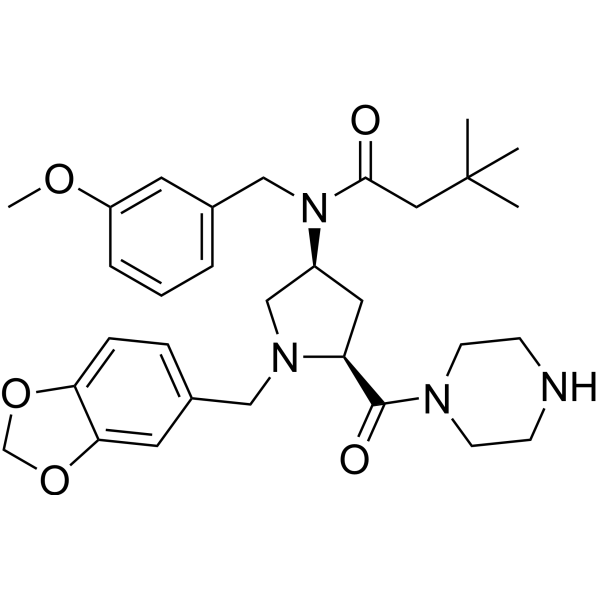
  • HY-113965
    CUR61414
    1 Publications Verification

    Hedgehog Smo Apoptosis Inflammation/Immunology
    CUR61414 is a novel, potent and cell permeable Hedgehog signaling pathway inhibitor (IC50 =100-200 nM). CUR61414 is a small-molecule aminoproline class compound and selectively binds to smoothened (Smo) with a Ki value of 44 nM. CUR-61414 can induce apoptosis in cancer cells without affecting neighboring non-tumor cells .
    CUR61414
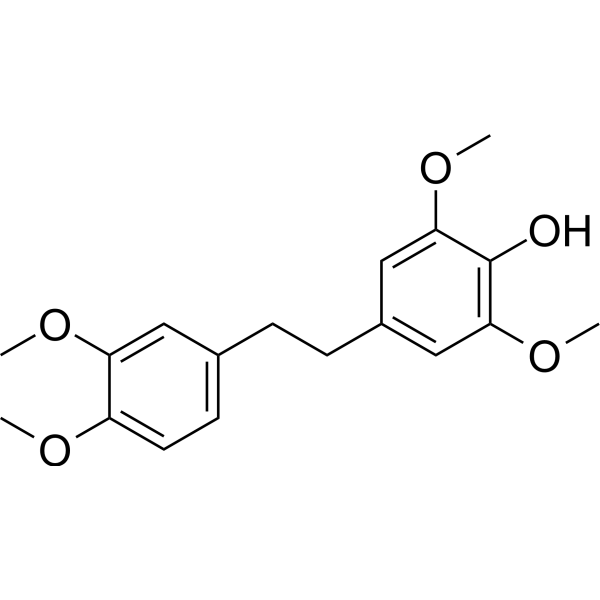
  • HY-123298
    Chrysotoxine
    1 Publications Verification

    Src Akt Apoptosis Cancer
    Chrysotoxine is a dual inhibitor of Src/Akt. Chrysotoxine suppresses cancer stem cells (CSCs) phenotypes by down-regulating Src/Akt signaling. Chrysotoxine reduces cell viability and increases apoptosis level in H460 and H23 cells instead of non-tumor cell lines. Chrysotoxine shows rapid excretion and low bioavailability in rats. Chrysotoxine is used in cancer research .
    Chrysotoxine
  • HY-N0848R

    24-Epibrassinolide (Standard); B1105 (Standard); BP55 (Standard)

    Reference Standards Apoptosis Cancer
    Epibrassinolide (Standard) is the analytical standard of Epibrassinolide. This product is intended for research and analytical applications. Epibrassinolide (24-Epibrassinolide) is a ubiquitously occurring plant growth hormone which shows great potential to alleviate heavy metals and pesticide stress in plants[1]. Epibrassinolide is a potential apoptotic inducer in various cancer cells without affecting the non-tumor cell growth[2].
    Epibrassinolide (Standard)
  • HY-100867

    TAK-659; CB-659

    Syk FLT3 Cancer
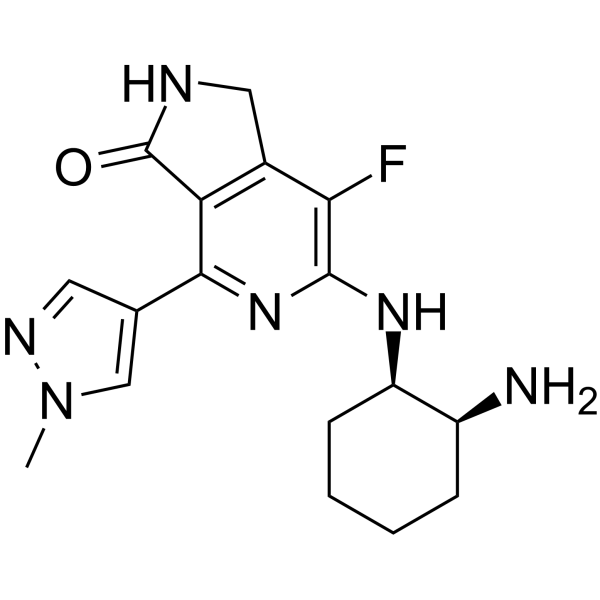
    TAK-659 is a highly potent, selective, reversible and orally available dual inhibitor of spleen tyrosine kinase (SYK) and fms related tyrosine kinase 3 (FLT3), with an IC50 of 3.2 nM and 4.6 nM for SYK and FLT3, respectively. TAK-659 induces cell death in tumor cells but not in nontumor cells, and with potential for the treatment of chronic lymphocytic leukemia (CLL) .
    Mivavotinib
  • HY-179247

    Bcr-Abl Cancer
    BCR-ABL1-IN-2 (compound 8) is a potent BCR-ABL1 tyrosine kinase inhibitor. BCR-ABL1-IN-2 exhibits activity in Imatinib (HY-15463) resistant K562/DOX cells with LC50 of 5.29 μM. BCR-ABL1-IN-2 shows no significant toxicity in nontumor cells. BCR-ABL1-IN-2 can be used for chronic myeloid leukemia research .
    BCR-ABL1-IN-2
  • HY-157850

    Microtubule/Tubulin Cancer
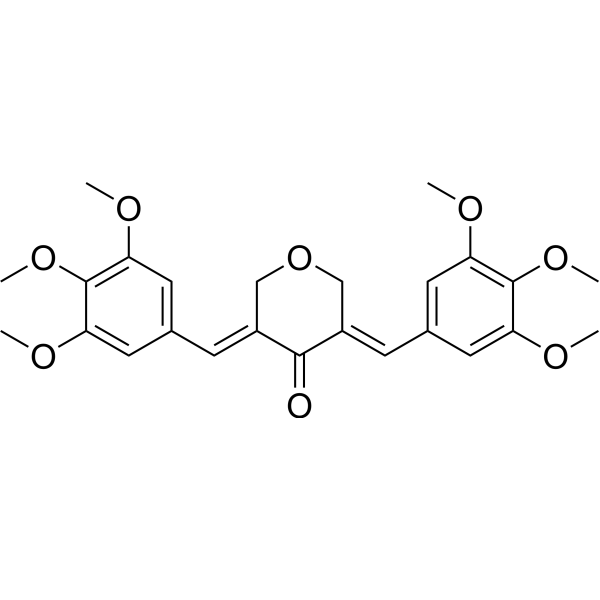
    BP-M345 (compound 5) is a potent, cancer cell-targeting antiproliferative agent that exhibits low toxicity to non-tumor cells. BP-M345 inhibits cancer cell proliferation with a GI50 value ranging from 0.17 to 0.45 μM .
    BP-M345
  • HY-157159

    Btk Cancer
    BTK-IN-28 (compound PID-4) is a potent BTK inhibitor with anticancer activity. BTK-IN-28 has inhibitory effects on BTK and downstream signaling cascades and selectively inhibits Burkitt lymphoma RAMOS proliferation. BTK-IN-28 has no significant cytotoxicity towards non-tumor cells .
    BTK-IN-28
  • HY-146454

    DNA/RNA Synthesis Cancer
    Antiproliferative agent-6 (compound 8a) is a potent antitumor agent. Antiproliferative agent-6 has antiproliferative activity against cancer cell lines HCT116, MCF-7, H460 and non-tumor aneuploid immortal keratinocyte HaCaT cells with GI50s of 0.5 μM, 2 μM, 0.7 μM and 3.5 μM, respectively .
    Antiproliferative agent-6
  • HY-176058

    HDAC Cancer
    HDAC6-IN-57 (compound 9c) is an HDAC6 inhibitor with an IC50 value of 7 nM. HDAC6-IN-57 inhibits 60 cancer cell lines with a mean GI50 of 2.64 μM while exhibiting significantly lower cytotoxicity towards non-tumor cell lines .
    HDAC6-IN-57
  • HY-100867AR

    TAK-659 monohydrochloride (Standard); CB-659 monohydrochloride (Standard)

    Syk Reference Standards FLT3 Cancer
    Mivavotinib (monohydrochloride) (Standard) is the analytical standard of Mivavotinib (monohydrochloride) (HY-100867A). This product is intended for research and analytical applications. TAK-659 hydrochloride is a highly potent, selective, reversible and orally available dual inhibitor of spleen tyrosine kinase (SYK) and fms related tyrosine kinase 3 (FLT3), with an IC50 of 3.2 nM and 4.6 nM for SYK and FLT3, respectively. TAK-659 hydrochloride induces cell death in tumor cells but not in nontumor cells, and with potential for the treatment of chronic lymphocytic leukemia (CLL) .
    Mivavotinib monohydrochloride (Standard)
  • HY-181130

    CDK Apoptosis Cancer
    Anticancer agent 299 (compound P12) is a cell-cycle inhibitor, senescence inducer, apoptosis inducer, and antiproliferative agent. Anticancer agent 299 exhibits selective activity against cancer cells with minimal effects on non-tumoral chondrocyte cells at relevant concentrations. Anticancer agent 299 can be used for the research of ER+/HER2− breast cancer and BRAF-mutant melanoma .
    Anticancer agent 299
  • HY-180535

    Cytochrome P450 Cancer
    Aromatase-IN-8 is a selective Aromatase inhibitor against an IC50 of 0.05 µM. Aromatase-IN-8 exhibits selective antiproliferative effects against estrogen receptor-positive breast cancer cell lines, while showing no toxicity toward non-tumoral cells. Aromatase-IN-8 suppresses estrogen active, increases testosterone levels, and downregulates estrogen receptor expression and phosphorylation. Aromatase-IN-8 can be used for triple negative breast cancer research .
    Aromatase-IN-8
  • HY-181710

    mTOR PI3K Cancer
    LASSBio-2337 is a dual pan-PI3K/mTOR inhibitor with an mTOR IC50 of 5.8 μM.LASSBio-2337 functionally modulates mTOR and all PI3K isoforms.LASSBio-2337 acts as a cytotoxic agent in leukemia cells, including multidrug-resistant populations.LASSBio-2337 spares nontumor human peripheral blood mononuclear cells.LASSBio-2337 displays moderate PAMPA-GIT permeability.LASSBio-2337 shows low metabolic stability in rat liver microsomes.LASSBio-2337 is aqueous insoluble.LASSBio-2337 can be used for the research of acute lymphoblastic leukemia, chronic myelogenous leukemia, breast cancer .
    LASSBio-2337
  • HY-184184

    Ligands for Target Protein for PROTAC TAM Receptor Cancer
    Axl ligand-1 is a highly selective ligand for AXL kinase, exhibiting higher selectivity for AXL over 72 human kinases. Axl ligand-1 serves as a Ligand for Target Protein for PROTAC, which is applied to develop PROTAC degraders with anti-tumor activity, such as PROTAC Axl Degrader 1 (HY-144624). Axl ligand-1 is applicable to breast cancer-related research .
    Axl ligand-1

Inquiry Online

Your information is safe with us. * Required Fields.

Salutation


Country or Region *

Applicant Name *


Organization Name *

Department *


Email Address *


Product Name *

Cat. No.


Requested quantity *

Phone Number *


Remarks

Inquiry Online

Inquiry Information

Product Name:
Cat. No.:
Quantity:
MCE Japan Authorized Agent:

