18 Results for "

nuclear p53

" in MedChemExpress (MCE) Product Catalog:
Products (18)

18 Results for "nuclear p53" in MCE Product Catalog:

8
8 Cited Publications
Cat. No.: HY-13811
CAS No.: 343351-67-7
Purity:  99.93%
Research Areas:  

Cancer

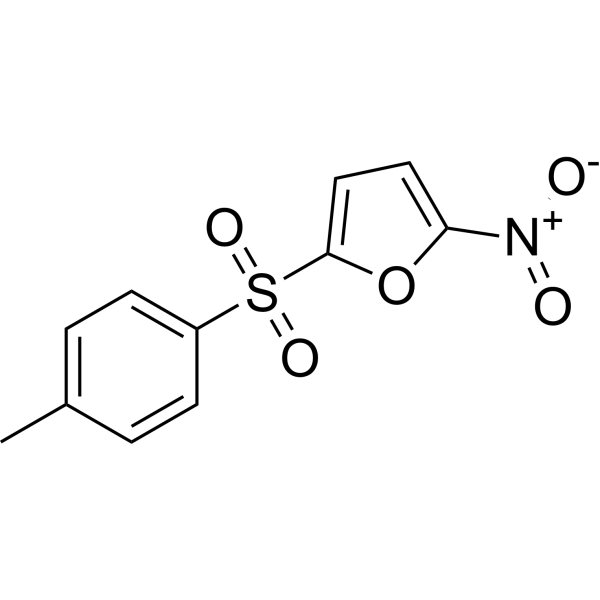
NSC697923 is a potent UBE2N (ubiquitin-conjugating enzyme E2 N, Ubc13) inhibitor. NSC697923 induces neuroblastoma (NB) cell death via promoting nuclear importation of p53 in p53 wild-type NB cells. NSC697923 also induces cell death in p53 mutant NB cells by activation of JNK-mediated apoptotic pathway. NSC697923 inhibits DNA damage and NF-κB signaling. Antitumor activity .
loading...
    loading...
Cat. No.: HY-N0392
CAS No.: 882664-74-6
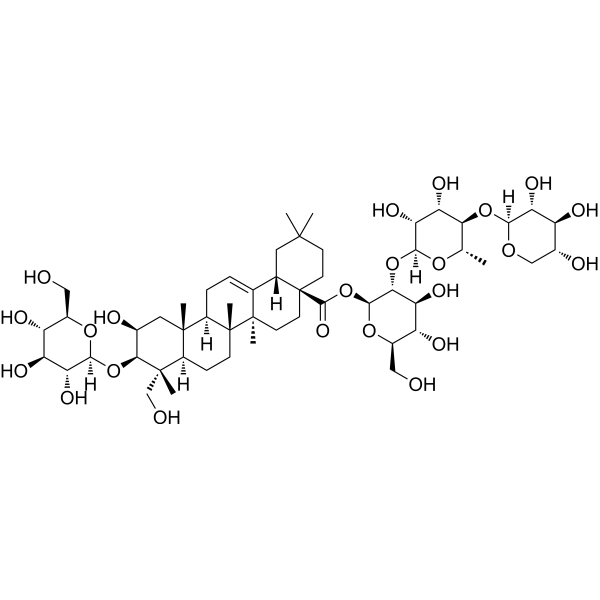
Polygalasaponin F is an orally active triterpenoid saponin monomer. Polygalasaponin F downregulates the expression of Bax, p53, caspase-3, NF-κB p65 and MEK1; restores and upregulates the expression of Bcl-2; activates the PI3K/Akt signaling pathway; inhibits the phosphorylation of p38 MAPK, nuclear translocation of NF-κB, TLR4-mediated signaling pathway, mitophagy (Mitophagy) and ROS production; enhances cell viability and suppresses apoptosis (Apoptosis). Polygalasaponin F maintains mitochondrial function, alleviates Ca 2+ overload, upregulates pCREB and BDNF, preserves cell viability and inhibits the release of inflammatory cytokines. Polygalasaponin F alleviates lung injury induced by influenza A H1N1 and cerebral ischemia-reperfusion injury. Polygalasaponin F is applicable to researches related to Parkinson's disease, cerebral ischemia, pneumonia induced by influenza A H1N1, stroke and Alzheimer's disease .
loading...
    loading...
Cat. No.: HY-P1755
CAS No.: 488118-64-5
Target:  

MDM-2/p53

Research Areas:  

Cancer

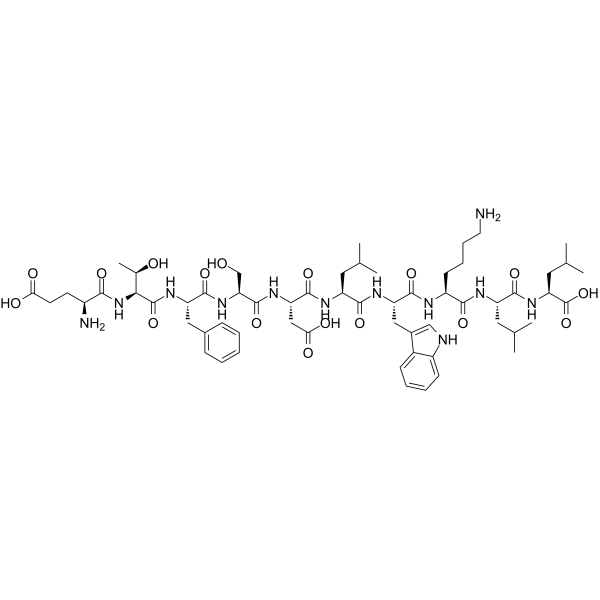
p53 (17-26) is a peptide derived from the P53 MDM2 binding domain, with a Kd of 50 nM for MDM2. p53 (17-26) causes cell lysis by damaging cancer cells and nuclear membranes, and induces cancer cell necrosis. p53 (17-26) exhibits antitumor activity and is applicable to research related to pancreatic cancer .
loading...
    loading...
Cat. No.: HY-N0181A
CAS No.: 474-69-1
Synonyms: 9β,10α-Ergosterol
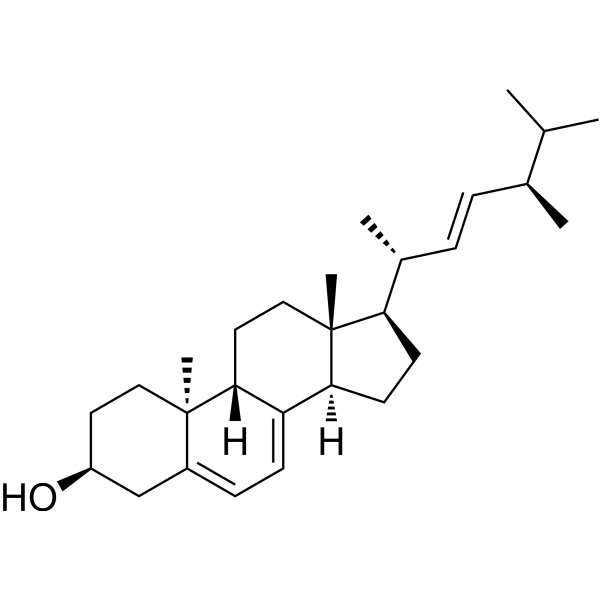
Lumisterol (9β,10α-Ergosterol) is a photoproduct of 7-dehydrocholesterol, present in the skin, and acts as an orally active VDR non-genomic modulator and ROR inverse agonist. Lumisterol binds to the SARS-CoV-2 Mpro substrate-binding pocket and the RdRP active site, inhibiting enzyme activity. Lumisterol induces NRF2-regulated antioxidant responses, p53 phosphorylation and nuclear translocation, and intracellular free radical scavenging. Lumisterol inhibits the proliferation of epidermal keratinocytes and melanoma cells, modulates cell cycle progression, and suppresses basal and TNFα-induced NFκB transcriptional activity. Lumisterol inhibits RORγ transcriptional activity and IL-17 production. Lumisterol is used in research on UVB-induced skin damage, melanoma, psoriasis, vitamin D deficiency, and COVID-19 .
loading...
    loading...
Cat. No.: HY-P1755F
Target:  

MDM-2/p53

Research Areas:  

Cancer

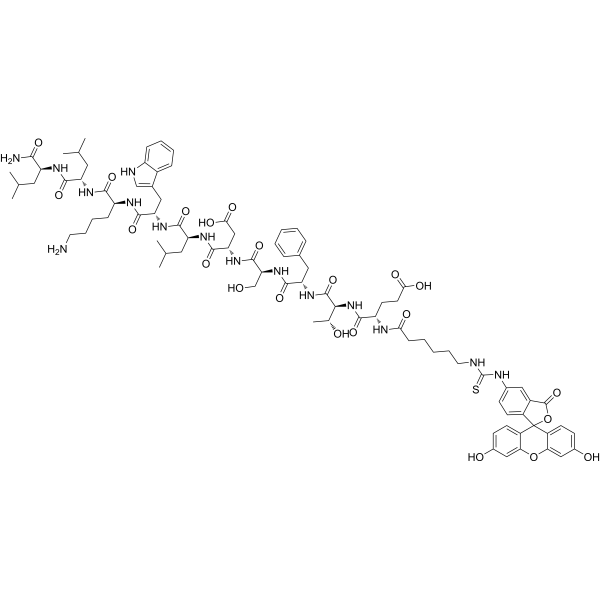
p53 (17-26), FITC labeled is a biological active peptide. p53 (17-26) is a peptide derived from the P53 MDM2 binding domain, with a Kd of 50 nM for MDM2. p53 (17-26) causes cell lysis by damaging cancer cells and nuclear membranes, and induces cancer cell necrosis. p53 (17-26) exhibits antitumor activity and is applicable to research related to pancreatic cancer.
loading...
    loading...
Cat. No.: HY-124811
CAS No.: 342416-30-2
Purity:  98.01%
Target:  

c-Myc

Research Areas:  

Cancer

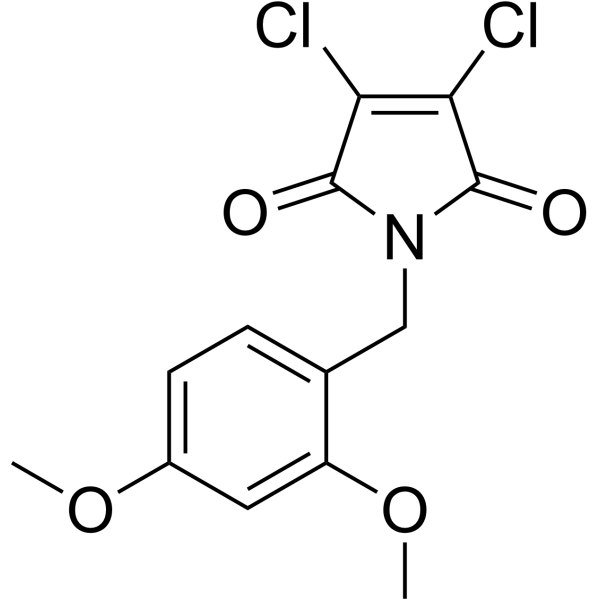
IRES-C11 is a spectfic c-MYC internal ribosome entry site (IRES) translation inhibitor. IRES-C11 blocks the interaction of a requisite c-MYC IRES trans-acting factor, heterogeneous nuclear ribonucleoprotein A1, with its IRES. IRES-C11 does not inhibits BAG-1, XIAP and p53 IRESes .
loading...
    loading...
Cat. No.: HY-P1755A
Target:  

MDM-2/p53

Research Areas:  

Cancer

p53 (17-26) acetate is a peptide derived from the P53 MDM2 binding domain, with a Kd of 50 nM for MDM2. p53 (17-26) acetate causes cell lysis by damaging cancer cells and nuclear membranes, and induces cancer cell necrosis. p53 (17-26) acetate exhibits antitumor activity and is applicable to research related to pancreatic cancer .
loading...
    loading...
Cat. No.: HY-N10173
CAS No.: 38274-00-9
Synonyms: Isololiolide
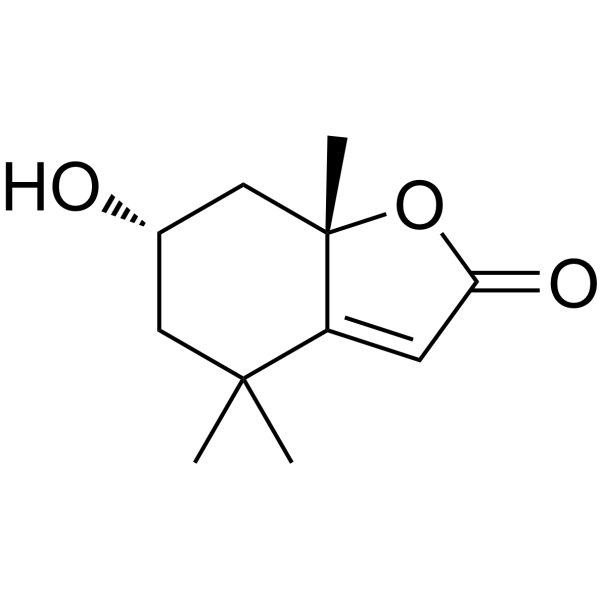
(+)-Epiloliolide is a megastigmane that can be isolated from Annona muricata . (+)-epiloliolide increased the nuclear localization of p53 . (+)-Epiloliolide has anti-inflammatory effect through upregulating phosphorylation of the PKA/CREB pathway. (+)-Epiloliolide also effectively increases the proliferation and migration of human periodontal ligament cells by downregulating NLRP3 activated by PG-LPS .
loading...
    loading...
Cat. No.: HY-P10797
TAT-N24 is a cell-penetrating peptide and also an inhibitor of p55PIK. TAT-N24 disrupts the interactions between p55PIK and p53, PCNA or Rb, blocks the p53-dependent ubiquitin-mediated degradation process, and inhibits the nuclear translocation and phosphorylation of NF-κB p65. TAT-N24 enhances MMS-induced p53-dependent cell apoptosis, inhibits DNA synthesis, reduces the expression of Cyclin D1, and induces cell cycle arrest at the G0/G1 or S phase. TAT-N24 inhibits the activation of NLRP3 and NLRC4 inflammasomes, reduces the expression of ZBP1-PANoptosome components, and suppresses PANoptosis. TAT-N24 can be used in research related to leukemia, colon cancer, cervical cancer, liver cancer, corneal neovascularization, restenosis and acute glaucoma .
loading...
    loading...
Cat. No.: HY-118912
CAS No.: 457937-39-2
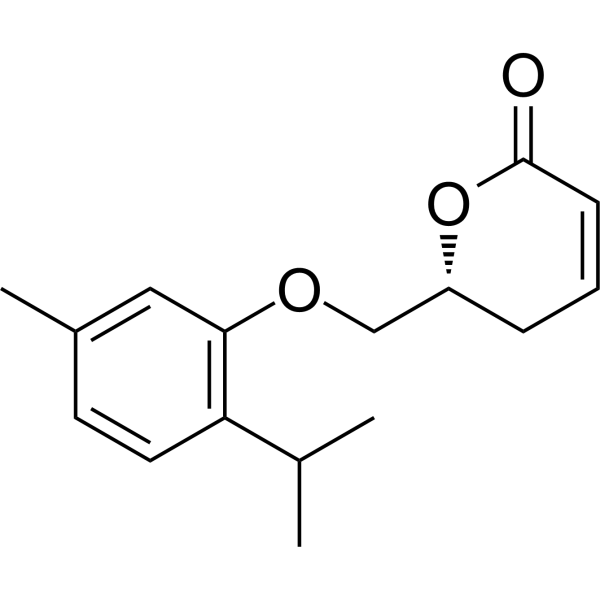
BMH-9 (Compound Z54) is a modulator for nuclear receptor subfamily 2, group F, member 6 (NR2F6) (also known as nuclear orphan receptor Ear2) . BMH-9 is an activator for p53 signaling pathway through interaction with DNA. BMH-9 inhibits proliferation of human cancer cells, exhibits antitumor efficacy in NOD-SCID mouse models .
loading...
    loading...
Cat. No.: HY-146384
CAS No.: 2986647-41-8
Research Areas:  

Cancer

CRM1 degrader 1 is a CRM1 degrader. CRM1 degrader 1 induces mitochondrial pathway-mediated apoptosis. CRM1 degrader 1 dose-dependently reduces CRM1 protein levels via the ubiquitin-proteasome pathway, promotes nuclear accumulation of p53, and regulates Bcl-2 family proteins and caspase activation. CRM1 degrader 1 is applicable to gastric cancer-related research .
loading...
    loading...
Cat. No.: HY-P11947
CAS No.: 254103-71-4
Target:  

MDM-2/p53 NF-κB

Research Areas:  

Others

p53 Bipartite NLS is a bipartite nuclear localization signal derived from p53. When p53 Bipartite NLS is fused to the N-terminus of p65 and the single-component nuclear localization signal of p65 itself is mutated, it alters the nuclear import pathway of p65. p53 Bipartite NLS renders p65 resistant to TTP (HY-P60128)-mediated inhibition of NF-κB transcriptional activity and nuclear import .
loading...
    loading...
Cat. No.: HY-P810430
Synonyms: 1110002G11Rik, AU044290, MGC118148, MGC138241, MGC142129, OTTMUSP00000022799, p53 activated gene 26, p53 regulated PA26 nuclear protein, p53 regulated protein PA26, p53-regulated protein PA26

Host:  

Rabbit

Application:  

WB, ICC/IF, IHC-P, FC

Reactivity:  

Human

loading...
    loading...
Cat. No.: HY-N0392R
CAS No.: 882664-74-6
Polygalasaponin F (Standard) is the analytical standard of Polygalasaponin F. This product is intended for research and analytical applications. Polygalasaponin F is an orally active triterpenoid saponin monomer. Polygalasaponin F downregulates the expression of Bax, p53, caspase-3, NF-κB p65 and MEK1; restores and upregulates the expression of Bcl-2; activates the PI3K/Akt signaling pathway; inhibits the phosphorylation of p38 MAPK, nuclear translocation of NF-κB, TLR4-mediated signaling pathway, mitophagy (Mitophagy) and ROS production; enhances cell viability and suppresses apoptosis (Apoptosis). Polygalasaponin F maintains mitochondrial function, alleviates Ca 2+ overload, upregulates pCREB and BDNF, preserves cell viability and inhibits the release of inflammatory cytokines. Polygalasaponin F alleviates lung injury induced by influenza A H1N1 and cerebral ischemia-reperfusion injury. Polygalasaponin F is applicable to researches related to Parkinson's disease, cerebral ischemia, pneumonia induced by influenza A H1N1, stroke and Alzheimer's disease.
loading...
    loading...
Cat. No.: HY-P810732
Synonyms: p53DINP1; SIP; Tumor protein p53-inducible nuclear protein 1; Stress-induced protein; p53-dependent damage-inducible nuclear protein 1; p53DINP1

Host:  

Rabbit

Application:  

WB, IHC-P, ICC/IF

Reactivity:  

Human, Mouse, Rat

loading...
    loading...
Cat. No.: HY-187731
CAS No.: 685141-23-5
Target:  

Notch CD44 NF-κB STAT c-Myc JAK

Research Areas:  

Cancer

BXL0124 is an orally effective CD44 inhibitor and Notch signaling pathway inhibitor. BXL0124 has a vitamin D receptor-dependent mechanism and can downregulate the expression of CD44, Notch1/2/3, HES1, OCT4, LAMA5, JAG1, JAG2, NF-κB and DLL1. BXL0124 inhibits c-Myc expression and the levels of phosphorylated ERK, AKT, ErbB2, reduces the level of activated Notch1 receptor and its nuclear localization, decreases the mRNA and protein levels of Jagged-1 and Jagged-2, and inhibits the STAT3 signaling pathway by reducing the formation of the CD44-STAT3-JAK2 complex, while also inhibiting the transcriptional activity of the CD44 promoter in a p53-dependent manner. BXL0124 can induce myoepithelial differentiation and inhibit the self-renewal of cancer stem cell-like cells, cancer cell proliferation, invasion, and growth. BXL0124 can be used in research related to triple-negative breast cancer, basal-like breast cancer, ErbB2-overexpressing mammary tumorigenesis, and breast cancer .
loading...
    loading...
Cat. No.: HY-P811746
Synonyms: KLHL37, NRPB, PIG10, ENC1, Ectoderm-neural cortex protein 1, ENC-1, Kelch-like protein 37, nuclear matrix protein NRP/B, p53-induced gene 10 protein

Host:  

Rabbit

Application:  

WB, IHC-P, ICC/IF, IP, FC

Reactivity:  

Human

loading...
    loading...
Cat. No.: HY-P811746A
Synonyms: KLHL37, NRPB, PIG10, ENC1, Ectoderm-neural cortex protein 1, ENC-1, Kelch-like protein 37, nuclear matrix protein NRP/B, p53-induced gene 10 protein

Host:  

Rabbit

Application:  

WB, IHC-P, ICC/IF, IP, FC

Reactivity:  

Human

loading...
    loading...
  • 1

