
428 Results for "

oligosaccharide alterations

" in MedChemExpress (MCE) Product Catalog:
Products (428)

428 Results for "oligosaccharide alterations" in MCE Product Catalog:

621
621 Publications Verification
Cat. No.: HY-D1056
Synonyms: LPS, from Escherichia coli (O55:B5)
Lipopolysaccharides, from E. coli O55:B5 (LPS, from Escherichia coli (O55:B5)) are endotoxins and TLR4 activators extracted from Escherichia coli (E. coli O55:B5) and are classified as S (smooth) type LPS. Lipopolysaccharides, from E. coli O55:B5 possess the typical three-part structure: O-antigen, core oligosaccharide, and lipid A. Lipopolysaccharides, from E. coli O55:B5 activate TLR-4 in immune cells, exhibit high pyrogenicity, and demonstrate dose and serotype specificity. Lipopolysaccharides, from E. coli O55:B5 can be widely used to induce cellular inflammation and establish animal models related to inflammation .
It is recommended to prepare a solution with concentration ≥2 mg/mL. Vortex thoroughly for more than 10 minutes. Due to the adsorption characteristics of LPS, silanized container or low adsorption centrifuge tubes should be used for aliquoting and storage, and mix thoroughly before use.
loading...
    loading...
38
38 Cited Publications
Cat. No.: HY-101494
CAS No.: 1951483-29-6
Purity:  99.94%
Synonyms: LY3214996
Target:  

ERK

Research Areas:  

Cancer

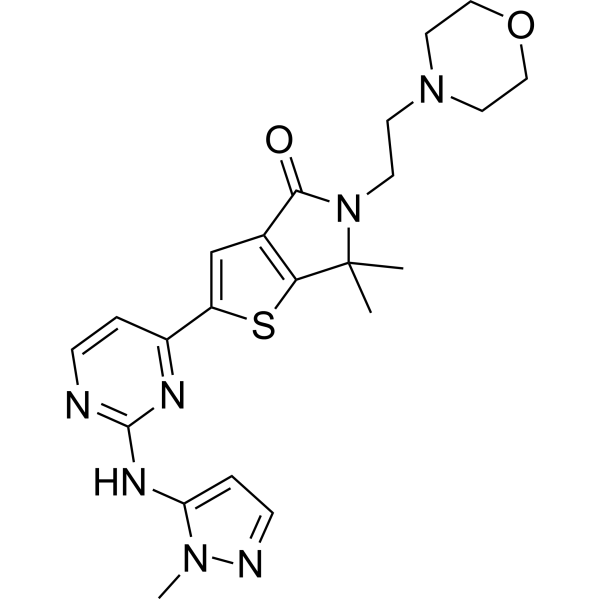
Temuterkib (LY3214996) is a highly selective inhibitor of ERK1 and ERK2, with IC50 of 5 nM for both enzymes in biochemical assays. Temuterkib potently inhibits cellular p-RSK1 in BRAF and RAS mutant cancer cell lines. Temuterkib shows potent antitumor activities in cancer models with MAPK pathway alterations.
loading...
    loading...
27
27 Cited Publications
Cat. No.: HY-N6718
CAS No.: 480-49-9
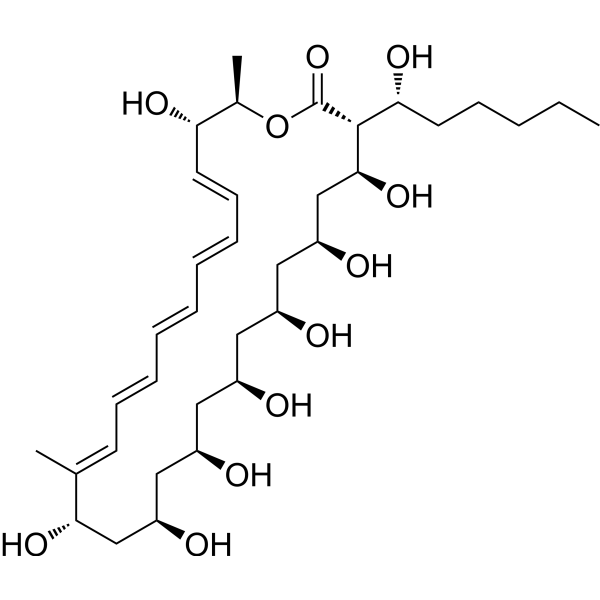
Filipin III is the major component of Filipin, a 28-membered ring pentaene macrolide antifungal antibiotic produced by S. filipinensis, S. avermitilis and S. miharaensis. Filipin interacts with membrane sterols causing the alteration of membrane structure .
loading...
    loading...
16
16 Cited Publications
Cat. No.: HY-123986
CAS No.: 68003-38-3
Purity:  99.95%
Research Areas:  

Inflammation/Immunology Cancer

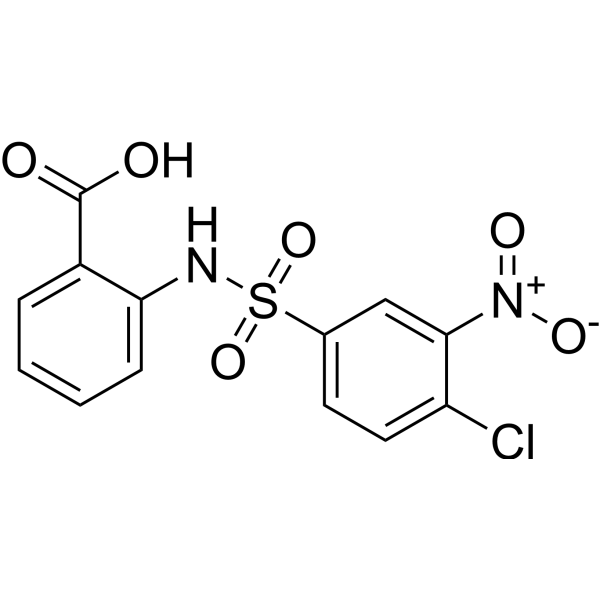
CTPI-2 is a third-generation mitochondrial citrate carrier SLC25A1 inhibitor with a KD of 3.5 μM. CTPI-2 inhibits glycolysis, PPARγ, and its downstream target the glucose transporter GLUT4. CTPI-2 halts salient alterations of NASH reverting steatosis, preventing the evolution to steatohepatitis, reducing inflammatory macrophage infiltration in the liver and adipose tissue, and starkly mitigating obesity induced by a high-fat diet. Antitumor activity .
loading...
    loading...
13
13 Cited Publications
Cat. No.: HY-109566
CAS No.: 2089288-03-7
Purity:  99.22%
Synonyms: AZD1390
Research Areas:  

Cancer

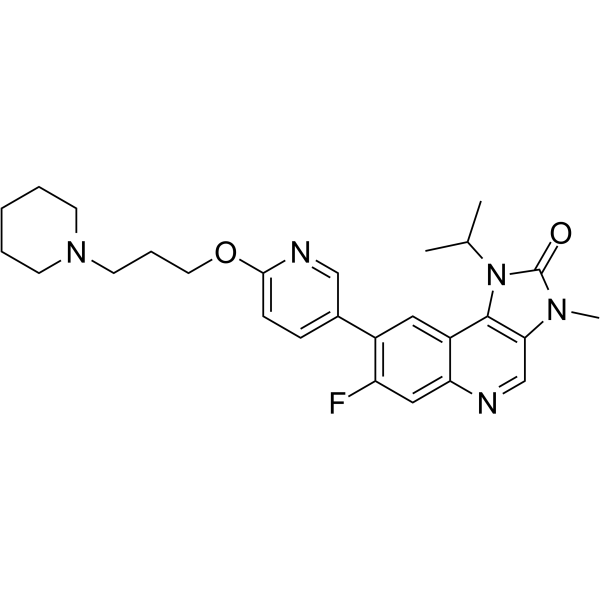
Elrelesertib (AZD1390) is an orally active, brain-penetrant ATM kinase inhibitor with IC50 values of 0.78 nM. Elrelesertib blocks ATM-dependent DNA damage response, inhibits ATM autophosphorylation and downstream Chk2, Rad50 phosphorylation, and accumulates at DNA breaks. Elrelesertib acts as a radiosensitizer, induces apoptosis, genomic instability, G2-M cell cycle arrest, ROS elevation, and mitochondrial membrane potential alteration. Elrelesertib has low efflux liability against P-gp and BCRP. Elrelesertib can be used for the research of central nervous system malignancies, glioblastoma multiforme, glioma, lung cancer brain metastases, and breast cancer .
loading...
    loading...
10
10 Cited Publications
Cat. No.: HY-108685
CAS No.: 129318-43-0
Purity:  ≥98.0%
Synonyms: Alendronic acid monosodium salt
Research Areas:  

Metabolic Disease

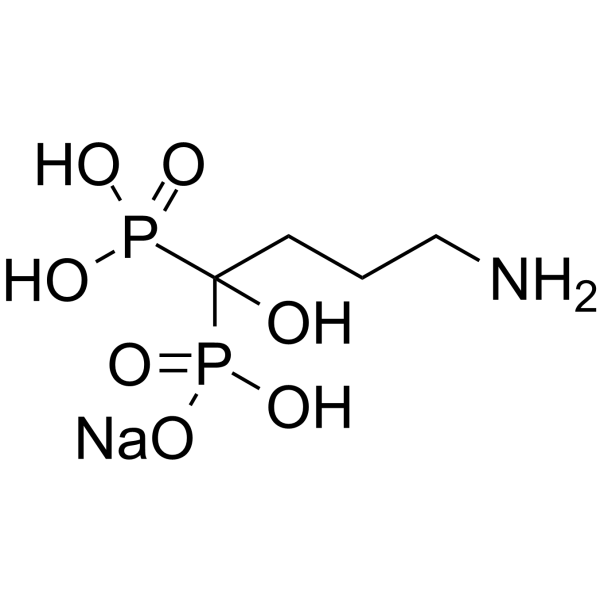
Alendronate sodium is an orally active bisphosphonate which binds to bone surfaces and inhibits bone resorption by osteoclasts. Alendronate sodium induces skeletal alterations in the chicken embryonic development model. Alendronate sodium can be used for osteoporosis research .
loading...
    loading...
10
10 Cited Publications
Cat. No.: HY-B0631
CAS No.: 66376-36-1
Research Areas:  

Metabolic Disease

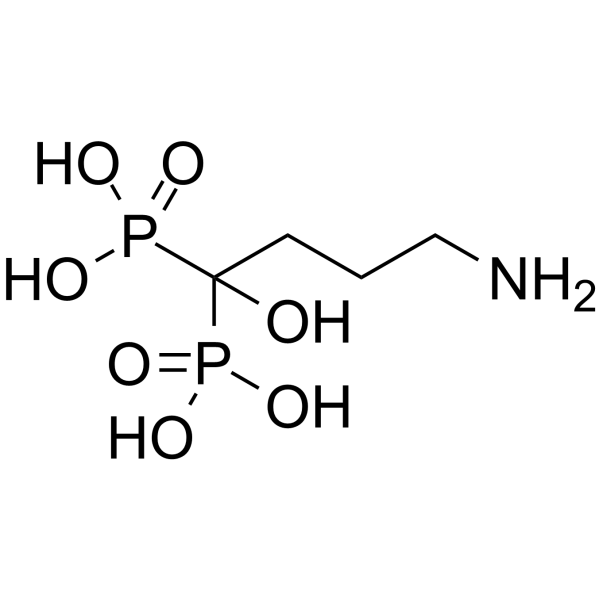
Alendronate acid is an orally active bisphosphonate which binds to bone surfaces and inhibits bone resorption by osteoclasts. Alendronate acid induces skeletal alterations in the chicken embryonic development model. Alendronate acid can be used for osteoporosis research .
loading...
    loading...
9
9 Cited Publications
Cat. No.: HY-N7032
CAS No.: 28053-08-9
Synonyms: UDP-D-Glucose disodium
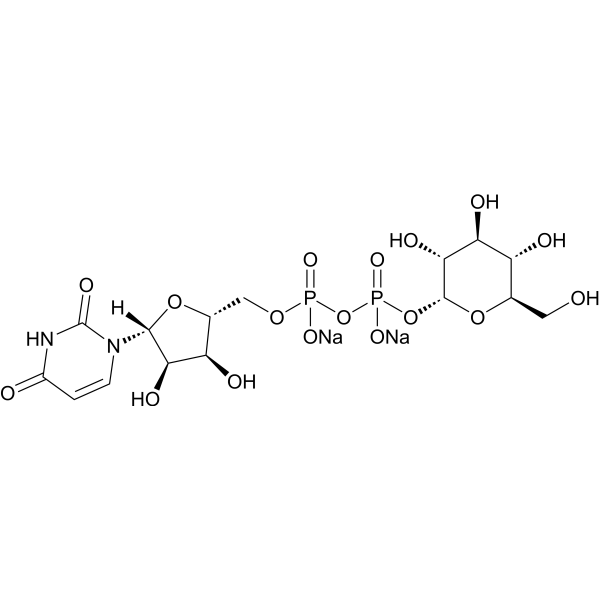
Uridine 5’-diphosphoglucose (UDP-glucose) disodium, secreted by cardiomyocytes during ischemia and reperfu, is a potent agonist of the proinflammatory P2Y14 receptor. It acts an important role in the regulation of inflammation and neutrophil polarization in neutrophils. Uridine 5’-diphosphoglucose disodium is also the precursor of glucose-containing oligosaccharides, polysaccharides, glycoproteins, and glycolipids in animal tissues and in some microorganisms. Uridine 5’-diphosphoglucose disodium is promising for research in counteracting myocardial infarction/reperfusion (MIR)-induced inflammation in the heart tissue.
loading...
    loading...
6
6 Cited Publications
Cat. No.: HY-D1056A1
Synonyms: LPS, from Escherichia coli (O111:B4)
Lipopolysaccharides, from E. coli O111:B4 (LPS, from Escherichia coli (O111:B4)) are endotoxins and TLR4 activators extracted from Escherichia coli (E. coli O111:B4) and are classified as S (smooth) type LPS. Lipopolysaccharides (LPS), from E. coli O111:B4 possess the typical three-part structure: O-antigen, R3-type core oligosaccharide, and lipid A. Lipopolysaccharides (LPS), from E. coli O111:B4 activate TLR-4 in immune cells and can cause significant gastric diseases. Lipopolysaccharides (LPS), from E. coli O111:B4 can be used to induce cellular inflammation and establish animal models related to inflammation .
It is recommended to prepare a solution with concentration ≥2 mg/mL. Vortex thoroughly for more than 10 minutes. Due to the adsorption characteristics of LPS, silanized container or low adsorption centrifuge tubes should be used for aliquoting and storage, and mix thoroughly before use.
loading...
    loading...
5
5 Cited Publications
Cat. No.: HY-112108
CAS No.: 148411-57-8
Purity:  ≥91.0%
Synonyms: COS
Chitosan oligosaccharide (COS) is an oligomer of β-(1→4)-linked D-glucosamine. Chitosan oligosaccharide (COS) activates AMPK and inhibits inflammatory signaling pathways including NF-κB and MAPK pathways.
loading...
    loading...
5
5 Cited Publications
Cat. No.: HY-B0417A
CAS No.: 859-18-7
Synonyms: U10149A
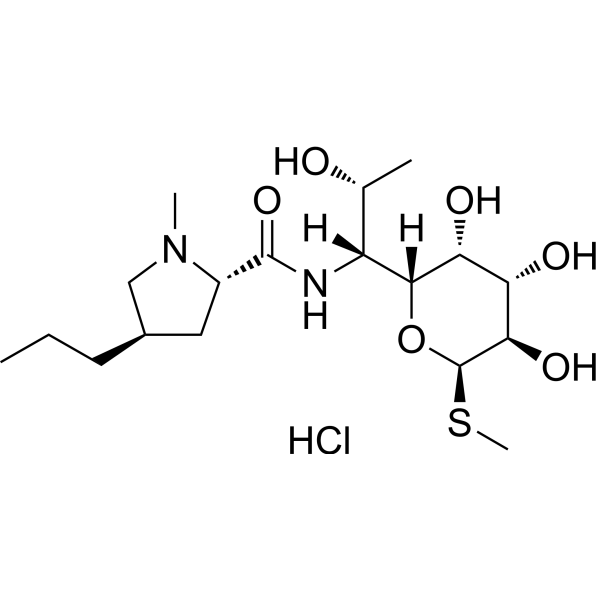
Lincomycin hydrochloride (U10149A) is an orally active lincosamide antibiotic. Lincomycin hydrochloride binds to the ribosomes of Gram-positive bacteria to inhibit protein synthesis. Lincomycin hydrochloride can inhibit chloroplast translation, disrupt chloroplast integrity, and activate chloroplast-to-nucleus retrograde signaling in Arabidopsis thaliana seedlings. Lincomycin hydrochloride induces alterations in lipid profiles and liver injury, disrupts blood glucose and insulin levels, and increases growth rate in mice .
loading...
    loading...
5
5 Cited Publications
Cat. No.: HY-117660
CAS No.: 154-21-2
Purity:  99.82%
Synonyms: U-10149
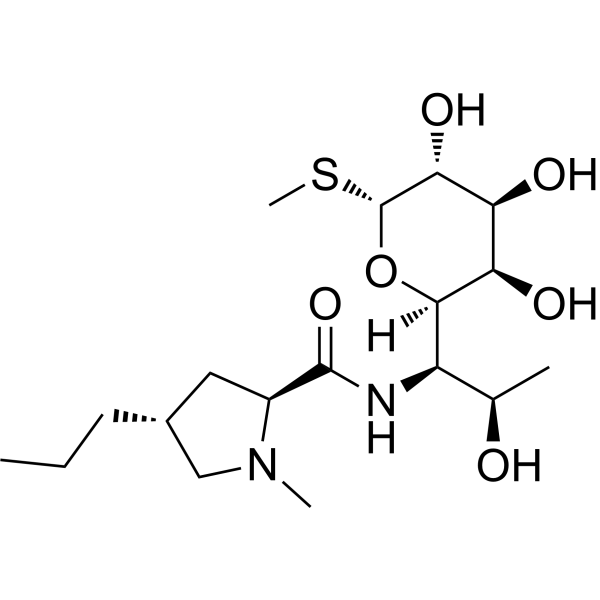
Lincomycin (U-10149) is an orally active lincosamide antibiotic. Lincomycin binds to the ribosomes of Gram-positive bacteria to inhibit protein synthesis. Lincomycin can inhibit chloroplast translation, disrupt chloroplast integrity, and activate chloroplast-to-nucleus retrograde signaling in Arabidopsis thaliana seedlings. Lincomycin induces alterations in lipid profiles and liver injury, disrupts blood glucose and insulin levels, and increases growth rate in mice .
loading...
    loading...
5
5 Cited Publications
Cat. No.: HY-B1358
CAS No.: 7179-49-9
Synonyms: U-10149 hydrochloride monohydrate
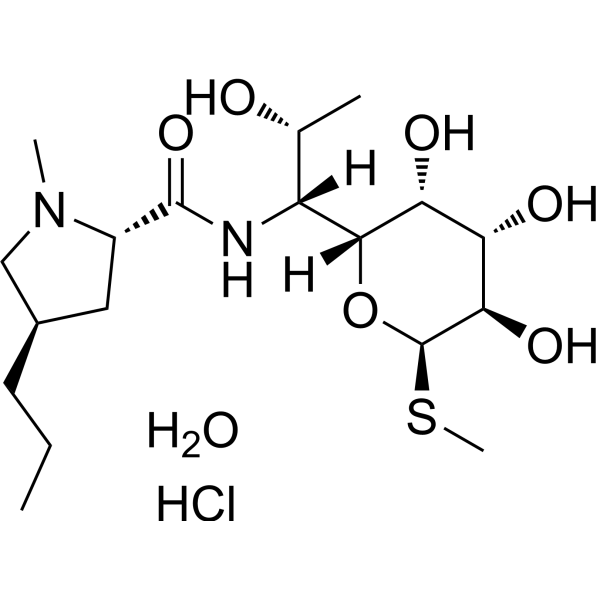
Lincomycin (U-10149) hydrochloride monohydrate is an orally active lincosamide antibiotic. Lincomycin hydrochloride monohydrate binds to the ribosomes of Gram-positive bacteria to inhibit protein synthesis. Lincomycin hydrochloride monohydrate can inhibit chloroplast translation, disrupt chloroplast integrity, and activate chloroplast-to-nucleus retrograde signaling in Arabidopsis thaliana seedlings. Lincomycin hydrochloride monohydrate induces alterations in lipid profiles and liver injury, disrupts blood glucose and insulin levels, and increases growth rate in mice .
loading...
    loading...
5
5 Cited Publications
Cat. No.: HY-N0573
CAS No.: 93-35-6
Synonyms: 7-Hydroxycoumarin; Hydrangin; NSC 19790
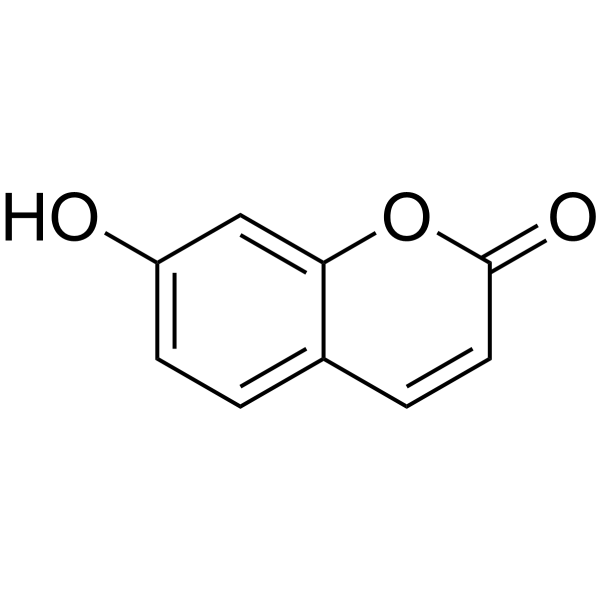
Umbelliferone (7-Hydroxycoumarin), a natural orally active product of the coumarin family, is a fluorescing compound which can be used as a sunscreen agent. Umbelliferone induces cell cycle arrest, apoptosis and DNA fragmentation in HepG2 cells. Umbelliferone exhibits significant anticancer effects. Umbelliferone attenuates the alteration characteristics of allergic airway inflammation. Umbelliferone displays the neuroprotective effects and cross the blood-brain barrier. Umbelliferone exhibits anti-inflammatory and antioxidant effects in chronic alcohol-fed rats .
loading...
    loading...
5
5 Cited Publications
Cat. No.: HY-N9965
CAS No.: 41263-94-9
Synonyms: 2'-FL
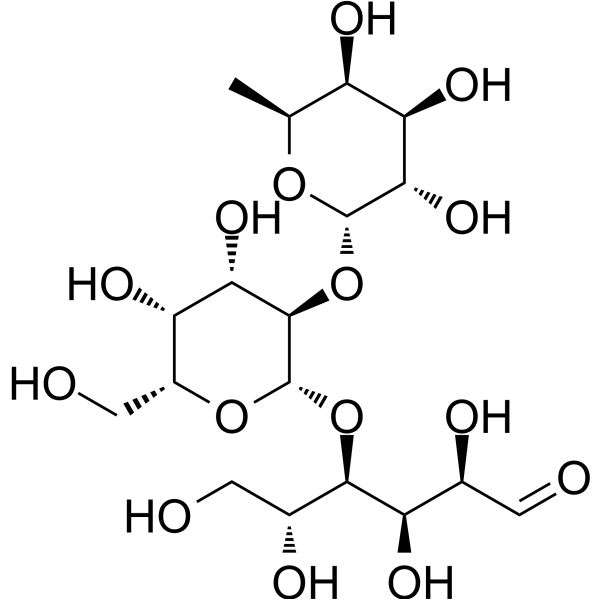
2'-Fucosyllactose (2'-FL) is an oligosaccharide that could be derived from human milk. 2'-Fucosyllactose regulates the expression of CD14, alleviates colitis and regulates the gut microbiome. 2'-Fucosyllactose stimulates T cells to increase IFN-γ production and decreases IL-6, IL-17, and TNF-α production of cytokines .
loading...
    loading...
4
4 Cited Publications
Cat. No.: HY-115386
CAS No.: 1101113-39-6
Purity:  98.00%
MitoTEMPOL is a mitochondria-targeted superoxide scavenger. MitoTEMPOL accumulates in mitochondria via membrane potential and locally scavenges superoxide anions. MitoTEMPOL alleviates hepatic oxidative stress and alterations in genes related to autophagy in STZ (HY-13753)-induced diabetic models. MitoTEMPOL inhibits diaphragmatic mitochondrial dysfunction and activation of proteolytic pathways in sepsis models. MitoTEMPOL also alleviates AGEs (HY-NP165)-induced ferritinophagy-dependent ferroptosis in human umbilical vein endothelial cells. MitoTEMPOL is used in research related to diabetes, sepsis, and vascular endothelial ferroptosis .
loading...
    loading...
3
3 Cited Publications
Cat. No.: HY-D1056D
Synonyms: LPS, from Porphyromonas gingivalis
Lipopolysaccharides, from P. gingivalis (LPS, from Porphyromonas gingivalis) are endotoxins and TLR4 activators extracted from Porphyromonas gingivalis (P. gingivalis) and are classified as S (smooth) type LPS. Lipopolysaccharides, from P. gingivalis possess the typical three-part structure: O-antigen, core oligosaccharide, and lipid A. Lipopolysaccharides, from P. gingivalis activate TLR-4 in immune cells and are important virulence factors in the mechanism of periodontal disease. Lipopolysaccharides, from P. gingivalis can be used in research related to periodontitis .
It is recommended to prepare a solution with concentration ≥2 mg/mL. Vortex thoroughly for more than 10 minutes. Due to the adsorption characteristics of LPS, silanized container or low adsorption centrifuge tubes should be used for aliquoting and storage, and mix thoroughly before use.
loading...
    loading...
2
2 Cited Publications
Cat. No.: HY-P2929
CAS No.: 83534-39-8
Research Areas:  

Cancer

PNGase F, a glycosidase, catalyzes the cleavage of an internal glycoside bond in an oligosaccharide. PNGase F removes nearly all N-linked oligosaccharides from glycoproteins. PNGase F can release N-glycans from glycoproteins in glycoanalytical workflows .
loading...
    loading...
2
2 Cited Publications
Cat. No.: HY-P2929D
CAS No.: 83534-39-8
Target:  

Glycosidase

Research Areas:  

Cancer

PNGase F (MS grade), a glycosidase, catalyzes the cleavage of an internal glycoside bond in an oligosaccharide. PNGase F (MS grade) removes nearly all N-linked oligosaccharides from glycoproteins. PNGase F (MS grade) can be used for MS analysis .
loading...
    loading...
2
2 Cited Publications
Cat. No.: HY-P2929C
CAS No.: 83534-39-8
Research Areas:  

Cancer

PNGase F (Lyophilized), a glycosidase, catalyzes the cleavage of an internal glycoside bond in an oligosaccharide. PNGase F (Lyophilized) removes nearly all N-linked oligosaccharides from glycoproteins. PNGase F (Lyophilized) can release N-glycans from glycoproteins in glycoanalytical workflows .
loading...
    loading...

