

33 Results for "

optic chiasm

" in MedChemExpress (MCE) Product Catalog:
Products (33)

33 Results for "optic chiasm" in MCE Product Catalog:

4
4 Cited Publications
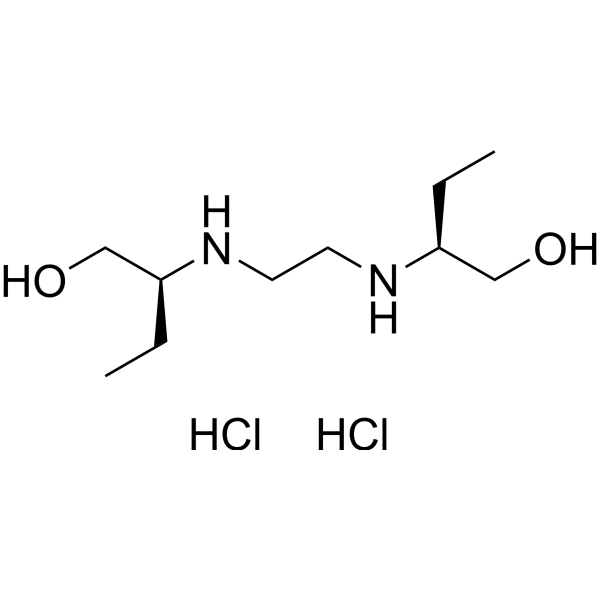
Cat. No.: HY-B0535A
CAS No.: 1070-11-7
Synonyms: Emb dihydrochloride
Ethambutol dihydrochloride is an antimycobacterial compound that prevents cell wall formation by inhibiting arabinosyltransferase activity. Ethambutol dihydrochloride can be used to establish animal models of hyperuricemia and optic neuropathy.
loading...
    loading...
4
4 Cited Publications
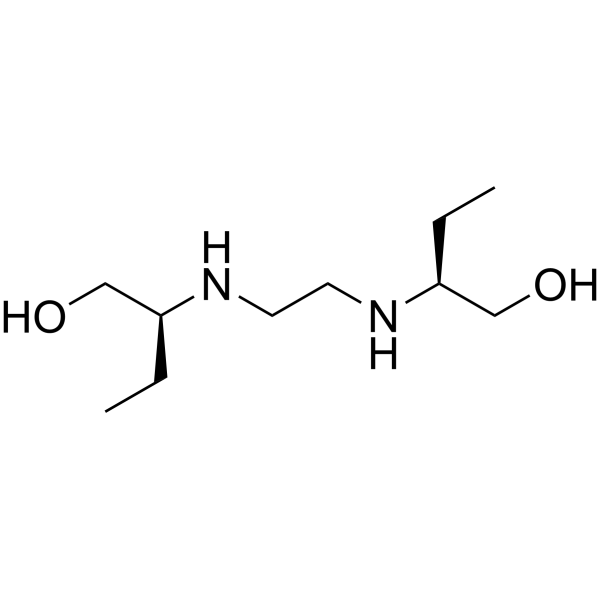
Cat. No.: HY-B0535
CAS No.: 74-55-5
Target:  

Bacterial Antibiotic

Research Areas:  

Infection

Ethambutol is an antimycobacterial compound that prevents cell wall formation by inhibiting arabinosyltransferase activity. Ethambutol can be used to establish animal models of hyperuricemia and optic neuropathy.
loading...
    loading...
2
2 Cited Publications
Cat. No.: HY-P80255
Synonyms: optic atrophy protein 1 homolog

Host:  

Rabbit

Application:  

WB, IHC-P, FC

Reactivity:  

Human, Mouse, Rat

loading...
    loading...
1
1 Cited Publications
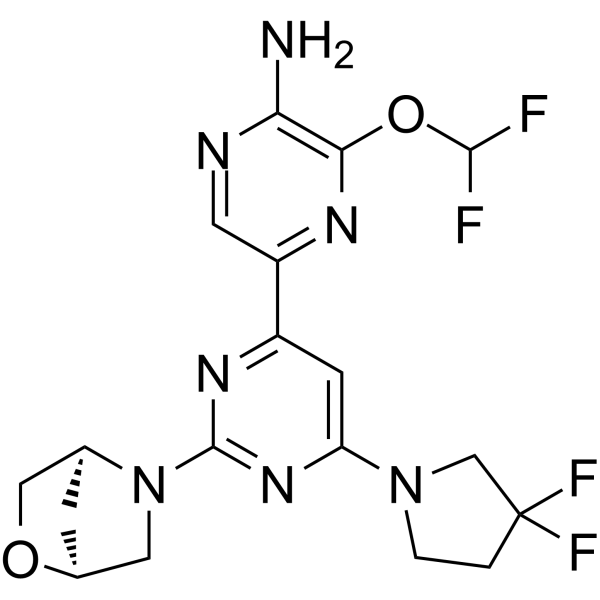
Cat. No.: HY-152142
CAS No.: 3026597-15-6
Purity:  99.63%
Target:  

JNK

Research Areas:  

Neurological Disease

DN-1289 is an orally active and selective inhibitor of dual leucine zipper kinase (DLK; IC50=17 nM) and leucine zipper-bearing kinase (LZK; IC50=40 nM). DN-1289 results significant attenuation of optic nerve crush (ONC)-induced p-c-Jun in mice model. DN-1289 has excellent in vivo plasma half-life and blood-brain barrier permeability .
loading...
    loading...
1
1 Cited Publications
Cat. No.: HY-158820
CAS No.: 1834560-88-1
Purity:  98.48%
Synonyms: QPI-1007
Cosdosiran is a chemically modified siRNA designed to temporarily inhibit expression of the caspase 2 protein and can be used for the study of nonarteritic anterior ischemic optic neuropathy and other optic neuropathies such as glaucoma that result in the death of retinal ganglion cells.
loading...
    loading...
1
1 Cited Publications
Cat. No.: HY-158820A
Purity:  98.48%
Synonyms: QPI-1007 sodium
Cosdosiran sodium is a chemically modified siRNA designed to temporarily inhibit expression of the caspase 2 protein and can be used for the study of nonarteritic anterior ischemic optic neuropathy and other optic neuropathies such as glaucoma that result in the death of retinal ganglion cells.
loading...
    loading...
Cat. No.: HY-P99780
CAS No.: 1422268-07-2
Synonyms: BIIB033
Opicinumab (BIIB033) is a human IgG1 monoclonal antibody targeting LINGO-1. Opicinumab binds LINGO-1 to block its negative regulatory signaling, suppress axonal degeneration, enhance axonal regeneration, promote remyelination, and exert neuroprotective effects. Opicinumab maintains axonal protective effects during co-administration with methylprednisolone. Opicinumab can be used for the research of multiple sclerosis, acute optic neuritis, and optic neuritis. .
loading...
    loading...
Cat. No.: HY-123607
CAS No.: 1639159-47-9
Purity:  99.23%
Target:  

Ephrin Receptor

Research Areas:  

Neurological Disease Cancer

UniPR129 is a potent and orally active Eph/ephrin antagonist. UniPR129 can inhibit EphA2-ephrin-A1 interaction with an IC50 of 945 nM and a Ki of 370 nM. UniPR129 can inhibit angiogenesis and show antitumor and neuroprotective effect. UniPR129 can be used for the researches of cancer and neurological disease, such as colorectal cancer and optic neuropathy .
loading...
    loading...
Cat. No.: HY-B0600
CAS No.: 209860-87-7
Synonyms: AFP-168; MK2452
Research Areas:  

Cardiovascular Disease Others

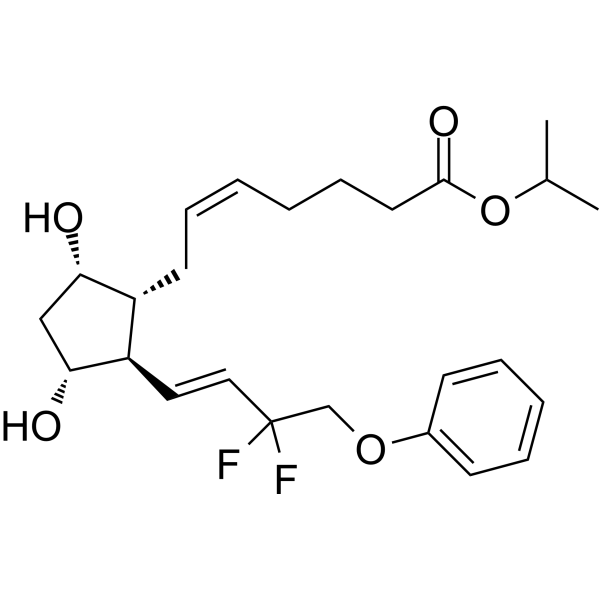
Tafluprost (AFP-168) is an anti-glaucoma prostaglandin (PG) analog. Tafluprost can inhibit the apoptosis of retinal ganglion cells (RGCs) and rat RGCs cells. Tafluprost promotes axon regeneration by regulating Zn 2+-mTORpathway, inhibits intracellular lipid accumulation in human preorbital adipocytes. Tafluprost can be used in the study of optic nerve injury in glaucoma .
loading...
    loading...
Cat. No.: HY-W017457
CAS No.: 52-66-4
Synonyms: (±)-Penicillamine
Research Areas:  

Neurological Disease

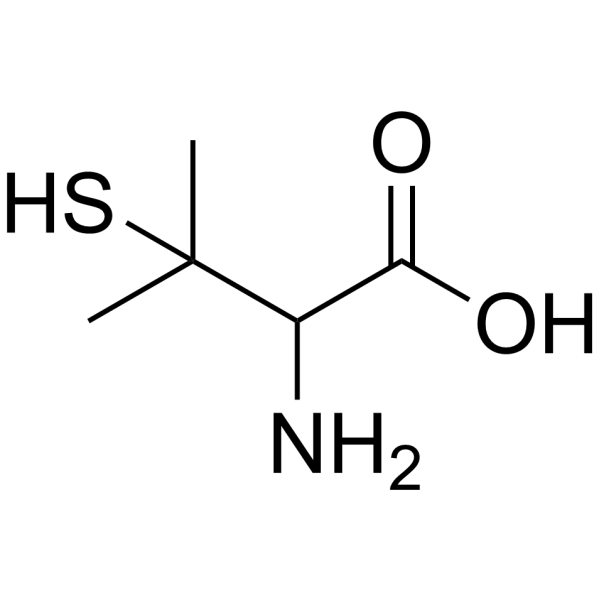
DL-Penicillamine [(±)-Penicillamine] is a copper chelating agent. DL-Penicillamine has antidotal effects in thallotoxicosis rats when co-treated with Prussian blue (HY-106594A). DL-Penicillamine can cause pyridoxine deficiency and then induce optic axial neuritis. DL-Penicillamine can also depress primary immune response .
loading...
    loading...
Cat. No.: HY-P2459
CAS No.: 163158-19-8
Target:  

Inhibitory Antibodies

Research Areas:  

Inflammation/Immunology

MOG (35-55), human is a synthetic encephalitogenic peptide fragment (residues 35-55) of human myelin oligodendrocyte glycoprotein, and also serves as a myelin oligodendrocyte glycoprotein peptide epitope. MOG (35-55), human induces mild central nervous system inflammation in mice, but does not trigger demyelinating lesions, only causing mild clinical neurological symptoms. MOG (35-55) induces experimental autoimmune encephalomyelitis mouse models that recapitulate the features of optic neuritis, multiple sclerosis, myelin oligodendrocyte glycoprotein antibody-associated diseases, and neuromyelitis optica spectrum disorders .
loading...
    loading...
Cat. No.: HY-15195
CAS No.: 290815-26-8
Purity:  98.15%
Synonyms: Ro 67-0565; SPP-301
Target:  

Endothelin Receptor

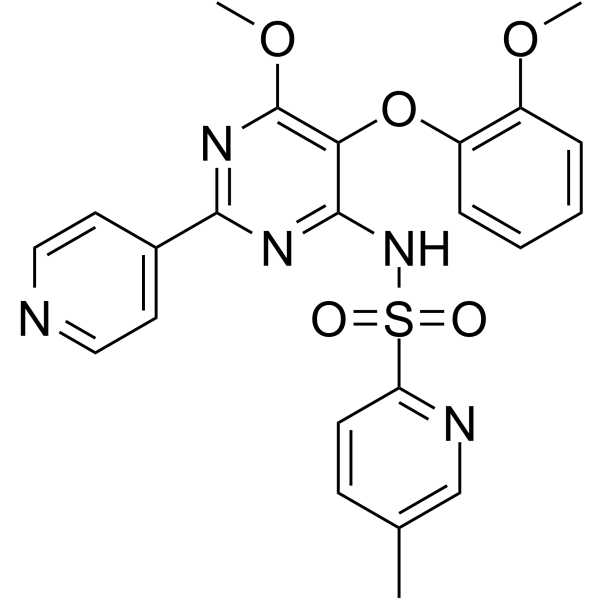
Avosentan (Ro 67-0565; SPP-301) is an orally active endothelin (ETA) receptor antagonist. Avosentan can block the ETA receptor, thereby reducing vascular contraction and exerting a renal protective effect. Avosentan inhibits vascular contraction caused by ET-1 and alleviates the reduction in retinal and optic nerve head blood flow induced by it, lowering intraocular pressure in the glaucoma monkey model. Avosentan non-specifically blocks ETB receptors at high doses, inhibiting ETB-mediated diuresis and natriuresis, and may cause fluid retention. Avosentan can be used to reduce proteinuria with diabetic nephropathy, but induces significant fluid overload and congestive heart failure .
loading...
    loading...
Cat. No.: HY-D1677
CAS No.: 128724-35-6
Target:  

Fluorescent Dye

Research Areas:  

Others

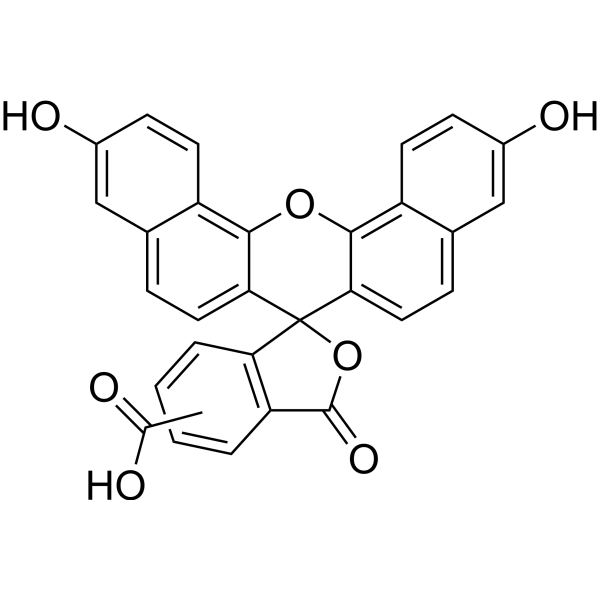
5(6)-Carboxynaphthofluorescein is a pH-dependent fluorophore. 5(6)-Carboxynaphthofluorescein shows good sensitivity in an alkaline pH range and it can be exploited in the construction of fiber-optic pH sensors. 5(6)-Carboxynaphthofluorescein can be used as a fluorescent pH indicator (Ex/Em=593/668 nm) .
loading...
    loading...
Cat. No.: HY-118294
CAS No.: 130209-78-8
Synonyms: 16-Phenoxy tetranor prostaglandin F2α isopropyl ester; 16-Phenoxy tetranor PGF2α isopropyl ester
Research Areas:  

Cardiovascular Disease

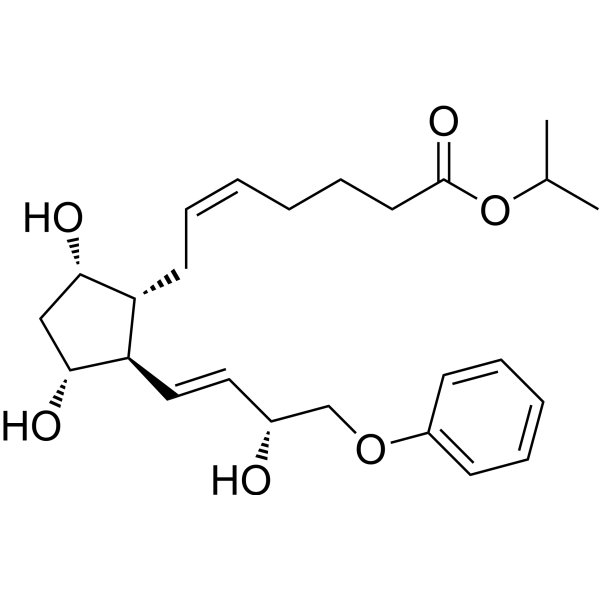
15-OH Tafluprost, a prostaglandin F2a (PGF2a) analog, relieves endothelin-1 (ET-1)-induced optic nerve head (ONH) blood flow impairment and ET-1-induced contraction of isolated ciliary artery segments .
loading...
    loading...
Cat. No.: HY-W017457R
CAS No.: 52-66-4
Synonyms: (±)-Penicillamine (Standard)
Research Areas:  

Others

DL-Penicillamine (Standard) is the analytical standard of DL-Penicillamine. This product is intended for research and analytical applications. DL-Penicillamine [(±)-Penicillamine] is a copper chelating agent. DL-Penicillamine has antidotal effects in thallotoxicosis rats when co-treated with Prussian blue (HY-106594A). DL-Penicillamine can cause pyridoxine deficiency and then induce optic axial neuritis. DL-Penicillamine can also depress primary immune response .
loading...
    loading...
Cat. No.: HY-B0600R
CAS No.: 209860-87-7
Synonyms: AFP-168 (Standard); MK2452 (Standard)
Tafluprost (Standard) is the analytical standard of Tafluprost. This product is intended for research and analytical applications. Tafluprost (AFP-168) is an anti-glaucoma prostaglandin (PG) analog. Tafluprost can inhibit the apoptosis of retinal ganglion cells (RGCs) and rat RGCs cells. Tafluprost promotes axon regeneration by regulating Zn2+-mTORpathway, inhibits intracellular lipid accumulation in human preorbital adipocytes. Tafluprost can be used in the study of optic nerve injury in glaucoma [4] .
loading...
    loading...
Cat. No.: HY-171985
CAS No.: 4175-38-6
Research Areas:  

Others

DCPD is an amine substance with both embryotoxicity and teratogenicity, and its total effect ED50 is 0.6 μmol per egg. DCPD induces early and late embryonic death, and causes multiple embryonic malformations including microcephaly, hypoplastic optic cup, eyelid and corneal defects. DCPD can serve as a calcium phosphate additive for biomimetic α-tricalcium phosphate bone cement, which inhibits the transformation of α-tricalcium phosphate into calcium-deficient hydroxyapatite, blocks the release of Gelatins (HY-Y1365), and effectively prolongs the setting time of bone cement. DCPD is applicable to studies related to embryonic malformations .\n
loading...
    loading...
Cat. No.: HY-15195R
CAS No.: 290815-26-8
Synonyms: Ro 67-0565 (Standard); SPP-301 (Standard)
Avosentan (Standard) is the analytical standard of Avosentan (HY-15195). This product is intended for research and analytical applications. Avosentan is an orally active endothelin (ETA) receptor antagonist. Avosentan can block the ETA receptor, thereby reducing vascular contraction, and exerting a renal protective effect. Avosentan inhibits vascular contraction caused by ET-1 and alleviates the reduction in retinal and optic nerve head blood flow induced by it, lowering intraocular pressure in the glaucoma monkey model. Avosentan non-specifically blocks ETB receptors at high doses, inhibiting ETB-mediated diuresis and natriuresis, and may cause fluid retention. Avosentan can be used to reduce proteinuria with diabetic nephropathy, but induces significant fluid overload and congestive heart failure.
loading...
    loading...
Cat. No.: HY-178030
CAXII-IN-3 is an effective carbonic anhydrase (CA XII) inhibitor with a Ki of 53 nM. CAXII-IN-3 exhibits selective inhibition against multiple human CA subtypes with Kis of 5.3 μM, 75 nM, 1.9 μM, > 10 μM against CA I, CA II, CA IV and CA IX. CAXII-IN-3 mainly inhibits CA II and XII, and reduces aqueous humor production. CAXII-IN-3 exhibits β3-AR agonistic activity, can dilate retinal blood vessels, and improve optic nerve perfusion. CAXII-IN-3 can be used in the research of ocular disorders such as glaucoma .
loading...
    loading...
Cat. No.: HY-185936
CAS No.: 3119104-72-9
Target:  

Others

Research Areas:  

Others

Zulaporsen rocopertide can promote the synthesis of optic atrophy 1 (OPA1) protein.
loading...
    loading...

