



70 Results for "

permeation

" in MedChemExpress (MCE) Product Catalog:
Products (70)

70 Results for "permeation" in MCE Product Catalog:

88
88 Publications Verification
Cat. No.: HY-D0041
CAS No.: 148504-34-1
Synonyms: Calcein acetoxymethyl ester
Calcein AM, has cell membrane permeability and can easily enter the cell. Calcein AM has no fluorescence and is hydrolyzed by endogenous esterase in the cell to produce polar molecule Calcein (Calcein), which has strong negative charge and cannot permeate the cell membrane. Calcein can emit strong green fluorescence, so it is often used with Propidium Iodide for cell viability/virulence detection, excitation/emission wavelength: 494/515 nm .
loading...
    loading...
27
27 Cited Publications
Cat. No.: HY-13750
CAS No.: 60940-34-3
Purity:  99.58%
Synonyms: SPI-1005; PZ-51; CCG-39161
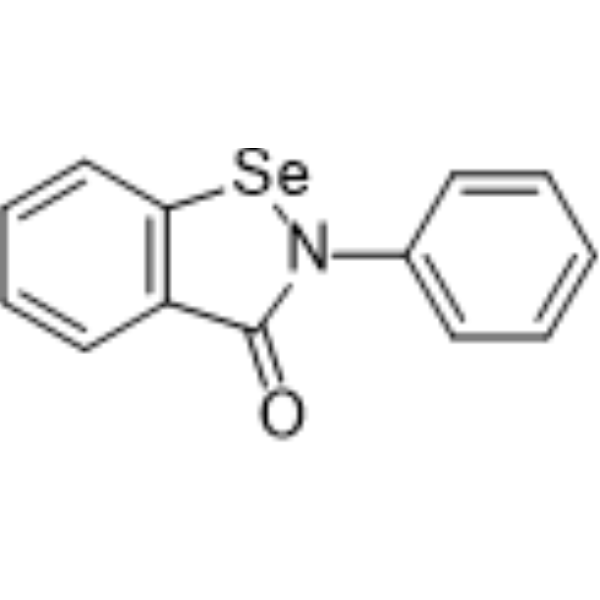
Ebselen (SPI-1005), a glutathione peroxidase mimetic, is a potent voltage-dependent calcium channel (VDCC) blocker . Ebselen potently inhibits M pro (IC50=0.67 μM) and COVID-19 virus (EC50=4.67 μM) .Ebselen is an inhibitor of HIV-1 capsid CTD dimerization. Ebselen, an organoselenium compound, can permeate the blood-brain barrier and has anti-inflammatory, antioxidant and anticancer activity .
loading...
    loading...
18
18 Cited Publications
Cat. No.: HY-D1783
CAS No.: 873315-86-7
Synonyms: MTDR FM
Target:  

Fluorescent Dye

Research Areas:  

Cancer

MitoTracker Deep Red (MTDR) FM fluorescent dye that selectively accumulates in the mitochondrial matrix. MitoTracker Deep Red FM covalently binds mitochondrial proteins by reacting with free mercaptan of cysteine residues, allowing staining of mitochondrial membrane potential independent of membrane potential. Excitation/emission wavelength 644/665 nm . MitoTracker Deep Red dyes have an excitation/emission wavelength of 633/650-750 nm .
The Ex/Em of MitoTracker Deep Red (MTDR) FM is 644/665 nm.
loading...
    loading...
4
4 Cited Publications
Cat. No.: HY-114299
CAS No.: 203787-91-1
Purity:  99.94%
Synonyms: SNAC
Research Areas:  

Others

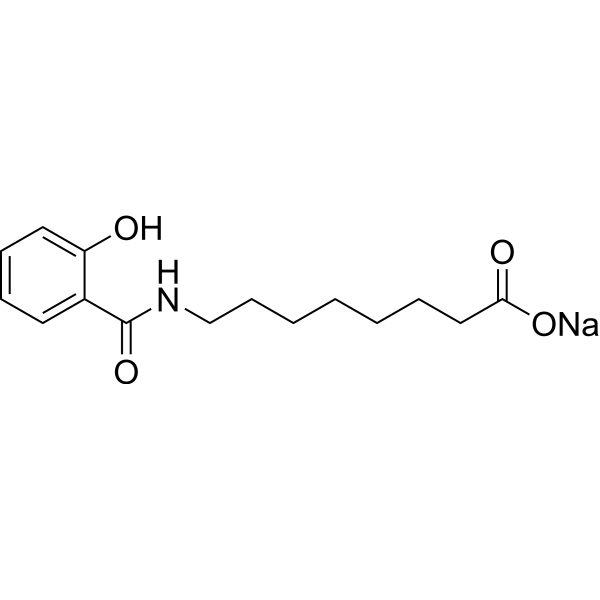
Salcaprozate sodium (SNAC), an oral absorption promoter, and has the potential as a delivery agent for oral forms of heparin and insulin. Salcaprozate sodium could increase passive transcellular permeation across small intestinal epithelia based on increased lipophilicity arising from non-covalent macromolecule complexation .
loading...
    loading...
2
2 Cited Publications
Cat. No.: HY-P4210
CAS No.: 1451199-98-6
Synonyms: ALRN-6924; MP-4897
Target:  

MDM-2/p53

Research Areas:  

Cancer

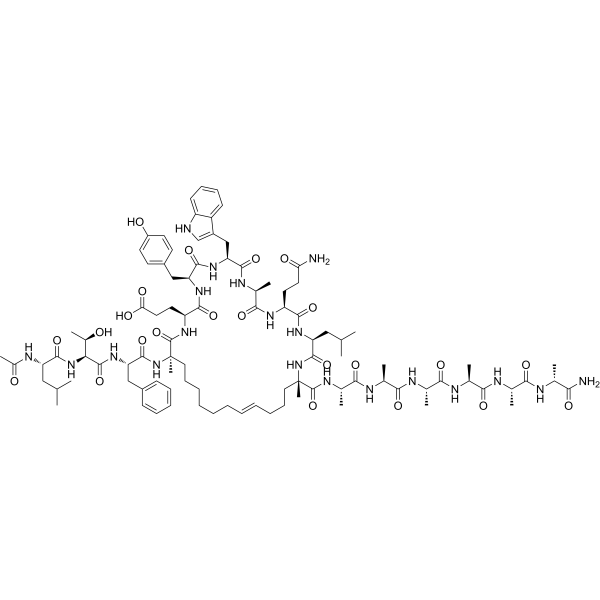
Sulanemadlin (ALRN-6924) is a potent and cell-permeating p53-based peptidomimetic macrocycles. Sulanemadlin is a inhibitor of the p53-MDM2, p53-MDMX, or both p53 and MDM2 and MDMX protein-protein interactions. Sulanemadlin can be used for cancers research .
loading...
    loading...
2
2 Cited Publications
Cat. No.: HY-138560
CAS No.: 9048-71-9
Cross-linked dextran G 50 is a gel filtration medium. Cross-linked dextran G 50 can be used in gel permeation chromatography for fractionation of the glycopeptide mixture (Sphere protein separation range: 1.5K-30K Da; Polysaccharide separation range: 500-10K Da) .
loading...
    loading...
2
2 Cited Publications
Cat. No.: HY-N2197
CAS No.: 35467-43-7
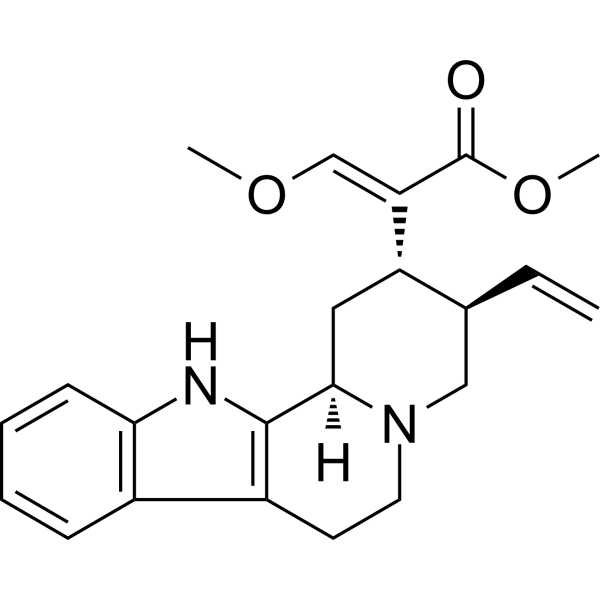
Hirsuteine is an indole alkaloid extracted from Uncaria rhynchophylla. Hirsuteine non-competitively antagonizes nicotine-mediated dopamine release by blocking ion permeation through nicotinic receptor channel complexes .
loading...
    loading...
1
1 Cited Publications
Cat. No.: HY-D0150
CAS No.: 107091-89-4
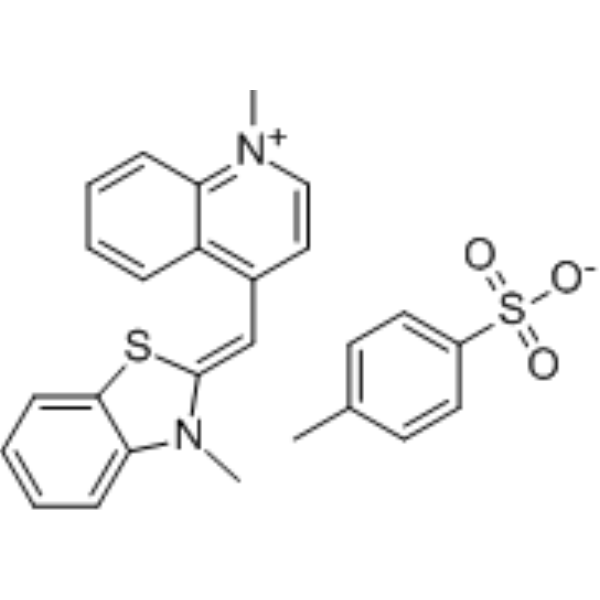
Thiazole Orange is an asymmetric anthocyanin dye that can be coupled with oligonucleotides (ONs) to prepare fluorescent hybridization probes. Thiazole Orange has been widely used in biomolecular detection and staining of DNA/ RNA in gels and can be used for reticulocyte analysis. Thiazole orange generates a significant fluorescence enhancement and high quantum yield when it binds with nucleic acids, especially RNA. Thiazole orange can permeate living cell membranes. Thiazole orange can use UV light for detection, but can also be detected with blue light. The excitation and emission of Thiazole orange are λex = 510 nm (488 nm and 470 nm also show strong excitation) and λem = 527 nm, respectively .
loading...
    loading...
1
1 Cited Publications
Cat. No.: HY-112624I
CAS No.: 9004-54-0
Synonyms: Dextran 3; Dextran D3; Dextran T3(MW 2400-3600)
Dextran T3 (Dextran 3; Dextran T3(MW 2400-3600)) is a neural tracer and intestinal permeability probe that can move anterogradely and retrogradely in neuronal axons by passive diffusion. Dextran T3 (MW 3,000) is able to permeate across the intestinal epithelial cell membrane in the presence of cholera toxin-induced cytoskeletal disturbance. Dextran T3 (MW 3,000) is used as a fluorescent marker to rapidly label developing neurons (such as Xenopus retinal ganglion cells) and to assess intestinal barrier function. It can be used to study axonal transport in neuroanatomy and permeability changes in intestinal pathophysiology. The Dextran series of compounds are also natural polysaccharide drug carriers that can be connected to drugs through covalent bonding methods such as ester bonds, amide bonds or click chemistry, or self-assembled to form carriers such as nanoparticles and hydrogels. Dextran is biodegradable and biocompatible, and can achieve targeted delivery and controlled release of drugs. Dextran derivatives can prolong the half-life of drugs, increase local concentrations, and reduce the activity of immune clearance .
loading...
    loading...
1
1 Cited Publications
Cat. No.: HY-120536
CAS No.: 13080-21-2
Purity:  ≥98.0%
Target:  

Bacterial

Research Areas:  

Infection

HPi1 is a potent, selective and orally active antimicrobial against Helicobacter pylori with an IC50 of 0.24 μM and an MIC of 0.08-0.16 μg/mL. HPi1 is inactive against other bacteria, including the gut commensals Lactobacillus casei, Lactobacillus reuteri, and Bifidobacterium longum .
loading...
    loading...
1
1 Cited Publications
Cat. No.: HY-110255
CAS No.: 934282-55-0
Purity:  99.8%
Research Areas:  

Neurological Disease

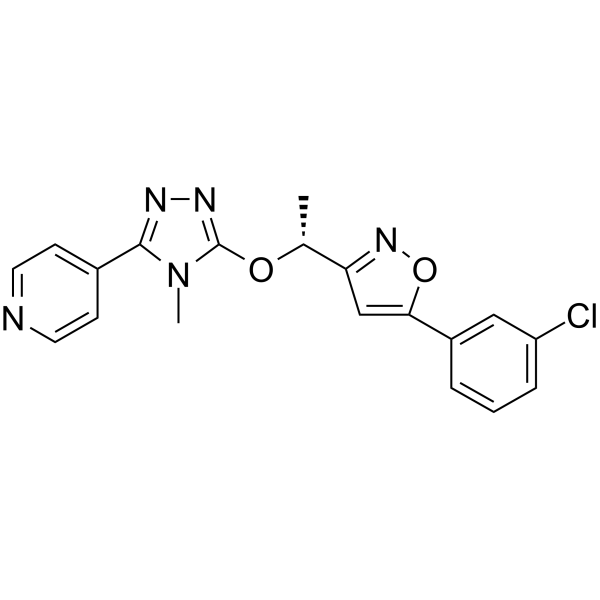
AZD-2066 is a selective, orally active and blood-brain barrier-permeating mGluR5 antagonist. AZD 2066 activates the BDNF/trkB signaling pathway. AZD 2066 can be used in the research of neuropathic pain, major depressive disorder and gastroesophageal reflux disease .
loading...
    loading...
Cat. No.: HY-W012382
CAS No.: 537-55-3
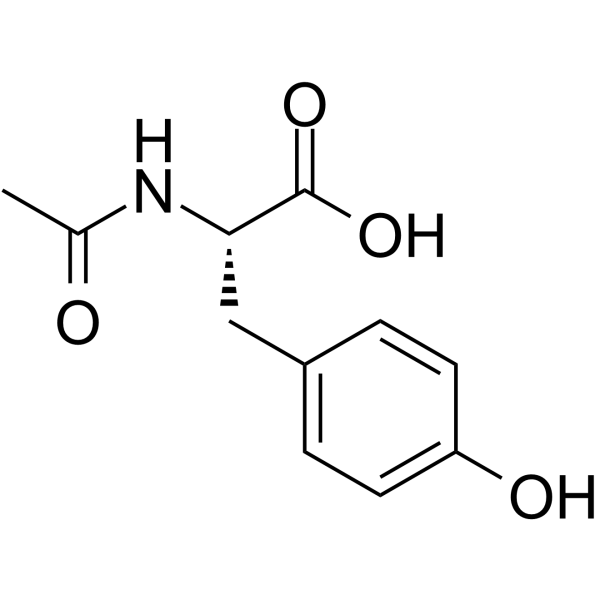
N-Acetyl-L-tyrosine is an orally active endogenous mitochondrial stress response regulator that can permeate the cell membrane by passive diffusion. N-Acetyl-L-tyrosine induces low-level reactive oxygen species (ROS) generation by transiently perturbing mitochondrial membrane potential, triggering reverse signaling to activate FoxO and Keap1 pathways. As a result, N-Acetyl-L-tyrosine enhances the expression of antioxidant enzyme genes, exerting anti-stress and cytoprotective effects. N-Acetyl-L-tyrosine can improve heat stress tolerance, inhibit tumor growth, and regulate energy metabolism. N-Acetyl-L-tyrosine can be used in the research of aging, metabolic diseases (such as diabetes), and cancer .
loading...
    loading...
Cat. No.: HY-33878
CAS No.: 21203-86-1
Research Areas:  

Neurological Disease

2-PPA is a lysosomal potassium and proton channel TMEM175 pore blocker. 2-PPA binds at a TMEM175 pore site to occlude potassium and proton ion permeation pathways. 2-PPA increases lysosomal macromolecule catabolism, accelerates macropinocytosis. 2-PPA binds to hepatic protein in covalent. 2-PPA can be used for the research of Parkinson's disease .
loading...
    loading...
Cat. No.: HY-P99849
CAS No.: 1471999-69-5
Synonyms: ABT-806

Target:  

EGFR

Research Areas:  

Cancer

Depatuxizumab is a brain-penetrant and humanized tumor-specific anti EGFR monoclonal antibody. Depatuxizumab inhibits the growth of xenograft models of mutant EGFRvIII and wild-type EGFR. Depatuxizumab can be used for research on cancer .
loading...
    loading...
Cat. No.: HY-164899
CAS No.: 2765091-45-8
Synonyms: 2-aminopyridine-3-carboxylic acid imidazolide
Target:  

DNA/RNA Synthesis

Research Areas:  

Infection

2A3 (2-aminopyridine-3-carboxylic acid imidazolide) is a covalent probe reagent for Selective 2'-Hydroxyl Acylation analyzed by Primer Extension (SHAPE) that targets the RNA ribose 2'-OH group. 2A3 efficiently permeates the biological membranes of Gram-negative bacteria, Gram-positive bacteria, and mammalian cells. 2A3 exhibits no base bias and specifically labels conformationally flexible, unpaired regions within RNA. 2A3 forms covalent adducts by acylating the 2'-OH groups of flexible RNA residues. When combined with SHAPE-MaP (mutational profiling) sequencing technology, these modification sites are converted into detectable mutational signals, thereby accurately reflecting local RNA backbone flexibility and base-pairing status. 2A3 is primarily utilized in molecular biology and transcriptomics research, including the resolution of RNA structuromes in living cells, the study of RNA folding regulatory mechanisms, and the investigation of non-coding RNA functions .
loading...
    loading...
Cat. No.: HY-W141881
CAS No.: 97-78-9
N-lauroylsarcosine is an anionic surfactant. N-lauroylsarcosine has antiviral activity against HSV-2 strain 333 and HSV-1 strain F. N-lauroylsarcosine synergistically increases skin permeability with 25-50% ethanol. N-lauroylsarcosine can be used to study HSV-2 infection .
loading...
    loading...
Cat. No.: HY-DY1036
CAS No.: 148504-34-1
Calcein AM (solution) , has cell membrane permeability and can easily enter the cell. Calcein AM has no fluorescence and is hydrolyzed by endogenous esterase in the cell to produce polar molecule Calcein (Calcein) , which has strong negative charge and cannot permeate the cell membrane. Calcein can emit strong green fluorescence, so it is often used with Propidium Iodide for cell viability/virulence detection, excitation/emission wavelength: 494/515 nm .
Solvent and concentration: DMSO: 2 mM
loading...
    loading...
Cat. No.: HY-W134328
CAS No.: 87915-38-6
Synonyms: Dextran blue (MW 2000000)
Blue dextran (Dextran blue) (MW 2000000) is a high-molecular-weight long-chain polymer of D-glucose. Blue dextran (MW 2000000) serves as an important model macromolecular drug and molecular weight estimation marker, and can be used as a standard for gel permeation chromatography. The release of Blue dextran (MW 2000000) from alginate microspheres is regulated by preparation conditions; its release rate in a pH 6.8 environment is significantly faster than that in pH 1.2, and it exhibits release characteristics close to zero-order kinetics under this condition .
loading...
    loading...
Cat. No.: HY-W039953
CAS No.: 98924-81-3
Synonyms: N-azidoacetylglucosamine-tetraacylated
Research Areas:  

Others

Ac4GlcNAz (N-azidoacetylglucosamine-tetraacylated) is an azido-tagged analogue of N-acetylglucosamine (GlcNAC). It features azide functionality on the N-acyl side chain and is acetylated to aid in cell membrane permeation. Once in the cell, the acetylated compound is deprotected and takes part in the hexosamine biosynthetic pathway by action of GlcNAc kinase. The resulting modified proteins are detected by the addition of fluorescent tags under Cu(I)-catalyzed azide-alkyne cycloaddition conditions.
loading...
    loading...
Cat. No.: HY-W040996R
CAS No.: 5333-42-6
Research Areas:  

Others

2-Octyldodecanol (Standard) is the analytical standard of 2-Octyldodecanol. This product is intended for research and analytical applications. 2-Octyldodecanol can enhance the skin permeation of formoterol fumarate (HY-B0010) .
loading...
    loading...

