1. Search Result
Search Result
Results for "

pyrenes

" in MedChemExpress (MCE) Product Catalog:

87

Inhibitors & Agonists

8

Fluorescent Dye

12

Biochemical Assay Reagents

1

Peptides

11

Natural
Products

7

Isotope-Labeled Compounds

6

Click Chemistry

3

Oligonucleotides

Cat. No. Product Name Target Research Areas Chemical Structure
  • HY-107377
    Benzo[a]pyrene
    5+ Cited Publications

    3,4-Benzopyrene

    Environmental Pollutants Endogenous Metabolite Cancer
    Benzo[a]pyrene shows lung carcinogenicity in animal models, and it is frequently used in chemoprevention studies.
    Benzo[a]pyrene
  • HY-N13022
    Humic acid
    1 Publications Verification

    Environmental Pollutants Bacterial SOD Inflammation/Immunology Cancer
    Humic acid is an important component of organic matter in soil and water, and serves as a plant regulator. Humic acid has multiple reactive activities such as surface adsorption, ion exchange, and complexation. Humic acid can enhance pyrene degradation by Mycobacterium NJS-1. Humic acid can inhibit the activity of superoxide dismutase and scavenge hydroxyl radicals. Humic acid is also toxic to CEM cells .
    Humic acid
  • HY-103609
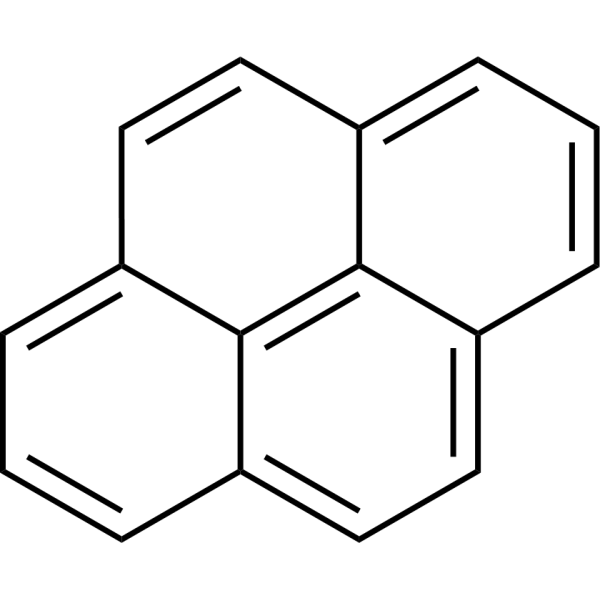
    Pyrene
    1 Publications Verification

    Benzo[def]phenanthrene

    Environmental Pollutants Biochemical Assay Reagents Others
    Pyrene is a polycyclic aromatic hydrocarbon (PAH) composed of four fused benzene rings. It has a distinct aromatic odor, produced by incomplete combustion of organic matter. Pyrene exhibits strong fluorescence, emitting in the blue region of the spectrum, making it useful as a probe for studying molecular interactions in solution and on surfaces. Pyrene is also used as a model compound for the study of PAHs in various environments and biological systems because of its ubiquity in these environments. However, long-term exposure to pyrene has been associated with potential health risks, including carcinogenicity and mutagenicity.
    Pyrene
  • HY-W014075

    Aryl Hydrocarbon Receptor Cytochrome P450 Collagen Inflammation/Immunology
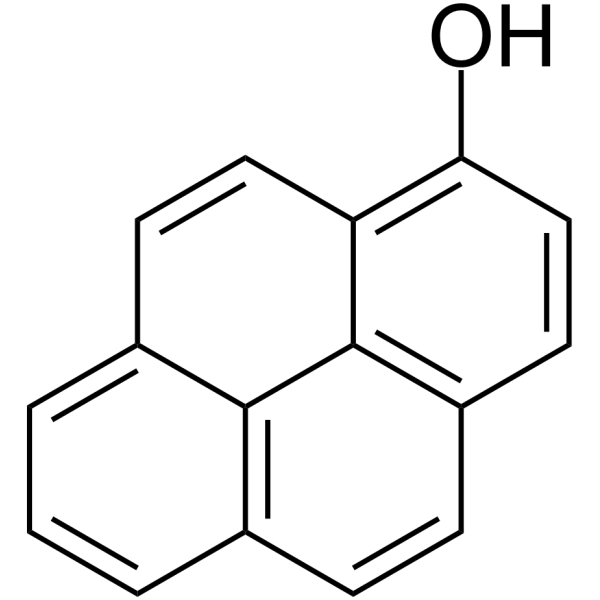
    1-Hydroxypyrene, a biomarker of exposure to polycyclic aromatic hydrocarbons (PAHs), is analyzed in urine samples. 1-Hydroxypyrene is the major biomarker of exposure to pyrenes. 1-Hydroxypyrene is the orally active agonist for aryl hydrocarbon receptor (AhR) and can lead to renal fibrosis .
    1-Hydroxypyrene
  • HY-W016969

    Environmental Pollutants Bacterial Interleukin Related Keap1-Nrf2 NF-κB Infection Cancer
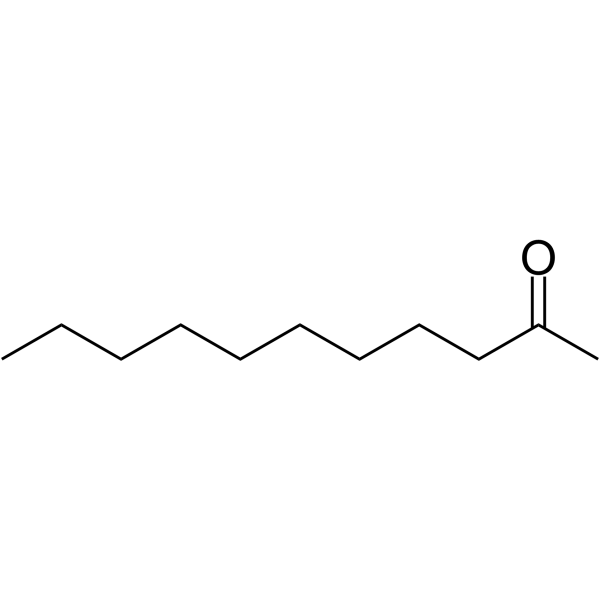
    2-Undecanone is an orally active organic ketone. 2-Undecanone exerts antibacterial effects by inhibiting bacterial chaperone systems and interfering with the refolding of heat-inactivated proteins. 2-Undecanone also ameliorates asthmatic inflammation and airway remodeling by blocking the NF-κB pathway, and activates the Nrf2 pathway to reduce oxidative damage and prevent lung cancer induced by Benzo[a]pyrene (HY-107377). 2-Undecanone can be used in research related to cancer, asthma and infections .
    2-Undecanone
  • HY-107377S

    Endogenous Metabolite Cancer
    Benzo[a]pyrene-d12 is the deuterium labeled Benzo[a]pyrene . Benzo[a]pyrene shows lung carcinogenicity in animal models, and it is frequently used in chemoprevention studies .
    Benzo[a]pyrene-d12
  • HY-124211

    Environmental Pollutants MDM-2/p53 Aryl Hydrocarbon Receptor Cancer
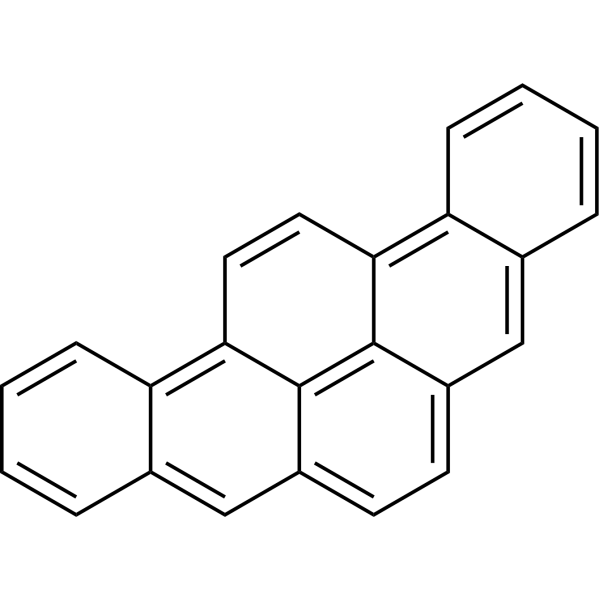
    Dibenzo (a,i) pyrene is a polycyclic aromatic hydrocarbon and also a carcinogenic ligand of the TCDD (Ah) receptor. Dibenzo (a,i) pyrene binds to the TCDD (Ah) receptor in rat liver. Dibenzo (a,i) pyrene induces DNA adduct formation and upregulates the protein levels of p53 and p21 WAF1 in diploid lung fibroblasts. Dibenzo (a,i) pyrene alters the cell cycle distribution of diploid lung fibroblasts, increasing the proportion of cells in the S phase, decreasing the proportions of cells in the G0/G1 and G2/M phases, and causing S phase delay/arrest. Dibenzo (a,i) pyrene is applicable for cancer research .
    Dibenzo(a,i)pyrene
  • HY-D0142

    Environmental Pollutants Fluorescent Dye Others
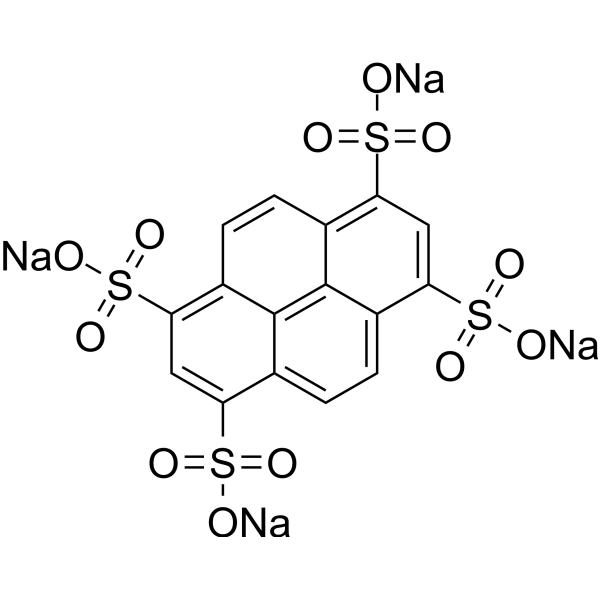
    Pyrene-1,3,6,8-tetrasulfonic acid tetrasodium is a fluorescent dye and pH indicator, also as a ligand of multifunctional metal-organic framework. Pyrene-1,3,6,8-tetrasulfonic acid tetrasodium has been used to detect CO2 release .
    Pyrene-1,3,6,8-tetrasulfonic acid tetrasodium
  • HY-W014075S

    Isotope-Labeled Compounds Aryl Hydrocarbon Receptor Cytochrome P450 Collagen Inflammation/Immunology
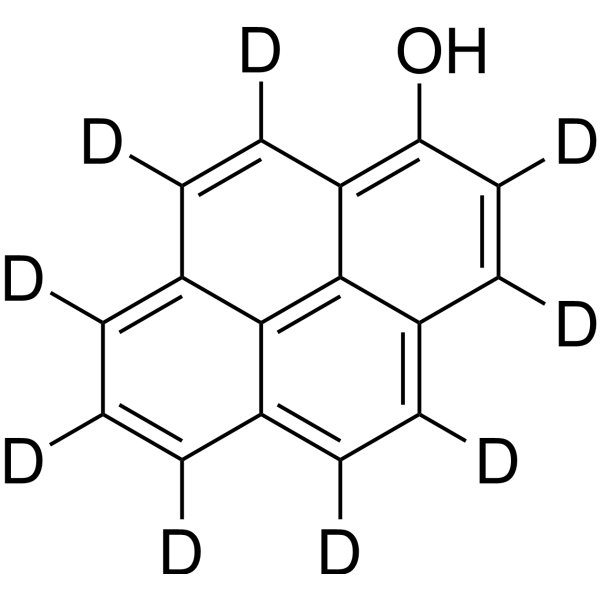
    1-Hydroxypyrene-d9 is the deuterium labeled 1-Hydroxypyrene (HY-W014075). 1-Hydroxypyrene, a biomarker of exposure to polycyclic aromatic hydrocarbons (PAHs), is analyzed in urine samples. 1-Hydroxypyrene is the major biomarker of exposure to pyrenes. 1-Hydroxypyrene is the orally active agonist for aryl hydrocarbon receptor (AhR) and can lead to renal fibrosis .
    1-Hydroxypyrene-d9
  • HY-150627S

    Isotope-Labeled Compounds Others
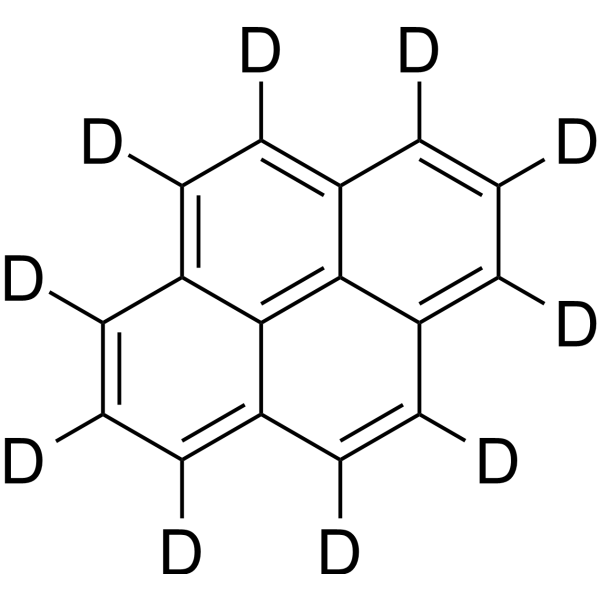
    Pyrene-d10 is the deuterium labeled Pyrene .
    Pyrene-d10
  • HY-107377R

    3,4-Benzopyrene (Standard)

    Reference Standards Endogenous Metabolite Cancer
    Benzo[a]pyrene (Standard) is the analytical standard of Benzo[a]pyrene. This product is intended for research and analytical applications. Benzo[a]pyrene shows lung carcinogenicity in animal models, and it is frequently used in chemoprevention studies.
    Benzo[a]pyrene (Standard)
  • HY-23499

    Environmental Pollutants Aryl Hydrocarbon Receptor Inflammation/Immunology Cancer
    Indeno[1,2,3-cd]pyrene is a polycyclic aromatic hydrocarbon with moderate cytotoxicity in human pulmonary alveolar epithelial cells HPAEpiC. Indeno[1,2,3-cd]pyrene enhances allergic lung infammation via aryl hydrocarbon receptor .
    Indeno[1,2,3-cd]pyrene
  • HY-D1364

    Biochemical Assay Reagents Others
    Pyrene maleimide is a polyaromatic fluorescent hydrocarbon with a termininal maleimide group. The maleimide group will react with a thiol group to form a covalent bond.
    Pyrene maleimide
  • HY-W016103

    Bacterial Drug Intermediate Infection
    1-Hydroxy-2-naphthoic acid is a ubiquitous bicyclic intermediate metabolite in the microbial degradation process of polycyclic aromatic hydrocarbons (PAHs). 1-Hydroxy-2-naphthoic acid can be converted into 1,2-naphthalenediol, which enters the naphthalene degradation pathway and participates in the tricarboxylic acid (TCA) cycle to achieve complete mineralization .
    1-Hydroxy-2-naphthoic acid
  • HY-W141127

    Biochemical Assay Reagents Cancer
    1-(Bromomethyl)pyrene is a Br compound with antitumor activity. 1-(Bromomethyl)pyrene is widely used in the synthesis of fluorophores for the fluorescent sensing of variety of analytes. 1-(Bromomethyl)pyrene can be also used in the synthesis of photoinitiators (PIs) .
    1-(Bromomethyl)pyrene
  • HY-W090065

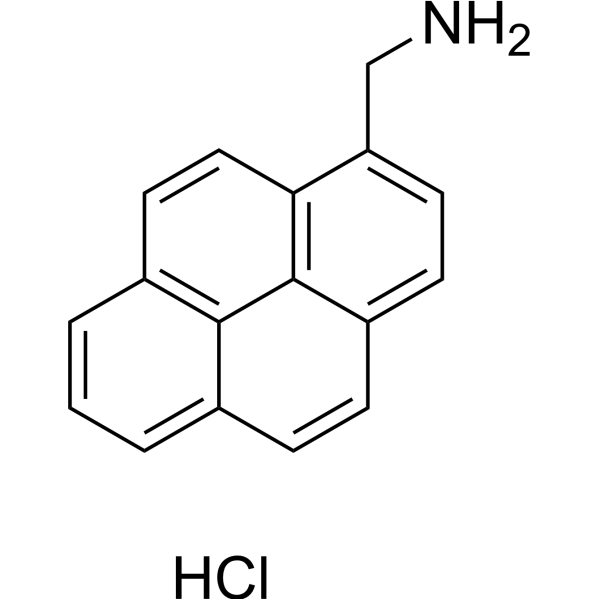
    1-Pyrenemethylamine hydrochloride

    Biochemical Assay Reagents Others
    Pyren-1-ylmethanamine hydrochloride, Pyren-1-ylmethanamine hydrochloride is commonly used as a fluorescent probe in biochemistry and molecular biology to detect and study nucleic acids, proteins and other biomolecules, moreover, it has been used in analytical chemistry Among them, for the detection of heavy metals and other pollutants in environmental samples, the pyrene group in the molecule exhibits strong fluorescence properties, which makes it useful as a sensitive and selective detector in various applications.
    Pyren-1-ylmethanamine hydrochloride
  • HY-132860S

    Isotope-Labeled Compounds Others
    Benzo[e]pyrene-d12 is the deuterium labeled Benzo[e]pyrene .
    Benzo[e]pyrene-d12
  • HY-W074644

    4,4',4'',4'''-(Pyrene-1,3,6,8-tetrayl)tetrabenzoic acid

    MOFs Others
    1,3,6,8-Tetrakis[p-benzoic acid]pyrene (4,4',4'',4'''-(Pyrene-1,3,6,8-tetrayl)tetrabenzoic acid) is a metal-organic framework (MOF).
    1,3,6,8-Tetrakis[p-benzoic acid]pyrene
  • HY-23499S

    Isotope-Labeled Compounds Others
    Indeno[1,2,3-cd]pyrene-d12 is the deuterium labeled Indeno[1,2,3-cd]pyrene[1].
    Indeno[1,2,3-cd]pyrene-d12
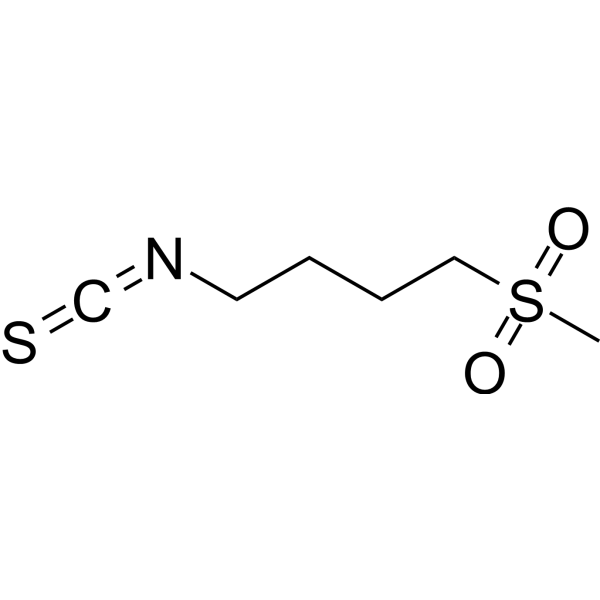
  • HY-121213

    Cytochrome P450 Cancer
    Erysolin is a CYP1A inhibitor with antigenic toxicity. Erysolin reduces benzo(a)pyrene-induced genotoxicity .
    Erysolin
  • HY-151750

    Fluorescent Dye Phosphoramidites Nucleoside Antimetabolite/Analog Others
    Pyrene phosphoramidite Du is a click chemistry reagent containing pyrene groups. The pyrene group in Pyrene phosphoramidite Du can be inserted into DNA with strong blue fluorescence.
    Pyrene phosphoramidite dU
  • HY-137348

    Biochemical Assay Reagents Others
    10-Pyrene-PC is a biochemical assay reagent.
    10-Pyrene-PC
  • HY-W112104

    MOFs Others
    Pyrene 1,3,6,8-tetracarboxylic acid is a metal-organic framework (MOF).
    Pyrene 1,3,6,8-tetracarboxylic acid
  • HY-141095

    PROTAC Linkers Cancer
    Pyrene-PEG5-propargyl is a PEG-based PROTAC linker that can be used in the synthesis of PROTACs .
    Pyrene-PEG5-propargyl
  • HY-N8933

    Others Others
    Glucolimnanthin is a plant glucoside that can be isolated from Limnanthes douglasii. Glucolimnanthin can increase metabolic activation of benzo[a]pyrene (B[a]P) in cultured mammalian cells
    Glucolimnanthin
  • HY-W046846

    Aryl Hydrocarbon Receptor Cancer
    Corannulene is an agonist of aryl hydrocarbon receptor (AhR). Corannulene causes less cytotoxic responses than Benzo[a]pyrene (HY-107377) in hepatoma cells. Corannulene is promising for research of cancers .
    Corannulene
  • HY-179391

    Telomerase Apoptosis Cancer
    Telomerase-IN-9 is a potent and selective telomerase inhibitor. Telomerase-IN-9 significantly reduces telomerase activity by binding to hTERT, leading to decreased telomerase function. Telomerase-IN-9 induces apoptosis and inhibits colony formation. Telomerase-IN-9 reduces tumor burden, restores antioxidantbalance, and preserves lung architecture in a Benzo[a]pyrene (HY-107377)-induced lung cancer mouse model. Telomerase-IN-9 can be used for the research of lung cancer .
    Telomerase-IN-9
  • HY-147170

    Fluorescent Dye Others
    (1,1'-Dipyrenyl)dimethyl ether exhibits intramolecular excimer fluorescence in competition with fluorescence from the locally excited pyrene chromophore. (1,1'-Dipyrenyl)dimethyl ether is soluble in synthetic phospholipid membranes .
    (1,1'-Dipyrenyl)dimethyl ether
  • HY-W014075R

    Reference Standards Aryl Hydrocarbon Receptor Cytochrome P450 Collagen Inflammation/Immunology
    1-Hydroxypyrene (Standard) is the analytical standard of 1-Hydroxypyrene (HY-W014075). This product is intended for research and analytical applications. 1-Hydroxypyrene, a biomarker of exposure to polycyclic aromatic hydrocarbons (PAHs), is analyzed in urine samples. 1-Hydroxypyrene is the major biomarker of exposure to pyrenes. 1-Hydroxypyrene is the orally active agonist for aryl hydrocarbon receptor (AhR) and can lead to renal fibrosis.
    1-Hydroxypyrene (Standard)
  • HY-103609R

    Benzo[def]phenanthrene (Standard)

    Biochemical Assay Reagents Reference Standards Others
    Pyrene (Standard) is the analytical standard of Pyrene. This product is intended for research and analytical applications. Pyrene is a polycyclic aromatic hydrocarbon (PAH) composed of four fused benzene rings. It has a distinct aromatic odor, produced by incomplete combustion of organic matter. Pyrene exhibits strong fluorescence, emitting in the blue region of the spectrum, making it useful as a probe for studying molecular interactions in solution and on surfaces. Pyrene is also used as a model compound for the study of PAHs in various environments and biological systems because of its ubiquity in these environments. However, long-term exposure to pyrene has been associated with potential health risks, including carcinogenicity and mutagenicity.
    Pyrene (Standard)
  • HY-174951

    Biochemical Assay Reagents Others
    Pyrene-PEG1000-OH is a PEG derivative with Pyrene and hydroxyl (OH) functional groups that can be used for drug delivery .
    Pyrene-PEG1000-OH
  • HY-174950B

    Biochemical Assay Reagents Others
    DSPE-PEG3400-Pyrene is a lipid-containing PEG derivative that can be used to form micelles as nanoparticles for drug delivery .
    DSPE-PEG3400-Pyrene
  • HY-23499R

    Reference Standards Aryl Hydrocarbon Receptor Inflammation/Immunology Cancer
    Indeno[1,2,3-cd]pyrene (Standard) is the analytical standard of Indeno[1,2,3-cd]pyrene. This product is intended for research and analytical applications. Indeno[1,2,3-cd]pyrene is a polycyclic aromatic hydrocarbon with moderate cytotoxicity in human pulmonary alveolar epithelial cells HPAEpiC. Indeno[1,2,3-cd]pyrene enhances allergic lung infammation via aryl hydrocarbon receptor .
    Indeno[1,2,3-cd]pyrene (Standard)
  • HY-W441021

    Liposome Others
    DSPE-Pyrene is a phospholipid molecule with polycyclic aromatic hydrocarbon, and can be used for drug encapsulation, such as drug loaded liposomes or nanoparticles. Pyrene is a fluorescent probe whose spectrum is sensitive to the polarity of its environment.
    DSPE-Pyrene
  • HY-D1548

    Fluorescent Dye Others
    1-(Azidomethyl)pyrene is a fluorescent dye . 1-(Azidomethyl)pyrene is a click chemistry reagent, it contains an Azide group and can undergo copper-catalyzed azide-alkyne cycloaddition reaction (CuAAc) with molecules containing Alkyne groups. It can also undergo strain-promoted alkyne-azide cycloaddition (SPAAC) reactions with molecules containing DBCO or BCN groups.
    1-(Azidomethyl)pyrene
  • HY-141093

    PROTAC Linkers Cancer
    Pyrene-PEG5-alcohol is a PEG-based PROTAC linker that can be used in the synthesis of PROTACs .
    Pyrene-PEG5-alcohol
  • HY-141094

    PROTAC Linkers Cancer
    Pyrene-PEG5-biotin is a PEG-based PROTAC linker that can be used in the synthesis of PROTACs .
    Pyrene-PEG5-biotin
  • HY-N10021

    Others Others
    Benzo[e]pyrene occurs in fossil fuels and is a highly toxic member of a family of compounds called polyaromatic hydrocarbons (PAHs) .
    Benzo[e]pyrene
  • HY-D1295

    PROTAC Linkers Cancer
    Pyrene azide 3 is a PEG-based PROTAC linker that can be used in the synthesis of PROTACs . Pyrene azide 3 is a click chemistry reagent, it contains an Azide group and can undergo copper-catalyzed azide-alkyne cycloaddition reaction (CuAAc) with molecules containing Alkyne groups. It can also undergo strain-promoted alkyne-azide cycloaddition (SPAAC) reactions with molecules containing DBCO or BCN groups.
    Pyrene azide 3
  • HY-141092

    PROTAC Linkers Cancer
    Pyrene-PEG2-azide is a PEG-based PROTAC linker that can be used in the synthesis of PROTACs . Pyrene-PEG2-azide is a click chemistry reagent, it contains an Azide group and can undergo copper-catalyzed azide-alkyne cycloaddition reaction (CuAAc) with molecules containing Alkyne groups. It can also undergo strain-promoted alkyne-azide cycloaddition (SPAAC) reactions with molecules containing DBCO or BCN groups.
    Pyrene-PEG2-azide
  • HY-123609

    PROTAC Linkers Cancer
    Pyrene-amido-PEG4-azide is a PEG-based PROTAC linker that can be used in the synthesis of PROTACs . Pyrene-amido-PEG4-azide is a click chemistry reagent, it contains an Azide group and can undergo copper-catalyzed azide-alkyne cycloaddition reaction (CuAAc) with molecules containing Alkyne groups. It can also undergo strain-promoted alkyne-azide cycloaddition (SPAAC) reactions with molecules containing DBCO or BCN groups.
    Pyrene-amido-PEG4-azide
  • HY-130397

    PROTAC Linkers Cancer
    Pyrene-amido-PEG4-CH2CH2COOH is a PEG-based PROTAC linker that can be used in the synthesis of PROTACs .
    Pyrene-amido-PEG4-CH2CH2COOH
  • HY-W543743

    1-Vinylpyrene

    Biochemical Assay Reagents Cancer
    1-Ethenylpyrene (1-Vinylpyrene) is an anti-chemical carcinogen that inhibits the formation of skin tumors initiated by either DMBA (HY-W011845) or Benzo[a]pyrene (HY-107377) .
    1-Ethenylpyrene
  • HY-P4579

    Biochemical Assay Reagents Others
    Pyr-Phe-OH is an effective pyrene-based hydrogel. Pyr Phe OH can self-assemble into hydrogels in the range of pH=7.5-14.0, and also shows a very low gel concentration (0.037% (w/v)) in phosphate buffer .
    Pyr-Phe-OH
  • HY-D0072

    1-(4,6-Dichloro-1,3,5-triazin-2-yl)pyrene

    Fluorescent Dye Others
    1-(Dichloro-1,3,5-triazinyl)-pyrene (1-(4,6-Dichloro-1,3,5-triazin-2-yl)pyrene) is a multifunctional dye. Dyes are important tools in biological experiments. They can help researchers observe and analyze cell structures, track biomolecules, evaluate cell functions, distinguish cell types, detect biomolecules, study tissue pathology and monitor microorganisms. Their applications range from basic scientific research to clinical A wide range of diagnostics. Dyes are also widely used in traditional fields such as textile dyeing, as well as in emerging fields such as functional textile processing, food pigments and dye-sensitized solar cells.
    1-(Dichloro-1,3,5-triazinyl)-pyrene
  • HY-W190974

    Perylene, 3-ethynyl-

    Biochemical Assay Reagents Others
    3-Ethynylperylene (Perylene, 3-ethynyl-) is a polyaromatic hydrocarbon with five fused rings and has a terminal propargyl group. 3-Ethynyl perylene possesses intrinsic fluorescence and pyrene derivatives are known for their ability to intercalate dsDNA. The propargyl group can react with azide-bearing compounds to form stable triazole rings.
    3-Ethynylperylene
  • HY-W016969R

    Bacterial Reference Standards Infection Cancer
    2-Undecanone (Standard) is the analytical standard of 2-Undecanone (HY-W016969). This product is intended for research and analytical applications. 2-Undecanone is an orally active organic ketone. 2-Undecanone exerts antibacterial effects by inhibiting bacterial chaperone systems and interfering with the refolding of heat-inactivated proteins. 2-Undecanone also ameliorates asthmatic inflammation and airway remodeling by blocking the NF-κB pathway, and activates the Nrf2 pathway to reduce oxidative damage and prevent lung cancer induced by Benzo[a]pyrene (HY-107377). 2-Undecanone can be used in research related to cancer, asthma and infections .
    2-Undecanone (Standard)
  • HY-N9782

    Others Infection Others
    2,7-Dihydroxy-1,6-dimethylpyrene is a pyrene that can be isolated from the wetland plant Juncus acutus and inhibits growth of the freshwater green alga Selenastrum capricornutum .
    2,7-Dihydroxy-1,6-dimethylpyrene
  • HY-W075545

    MOFs Others
    Pyrene-4,5-dione is a metal-organic framework (MOF).
    Pyrene-4,5-dione
  • HY-182162

    Phosphoramidites
    5'-Pyrene cap phosphoramidite is a phosphoramidite that can be used in the synthesis of oligonucleotides.
    5'-Pyrene cap phosphoramidite

Inquiry Online

Your information is safe with us. * Required Fields.

Salutation


Country or Region *

Applicant Name *


Organization Name *

Department *


Email Address *


Product Name *

Cat. No.


Requested quantity *

Phone Number *


Remarks

Inquiry Online

Inquiry Information

Product Name:
Cat. No.:
Quantity:
MCE Japan Authorized Agent: