From 11:00 pm to 12:00 pm EST ( 8:00 pm to 9:00 pm PST ) on January 6th, the website will be under maintenance. We are sorry for the inconvenience. Please arrange your schedule properly.
Propylparaben (Propyl parahydroxybenzoate) is an antibacterial preservative that can be produced by plants and bacteria. Propylparaben is commonly used in cosmetics, pharmaceuticals and foods. Propylparaben disrupts follicular growth and steroidogenic function by altering cell cycle, apoptosis and steroidogenic pathways. Propylparaben also reduced sperm count and motility in rats .
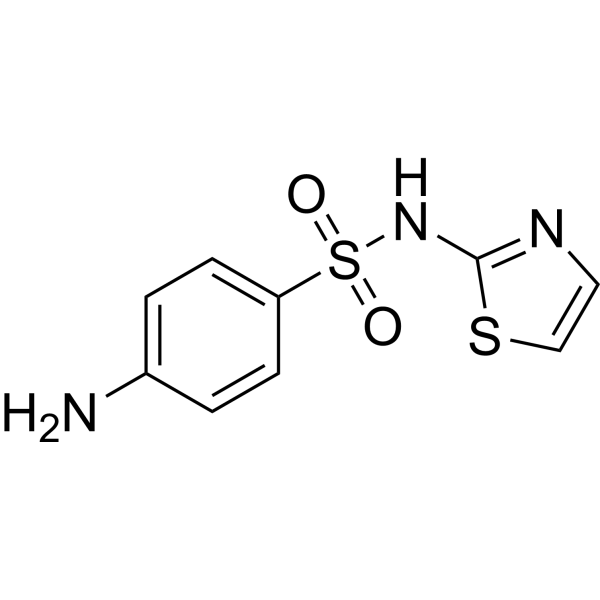
Sulfathiazole is an orally active, endocrine disruptor targeting the steroidogenic pathway, specifically enhancing the activity of CYP19 in human adrenal cancer cells (H295R) and upregulating the mRN expression of CYP17, CYP19, and 3β-HSD. Sulfathiazole increases the production of 17-estradiol (E2) and has endocrine disrupting effects on aquatic organisms such as the Japanese medaka fish .
6:2 Cl-PFAES is an orally effective alternative to Perfluorooctane sulfonate. 6:2 Cl-PFAES significantly inhibits the growth of zebrafish and induces reproductive toxicity. 6:2 Cl-PFAES reduces the relative weights of epididymis and testis in male BALB/c mice. 6:2 Cl-PFAES can be used in the chrome plating industry .
LRH-1 agonist-2 (Compound 6N) is a selective, full LRH-1 agonist with an EC50 of 15.7 nM. LRH-1 agonist-2 directly interacts with the Thr352 and His390 residues in the LRH-1 binding pocket, promotes allosteric signaling to the activation function surface (AFS), stabilizes the AFS and enhances coactivator recruitment. LRH-1 agonist-2 induces the anti-inflammatory cytokine IL-10, and reduces the pro-inflammatory cytokines IL-1β and TNFα. LRH-1 modulator-1 exerts anti-inflammatory effects in intestinal organoids. LRH-1 modulator-1 can be used in studies related to inflammatory bowel disease .
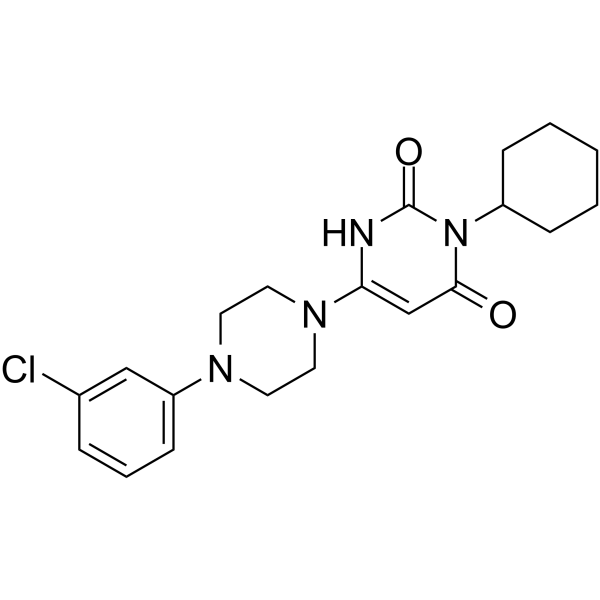
ML-180 (SR1848) is a potent orphan nuclear receptor liver receptor homolog 1 (LRH-1; NR5A2) inverse agonist with an IC50 of 3.7 μM. ML-180 is inactive for steroidogenic factor-1 (SF-1; NR5A1; IC50>10 μM). ML-180 has the potential for LRH-1-dependent cancers .
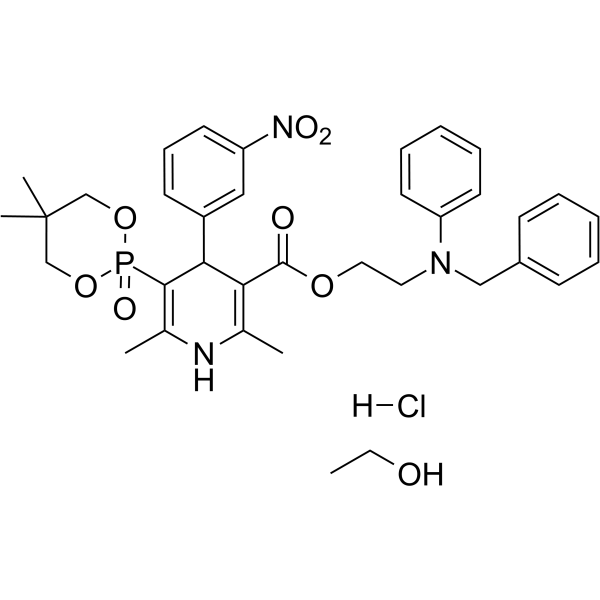
Efonidipine (NZ-105) hydrochloride monoethanolate is an orally active dual L-type and T-type calcium channel blocker (CCB) with IC50 values of 1.8 and 350 nM, respectively. Efonidipine hydrochloride monoethanolate inhibits SARS-CoV-2 main protease. Efonidipine hydrochloride monoethanolate modulates adrenal steroidogenesis by increasing the expression of steroidogenic acute regulatory protein (StAR), dbcAMP-or angiotensin II-induced StAR mRNA expression and DHEA-S production, while suppressing the biosynthesis of aldosterone and cortisol. Efonidipine hydrochloride monoethanolate reduces plasma aldosterone levels in vivo. Efonidipine hydrochloride monoethanolate improves cardiac function in heart failure models by inhibiting T-type calcium channels (via both tonic and use-dependent blockade), independently of blood pressure reduction. Efonidipine hydrochloride monoethanolate can be used for research in hypertension, heart failure, and disorders involving dysregulated steroid hormone synthesis .
Iprodione is an orally active diformimide fungicide. Iprodione can specifically cause oxidative damage by producing free radicals (ROS). Iprodione is also an antiandrogen agent that delays adolescent development in rats and reduces sexual behavior and reproductive ability in rats .
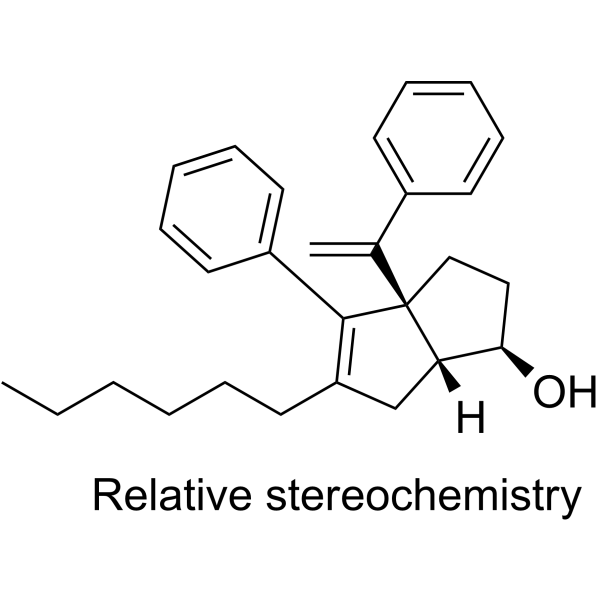
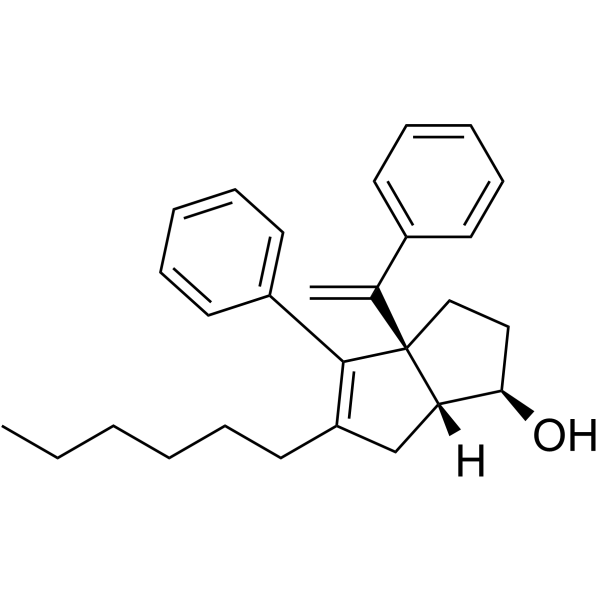
RJW100 is a potent liver receptor homolog 1 (LRH-1, NR5A2) and steroidogenic factor-1 (SF-1, NR5A1) agonist with pEC50s of 6.6 and 7.5, respectively . RJW100 also causes strong activation of the miR-200c (miRNA-200c, microRNA-200c) promoter .
AG-205 is a progesterone receptor membrane component 1 (PGRMC1) antagonist and CGT inhibitor, with an IC50 of 50 μM against rat CGT. AG-205 exhibits antimitotic, antimigratory and anti-invasive activities. AG-205 increases the expression of genes encoding cholesterol biosynthesis pathway or steroidogenic enzymes. AG-205 promotes the regulation of cell cycle by apoptosis and reduces the migratory and invasive capacities of ovarian and breast cancer cells. AG-205 can be used in research related to renal cancer and breast cancer .
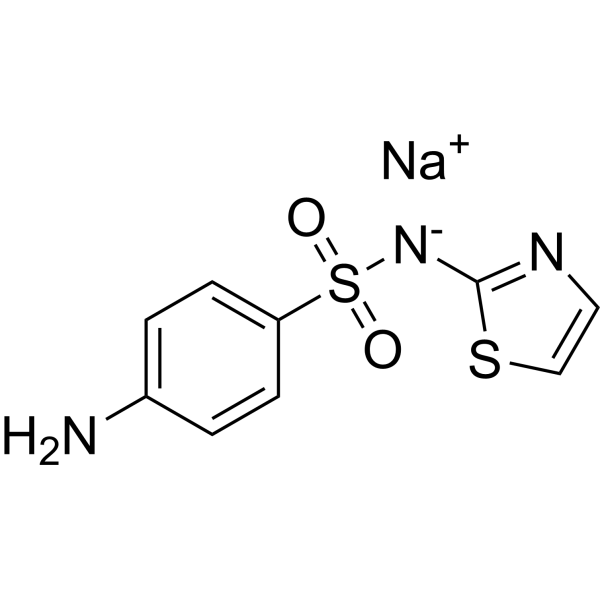
Sulfathiazole sodium is an orally active, endocrine disruptor targeting the steroidogenic pathway, specifically enhancing the activity of CYP19 in human adrenal cancer cells (H295R) and upregulating the mRN expression of CYP17, CYP19, and 3β-HSD. Sulfathiazole sodium increases the production of 17-estradiol (E2) and has endocrine disrupting effects on aquatic organisms such as the Japanese medaka fish. Sulfathiazole sodium is also a cathodic corrosion inhibitor. It inhibits the corrosion of copper by chloride ions through chemical and physical adsorption on the copper surface, reduces the corrosion current density and shifts the corrosion potential negatively .
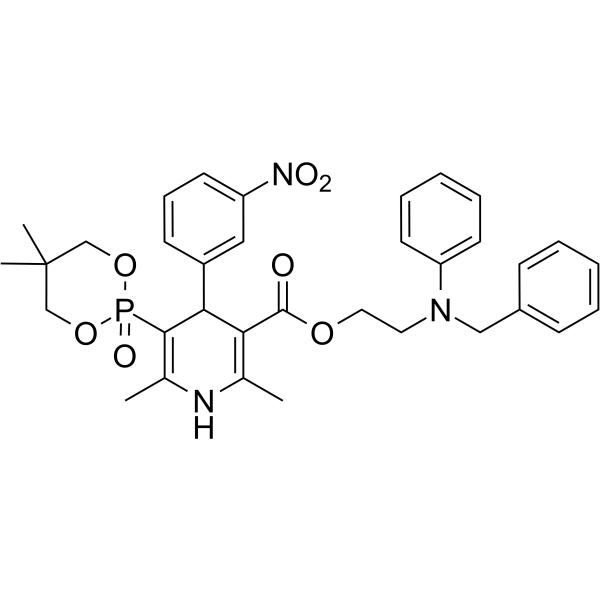
Efonidipine (NZ-105) is an orally active dual L-type and T-type calcium channel blocker (CCB) with IC50 values of 1.8 and 350 nM, respectively. Efonidipine inhibits SARS-CoV-2 main protease. Efonidipine modulates adrenal steroidogenesis by increasing the expression of steroidogenic acute regulatory protein (StAR), dbcAMP-or angiotensin II-induced StAR mRNA expression and DHEA-S production, while suppressing the biosynthesis of aldosterone and cortisol. Efonidipine reduces plasma aldosterone levels in vivo. Efonidipine improves cardiac function in heart failure models by inhibiting T-type calcium channels (via both tonic and use-dependent blockade), independently of blood pressure reduction. Efonidipine can be used for research in hypertension, heart failure, and disorders involving dysregulated steroid hormone synthesis .
SID 7969543 is a selective SF-1 (steroidogenic factor 1, NR5A1) inhibitor with an IC50 of 760 nM. SID 7969543 inhibits SF-1-triggered luciferase expression with IC50 of 30 nM. SF-1 is a transcription factor belonging to the nuclear receptor superfamily .
Propylparaben-d4 is the deuterium labeled Propylparaben . Propylparaben (Propyl parahydroxybenzoate) is an antimicrobial preservative which can be produced naturally by plants and bacteria. Propylparaben is prevalently used in cosmetics, pharmaceuticals, and foods. Propylparaben disrupts antral follicle growth and steroidogenic function by altering the cell-cycle, apoptosis, and steroidogenesis pathways. Propylparaben also decreases sperm number and motile activity in rats .
RR-RJW100, the enantiomer of RJW100, is an nuclear receptor liver receptor homolog 1 (LRH-1) and steroidogenic factor 1 (SF-1) agonist. RJW100 can be synthesized as two enantiomers, RR-RJW100 and SS-RJW100, with RR-RJW100 shown to be the more potent LRH-1 agonist. RR-RJW100 is involved in the regulation of metabolic homeostasis and is used in studies of diabetes, liver disease and inflammatory bowel disease .
Tosylate-DPA-714 is a GMP-grade precursor for the radiosynthesis of DPA-714 (HY-122607). It crosses the blood-brain barrier and exhibits steroidogenic activity. DPA-714 is a specific ligand for the 18 kDa translocator protein (TSPO) with a Ki of 7.0 nM. Tosylate-DPA-714 is safe and does not bind to central benzodiazepine receptors (benzodiazepine receptor). As a radiolabeling precursor, Tosylate-DPA-714 reacts with 18F via nucleophilic aliphatic substitution to form 18F-DPA-714, enabling specific targeted binding to TSPO. 18F-DPA-714 accurately reflects the level of neuroinflammation mediated by microglial activation, and is used for PET molecular imaging of neurological diseases such as Alzheimer's disease and multiple sclerosis .
Propylparaben (Standard) is the analytical standard of Propylparaben. This product is intended for research and analytical applications. Propylparaben (Propyl parahydroxybenzoate) is an antibacterial preservative that can be produced by plants and bacteria. Propylparaben is commonly used in cosmetics, pharmaceuticals and foods. Propylparaben disrupts follicular growth and steroidogenic function by altering cell cycle, apoptosis and steroidogenic pathways. Propylparaben also reduced sperm count and motility in rats .
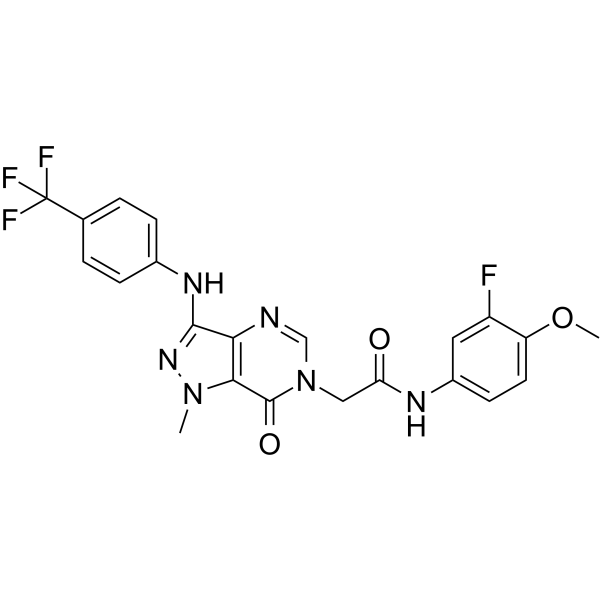
SF-1 antagonist-1 (compound 11) is a antagonist of steroidogenic factor 1 (SF-1). SF-1 antagonist-1 affects SF-1 transcriptional activity with an EC50 value of <200 nM. SF-1 antagonist-1 inhibits the proliferation of Rat Leydig tumor cells. SF-1 antagonist-1 can be used for the research of cancer .
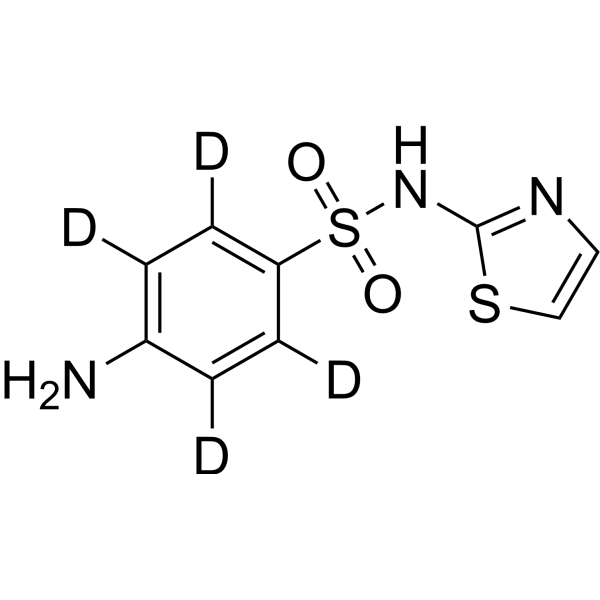
Sulfathiazole-d4 is a deuterium labeled Sulfathiazole. Sulfathiazole is an orally active, endocrine disruptor targeting the steroidogenic pathway, specifically enhancing the activity of CYP19 in human adrenal cancer cells (H295R) and upregulating the mRN expression of CYP17, CYP19, and 3β-HSD. Sulfathiazole increases the production of 17-estradiol (E2) and has endocrine disrupting effects on aquatic organisms such as the Japanese medaka fish .
Sulfathiazole (100 μg/mL in acetonitrile) is an orally active, endocrine disruptor targeting the steroidogenic pathway, specifically enhancing the activity of CYP19 in human adrenal cancer cells (H295R) and upregulating the mRN expression of CYP17, CYP19, and 3β-HSD. Sulfathiazole (100 μg/mL in acetonitrile) increases the production of 17-estradiol (E2) and has endocrine disrupting effects on aquatic organisms such as the Japanese medaka fish. Sulfathiazole (100 μg/mL in acetonitrile) is also a cathodic corrosion inhibitor. Sulfathiazole (100 μg/mL in acetonitrile) inhibits the corrosion of copper by chloride ions through chemical and physical adsorption on the copper surface, reduces the corrosion current density and shifts the corrosion potential negatively .
Propyl paraben- 13C6 (Propyl parahydroxybenzoate- 13C6) is 13C labeled Propylparaben. Propylparaben (Propyl parahydroxybenzoate) is an antibacterial preservative that can be produced by plants and bacteria. Propylparaben is commonly used in cosmetics, pharmaceuticals and foods. Propylparaben disrupts follicular growth and steroidogenic function by altering cell cycle, apoptosis and steroidogenic pathways. Propylparaben also reduced sperm count and motility in rats .
RJW103 TFA is an acid-stable SF-1 (NR5A1) and LRH-1 agonist with pEC50 values of 6.5 and 5.9, respectively. RJW103 TFA activates SF-1- and LRH-1-mediated transcription of endogenous target genes. RJW103 TFA can be used in research on cancer, endocrinology and metabolic diseases, such as adrenocortical tumors .
LX1 is an anti-prostate cancer compound that targets androgen receptor (AR), AR variants and steroidogenic enzyme AKR1C3. LX1 inhibits the enzymatic activity of AKR1C3, reduces the conversion of androstenedione to testosterone and reduces the expression of AR and AR-V7 and downregulates their target genes. LX1 overcomes the resistance of tumor cells to Enzalutamide (HY-70002), and the combination with Enzalutamide (HY-70002) further inhibits tumor growth .
Iprodione (Standard) is the analytical standard of Iprodione. This product is intended for research and analytical applications. Iprodione is an orally active diformimide fungicide. Iprodione can specifically cause oxidative damage by producing free radicals (ROS). Iprodione is also an antiandrogen agent that delays adolescent development in rats and reduces sexual behavior and reproductive ability in rats .
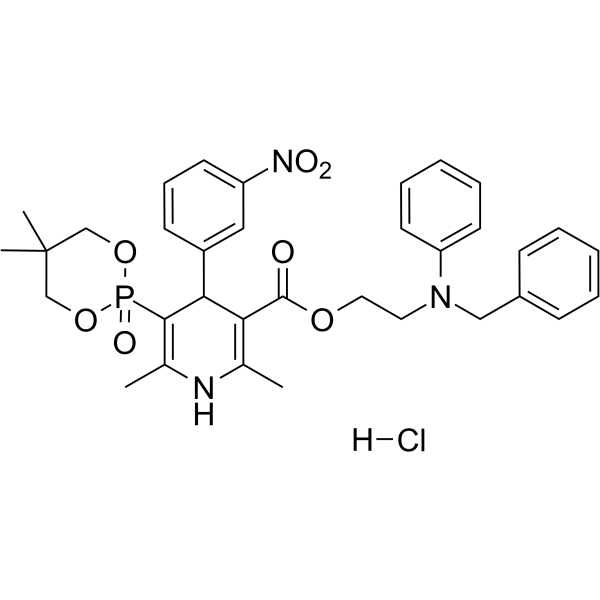
Efonidipine (NZ-105) hydrochloride is an orally active dual L-type and T-type calcium channel blocker (CCB) with IC50 values of 1.8 and 350 nM, respectively. Efonidipine hydrochloride inhibits SARS-CoV-2 main protease. Efonidipine hydrochloride modulates adrenal steroidogenesis by increasing the expression of steroidogenic acute regulatory protein (StAR), dbcAMP-or angiotensin II-induced StAR mRNA expression and DHEA-S production, while suppressing the biosynthesis of aldosterone and cortisol. Efonidipine hydrochloride reduces plasma aldosterone levels in vivo. Efonidipine hydrochloride improves cardiac function in heart failure models by inhibiting T-type calcium channels (via both tonic and use-dependent blockade), independently of blood pressure reduction. Efonidipine hydrochloride can be used for research in hypertension, heart failure, and disorders involving dysregulated steroid hormone synthesis .
[Deamino-Pen1,Val4,D-Arg8]-vasopressin (AVP-A) is an arginine-vasopressin (AVP) antagonist. AVP-A can significantly lower plasma aldosterone concentration in rats. AVP-A can be used for the research of the growth and steroidogenic capacity of rat adrenal zona glomerulosa .
Lys-γ3-MSH(human) is a melanocortin peptide derived from the C-terminal of the fragment of pro-opiomelanocortin (POMC). Lys-γ3-MSH(human) potentiates the steroidogenic response of the rat adrenal to adrenocorticotrophin (ACTH). Lys-γ3-MSH(human) is a potent stimulator of lipolysis with an apparent EC50 of 3.56 nM. Lys-γ3-MSH(human) can activate hormone sensitive lipase (HSL) and Perilipin A resulting in lipolysis .
Lys-γ3-MSH(human) TFA is a melanocortin peptide derived from the C-terminal of the fragment of pro-opiomelanocortin (POMC). Lys-γ3-MSH(human) TFA potentiates the steroidogenic response of the rat adrenal to adrenocorticotrophin (ACTH). Lys-γ3-MSH(human) TFA is a potent stimulator of lipolysis with an apparent EC50 of 3.56 nM. Lys-γ3-MSH(human) TFA can activate hormone sensitive lipase (HSL) and Perilipin A resulting in lipolysis .
Diethylumbelliferyl phosphate (DEUP), a selective and potent inhibitor of cholesterol esterase, does not inhibit protein kinase activity A in vitro, and it effectively disrupts steroidogenesis by blocking the transport of cholesterol into the mitochondria of steroidogenic cells, with an IC50 of 11.6 μM, potentially limiting dietary cholesterol absorption.
Iso-RJW100 (compound 24-endo) is a dual-liver receptor homologue-1 (LRH-1) and steroidogenic factor-1 (SF-1) agonist with pEC50 of 6.4 and 7.2, respectively .
Propylparaben (sodium) (Standard) is the analytical standard of Propylparaben (sodium). This product is intended for research and analytical applications. Propylparaben sodium (Propyl parahydroxybenzoate) is an antimicrobial preservative which can be produced naturally by plants and bacteria. Propylparaben sodium is prevalently used in cosmetics, pharmaceuticals, and foods. Propylparaben sodium disrupts antral follicle growth and steroidogenic function by altering the cell-cycle, apoptosis, and steroidogenesis pathways. Propylparaben sodium also decreases sperm number and motile activity in rats .
Propylparaben-d7 (Propyl parahydroxybenzoate-d7) is the deuterium labeled Propylparaben (HY-N2026) . Propylparaben (Propyl parahydroxybenzoate) is an antimicrobial preservative which can be produced naturally by plants and bacteria. Propylparaben is prevalently used in cosmetics, pharmaceuticals, and foods. Propylparaben disrupts antral follicle growth and steroidogenic function by altering the cell-cycle, apoptosis, and steroidogenesis pathways. Propylparaben also decreases sperm number and motile activity in rats .
SS-RJW100 is a enantiomer of RJW100, which is a racemic agonist of nuclear receptor liver receptor homolog 1 (LRH-1) and steroidogenic factor 1 (SF-1). SS-RJW100 promotes recruitment of coregulator protein fragments in vitro, recruits the transcriptional intermediary factor 2 (Tif2) coactivator to LRH-1. SS-RJW100 diminishes LRH-1 allosteric activation networks, shows poor thermal stability .
Sulfathiazole (Standard) is the analytical standard of Sulfathiazole (HY-B0507). This product is intended for research and analytical applications. Sulfathiazole is an orally active, endocrine disruptor targeting the steroidogenic pathway, specifically enhancing the activity of CYP19 in human adrenal cancer cells (H295R) and upregulating the mRN expression of CYP17, CYP19, and 3β-HSD. Sulfathiazole increases the production of 17-estradiol (E2) and has endocrine disrupting effects on aquatic organisms such as the Japanese medaka fish .
Sulfathiazole sodium (Standard) is the analytical standard of Berberine sodium (HY-B0507A). This product is intended for research and analytical applications. Sulfathiazole sodium is an orally active, endocrine disruptor targeting the steroidogenic pathway, specifically enhancing the activity of CYP19 in human adrenal cancer cells (H295R) and upregulating the mRN expression of CYP17, CYP19, and 3β-HSD. Sulfathiazole sodium increases the production of 17-estradiol (E2) and has endocrine disrupting effects on aquatic organisms such as the Japanese medaka fish. Sulfathiazole sodium is also a cathodic corrosion inhibitor. Sulfathiazole sodium inhibits the corrosion of copper by chloride ions through chemical and physical adsorption on the copper surface, reduces the corrosion current density and shifts the corrosion potential negatively .
Efonidipine (NZ-105) hydrochloride monoethanolate (Standard) is the analytical standard of Efonidipine hydrochloride monoethanolate (HY-12502AR). This product is intended for research and analytical applications. Efonidipine (NZ-105) hydrochloride monoethanolate is an orally active dual L-type and T-type calcium channel blocker (CCB) with IC50 values of 1.8 and 350 nM, respectively. Efonidipine hydrochloride monoethanolate inhibits SARS-CoV-2 main protease. Efonidipine hydrochloride monoethanolate modulates adrenal steroidogenesis by increasing the expression of steroidogenic acute regulatory protein (StAR), dbcAMP-or angiotensin II-induced StAR mRNA expression and DHEA-S production, while suppressing the biosynthesis of aldosterone and cortisol. Efonidipine hydrochloride monoethanolate reduces plasma aldosterone levels in vivo. Efonidipine hydrochloride monoethanolate improves cardiac function in heart failure models by inhibiting T-type calcium channels (via both tonic and use-dependent blockade), independently of blood pressure reduction. Efonidipine hydrochloride monoethanolate can be used for research in hypertension, heart failure, and disorders involving dysregulated steroid hormone synthesis .
SID 7969543 (Standard) is the analytical standard of SID 7969543 (HY-107404). This product is intended for research and analytical applications. SID 7969543 is a selective SF-1 (steroidogenic factor 1, NR5A1) inhibitor with an IC50 of 760 nM. SID 7969543 inhibits SF-1-triggered luciferase expression with IC50 of 30 nM. SF-1 is a transcription factor belonging to the nuclear receptor superfamily .
[Deamino-Pen1,Val4,D-Arg8]-vasopressin (AVP-A) is an arginine-vasopressin (AVP) antagonist. AVP-A can significantly lower plasma aldosterone concentration in rats. AVP-A can be used for the research of the growth and steroidogenic capacity of rat adrenal zona glomerulosa .
Lys-γ3-MSH(human) is a melanocortin peptide derived from the C-terminal of the fragment of pro-opiomelanocortin (POMC). Lys-γ3-MSH(human) potentiates the steroidogenic response of the rat adrenal to adrenocorticotrophin (ACTH). Lys-γ3-MSH(human) is a potent stimulator of lipolysis with an apparent EC50 of 3.56 nM. Lys-γ3-MSH(human) can activate hormone sensitive lipase (HSL) and Perilipin A resulting in lipolysis .
Lys-γ3-MSH(human) TFA is a melanocortin peptide derived from the C-terminal of the fragment of pro-opiomelanocortin (POMC). Lys-γ3-MSH(human) TFA potentiates the steroidogenic response of the rat adrenal to adrenocorticotrophin (ACTH). Lys-γ3-MSH(human) TFA is a potent stimulator of lipolysis with an apparent EC50 of 3.56 nM. Lys-γ3-MSH(human) TFA can activate hormone sensitive lipase (HSL) and Perilipin A resulting in lipolysis .
Propylparaben (Propyl parahydroxybenzoate) is an antibacterial preservative that can be produced by plants and bacteria. Propylparaben is commonly used in cosmetics, pharmaceuticals and foods. Propylparaben disrupts follicular growth and steroidogenic function by altering cell cycle, apoptosis and steroidogenic pathways. Propylparaben also reduced sperm count and motility in rats .
Propylparaben (Standard) is the analytical standard of Propylparaben. This product is intended for research and analytical applications. Propylparaben (Propyl parahydroxybenzoate) is an antibacterial preservative that can be produced by plants and bacteria. Propylparaben is commonly used in cosmetics, pharmaceuticals and foods. Propylparaben disrupts follicular growth and steroidogenic function by altering cell cycle, apoptosis and steroidogenic pathways. Propylparaben also reduced sperm count and motility in rats .
Propylparaben (sodium) (Standard) is the analytical standard of Propylparaben (sodium). This product is intended for research and analytical applications. Propylparaben sodium (Propyl parahydroxybenzoate) is an antimicrobial preservative which can be produced naturally by plants and bacteria. Propylparaben sodium is prevalently used in cosmetics, pharmaceuticals, and foods. Propylparaben sodium disrupts antral follicle growth and steroidogenic function by altering the cell-cycle, apoptosis, and steroidogenesis pathways. Propylparaben sodium also decreases sperm number and motile activity in rats .
Propylparaben-d4 is the deuterium labeled Propylparaben . Propylparaben (Propyl parahydroxybenzoate) is an antimicrobial preservative which can be produced naturally by plants and bacteria. Propylparaben is prevalently used in cosmetics, pharmaceuticals, and foods. Propylparaben disrupts antral follicle growth and steroidogenic function by altering the cell-cycle, apoptosis, and steroidogenesis pathways. Propylparaben also decreases sperm number and motile activity in rats .
Sulfathiazole-d4 is a deuterium labeled Sulfathiazole. Sulfathiazole is an orally active, endocrine disruptor targeting the steroidogenic pathway, specifically enhancing the activity of CYP19 in human adrenal cancer cells (H295R) and upregulating the mRN expression of CYP17, CYP19, and 3β-HSD. Sulfathiazole increases the production of 17-estradiol (E2) and has endocrine disrupting effects on aquatic organisms such as the Japanese medaka fish .
Propyl paraben- 13C6 (Propyl parahydroxybenzoate- 13C6) is 13C labeled Propylparaben. Propylparaben (Propyl parahydroxybenzoate) is an antibacterial preservative that can be produced by plants and bacteria. Propylparaben is commonly used in cosmetics, pharmaceuticals and foods. Propylparaben disrupts follicular growth and steroidogenic function by altering cell cycle, apoptosis and steroidogenic pathways. Propylparaben also reduced sperm count and motility in rats .
Propylparaben-d7 (Propyl parahydroxybenzoate-d7) is the deuterium labeled Propylparaben (HY-N2026) . Propylparaben (Propyl parahydroxybenzoate) is an antimicrobial preservative which can be produced naturally by plants and bacteria. Propylparaben is prevalently used in cosmetics, pharmaceuticals, and foods. Propylparaben disrupts antral follicle growth and steroidogenic function by altering the cell-cycle, apoptosis, and steroidogenesis pathways. Propylparaben also decreases sperm number and motile activity in rats .
Western blot analysis of extracts from THP-1(lane 2(20μg), Jurkat (lane 3(20μg) and NIH3T3(lane 4(20μg) using FOXO1A (HY-P80132) Rabbit mAb. Proteins were transferred
to a PVDF membrane and blocked with 5% non-fat milk in TBST for 2 hour at room temperature. The primary antibody (1/1000) and Loading control antibody (Beta Actin, HY-P80438, 1/10000) was
used in 5% non-fat milk in TBST at 4°C overnight. Goat Anti-Mouse/Rabbit IgG-HRP Secondary Antibody (1/10000) was used for 1 hour at room temperature.
Western blot analysis of extracts from THP-1(lane 2(20μg), Jurkat (lane 3(20μg) and NIH3T3(lane 4(20μg) using FOXO1A (HY-P80132) Rabbit mAb. Proteins were transferred
to a PVDF membrane and blocked with 5% non-fat milk in TBST for 2 hour at room temperature. The primary antibody (1/1000) and Loading control antibody (Beta Actin, HY-P80438, 1/10000) was
used in 5% non-fat milk in TBST at 4°C overnight. Goat Anti-Mouse/Rabbit IgG-HRP Secondary Antibody (1/10000) was used for 1 hour at room temperature.
Western blot analysis of extracts from THP-1(lane 2(20μg), Jurkat (lane 3(20μg) and NIH3T3(lane 4(20μg) using FOXO1A (HY-P80132) Rabbit mAb. Proteins were transferred
to a PVDF membrane and blocked with 5% non-fat milk in TBST for 2 hour at room temperature. The primary antibody (1/1000) and Loading control antibody (Beta Actin, HY-P80438, 1/10000) was
used in 5% non-fat milk in TBST at 4°C overnight. Goat Anti-Mouse/Rabbit IgG-HRP Secondary Antibody (1/10000) was used for 1 hour at room temperature.
Western blot analysis of extracts from THP-1(lane 2(20μg), Jurkat (lane 3(20μg) and NIH3T3(lane 4(20μg) using FOXO1A (HY-P80132) Rabbit mAb. Proteins were transferred
to a PVDF membrane and blocked with 5% non-fat milk in TBST for 2 hour at room temperature. The primary antibody (1/1000) and Loading control antibody (Beta Actin, HY-P80438, 1/10000) was
MedchemExpress Validation 03
Western blot analysis of extracts from THP-1(lane 2(20μg), Jurkat (lane 3(20μg) and NIH3T3(lane 4(20μg) using FOXO1A (HY-P80132) Rabbit mAb. Proteins were transferred
MedchemExpress Validation 04
Western blot analysis of extracts from THP-1(lane 2(20μg), Jurkat (lane 3(20μg) and NIH3T3(lane 4(20μg) using FOXO1A (HY-P80132) Rabbit mAb. Proteins were transferred
to a PVDF membrane and blocked with 5% non-fat milk in TBST for 2 hour at room temperature. The primary antibody (1/1000) and Loading control antibody (Beta Actin, HY-P80438, 1/10000) was
used in 5% non-fat milk in TBST at 4°C overnight. Goat Anti-Mouse/Rabbit IgG-HRP Secondary Antibody (1/10000) was used for 1 hour at room temperature.
MedchemExpress Validation
Western blot analysis of extracts from THP-1(lane 2(20μg), Jurkat (lane 3(20μg) and NIH3T3(lane 4(20μg) using FOXO1A (HY-P80132) Rabbit mAb. Proteins were transferred
to a PVDF membrane and blocked with 5% non-fat milk in TBST for 2 hour at room temperature. The primary antibody (1/1000) and Loading control antibody (Beta Actin, HY-P80438, 1/10000) was
used in 5% non-fat milk in TBST at 4°C overnight. Goat Anti-Mouse/Rabbit IgG-HRP Secondary Antibody (1/10000) was used for 1 hour at room temperature.
Western blot analysis of extracts from THP-1(lane 2(20μg), Jurkat (lane 3(20μg) and NIH3T3(lane 4(20μg) using FOXO1A (HY-P80132) Rabbit mAb. Proteins were transferred
to a PVDF membrane and blocked with 5% non-fat milk in TBST for 2 hour at room temperature. The primary antibody (1/1000) and Loading control antibody (Beta Actin, HY-P80438, 1/10000) was
used in 5% non-fat milk in TBST at 4°C overnight. Goat Anti-Mouse/Rabbit IgG-HRP Secondary Antibody (1/10000) was used for 1 hour at room temperature.
MedchemExpress Validation
Western blot analysis of extracts from THP-1(lane 2(20μg), Jurkat (lane 3(20μg) and NIH3T3(lane 4(20μg) using FOXO1A (HY-P80132) Rabbit mAb. Proteins were transferred
to a PVDF membrane and blocked with 5% non-fat milk in TBST for 2 hour at room temperature. The primary antibody (1/1000) and Loading control antibody (Beta Actin, HY-P80438, 1/10000) was
used in 5% non-fat milk in TBST at 4°C overnight. Goat Anti-Mouse/Rabbit IgG-HRP Secondary Antibody (1/10000) was used for 1 hour at room temperature.
MedchemExpress Validation
Western blot analysis of extracts from THP-1(lane 2(20μg), Jurkat (lane 3(20μg) and NIH3T3(lane 4(20μg) using FOXO1A (HY-P80132) Rabbit mAb. Proteins were transferred
to a PVDF membrane and blocked with 5% non-fat milk in TBST for 2 hour at room temperature. The primary antibody (1/1000) and Loading control antibody (Beta Actin, HY-P80438, 1/10000) was
used in 5% non-fat milk in TBST at 4°C overnight. Goat Anti-Mouse/Rabbit IgG-HRP Secondary Antibody (1/10000) was used for 1 hour at room temperature.
MedchemExpress Validation
Western blot analysis of extracts from THP-1(lane 2(20μg), Jurkat (lane 3(20μg) and NIH3T3(lane 4(20μg) using FOXO1A (HY-P80132) Rabbit mAb. Proteins were transferred
to a PVDF membrane and blocked with 5% non-fat milk in TBST for 2 hour at room temperature. The primary antibody (1/1000) and Loading control antibody (Beta Actin, HY-P80438, 1/10000) was
used in 5% non-fat milk in TBST at 4°C overnight. Goat Anti-Mouse/Rabbit IgG-HRP Secondary Antibody (1/10000) was used for 1 hour at room temperature.
MedchemExpress Validation
Western blot analysis of extracts from THP-1(lane 2(20μg), Jurkat (lane 3(20μg) and NIH3T3(lane 4(20μg) using FOXO1A (HY-P80132) Rabbit mAb. Proteins were transferred
to a PVDF membrane and blocked with 5% non-fat milk in TBST for 2 hour at room temperature. The primary antibody (1/1000) and Loading control antibody (Beta Actin, HY-P80438, 1/10000) was
used in 5% non-fat milk in TBST at 4°C overnight. Goat Anti-Mouse/Rabbit IgG-HRP Secondary Antibody (1/10000) was used for 1 hour at room temperature.
MedchemExpress Validation
Western blot analysis of extracts from THP-1(lane 2(20μg), Jurkat (lane 3(20μg) and NIH3T3(lane 4(20μg) using FOXO1A (HY-P80132) Rabbit mAb. Proteins were transferred
to a PVDF membrane and blocked with 5% non-fat milk in TBST for 2 hour at room temperature. The primary antibody (1/1000) and Loading control antibody (Beta Actin, HY-P80438, 1/10000) was
used in 5% non-fat milk in TBST at 4°C overnight. Goat Anti-Mouse/Rabbit IgG-HRP Secondary Antibody (1/10000) was used for 1 hour at room temperature.
MedchemExpress Validation
Western blot analysis of extracts from THP-1(lane 2(20μg), Jurkat (lane 3(20μg) and NIH3T3(lane 4(20μg) using FOXO1A (HY-P80132) Rabbit mAb. Proteins were transferred
to a PVDF membrane and blocked with 5% non-fat milk in TBST for 2 hour at room temperature. The primary antibody (1/1000) and Loading control antibody (Beta Actin, HY-P80438, 1/10000) was
used in 5% non-fat milk in TBST at 4°C overnight. Goat Anti-Mouse/Rabbit IgG-HRP Secondary Antibody (1/10000) was used for 1 hour at room temperature.
MedChemExpress values your privacy and your trust is important to us. We use cookies to enhance your website experience. Some cookies are necessary to run the website.
Privacy and Cookie Policy

