1. Search Result
Search Result
Results for "

superoxide dismutase and catalase

" in MedChemExpress (MCE) Product Catalog:

20

Inhibitors & Agonists

1

Biochemical Assay Reagents

1

MCE Kits

10

Natural
Products

1

Oligonucleotides

Targets Recommended:
Cat. No. Product Name Target Research Areas Chemical Structure
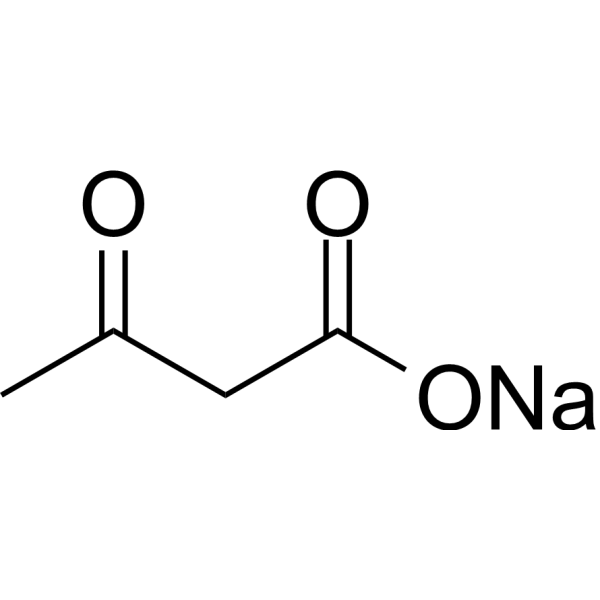
  • HY-112540B

    Endogenous Metabolite Metabolic Disease
    Acetoacetic acid sodium is an oxidative stress inducer that affects the antioxidant enzyme system and lipoprotein metabolism. Acetoacetic acid sodium induces oxidative stress by decreasing the mRNA expression and activity of superoxide dismutase (SOD), catalase (CAT), and glutathione peroxidase (GSH-Px), increasing MDA content, and inhibiting very low density lipoprotein (VLDL) assembly by downregulating apolipoprotein ApoB100, ApoE, and low density lipoprotein receptor (LDLR), leading to triglyceride (TG) accumulation in hepatocytes. Acetoacetic acid sodium can be used to study metabolic diseases .
    Acetoacetic acid sodium
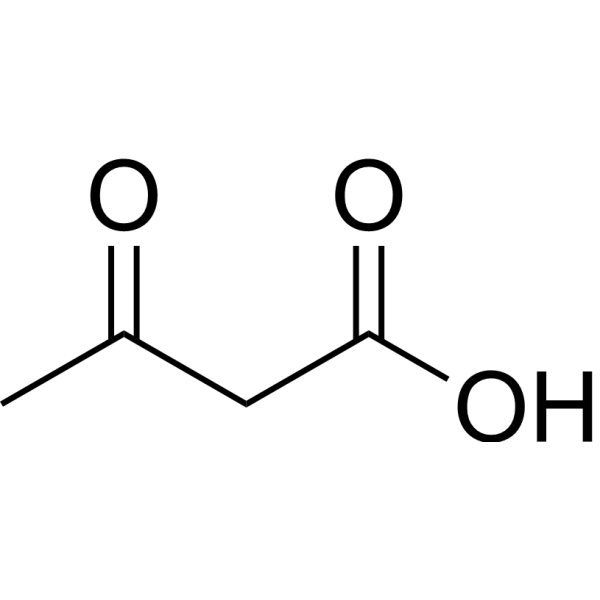
  • HY-112540
    Acetoacetic acid
    4 Publications Verification

    Endogenous Metabolite Metabolic Disease
    Acetoacetic acid is an oxidative stress inducer that affects the antioxidant enzyme system and lipoprotein metabolism. Acetoacetic acid induces oxidative stress by decreasing the mRNA expression and activity of superoxide dismutase (SOD), catalase (CAT), and glutathione peroxidase (GSH-Px), increasing MDA content, and inhibiting very low density lipoprotein (VLDL) assembly by downregulating apolipoprotein ApoB100, ApoE, and low density lipoprotein receptor (LDLR), leading to triglyceride (TG) accumulation in hepatocytes. Acetoacetic acid can be used to study metabolic diseases .
    Acetoacetic acid
  • HY-100594
    EUK-134
    1 Publications Verification

    NF-κB Cardiovascular Disease
    EUK-134, a synthetic superoxide dismutase and catalase mimetic, protects rat kidneys from ischemia-reperfusion-induced damage. EUK-134 is a superoxide dismutase (SOD) mimetics (SODm) with catalase activity. EUK-134 is a mitoprotective antioxidant. EUK-134 reduces the expression of NF-κB, MDA level, and protein carbonylation in H9C2 cells .
    EUK-134
  • HY-Y1282

    Environmental Pollutants Biochemical Assay Reagents SOD Cardiovascular Disease Infection Neurological Disease
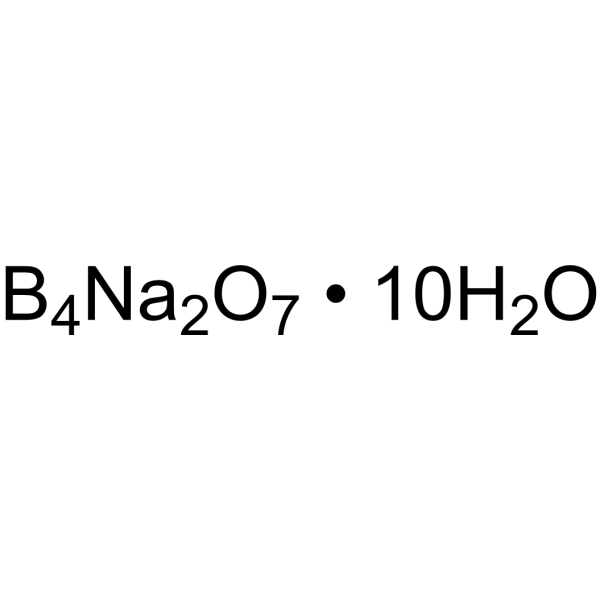
    Sodium tetraborate decahydrate is an orally active biochemical reagent and antibacterial agent. Sodium tetraborate decahydrate leads to an increase in the activity of Catalase, Superoxide dismutase. Sodium tetraborate decahydrate reduces Hydrogen sulfide and the sulfate-reducing bacteria population of swine manure. Sodium tetraborate decahydrate serves as flame suppressant for wood cellulose. Sodium tetraborate decahydrate is a triglyceride transesterification catalyst. Sodium tetraborate decahydrate suppresses the formation of chlorinated by-products in Cl -containing water. Sodium tetraborate decahydrate has a neuroprotective effect against chromium poisoning. Sodium tetraborate decahydrate can protect the heart from chromium damage at low doses. Sodium tetraborate in a low dose with an isolated application shows an antioxidant effect .
    Sodium tetraborate decahydrate
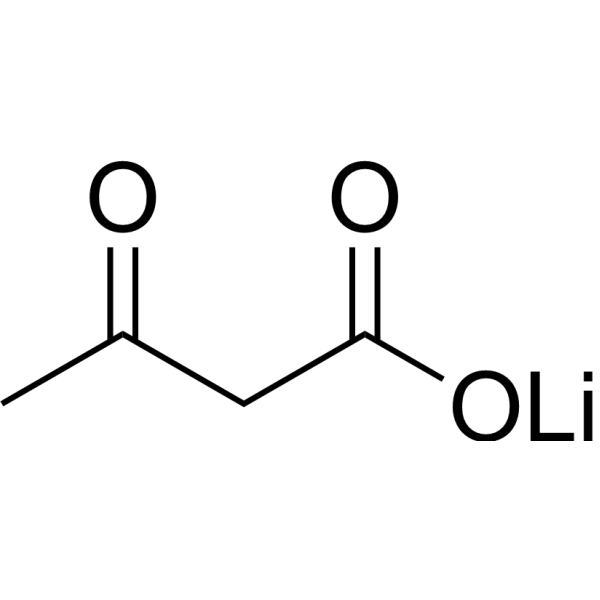
  • HY-112540A
    Acetoacetic acid lithium
    4 Publications Verification

    Endogenous Metabolite Metabolic Disease
    Acetoacetic acid lithium is an oxidative stress inducer that affects the antioxidant enzyme system and lipoprotein metabolism. Acetoacetic acid lithium induces oxidative stress by decreasing the mRNA expression and activity of superoxide dismutase (SOD), catalase (CAT), and glutathione peroxidase (GSH-Px), increasing MDA content, and inhibiting very low density lipoprotein (VLDL) assembly by downregulating apolipoprotein ApoB100, ApoE, and low density lipoprotein receptor (LDLR), leading to triglyceride (TG) accumulation in hepatocytes. Acetoacetic acid lithium can be used to study metabolic diseases .
    Acetoacetic acid lithium
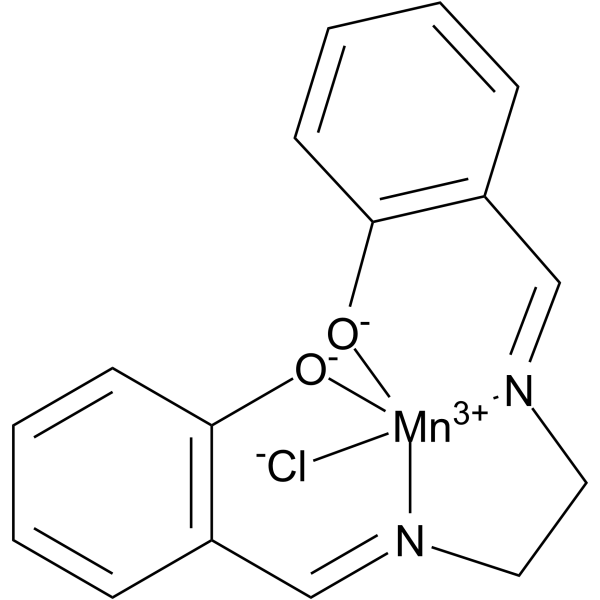
  • HY-W001583
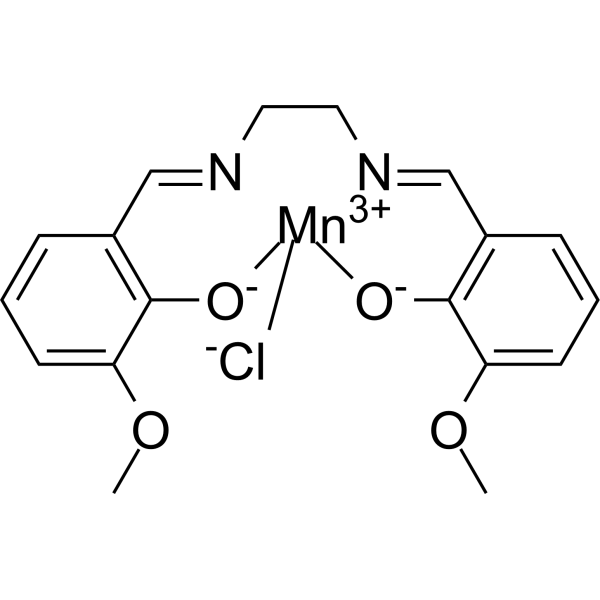
    Manganese(salen) chloride
    1 Publications Verification

    EUK-8

    Reactive Oxygen Species (ROS) Cardiovascular Disease
    Manganese(salen) chloride (EUK-8), a superoxide dismutase and catalase mimetic, is an antioxidant with oxyradical scavenging properties. Manganese(salen) chloride ameliorates acute lung injury in endotoxemic swine .
    Manganese(salen) chloride
  • HY-76632

    Cholinesterase (ChE) SOD Neurological Disease
    4-Hydroxyisophthalic acid activates antioxidant enzymes (such as catalase CAT and superoxide dismutase SOD), scavenges free radicals, and exhibits antioxidant property. 4-Hydroxyisophthalic acid activates AChE and BChE, enhances neuronal function and improves Tau-induced neurobehavioral defects. 4-Hydroxyisophthalic acid improves the cognitive defects, and ameliorates circadian rhythm disorders of fruit flies .
    4-Hydroxyisophthalic acid
  • HY-19382

    SOD ERK Reactive Oxygen Species (ROS) Neurological Disease
    EUK-189 is a synthetic superoxide dismutase (SOD) and catalase mimetic. EUK-189 can block oxygen/glucose deprivation (OGD)-induced ERK1/2 dephosphorylation, ATP depletion and eliminate ROS production. EUK-189 exhibits neuroprotective effect and can inhibit delayed radiation injury. EUK-189 can be used for the research of neurological disease, such as ischemic stroke .
    EUK-189
  • HY-W127739

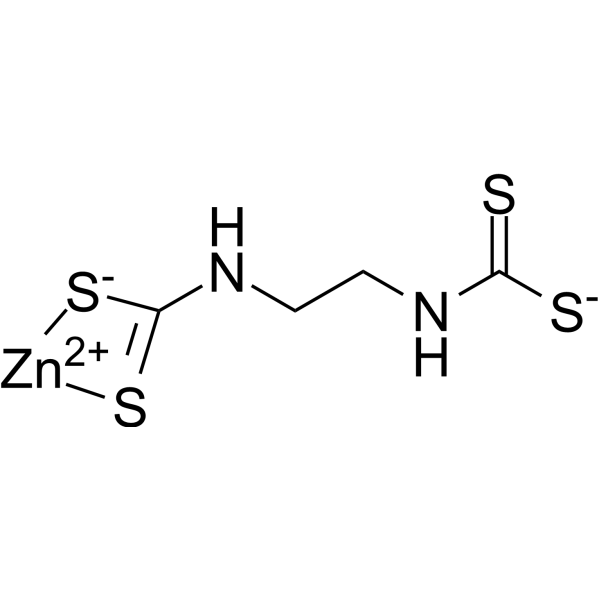
    Zinc ethylene-1, 2-bisdithiocarbamate

    Environmental Pollutants Biochemical Assay Reagents Others
    Zineb is an agricultural fungicide of the dithiocarbamate class. Its toxicity is relatively low, and there is little evidence of human harm from exposure. Oxidative stress is one of the main factors contributing to diseases caused by Zineb. Zineb does not alter the activity of any superoxide dismutase enzymes. Catalase (CAT) activity was reduced only by Zineb.
    Zineb
  • HY-N9928

    Cholinesterase (ChE) Neurological Disease
    Echinenone is an acetylcholinesterase (AChE) inhibitor (IC50=16.29 μg/mL) with anti-Aβ(25-35) activity. Echinenone can inhibit MDA content and increase superoxide dismutase (SOD), catalase (CAT) and glutathione peroxidase (GSH-Px) activities to cope with oxidative stress damage .
    Echinenone
  • HY-171657

    Drug Derivative SOD Interleukin Related COX Collagen Inflammation/Immunology
    4'-Acetoxy resveratrol is a Resveratrol (HY-16561) derivative. 4'-Acetoxy resveratrol upregulates gene expression of elastin, collagen types III and IV, superoxide dismutase (SOD), and catalase (CAT), while downregulating interleukins (IL-1A, IL-1R2, IL-6, IL-8) and cyclooxygenase-2 (COX-2) in human skin models. 4'-Acetoxy resveratrol can be used for skin reasearch .
    4'-Acetoxy resveratrol
  • HY-130439

    SOD Metabolic Disease
    EUK 8 and EUK 134 are synthetic catalytic scavengers of reactive oxygen species with superoxide dismutase (SOD) and catalase mimetic activity.1 EUK 124 is a structural analog of EUK 8 and EUK 134 with significantly reduced activity. EUK 124 and EUK 8 inhibit superoxide-mediated reduction of an electron acceptor (i.e., SOD mimetic activity), with IC50 values of 5 μM and 0.7 μM, respectively.
    EUK-124
  • HY-124894

    Fungal Infection
    (+)-Benalaxyl is a broad-spectrum benzamide fungicide. (+)-Benalaxyl inhibits the growth of the freshwater algae S. obliquus, with an EC50 value of 8.441 mg/L. (+)-Benalaxyl can induce the production of chlorophyll a and b, as well as increase the activity of superoxide dismutase (SOD) and the generation of malondialdehyde (MDA). (+)-Benalaxyl has inhibitory effects on catalase (CAT). (+)-Benalaxyl is effective against diseases caused by oomycetes .
    (+)-Benalaxyl
  • HY-N0025

    Reactive Oxygen Species (ROS) Apoptosis Metabolic Disease
    Jionoside D is a hydroxycinnamic acid ester with antioxidant property. Jionoside D has scavenging activity of intracellular reactive oxygen species (ROS) and of DPPH radical, and lipid peroxidation inhibitory activity. Jionoside D reduces the apoptotic cells induced by H2O2 in V79-4 cells. Jionoside D increases the activities of cellular antioxidant enzymes, SOD and catalase .
    Jionoside D
  • HY-112540AR

    Endogenous Metabolite Reference Standards Metabolic Disease
    Acetoacetic acid (lithium) (Standard) is the analytical standard of Acetoacetic acid (lithium). This product is intended for research and analytical applications. Acetoacetic acid lithium is an oxidative stress inducer that affects the antioxidant enzyme system and lipoprotein metabolism. Acetoacetic acid lithium induces oxidative stress by decreasing the mRNA expression and activity of superoxide dismutase (SOD), catalase (CAT), and glutathione peroxidase (GSH-Px), increasing MDA content, and inhibiting very low density lipoprotein (VLDL) assembly by downregulating apolipoprotein ApoB100, ApoE, and low density lipoprotein receptor (LDLR), leading to triglyceride (TG) accumulation in hepatocytes. Acetoacetic acid lithium can be used to study metabolic diseases .
    Acetoacetic acid lithium (Standard)
  • HY-N19717

    NF-κB SOD Inflammation/Immunology Cancer
    Bartogenic acid is an orally active NF-κB inhibitor, found in Barringtonia racemosa fruits. Bartogenic acid increases catalase, superoxide dismutase (SOD), and glutathione levels. Bartogenic acid inhibits lipid peroxidation and suppresses inflammation markers. Bartogenic acid can be used for the research of ovarian cancer, skin cancer, and inflammatory conditions .
    Bartogenic acid
  • HY-N17990

    PDK-1 Akt GSK-3 Reactive Oxygen Species (ROS) Neurological Disease
    Sexangularetin 3-sophoroside is a PDK1 and Akt phosphorylation activator with neuroprotective properties. Sexangularetin 3-sophoroside restores phosphorylated GSK-3β protein levels. Sexangularetin 3-sophoroside acts as a ROS inhibitor and regulates mRNA expression of superoxide dismutase 1 and catalase. Sexangularetin 3-sophoroside can be used for the research of Parkinson’s disease .
    Sexangularetin 3-sophoroside
  • HY-N13756

    Bacterial Reactive Oxygen Species (ROS) SOD Infection Neurological Disease
    Deoxymikanolide is an orally active antibacterial agent that inhibits catalase (CAT), peroxidase (POD), and superoxide dismutase (SOD) activities. Deoxymikanolide increases glycan metabolism, phosphorus metabolism, electric conductivity, intrabacterial reactive oxygen species (ROS) levels, and malondialdehyde (MDA) levels, causes cell shrinkage, cytoplasmic damage, and cell disruption in Ralstonia solanacearum. Deoxymikanolide inhibits Acetic acid-induced writhing in mice. Deoxymikanolide can be used for the research of bacterial wilt .
    Deoxymikanolide
  • HY-180141

    Insecticide Cholinesterase (ChE) SOD Infection
    AF03 is a larvicide against Aedes aegypti Vector Larvae with a LC50 of 41.6 μg/mL. AF03 binds stably to the sterol carrier protein-2 (AeSCP-2) of Aedes aegypti, interfering with lipid metabolism in larvae. AF03 can increase acetylcholinesterase (AChE) activity in the zebrafish brain, slightly elevate catalase (CAT) activity in the liver and heart, and increased superoxide dismutase (SOD) activity in the brain. AF03 can be used for the research of arboviruses infection, such as Dengue .
    AF03
  • HY-179502

    NF-κB Glutathione Peroxidase TNF Receptor Interleukin Related mTOR SOD Inflammation/Immunology
    Anti-inflammatory agent 107 is an orally active anti-inflammatory agent. Anti-inflammatory agent 107 inhibits and NF-κB with a superior binding affinity of -9.4578 kcal/mol. Anti-inflammatory agent 107 reduces levels of inflammatory biomarkers (TNF-α, IL-6, INF-γ, NF-κβ, C-reactive protein and Erythrocyte Sedimentation Rate) and enhances the endogenous antioxidant defense system by elevating SOD (Superoxide Dismutase), CAT (Catalase) and GSH (Glutathione) activities. Anti-inflammatory agent 107 not induces liver toxicity and demonstrates hepatoprotective effects. Anti-inflammatory agent 107 dose-dependently ameliorates leukocyte infiltration and tissue edema. Anti-inflammatory agent 107 can be used for anti-inflammatory research .
    Anti-inflammatory agent 107

Inquiry Online

Your information is safe with us. * Required Fields.

Salutation


Country or Region *

Applicant Name *


Organization Name *

Department *


Email Address *


Product Name *

Cat. No.


Requested quantity *

Phone Number *


Remarks

Inquiry Online

Inquiry Information

Product Name:
Cat. No.:
Quantity:
MCE Japan Authorized Agent:

