
128 Results for "

tissue engineering

" in MedChemExpress (MCE) Product Catalog:
Products (128)

128 Results for "tissue engineering" in MCE Product Catalog:

136
136 Publications Verification
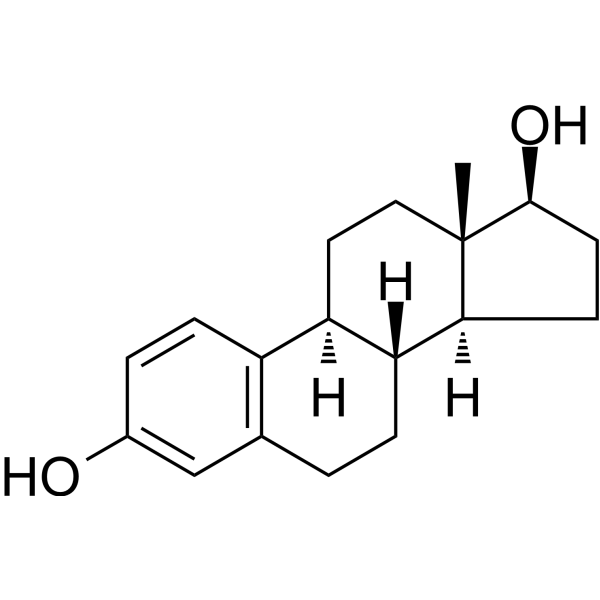
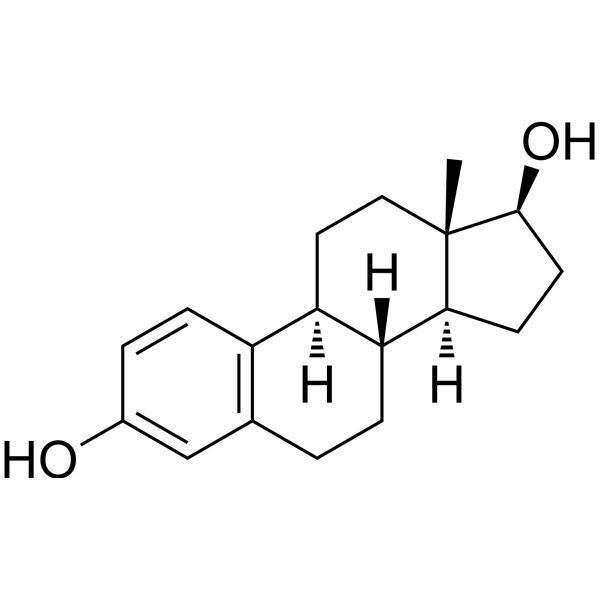
Cat. No.: HY-B0141
CAS No.: 50-28-2
Synonyms: β-Estradiol; E2; 17β-Estradiol; 17β-Oestradiol
Estradiol (β-Estradiol) is a steroid hormone and the major female sex hormone. Estradiol can up-regulate the expression of neural markers of human endometrial stem cells (hEnSCs) and promote their neural differentiation. Estradiol can be used for the research of cancers, neurodegenerative diseases and neural tissue engineering .
loading...
    loading...
136
136 Publications Verification
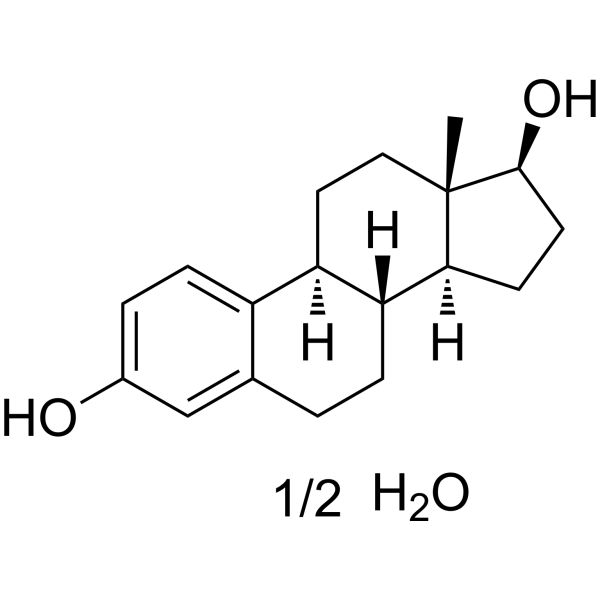
Cat. No.: HY-B0141C
CAS No.: 35380-71-3
Synonyms: β-Estradiol hemihydrate; 17β-Estradiol hemihydrate; 17β-Oestradiol hemihydrate
Estradiol (β-Estradiol) hemihydrate is a steroid hormone and the major female sex hormone. Estradiol (β-Estradiol) hemihydrate can up-regulate the expression of neural markers of human endometrial stem cells (hEnSCs) and promote their neural differentiation. Estradiol (β-Estradiol) hemihydrate can be used for the research of cancers, neurodegenerative diseases and neural tissue engineering .
loading...
    loading...
32
32 Cited Publications
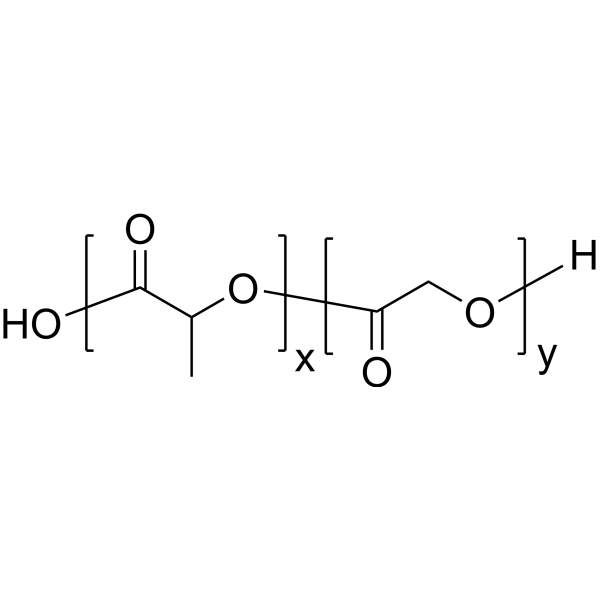
Cat. No.: HY-B2247
CAS No.: 34346-01-5
Synonyms: poly(lactic-co-glycolic acid) (50:50)
PLGA (50:50) (poly(lactic-co-glycolic acid) (50:50)) is a copolymer of poly lactic acid (PLA) and poly glycolic acid (PGA) which can be used to fabricate devices for drug delivery and tissue engineering applications.
loading...
    loading...
8
8 Cited Publications
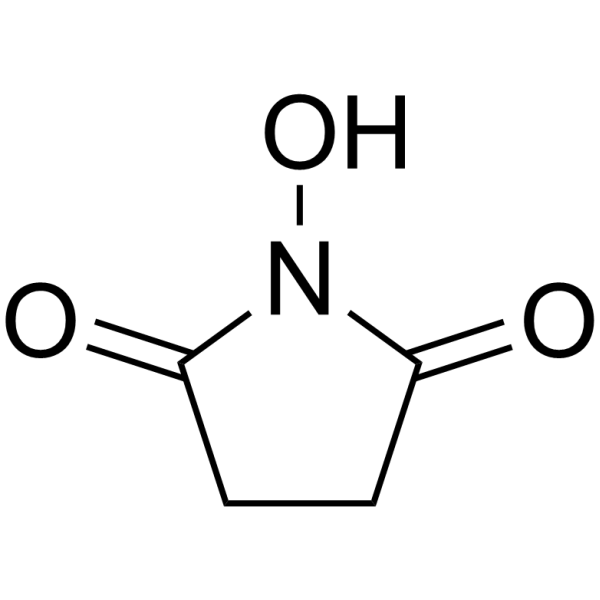
Cat. No.: HY-Y0623
CAS No.: 6066-82-6
Synonyms: HOSu; 1-Hydroxy-2,5-pyrrolidinedione
N-Hydroxysuccinimide (HOSu; 1-Hydroxy-2,5-pyrrolidinedione) is a covalent crosslinker commonly used in bioconjugation technology with a primary amine group. N-Hydroxysuccinimide reacts with amino groups (-NH2) to form a stable amide bond, which can modify amino-containing biomolecules. N-Hydroxysuccinimide can be used, for example, for protein labeling with fluorescent dyes and enzymes, surface activation of chromatography supports, microbeads, nanoparticles and microarray slides, and chemical synthesis of peptides. N-Hydroxysuccinimide has a wide range of applications in biomaterial synthesis (such as collagen, chitosan crosslinking), drug delivery systems (such as hydrogel preparation) and tissue engineering .
loading...
    loading...
3
3 Cited Publications
Cat. No.: HY-Y0850K
CAS No.: 9002-89-5
Synonyms: PVA (Mw 31000-50000, 98-99% hydrolyzed); Poly(Ethenol) (Mw 31000-50000, 98-99% hydrolyzed)
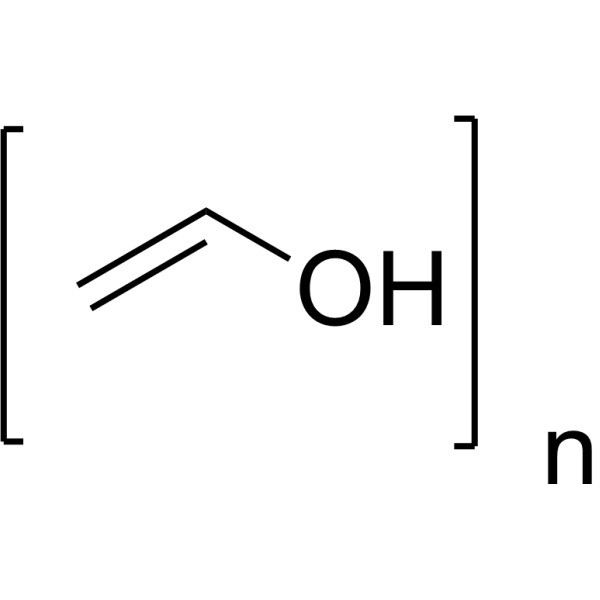
Polyvinyl alcohol (Mw 31000-50000, 98-99% hydrolyzed), also known as PVA, is a vinyl water-soluble polymer that can be used as a non-ionic surfactant. It can also be used as a biodegradable polymer and can be used in adhesives, coatings, textiles, ceramics and cosmetics. Polyvinyl alcohol can be used in tissue engineering by electrospinning. Polyvinyl alcohol can achieve high cellular density, infiltration, and uniform distribution, facilitating functional connections between cells. Polyvinyl alcohol can improve cell vitality through in vitro cultivation. Polyvinyl alcohol demonstrates promising inhibition of ostersarcoma cancer cells with Doxorubicin (HY-15142A) .
loading...
    loading...
3
3 Cited Publications
Cat. No.: HY-Y0850I
CAS No.: 9002-89-5
Synonyms: PVA (Mw 9000-10000, 80% hydrolyzed); Poly(Ethenol) (Mw 9000-10000, 80% hydrolyzed)
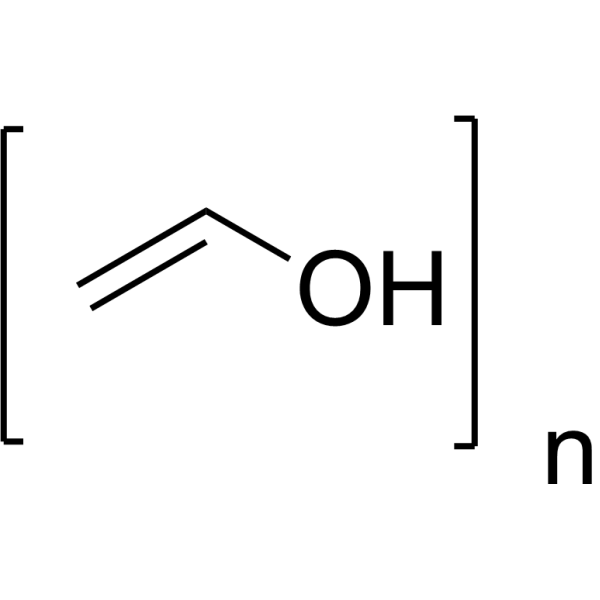
Polyvinyl alcohol (Mw 9000-10000, 80% hydrolyzed) also known as PVA, is a vinyl water-soluble polymer that can be used as a non-ionic surfactant. Polyvinyl alcohol (Mw 9000-10000, 80% hydrolyzed) can be used as a biodegradable polymer and can be used in adhesives, coatings, textiles, ceramics, and cosmetics. Polyvinyl alcohol can be used in tissue engineering by electrospinning. Polyvinyl alcohol can achieve high cellular density, infiltration, and uniform distribution, facilitating functional connections between cells. Polyvinyl alcohol can improve cell vitality through in vitro cultivation. Polyvinyl alcohol demonstrates promising inhibition of ostersarcoma cancer cells with Doxorubicin (HY-15142A) .
loading...
    loading...
3
3 Cited Publications
Cat. No.: HY-Y0850P
CAS No.: 9002-89-5
Synonyms: PVA (Mw 146000-186000, 87-89% hydrolyzed); Poly(Ethenol) (Mw 146000-186000, 87-89% hydrolyzed)
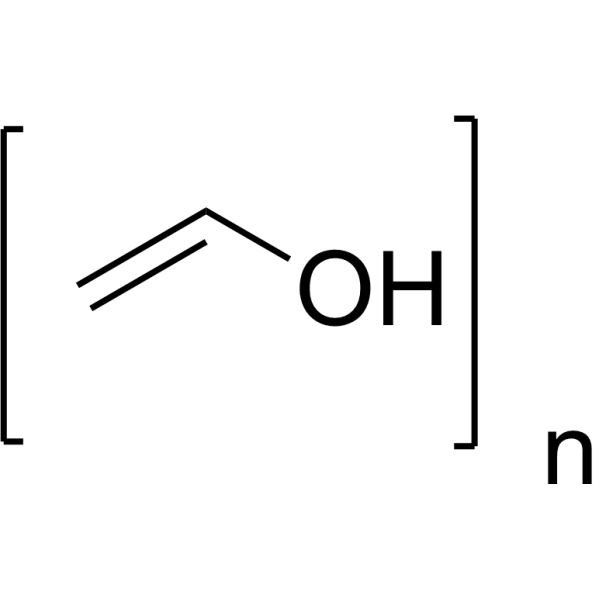
Polyvinyl alcohol (Mw 146000-186000, 87-89% hydrolyzed) is a polyvinyl alcohol with a molecular weight of 146000-186000 and hydrolytic properties. Polyvinyl alcohol (Mw 146000-186000, 87-89% hydrolyzed) is the hydrolysis and removal of acetate groups after the polymerization of ethylene acetate. And polyvinyl alcohol is obtained. Polyvinyl alcohol with different degrees of hydrolysis can be used to self-crosslink to form cryogel, which can be used as biological excipient. Polyvinyl alcohol can be used in tissue engineering by electrospinning. Polyvinyl alcohol can achieve high cellular density, infiltration, and uniform distribution, facilitating functional connections between cells. Polyvinyl alcohol can improve cell vitality through in vitro cultivation. Polyvinyl alcohol demonstrates promising inhibition of ostersarcoma cancer cells with Doxorubicin (HY-15142A) .
loading...
    loading...
3
3 Cited Publications
Cat. No.: HY-Y0850J
CAS No.: 9002-89-5
Synonyms: PVA (Mw 13000-23000, 87-89% hydrolyzed); Poly(Ethenol) (Mw 13000-23000, 87-89% hydrolyzed)
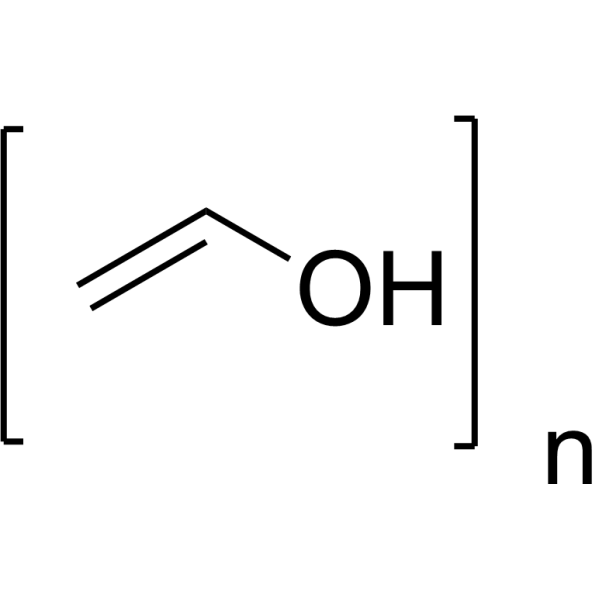
Polyvinyl alcohol (Mw 13000-23000, 87-89% hydrolyzed) is a polyvinyl alcohol with a molecular weight of 130000-23000 and hydrolytic properties. Polyvinyl alcohol (Mw 13000-23000, 87-89% hydrolyzed) is the hydrolysis and removal of acetate groups after the polymerization of ethylene acetate and polyvinyl alcohol is obtained. A degree of hydrolysis of 87-89% indicates that a large part of the acetate groups have been removed, resulting in a large number of hydroxyl groups in the PVA structure. Polyvinyl alcohol with different degrees of hydrolysis can be used to self-crosslink to form cryogel, which can be used as biological excipient. Polyvinyl alcohol can be used in tissue engineering by electrospinning. Polyvinyl alcohol can achieve high cellular density, infiltration, and uniform distribution, facilitating functional connections between cells. Polyvinyl alcohol can improve cell vitality through in vitro cultivation. Polyvinyl alcohol demonstrates promising inhibition of ostersarcoma cancer cells with Doxorubicin (HY-15142A) .
loading...
    loading...
2
2 Cited Publications
Cat. No.: HY-Y1168
CAS No.: 3945-69-5
Synonyms: 4-(4,6-Dimethoxy-1,3,5-triazin-2-yl)-4-methylmorpholinium chloride
DMTMM (4-(4,6-dimethoxy-1,3,5-triazine-2-yl)-4-methylmorpholinium chloride) is a coupling agent. DMTMM can activate carboxyl groups and promote the formation of amide bonds. DMTMM plays an important role in promoting the chemical modification of biomacromolecules such as polysaccharides and proteins. DMTMM can be used for research of tissue engineering, breast cancer, corneal regeneration, and biomaterials .
loading...
    loading...
1
1 Cited Publications
Cat. No.: HY-B0141R
CAS No.: 50-28-2
Synonyms: β-Estradiol (Standard); E2 (Standard); 17β-Estradiol (Standard); 17β-Oestradiol (Standard)
Estradiol (Standard) is the analytical standard of Estradiol. This product is intended for research and analytical applications. Estradiol (β-Estradiol) is a steroid hormone and the major female sex hormone. Estradiol can up-regulate the expression of neural markers of human endometrial stem cells (hEnSCs) and promote their neural differentiation. Estradiol can be used for the research of cancers, neurodegenerative diseases and neural tissue engineering .
loading...
    loading...
1
1 Cited Publications
Cat. No.: HY-158226
Synonyms: ElaMA
Elastin Methacrylated (ElaMA) elastin recruits and modulates innate immune cells and accelerates angiogenesis at the wound site, thereby improving wound regeneration. Elastin Methacrylated attracts large numbers of neutrophils and primarily M2 macrophages to the wound and induces their penetration into the hydrogel. Elastin Methacrylated has excellent immunomodulatory effects, leading to superior angiogenesis, collagen deposition and dermal regeneration . Elastin Methacrylated needs to self-assemble into fibrous hydrogel under the action of photoinitiator LAP (HY-44076), and target bioactive adhesion sites, play an inherent supporting role for tissue cells and biodegradable activity.
Application: cell culture, biological 3D printing, tissue engineering, etc.
loading...
    loading...
1
1 Cited Publications
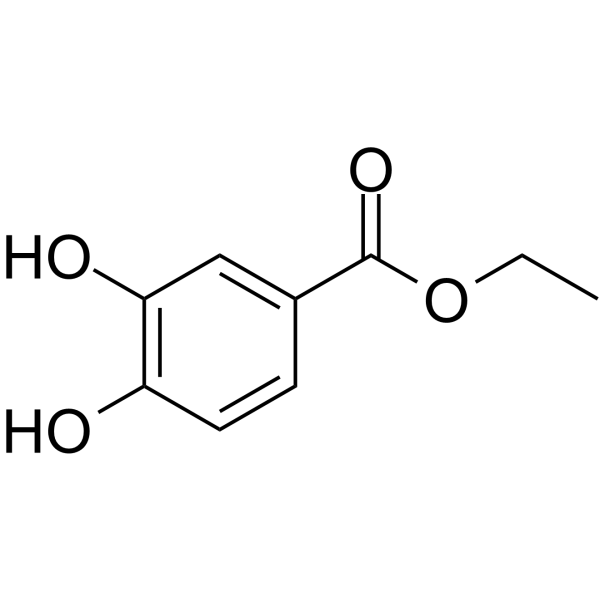
Cat. No.: HY-W016409
CAS No.: 3943-89-3
Synonyms: Protocatechuic acid ethyl ester
Ethyl 3,4-dihydroxybenzoate (Protocatechuic acid ethyl ester) is an orally effective, blood-brain barrier-permeable, competitive prolyl hydroxylase (PHD) inhibitor that inhibits the hydroxylation modification of hypoxia-inducible factor (HIF) by PHD. Ethyl 3,4-dihydroxybenzoate stabilizes HIF-1α by inhibiting PHD, activates downstream pathways to induce autophagy and apoptosis of tumor cells, and regulates inflammatory responses, inhibits the NF-κB pathway, improves vascular permeability, and promotes osteoblast differentiation. Ethyl 3,4-dihydroxybenzoate has anti-tumor, anti-hypoxic injury, and bone metabolism regulation effects. It can also be used in the research of cardiovascular protection (such as reducing myocardial ischemic damage), bone tissue engineering (promoting osteogenesis/inhibiting osteoclast differentiation), and prevention and treatment of high-altitude cerebral edema .
loading...
    loading...
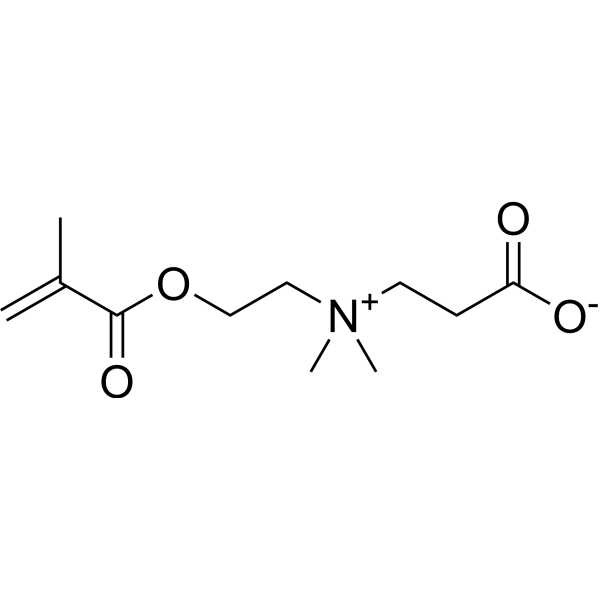
Cat. No.: HY-W110584
CAS No.: 24249-95-4
Carboxybetaine methacrylate is an amphoteric ionic compound with excellent properties such as good hydrophilicity, antistatic property, and biocompatibility. Carboxybetaine methacrylate can be used to prepare tissue engineering scaffolds, drug carriers, and so on .
loading...
    loading...
Cat. No.: HY-D1005A6
CAS No.: 9003-11-6
Synonyms: PEG-PPG-PEG, 2200 (Average)
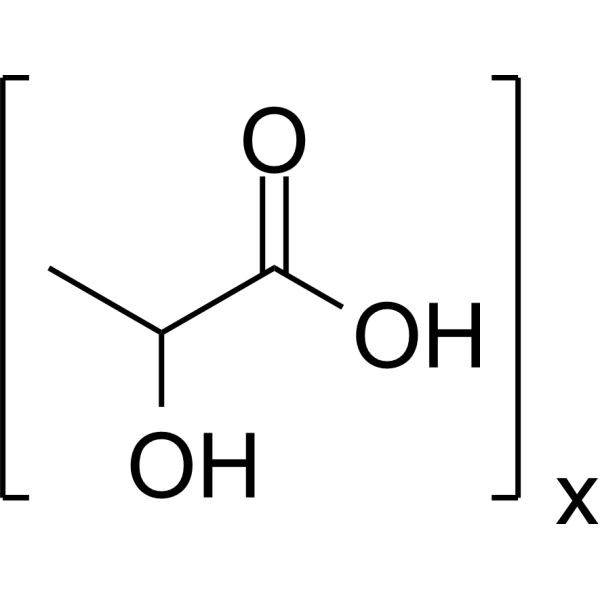
Poloxamer 124 L44 is a block polymer of polyoxyethylene and polyoxypropylene and a hydrophobic surfactant. Poloxamer 124 L44 causes eye irritation and exhibits oral toxicity in albino rats with an LD50 of 5 g/kg. Poloxamer 124 L44 has reversible adverse effects on triglyceride and cholesterol transport in the lymphatic system of rats. Poloxamer 124 L44 can form thermoreversible hydrogels and is used as a food additive and as a drug delivery vehicle in cosmetics, pharmaceuticals, and tissue engineering[1][2][3].
loading...
    loading...
Cat. No.: HY-W110542G
CAS No.: 26570-48-9
Synonyms: PEGDA (MW 6000)
Poly(ethylene glycol) diacrylate (PEGDA) (MW 6000) is a versatile polymer material that is widely used as a building material for hydrogel scaffolds, especially in the fields of tissue engineering and regenerative medicine. Poly(ethylene glycol) diacrylate (MW 6000) can be used as a building material for wound dressing hydrogels .
loading...
    loading...
Cat. No.: HY-W110542J
CAS No.: 26570-48-9
Synonyms: PEGDA (MW 700)
Poly(ethylene glycol) diacrylate (PEGDA) (MW 700) is a versatile polymer material that is widely used as a building material for hydrogel scaffolds, especially in the fields of tissue engineering and regenerative medicine. Poly(ethylene glycol) diacrylate (MW 700) mimics the extracellular matrix (ECM), providing support and growth space for cells .
loading...
    loading...
Cat. No.: HY-B0633C
CAS No.: 9004-61-9
Hyaluronic acid (Mw: 1000-2000 Da) is a long-chain unbranched polysaccharide with a molecular weight of 1000-2000 Da. Hyaluronic acid (Mw: 2000 Da) inhibits IL-1β expression and increases LC3-II. Hyaluronic acid (Mw: 1000-2000Da) can regulate tissue homeostasis and stress resistance, promote angiogenesis and tissue remodeling. Hyaluronic acid (Mw: 1000-2000 Da) has good biocompatibility and biodegradability, and can be used in drug delivery systems and tissue engineering. Hyaluronic acid (Mw: 2000 Da) can reduce facial skin blemishes and sagging .
loading...
    loading...
Cat. No.: HY-W110542D
CAS No.: 26570-48-9
Synonyms: PEGDA (MW 1000)
Poly(ethylene glycol) diacrylate (PEGDA) (MW 1000) is a versatile polymer material that is widely used as a building material for hydrogel scaffolds, especially in the fields of tissue engineering and regenerative medicine .
loading...
    loading...
Cat. No.: HY-D1005A2
CAS No.: 9003-11-6
Synonyms: PEG-PPG-PEG, 1900 (Average)
Poloxamer 105 L35 is block polymer of polyoxyethylene and polyoxypropylene with average molecular mass of 1900 Da. Poloxamer 105 L35 forms thermoreversible hydrogel, that is utilized in food additives, drug delivery carriers in cosmetics, pharmaceutical ingredients and tissue engineering .
loading...
    loading...
Cat. No.: HY-W110542N
CAS No.: 26570-48-9
Synonyms: PEGDA (MW 250),MEHQ as inhibitor
Poly(ethylene glycol) diacrylate (PEGDA) (MW 250), MEHQ as inhibitor is a versatile polymer material that is widely used as a building material for hydrogel scaffolds, especially in the fields of tissue engineering and regenerative medicine. Poly(ethylene glycol) diacrylate (MW 250), MEHQ as inhibitor can be used to construct optical cross-linked hydrogel implants .
loading...
    loading...

