59 Results for "

ubiquitin E3 ligase activity

" in MedChemExpress (MCE) Product Catalog:
Products (59)

59 Results for "ubiquitin E3 ligase activity" in MCE Product Catalog:

19
19 Publications Verification
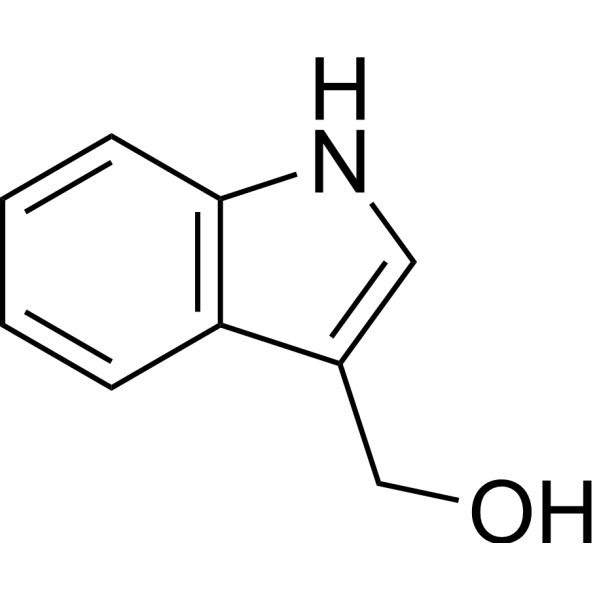
Cat. No.: HY-N0170
CAS No.: 700-06-1
Synonyms: Indole-3-methanol
Indole-3-carbinol (I3C) inhibits NF-κB activity and also is an Aryl hydrocarbon receptor (AhR) agonist, and an inhibitor of WWP1 (WW domain-containing ubiquitin E3 ligase 1).
loading...
    loading...
7
7 Cited Publications
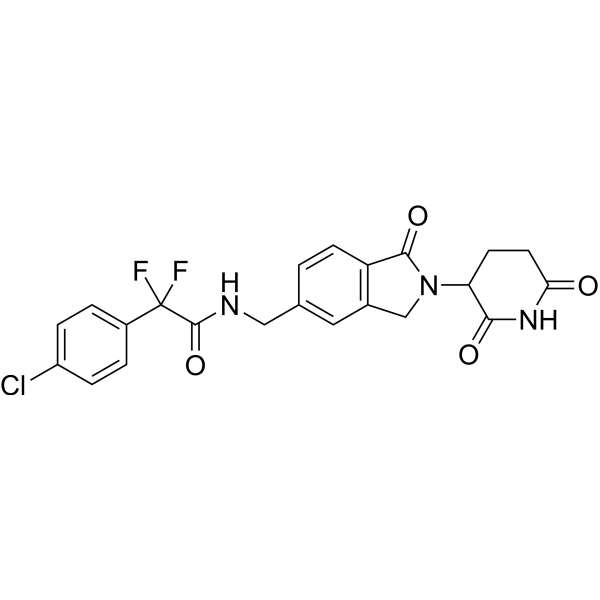
Cat. No.: HY-130800
CAS No.: 1860875-51-9
Purity:  99.76%
Synonyms: CC-90009
Eragidomide (CC-90009) is a GSPT1 Molecular Glue degrader. Eragidomide exhibits antiproliferative and pro-apoptotic (apoptosis) activities against acute myeloid leukemia cells. Eragidomide recruits the CRL4CRBN E3 ubiquitin ligase complex to selectively target GSPT1 for ubiquitination and proteasomal degradation. Eragidomide reduces leukemia cell engraftment and eliminates leukemia stem cells. Eragidomide promotes the activation of the GCN1/GCN2/ATF4 pathway and the integrated stress response pathway, inhibits global protein translation, promotes preferential translation of ATF4, and induces the accumulation of ATF4, CHOP and ATF3. The response to Eragidomide is regulated by the ILF2/ILF3 heterodimer complex, the mTOR signaling pathway and the integrated stress response. Eragidomide can be used in research related to acute myeloid leukemia and relapsed/refractory acute myeloid leukemia .
loading...
    loading...
3
3 Cited Publications
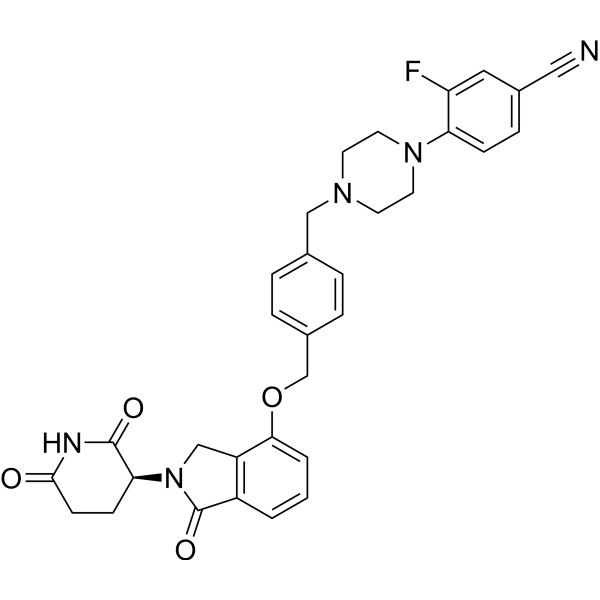
Cat. No.: HY-129395
CAS No.: 2259648-80-9
Purity:  99.16%
Synonyms: CC-92480
Research Areas:  

Cancer

Mezigdomide (CC-92480), a cereblon E3 ubiquitin ligase modulating agent (CELMoD), acts as a molecular glue. Mezigdomide shows high affinity to cereblon, resulting in potent antimyeloma activity .
loading...
    loading...
2
2 Cited Publications
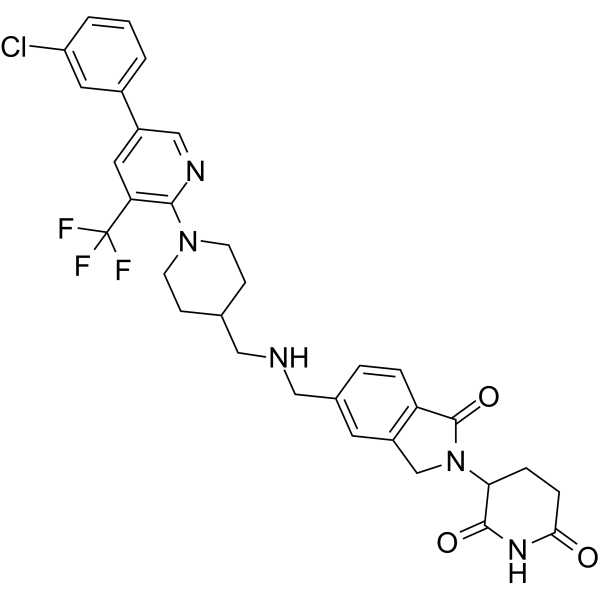
Cat. No.: HY-162318
CAS No.: 2946670-96-6
Research Areas:  

Cancer

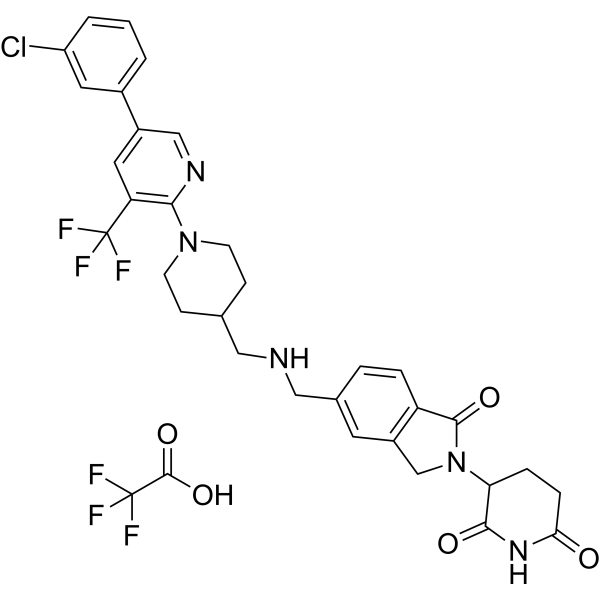
MYC degrader 1 is a MYC degrader that recruits Cereblon (CRBN), with a Kd value of 145 nM and oral activity. MYC degrader 1 specifically binds MYC and GSPT1, recruits the CRBN E3 ubiquitin ligase complex, and induces MYC degradation via the ubiquitin-proteasome pathway. MYC degrader 1 downregulates KLHL42 expression, restores pRB1 protein levels, and re-establishes the sensitivity of MYC-overexpressing cancer cells to CDK4/6 inhibitors. MYC degrader 1 combined with Palbociclib (HY-50767) shows significant inhibition of tumor growth. MYC degrader 1 can be used in studies related to bladder cancer, prostate cancer, and breast cancer .
loading...
    loading...
2
2 Cited Publications
Cat. No.: HY-162318A
Target:  

c-Myc

Research Areas:  

Cancer

MYC degrader 1 TFA is a MYC degrader that recruits Cereblon (CRBN), with a Kd value of 145 nM and oral activity. MYC degrader 1 TFA specifically binds MYC and GSPT1, recruits the CRBN E3 ubiquitin ligase complex, and induces MYC degradation via the ubiquitin-proteasome pathway. MYC degrader 1 TFA downregulates KLHL42 expression, restores pRB1 protein levels, and re-establishes the sensitivity of MYC-overexpressing cancer cells to CDK4/6 inhibitors. MYC degrader 1 TFA combined with Palbociclib (HY-50767) shows significant inhibition of tumor growth. MYC degrader 1 TFA can be used in studies related to bladder cancer, prostate cancer, and breast cancer .
loading...
    loading...
Cat. No.: HY-156730
CAS No.: 2502186-79-8
Purity:  96.17%
Target:  

Molecular Glues STAT

Research Areas:  

Cancer

KT-333 is a molecular glues that degrades STAT3 protein. KT-333 mediates the selective degradation of STAT3 through the ubiquitin-proteasome system by binding to STAT3 protein and E3 ubiquitin ligase von Hippel-Lindau protein (VHL). KT-333 has strong selectivity for STAT3 protein degradation and good antitumor activity. KT-333 can be used in the study of hematologic malignancies such as large granular lymphocytic leukemia (LGL-L), peripheral T-cell lymphoma (PTCL), and cutaneous T-cell lymphoma (CTCL) .
loading...
    loading...
Cat. No.: HY-160141
CAS No.: 2736508-60-2
Synonyms: BGB-16673; BTK-IN-29
Target:  

PROTACs Btk NF-κB

Research Areas:  

Inflammation/Immunology Cancer

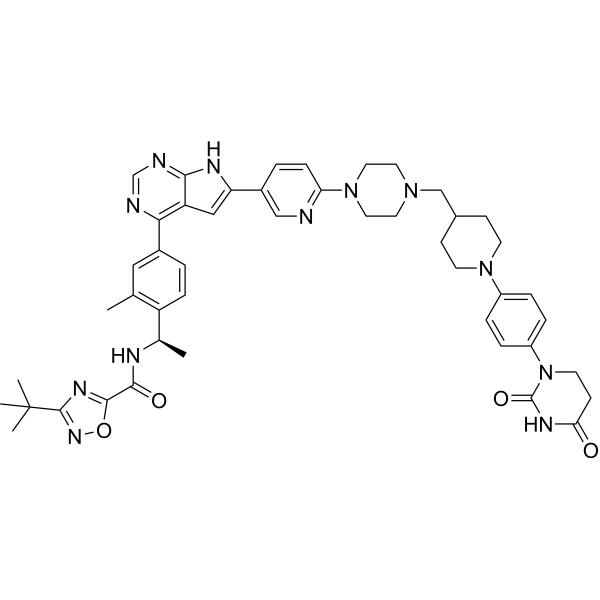
BGB-16673 (BGB-16673) is an orally active, selective BTK PROTAC degrader (IC50=0.69 nM). BGB-16673 ligates BTK to E3 ubiquitin ligase, causing BTK to undergo polyubiquitination, which is then recognized and degraded by the proteasome, thereby exerting efficient BTK degradation activity. BGB-16673 can be used in the research of B-cell malignancies such as chronic lymphocytic leukemia, small lymphocytic lymphoma, and mantle cell lymphoma .
loading...
    loading...
Cat. No.: HY-173011
Target:  

PROTACs Cyclophilin HIV HCV

Research Areas:  

Infection

RJS308 is a selective Cyclophilin A (CypA) PROTAC degrader. RJS308 induces ubiquitin-dependent CypA degradation by recruiting the VHL E3 ligase complex, and forms a ternary complex with CypA and VHL/elongin C/elongin B. RJS308 exhibits anti-HIV-1 and anti-HCV activities. RJS308 can be used in studies related to viral infections .
loading...
    loading...
Cat. No.: HY-145319
CAS No.: 2367619-87-0
Purity:  99.75%
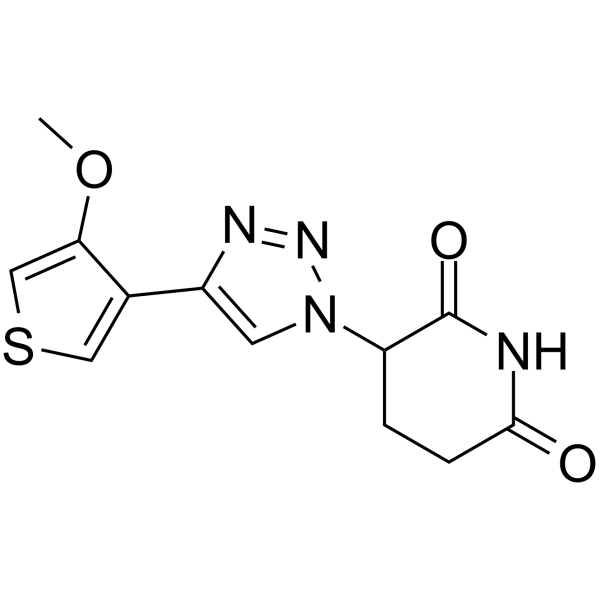
FPFT-2216 is an orally active Molecular glue degrader targeting IKZF1, IKZF3, CK-1α, and PDE6D, with a DC50 of 8 nM against PDE6D. FPFT-2216 mediates ubiquitin-proteasome degradation via the CRL4 CRBN E3 ubiquitin ligase complex and interacts with the non-isoprenoid-binding region of PDE6D. FPFT-2216 activates the p53 signaling pathway, inhibits the CBM complex/NF-κB pathway, upregulates IL-2, suppresses IL-1β and IL-6, and induces tumor cell Apoptosis. FPFT-2216 exhibits anticancer activity against multiple myeloma and lymphoma. FPFT-2216 can be used in research related to multiple myeloma, lymphoma, acute lymphoblastic leukemia, acute myeloid leukemia, pancreatic ductal adenocarcinoma, non-small cell lung cancer, and gastric adenocarcinoma .
loading...
    loading...
Cat. No.: HY-128756
CAS No.: 2376047-73-1
Purity:  99.36%
Target:  

PROTACs Bcr-Abl

Research Areas:  

Neurological Disease Cancer

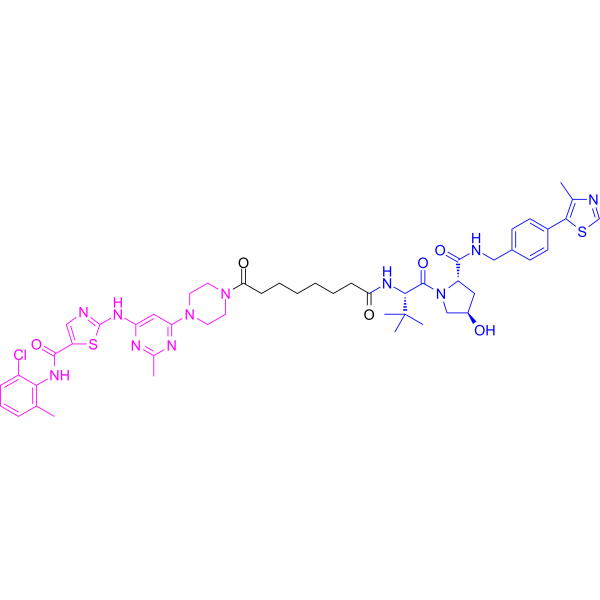
SIAIS178 is a potent and selective BCR-ABL degrader based on PROTAC technology with an IC50 of 24 nM. SIAIS178 causes effective degradation of BCR-ABL protein by recruiting Von Hippel-Lindau (VHL) E3 ubiquitin ligase. SIAIS178 has anticancer activity .
loading...
    loading...
Cat. No.: HY-168669
CAS No.: 3052745-16-8
Target:  

PROTACs Ras Caspase ERK

Research Areas:  

Cancer

PROTAC K-Ras Degrader-5 is a cereblon-based K-Ras PROTAC degrader with a DC50 of <100 nM for KRAS G12D. PROTAC K-Ras Degrader-5 recruits KRAS G12D to the cereblon E3 ubiquitin ligase complex for ubiquitination and subsequent proteasomal degradation. PROTAC K-Ras Degrader-5 suppresses pERK levels downstream of KRAS G12D degradation in cancer cells. PROTAC K-Ras Degrader-5 reduces proliferation of cancer cells. PROTAC K-Ras Degrader-5 induces caspase 3/7 activity and cPARP, markers of apoptosis, in pancreatic cancer spheroids and tumors. PROTAC K-Ras Degrader-5 can be used for the research of pancreatic cancer and colorectal cancer .
loading...
    loading...
Cat. No.: HY-143346
CAS No.: 2361138-33-0
Purity:  98.73%
CCW16 is a non-selective cysteine-reactive covalent ligand and an RNF4 E3 ubiquitin ligase recruiter with an IC50 of 1.8 μM against human RNF4[. CCW16 covalently modifies accessible cysteine residues on RNF4, PRDX1, PRDX2, and PRDX6, attenuating the peroxide-scavenging activity of peroxiredoxins. CCW16 induces oxidative stress through upregulation of HMOX1 and NRF2, and triggers ferroptosis via lipid peroxidation and ROS signaling pathways in an RNF4-independent manner. CCW16 serves as an RNF4-recruiting moiety; it does not induce RNF4 degradation when used alone and can be used to synthesize protein degraders, such as the PROTAC compound CCW 28-3 (HY-156774). CCW16 can be used for research on acute myeloid leukemia and hepatocellular carcinoma .
loading...
    loading...
Cat. No.: HY-173011A
Target:  

PROTACs Cyclophilin HIV HCV

Research Areas:  

Infection

RJS308 TFA is a selective Cyclophilin A (CypA) PROTAC degrader. RJS308 TFA induces ubiquitin-dependent CypA degradation by recruiting the VHL E3 ligase complex, and forms a ternary complex with CypA and VHL/elongin C/elongin B. RJS308 TFA exhibits anti-HIV-1 and anti-HCV activities. RJS308 TFA can be used in studies related to viral infections .
loading...
    loading...
Cat. No.: HY-161168
CAS No.: 3055008-98-2
Target:  

Molecular Glues CDK

Research Areas:  

Cancer

Cyclin K degrader 1 is a molecular glue degrader derived from the pan-CDK inhibitor AT-7519 (HY-50940), with potent Cyclin K degrading activity and a DC50 of 21 nM. Cyclin K degrader 1 binds to CDK12, mediates the formation of a CDK12-DDB1 ternary protein complex, recruits the E3 ubiquitin ligase complex, and induces ubiquitination and proteasomal degradation of Cyclin K. Cyclin K degrader 1 can be used in the research of various Cyclin K-related diseases such as cancer .
loading...
    loading...
Cat. No.: HY-143904
CAS No.: 2953426-43-0
Purity:  98.01%
Target:  

PROTACs Mps1

Research Areas:  

Cancer

PROTAC TTK degrader-1 is a PROTAC degrader targeting Threonine Tyrosine Kinase (TTK), with a DC50 of 5.8 nM in HCT-116 cells and 1.7 nM in COLO-205 cells. PROTAC TTK degrader-1 induces the formation of a ternary complex with TTK and the CRBN E3 ubiquitin ligase, triggering proteasome-mediated degradation. PROTAC TTK degrader-1 exhibits activity against colon cancer cells and shows anti-tumor activity in a colon cancer xenograft mouse model. It can be used in colon cancer-related research .
loading...
    loading...
Cat. No.: HY-146346
CAS No.: 2978763-95-8
Purity:  98.75%
Target:  

PROTACs HDAC NF-κB

Research Areas:  

Infection Inflammation/Immunology

HD-TAC7 is a selective HDAC3 PROTAC degrader with an IC50 of 1.1 μM. By recruiting the CRBN E3 ligase, HD-TAC7 induces ubiquitin-proteasome degradation and selective downregulation of HDAC3, which in turn increases H3K27 acetylation levels and downregulates the NF-κB subunit p65, exerting anti-inflammatory activity. HD-TAC7 is used in research on COVID-19, SARS-CoV-2 infection, asthma, chronic obstructive pulmonary disease, and colon cancer .
loading...
    loading...
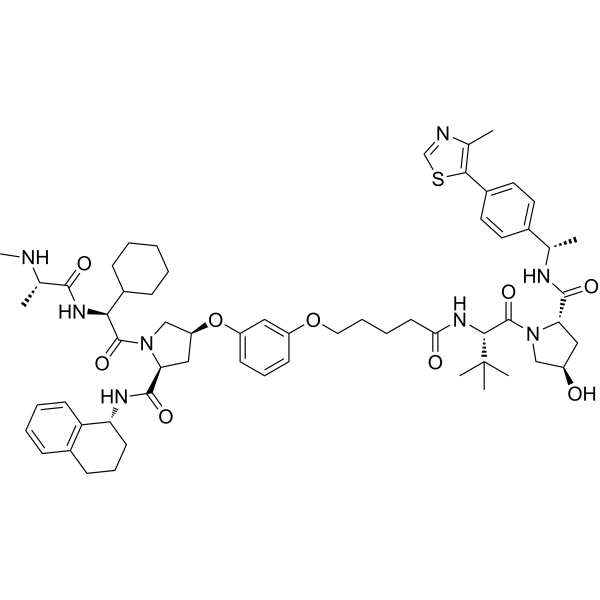
Cat. No.: HY-177119
Research Areas:  

Infection

ZBP1 Covalent PROTAC-1 is a covalent PROTAC degrader targeting ZBP1, with a DC50 of 25.69 nM. ZBP1 Covalent PROTAC-1 integrates a ZBP1-binding DNA aptamer, a linker containing covalent NASA, and an E3 ligase-recruiting moiety to guide ubiquitin-proteasome system-mediated degradation of ZBP1. ZBP1 Covalent PROTAC-1 exhibits inhibitory activity against necroptosis signaling pathways and inflammatory responses. ZBP1 Covalent PROTAC-1 can be used for research on viral pneumonia .
loading...
    loading...
Cat. No.: HY-149924
CAS No.: 3033993-13-1
Purity:  95.87%
Target:  

PROTACs IAP Apoptosis

Research Areas:  

Cancer

CST626 is a PROTAC degrader targeting IAP, with DC50 values of 0.7 nM, 2.4 nM and 6.2 nM against XIAP, cIAP1 and cIAP2, respectively. This compound recruits the VHL E3 ubiquitin ligase to form a heterotrimeric complex, thereby inducing ubiquitination and proteasomal degradation of the target proteins. CST626 also exhibits certain degrading activity against VHL30 and VHL19. CST626 inhibits the proliferation and induces apoptosis of various hematologic tumor cell lines, and its anti-tumor effect is further enhanced when used in combination with TNF-α. CST626 can be used in research related to multiple myeloma, acute myeloid leukemia and diffuse large B-cell lymphoma .
loading...
    loading...
Cat. No.: HY-175358
Target:  

PROTACs Deubiquitinase

Research Areas:  

Cancer

PROTAC USP7 Degrader-1 is a VHL-recruiting PROTAC and USP7 degrader with binding activity to both USP7 and the VHL E3 ubiquitin ligase. PROTAC USP7 Degrader-1 recruits the VHL E3 ligase to mediate the ubiquitination and subsequent proteolytic degradation of USP7 .
loading...
    loading...
Cat. No.: HY-N0170R
CAS No.: 700-06-1
Synonyms: Indole-3-methanol (Standard)
Indole-3-carbinol (Standard) is the analytical standard of Indole-3-carbinol. This product is intended for research and analytical applications. Indole-3-carbinol (I3C) inhibits NF-κB activity and also is an Aryl hydrocarbon receptor (AhR) agonist, and an inhibitor of WWP1 (WW domain-containing ubiquitin E3 ligase 1).
loading...
    loading...

