1. Search Result
Search Result
Results for "

vascular endothelial growth factor

" in MedChemExpress (MCE) Product Catalog:

77

Inhibitors & Agonists

1

Screening Libraries

6

Peptides

10

Inhibitory Antibodies

9

Natural
Products

68

Recombinant Proteins

2

Isotope-Labeled Compounds

18

Antibodies

10

Oligonucleotides

Cat. No. Product Name Target Research Areas Chemical Structure
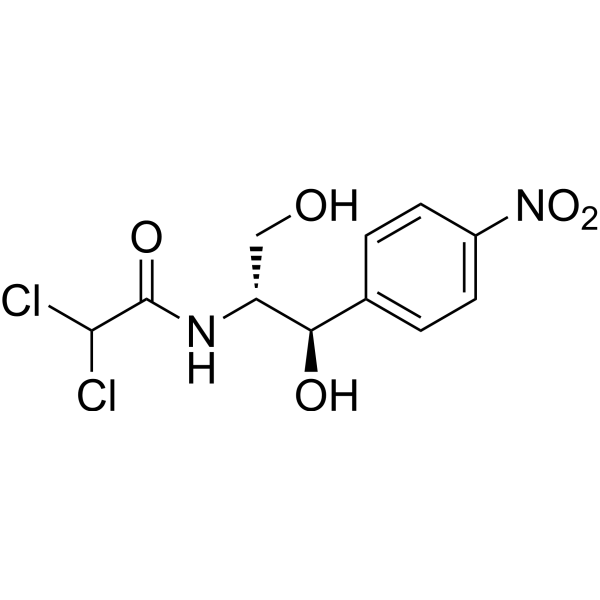
  • HY-B0239
    Chloramphenicol
    Maximum Cited Publications
    16 Publications Verification

    Antibiotic Bacterial HIF/HIF Prolyl-Hydroxylase VEGFR Autophagy Apoptosis Beclin1 JNK Akt MMP Infection Cancer
    Chloramphenicol is an orally active, potent and broad-spectrum antibiotic. Chloramphenicol shows antibacterial activity. Chloramphenicol represses the oxygen-labile transcription factor and hypoxia inducible factor-1 alpha (HIF-1α) in hypoxic A549 and H1299 cells. Chloramphenicol suppresses the mRNA levels of vascular endothelial growth factor (VEGF) and glucose transporter 1, eventually decreasing VEGF release. Chloramphenicol can be used for anaerobic infections and lung cancer research .
    Chloramphenicol
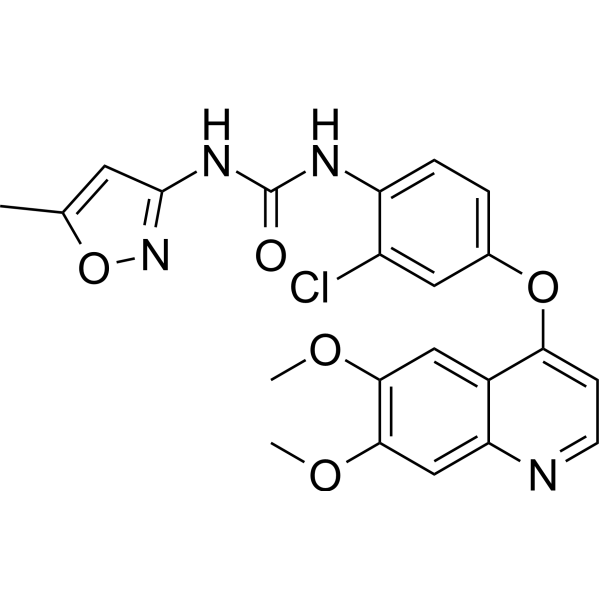
  • HY-10977
    Tivozanib
    5+ Cited Publications

    AV-951; KRN951

    VEGFR Cancer
    Tivozanib (AV-951; KRN951) is a selective, orally active inhibitor for vascular endothelial growth factor receptor (VEGFR)-1, 2 3, with IC50s of 30, 6.5 and 15 nM, respectively. Tivozanib exhibits antitumor efficacy .
    Tivozanib
  • HY-P99116

    RG7716; RO-6867461

    VEGFR Cardiovascular Disease Metabolic Disease Inflammation/Immunology
    Faricimab, an overall good safety and tolerability profile, is a bispecific antibody targeting Angiopoietin-2 (Ang-2) and vascular endothelial growth factor-A (VEGF-A). Faricimab prevents retinal vascular leakage, cell death and inflammation in retinal ischemia/reperfusion (I/R) injury and sCNV mouse models. Faricimab demonstrates statistically superior visual acuity gains versus Ranibizumab (HY-P9951). Faricimab can be used for retinal diseases, such as age-related macular degeneration (w-AMD), diabetic macular edema (DME) and macular edema following retinal vein occlusion (RVO) .
    Faricimab
  • HY-P991628

    PF-08634404

    PD-1/PD-L1 VEGFR Cancer
    SSGJ-707 (PF-08634404) is a bispecific antibody targeting VEGF and PD-1. SSGJ-707 exerts dual anti-tumor effects by neutralizing VEGF and blocking the PD-1 signaling pathway. SSGJ-707 can be combined with platinum-based chemotherapy to inhibit advanced non-small cell lung cancer (NSCLC), and its inhibitory effect is not limited by PD-L1 expression levels. In the HARMONi-2 trial, the objective response rate of SSGJ-707 correlates with the PD-L1 tumor proportion score, and the incidence of grade ≥3 adverse events is comparable to that of Inetetamab (HY-P99969). SSGJ-707 is being extensively investigated for a variety of malignancies including advanced NSCLC, colorectal cancer and small cell lung cancer .
    SSGJ-707
  • HY-10408
    Ki20227
    4 Publications Verification

    c-Fms VEGFR c-Kit PDGFR Inflammation/Immunology
    Ki20227 is an orally active and highly selective c-Fms tyrosine kinase (CSF1R) inhibitor with IC50s of 2 nM, 12 nM, 451 and 217 nM for CSF1R, VEGFR2 (vascular endothelial growth factor receptor-2), c-Kit (stem cell factor receptor) and PDGFRβ (platelet-derived growth factor receptor β). Ki20227 suppresses osteoclast differentiation and osteolytic bone destruction .
    Ki20227
  • HY-N0249
    Saikosaponin C
    2 Publications Verification

    MMP Infection Inflammation/Immunology
    Saikosaponin C is an orally active MMP-2 inducer. Saikosaponin C induces the survival, growth, migration and capillary tube formation of endothelial cells. Saikosaponin C inhibits the early stage of hepatitis C virus infection. Saikosaponin C can be used in research related to ischemic tissue diseases, chronic kidney diseases and hepatitis C virus infection .
    Saikosaponin C
  • HY-13718

    H-Glu-Trp-OH; L-Glutamyl-L-tryptophan

    VEGFR HCV Endogenous Metabolite Infection Cardiovascular Disease Inflammation/Immunology Cancer
    Oglufanide (H-Glu-Trp-OH) is a dipeptide immunomodulator isolated from calf thymus. Oglufanide inhibits vascular endothelial growth factor (VEGF). Oglufanide can stimulate the immune response to hepatitic C virus (HCV) and intracellular bacterial infections. Oglufanide shows antitumor and anti-angiogenesis activities .
    Oglufanide
  • HY-123927

    VEGFR Ephrin Receptor Inflammation/Immunology Cancer
    UniPR1331 is an orally active 3β-hydroxy-Δ5-choline acid derivative that inhibits Eph-ephrin interactions. UniPR1331 blocks the interaction of VEGFR2 with its natural ligand vascular endothelial growth factor and inhibits subsequent autophosphorylation, signaling, and pro-angiogenic activation of endothelial cells. UniPR1331 exhibits anti-angiogenesis, anti-cancer and anti-inflammation effects. UniPR1331 can be used for the researches of cancer and inflammation, such as glioma and colitis .
    UniPR1331
  • HY-12379
    NS-2028
    1 Publications Verification

    Guanylate Cyclase Inflammation/Immunology
    NS-2028 is a highly selective soluble Guanylyl Cyclase (sGC) inhibitor with IC50 values of 30 nM and 200 nM for basal and NO-stimulated enzyme activity . NS-2028 inhibits soluble Guanylyl Cyclase activity in homogenates of mouse cerebellum and neuronal NO synthase with IC50 values of 17 nM and 20 nM . NS-2028 inhibits 3-morpholino-sydnonimine (SIN-1)-elicited formation of cyclic GMP in human cultured umbilical vein endothelial cells with an IC50 of 30 nM . NS-2028 is commonly used in the research of nitric oxide signaling pathways, it inhibits NO-dependent relaxant responses in non-vascular smooth muscle completely (1 μM) . NS-2028 reduces vascular endothelial growth factor-induced angiogenesis and permeability .
    NS-2028
  • HY-108868

    Salirgan; Salurin; Salyrgan

    HIF/HIF Prolyl-Hydroxylase VEGFR Metabolic Disease
    Mersalyl (Salirgan) is a potent vascular endothelial growth factor (VEGF) and hypoxia-inducible factor 1 (HIF-1) inducer. Mersalyl induces VEGF and ENO1 mRNA expression. Mersalyl shows diuresis effects .
    Mersalyl
  • HY-109561

    EYE001; NX1838

    VEGFR Metabolic Disease Inflammation/Immunology
    Pegaptanib sodium is an RNA aptamer with polyethylene glycol modifications, which is directed against vascular endothelial growth factor (VEGF)-165. Pegaptanib could be used for the study of neovascular age-related macular degeneration (AMD) .
    Pegaptanib sodium
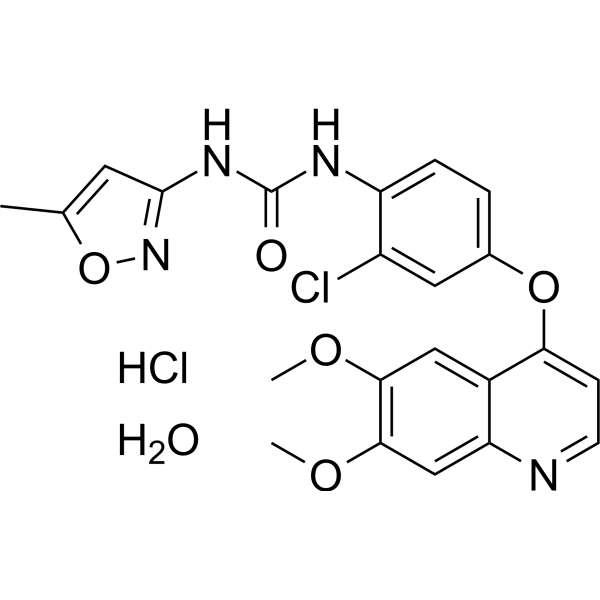
  • HY-10977A
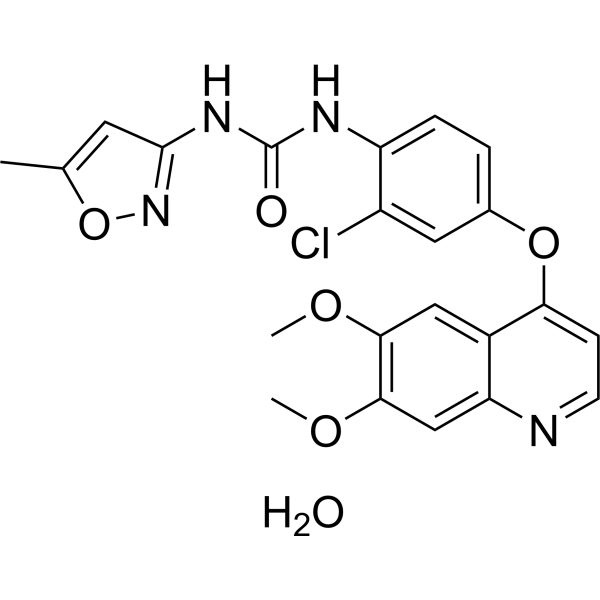
    Tivozanib hydrochloride hydrate
    5+ Cited Publications

    AV-951 hydrochloride hydrate; KRN951 hydrochloride hydrate

    VEGFR Cancer
    Tivozanib hydrochloride hydrate is the hydrate hydrochloride form of Tivozanib (HY-10977). Tivozanib hydrochloride hydrate is a selective, orally active inhibitor for vascular endothelial growth factor receptor (VEGFR)-1, 2 3, with IC50s of 30, 6.5 and 15 nM, respectively. Tivozanib hydrochloride hydrate exhibits antitumor efficacy .
    Tivozanib hydrochloride hydrate
  • HY-P99215

    Anti-EGFL7; RG 7414

    VEGFR Cancer
    Parsatuzumab (Anti-EGFL7; RG 7414) is a humanized monoclonal antibody, acts as an immunomodulator and binds to EGFL7. Parsatuzumab selectively blocks the interaction between EGFL7 and endothelial cells, potentially inhibiting vascular regrowth and reducing vascular endothelial growth factor (VEGF) inhibition .
    Parsatuzumab
  • HY-P3226

    IGF-1R VEGFR Drug Derivative Cardiovascular Disease Neurological Disease
    JB-1, an IGF-I analog, is a selective IGF-I receptor inhibitor that does not interact with IGF-II. JB-1 competes with IGF-I for binding to IGF-1R and blocks receptor autophosphorylation. JB-1 increases the level of sVEGFR-1. JB-1 normalizes retinal abnormalities, including reducing retinal neovascularization. JB-1 is applicable to studies related to oxygen-induced retinopathy .
    JB-1
  • HY-N0910
    Notoginsenoside Ft1
    1 Publications Verification

    PI3K mTOR Akt Apoptosis p38 MAPK ERK Transmembrane Glycoprotein Glutathione Reductase (GR) Estrogen Receptor/ERR Calcium Channel Ferroptosis G protein-coupled Bile Acid Receptor 1 FXR Cardiovascular Disease Neurological Disease Metabolic Disease Inflammation/Immunology Cancer
    Notoginsenoside Ft1 is an orally active bioactive saponin. Notoginsenoside Ft1 inhibits the PI3K/AKT/mTOR signaling pathway, activates the p38 MAPK and ERK1/2 signaling pathways, and increases the proportion of CD8 + T cells, thereby inducing apoptosis and lysosomal cell death in various cancer cells, and promoting angiogenesis. Notoginsenoside Ft1 causes vasodilation by activating glucocorticoid receptors (GR) and estrogen receptor beta (ERβ) in endothelial cells. Notoginsenoside Ft1 increases intracellular Ca 2+ accumulation, reduces cAMP levels by activating a signaling network mediated through P2Y12 receptors, and promotes platelet aggregation, thereby exerting a procoagulant effect. Notoginsenoside Ft1 inhibits ferroptosis (ferroptosis) in renal tubular epithelial cells by activating the TGR5 receptor, thereby demonstrating a renal protective effect. Notoginsenoside Ft1 acts as a TGR5 agonist and an FXR antagonist to combat obesity and insulin resistance .
    Notoginsenoside Ft1
  • HY-147243

    ANG-3070

    VEGFR PDGFR Cardiovascular Disease Inflammation/Immunology
    Ansornitinib is an orally active dual kinase inhibitor that inhibits platelet-derived growth factor receptor (PDGFR) and vascular endothelial growth factor receptor (VEGFR2). Ansornitinib can be used as an antifibrotic agent in lung, liver, kidney, and gastrointestinal fibrotic diseases .
    Ansornitinib
  • HY-136477

    PGV-1

    Apoptosis COX VEGFR NF-κB Cancer
    Pentagamavunon-1 (PGV-1), a Curcumin analog with oral activity, targets on several molecular mechanisms to induce apoptosis including inhibition of angiogenic factors cyclooxygenase-2 (COX-2) and vascular endothelial growth factor (VEGF). PGV-1 inhibits NF-κB activation .
    Pentagamavunon-1
  • HY-122753

    MDM-2/p53 Cancer
    SLMP53-1 is a wild-type and mutant p53 reactivator with promising antitumor activity. SLMP53-1 mediates the reprograming of glucose metabolism in cancer cells. SLMP53-1 depletes angiogenesis, decreasing endothelial cell tube formation and vascular endothelial growth factor (VEGF) expression levels .
    SLMP53-1
  • HY-B0239R

    Reference Standards Antibiotic Bacterial HIF/HIF Prolyl-Hydroxylase VEGFR Autophagy Apoptosis Beclin1 JNK Akt MMP Infection Cancer
    Chloramphenicol (Standard) is the analytical standard of Chloramphenicol. This product is intended for research and analytical applications. Chloramphenicol is an orally active, potent and broad-spectrum antibiotic. Chloramphenicol shows antibacterial activity. Chloramphenicol represses the oxygen-labile transcription factor and hypoxia inducible factor-1 alpha (HIF-1α) in hypoxic A549 and H1299 cells. Chloramphenicol suppresses the mRNA levels of vascular endothelial growth factor (VEGF) and glucose transporter 1, eventually decreasing VEGF release. Chloramphenicol can be used for anaerobic infections and lung cancer research .
    Chloramphenicol (Standard)
  • HY-P3318

    L-BOC2

    Leukotriene Receptor Inflammation/Immunology
    Boc-Phe-Leu-Phe-Leu-Phe (Boc-FLFLF) is a N-formyl peptide receptors (FPR) inhibitor. Boc-Phe-Leu-Phe-Leu-Phe abolishes the FMLP-induced release of peptide leukotrienes. Boc-Phe-Leu-Phe-Leu-Phe inhibits the sprouting of human umbilical vein endothelial cell (HUVEC) spheroids mediated by proliferative diabetic retinopathy (PDR) vitreous and vascular endothelial growth factor (VEGF) respectively in a three-dimensional fibrin gel. Boc-Phe-Leu-Phe-Leu-Phe inhibits the anti-inflammatory and antifibrotic effects of Ac2-26 (HY-P1098). Boc-Phe-Leu-Phe-Leu-Phe can be used for the study of immunology .
    Boc-Phe-Leu-Phe-Leu-Phe
  • HY-P99830

    KH902

    VEGFR TNF Receptor Interleukin Related Cardiovascular Disease Inflammation/Immunology Cancer
    Conbercept (KH902) is a recombinant fusion protein composed of VEGFR-1 (second domain) and VEGFR-2 (third and fourth domains) regions fused to human IgG1 Fc. Conbercept is a VEGF inhibitor (IC50 = 8.8 pM) and is a soluble receptor decoy that blocks all isoforms of VEGF-A (Kd = 0.5 pM), VEGF-B (Kd = 8 pM), VEGF-C, and PlGF (Kd = 5 pM). Conbercept has anti-inflammatory effects, can lower the levels of VEGF, TNF-α and IL-6, and reduce the infiltration of inflammatory cells. Conbercept decreases tumor growth in several oncology studies. Conbercept can be used for various eye diseases such as polypoidal choroidal vasculopathy (PCV), diabetic macular edema (DME) and pathologic myopia choroidal neovascularization (pmCNV) .
    Conbercept
  • HY-153484A

    VEGFR Small Interfering RNA (siRNA) Others
    Bevasiranib sodium is a siRNA designed to silence the genes that produce vascular endothelial growth factor (VEGF). It is widely accepted that vascular endothelial growth factor (VEGF) is a key component in the pathogenesis of choroidal neo-vascularization (CNV), which is a precursor to wet age-related macular degeneration (wet AMD).
    Bevasiranib sodium
  • HY-116116

    SIM010603

    c-Kit RET VEGFR Cancer
    Tafetinib (SIM010603) is an oral multi-targets receptor tyrosine kinases inhibitor. Tafetinib inhibitsstem cell factor receptor (Kit),vascular endothelial growth factor receptor-2 (VEGFR-2),platelet-derived growth factor receptor-β (PDGFR-β),glial cell line-derived neurotrophic factor receptor (Rearranged during Transfection; RET), andFms-like tyrosine kinase-3 (FLT3)withIC50values between 5.0 and 68.1 nmol/l. Tafetinib inhibits the phosphorylation ofPDGFR-βandVEGFR-2. Tafetinib inhibits endothelial cell proliferation, endothelial cells chemotaxis, and corneal angiogenesis .
    Tafetinib
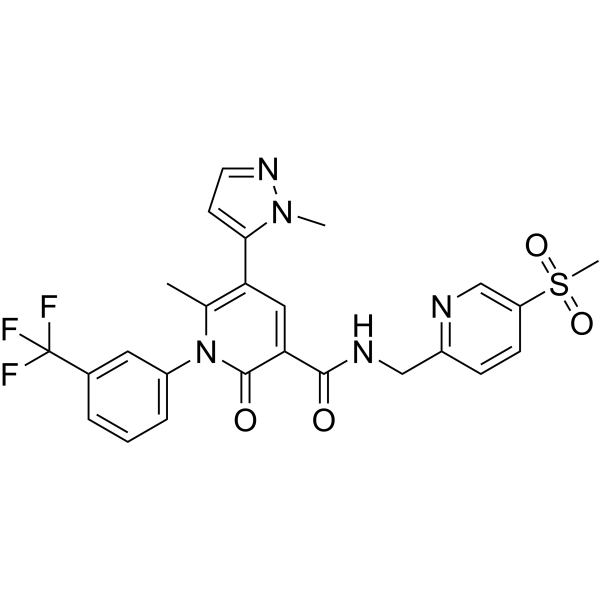
  • HY-108798

    VEGFR Cardiovascular Disease Cancer
    Ziv-aflibercept is a soluble inhibitor of vascular endothelial growth factor (VEGF). Ziv-aflibercept is an adaptive variant of Aflibercept (HY-108801), Ziv-aflibercept has a low PH value and high osmotic pressure when compared to Aflibercept. Ziv-aflibercept has potential applications in metastatic colorectal carcinoma and retinal diseases .
    Ziv-aflibercept
  • HY-P10097

    VEGFR Others
    Flt2-11 is a anti-angiogenic peptide, and specifically binds NRP-1. Flt2-11 inhibits NRP-1/sVEGFR-1 interaction.
    Flt2-11
  • HY-N3001
    Isolinderalactone
    1 Publications Verification

    STAT VEGFR Bcl-2 Family Survivin IAP NF-κB Apoptosis Caspase Neurological Disease Inflammation/Immunology Cancer
    Isolinderalactone is a sesquiterpene that exhibits anti-cancer, anti-inflammatory, and neuroprotective effects. Isolinderalactone inhibits VEGF expression and tyrosine phosphorylation of VEGFR2. Isolinderalactone decreases viability and induces apoptosis in U-87 glioblastoma (GBM) cells and colorectal cancer (CRC) cells. Isolinderalactone induces G2/M phase cell cycle arrest, ROS generation, pJNK/p38 MAPK activation, in colorectal cancer (CRC) cells. Isolinderalactone blocks LPS (HY-D1056)-induced NF-κB activation while activating Nrf2-HMOX1 signaling in RAW264.7 macrophages. Isolinderalactone improves cognitive dysfunction in APP/PS1 mice. Isolinderalactone can be used for the study of Glioblastoma multiforme (GBM), colorectal cancer, Alzheimer’s disease and acute lung injury .
    Isolinderalactone
  • HY-U00002

    VEGFR EGFR Cancer
    ZD-4190 is a potent, orally available inhibitor of the vascular endothelial cell growth factor receptor 2 (VEGFR2) and of epidermal growth factor receptor (EGFR) signalling, used for the treatment of cancer.
    ZD-4190
  • HY-P99516

    HLX-06

    VEGFR Cancer
    Vulinacimab (HLX-06) is a human monoclonal antibody directed against human vascular endothelial growth factor receptor 2 (VEGFR-2). Vulinacimab specifically binds to and inhibits VEGFR-2, which may inhibit tumor angiogenesis and tumor cell proliferation. Vulinacimab can be used for the research of solid tumors and non-small cell lung cancer .
    Vulinacimab
  • HY-18711

    Metatinib free base; c-Met inhibitor 2 free base

    c-Met/HGFR VEGFR Cancer
    SCR-1481B1 free base, also known as Metatinib free base, is a small molecule receptor kinase inhibitor that targets both c-MET and vascular endothelial growth factor receptor 2 (VEGFR2) .
    SCR-1481B1 free base
  • HY-153484

    VEGFR Small Interfering RNA (siRNA) Others
    Bevasiranib is a siRNA designed to silence the genes that produce vascular endothelial growth factor (VEGF). It is widely accepted that vascular endothelial growth factor (VEGF) is a key component in the pathogenesis of choroidal neo-vascularization (CNV), which is a precursor to wet age-related macular degeneration (wet AMD).
    Bevasiranib
  • HY-157420

    VEGFR Cardiovascular Disease
    VEGFR-2-IN-38 (compound 3) is a potential vascular endothelial growth factor receptor-2 inhibitor .
    VEGFR-2-IN-38
  • HY-174510

    mRNA Cancer
    Human VEGFA mRNA encodes the human vascular endothelial growth factor A (VEGFA) protein, a member of the PDGF/VEGF growth factor family. VEGFA could induce proliferation and migration of vascular endothelial cells, and is essential for both physiological and pathological angiogenesis.
    Human VEGFA mRNA
  • HY-177134

    VEGFR c-Met/HGFR Cancer
    Taligantinib (Compound Example 70) is an orally active and selective dual inhibitor targeting vascular endothelial growth factor receptor 2 (VEGFR-2) and hepatocyte growth factor receptor (c-Met). Taligantinib suppresses tumor angiogenesis and cell proliferation. Taligantinib is promising for research of solid tumors such as non-small cell lung cancer and hepatocellular carcinoma .
    Taligantinib
  • HY-10338A

    c-Met/HGFR VEGFR Cancer
    Foretinib phosphate is an orally bioavailable small molecule with potential anti-tumor activity. Foretinib phosphate can selectively inhibit hepatocyte growth factor (HGF) receptor c-MET and vascular endothelial growth factor receptor 2 (VEGFR2), thereby potentially inhibiting tumor angiogenesis, tumor cell proliferation and metastasis. Foretinib phosphate shows different anti-cancer activity from cabozantinib in lung cancer cells and has stronger inhibitory effects on targets such as MEK1/2, FER and AURKB .
    Foretinib phosphate
  • HY-B0239S2

    JNK Apoptosis VEGFR MMP Bacterial Akt Autophagy HIF/HIF Prolyl-Hydroxylase Antibiotic Beclin1 Cancer
    Threo-Chloramphenicol-d6 is the deuterium labeled Chloramphenicol . Chloramphenicol is an orally active, potent and broad-spectrum antibiotic. Chloramphenicol shows antibacterial activity. Chloramphenicol represses the oxygen-labile transcription factor and hypoxia inducible factor-1 alpha (HIF-1α) in hypoxic A549 and H1299 cells. Chloramphenicol suppresses the mRNA levels of vascular endothelial growth factor (VEGF) and glucose transporter 1, eventually decreasing VEGF release. Chloramphenicol can be used for anaerobic infections and lung cancer research .
    Threo-Chloramphenicol-d6
  • HY-13892

    CHIR-258 dilactic acid; TKI258 dilactic acid

    VEGFR Cancer
    Dovitinib (dilactic acid) is an orally active inhibitor of VEGF kinase. Dovitinib (dilactic acid) inhibits receptor tyrosine kinases (RTKs) involved in solid and hematologic cancers and tumor angiogenesis .
    Dovitinib dilactic acid
  • HY-120200

    VEGFR Cardiovascular Disease Cancer
    YF-452 is a potent inhibitor of vascular endothelial growth factor receptor 2 (VEGFR2). YF-452 remarkably inhibits the migration, invasion and tube-like structure formation of human umbilical vein endothelial cells (HUVECs) with little toxicity. YF-452 inhibits VEGF-induced phosphorylation of VEGFR2 kinase and the downstream protein kinases including extracellular signal regulated kinase (ERK), focal adhesion kinase (FAK) and Src. YF-452 is a potential antiangiogenic agent candidate for cancer research .
    YF-452
  • HY-175608

    EGFR Apoptosis Bcl-2 Family MDM-2/p53 Cancer
    EGFR-IN-171 is an EGFR inhibitor with an IC50 value of 0.19 μM. EGFR-IN-171 also inhibits vascular endothelial growth factor 2 (VEGFR-2) with an IC50 value of 31.65 μM. EGFR-IN-171 can induce apoptosis and G2/M phase cell cycle arrest. EGFR-IN-171 can be used for cancer research, such as liver and breast cancer .
    EGFR-IN-171
  • HY-P10833

    VEGFR PI3K Akt mTOR ERK Apoptosis Cardiovascular Disease Cancer
    C-VGB3 is a selective vascular endothelial growth factor receptor 2 (VEGFR2) antagonist, which inhibits VEGFR2-mediated PI3K/AKT/mTOR and PLCγ/ERK1/2 signaling pathways. C-VGB3 binds to the extracellular domain of VEGFR2, blocking ligand-receptor interaction and inducing apoptosis in endothelial and tumor cells through both intrinsic (involving Bcl2 family and caspases) and extrinsic (death receptor-mediated) pathways. C-VGB3 is promising for research of angiogenesis-related cancers, such as breast cancer .
    C-VGB3
  • HY-174507

    mRNA Cancer
    Human VEGFD mRNA encodes the human vascular endothelial growth factor D (VEGFD) protein, a member of the platelet-derived growth factor/vascular endothelial growth factor (PDGF/VEGF) family. VEGFD is structurally and functionally similar to vascular endothelial growth factor C (VEGFC).
    Human VEGFD mRNA
  • HY-163125

    VEGFR Cancer
    BHEPN is an inhibitor of vascular endothelial growth factor receptor-2 (VEGFR-2). BHEPN has inhibition of VEGFR-2 with an IC50 value of 0.320 μM. BHEPN also exhibits remarkable cytotoxic effects against HepG2 and MCF-7 cancer cell lines, with IC50 values of 0.19 μM and 1.18 μM, respectively. BHEPN can be used for anticancer research .
    BHEPN
  • HY-174509

    mRNA Cancer
    Human VEGFB mRNA encodes the human vascular endothelial growth factor B (VEGFB) protein, a member of the platelet-derived growth factor (PDGF)/ vascular endothelial growth factor (VEGF) family. VEGFB is a growth factor for endothelial cells.
    Human VEGFB mRNA
  • HY-174508

    mRNA Cancer
    Human VEGFC mRNA encodes the human vascular endothelial growth factor C (VEGFC) protein, a member of the platelet-derived growth factor/vascular endothelial growth factor (PDGF/VEGF) family. VEGFC promotes angiogenesis and endothelial cell growth, and can also affect the permeability of blood vessels.
    Human VEGFC mRNA
  • HY-136209

    VEGFR Cancer
    SU5208 inhibits vascular endothelial growth factor receptor-2 (VEGFR2) .
    SU5208
  • HY-P991626

    VEGFR Others
    VGX200 is a monoclonal antibody against vascular endothelial growth factor D (VEGFD) .
    VGX200
  • HY-174593

    mRNA Cancer
    Human KDR mRNA encodes the human kinase insert domain receptor (KDR) protein, a receptor of vascular endothelial growth factor (VEGF). KDR functions as the main mediator of VEGF-induced endothelial proliferation, survival, migration, tubular morphogenesis and sprouting.
    Human KDR mRNA
  • HY-174684

    mRNA Cancer
    Human FLT1 mRNA encodes the human fms related receptor tyrosine kinase 1 (FLT1) protein, a member of the vascular endothelial growth factor receptor (VEGFR) family. FLT1 binds to VEGFR-A, VEGFR-B and placental growth factor and plays an important role in angiogenesis and vasculogenesis.
    Human FLT1 mRNA
  • HY-169626

    VEGFR Cardiovascular Disease Cancer
    VEGFR-IN-6 (Compound 3) is a vascular endothelial growth factor receptor (VEGFR) inhibitor. VEGFR-IN-6 can inhibit angiogenesis. VEGFR-IN-6 is promising for research of tumor diseases that rely on angiogenesis .
    VEGFR-IN-6
  • HY-164551

    VEGFR STAT ERK Apoptosis Cancer
    YLL545 is a type of vascular endothelial growth factor receptor 2 (VEGFR2) inhibitor. YLL545 can inhibit VEGF-induced phosphorylation of VEGFR2 and the activation of downstream signaling factors (like phosphorylated STAT3 and phosphorylated ERK1/2) in human umbilical vein endothelial cells (HUVEC). YLL545 can suppress the proliferation, migration, invasion, and angiogenesis of HUVEC. YLL545 can induce apoptosis in breast cancer mice and inhibit tumor growth .
    YLL545
  • HY-P992371

    VEGFR Cancer
    hPV19 is a humanized inhibitory monoclonal antibody targeting vascular endothelial growth factor (VEGF) with a unique binding site. hPV19 can be used for the research of advanced solid tumors .
    hPV19

Inquiry Online

Your information is safe with us. * Required Fields.

Salutation


Country or Region *

Applicant Name *


Organization Name *

Department *


Email Address *


Product Name *

Cat. No.


Requested quantity *

Phone Number *


Remarks

Inquiry Online

Inquiry Information

Product Name:
Cat. No.:
Quantity:
MCE Japan Authorized Agent:

