



SR-1903
SR-1903 is an inverse agonist of RORγ and PPARγ (IC50 of ∼100 nM and 209 nM for RORγ and PPARγ, respectively) and a LXR agonist. SR-1903 exhibits anti-inflammatory and anti-diabetic efficacy in collagen-induced arthritis and diet-induced obesity mouse models.
For research use only. We do not sell to patients.
- CAS No.: 1414248-06-8
- Formula: C27H27F6N3O
- Molecular Weight:523.51
-
Storage:
Please store the product under the recommended conditions in the Certificate of Analysis.


To place orders, for customer services and technical support, please contact: MedChemExpress USA
Tel: 609-228-6898 E-mail: [email protected] [email protected]


-
 Biological Activity
-
Chemical Information
- Protocols
- Purity & Documentation
- References
-
 Help & FAQs


-
HY-17356
Fenofibrate -
HY-N2302
FucoxanthinMarine Carotenoid -
HY-137307
Cholest-5-ene-3ß,22(S)-diolOxysterol -
HY-17356S
Fenofibrate-d6Stable Isotope -
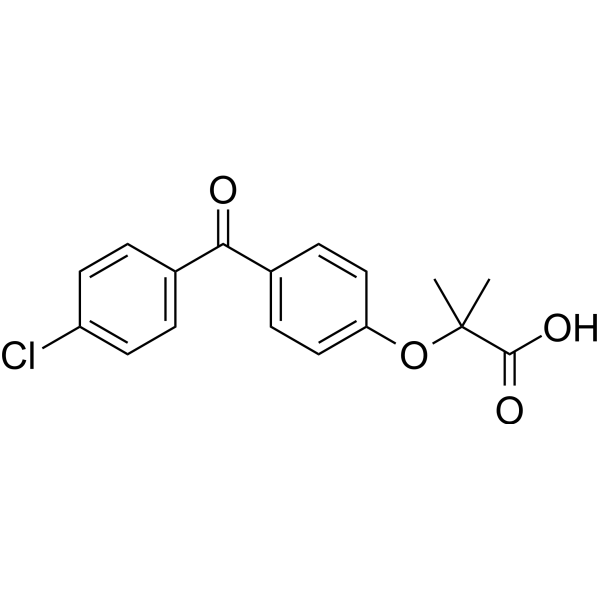
HY-B0760
Fenofibric acid -

HY-W717504
Glucosylceramide, plantAnti-inflammatory Agent -
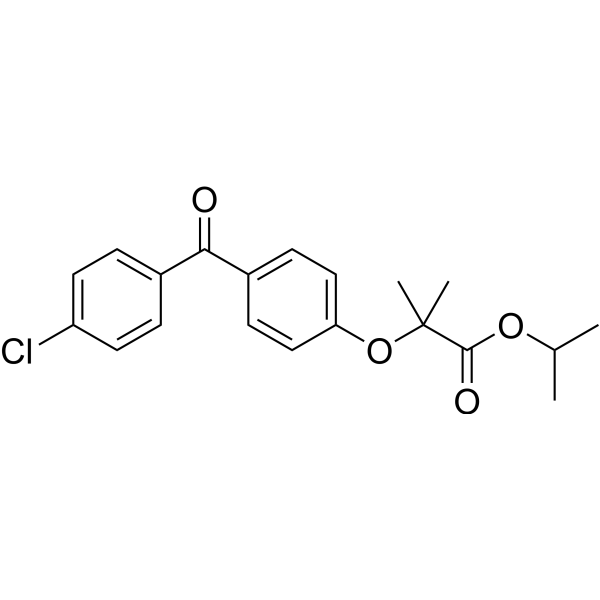
HY-17356R
Fenofibrate (Standard) -
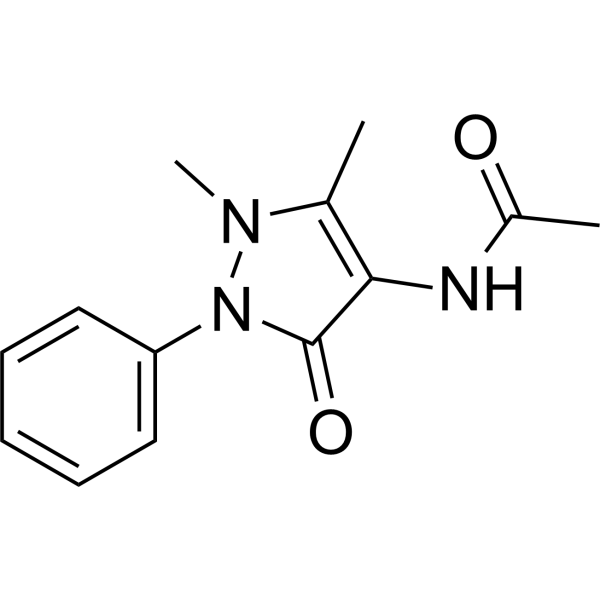
HY-W268542
4-AcetylaminoantipyrineAnti-inflammatory and Protein-Binding Inhibitor -
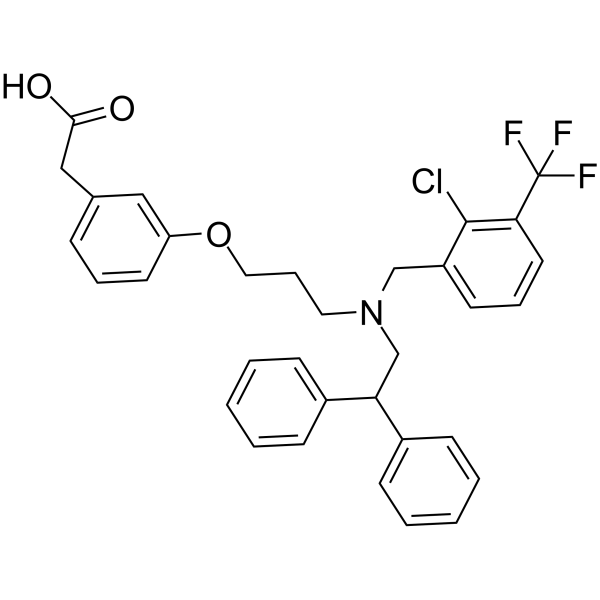
HY-10627
GW3965LXR Agonist -

HY-N2302R
Fucoxanthin (Standard)Marine Carotenoid -

HY-165035
Glucosylceramide (gaucher's spleen)Sphingolipid/Gaucher Disease Biomarker -
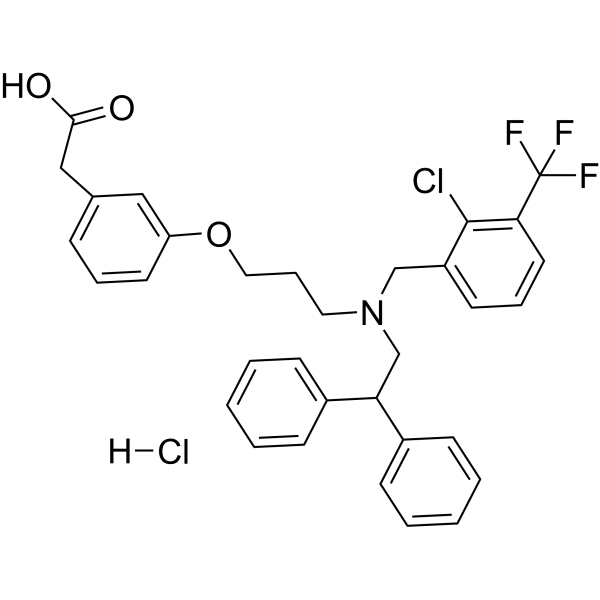
HY-10627A
GW3965 hydrochlorideLXR Agonist


Biological Activity
Description
IC50 & Target
[1]|
RORγ ~100 nM (IC50) |
PPARγ 209 nM (IC50) |
Cellular Effect
|
Cell Line

|
Type | Value | Description | References |
|---|---|---|---|---|
| HepG2 | IC50 |
70 nM
Compound: 16
|
Displacement of [3H]T0901317 from human RoRc expressed in HepG2 cells by scintillation proximity binding assay
Displacement of [3H]T0901317 from human RoRc expressed in HepG2 cells by scintillation proximity binding assay
|
[PMID: 24502334] |
In Vitro
SR1903 (10 μM) attenuates LPS (HY-D1056) signaling in macrophages, with suppression of TREM-1 gene expression[1].
SR1903 increases expression of LXR target genes, including genes involved in macrophage cholesterol efflux (ABCG1 and SCD) and lipid metabolism (ACACA and FASN) in macrophage RAW264.7[1].
MedChemExpress (MCE) has not independently confirmed the accuracy of these methods. They are for reference only. Further protocols information, click here.
In Vivo
SR1903 (20 mg/kg, i.p., 14 days) improves metabolic parameters and protects against obesity-associated thymic degeneration in diet-induced obese (DIO) mice[1].
MedChemExpress (MCE) has not independently confirmed the accuracy of these methods. They are for reference only.
-
Animal Model:Collagen-induced arthritis (female DBA/1J mice were injected with chicken type II collagen on day 1, and then each animal received a boost injection of collagen on day 21)[1]
-
Dosage:20 mg/kg
-
Administration:Intraperitoneal injection (i.p.), twice-a-day for a total of 16 days
-
Result:Demonstrated a reduction in arthritis clinic score at the conclusion of the study (day 34).
Did not cause enlargement of the liver.
Had enhanced thymocyte differentiation and survival compared to mice treated with either the selective LXR agonist GW3965 or the dual LXR agonist/RORγ inverse agonist T0901317.
-
Animal Model:Diet-induced obese (DIO) mouse (Male, 22 weeks of age, fed a high fat diet (60% kCal % fat))[1]
-
Dosage:20 mg/kg
-
Administration:Intraperitoneal injection (i.p.), 14 days
-
Result:Improved fasting glucose levels and reduced total cholesterol and low density lipoprotein (LDL).
Improved both fasting and fed insulin levels.
Showed 15% weight loss and 17% reduction in fat mass after 14 days.
Reduced food intake.
Reduced leptin resistance and repressed Socs3 (suppressor of cytokine signaling-3) expression.


Chemical Information
-
CAS No. 1414248-06-8
-
Molecular Weight 523.51
-
Formula C27H27F6N3O
-
SMILES
OC(C(F)(F)F)(C(F)(F)F)C1=CC=C(C2=CC=C(CN3CCN(CC4=CC=NC=C4)CC3)C=C2C)C=C1
-
Shipping
Room temperature in continental US; may vary elsewhere.
-
Storage
Please store the product under the recommended conditions in the Certificate of Analysis.

Protocols
-
Collagen-Induced Arthritis
Collagen-induced arthritis (CIA) is an autoimmune murine model of rheumatoid arthritis in which immunization with type II collagen (CII) emulsified in an adjuvant induces a T cell- and autoantibody-driven inflammatory arthritis characterized by synovial hyperplasia, immune cell infiltration, and joint destruction. The model typically relies on genetically susceptible mouse strains (e. g. , DBA/1) and reproduces key features of human rheumatoid arthritis, including anti-collagen immune responses and progressive joint inflammation. Disease onset generally occurs within ~3-4 weeks after immunization, depending on antigen/adjuvant combinations and protocol variation. The immunopathology is driven by adaptive immune activation against CII, leading to systemic and local joint inflammation mediated by pro-inflammatory cytokines and effector immune cells, making CIA a standard preclinical platform for evaluating immunomodulatory and anti-arthritic interventions.
-
Cell Cytotoxicity Assay
Cytotoxicity assays are usually based on the assessment of cell membrane damage, which can also be indirectly detected by measuring cell viability. Detection methods include MTT assay, CKK-8 assay, LDH assay and ATP assay, etc.
-
Research Protocol for Inflammation-related Diseases
The NLRP3 inflammasome is a cytosolic innate immune signaling platform that integrates priming signals and danger-signal activation to promote caspase-1 activation, maturation of IL-1β and IL-18, and gasdermin D-mediated pyroptotic cell death. The core experimental logic is to determine whether inflammatory disease phenotypes are driven by increased NLRP3 expression, ASC-containing inflammasome assembly, caspase-1 cleavage, GSDMD cleavage, and extracellular release of IL-1β/IL-18 rather than by nonspecific cell injury alone. The pathway is strongly linked to inflammation-related disease phenotypes because monosodium urate crystals activate NALP3/NLRP3 inflammasome signaling in gout-like crystal inflammation, cholesterol crystals activate NLRP3 inflammasomes in atherogenesis models, and DSS-induced intestinal inflammation has been reported to involve NLRP3 inflammasome activity. However, experimental colitis studies also show context-dependent protective effects of NLRP3 inflammasome co
-
Research Protocol for Metabolic Diseases
AMP-activated protein kinase, AMPK, is a conserved cellular energy sensor that responds to reduced cellular energy status and coordinates metabolism by increasing ATP-generating catabolic pathways while suppressing ATP-consuming anabolic processes. In metabolic disease research, the AMPK pathway is experimentally relevant because it regulates hepatic lipid synthesis, fatty acid oxidation, glucose production, skeletal-muscle glucose disposal, mTORC1-linked biosynthesis, autophagy, mitochondrial homeostasis, and whole-body energy balance. The central pathway logic is that energy stress, metformin, exercise-like stimulation, or direct AMPK activators increase AMPKα Thr172 phosphorylation and downstream substrate phosphorylation, including ACC and RAPTOR. Phosphorylation of ACC suppresses lipogenesis and supports fatty acid oxidation, whereas phosphorylation of RAPTOR suppresses mTORC1 signaling and links cellular energy status to growth and protein synthesis control. The pathway is linked


Purity & Documentation
References

Calculators
Concentration (start) × Volume (start) = Concentration (final) × Volume (final)


SR-1903 Related Classifications
HY-138007 Related Classifications
 Powered by Bioz