



[1] Takahashi K, et al. Development. 2013;140(12):2457-61.
[2] CHAPTER THREE, Embryonic Stem Cells; 2002.
[3] Zakrzewski W, et al. Stem Cell Res Ther. 2019;10(1):68.
[4] Gurusamy N, et al. Prog Mol Biol Transl Sci. 2018;160:1-22.
[5] Di Buduo CA, et al. Haematologica. 2021 Apr 1;106(4):947-957.

About Stem Cells
Stem cells are able to differentiate into different types of cells in the body and have unique abilities to self-renew and recreate functional tissues.
There are several main types of stem cells: the 'pluripotent' stem cells, including embryonic stem cells (ESCs) and induced pluripotent stem cells (iPSCs), as well as nonembryonic or somatic stem cells (commonly called 'adult' stem cells, ASCs).
Pluripotent stem cells have the ability to differentiate into all of the cells of the adult body. Scientists create iPSCs in a lab. These cells behave in a similar way to ESCs with fewer ethical and legal controversies. Therefore, iPSCs are considered to hold great promise in the fields of regenerative medicine, neurodegenerative disease modeling, and drug screening[1][2].
Adult stem cells are found in tiss or organ and can differentiate to yield the specialized cell types of that tissue or organ. These include neural stem cells (NSCs), hematopoietic stem cells (HSCs), mesenchymal stem cells (MSCs), cardiac stem cells (CSCs), etc[3][4].
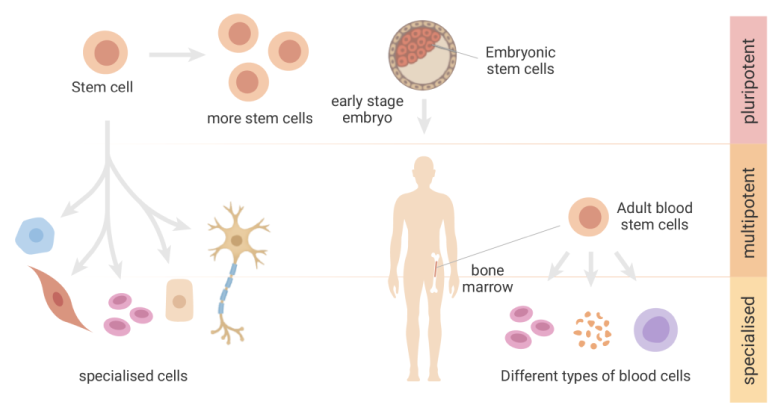
Figure 1. Stem cells: the main description of stem cells can be classified according to their origin and differentiation potential.
Figure 1. Stem cells: the main description of stem cells can be classified according to their origin and differentiation potential.
Cytokines Used for Stem Cell Differentiation
Stem cells require a combination of growth factors and nutrients to maintain differentiation and development. The cytokines required for stem cell culture mainly belong to two categories: the transforming growth factor-β superfamily and colony-stimulating factor.
The Transforming growth factor-β superfamily (TGF-βs) is the largest family of secreted growth factors, including TGF-β (TGF-β1, TGF-β2, and TGF-β3), bone morphogenetic protein (BMP), Activin A, and Inhibin. In stem cell culture, TGF-β can induce the directional differentiation of various MSCs and regulate the immunosuppressive function of mesenchymal stem cells.
Colony-stimulating factors (CSFs): These include macrophage colony-stimulating factor (M-CSF), granulocyte-macrophage colony-stimulating factor (GM-CSF), granulocyte colony-stimulating factor (G-CSF), and multipotent colony-stimulating factor (multi-CSF/IL-3), which are widely used to promote blood cell development and differentiation. Broadly speaking, all cytokines that stimulate the hematopoietic process can be collectively referred to as CSFs. For example, erythropoietin (EPO) stimulates erythropoiesis, while stem cell factor (SCF) and leukemia inhibitory factor (LIF) can inhibit the spontaneous differentiation of stem cells and keep them in an undifferentiated state, thereby maintaining the pluripotent phenotype of stem cells. Scientists have been able to use recombinant proteins to achieve in vitro induction of differentiation of HSCs to produce erythrocytes and platelets[5].
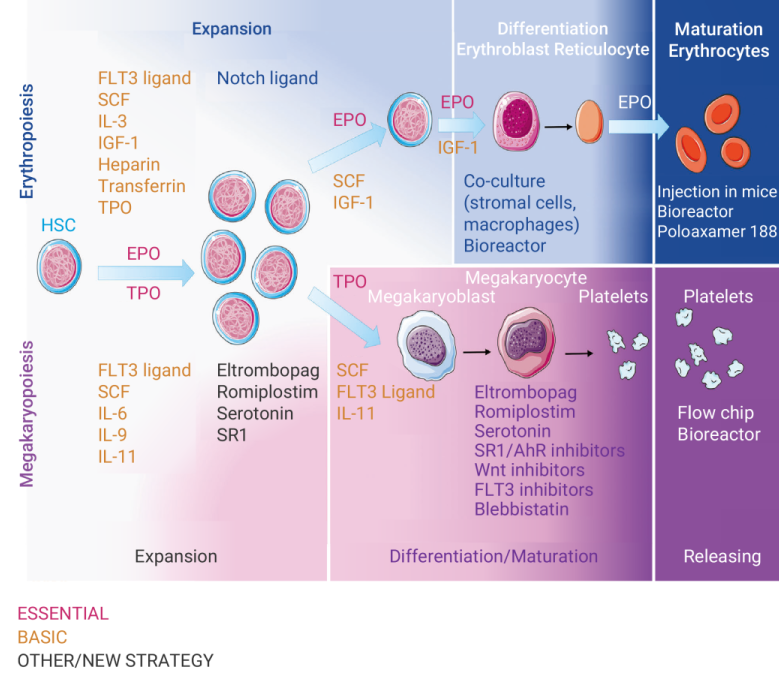
Figure 2. Soluble cytokines used to produce platelets and red blood cells in vitro[5].
Figure 2. Soluble cytokines used to produce platelets and red blood cells in vitro[5].
Products
| Cat. No | Cytokines |
Hematopoietic Stem Cells(HSC) |
Embryonic Stem Cells(ESC) |
Neural Stem Cells(NSC) |
Induced Pluripotent Stem Cells(iPSC) |
Mesenchymal Stem Cells(MSC) |
Categories |
|---|---|---|---|---|---|---|---|
| HY-P7004 | FGF-2 | √ | √ | √ | √ | √ | Common |
| HY-P7109 | EGF | √ | √ | √ | √ | √ | |
| HY-P7118 | TGF-β1 | √ | √ | √ | TGF-βs | ||
| HY-P7120 | TGF-β3 | √ | |||||
| HY-P7007 | BMP-4 | √ | √ | √ | |||
| HY-P70311 | Activin A | √ | |||||
| HY-P7040 | IL-3 | √ | √ | CSFs | |||
| HY-P70781 | SCF | √ | |||||
| HY-P7111 | Flt3-ligand | √ | |||||
| HY-P7016C | GM-CSF | √ | |||||
| HY-P70422 | G-CSF | √ | |||||
| HY-P7050 | M-CSF | √ | |||||
| HY-P7049 | LIF | √ | √ | ||||
| HY-P70637A | TPO | √ | |||||
| HY-P7110A | VEGF165 | √ | Others | ||||
| HY-P70533 | FGF-8b | √ | |||||
| HY-P7044 | IL-6 | √ | |||||
| HY-P7407 | SHH | √ | |||||
| HY-P7145 | CNTF | √ | √ | ||||
| HY-P70558 | Noggin | √ | |||||
| HY-P7055 | PDGF-BB | √ | |||||
| HY-P7114 | R-spondin 1 | √ | |||||
| HY-P7121 | HGF | √ | |||||
| HY-P70485 | Vitronectin | √ | √ | ||||
| HY-P701311 | Laminin 521 | √ | √ | ||||
| HY-P70453B | Wnt-3a | √ |