



Stictic acid

Based on 1 Customer Validation
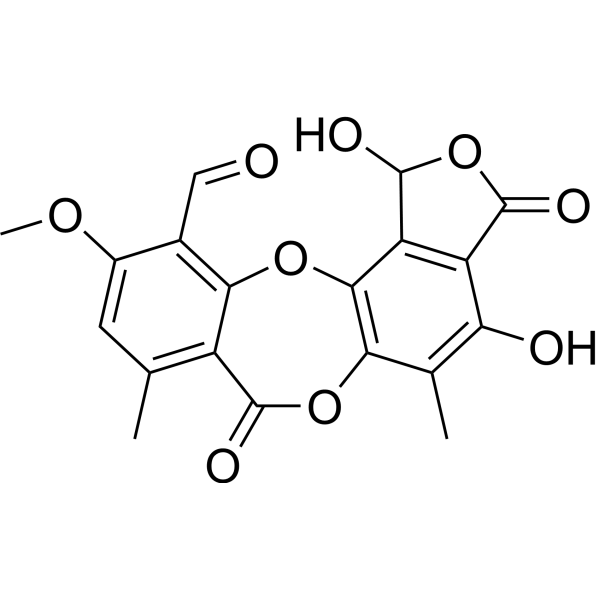
Stictic acid is a Depsidone. Stictic acid is found in the edible lichens Lobaria pindarensis and Lobaria pulmonaria. Stictic acid inhibits LPS/Aβ42-induced mRNA expression of iNOS, IL-1β, TNF-α, and IL-6, and decreases LPS-induced COX-2 protein expression. Stictic acid inhibits Aβ42 fibril formation and aggregation. Stictic acid scavenges superoxide anions. Stictic acid exhibits anticancer activity against colon adenocarcinoma. Stictic acid is used in research on Alzheimer's disease and colon adenocarcinoma.
For research use only. We do not sell to patients.
- Purity : 98.5%
- CAS No.: 549-06-4
- Formula: C19H14O9
- Molecular Weight:386.31
-
Storage:Powder -20°C, 3 years , 4°C, 2 years ; In solvent -80°C, 6 months , -20°C, 1 month

To place orders, for customer services and technical support, please contact: MedChemExpress USA
Tel: 609-228-6898 E-mail: [email protected] [email protected]


-
 Biological Activity
-
Chemical Information
-
Solvent & Solubility
- Protocols
- Purity & Documentation
- References
-
 Help & FAQs




Biological Activity
Description
IC50 & Target
[1]|
iNOS |
IL-1β |
IL-6 |
COX-2 |
Cellular Effect
|
Cell Line

|
Type | Value | Description | References |
|---|---|---|---|---|
| HT-29 | IC50 |
29.29 μg/mL
|
Growth inhibition of human colon adenocarcinoma HT-29 cells assessed by MTT assay after 48 hrs incubation.
Growth inhibition of human colon adenocarcinoma HT-29 cells assessed by MTT assay after 48 hrs incubation.
|
stictic-acid-inhibits-cell-growth-of-human-colon-adenocarcinoma-ht-29-cells |
| MRC5 | IC50 |
2478.40 μg/mL
|
Growth inhibition of human fetal lung fibroblast MRC-5 cells assessed by MTT assay after 48 hrs incubation.
Growth inhibition of human fetal lung fibroblast MRC-5 cells assessed by MTT assay after 48 hrs incubation.
|
stictic-acid-inhibits-cell-growth-of-human-colon-adenocarcinoma-ht-29-cells |
In Vitro
Stictic acid (30 μM; pretreatment for 3 h before LPS stimulation) completely inhibits LPS-induced mRNA expression of IL-6, IL-1β, iNOS, and TNF-α in RAW264.7 cells[1].
Stictic acid (30 μM; pretreatment for 3 h before LPS stimulation) inhibits LPS-induced mRNA expression of IL-6, IL-1β, iNOS, and TNF-α in BV2 cells[1].
Stictic acid (30 μM; pretreated for 3 h before LPS stimulation) significantly reduces COX-2 protein expression in LPS-induced RAW264.7 cells[1].
Stictic acid (30 μM; pretreatment for 3 h before LPS stimulation) inhibits LPS-induced COX-2 protein expression in BV2 cells[1].
Stictic acid (30 μM; pretreatment for 3 h before LPS stimulation) inhibits LPS-induced phagocytosis in BV2 cells[1].
Stictic acid (30 μM; pretreatment for 3 h before Aβ42 stimulation) inhibits Aβ42-induced mRNA expression of IL-6, IL-1β, iNOS, and TNF-α in BV2 cells[1].
Stictic acid (3000 μM) exhibits weak DPPH radical scavenging activity of approximately 10% at 3000 μM[2].
Stictic acid (0.01-100 μM; 48 h) inhibits the growth of HT-29 colon adenocarcinoma cells with an IC50 of 29.29 µg/mL, while showing lower growth inhibition against non-malignant MRC-5 cells[3].
MedChemExpress (MCE) has not independently confirmed the accuracy of these methods. They are for reference only. Further protocols information, click here.
-
Cell Line:RAW 264.7 macrophage cells
-
Concentration:30 μM
-
Incubation Time:3 h (pre-treatment before LPS challenge); 12 h (post-LPS challenge)
-
Result:Showed a full suppression on the LPS-induced mRNA expressions of IL-6, IL-1β, iNOS and TNF-α, similar to that of dexamethasone.
-
Cell Line:RAW 264.7 macrophage cells
-
Concentration:30 μM
-
Incubation Time:3 h (pre-treatment before LPS challenge); 12 h (post-LPS challenge)
-
Result:Markedly reduced the expression of COX-2, as induced by LPS.
-
Cell Line:BV2 microglial cells
-
Concentration:30 μM
-
Incubation Time:3 h (pre-treatment before LPS challenge); 12 h (post-LPS challenge)
-
Result:Showed robust suppression on the LPS-induced mRNA expressions of IL-6, IL-1β, iNOS and TNF-α.
-
Cell Line:BV2 microglial cells
-
Concentration:30 μM
-
Incubation Time:3 h (pre-treatment before LPS challenge); 12 h (post-LPS challenge)
-
Result:Showed robust suppression on the LPS-induced protein expression of COX-2.
-
Cell Line:BV2 microglial cells
-
Concentration:30 μM
-
Incubation Time:3 h (pre-treatment before Aβ42 challenge); 12 h (post-Aβ42 challenge)
-
Result:Showed suppression on the Aβ42-induced mRNA expressions of IL-6, IL-1β, iNOS and TNF-α.
-
Cell Line:HT-29, MCF-7, MRC-5
-
Concentration:10-8 M to 10-4 M
-
Incubation Time:48 h
-
Result:Inhibited HT-29 cell growth with an IC50 of 29.29 µg/mL.
Inhibited MRC-5 cell growth with an IC50 of 2478.40 µg/mL.
Was 689-fold more sensitive to HT-29 cells compared to MCF-7 cells.


Chemical Information
-
CAS No. 549-06-4
-
Appearance Solid
-
Molecular Weight 386.31
-
Formula C19H14O9
-
Color White to off-white
-
SMILES
O=CC1=C(OC(C2=C(C(OC2O)=O)C(O)=C3C)=C3OC4=O)C4=C(C)C=C1OC
-
Structure Classification
-
Initial Source
Lobaria pulmonaria
-
Shipping
Room temperature in continental US; may vary elsewhere.
-
Storage
Powder -20°C 3 years 4°C 2 years In solvent -80°C 6 months -20°C 1 month


Solvent & Solubility
In Vitro:
DMSO : 11 mg/mL (28.47 mM; Need ultrasonic and warming; Hygroscopic DMSO has a significant impact on the solubility of product, please use newly opened DMSO)
Please refer to the solubility information to select the appropriate solvent. Once prepared, please aliquot and store the solution to prevent product inactivation from repeated freeze-thaw cycles.
Storage method and period of stock solution: -80°C, 6 months; -20°C, 1 month. When stored at -80°C, please use it within 6 months. When stored at -20°C, please use it within 1 month.
Please refer to the solubility information to select the appropriate solvent. Once prepared, please aliquot and store the solution to prevent product inactivation from repeated freeze-thaw cycles.
Storage method and period of stock solution: -80°C, 6 months; -20°C, 1 month. When stored at -80°C, please use it within 6 months. When stored at -20°C, please use it within 1 month.
Concentration (start) × Volume (start) = Concentration (final) × Volume (final)

Protocols
-
RT-PCR
Reverse transcription technology uses RNA as a template to synthesize DNA. RT-PCR is simple, specific and sensitive, and can be used to detect gene expression levels and expression differences in cells; detect RNA virus content; clone cDNA sequences of specific genes.
-
RNA extraction experimental
By lysing cells, releasing RNA, and removing impurities such as proteins and DNA, high-purity RNA products are finally obtained. The commonly used traditional method is the guanidine isothiocyanate/phenol/chloroform method (Trizol), which is suitable for a variety of animal materials including animal tissues, microorganisms, cultured cells, etc., and most plant materials.
-
Western Blot
Western blotting (WB) is a commonly used experimental method in molecular biology, biochemistry, and immunogenetics for identifying and quantifying target proteins. It combines gel electrophoresis with immunoassay, enabling researchers to analyze protein expression, post-translational modifications, and molecular weight.
-
Real Time qPCR (Q-PCR)
Real-time quantitative PCR (qPCR) quantifies an amplifiable nucleic-acid target by monitoring fluorescence during PCR cycling rather than measuring product only after amplification. The increase in fluorescence tracks accumulation of PCR product, and the quantification cycle (Cq; historically also Ct/CP) is related to the initial amount of target: samples containing more starting target generally reach the defined fluorescence threshold in fewer cycles.
-
Pyroptosis Solutions
Pyroptosis is a lytic inflammatory cell-death pathway executed by gasdermin pores, most classically through inflammasome-mediated activation of caspase-1, cleavage of gasdermin D, membrane pore formation, LDH release, and secretion of IL-1β and IL-18. The canonical pathway is commonly modeled by priming cells with an inflammatory signal such as LPS to induce pro-IL-1β and inflammasome components, followed by an activation signal such as ATP or nigericin to activate NLRP3, ASC speck formation, caspase-1 cleavage, GSDMD cleavage, cytokine release, and pyroptotic membrane rupture. The non-canonical pathway is triggered when cytosolic LPS activates mouse caspase-11 or human caspase-4/5, leading to GSDMD cleavage and pyroptosis, and this can secondarily activate NLRP3-dependent IL-1β release. Pyroptosis is linked to inflammatory injury, infection, cancer, liver disease, ocular disease, placental inflammation, and other disease phenotypes, but unresolved questions include which gasdermin fam
-
Protocol For Protein Expression And Purification
Recombinant protein expression in Escherichia coli followed by purification of a His-tagged soluble protein by immobilized metal affinity chromatography (IMAC), with optional MBP fusion and TEV tag removal when the construct includes these elements. The biological readout is production of the encoded target protein, detected as an inducible band at the expected molecular mass by SDS-PAGE and quantified by total protein assay or chromatographic absorbance; the purification readout is enrichment of the target protein in elution fractions after selective binding of polyhistidine residues to immobilized Ni2+/metal-chelate resin and elution by imidazole-containing buffer. Expression is driven by an inducible bacterial expression system, commonly T7/lac-based, in which IPTG or lactose/auto-induction activates transcription and translation of the cloned gene; lower induction temperature, lower inducer concentration, induction timing, and solubility-enhancing fusion tags can influence the frac
-
Alzheimer’s Disease Modeling
Alzheimer’s Disease (AD) is a neurodegenerative disorder characterized by a progressive decline in cognitive functions and loss of specific types of neurons and synapses. Alzheimer's symptoms can be simulated in mice by injecting drugs (such as Aβ) or genetically modified.


Purity & Documentation
-
Data Sheet (286 KB)
-
SDS (418 KB)
- English - EN (418 KB)
- Français - FR (418 KB)
- Deutsch - DE (418 KB)
- Norwegian - NO (418 KB)
- Español - ES (418 KB)
- Swedish - SV (418 KB)
- Italian - IT (418 KB)
- Korean - KR (418 KB)
- Portuguese - PT (418 KB)
-
Handling Instructions (2659 KB)
References


Complete Stock Solution Preparation Table
Please refer to the solubility information to select the appropriate solvent. Once prepared, please aliquot and store the solution to prevent product inactivation from repeated freeze-thaw cycles.
Storage method and period of stock solution: -80°C, 6 months; -20°C, 1 month. When stored at -80°C, please use it within 6 months. When stored at -20°C, please use it within 1 month.
| Optional Solvent | Concentration Solvent Mass | 1 mg | 5 mg | 10 mg | 25 mg |
|---|---|---|---|---|---|
| DMSO | 1 mM | 2.5886 mL | 12.9430 mL | 25.8859 mL | 64.7149 mL |
| 5 mM | 0.5177 mL | 2.5886 mL | 5.1772 mL | 12.9430 mL | |
| 10 mM | 0.2589 mL | 1.2943 mL | 2.5886 mL | 6.4715 mL | |
| 15 mM | 0.1726 mL | 0.8629 mL | 1.7257 mL | 4.3143 mL | |
| 20 mM | 0.1294 mL | 0.6471 mL | 1.2943 mL | 3.2357 mL | |
| 25 mM | 0.1035 mL | 0.5177 mL | 1.0354 mL | 2.5886 mL |


Stictic acid Related Classifications
HY-126779 Related Classifications
 Powered by Bioz