



Ompenaclid
Based on 6 publication(s) in Google Scholar
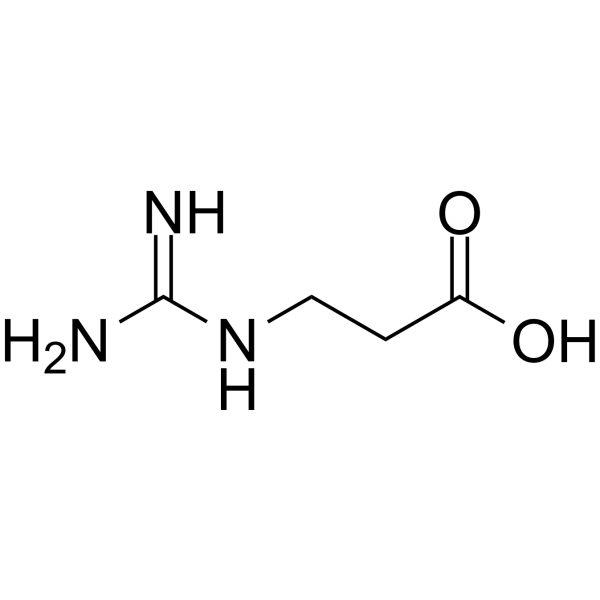
Ompenaclid (RGX-202) is an oral small-molecule SLC6A8 transporter inhibitor. Ompenaclid robustly inhibits creatine import in vitro and in vivo, reduces intracellular phosphocreatine and ATP levels, and induces tumor apoptosis. Ompenaclid can be used for the research of cancer and duchenne muscular dystrophy.
For research use only. We do not sell to patients.
- Purity : 99.94%
- CAS No.: 353-09-3
- Formula: C4H9N3O2
- Molecular Weight:131.14
-
Storage:Powder -20°C, 3 years , 4°C, 2 years ; In solvent -80°C, 6 months , -20°C, 1 month

To place orders, for customer services and technical support, please contact: MedChemExpress USA
Tel: 609-228-6898 E-mail: [email protected] [email protected]


-
 Biological Activity
-
Chemical Information
-
Solvent & Solubility
- Protocols
- Purity & Documentation
- References
-
 Help & FAQs


-
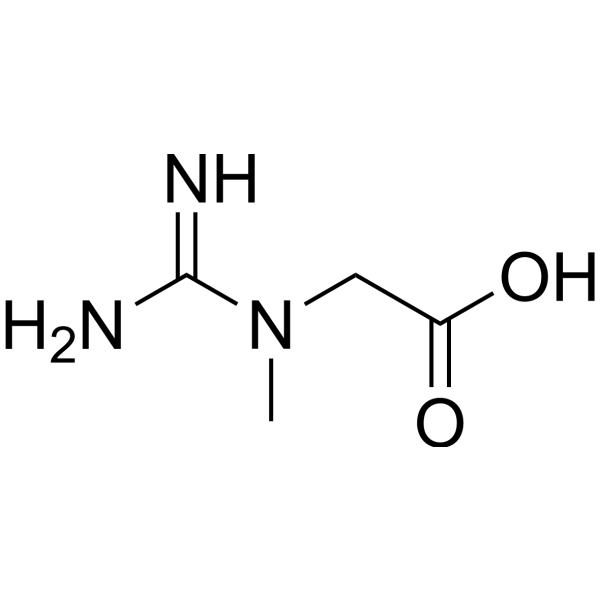
HY-W010388
CreatineEndogenous Metabolite -
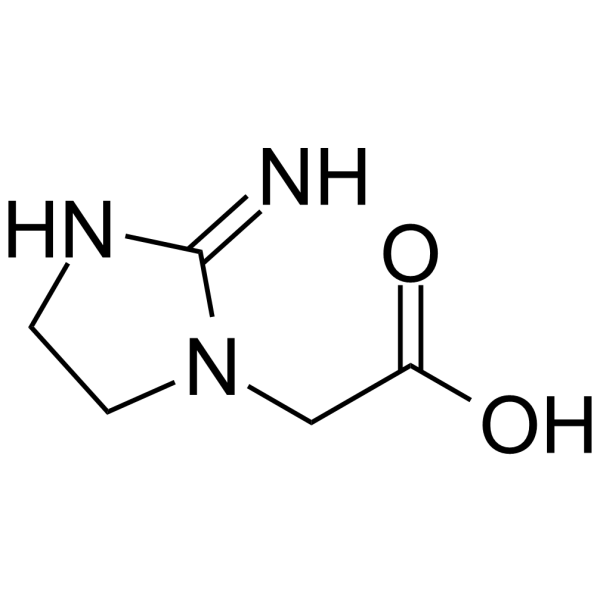
HY-W017540
CyclocreatineATP Supplier, Creatine Analogue -
HY-B1352
L-OrnithineAmino Acid -
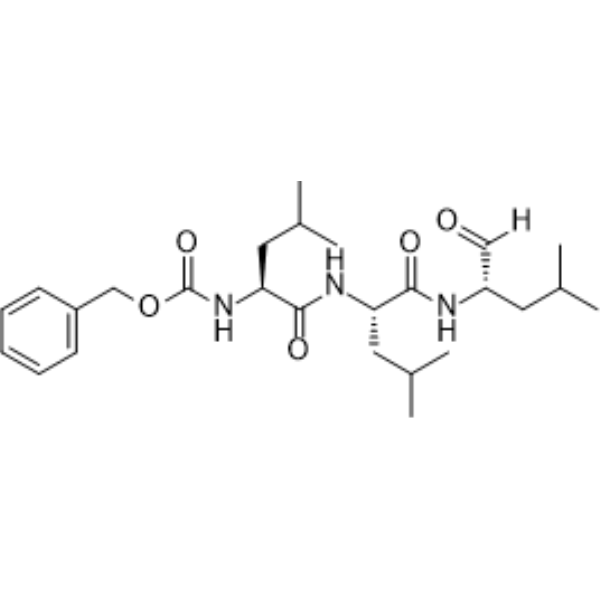
HY-13259
MG-132Proteasome Inhibitor -
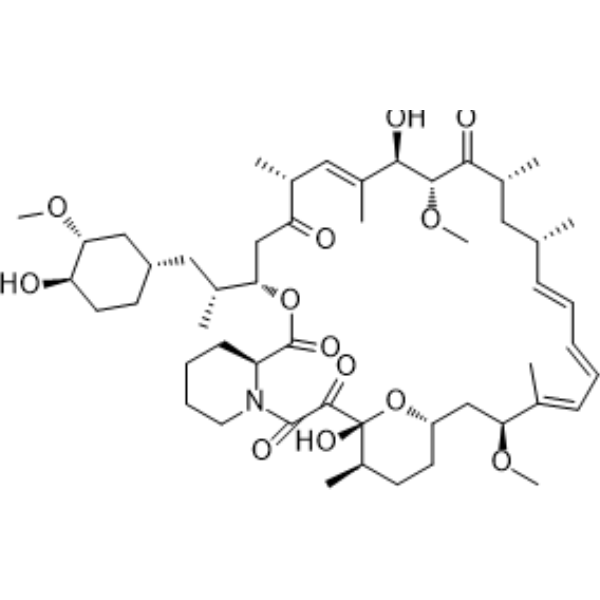
HY-10219
RapamycinmTOR Inhibitor -
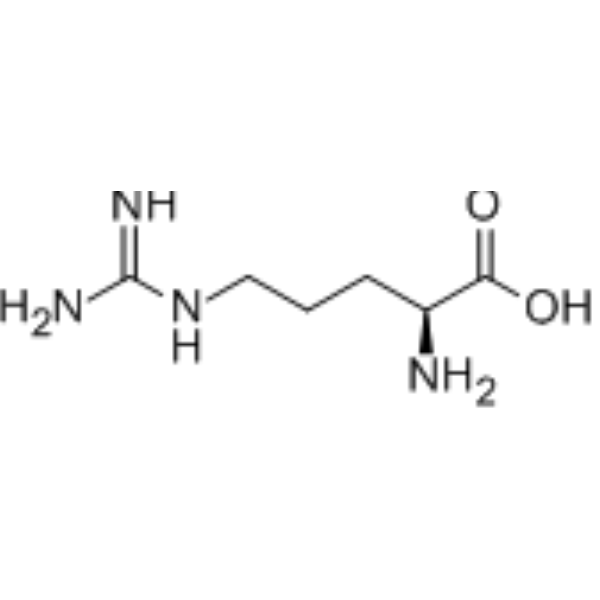
HY-N0455
L-ArginineeNOS Substrate -
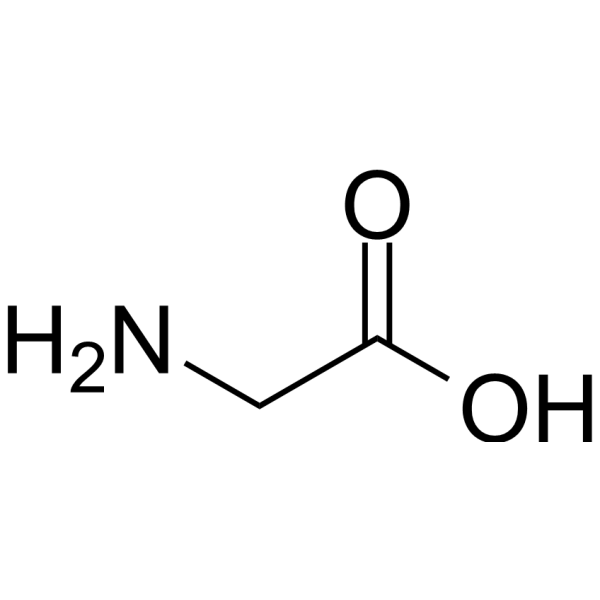
HY-Y0966
GlycineNMDAR Agonist -
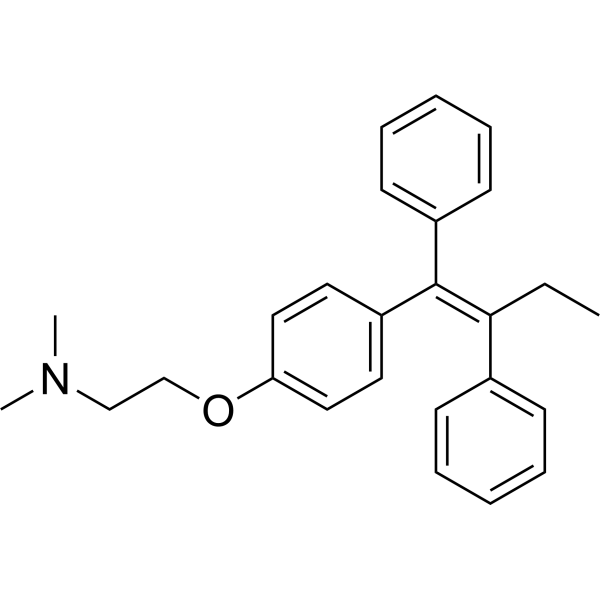
HY-13757A
TamoxifenEstrogen Receptor Modulator -

HY-W015828R
Ompenaclid (Standard)SLC6A8 Transporter Inhibitor -
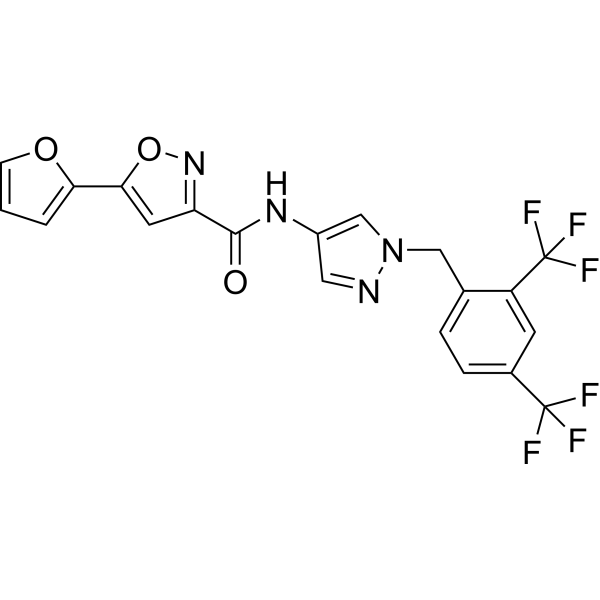
HY-108434
Ceapin-A7ATF6α Signaling Blocker -
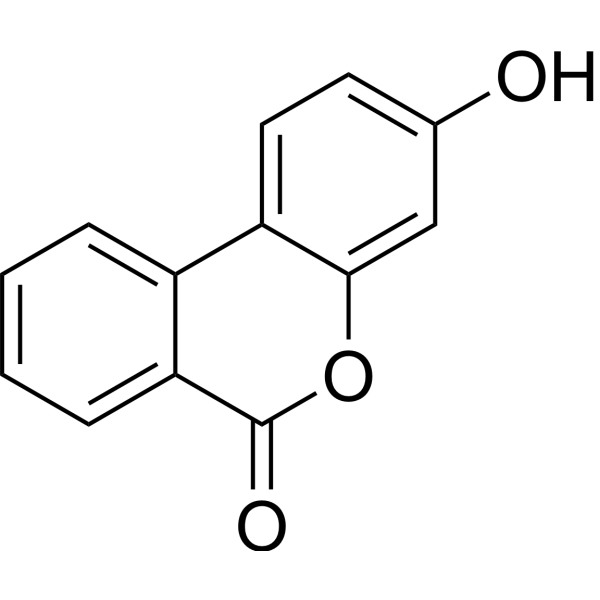
HY-126307
Urolithin BNF-κB Inhibitor -
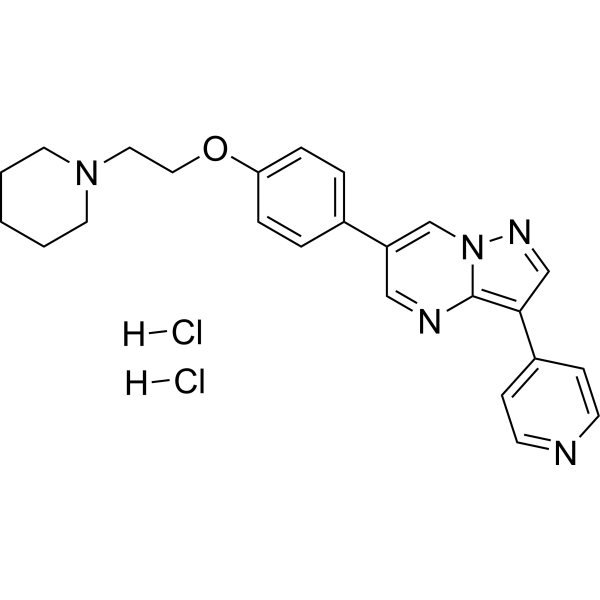
HY-13418
Dorsomorphin dihydrochlorideAMPK Inhibitor
Publications Citing Use of MedChemExpress (MCE) Ompenaclid
More- Gut Microbes. 2025 Dec;17(1):2489072. [Abstract]
- Proc Natl Acad Sci U S A. 2025 Sep 9;122(36):e2426135122. [Abstract]
- Cancer Immunol Res. 2025 Jun 4;13(6):939-956. [Abstract]
- Oncoimmunology. 2023 Apr 19;12(1):2204015. [Abstract]
- ACS Omega. 2025 Aug 21;10(34):39192-39202. [Abstract]
- Res Sq. 2024 Aug 06.
 Customer Validation & Images

-
WB
-
Histological Imaging/Staining
-
Histological Imaging/Staining
-
Others
-
Flow Cytometry
All Endogenous Metabolite Isoforms
More

Biological Activity
Description
IC50 & Target
|
Human Endogenous Metabolite |
In Vitro
Ompenaclid (RGX-202; 10 μM; 96 hours) reduces cell growth, and reveals a nearly complete depletion of phosphocreatine (>99%), greater than 79% reduction in cellular creatine and a substantial (46%) reduction in intracellular ATP levels relative to control cells in hypoxia[1].
MedChemExpress (MCE) has not independently confirmed the accuracy of these methods. They are for reference only.
In Vivo
Ompenaclid (approximately 650 mg/kg; i.p. daily for 14 days) treatment reduces Lvm3b cells liver metastatic colonization by eightfold in NOD-SCID mice[1].
MedChemExpress (MCE) has not independently confirmed the accuracy of these methods. They are for reference only.
-
Animal Model:UN-KPC-961 pancreatic tumor-bearing B6129SF1/J mice[1]
-
Dosage:800 mg/kg
-
Administration:p.o. for 35 days
-
Result:Suppressed tumoral d3-creatine import by 50% at 800 mg/kg.
-
Animal Model:6- to 9-week-old C57BL/6J male wild-type mice[1]
-
Dosage:100, 250, 500 mg/KG in sterile 0.9% NaCl
-
Administration:p.o. for 35 days
-
Result:Inhibited tissue uptake of d3-creatine in a dose-dependent manner by up to 75% at 500 mg/kg.
Clinical Trial
| NCT Number | Sponsor | Condition | Start Date |
Phase

|
|---|---|---|---|---|
| NCT01329991 | 2011-05 | PHASE1 |


Chemical Information
-
CAS No. 353-09-3
-
Appearance Solid
-
Molecular Weight 131.14
-
Formula C4H9N3O2
-
Color White to off-white
-
SMILES
O=C(O)CCNC(N)=N
-
Synonyms
RGX-202; 3-Guanidinopropionic acid
-
Structure Classification
-
Initial Source
-
Shipping
Room temperature in continental US; may vary elsewhere.
-
Storage
Powder -20°C 3 years 4°C 2 years In solvent -80°C 6 months -20°C 1 month


Publications (6)
-
Journal Impact Factor
-
Most Recent
-
Gut Microbes
Creatine-mediated ferroptosis inhibition is involved in the intestinal radioprotection of daytime-restricted feeding. [Abstract]2025 Dec;17(1):2489072. PMID: 40205678
Ompenaclid purchased from MedChemExpress. Usage Cited in: Gut Microbes. 2025 Dec;17(1):2489072. [Abstract]
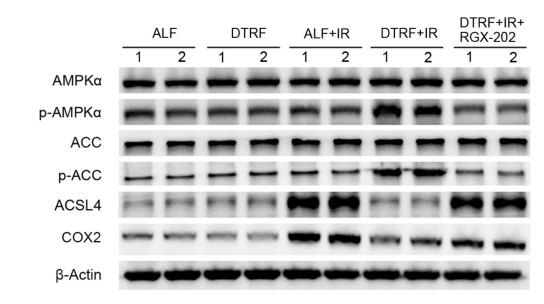
Ompenaclid (RGX-202: 800 mg/kg). Protein bands of AMPKα, p-AMPKα, ACC, p-ACC, ACSL4 and COX2 in mouse ileum.
Ompenaclid purchased from MedChemExpress. Usage Cited in: Gut Microbes. 2025 Dec;17(1):2489072. [Abstract]
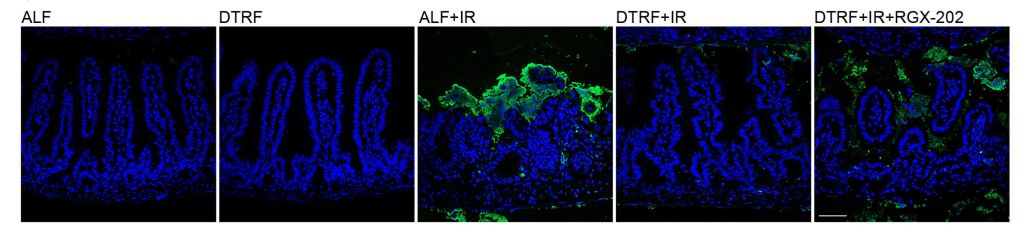
TUNEL staining shows the effect of RGX-202 (Ompenaclid: 800 mg/kg) administration on DTRF radioprotection. Dead cells are shown as green fluorescence. Cell nuclei are stained with DAPI (blue).
-
Proc Natl Acad Sci U S A
Structural insights into the substrate uptake and inhibition of the human creatine transporter (hCRT). [Abstract]2025 Sep 9;122(36):e2426135122. PMID: 40892912 -
Cancer Immunol Res
In Situ Delivery of Gasdermin E mRNA Promotes Antitumor Immunity via Creatine-Elicited Type I Interferon Signaling in Monocytes. [Abstract]2025 Jun 4;13(6):939-956. PMID: 40168141 -
Oncoimmunology
CARD9 deficiency promotes pancreatic cancer growth by blocking dendritic cell maturation via SLC6A8-mediated creatine transport. [Abstract]2023 Apr 19;12(1):2204015. PMID: 37089447
Ompenaclid purchased from MedChemExpress. Usage Cited in: Oncoimmunology. 2023 Apr 19;12(1):2204015. [Abstract]
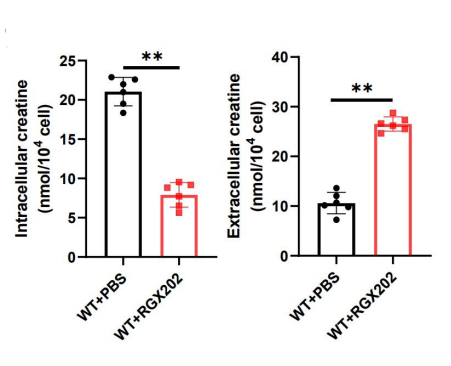
Intracellular and extracellular levels of creatine in WT BMDCs treated with PBS or Ompenaclid (RGX202).
Ompenaclid purchased from MedChemExpress. Usage Cited in: Oncoimmunology. 2023 Apr 19;12(1):2204015. [Abstract]
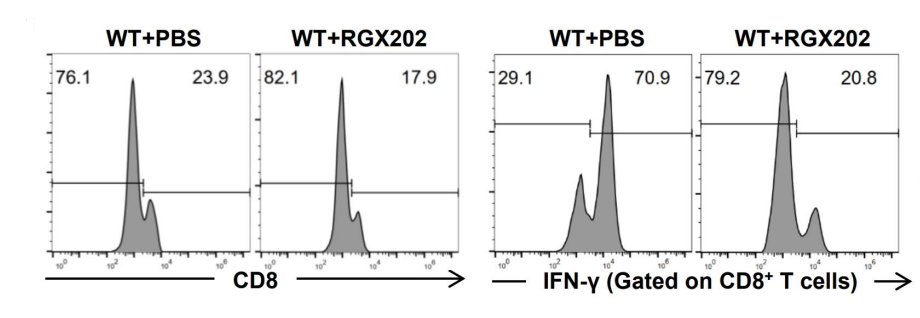
Ompenaclid (RGX202). CD8 levels in T cells and IFN-γ levels in CD8+ T cells co-cultured with BMDCs.
-
ACS Omega
2025 Aug 21;10(34):39192-39202. PMID: 40918390 -
Ompenaclid purchased from MedChemExpress. Usage Cited in: Res Sq. 2024 Aug 06.
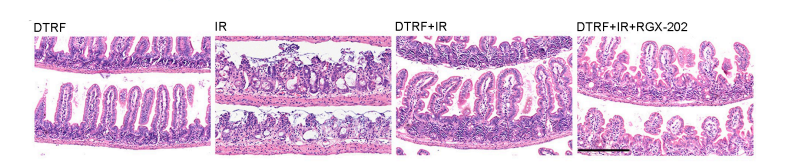
HE staining revealing the impact of RGX-202 (Ompenaclid:800 mg/kg) administration on the radioprotection of DTRF.


Solvent & Solubility
In Vitro:
H2O : ≥ 50 mg/mL (381.27 mM)
DMSO : < 1 mg/mL (insoluble or slightly soluble)
* "≥" means soluble, but saturation unknown.
Please refer to the solubility information to select the appropriate solvent. Once prepared, please aliquot and store the solution to prevent product inactivation from repeated freeze-thaw cycles.
Storage method and period of stock solution: -80°C, 6 months; -20°C, 1 month. When stored at -80°C, please use it within 6 months. When stored at -20°C, please use it within 1 month.
* Note: If you choose water as the stock solution, please dilute it to the working solution, then filter and sterilize it with a 0.22 μm filter before use.
Please refer to the solubility information to select the appropriate solvent. Once prepared, please aliquot and store the solution to prevent product inactivation from repeated freeze-thaw cycles.
Storage method and period of stock solution: -80°C, 6 months; -20°C, 1 month. When stored at -80°C, please use it within 6 months. When stored at -20°C, please use it within 1 month.
* Note: If you choose water as the stock solution, please dilute it to the working solution, then filter and sterilize it with a 0.22 μm filter before use.
Concentration (start) × Volume (start) = Concentration (final) × Volume (final)


Purity & Documentation
-
Data Sheet (277 KB)
-
SDS (394 KB)
- English - EN (394 KB)
- Français - FR (394 KB)
- Deutsch - DE (394 KB)
- Norwegian - NO (394 KB)
- Español - ES (394 KB)
- Swedish - SV (394 KB)
- Italian - IT (394 KB)
- Korean - KR (394 KB)
- Portuguese - PT (394 KB)
-
Handling Instructions (2659 KB)
References


Complete Stock Solution Preparation Table
Please refer to the solubility information to select the appropriate solvent. Once prepared, please aliquot and store the solution to prevent product inactivation from repeated freeze-thaw cycles.
Storage method and period of stock solution: -80°C, 6 months; -20°C, 1 month. When stored at -80°C, please use it within 6 months. When stored at -20°C, please use it within 1 month.
| Optional Solvent | Concentration Solvent Mass | 1 mg | 5 mg | 10 mg | 25 mg |
|---|---|---|---|---|---|
| H2O | 1 mM | 7.6254 mL | 38.1272 mL | 76.2544 mL | 190.6360 mL |
| 5 mM | 1.5251 mL | 7.6254 mL | 15.2509 mL | 38.1272 mL | |
| 10 mM | 0.7625 mL | 3.8127 mL | 7.6254 mL | 19.0636 mL | |
| 15 mM | 0.5084 mL | 2.5418 mL | 5.0836 mL | 12.7091 mL | |
| 20 mM | 0.3813 mL | 1.9064 mL | 3.8127 mL | 9.5318 mL | |
| 25 mM | 0.3050 mL | 1.5251 mL | 3.0502 mL | 7.6254 mL | |
| 30 mM | 0.2542 mL | 1.2709 mL | 2.5418 mL | 6.3545 mL | |
| 40 mM | 0.1906 mL | 0.9532 mL | 1.9064 mL | 4.7659 mL | |
| 50 mM | 0.1525 mL | 0.7625 mL | 1.5251 mL | 3.8127 mL | |
| 60 mM | 0.1271 mL | 0.6355 mL | 1.2709 mL | 3.1773 mL | |
| 80 mM | 0.0953 mL | 0.4766 mL | 0.9532 mL | 2.3829 mL | |
| 100 mM | 0.0763 mL | 0.3813 mL | 0.7625 mL | 1.9064 mL |
* Note: If you choose water as the stock solution, please dilute it to the working solution, then filter and sterilize it with a 0.22 μm filter before use.


Ompenaclid Related Classifications
HY-W015828 Related Classifications
 Powered by Bioz