



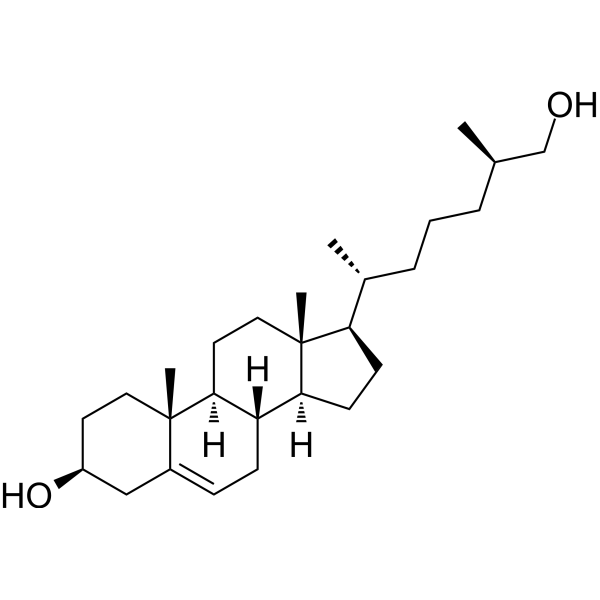
27-Hydroxycholesterol
Based on 12 publication(s) in Google Scholar
27-Hydroxycholesterol (27-OHC) is a selective estrogen receptor modulator and an agonist of the liver X receptor.
Nur für Forschungszwecke. Wir verkaufen nicht an Patienten.
- Reinheit : 99.93%
- CAS. Nr.: 20380-11-4
- Formel: C27H46O2
- Molecular Weight:402.65
-
Speicherung:Powder -20°C, 3 years , 4°C, 2 years ; In solvent -80°C, 6 months , -20°C, 1 month

To place orders, for customer services and technical support, please contact: MedChemExpress USA
Tel: 609-228-6898 E-mail: [email protected] [email protected]


-
 Biologische Aktivität
-
Chemical Information
-
Lösungsmittel & Löslichkeit
- Protokoll
- Reinheit & Dokumentation
- Verweise
-
 Help & FAQs


-
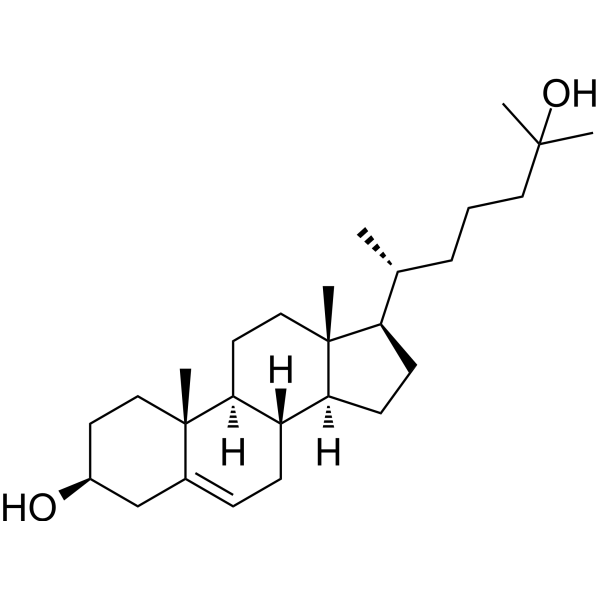
HY-113134
25-HydroxycholesterolCholesterol Metabolite -
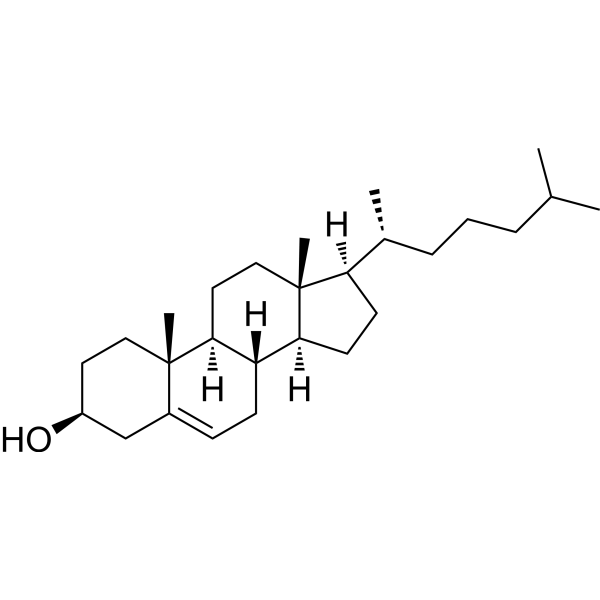
HY-N0322
Cholesterol (from animal)ERRα Agonist -
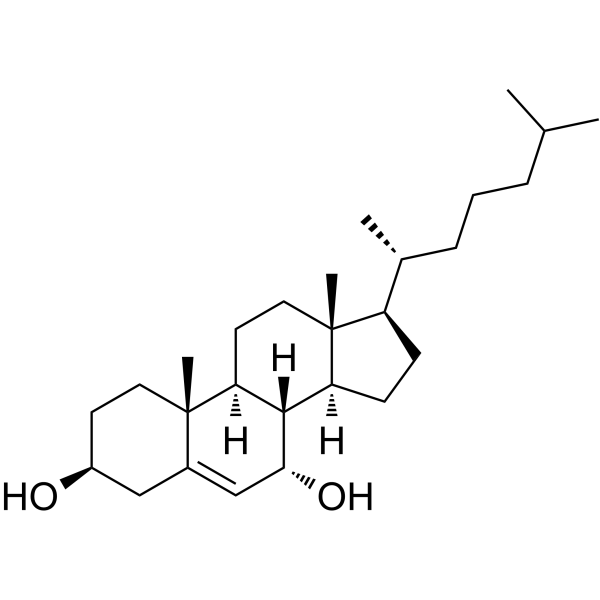
HY-N7264
7α-HydroxycholesterolCholesterol Oxide -
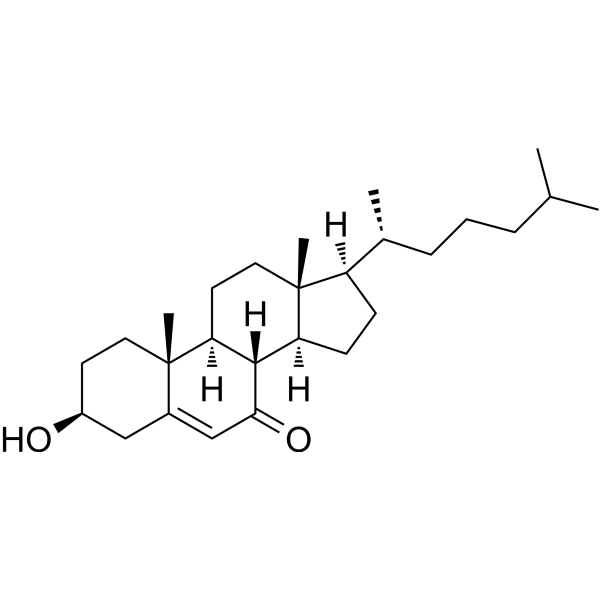
HY-113342
7-KetocholesterolCholesterol 7 Alpha-Hydroxylase Inhibitor -
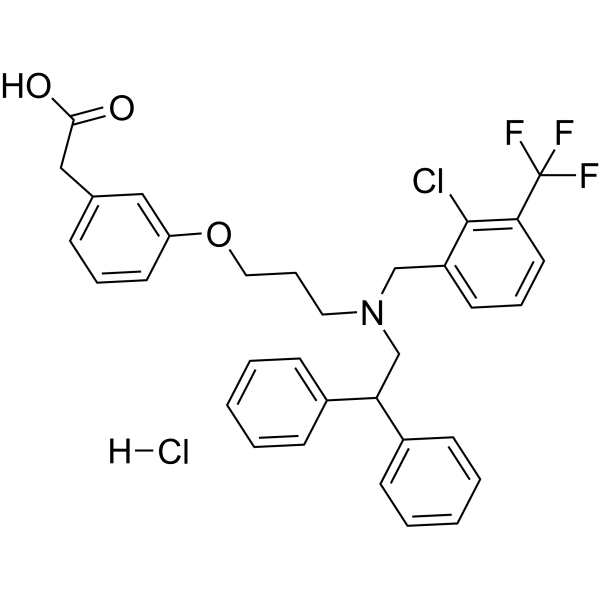
HY-10627A
GW3965 hydrochlorideLXR Agonist -
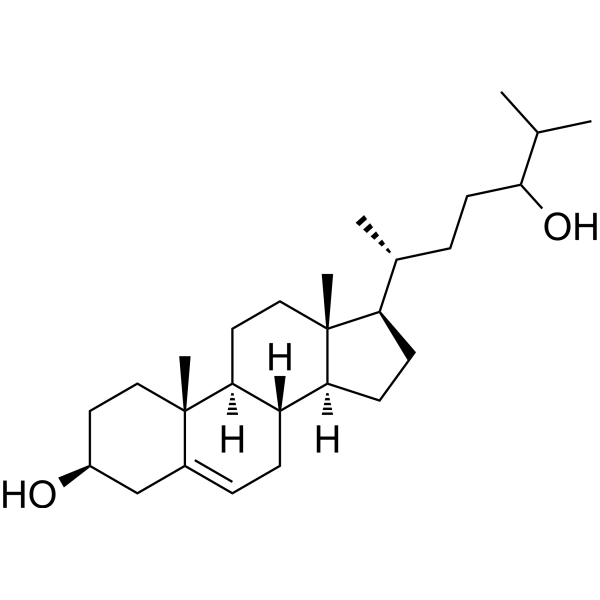
HY-N2370
24-HydroxycholesterolLXR Activator -
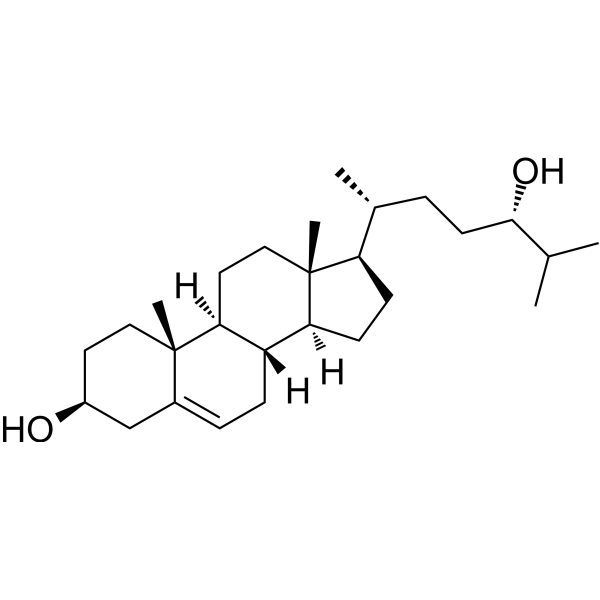
HY-16940
24(S)-HydroxycholesterolEndogenous Metabolite -
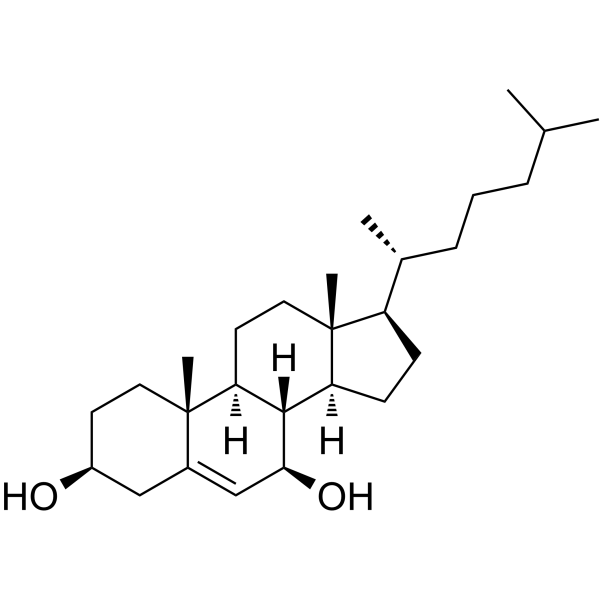
HY-113341
7β-HydroxycholesterolOxidative Stress Inducer -
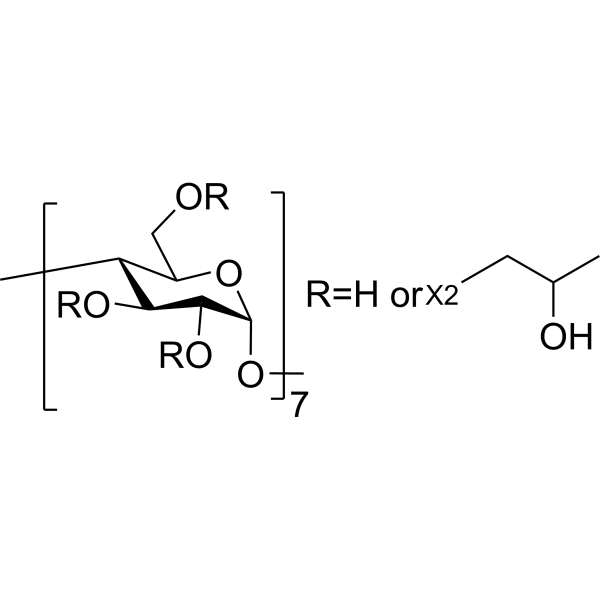
HY-101103
HP-β-CDCo-solvent -
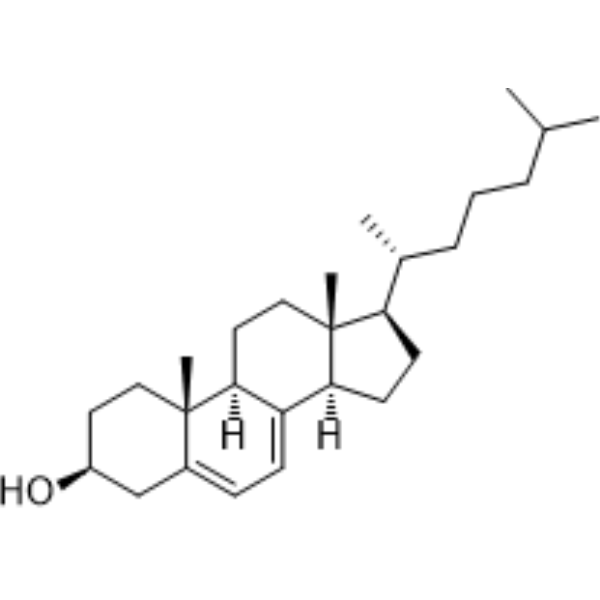
HY-113279
7-DehydrocholesterolEndogenous Metabolite -
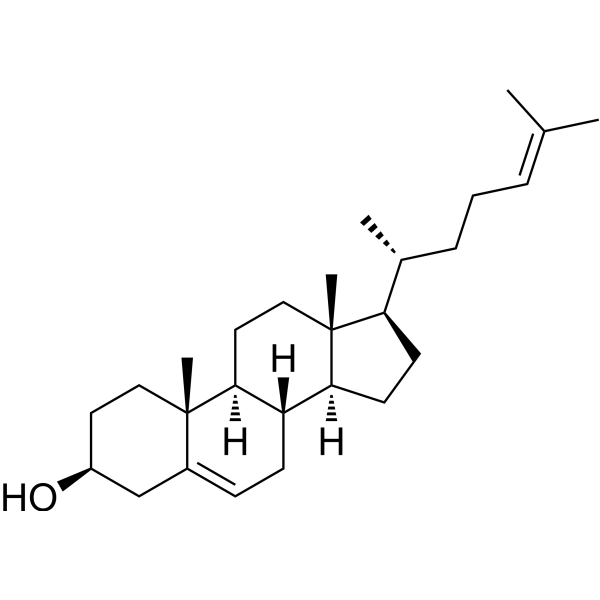
HY-113224
DesmosterolEndogenous Metabolite -
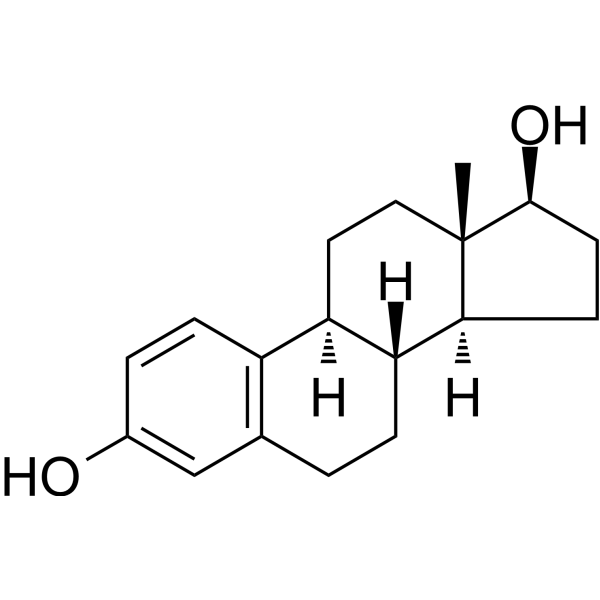
HY-B0141
EstradiolHuman Endogenous Metabolite
Publications Citing Use of MedChemExpress (MCE) 27-Hydroxycholesterol
More- Mol Cancer. 2025 May 26;24(1):151. [Abstract]
- ACS Nano. 2026 Mar 13. [Abstract]
- Sci Adv. 2022 Jul 15;8(28):eabn5295. [Abstract]
- Cell Death Dis. 2026 Feb 7;17(1):207. [Abstract]
- Nano Today. 2025 Oct.
- Cell Chem Biol. 2024 May 16;31(5):920-931.e6. [Abstract]
- Mov Disord. 2023 Nov;38(11):2005-2018. [Abstract]
- Anal Chim Acta. 2026 Jun 16;1418:345855.
- Chem Biol Interact. 2026 Aug 26:439:112317.
- Arch Biochem Biophys. 2026 Jun:780:110790. [Abstract]
- J Pharmacol Sci. 2026 Sep 26;162(4):268-280.
- bioRxiv. 2026 May 30.
 Customer Validation & Images

-
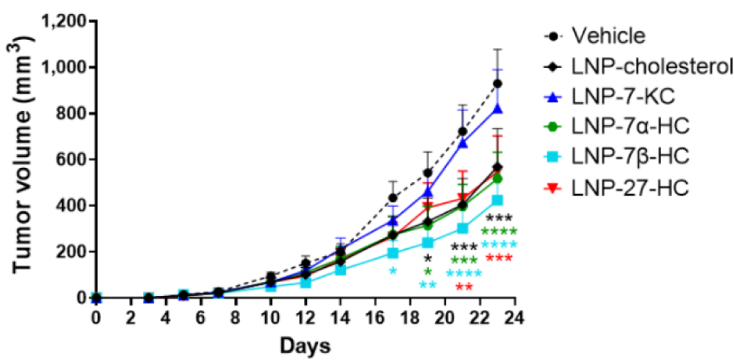
In Vivo Efficacy Study
-
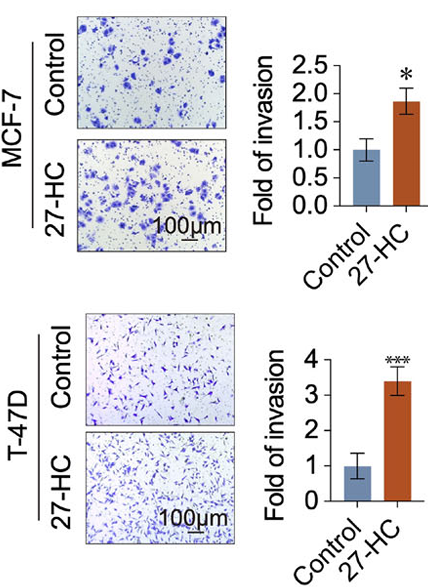
Cell Migration/Invasion Assay
-
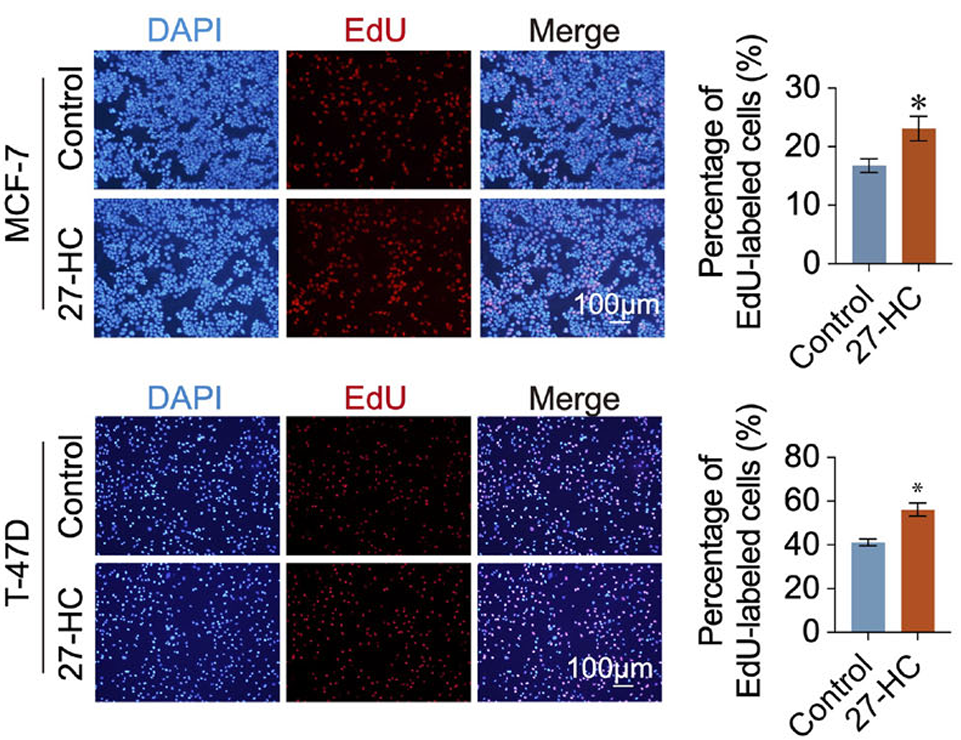
Cell Proliferation/Viability Assay
-
RT-PCR
-
WB
Alle Endogenous Metabolite Isoform-spezifische Produkte anzeigen
More

Biologische Aktivität
Beschreibung
IC50 & Target
|
Human Endogenous Metabolite |
In Vitro
27-Hydroxycholesterol is an endogenous selective estrogen receptor modulator that displays significant partial agonist activity in a variety of cellular models of estrogen receptor action. It positively regulates both gene transcription and cell proliferation in cellular models of breast cancer[1]. 27-Hydroxycholesterol, through estrogen receptor activation, triggers deleterious effect in prostate cancer cell lines. 27-Hydroxycholesterol significantly increases cell proliferation of LNCaP and PC3 cells and this effect can be attenuated by estrogen receptor inhibitors[2]. 27-Hydroxycholesterol is an oxysterol produced from cholesterol by the monooxygenase CYP27A1, which regulates intracellular cholesterol homeostasis. 27-Hydroxycholesterol also acts as an endogenous selective estrogen receptor modulator capable of increasing breast cancer growth and metastasis. 27-Hydroxycholesterol levels can be modulated by statins or direct inhibition of CYP27A1, thereby attenuating its pro-tumorigenic activities[3]. 27-hydroxylation of cholesterol is an important pathway for LXR activation in response to cholesterol overload[4].
MedChemExpress (MCE) has not independently confirmed the accuracy of these methods. They are for reference only.


Chemical Information
-
CAS. Nr. 20380-11-4
-
Appearance Solid
-
Molecular Weight 402.65
-
Formel C27H46O2
-
Color White to off-white
-
SMILES
C[C@@H](CO)CCC[C@@H](C)[C@H]1CC[C@@]2([H])[C@]3([H])CC=C4C[C@@H](O)CC[C@]4(C)[C@@]3([H])CC[C@]12C
-
Synonyms
27-OHC
-
Initial Source
-
Versand
Room temperature in continental US; may vary elsewhere.
-
Speicherung
Powder -20°C 3 years 4°C 2 years In solvent -80°C 6 months -20°C 1 month


Publications (12)
-
Journal Impact Factor
-
Most Recent
-
Mol Cancer
GP73-dependent regulation of exosome biogenesis promotes colorectal cancer liver metastasis. [Abstract]2025 May 26;24(1):151. PMID: 40414849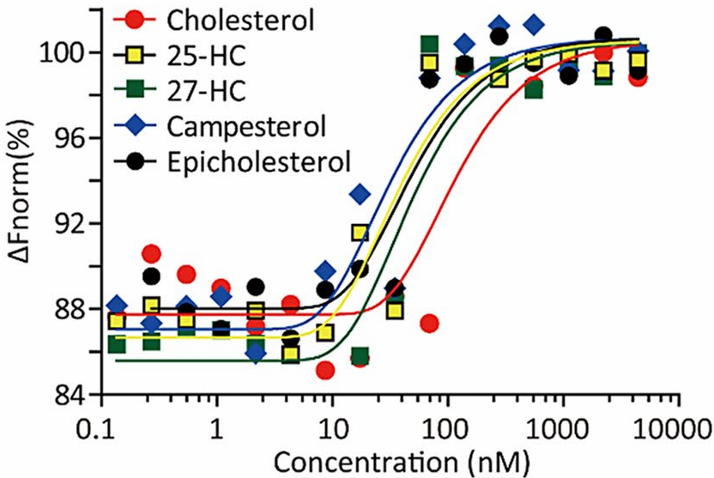
27-Hydroxycholesterol purchased from MedChemExpress. Usage Cited in: Mol Cancer. 2025 May 26;24(1):151. [Abstract]
Analysis of interactions between GP73 and cholesterol, 25-HC, 27-HC (27-Hydroxycholesterol), campesterol, and epicolesterol by MST. The data were derived from the effects of the indicated ligands on the fluorescence decay of fluorescently labeled GP73.
-
ACS Nano
Immune Modulatory Oxysterols Produced from Cholesterol-Containing Lipid Nanoparticles Regulate Tumor Growth. [Abstract]2026 Mar 13. PMID: 41825961
27-Hydroxycholesterol purchased from MedChemExpress. Usage Cited in: ACS Nano. 2026 Mar 13. [Abstract]
Compared to the vehicle, LNPs containing cholesterol, 24-HC, 7β-HC, 7α-HC, and 27-HC (27-Hydroxycholesterol) (LNP-27-HC; 47 nmol phospholipids/g; i.v.; every three days) decreased tumor growth, while LNPs containing 5β,6β-EC and 7-KC showed a trend toward increased tumor growth.
-
Sci Adv
ZMYND8 is a master regulator of 27-hydroxycholesterol that promotes tumorigenicity of breast cancer stem cells. [Abstract]2022 Jul 15;8(28):eabn5295. PMID: 35857506 -
Cell Death Dis
KDM5B cooperates with CRL4B complex to promote the tumorigenesis of ER+ breast cancer via regulating cholesterol metabolism. [Abstract]2026 Feb 7;17(1):207. PMID: 41654562
27-Hydroxycholesterol purchased from MedChemExpress. Usage Cited in: Cell Death Dis. 2026 Feb 7;17(1):207. [Abstract]
Transwell experiments were used to investigate the invasion of MCF-7 cells under 10 μM 27-HC (27-Hydroxycholesterol) treatment.
27-Hydroxycholesterol purchased from MedChemExpress. Usage Cited in: Cell Death Dis. 2026 Feb 7;17(1):207. [Abstract]
EdU assays were used to investigate the proliferation of MCF-7 cells under 10 μM 27-HC (27-Hydroxycholesterol) treatment.
27-Hydroxycholesterol purchased from MedChemExpress. Usage Cited in: Cell Death Dis. 2026 Feb 7;17(1):207. [Abstract]
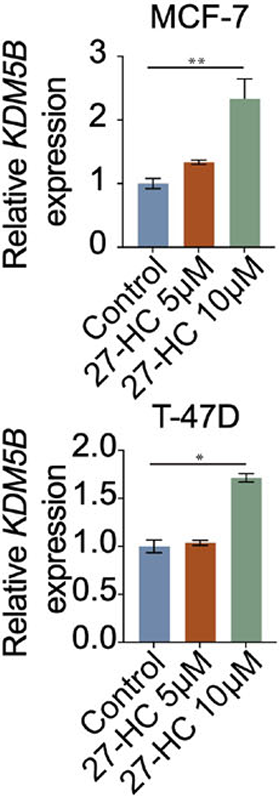
The transcription levels were detected by qPCR in MCF-7 and T-47D cells with 27-HC (27-Hydroxycholesterol) (5-10 μM) treatment.
27-Hydroxycholesterol purchased from MedChemExpress. Usage Cited in: Cell Death Dis. 2026 Feb 7;17(1):207. [Abstract]
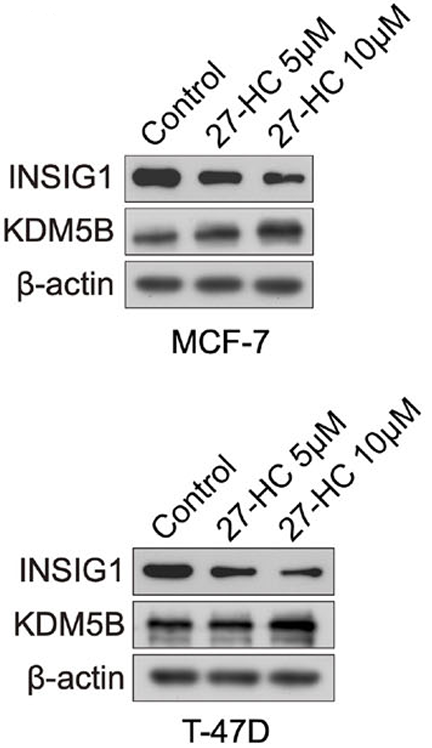
The protein levels were detected by western blot in MCF-7 and T-47D cells with 27-HC (27-Hydroxycholesterol) (5-10 μM) treatment.
-
-
Cell Chem Biol
Transient hydroxycholesterol treatment restrains TCR signaling to promote long-term immunity. [Abstract]2024 May 16;31(5):920-931.e6. PMID: 38759618 -
Mov Disord
2023 Nov;38(11):2005-2018. PMID: 37593929 -
-
-
Arch Biochem Biophys
Selective mitochondrial damage and dysfunction in cholesterol-exposed neuronal cells: Role of mitochondrial lipid peroxidation. [Abstract]2026 Jun:780:110790. PMID: 41825807 -
-


Lösungsmittel & Löslichkeit
In Vitro:
Ethanol : 10 mg/mL (24.84 mM; ultrasonic and warming and heat to 60°C)
DMSO : 1 mg/mL (2.48 mM; Need ultrasonic; Hygroscopic DMSO has a significant impact on the solubility of product, please use newly opened DMSO)
Please refer to the solubility information to select the appropriate solvent. Once prepared, please aliquot and store the solution to prevent product inactivation from repeated freeze-thaw cycles.
Storage method and period of stock solution: -80°C, 6 months; -20°C, 1 month. When stored at -80°C, please use it within 6 months. When stored at -20°C, please use it within 1 month.
Please refer to the solubility information to select the appropriate solvent. Once prepared, please aliquot and store the solution to prevent product inactivation from repeated freeze-thaw cycles.
Storage method and period of stock solution: -80°C, 6 months; -20°C, 1 month. When stored at -80°C, please use it within 6 months. When stored at -20°C, please use it within 1 month.
Konzentration (Stammlösung) × Volumen (Stammlösung) = Konzentration (Ziellösung) × Volumen (Ziellösung)
In Vivo:
Select the appropriate dissolution method based on your experimental animal and administration route.
- For the following dissolution methods, please ensure to first prepare a clear stock solution using an In Vitro approach and then sequentially add co-solvents:
- To ensure reliable experimental results, the clarified stock solution can be appropriately stored based on storage conditions. As for the working solution for In Vivo experiments, it is recommended to prepare freshly and use it on the same day.
- The percentages shown for the solvents indicate their volumetric ratio in the final prepared solution. If precipitation or phase separation occurs during preparation, heat and/or sonication can be used to aid dissolution.
Add each solvent one by one: 10% EtOH 40% PEG300 5% Tween-80 45% Saline
Solubility: 1 mg/mL (2.48 mM); Suspended solution; Need ultrasonic
This protocol yields a suspended solution of 1 mg/mL. Suspended solution can be used for oral and intraperitoneal injection.
Taking 1 mL working solution as an example, add 100 μL EtOH stock solution (10.0 mg/mL) to 400 μL PEG300, and mix evenly; then add 50 μL Tween-80 and mix evenly; then add 450 μL Saline to adjust the volume to 1 mL.
Preparation of Saline: Dissolve 0.9 g sodium chloride in ddH₂O and dilute to 100 mL to obtain a clear Saline solution.
Add each solvent one by one: 10% EtOH 90% Corn Oil
Solubility: ≥ 1 mg/mL (2.48 mM); Clear solution
This protocol yields a clear solution of ≥ 1 mg/mL (saturation unknown). If the continuous dosing period exceeds half a month, please choose this protocol carefully.
Taking 1 mL working solution as an example, add 100 μL EtOH stock solution (10.0 mg/mL) to 900 μL Corn oil, and mix evenly.
In Vivo Dissolution Calculator
Please enter the basic information of animal experiments:
-
-
-
-
Recommended: Prepare an additional quantity of animals to account for potential losses during experiments.
Please enter your animal formula composition:
-
%DMSO +
Recommended: Keep the proportion of DMSO in working solution below 2% if your animal is weak.
-
%+
-
+%Tween-80 + +
-
%Saline +
The co-solvents required include: DMSO, . All of co-solvents are available by MedChemExpress (MCE). , Tween 80. All of co-solvents are available by MedChemExpress (MCE).
Working solution concentration: 0.22 mg/mL
Method for preparing stock solution: mg drug dissolved in μL DMSO. Stock solution concentration: mg/mL.
1. Take μL DMSO stock solution;
2. Add μL .
μL , mix evenly;
3. Then add μL Tween 80, mix evenly;
4. Then add μL
Please ensure that the stock solution in the first step is dissolved to a clear state, and add co-solvents in sequence. You can use ultrasonic heating (ultrasonic cleaner, recommended frequency 20-40 kHz), vortexing, etc. to assist dissolution.


Reinheit & Dokumentation
-
Data Sheet (285 KB)
-
SDS (396 KB)
- English - EN (396 KB)
- Français - FR (396 KB)
- Deutsch - DE (396 KB)
- Norwegian - NO (396 KB)
- Español - ES (396 KB)
- Swedish - SV (396 KB)
- Italian - IT (396 KB)
- Korean - KR (396 KB)
- Portuguese - PT (396 KB)
-
Handling Instructions (2659 KB)
Verweise
[1]. DuSell CD, et al. 27-hydroxycholesterol is an endogenous selective estrogen receptor modulator. Mol Endocrinol. 2008 Jan;22(1):65-77. [Content Brief]
[2]. Raza S, et al. The cholesterol metabolite 27-hydroxycholesterol stimulates cell proliferation via ERβ in prostate cancer cells. Cancer Cell Int. 2017 May 11;17:52. [Content Brief]
[3]. Kimbung S, et al. Impact of 27-hydroxylase (CYP27A1) and 27-hydroxycholesterol in breast cancer. Endocr Relat Cancer. 2017 Jul;24(7):339-349. [Content Brief]
[4]. Fu X, et al. 27-hydroxycholesterol is an endogenous ligand for liver X receptor in cholesterol-loaded cells. J Biol Chem. 2001 Oct 19;276(42):38378-87. [Content Brief]


Complete Stock Solution Preparation Table
Please refer to the solubility information to select the appropriate solvent. Once prepared, please aliquot and store the solution to prevent product inactivation from repeated freeze-thaw cycles.
Storage method and period of stock solution: -80°C, 6 months; -20°C, 1 month. When stored at -80°C, please use it within 6 months. When stored at -20°C, please use it within 1 month.
| Optional Solvent | Concentration Solvent Mass | 1 mg | 5 mg | 10 mg | 25 mg |
|---|---|---|---|---|---|
| DMSO / Ethanol | 1 mM | 2.4835 mL | 12.4177 mL | 24.8355 mL | 62.0887 mL |
| Ethanol | 5 mM | 0.4967 mL | 2.4835 mL | 4.9671 mL | 12.4177 mL |
| 10 mM | 0.2484 mL | 1.2418 mL | 2.4835 mL | 6.2089 mL | |
| 15 mM | 0.1656 mL | 0.8278 mL | 1.6557 mL | 4.1392 mL | |
| 20 mM | 0.1242 mL | 0.6209 mL | 1.2418 mL | 3.1044 mL |


27-Hydroxycholesterol Related Classifications
HY-N2371 Related Classifications
 Powered by Bioz