



Cancer Immunotherapy
Cancer immunotherapy (CIT) is a type of biological therapy, aiming to improve anti-tumor immune responses with fewer off-target effects than chemotherapy. Several types of immunotherapy include: oncolytic virus therapies, cancer vaccines, cytokine therapies, adoptive cell transfer (ACT), and immune checkpoint inhibitors (ICIs). In particular, ICIs and ACT have obtained immense clinical response, but their efficacy varies from person to person. Immune cells can be harnessed to eliminate tumor cells, such as T cells, B cells, NK cells, and myeloid cells. T cells have potent tumor-killing capability, therefore, a plethora of cancer immunotherapy research have focused on inducing T-cell-mediated anti-tumor responses. CTLA-4 and PD-1 are found on the cell surface of T cells as co-inhibitory receptors. The breakthrough in cancer immunotherapy results from the identification and subsequent targeting of checkpoint mechanisms in T cells with monoclonal antibodies against CTLA-4 and programmed death-ligand 1/programmed death-1 (PD-L1/PD-1).
Several types of cancers (e.g., melanoma, mismatch repair-deficient cancers, bladder cancer, and non-small cell lung cancer) have achieved significant clinical responses in T-cell checkpoint blockade therapies. However, single-mode immunotherapy faces challenges such as low immune response, low tumor infiltration, and complex immunosuppressive tumor microenvironment. Recently, combined therapies based on tumor immunity have received extensive attention in the research of enhancing tumor cells immunogenicity and inhibiting their growth. For example, anti CTLA-4 and PD-1, immune checkpoint blockade (ICB) combined with chemotherapy, anti-angiogenic drugs and kinase inhibitors.
-
Pemrametostat (Standard)
 0 ImagesSynonyms: GSK3326595 (Standard); EPZ015938 (Standard)
GSK3326595 (Standard) is the analytical standard of GSK3326595 (HY-101563). This product is intended for research and analytical applications. GSK3326595 is a protein arginine methyltransferase 5 (PRMT5) inhibitor. GSK3326595 decreases SARS-CoV-2 infection, inhibits cancer cell proliferation and induces pro-inflammatory macrophage polarization and increases hepatic triglyceride levels without affecting atherosclerosis. GSK3326595 can be used for research of relapsed/refractory mantle cell lymphoma.
-
Brivudine (Standard)
 0 ImagesSynonyms: Bromovinyldeoxyuridine (Standard); BVDU (Standard)
-
TACR1-IN-1
 0 ImagesCat. No.: HY-189358CAS No.: 901730-21-0
TACR1-IN-1 is a TACR1 inhibitor. TACR1-IN-1 attenuates Substance P-driven ERK phosphorylation and downstream malignant programs. TACR1-IN-1 reduces PGP9.5-positive tumor innervation in orthotopic PDAC models. TACR1-IN-1 increases antigen presentation and immune chemokine-related transcript expression under Substance P treatment conditions. TACR1-IN-1 reverses Substance P-associated reduction in Gemcitabine (HY-17026) sensitivity. TACR1-IN-1 can be used for research on pancreatic ductal adenocarcinoma.
-
Ethylenediaminetetraacetic acid trisodium salt (Standard)
 0 ImagesSynonyms: EDTA trisodium salt (Standard); Trisodium EDTA (Standard)
Ethylenediaminetetraacetic acid (trisodium salt) (Standard) is the analytical standard of Ethylenediaminetetraacetic acid (trisodium salt). This product is intended for research and analytical applications. Ethylenediaminetetraacetic acid trisodium salt (EDTA trisodium salt; Trisodium EDTA) is a kind of metal chelating agent (binds to bivalent and trivalent metal cations, including calcium). Ethylenediaminetetraacetic acid trisodium salt has antibacterial, anti-inflammatory, antioxidant, anti-hypercalcemia and anticoagulant activities. Ethylenediaminetetraacetic acid trisodium salt decreases the metal ion-catalyzed oxidative damage to proteins, and allows maintenance of reducing environment during protein purification. Ethylenediaminetetraacetic acid trisodium salt can alleviate the liver fibrosis. Ethylenediaminetetraacetic acid can be used for coronary artery disease and neural system disease research.
-
BMS-813160 (Standard)
 0 ImagesCat. No.: HY-109593RCAS No.: 1286279-29-5
BMS-813160 (Standard) is the analytical standard of BMS-813160 (HY-109593). This product is intended for research and analytical applications. BMS-813160 is a potent and selective CCR2/5 dual antagonist. BMS-813160 binds with CCR2 and CCR5 with IC50s of 6.2 and 3.6 nM, respectively. BMS-813160 can be used for the research of inflammation.
-
Human MITF mRNA
 0 ImagesCat. No.: HY-174580
Human MITF mRNA encodes the human melanocyte inducing transcription factor (MITF) protein, a transcription factor that contains both basic helix-loop-helix and leucine zipper structural features. MITF could regulate melanocyte development and is also responsible for pigment cell-specific transcription of the melanogenesis enzyme genes.

-
Feudomycin A
 0 ImagesCat. No.: HY-Z17187CAS No.: 79466-09-4Synonyms: 13-Deoxydaunorubicin
Feudomycin A is an onion ring antibiotic with anti-tumor cell activity.
-
GCC-2
 0 ImagesCat. No.: HY-189459
GCC-2 is a glycolipid. GCC-2 binds to CD1d and presents it to cells. GCC-2 induces Th1-biased cellular activation and IFN-γ production. GCC-2 inhibits antitumor activity in colon cancer tumor models and induces antigen-specific humoral immune responses. GCC-2 can be used for research on colon adenocarcinoma.
-
Fasentin (Standard)
 0 ImagesCat. No.: HY-101849RCAS No.: 392721-37-8
Fasentin (Standard) is the analytical standard of Fasentin. This product is intended for research and analytical applications. Fasentin, a potent glucose uptake inhibitor, inhibits GLUT-1/GLUT-4 transporters. Fasentin preferentially inhibits GLUT4 (IC50=68 μM) over GLUT1. Fasentin is a death receptor stimuli (FAS) sensitizer and sensitizes cells to FAS-induced cell death. Fasentin is also a tumor necrosis factor (TNF) apoptosis-inducing ligand sensitizer. Fasentin blocks glucose uptake in cancer cell lines and has anti-angiogenic activity.
-
Alisamycin
 0 ImagesCat. No.: HY-N13892CAS No.: 136398-54-4
Alisamycin is the manumycin group of antibiotic. Alisamycin is active against Gram-positive bacteria and fungi, and has a weak antitumour activity.
-
EMD638683 (Standard)
 0 Images
EMD638683 (Standard) is the analytical standard of EMD638683. This product is intended for research and analytical applications. EMD638683 is an orally effective SGK1 inhibitor with an IC50 of 3 μM. EMD638683 exhibits strong inhibition against SGK1, moderate inhibition against SGK2 and SGK3, and shows excellent selectivity for other AGC kinase family members. EMD638683 has antihypertensive activity by inhibiting SGK1, and independently of the blood pressure-lowering effect, it effectively prevents heart inflammation and fibrosis caused by hypertension by inhibiting the cardiac NLRP3 inflammation body/ IL-1β axis. EMD638683 promotes apoptosis of colon cancer cells and sensitizes radiotherapy. EMD638683 (S-Form) can be used in research related to hypertension, hypertensive heart damage, and colon cancer.
-
Ketoprofen sodium
 0 ImagesCat. No.: HY-167630CAS No.: 57495-14-4Synonyms: 19583 RP-Na
Ketoprofen (RP-19583) sodium is a non-steroidal anti-inflammatory agent. Ketoprofen sodium can inhibit the activity of Cyclooxygenase with IC50 values of 2 nM (COX-1) and 26 nM (COX-2). Ketoprofen is potential in the research of inflammation, immunology, and metabolic disease such as obesity.
-
cBu-Cit-PAB
 0 ImagesCat. No.: HY-177503CAS No.: 1799660-01-7
cBu-Cit-PAB (Compound 13) is a key intermediate of ADC linker. cBu-Cit-PAB can be used for synthesis of antibody-drug conjugates (ADCs).
-
Glidobactin G
 0 ImagesCat. No.: HY-N14023CAS No.: 119259-71-1
Glidobactin G is an anti-tumor antibiotic. Glidobactin G has the activity against pathogenic fungi and yeast. Glidobactin G also extends the survival of mice inoculated with leukemia P388 cells.
-
Triclosan (Standard)
 0 Images
Triclosan (Standard) is the analytical standard of Triclosan. This product is intended for research and analytical applications. Triclosan is a broad-spectrum antibacterial agent that inhibits bacterial fatty acid synthesis at the enoyl-acyl carrier protein reductase (FabI) step. Triclosan inhibits E. coli enoyl-acyl carrier protein reductase (FabI) and FabI containing a glycine-to-valine substitution at position 93 (FabIG93V) with IC50s of 2 µM and 10 µM, respectively. Triclosan causes apoptotic effect in cultured rat neural stem cells (NSC). Triclosan exacerbates colitis and colitis-associated colorectal tumorigenesis in animal models.
-
Aranciamycin
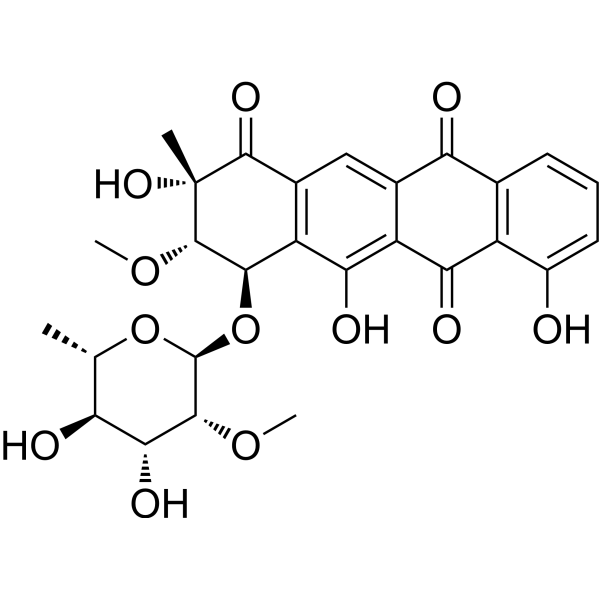 0 ImagesCat. No.: HY-123886CAS No.: 72389-06-1
Aranciamycin (Compound 1) is an anthracycline antibiotic with collagenase inhibitory activity (IC503.7*10-7M). Aranciamycin can be used to inhibit DNA synthesis in tumor cells .
-
Octanal-d4
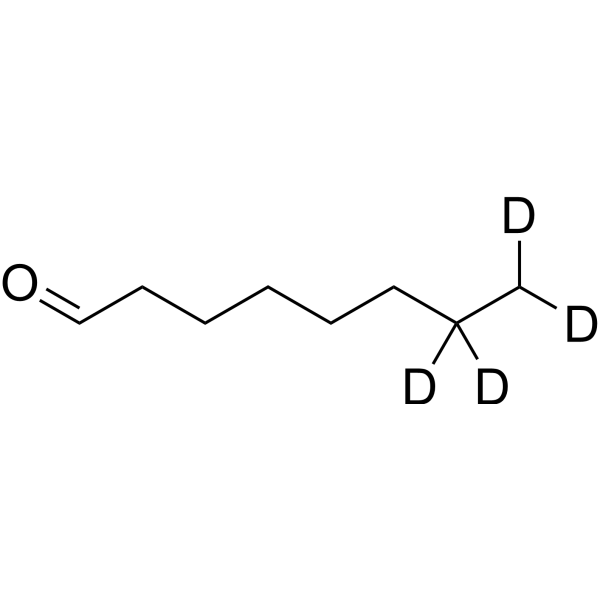 0 ImagesCat. No.: HY-N8015S2CAS No.: 1335401-91-6
Octanal-d4 is deuterated labeled Octanal (HY-N8015). Octanal is a fragrant aldehyde with antioxidant and antibacterial activity. Its antifungal effect against G. citri-aurantii may be related to the disruption of cell membrane integrity and the leakage of cellular components. Additionally, Octanal exhibits cytotoxicity towards HeLa cells, with an IC50 value of 3.5 μg/mL.
-
p-SCN-Bn-DOTA (Standard)
 0 ImagesCat. No.: HY-114377RCAS No.: 127985-74-4
p-SCN-Bn-DOTA (Standard) is the analytical standard of p-SCN-Bn-DOTA. This product is intended for research and analytical applications. p-SCN-Bn-DOTA is a bifunctional chelating agent. p-SCN-Bn-DOTA can simultaneously chelate radionuclides and link monoclonal antibody for radioimmunoresearch of tumor.
-
Curromycin A
 0 ImagesCat. No.: HY-N14095CAS No.: 97412-76-5
Curromycin A has antibacterial activity against Gram-positive bacteria such as Bacillus subtilis. Curromycin A can inhibit the replication of human immunodeficiency virus (HIV), inhibit mouse melanoma B16 and leukemia P388 cells.



