



Cancer Immunotherapy
Cancer immunotherapy (CIT) is a type of biological therapy, aiming to improve anti-tumor immune responses with fewer off-target effects than chemotherapy. Several types of immunotherapy include: oncolytic virus therapies, cancer vaccines, cytokine therapies, adoptive cell transfer (ACT), and immune checkpoint inhibitors (ICIs). In particular, ICIs and ACT have obtained immense clinical response, but their efficacy varies from person to person. Immune cells can be harnessed to eliminate tumor cells, such as T cells, B cells, NK cells, and myeloid cells. T cells have potent tumor-killing capability, therefore, a plethora of cancer immunotherapy research have focused on inducing T-cell-mediated anti-tumor responses. CTLA-4 and PD-1 are found on the cell surface of T cells as co-inhibitory receptors. The breakthrough in cancer immunotherapy results from the identification and subsequent targeting of checkpoint mechanisms in T cells with monoclonal antibodies against CTLA-4 and programmed death-ligand 1/programmed death-1 (PD-L1/PD-1).
Several types of cancers (e.g., melanoma, mismatch repair-deficient cancers, bladder cancer, and non-small cell lung cancer) have achieved significant clinical responses in T-cell checkpoint blockade therapies. However, single-mode immunotherapy faces challenges such as low immune response, low tumor infiltration, and complex immunosuppressive tumor microenvironment. Recently, combined therapies based on tumor immunity have received extensive attention in the research of enhancing tumor cells immunogenicity and inhibiting their growth. For example, anti CTLA-4 and PD-1, immune checkpoint blockade (ICB) combined with chemotherapy, anti-angiogenic drugs and kinase inhibitors.
-
(R)-2-Amino-5,5,5-trifluoropentanoic acid
 0 ImagesCat. No.: HY-W073239CAS No.: 122565-29-1
(R)-2-Amino-5,5,5-trifluoropentanoic acid is a leucine antagonist. (R)-2-Amino-5,5,5-trifluoropentanoic acid increases Sestrin2 binding to GATOR2. (R)-2-Amino-5,5,5-trifluoropentanoic acid can be used in research on diabetes, neurodegenerative diseases, immune diseases, and cancer.

-
Primocarcin
 0 Images
Primocarcin is an antibiotic that inhibits Ehrlich ascites cancer.
-
Saquayamycin B1
 0 ImagesCat. No.: HY-126802CAS No.: 99260-68-1
Saquayamycin B1 has antimicrobial effect, but it has weaker effect against Gram-negative bacteria. Saquayamycin B1 has inhibitory effect on leukemia P388 cells and Adriamycin-resistant P388 cells.
-
Murayaquinone
 0 ImagesCat. No.: HY-133093CAS No.: 100843-91-2Synonyms: PKF118-774
Murayaquinone (PKF118-774) is a β-catenin/Tcf4 complex inhibitor with an IC50 of 2.4 μM. Murayaquinone is a nematicidal agent found in Streptomyces sp. AN140557.
-
Carazostatin
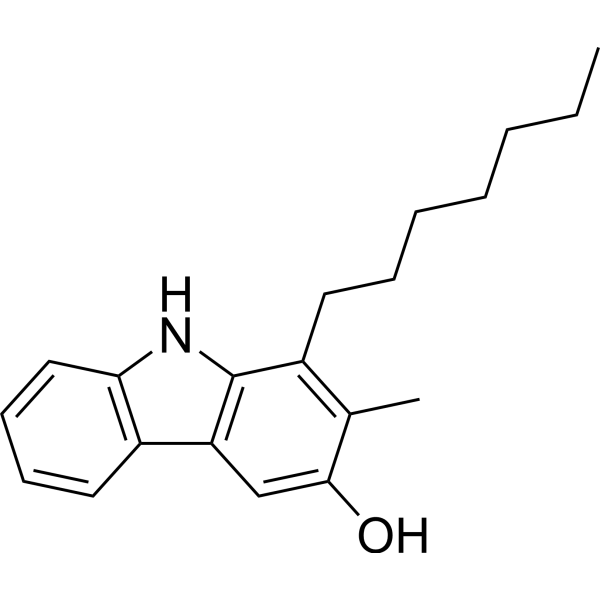 0 ImagesCat. No.: HY-119975CAS No.: 126168-32-9Synonyms: DC118
Carazostatin (DC118), an antioxidant, can be isolated from Streptomycs chromofuscus. Carazostatin (DC118) exhibits strong inhibitory activity against free radical-induced lipid peroxidation and shows stronger antioxidant activity in liposomal membranes than α-tocopherol (VE).
-
Barakol
 0 ImagesCat. No.: HY-167825CAS No.: 24506-68-1
Barakol is an anticancer and anxiolytic agent identified in Cassia siamea. Barakol inhibits MMP-3 activity and enhances the cytotoxicity and antimetastatic effects of Doxorubicin (HY-15142) against cancer cells. Barakol induces apoptosis via reactive oxygen species (ROS) production, upregulation of the Bax/Bcl-2 protein ratio, and activation of caspase-9. Barakol exerts anxiolytic activity with diazepam-like effects, increases spontaneous longitudinal smooth muscle contraction of rat ileum in a concentration-dependent manner (EC50 = 0.3 mM), and inhibits norepinephrine-induced contraction suppression. Barakol can be used in research related to anxiety, intestinal motility, and neuroblastoma.
-
IDO-IN-19
 0 ImagesCat. No.: HY-177557CAS No.: 2033173-20-3
IDO-IN-19 (Compound I) is a free base of an imidazole-isoindole derivative. IDO-IN-19 can inhibit the activity of Indoleamine 2,3-Dioxygenase (IDO). IDO-IN-19 can block the decomposition of tryptophan and restore the function of T cells. IDO-IN-19 can be used for the researches of cancer, immunology, infection and neurological disease, such as breast cancer and Alzheimer's disease.
-
Pracinostat (Standard)
 0 ImagesSynonyms: SB939 (Standard)
Pracinostat (Standard) is the analytical standard of Pracinostat. This product is intended for research and analytical applications. Pracinostat is a potent histone deacetylase (HDAC) inhibitor, with IC50s of 40-140 nM, used for cancer research. Pracinostat also inhibits metallo-β-lactamase domain-containing protein 2 (MBLAC2) hydrolase activity with an EC50 below 10 nM.
-
Hexacyclinol
 0 ImagesCat. No.: HY-N14970CAS No.: 903574-41-4
Hexacyclinol has moderate anti-Gram-positive bacteria activity, 4-40 μg/mL can inhibit the production of oxidants by polymorphonuclear neutrophils (PMNL) stimulated by zymosan. Hexacyclinol inhibits the growth of L-930 and K 562 cells with IC50s of 1.4 μg/mL and 0.4 μg/mL, respectively, and the IC50 of HeLa cells is 10 μg/mL. Hexacyclinol also has an anti-Plasmodium effect, and its IC50 for Plasmodium falciparum is 2.4 μg/mL.
-
5-Methylfurfural (Standard)
 0 Images
5-Methylfurfural (Standard) is the analytical standard of 5-Methylfurfural. This product is intended for research and analytical applications. 5-Methylfurfural is a chemical that can be utilized as food additive, intermediate in the production of agrochemicals, and precursor of certain anti-cancer natural products. 5-Methylfurfural is formed during the photoexposition of ranitidine hydrochloride. 5-Methylfurfural is an organic compound. 5-Methylfurfural has a strong tendency to be further hydrogenated to 2,5-dimethylfuran (DMF). 5-Methylfurfural can predominantly evoke skin inflammation and barrier disintegration. 5-Methylfurfural degrades native DNA through the formation of single-strand breaks.
-
SAFit2 (Standard)
 0 ImagesCat. No.: HY-102080RCAS No.: 1643125-33-0
-
α-Thujaplicin
 0 Images
α-Thujaplicin, the isomer of Hinokitiol (HY-B2230), is an antimicrobial agent. α-Thujaplicin can be isolated from Aomori Hiba (Thujopsis dolabrata SIEB. et ZUCC. var. hondai MAKINO). α-Thujaplicin shows inhibition of Carboxypeptidase A (IC50: 32.4 μM). α-Thujaplicin shows rather strong antifungal activity against seven kinds of plant-pathogenic fungi, their MICs being in the range of 12.0-50.0 μg/mL. α-Thujaplicin shows clear antibacterial activity against Legionella pneumophila SG 1 and L. pneumophila SG 3, and their MICs are in the range of 12.5-50 μg/mL. α-Thujaplicin shows antibacterial activity against Enterococcus faecalis IFO-12965 with a MIC of 1.56 μg/mL. α-Thujaplicin shows germination inhibition toward the seed of Echinochloa utilis Ohwi et Yabuno. α-thujaplicin inhibits lymphocytic leukemia, stomach cancer, Ehrlich’s ascites carcinoma.
-
RSL3 (Standard)
 0 ImagesSynonyms: (1S,3R)-RSL3 (Standard)
RSL3 (Standard) is the analytical standard of RSL3 (HY-100218A). This product is intended for research and analytical applications. RSL3 ((1S,3R)-RSL3) is an inhibitor of glutathione peroxidase 4 (GPX4) (ferroptosis activator), reduces the expression of GPX4 protein, and induces ferroptotic death of head and neck cancer cell. RSL3 increases the expression of p62 and Nrf2 and inactivates Keap1 in HN3-rslR cells.
-
FLLL12
 0 ImagesCat. No.: HY-183402CAS No.: 917813-60-6Synonyms: GO-Y026
FLLL12 (GO-Y026) is a curcumin analog anticancer agent. FLLL12 inhibits the phosphorylation of AKT, Bcl-2, Bid, EGFR, mTOR, FOXO1a, FOXO3a, STAT3, HER2/neu, as well as pancreatic AKT/STAT3; upregulates the expression of Bim and DR5; and activates PTPs. FLLL12 regulates downstream pathways, induces mitochondria-mediated and DR5-dependent extrinsic apoptosis, inhibits cancer cell viability, proliferation, anchorage-independent growth and migration, and exerts a synergistic effect with Doxorubicin (HY-15142A). FLLL12 can be used in research related to head and neck squamous cell carcinoma, breast cancer, prostate cancer, pancreatic cancer, lung cancer, colon cancer and colorectal cancer.
-
Anti-GC1q R/C1QBP Antibody (60.11)
 0 ImagesCat. No.: HY-P990844
Anti-GC1q R/C1QBP Antibody (60.11) is a kind of mouse IgG1 κ chimeric antibody inhibitor, targeting to human GC1q R/C1QBP. Anti-GC1q R/C1QBP Antibody (60.11) can neutralize GC1q R. Anti-GC1q R/C1QBP Antibody (60.11) can be used for the researches of cancer, infection and inflammation, such as MDA231 tumor and S. aureus induced infective endocarditis (IE).
-
Phototherapeutic agent-1
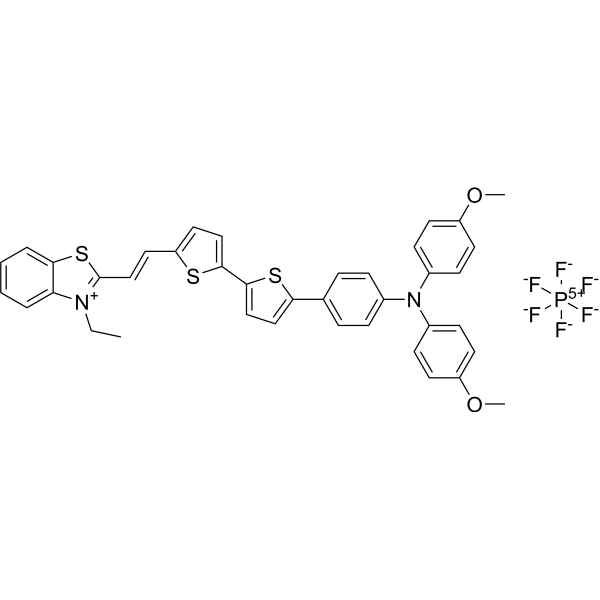 0 ImagesCat. No.: HY-D1468CAS No.: 2555045-67-3
Phototherapeutic agent-1 is a multi-modal light diagnosis agent with aggregation-induced emission properties. have certain Phototherapeutic agent-1 has certain reactive oxygen species (ROS) generation capacity in illumination condition. Phototherapeutic agent-1 can effectively kill cancer cells and tumor tissue.
-
Pirarubicin Hydrochloride (Standard)
 0 ImagesCat. No.: HY-13725ARCAS No.: 95343-20-7Synonyms: THP Hydrochloride (Standard)
Pirarubicin (Hydrochloride) (Standard) is the analytical standard of Pirarubicin (Hydrochloride). This product is intended for research and analytical applications. Pirarubicin Hydrochloride is an anthracycline antibiotics, acts as a topoisomerase II inhibitor, and is a widely used for treatment of various cancers, in particular, solid tumors.
-
(rac)-Etodolac-d3
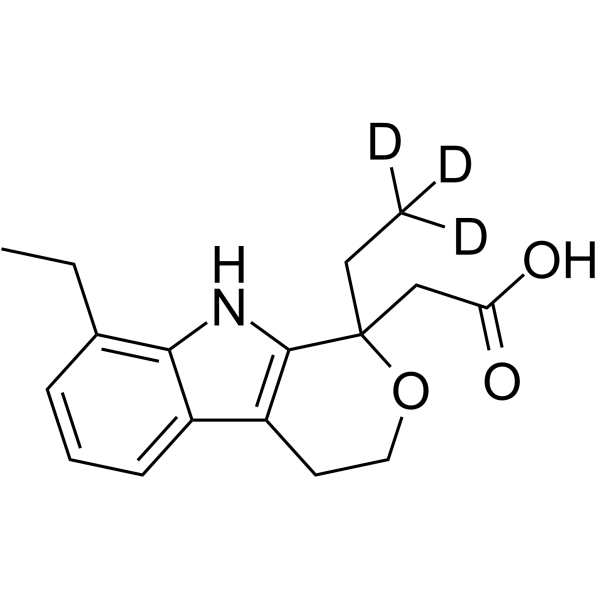 0 ImagesCat. No.: HY-76251S1CAS No.: 1276197-46-6
(rac)-Etodolac-d3 is a labelled racemic Etodolac. Etodolac (AY-24236) is a non-steroidal anti-inflammatory compound that is a non-selective inhibitor of COX (IC50=53.5 nM)
-
KKI-5
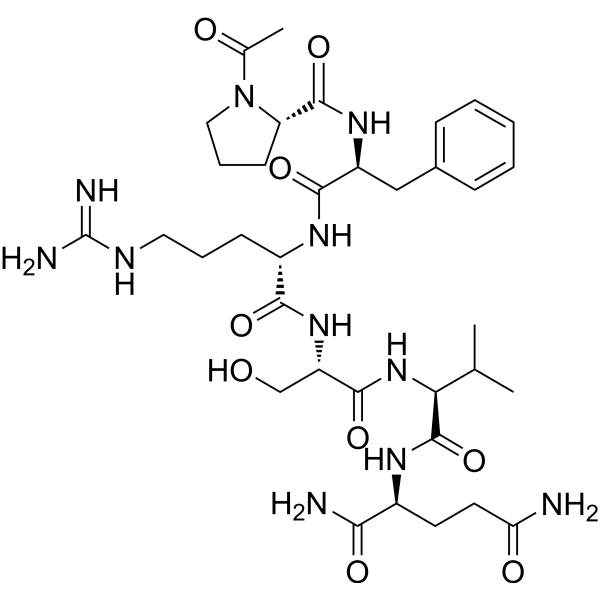 0 ImagesCat. No.: HY-P0237CAS No.: 97145-43-2
KKI-5 is a specific inhibitor of tissue kallikrein. KKI-5 can attenuate breast cancer cell invasion.



