



Cancer Immunotherapy
Cancer immunotherapy (CIT) is a type of biological therapy, aiming to improve anti-tumor immune responses with fewer off-target effects than chemotherapy. Several types of immunotherapy include: oncolytic virus therapies, cancer vaccines, cytokine therapies, adoptive cell transfer (ACT), and immune checkpoint inhibitors (ICIs). In particular, ICIs and ACT have obtained immense clinical response, but their efficacy varies from person to person. Immune cells can be harnessed to eliminate tumor cells, such as T cells, B cells, NK cells, and myeloid cells. T cells have potent tumor-killing capability, therefore, a plethora of cancer immunotherapy research have focused on inducing T-cell-mediated anti-tumor responses. CTLA-4 and PD-1 are found on the cell surface of T cells as co-inhibitory receptors. The breakthrough in cancer immunotherapy results from the identification and subsequent targeting of checkpoint mechanisms in T cells with monoclonal antibodies against CTLA-4 and programmed death-ligand 1/programmed death-1 (PD-L1/PD-1).
Several types of cancers (e.g., melanoma, mismatch repair-deficient cancers, bladder cancer, and non-small cell lung cancer) have achieved significant clinical responses in T-cell checkpoint blockade therapies. However, single-mode immunotherapy faces challenges such as low immune response, low tumor infiltration, and complex immunosuppressive tumor microenvironment. Recently, combined therapies based on tumor immunity have received extensive attention in the research of enhancing tumor cells immunogenicity and inhibiting their growth. For example, anti CTLA-4 and PD-1, immune checkpoint blockade (ICB) combined with chemotherapy, anti-angiogenic drugs and kinase inhibitors.
-
Emapticap pegol scramble negative control
 0 ImagesCat. No.: HY-148100C
Emapticap pegol scramble negative control, an oligonucleotide aptamer, is the negative control of Emapticap pegol (HY-148100).
-
HBV-IN-54
 0 ImagesCat. No.: HY-179393
HBV-IN-54 is a selective and orally active HBV inhibitor. HBV-IN-54 exhibits anti-HBV activity in both HepAD38 cells (EC50 = 0.020 μM, CC50 > 100 μM) and HLCZ01 cells (EC50 = 0.024 μM, CC50 > 100 μM). HBV-IN-54 inhibits viral replication in vivo. HBV-IN-54 displays favorable physicochemical properties and high plasma stability. HBV-IN-54 can be used for research on Hepatitis B (HBV).
-
TPP2a bromide
 0 ImagesCat. No.: HY-122802CAS No.: 1838592-80-5
TPP2a bromide is a thioredoxin reductase (TrxR) inhibitor with an IC50 value of 1.16 μM, and also acts as a TrxR-specific fluorescent probe with environment-sensitive fluorescence. TPP2a bromide selectively forms covalent interactions with subcellular mitochondrial TrxR, thereby modifying its Sec498 residue. TPP2a bromide can increase the level of reactive oxygen species (ROS) in cells and induce mitochondrial apoptosis in cancer cells. TPP2a bromide exhibits enhanced cytotoxicity against cancer cell lines. TPP2a bromide can be used in research related to cervical cancer, lung cancer, etc.
-
Cantharidic acid
 0 ImagesCat. No.: HY-137135CAS No.: 28874-45-5
Cantharidic acid is a selective inhibitor for protein phosphatase 2 (PP2A) and protein phosphatase 1 (PP1). Cantharidic acid inhibits cell viability and arrest cell cycle at sub G1 phase, induces apoptosis in cells NPC-39 and HONE-1 through the upregulation of ERK1/2, p38, and JNK1/2 pathway.
-
AMP423
 0 ImagesCat. No.: HY-119289CAS No.: 219501-57-2
AMP423 is an oxidation inducer and cell cycle regulator. AMP423 induces necrosis, apoptosis, and reactive oxygen species production. AMP423 induces inhibition of protein synthesis, reduction of thiol levels, and S-phase cell accumulation, and exhibits antitumor activity. AMP423 can be used in research related to multiple myeloma and follicular B-cell lymphoma.
-
Perillyl alcohol (Standard)
 0 Images
Perillyl alcohol (Standard) is the analytical standard of Perillyl alcohol (HY-N7000). Perillyl alcohol is an orally active monoterpene. Perillyl alcohol exhibits multiple activities such as analgesic, anti-inflammatory, anti-tumor, anti-angiogenic, and anti-nociceptive effects. Perillyl alcohol can induce apoptosis and cell cycle arrest in tumor cells.
-
5T4_0108
 0 ImagesCat. No.: HY-P991410Purity: 99.50%Synonyms: MEDI0641 antibody
5T4_0108 (MEDI0641 antibody) is a human monoclonal antibody (mAb) targeting TPBG. 5T4_0108 can be used in breast and prostate cancer research.
-
2,6-Dimethoxy-1,4-benzoquinone (Standard)
 0 Images
2,6-Dimethoxy-1,4-benzoquinone (Standard) is the analytical standard of 2,6-Dimethoxy-1,4-benzoquinone (HY-N1677). This product is intended for research and analytical applications. 2,6-Dimethoxy-1,4-benzoquinone is a 1,4-benzoquinone derivative. 2,6-Dimethoxy-1,4-benzoquinone promotes phosphorylation of AKT, S6K, mTOR, 4E-BP1, and AMPK, and attenuates mTORC1 activity as part of the AKT/mTOR pathway. 2,6-Dimethoxy-1,4-benzoquinone stimulates myoblast differentiation, increases myotube size, elevates MHC protein expression, enhances mitochondrial biogenesis, respiration, and DNA content, and increases skeletal muscle weights, fiber size, grip strength, and treadmill performance. 2,6-Dimethoxy-1,4-benzoquinone exerts anti-cancer, anti-inflammatory, anti-adipogenic, antibacterial, and antimutagenic effects, inhibits adipogenic transcription factors, nitric oxide production, skin tumor development, Magnaporthe oryzae growth, spore germination, appressorium formation, and growth of select bacterial species, induces H2O2 generation and rice defense gene expression, and reduces rice blast lesion formation. 2,6-Dimethoxy-1,4-benzoquinone can be used for the research of obesity, skin tumorigenesis, rice blast disease, and food-borne illness.
-
Anti-CD33 Antibody (OR000283)
 0 ImagesCat. No.: HY-P9S0124Purity: 99.00%Synonyms: ORM-6151 Antibody; BMS-986497 Antibody
Anti-CD33 Antibody (OR000283) (ORM-6151 Antibody; BMS-986497 Antibody) is an antibody targeting CD33. It is generated by grafting the FAb (H&L) sequence of Gemtuzumab (HY-P99971) onto an IgG1 Fc carrying the N297A mutation, which inhibits Fc-γR binding. Anti-CD33 Antibody (OR000283) can be used to construct degrader-antibody conjugates (DACs), such as ORM-6151 (HY-171792).
-
Ethylenediaminetetraacetic acid trisodium salt (Standard)
 0 ImagesSynonyms: EDTA trisodium salt (Standard); Trisodium EDTA (Standard)
Ethylenediaminetetraacetic acid (trisodium salt) (Standard) is the analytical standard of Ethylenediaminetetraacetic acid (trisodium salt). This product is intended for research and analytical applications. Ethylenediaminetetraacetic acid trisodium salt (EDTA trisodium salt; Trisodium EDTA) is a kind of metal chelating agent (binds to bivalent and trivalent metal cations, including calcium). Ethylenediaminetetraacetic acid trisodium salt has antibacterial, anti-inflammatory, antioxidant, anti-hypercalcemia and anticoagulant activities. Ethylenediaminetetraacetic acid trisodium salt decreases the metal ion-catalyzed oxidative damage to proteins, and allows maintenance of reducing environment during protein purification. Ethylenediaminetetraacetic acid trisodium salt can alleviate the liver fibrosis. Ethylenediaminetetraacetic acid can be used for coronary artery disease and neural system disease research.
-
PEG3400-bis-amine
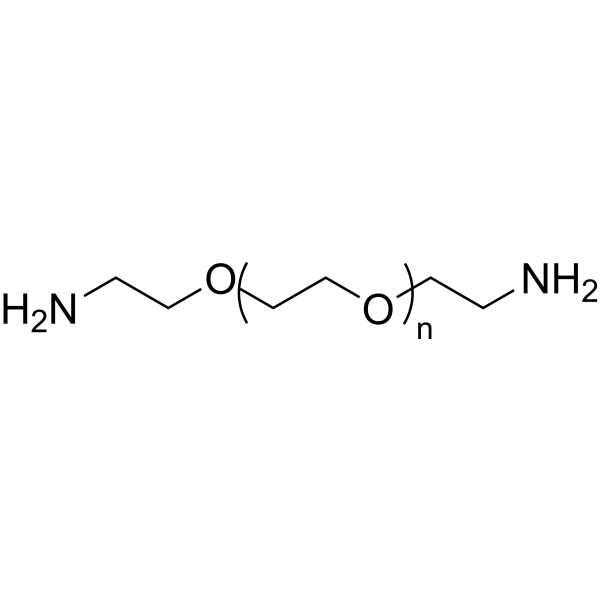 0 ImagesCat. No.: HY-140647CAS No.: 24991-53-5Synonyms: Poly(ethylene glycol)-bis-amine 3400
PEG3400-bis-amine (Poly(ethylene glycol)-bis-amine 3400) is a diamine-terminated polyethylene glycol and conjugate linker. PEG3400-bis-amine endows the surface of carbon capsules with stealth properties, biocompatibility, and free amino groups for antibody conjugation. PEG3400-bis-amine acts as a reducing agent and passivating agent to promote the formation and assembly of silver nanoparticles on silica nanospheres, and increases the number of silver nanoparticles on the silica surface.
-
Lupenone (Standard)
 0 Images
Lupenone is an orally active lupine-type triterpenoid that can be isolated from Musa basjoo. Lupenone Lupenone plays a role through the PI3K/Akt/mTOR and NF-κB signaling pathways. Lupenone has anti-inflammatory, antiviral, antidiabetic and anticancer activities.
-
RO5323441
 0 ImagesCat. No.: HY-P991430Synonyms: TB-403
RO5323441 (TB-403) is a human IgG1 monoclonal antibody (mAb) targeting PlGF. RO5323441 inhibits the binding of human PlGF-1 or PlGF-2 to VEGFR-1 (IC50 values are 0.1 and 0.2 nM, respectively). RO5323441 blocks PlGF-induced VEGFR-1 phosphorylation in Flt-1-transfected HEK293 cells. RO5323441 has antitumor activity.
-
EMD638683 (Standard)
 0 Images
EMD638683 (Standard) is the analytical standard of EMD638683. This product is intended for research and analytical applications. EMD638683 is an orally effective SGK1 inhibitor with an IC50 of 3 μM. EMD638683 exhibits strong inhibition against SGK1, moderate inhibition against SGK2 and SGK3, and shows excellent selectivity for other AGC kinase family members. EMD638683 has antihypertensive activity by inhibiting SGK1, and independently of the blood pressure-lowering effect, it effectively prevents heart inflammation and fibrosis caused by hypertension by inhibiting the cardiac NLRP3 inflammation body/ IL-1β axis. EMD638683 promotes apoptosis of colon cancer cells and sensitizes radiotherapy. EMD638683 (S-Form) can be used in research related to hypertension, hypertensive heart damage, and colon cancer.
-
Guanosine triphosphate tritris solution (100 mM)
 0 ImagesSynonyms: GTP tritris solution (100 mM)
Guanosine triphosphate (GTP) tritris solution (100 mM) is a critical nucleotide and regulator of cellular metabolism. Guanosine triphosphate tritris solution (100 mM) promotes ribosomal DNA localization, pre-rRNA transcription and ribosome biogenesis by binding to RNA polymerase I and GPN proteins (GPN1/3). Guanosine triphosphate tritris solution (100 mM) links MYC-dependent ribosome biogenesis to nucleotide sufficiency, acts as a metabolic gatekeeper supporting protein synthesis, DNA/RNA synthesis and cellular signal transduction, while also participating in the physiological activities of pancreatic β-cells and serving as an oxidative substrate for reactive oxygen species. In small cell lung cancer with high MYC expression, Guanosine triphosphate tritris solution (100 mM) accumulates through the IMPDH-driven synthetic pathway, thereby affecting apoptosis and mitotic processes. Guanosine triphosphate tritris solution (100 mM) is used in the research of small cell lung cancer, hepatoblastoma and cellular metabolism.
-
IT1t dihydrochloride (Standard)
 0 ImagesCat. No.: HY-101458ARCAS No.: 1092776-63-0
IT1t (dihydrochloride) (Standard) is the analytical standard of IT1t (dihydrochloride) (HY-101458A). This product is intended for research and analytical applications. IT1t dihydrochloride is a potent CXCR4 antagonist; inhibits CXCL12/CXCR4 interaction with an IC50 of 2.1 nM.
-
Coelenterazine TFA
 0 ImagesCat. No.: HY-18743APurity: 99.14%
Coelenterazine TFA is a luminescent enzyme substrate for apoaequorin and Renilla luciferase. Renilla luciferase and substrate Coelenterazine TFA has been used as the bioluminescence donor in bioluminescence resonance energy transfer (BRET) to detect protein-protein interactions. Coelenterazine TFA is a superoxide anion-sensitive chemiluminescent probe and it can also be used in chemiluminescent detection of peroxynitrite (Ex/Em = 429/466 nm).
-
Silybin A (Standard)
 0 ImagesCat. No.: HY-13748RCAS No.: 22888-70-6Synonyms: Silibinin A (Standard)
Silybin A (Standard) is the analytical standard of Silybin A. This product is intended for research and analytical applications. Silybin A (Silibinin A), an effective anti-cancer and chemopreventive agent, has been shown to exert multiple effects on cancer cells, including inhibition of both cell proliferation and migration.
-
Human MITF mRNA
 0 ImagesCat. No.: HY-174580
Human MITF mRNA encodes the human melanocyte inducing transcription factor (MITF) protein, a transcription factor that contains both basic helix-loop-helix and leucine zipper structural features. MITF could regulate melanocyte development and is also responsible for pigment cell-specific transcription of the melanogenesis enzyme genes.
-
Anti-MAGEC2/CT10 Antibody (LX-CT10.5)
 0 ImagesCat. No.: HY-P990834
Anti-MAGEC2/CT10 Antibody (LX-CT10.5) is a kind of mouse IgG2a κ chimeric antibody, targeting to human MAGEC2/CT10. Anti-MAGEC2/CT10 Antibody (LX-CT10.5) reacts with human melanoma-associated antigen C2 (MAGEC2), also known as CT10. Anti-MAGEC2/CT10 Antibody (LX-CT10.5) can be used for identifying MAGEC2 expressing cells in immunohistochemistry, immunofluorescence and western blot studies.



