



Cancer Targeted Therapy
Cancer targeted therapy is the foundation of precision medicine; it uses drugs or other substances to target specific genes and proteins that control cancer cells’ growth, division and spreading. Compared to traditional chemotherapy drugs, targeted-drugs can specifically act on cancer cells with high efficacy without damaging normal cells. Drugs used in cancer targeted therapy mainly includes small molecules and macromolecules (e.g., monoclonal antibodies), which can target cancer cells and constituents in the tumor microenvironment to activate the immune system. Anti-angiogenesis drugs, such as those targeting vascular endothelial growth factor (VEGF), epidermal growth factor receptor (EGFR), transforming growth factor (TGF)-α, TGF-β, Tumor necrosis factor (TNF)-α, and platelet-derived endothelial growth factor (PDGFR) inhibit the proliferation and metastasis of cancer cells. In recent years, the proportion of antibody drugs in cancer treatment has gradually become prominent. Antibody-drug conjugates (ADCs) are a new type of targeted drugs that are composed of monoclonal antibody, cytotoxic drug and linker. ADCs can deliver drugs to tumor cells and minimize the toxicity to normal tissues. Proteolysis-targeting chimera (PROTAC) is a useful technology for targeted protein degradation. PROTAC exploits the ubiquitin-proteasome system and forms a ternary complex with a hijacked E3 ubiquitin ligase and target protein, leading to polyubiquitination and degradation of the target protein.
Targeted therapy is a useful strategy in treatment of cancer either alone or in combination with standard chemotherapy. At present, targeted therapy has proved significant clinical success in the treatment of many types of cancer, including breast cancer, colorectal cancer, leukemia, ovarian cancer and lung cancer.
-
DDR1-IN-10
 0 ImagesCat. No.: HY-169741CAS No.: 3038810-90-8
DDR1-IN-10 (compound 7q) is a DDR1 inhibitor. DDR1-IN-10 can be used in the study of pancreatic cancer, non-small cell lung cancer, and gastric carcinoma.
-
AZD3632
 0 ImagesCat. No.: HY-182793CAS No.: 3058433-50-1Synonyms: MLL1-IN-1
AZD3632 (MLL1-IN-1) is an orally active MLL1 inhibitor with an IC50 of 0.043 μM. AZD3632 induces Menin protein degradation and inhibits the proliferation of leukemia cells. AZD3632 can induce tumor regression in leukemia-bearing mice. AZD3632 is useful for research into MLL1-associated leukemia.
-
hsa-miR-2114-5p inhibitor
 0 ImagesCat. No.: HY-RI00435
hsa-miR-2114-5p inhibitors are chemically-modified oligonucleotides that hybridize with mature miRNAs. The miRNA inhibitors have full-length nucleotide 2'-methoxy modification. The miRNA inhibitors strongly compete with mature miRNAs to prevent the complementary pairing of miRNAs and their target genes, thereby inhibiting miRNAs from functioning.
-
hsa-miR-4450 inhibitor
 0 ImagesCat. No.: HY-RI01056
hsa-miR-4450 inhibitors are chemically-modified oligonucleotides that hybridize with mature miRNAs. The miRNA inhibitors have full-length nucleotide 2'-methoxy modification. The miRNA inhibitors strongly compete with mature miRNAs to prevent the complementary pairing of miRNAs and their target genes, thereby inhibiting miRNAs from functioning.
-
hsa-miR-548bb-5p antagomir
 0 ImagesCat. No.: HY-RI01676A
hsa-miR-548bb-5p antagomirs are chemically-modified oligonucleotides that hybridize with mature miRNAs. The miRNA antagomirs have 2 phosphorothioates at the 5' end, 4 phosphorothioates at the 3' end, 1 cholesterol group at the 3' end, and full-length nucleotide 2'-methoxy modification. The miRNA antagomirs strongly compete with mature miRNAs to prevent the complementary pairing of miRNAs and their target genes, thereby inhibiting miRNAs from functioning. Stability of miRNA antagomirs appears to be significantly higher than miRNA inhibitors, they exhibits enhanced cellular uptake, stability and regulatory activity in vivo.
-
MC2590
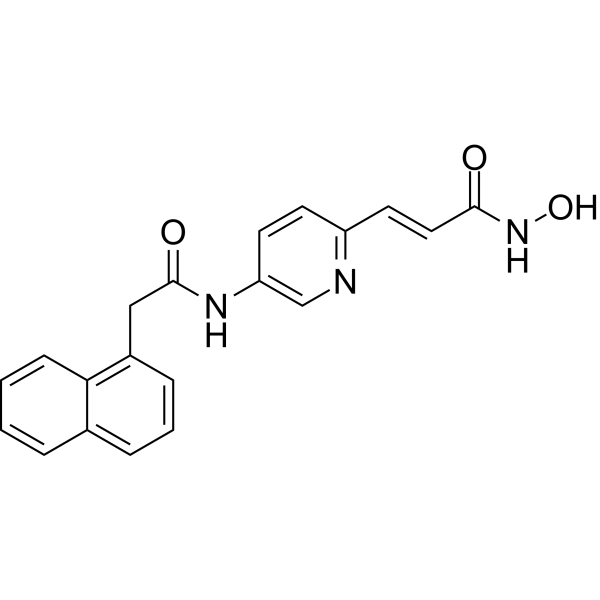 0 Images
MC2590 is a potent pyridine-containing histone deacetylase (HDAC) inhibitor. MC2590 is a inhibitor of HDAC1-3, -6, -8, and -10 (class I/IIb-selective inhibitor) with IC50s of 0.015 μM-0.156 μM. MC2590 also inhibits HDAC isoforms HDAC4, HDAC5, HDAC7, HDAC9, HDAC11 with IC50s of 1.35 μM-3.98 μM. MC2625 induces G2/M cell cycle arrest and modulates pro- and anti-apoptotic microRNAs towards apoptosis induction.
-
mmu-miR-485-3p inhibitor
 0 ImagesCat. No.: HY-RI03215
mmu-miR-485-3p inhibitors are chemically-modified oligonucleotides that hybridize with mature miRNAs. The miRNA inhibitors have full-length nucleotide 2'-methoxy modification. The miRNA inhibitors strongly compete with mature miRNAs to prevent the complementary pairing of miRNAs and their target genes, thereby inhibiting miRNAs from functioning.
-
mmu-miR-7049-3p inhibitor
 0 ImagesCat. No.: HY-RI03840
mmu-miR-7049-3p inhibitors are chemically-modified oligonucleotides that hybridize with mature miRNAs. The miRNA inhibitors have full-length nucleotide 2'-methoxy modification. The miRNA inhibitors strongly compete with mature miRNAs to prevent the complementary pairing of miRNAs and their target genes, thereby inhibiting miRNAs from functioning.
-
FGFR3-IN-12
 0 ImagesCat. No.: HY-181752CAS No.: 3127143-52-3
FGFR3-IN-12 is a selective fibroblast growth factor receptor 3 (FGFR3) inhibitor with an IC50 of 6.8 nM. FGFR3-IN-12 shows an IC50 of 19.2 nM against FGFR3V555M and an IC50 of 16.9 nM against TNK1 (Thirty-eight Negative Kinase 1). FGFR3-IN-12 inhibits cancer cells proliferation and induces caspase-mediated apoptosis. FGFR3-IN-12 exhibits antitumor activity in bladder cancer xenografts mice models. FGFR3-IN-12 can be used for the research of cancer, such as bladder cancer.

-
hsa-miR-892b inhibitor
 0 ImagesCat. No.: HY-RI02505
hsa-miR-892b inhibitors are chemically-modified oligonucleotides that hybridize with mature miRNAs. The miRNA inhibitors have full-length nucleotide 2'-methoxy modification. The miRNA inhibitors strongly compete with mature miRNAs to prevent the complementary pairing of miRNAs and their target genes, thereby inhibiting miRNAs from functioning.
-
mmu-miR-1929-5p inhibitor
 0 ImagesCat. No.: HY-RI02742
mmu-miR-1929-5p inhibitors are chemically-modified oligonucleotides that hybridize with mature miRNAs. The miRNA inhibitors have full-length nucleotide 2'-methoxy modification. The miRNA inhibitors strongly compete with mature miRNAs to prevent the complementary pairing of miRNAs and their target genes, thereby inhibiting miRNAs from functioning.
-
mmu-miR-6357 antagomir
 0 ImagesCat. No.: HY-RI03363A
mmu-miR-6357 antagomirs are chemically-modified oligonucleotides that hybridize with mature miRNAs. The miRNA antagomirs have 2 phosphorothioates at the 5' end, 4 phosphorothioates at the 3' end, 1 cholesterol group at the 3' end, and full-length nucleotide 2'-methoxy modification. The miRNA antagomirs strongly compete with mature miRNAs to prevent the complementary pairing of miRNAs and their target genes, thereby inhibiting miRNAs from functioning. Stability of miRNA antagomirs appears to be significantly higher than miRNA inhibitors, they exhibits enhanced cellular uptake, stability and regulatory activity in vivo.
-
mmu-miR-7226-3p inhibitor
 0 ImagesCat. No.: HY-RI03989
mmu-miR-7226-3p inhibitors are chemically-modified oligonucleotides that hybridize with mature miRNAs. The miRNA inhibitors have full-length nucleotide 2'-methoxy modification. The miRNA inhibitors strongly compete with mature miRNAs to prevent the complementary pairing of miRNAs and their target genes, thereby inhibiting miRNAs from functioning.
-
D-Mannitol-d4
 0 ImagesCat. No.: HY-178413SSynonyms: Mannitol-d4; Mannite-d4
D-Mannitol-d4 (Mannitol-d4) is the deuterium labeled D-Mannitol (HY-N0378). D-Mannitol (Mannitol) is an oral, resistant sugar widely used in the food and pharmaceutical industries to promote the absorption and retention of calcium and magnesium through cecal fermentation, while acting as a osmotic diuretic to reduce tissue edema. D-Mannitol can enhance brown fat formation, improve insulin effect, reduce blood sugar levels, And through the start the β3-adrenergic receptor (β3-AR), PGC1α and PKA induced by means of white fat cells into brown fat cells. D-Mannitol is commonly used to maintain osmotic pressure between the plant cytoplasm and the culture medium and protect cells when the cell wall is weakened or even removed.
-
Rufutalkib
 0 ImagesCat. No.: HY-187922CAS No.: 1609170-61-7
Rufutalkib is an orally active ALK modulator. It possesses thermodynamic and chemical stability, and can be used in research related to anaplastic large cell lymphoma, non-Hodgkin's lymphoma, inflammatory myofibroblastic tumor, neuroblastoma, glioblastoma, and ALK-positive malignancies.
-
Ganoderenic acid D (Standard)
 0 ImagesCat. No.: HY-N1516RCAS No.: 100665-43-8
3-Aminobenzoic acid (Standard) is the analytical standard of 3-Aminobenzoic acid. This product is intended for research and analytical applications. 3-Aminobenzoic acid (3-ABA) is an orally active anti-inflammatory agent targeting the tight junction (TJ) regulatory pathways in intestinal epithelial cells. 3-Aminobenzoic acid improves intestinal inflammation by enhancing intestinal barrier integrity and reducing epithelial permeability. It can be used in studies related to improving gut health. Additionally, 3-Aminobenzoic acid analogs can act as γ-aminobutyric acid transaminase (GABA-AT) inhibitors, exhibiting anticonvulsant effects.
-
6-Iodoamiloride
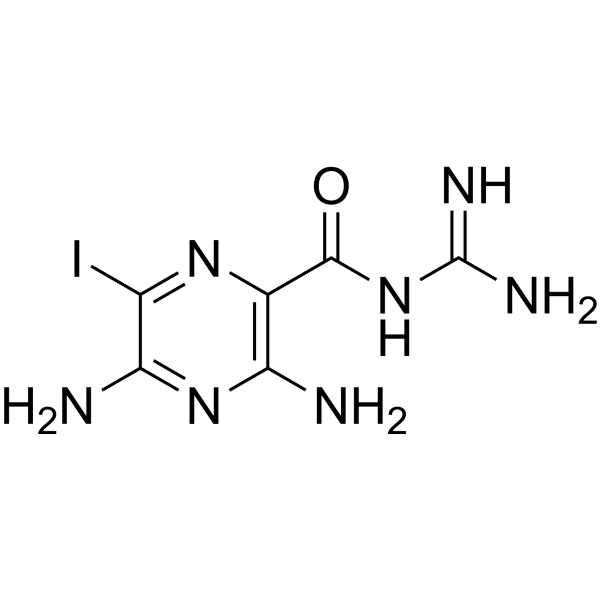 0 ImagesCat. No.: HY-155017CAS No.: 60398-23-4
6-Iodoamiloride is a potent acid-sensing ion channel 1 (ASIC1) inhibitor with an IC50 of 88 nM. 6-Iodoamiloride inhibits ASIC3-mediated currents from rat dorsal root ganglion neurons with an IC50 of 230 nM.
-
FGFR3-IN-9
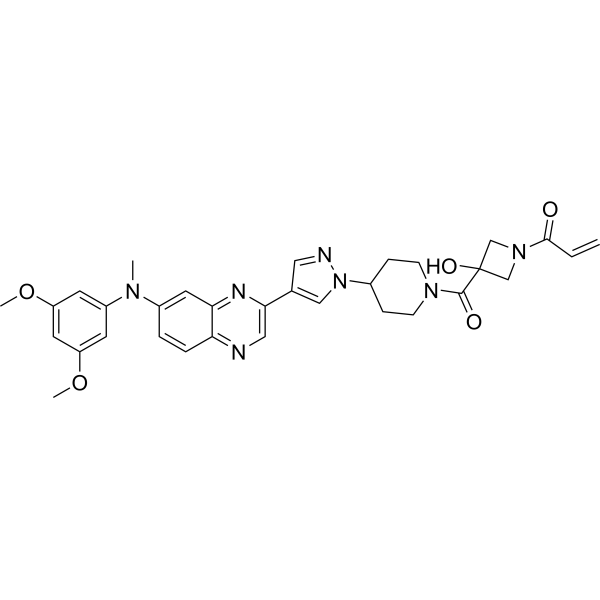 0 ImagesCat. No.: HY-158011CAS No.: 2446523-17-5
FGFR3-IN-9 (example27) is a selective FGFR3 inhibitor.
-
Akt/mTOR-IN-1
 0 ImagesCat. No.: HY-161857
Akt/mTOR-IN-1 (Compound 8r) is an AKT/mTOR signaling pathway inhibitor exhibiting an IC50 value of 0.8 µM with anticancer activity. Akt/mTOR-IN-1 can decrease the expression of Caspase 3 and increase the expression of the autophagic protein Cyclin B1, thereby inducing cell autophagy and apoptosis. Akt/mTOR-IN-1 can be used in research related to non-small cell lung cancer (NSCLC).



