Inflammation/Immunology
-
Inflammation/Immunology Related Products (20772)
Related Products (20772)

-
Antibodies (115)
-
Related Compound Screening Libraries (4)
-
FITC-labeled ODN 2088 sodium
 0 ImagesCat. No.: HY-150738B
-
Anti-Mouse ICOSL/CD275 (LALA-PG) Antibody (HK5.3)
 0 ImagesCat. No.: HY-P990234
Anti-Mouse ICOSL/CD275 (LALA-PG) Antibody (HK5.3) is a mouse-derived IgG2a κ type antibody inhibitor, targeting to mouse ICOSL/CD275. Anti-Mouse ICOSL/CD275 (LALA-PG) Antibody (HK5.3) is a chimeric antibody of the original HK5.3 antibody (HY-P990123). Anti-Mouse ICOSL/CD275 (LALA-PG) Antibody (HK5.3) contains the LALA-PG mutation region. Anti-Mouse ICOSL/CD275 (LALA-PG) Antibody (HK5.3) can neutralize ICOSL. Anti-Mouse ICOSL/CD275 (LALA-PG) Antibody (HK5.3) can be used for researches of inflammation and infection.
-
DHODH-IN-13
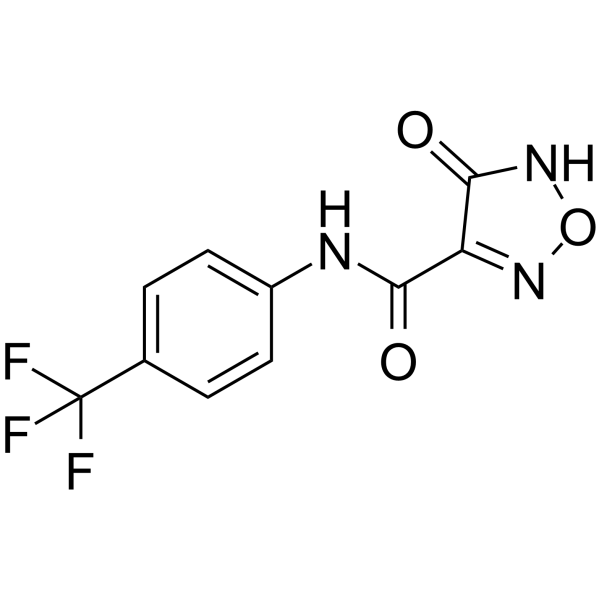 0 ImagesCat. No.: HY-135677CAS No.: 1364791-86-5
DHODH-IN-13 (Compound 7a) is a hydroxyfurazan analog of A771726. DHODH-IN-13 is a dihydroorotate dehydrogenase (DHODH) inhibitor with an IC50 of 4.3 μM for rat liver DHODH. DHODH-IN-13 can be used for rheumatoid arthritis.
-
Anti-Mouse CD155 Antibody (4.24)
 0 ImagesCat. No.: HY-P991798
Anti-Mouse CD155 Antibody (4.24) reacts with the mouse CD155. CD155 is a member of a subfamily of immunoglobulin-like adhesion receptors. Recommend Isotype Controls: Rat IgG2a kappa, Isotype Control (HY-P990679).
-
Anti-CD160 Antibody (MAT 303)
 0 ImagesCat. No.: HY-P992202

-
Anti-CHRDL-1 Antibody
 0 ImagesCat. No.: HY-P992218
-
PROTAC BTK Degrader-9
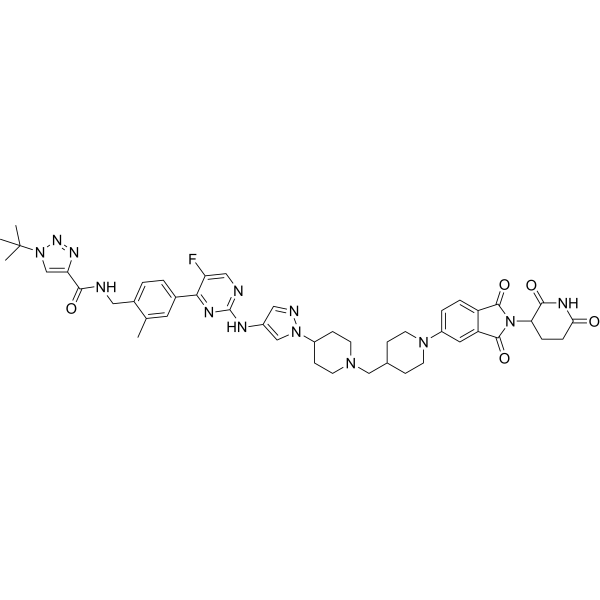 0 ImagesCat. No.: HY-162280CAS No.: 3034024-77-3
PROTAC BTK Degrader-9 is a potent BTK PROTAC degrader with a DC50 of 1.29 nM (in Mino cells at 4 h). PROTAC BTK Degrader-9 induces the formation of a stable ternary complex with BTK and the CRBN E3 ubiquitin ligase, thereby mediating proteasomal degradation of BTK in a CRBN-dependent manner. PROTAC BTK Degrader-9 downregulates the RANKL-activated BTK-PLCγ2-Ca2+-NFATc1 signaling pathway. PROTAC BTK Degrader-9 alleviates alveolar bone resorption in periodontitis models of Mus musculus (house mouse). PROTAC BTK Degrader-9 can be used in research related to periodontitis.
-
Metronidazole/OVA
 0 ImagesCat. No.: HY-161581
Metronidazole/OVA is a conjugate of Metronidazole (HY-B0318) and Ovalbumin (OVA). By conjugating the antigen with protein adjuvants, the production of antigen-specific antibodies in vaccine models can be enhanced. The conjugate does not affect protein folding or disrupt the primary epitopes, and it can enhance cross-presentation and the generation of antigen-specific T cells.
-
Deflazacort-d7
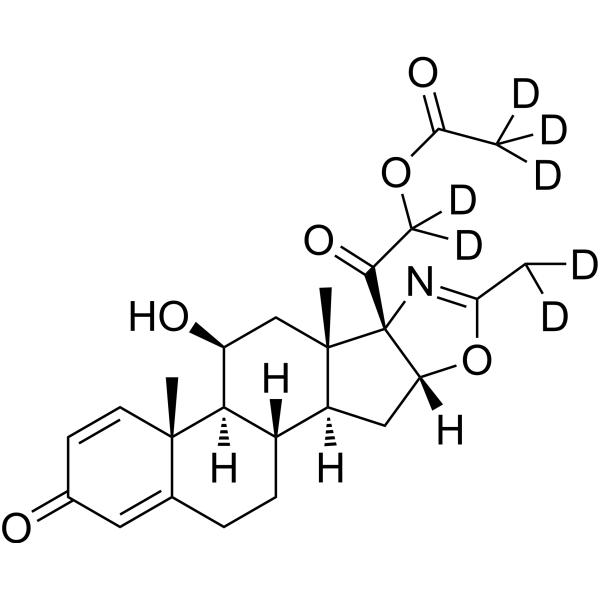 0 ImagesCat. No.: HY-13609S1
Deflazacort-d7 is the deuterium labeled Deflazacort. Deflazacort, a glucocorticoid, is an inactive proagent and is converted rapidly to the active metabolite 21-desacetyldeflazacort. Deflazacort is used as an anti-inflammatory and immunosuppressant.
-
Tetrahydrocorticosterone-d3-1
 0 ImagesCat. No.: HY-113422S2
Tetrahydrocorticosterone-d3-1 is the d3-1-labeled Tetrahydrocorticosterone (HY-113422). Tetrahydrocorticosterone is a glucocorticoid. One of its active forms, 5α-Tetrahydrocorticosterone (HY-113364), exerts its effects by binding to the GC receptor and inhibiting inflammatory processes. Tetrahydrocorticosterone is naturally synthesized by the adrenal glands and plays a key role in regulating the metabolism of carbohydrates, proteins and fats.
-
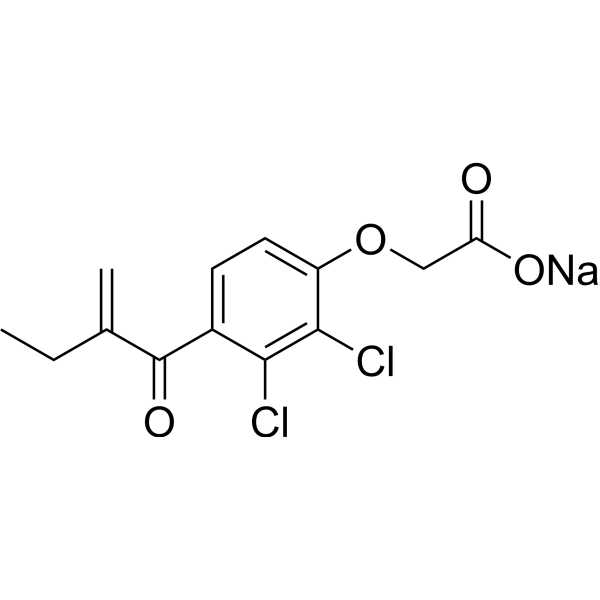
Ethacrynic acid sodium
 0 Images
Ethacrynic acid (Etacrynic acid sodium) sodium is a diuretic. Ethacrynic acid sodium is an inhibitor of glutathione S-transferases (GSTs). Ethacrynic acid sodium is a potent inhibitor of NF-kB-signaling pathway, and also modulates leukotriene formation. Ethacrynic acid sodium also inhibits L-type voltage-dependent and store-operated calcium channel, leading to relaxation of airway smooth muscle (ASM) cells. Ethacrynic acid sodium has anti-inflammatory properties that reduces the retinoid-induced ear edema in mice.
-
Netropsin
 0 Images
Netropsin dihydrochloride is a small-molecule MGB (minor-groove binder) and antibiotic, inhibits the catalytic activity of isolated topoisomerase and interferes with the stabilization of the cleavable complexes of topoisomerase II and I in nuclei. Netropsin dihydrochloride has antibacterial and antiviral activity.
-
α-Lipoic Acid sodium (Standard)
 0 ImagesSynonyms: Thioctic acid sodium (Standard); (±)-α-Lipoic acid sodium (Standard); DL-α-Lipoic acid sodium (Standard)
α-Lipoic Acid (sodium) (Standard) is the analytical standard of α-Lipoic Acid (sodium). This product is intended for research and analytical applications. α-Lipoic Acid (Thioctic acid) sodium is an antioxidant, which is an essential cofactor of mitochondrial enzyme complexes. α-Lipoic Acid sodium inhibits NF-κB-dependent HIV-1 LTR activation. α-Lipoic Acid sodium induces endoplasmic reticulum (ER) stress-mediated apoptosis in hepatoma cells. α-Lipoic Acid sodium can be used with CPUL1 (HY-151802) to construct the self-assembled nanoaggregate CPUL1-LA NA, which has improved antitumor efficacy than CPUL1.
-
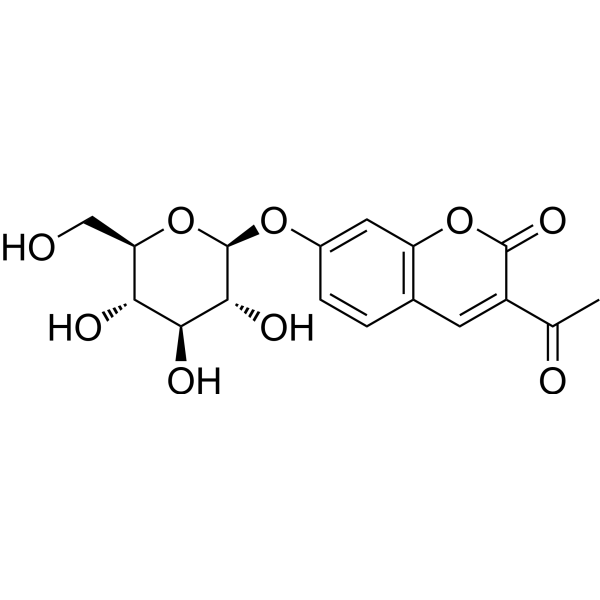
3-Acetylumbelliferyl β-D-Glucopyranoside
 0 ImagesCat. No.: HY-W357142CAS No.: 20943-16-2
3-Acetylumbelliferyl β-D-Glucopyranoside is a fluorogenic substrate for β-glucosidase and can be used as a positive control substrates for β-D-glucosidase.
-
CI-986
 0 ImagesCat. No.: HY-105504CAS No.: 130116-16-4
CI-986 is a dual inhibitor of COX and 5-LOX. CI-986 can prevent the coronary vasoconstriction and the increased production of LTB(4) and LTC(4). CI-986 also has anti-inflammatory and analgesic effects. CI-986 can be used for the researches of inflammation and cardiovascular disease, such as arthritis.
-
Anti-IL-6 Antibody (Chugai SK2)
 0 ImagesCat. No.: HY-P991600
Anti-IL-6 Antibody (Chugai SK2) is a murine monoclonal antibody, targeting IL-6. Anti-IL-6 Antibody (Chugai SK2) can be used for inflammatory diseases and cancers research, such as rheumatoid arthritis (RA), crohn's disease (CD) and pancreatic, lung and colon cancer.
-
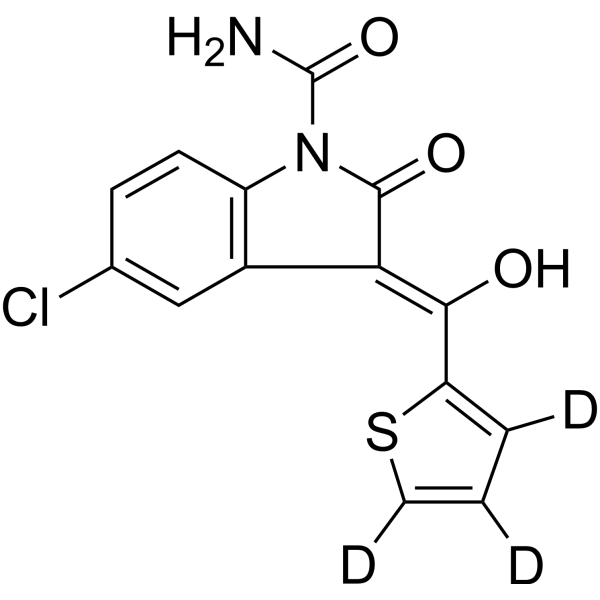
Tenidap-d3
 0 ImagesCat. No.: HY-105028SCAS No.: 142741-60-4Synonyms: CP-66248-d3
Tenidap-d3 is the deuterium labeled Tenidap. Tenidap, a non-steroidal anti-inflammatory drug, is a selective COX-1 inhibitor, with IC50 values of 0.03 μM and 1.2 μM for COX-1 and COX-2, respectively. Tenidap has anti-inflammatory and antirheumatic properties. Tenidap is also a specific SLC26A3 inhibitor.
-
Tixanox sodium
 0 ImagesCat. No.: HY-159926CAS No.: 40691-57-4Synonyms: RS-7540
Tixanox sodium (RS-7540), an anti-allergic compound, is a potent inhibitor of mediator release in the IgE-mediated passive cutaneous anaphylaxis (PCA) reaction.
-
T3/OVA
 0 ImagesCat. No.: HY-161528
T3/OVA is an antigen-adjuvant conjugate formed by conjugating T3 (thyroxine) with ovalbumin (OVA). By conjugating the antigen with protein adjuvants, the production of antigen-specific antibodies in vaccine models can be enhanced. The conjugate does not affect protein folding or disrupt major epitopes, and it can enhance cross-presentation and the generation of antigen-specific T cells.