Others
-
Others Related Products (76625)
Related Products (76625)

-
Copper(Ⅱ) sulfate
 0 Images
Copper(Ⅱ) sulfate (Cupric sulfate) is an inorganic compound that is a source of copper ions. Copper(Ⅱ) sulfate forms coordination compounds through the coordination of copper ions with ligands. Copper(Ⅱ) sulfate can be used for various enzymatic studies and material synthesis.
-
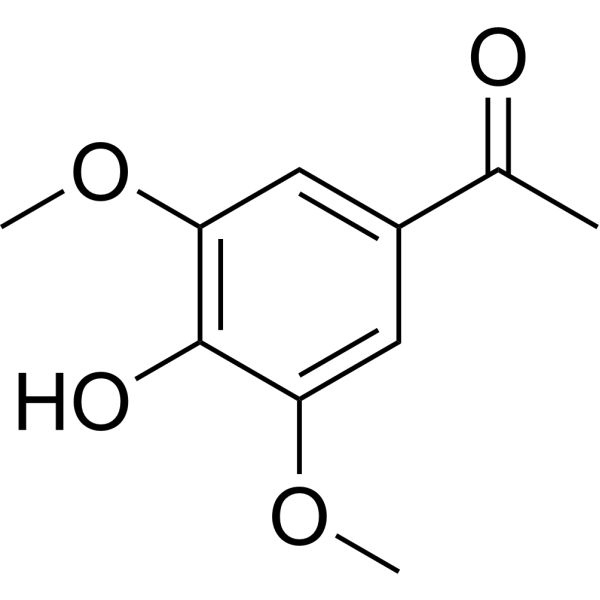
Acetosyringone
 0 Images
Acetosyringone is a phenolic compound from wounded plant cells, enables virA gene which encodes a membrane-bound kinase to phosphorylate itself and activate the virG gene product, which stimulates the transcription of other vir genes and itself. Acetosyringone enhances efficient Dunaliella transformation of Agrobacterium strains.
-
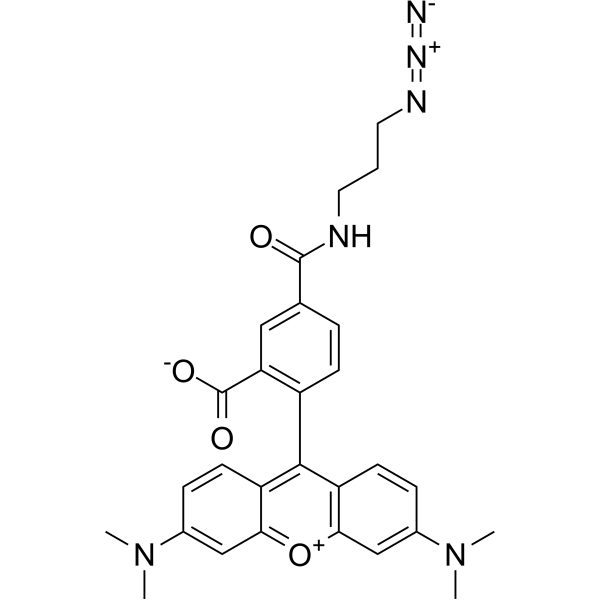
TAMRA azide, 5-isomer
 0 Images
TAMRA azide, 5-isomer is a click chemical containing azide groups that can be used as a linker for TAMRA. The azide group of TAMRA Azide, 5-isomer enables copper-catalyzed click chemical reactions with alkynes, DBCO, and BCN. It contains an azide group and can undergo copper-catalyzed azide-alkyne cycloaddition (CuAAc) with molecules containing alkyne groups. It can also undergo ring strain-promoted alkyne-azide cycloaddition (SPAAC) with molecules containing DBCO or BCN groups (Ex/Em = 555/580 nm).
-
DSPE-PEG2000-Mal ammonium
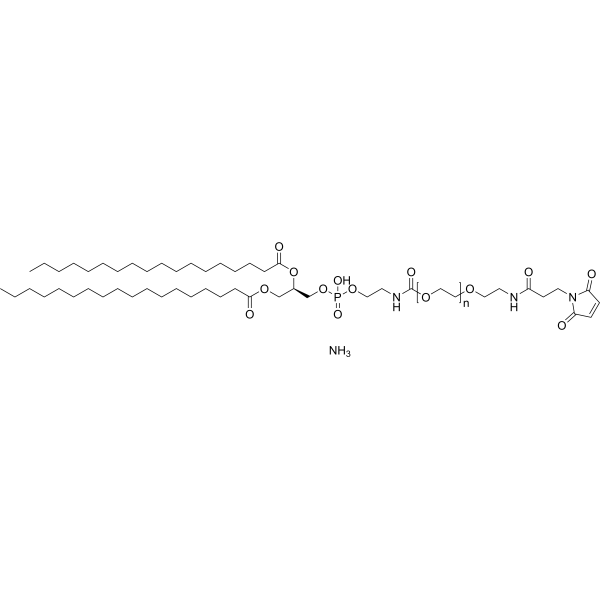 0 ImagesSynonyms: DSPE-PEG2000 Maleimide ammonium; 1,2-Distearoyl-sn-glycero-3-phosphoethanolamine-N-[maleimide(polyethylene glycol)-2000] ammonium
DSPE-PEG-Maleimide has DSPE phospholipid and maleimide to prepare nanostructured lipid carrier. DSPE-PEG-Maleimide extends blood circulation time and higher stability for encapsulated agents.
-
D-Sorbitol
 0 Images
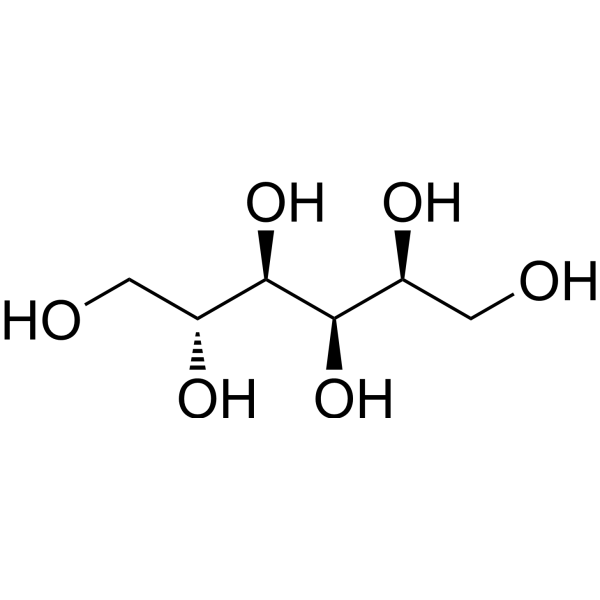
D-Sorbitol (Sorbitol) is a six-carbon sugar alcohol and can used as a sugar substitute. D-Sorbitol can be used as a stabilizing excipient and/or isotonicity agent, sweetener, humectant, thickener and dietary supplement.
-
Methoxy-PMS
 0 ImagesSynonyms: 1-Methoxy PMS; 1-Methoxyphenazine methosulfate
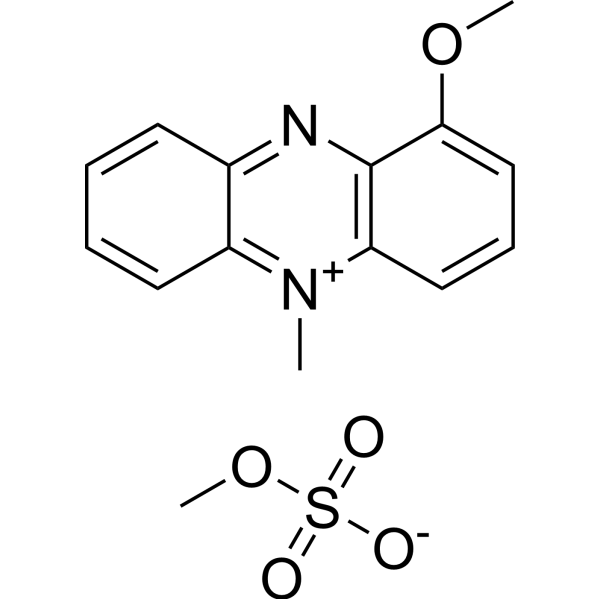
Methoxy-PMS (1-Methoxy PMS), an active oxygen formation inducer, is stable electron-transport mediator between NAD(P)H and tetrazolium dyes.
-
XTT sodium
 0 Images
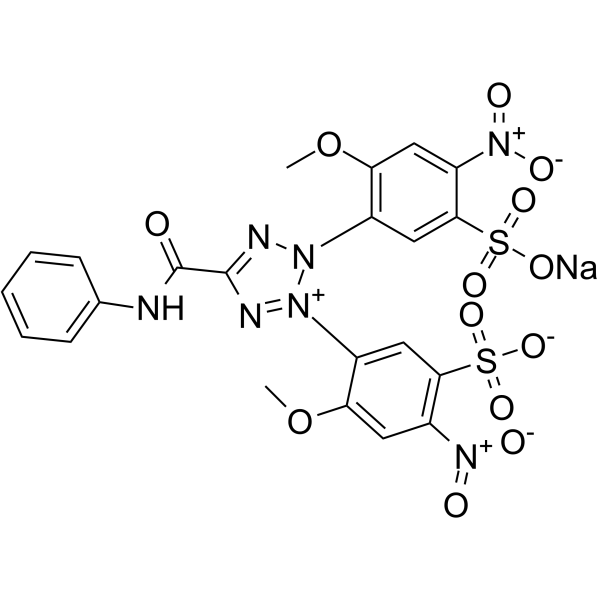
XTT (sodium) is used to assess cell viability as a function of redox potential. Actively respiring cells convert the water-soluble XTT to a water-soluble, orange colored formazan product.
-
Dextran T70 (MW 70,000)
 0 ImagesCat. No.: HY-112624BCAS No.: 9004-54-0Synonyms: Dextran 70; Dextran D70; Dextran T70(MW 64000-76000)
Dextran 70,000 is a high molecular weight polysaccharide formed by glucose linked by α-(1→6) glycosidic bonds. Dextran 70,000 can expand blood volume through colloidal osmotic pressure effect and inhibit cell adhesion and platelet aggregation through steric hindrance. At the same time, Dextran 70,000 can be used as a drug carrier to achieve targeted delivery through endocytosis. Dextran 70,000 is biologically inert and has low immunogenicity. It can be used for clinical blood volume expansion, anti-thrombotic research, and evaluation of vascular permeability in in vitro experiments. It can also be combined with fluorescent dyes for cell tracking and drug delivery research. The Dextran series of compounds are also natural polysaccharide drug carriers that can be connected to drugs through covalent bonding methods such as ester bonds, amide bonds or click chemistry, or self-assembled to form carriers such as nanoparticles and hydrogels. Dextran is biodegradable and biocompatible, and can achieve targeted delivery and controlled release of drugs. Dextran derivatives can prolong the half-life of drugs, increase local concentrations, and reduce the activity of immune clearance.
-
Alkyne-phenol
 0 ImagesSynonyms: Alkyne tyramide; Alk-Ph
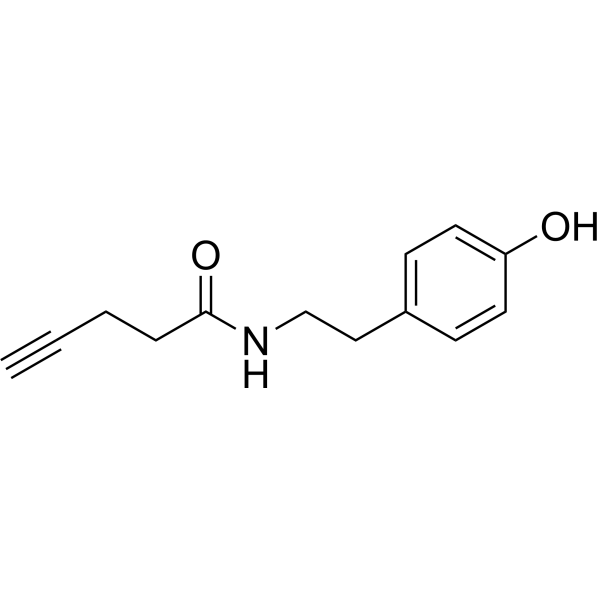
Alkyne-phenol (Alk-Ph) is a clickable ascorbate peroxidase 2 (APEX2) probe. Alkyne-phenol substantially improves APEX-labeling efficiency in intact yeast cells, as it is more cell wall-permeant than APEX2 substrate biotin-phenol (BP). Alkyne-phenol also facilitates the identification of APEX-labeling sites, allowing the unambiguous assignment of membrane topology of mitochondrial proteins. Alkyne-phenol is a click chemistry reagent, it contains an Alkyne group and can undergo copper-catalyzed azide-alkyne cycloaddition (CuAAc) with molecules containing Azide groups.
-
Xantphos
 0 ImagesSynonyms: 9,9-Dimethyl-4,5-bis(diphenylphosphino)xanthene
Xantphos (9,9-Dimethyl-4,5-bis(diphenylphosphino)xanthene) is a bisphosphine ligand. Xantphos coordinates to metals in either cis or trans chelation mode. Xantphos acts as a key ligand in palladium or platinum catalyzed reactions. Xantphos can be used in the construction of heterocyclic compounds in organic synthesis.
-
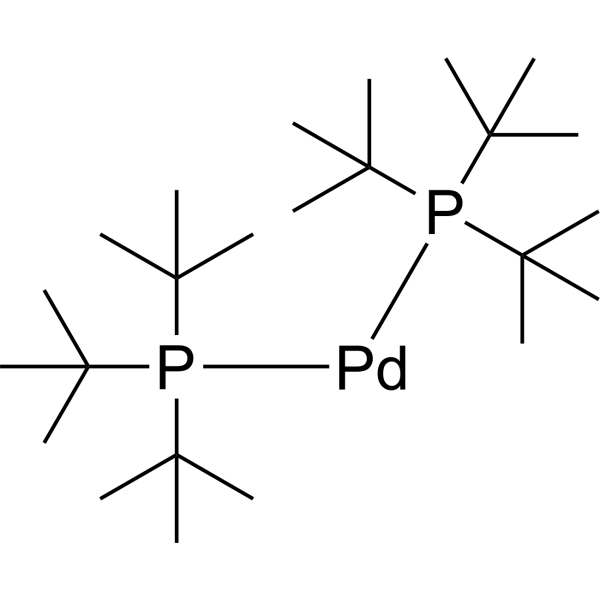
Bis(tri-tert-butylphosphine)palladium(0)
 0 Images
Bis(tri-tert-butylphosphine)palladium(0) is a biochemical reagent that can be used as a biological material or organic compound for life science related research.
-
Acetobromo-α-D-glucuronic acid methyl ester, 98%
 0 ImagesSynonyms: Acetobromo-alpha-D-glucuronic acid methyl ester, 98%
Acetobromo-α-D-glucuronic acid methyl ester, 98% is a glucuronosyl donor. Acetobromo-α-D-glucuronic acid methyl ester, 98% is applicable to the synthesis of other compounds.
-
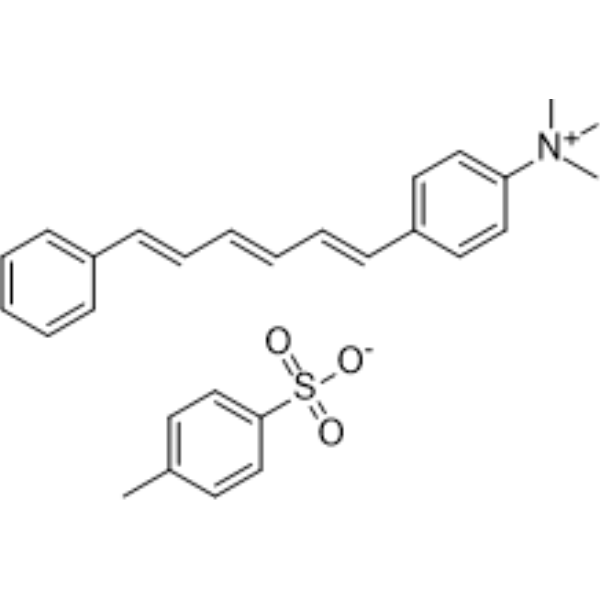
TMA-DPH
 0 Images
TMA-DPH is a hydrophobic fluorescent membrane probe (Ex=355 nm; Em=430 nm). TMA-DPH is able to anchor on the cell surface and localize to different regions of the phospholipid bilayer. By analyzing the fluorescence polarization values of TMA-DPH in the plasma membrane and membrane substructures, the fluidity of the cell membrane can be determined.
-
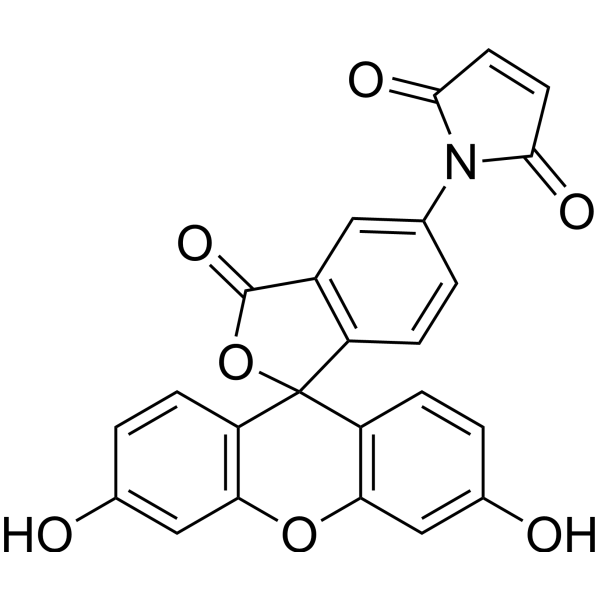
Fluorescein-5-maleimide
 0 ImagesSynonyms: N-(5-Fluoresceinyl)maleimide
Fluorescein-5-maleimide (N-(5-Fluoresceinyl)maleimide) is a fluorescent dye. Fluorescein-5-maleimide can be used to detect the redox state of thiols in eukaryotic cells. Fluorescein-5-maleimide can label peptides and is used to detect negatively charged nanoparticles. Fluorescein-5-maleimide can also label actin to explore its interaction with cardiac myosin-binding protein C (cMyBP-C), which helps in developing small molecule modulators for heart failure. Fluorescein-5-maleimide can screen mutant proteins that contain cysteine residues. The excitation wavelength of Fluorescein-5-maleimide is 494 nm, and the emission wavelength is 519 nm.
-
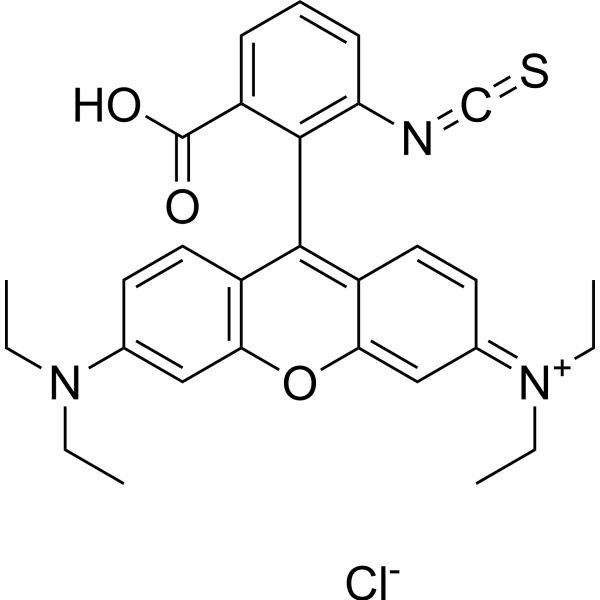
Rhodamine B isothiocyanate
 0 ImagesCat. No.: HY-112697CAS No.: 36877-69-7
Rhodamine B isothiocyanate (RBITC) is a fluorescent dye commonly used in biological imaging and labeling applications. It has an isothiocyanate functional group that can be covalently attached to amino groups on proteins and other biomolecules, making it useful for fluorescent labeling of cells and tissues. RBITC fluoresces bright orange-red under green light excitation, which makes it easy to detect and track labeled molecules in complex samples. Due to its stability and sensitivity, RBITC has been widely used in various research fields, including cell biology, immunology, and neurobiology.
-
Acridine Orange 10-Nonyl Bromide
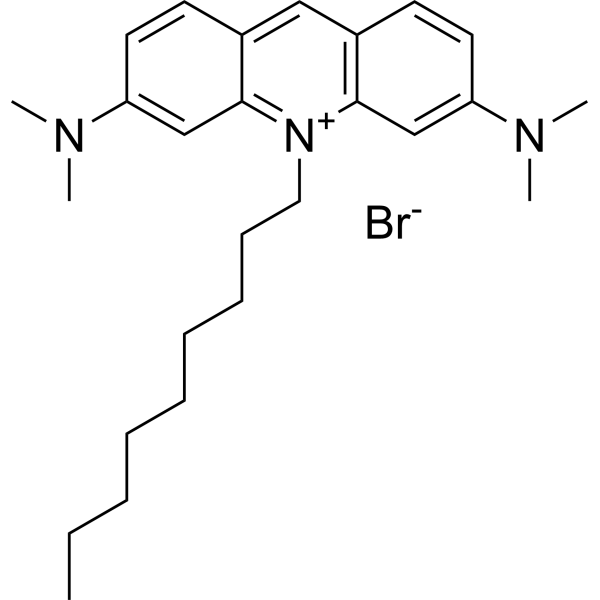 0 ImagesSynonyms: Nonylacridine orange
Acridine Orange 10-Nonyl Bromide is a fluorescent probe for cardiolipin (λex: 489 nm, λem: 525 nm).
-
Phosphoribosyl pyrophosphate pentasodium
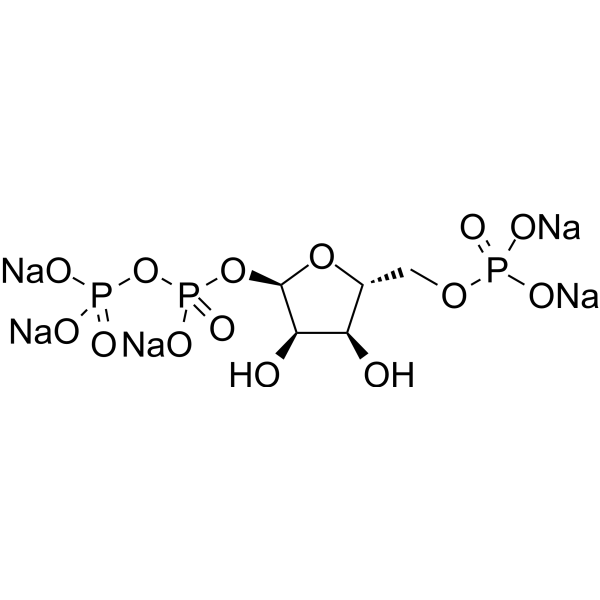 0 ImagesSynonyms: PRPP pentasodium
Phosphoribosyl pyrophosphate (PRPP) pentasodium is an important metabolite required in the biosynthesis of purine and pyrimidine nucleotides, the amino acids histidine and tryptophan, and the cofactors NAD and NADP.
-
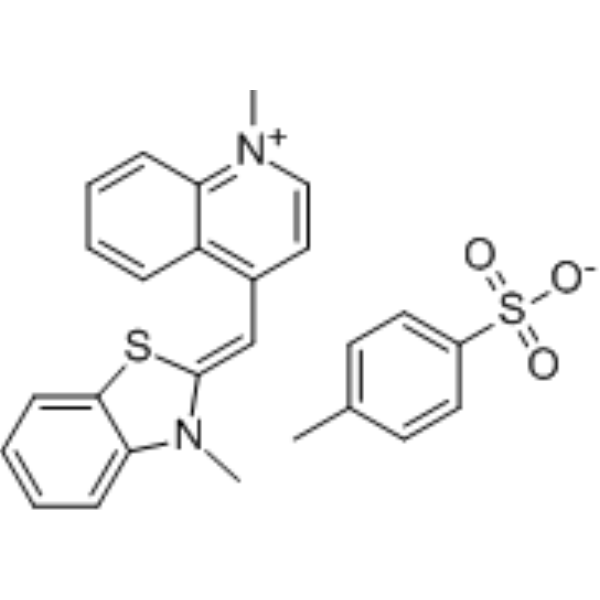
Thiazole Orange
 0 Images
Thiazole Orange is an asymmetric anthocyanin dye that can be coupled with oligonucleotides (ONs) to prepare fluorescent hybridization probes. Thiazole Orange has been widely used in biomolecular detection and staining of DNA/ RNA in gels and can be used for reticulocyte analysis. Thiazole orange generates a significant fluorescence enhancement and high quantum yield when it binds with nucleic acids, especially RNA. Thiazole orange can permeate living cell membranes. Thiazole orange can use UV light for detection, but can also be detected with blue light. The excitation and emission of Thiazole orange are λex = 510 nm (488 nm and 470 nm also show strong excitation) and λem = 527 nm, respectively.
-
Gold(III) chloride trihydrate
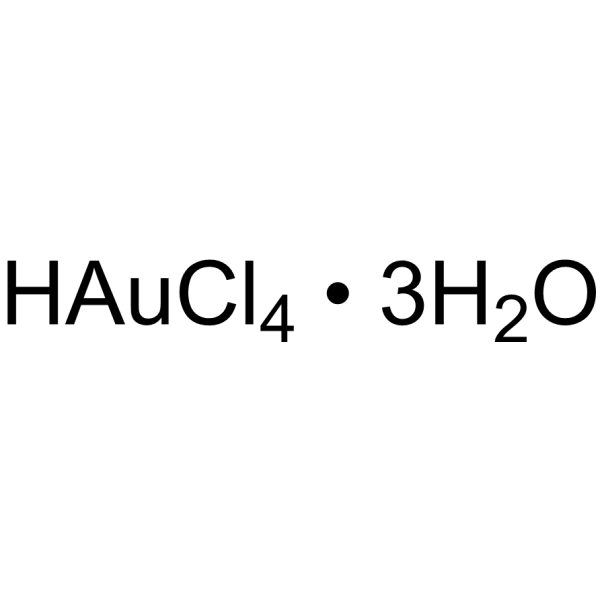 0 ImagesSynonyms: Chloroauric acid trihydrate
Gold (III) chloride trihydrate is a reducing agent. Gold (III) chromium trihydrate can be used for chemical synthesis of gold nanoparticles (NP) and spirochromene derivatives.