Others
-
Others Related Products (76625)
Related Products (76625)

-
Dextran T500 (MW 500,000)
 0 ImagesCat. No.: HY-112624PCAS No.: 9004-54-0Synonyms: Dextran 500; Dextran D500; Dextran T500(MW 440000-560000)
Dextran T500 MW 500,000 (Dextran 500; Dextran D500; Dextran T500 MW 440000-560000) is a polymer of anhydroglucose with the average molecular weight of 500,000. Dextran T500 MW 500,000 exhibits good biodegradability and good biocompatibility, that is utilized in food, pharmaceutics, cosmetics, and research area.
-
Disuccinimidyl sulfoxide
 0 ImagesSynonyms: DSSO
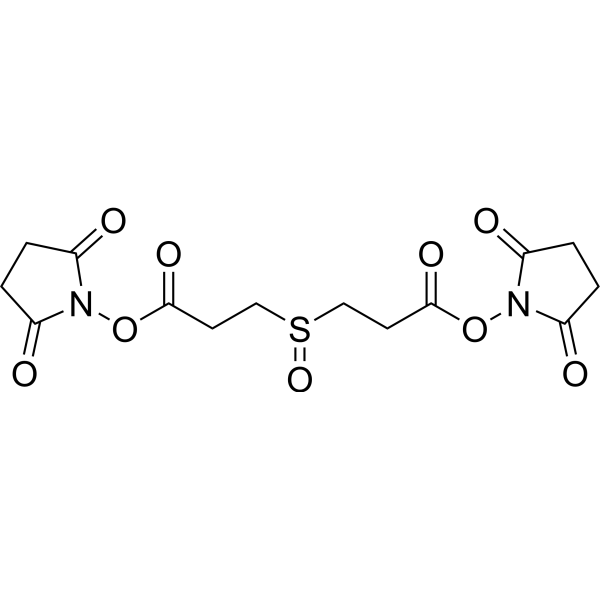
Disuccinimidyl sulfoxide (DSSO) is a sulfoxide-containing crosslinker targeting amino groups that can be cleaved by MS, and it is suitable for model peptides, proteins, and multisubunit protein complexes. Disuccinimidyl sulfoxide contains two symmetric collision-induced dissociation (CID)-cleavable sites, enabling the identification of DSSO-crosslinked peptides based on different fragmentation patterns.
-
Calcium chloride dihydrate, for cell culture, 99%
 0 Images
Calcium chloride dihydrate, for cell culture, 99% is a biochemical reagent. Calcium chloride dihydrate, for cell culture, 99% enhances the dentinogenic differentiation potential of WMTA on cells. Calcium chloride dihydrate, for cell culture, 99% can be used as a biological material or organic compound for life science related research[2.
-
1,2-Dioleoyl-sn-glycero-3-phospho-L-serine sodium
 0 ImagesSynonyms: DOPS-NA
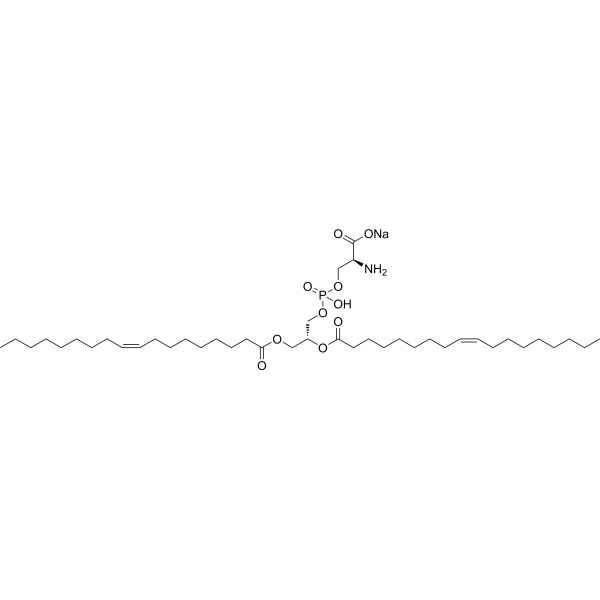
1,2-Dioleoyl-sn-glycero-3-phospho-L-serine sodium (DOPS-NA) is a ubstitute for Phosphoserine/phosphatidylserine. 1,2-Dioleoyl-sn-glycero-3-phospho-L-serine sodium can be used together with DOPC and DOPE in lipid mixtures for the synthesis of liposomes. 1,2-Dioleoyl-sn-glycero-3-phospho-L-serine sodium can self-assemble into single-layer or double-layer membrane structures, similar to cell membranes, and possesses high membrane fluidity and flexibility. 1,2-Dioleoyl-sn-glycero-3-phospho-L-serine is widely applied in membrane biology, cell membrane research, lipid preparation, and drug delivery systems.
-
MASM7
 0 Images
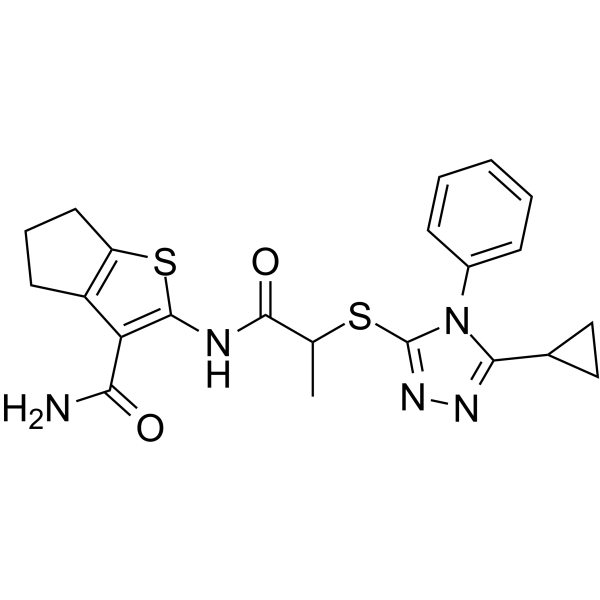
MASM7 is a mitofusin activator, and can achieve mitochondrial fusion via mitofusins. MASM7 can increase Mito AR with an EC50 value of 75 nM in MEFs in concentration-responsively, and can promote mitochondrial fusion by directly activating MFN2 or MFN. MASM7 also demonstrates direct binding to the HR2 domain of MFN2 with Kd value of 1.1 μM.
-
Riboflavin phosphate sodium
 0 ImagesSynonyms: Riboflavine phosphate sodium; Riboflavin 5'-phosphate sodium; Riboflavine 5'-phosphate sodium
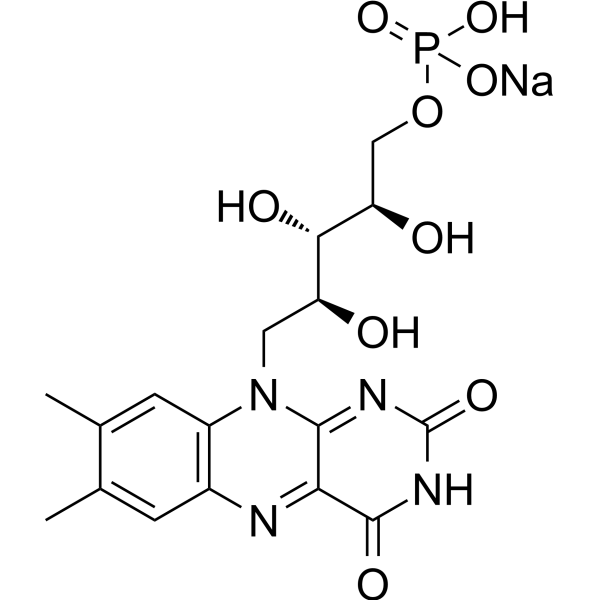
Riboflavin phosphate sodium (FMN-Na) is a derivative of Riboflavin (vitamin B2) which is an essential nutrient for animals. Riboflavin phosphate sodium can be used for the research of progressive keratoconus, corneal ectasia and irregular astigmatism. Riboflavine phosphate sodium is a very effective NAD+-recycling agent.
-
Dansylcadaverine
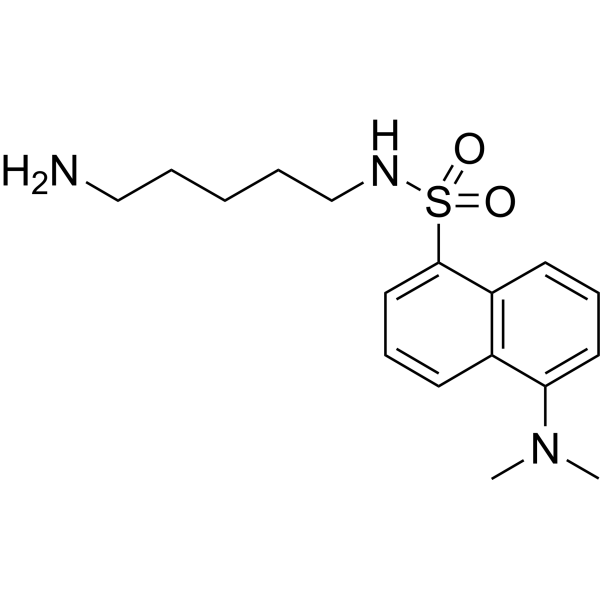 0 ImagesSynonyms: Monodansyl cadaverine
Dansylcadaverine (Monodansyl cadaverine) is an autofluorescent compound used for the labeling of autophagic vacuoles. Dansylcadaverine, a high affinity substrate of transglutaminases, can block the receptor-mediated endocytosis of many ligands.
-
1,2-Dioleoyl-sn-glycero-3-phosphate sodium salt
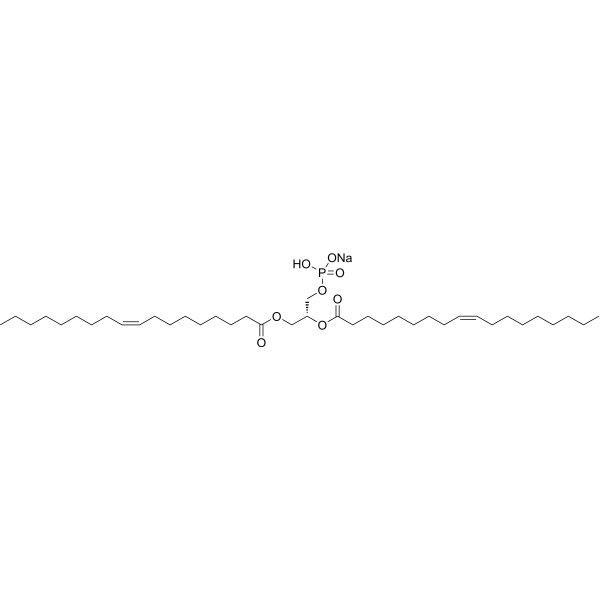 0 Images
1,2-Dioleoyl-sn-glycero-3-phosphate sodium salt (18:1 PA sodium salt) is an anionic lipid that can be used to prepare liposomes, micelles and artificial membranes.
-
tert-Butyl 3,9-diazaspiro[5.5]undecane-3-carboxylate
![tert-Butyl 3,9-diazaspiro[5.5]undecane-3-carboxylate](https://file.medchemexpress.com/product_pic/hy-30536.gif "Click to View tert-Butyl 3,9-diazaspiro[5.5]undecane-3-carboxylate Product Detail") 0 Images
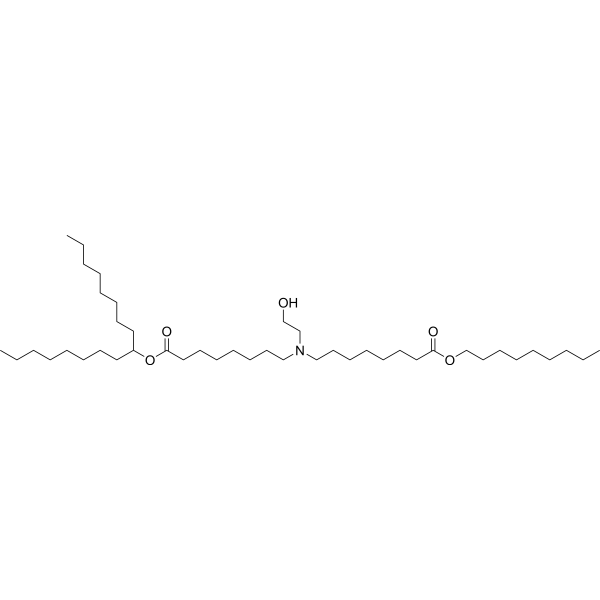
0 Imagestert-Butyl 3,9-diazaspiroundecane-3-carboxylate is a 3,9-diazaspiroundecane-based building block and precursor for synthesizing γ-aminobutyric acid type A (GABAA) receptor antagonists.
-
Ninhydrin
 0 Images
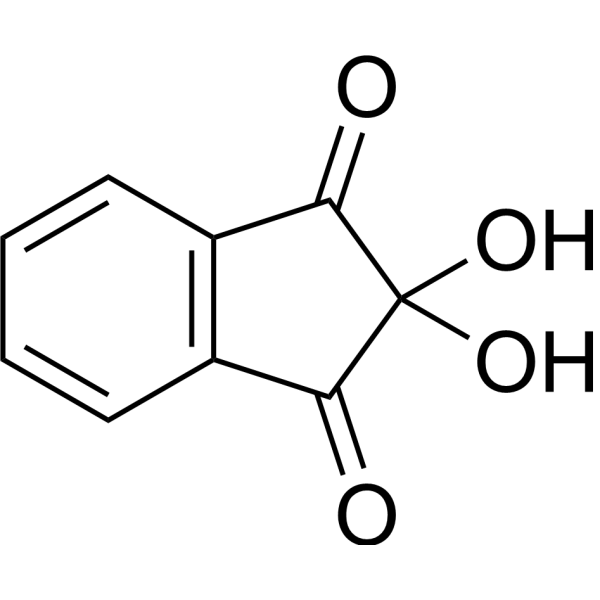
Ninhydrin can be used as a chromogenic analytical probe for the quantification of amino acids and proteins.
-
ER-Tracker Green
 0 Images
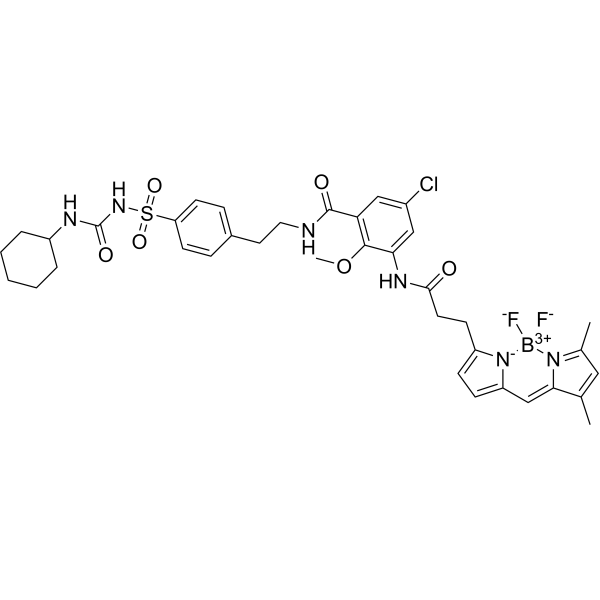
ER-Tracker dye is a derivative of BODIPY series dyes coupled with Glibenclamide (HY-15206), highly selective binding to the endoplasmic reticulum, non-toxic to cells at low concentrations, this type of dye is an environmentally sensitive probe, and formaldehyde treatment can still retain part of the fluorescence, with high fluorescence life, good extinction coefficient and other characteristics. Glibenclamide is an atp-dependent K+ channel blocker (Kir6, KATP) and CFTR Cl-channel blocker that binds in the endoplasmic reticulum. ER-Tracker is not suitable for staining cells after fixation.
-
2′,7′-Dichlorofluorescein diacetate
 0 Images
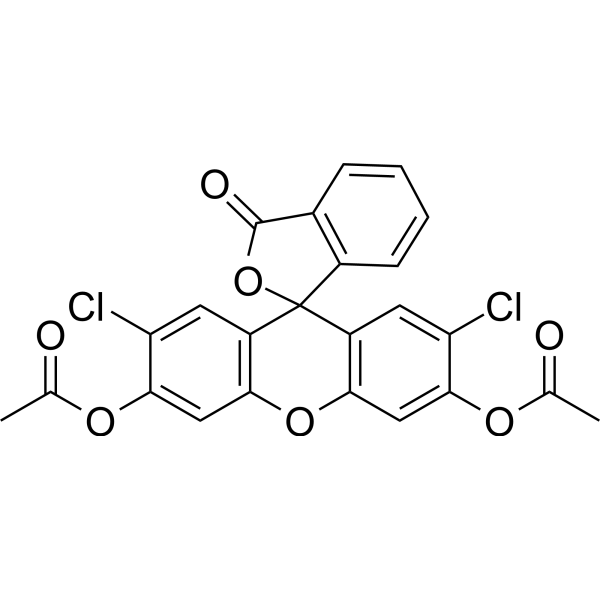
2′,7′-Dichlorofluorescein diacetate (DCFH2-DA) is a cell-permeable fluorescent probe. 2′,7′-Dichlorofluorescein diacetate can be used to detect the generation of reactive oxygen intermediates and for assessing the overall oxidative stress in toxicological phenomenon.
-
Coumarin 6
 0 Images
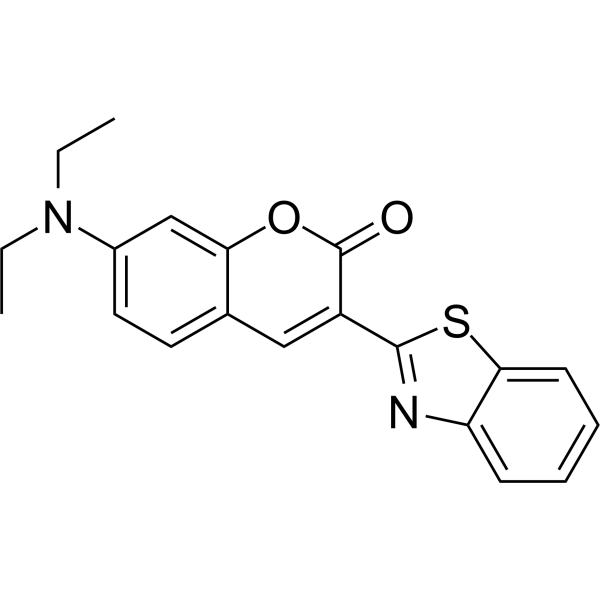
Coumarin 6, a fluorescent dye, is used as a fluorescent probe in a microparticle drug delivery system to conduct in vivo tracking, cell uptake, and transport mechanism studies of drug delivery systems (λexc=450 nm, λem=505 nm).
-
Silver trifluoromethanesulfonate
 0 ImagesSynonyms: Triflic acid silver; Perfluoromethanesulfonic acid silver; Fluorad FC 24 silver
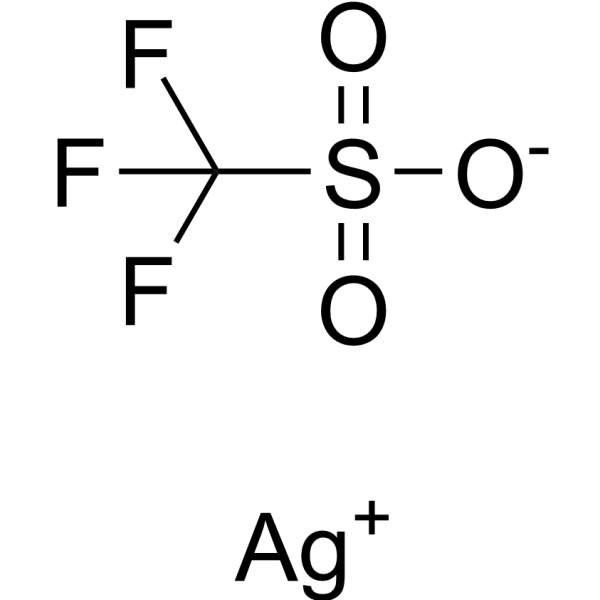
Silver trifluoromethanesulfonate, a perfluoroalkanesulfonic acid, is one of the superior catalysts for C- or O-acylation. Silver trifluoromethanesulfonate is widely used as a cationic catalyst in promoting Friedel-Crafts reactions and esterification reactions.
-
Tin(II) chloride, 98%
 0 ImagesSynonyms: Stannous chloride, 98%; Tin(II) chloride, anhydrous, 98%; Anhydrous stannous chloride, 98%
Tin(II) chloride, 98% (Stannous chloride) is a biochemical reagent with genotoxicity, mutagenicity, mitotic recombinogenicity, and reactive oxygen species-inducing activity.
-
Holo-Bovine Transferrin
 0 Images
Holo-Bovine Transferrin, a blood-plasma glycoprotein, is a target ligand for transferrin receptor. Holo-Bovine Transferrin can bind to and mediate the transport of iron.
-
Tyramide Amplification Buffer
 0 ImagesCat. No.: HY-D1840
Tyramide Amplification Buffer is a ready-to-use buffer primarily intended for immunostaining of cells and tissues by the technique of tyramide signal amplification (TSA). Tyramide Amplification Buffer enables the reaction between tyramide-labeled antibodies and fluorescently labeled tyramide substitutes (tyramide) using peroxidase, resulting in a highly amplified fluorescent signal. Tyramide Amplification Buffer can be used for signal enhancement in detection methods such as immunofluorescence (IF), immunohistochemistry (IHC), or in situ hybridization (FISH).