



AMPK Activator
-
Lithospermic acid (Standard)
 0 ImagesSynonyms: (+)-Lithospermic acid (Standard)
Lithospermic acid (Standard) is the analytical standard of Lithospermic acid. This product is intended for research and analytical applications. Lithospermic acid ((+)-Lithospermic acid) is a plant-derived polycyclic phenolic carboxylic acid isolated from Salvia miltiorrhiza, and has the anti-oxidative and hepatoprotective activity on carbon tetrachloride (CCl4)-induced acute liver damage in vitro and in vivo.
-
Etilefrine (Standard)
 0 Images
Etilefrine (Standard) is the analytical standard of Etilefrine. This product is intended for research and analytical applications. Etilefrine is a sympathetic nerve agonist and AMPK activator that selectively targets α1/β1 adrenergic receptors. Etilefrine stimulates α1 adrenergic receptors, leading to contraction of vascular smooth muscle and increased peripheral resistance. Etilefrine also stimulates β1 receptors to enhance myocardial contractility and increase heart rate, thereby increasing blood pressure and improving cardiac output. Etilefrine also bidirectionally regulates the AMPK/Akt pathway and modulates the phosphorylation levels. Etilefrine can be used in cardiovascular research, such as postural hypotension, chylothorax, and improving low cardiac output.
-
Jervine hydriodide
 0 ImagesCat. No.: HY-N0836ACAS No.: 60326-37-6Synonyms: 11-Ketocyclopamine hydriodide
Jervine hydriodide (11-Ketocyclopamine hydriodide) is an orally active steroidal alkaloid and Hedgehog signaling pathway inhibitor. Jervine hydriodide can be isolated from Veratrum californicum. Jervine hydriodide regulates Wnt, inhibits the AKT/mTOR signaling pathway, and activates the AMPK signaling pathway. Jervine hydriodide induces DNA damage, Apoptosis, Autophagy, ROS production and Mitochondrial damage. Jervine hydriodide exhibits anti-cancer and anti-inflammatory activities. Jervine hydriodide reduces tumor growth rate and weight in xenograft models. Jervine hydriodide can be used in studies related to triple-negative breast cancer, nasopharyngeal carcinoma and non-small cell lung cancer.
-
Ethyl (E)-ferulate
 0 ImagesCat. No.: HY-W590845CAS No.: 28028-62-8
Ethyl (E)-ferulate is an AMPK/Nrf2 signaling pathway activator that can reduce lipopolysaccharide (HY-D1056)-induced acute lung injury. Additionally, Ethyl (E)-ferulate exhibits free radical scavenging properties, providing anti-inflammatory, antioxidant, neuroprotective, and sunscreen effects. Ethyl (E)-ferulate holds promise for research in the fields of inflammation and neurodegenerative diseases.
-
Flufenamic acid (Standard)
 0 Images
Flufenamic acid (Standard) is the analytical standard of Flufenamic acid. This product is intended for research and analytical applications. Flufenamic acid is a non-steroidal anti-inflammatory agent, inhibits cyclooxygenase (COX), activates AMPK, and also modulates ion channels, blocking chloride channels and L-type Ca2+ channels, modulating non-selective cation channels (NSC), activating K+ channels. Flufenamic acid binds to the central pocket of TEAD2 YBD and inhibits both TEAD function and TEAD-YAP-dependent processes, such as cell migration and proliferation.
-
Cinnamyl Alcohol-d5
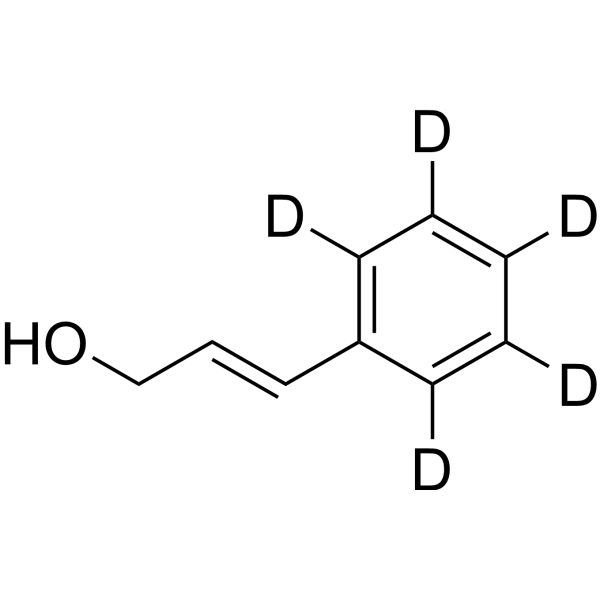 0 ImagesCat. No.: HY-Y0078SCAS No.: 1044940-87-5
-
Foenumoside B
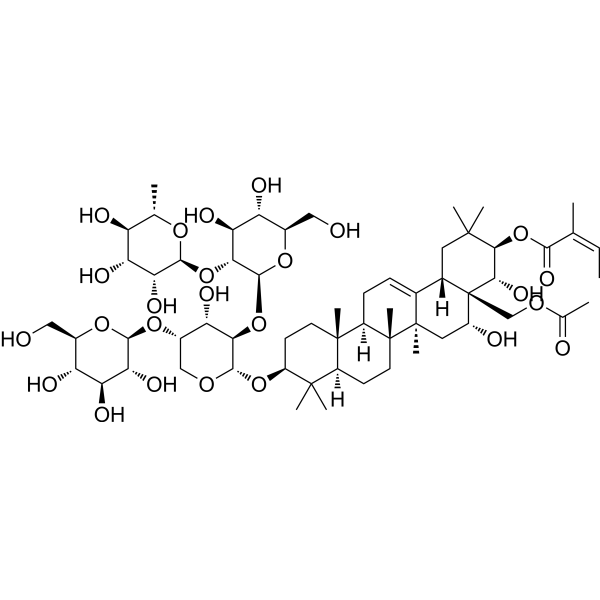 0 ImagesCat. No.: HY-N11924CAS No.: 877661-00-2
Foenumoside B is a triterpene saponin isolated from Lysimachia foenum-graecum. Foenumoside B activates AMPK signaling, inhibits PPARγ-induced adipogenesis, and shifts lipid metabolism toward lipolysis. Foenumoside B can be used in the study of obesity and obesity-related metabolic diseases.
-
EGFR-IN-146
 0 ImagesCat. No.: HY-169566CAS No.: 166039-38-9
-
Pinusolide
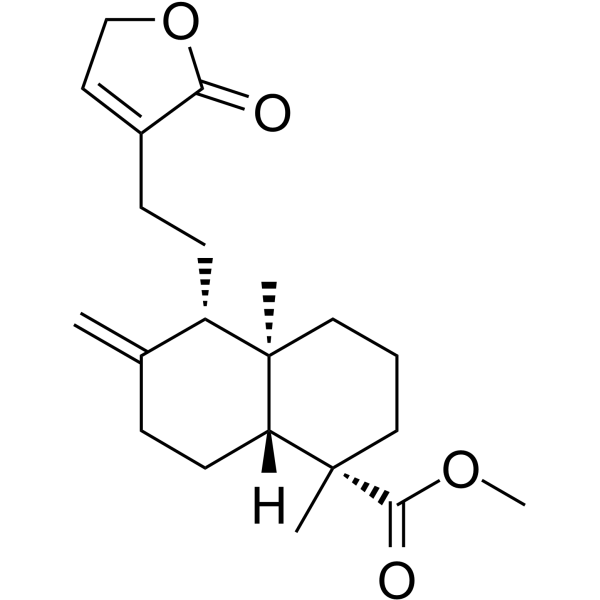 0 Images
Pinusolide is an AMPK activator and PAF receptor antagonist. Pinusolide activates AMPK, phosphorylates ACC, enhances IRS-1 tyrosine phosphorylation, boosts glucose uptake, and modulates insulin signaling. Pinusolide inhibits caspase-3/7 activation, intracellular calcium elevation, reactive oxygen species overproduction, lipid peroxidation, and tumor cell proliferation. Pinusolide stabilizes superoxide dismutase activity, reduces apoptotic hallmarks, induces mitochondrial pathway apoptosis, and triggers DNA fragmentation. Pinusolide can be used for the research of type 2 diabetes, neurodegenerative diseases, acute lymphoblastic leukemia, acute myeloid leukemia, and Burkitt lymphoma.
-
Buformin hydrochloride (Standard)
 0 ImagesCat. No.: HY-B2099ARCAS No.: 1190-53-0Synonyms: 1-Butylbiguanide hydrochloride (Standard)
Buformin (hydrochloride) (Standard) is the analytical standard of Buformin (hydrochloride). This product is intended for research and analytical applications. Buformin hydrochloride (1-Butylbiguanide hydrochloride), a potent AMPK activator, acts as an orally active biguanide antidiabetic agent. Buformin hydrochloride decreases hepatic gluconeogenesis and lowers blood glucose production in vivo. Buformin hydrochloride also has anti-cancer activities and is applied in cancer study (such as, cervical cancer and breast cancer, et al).
-
RSVA405 (Standard)
 0 ImagesCat. No.: HY-103238RCAS No.: 140405-36-3
RSVA405 (Standard) is the analytical standard of RSVA405 (HY-103238). This product is intended for research and analytical applications. RSVA405 is a potent, orally active activator of AMPK, with an EC50 of 1 μM. RSVA405 facilitates CaMKKβ-dependent activation of AMPK, inhibits mTOR, and promotes autophagy to increase Aβ degradation. RSVA405 has anti-inflammatory effects through the inhibition of STAT3 function. RSVA405 can also be used for the research of obesity.
-
Cimiracemoside C (Standard)
 0 ImagesCat. No.: HY-N6971RCAS No.: 256925-92-5Synonyms: Cimicifugoside M (Standard)
Cimiracemoside C (Standard) is the analytical standard of Cimiracemoside C. This product is intended for research and analytical applications. Cimiracemoside C is an active component of Cimicifuga racemosa, activates AMPK, has the potential activity against diabetes.
-
Gamma-glutamylcysteine ammonium
 0 ImagesCat. No.: HY-113402BSynonyms: γ-Glu-Cys ammonium
Gamma-glutamylcysteine ammonium (γ-Glu-Cys ammonium) is an orally active, blood-brain barrier permeable dipeptide. Gamma-glutamylcysteine ammonium activates AMPK, SIRT1, IL-4/STAT6, AC/cAMP/PI3K, IGF-1R/IRS1/PI3K, and Nrf2 signaling pathways; it inhibits NF-κB, JAK1/STAT1/3, MAPKs, cadmium-induced p38 MAPK, JNK, and PI3K/Akt signaling pathways. Gamma-glutamylcysteine ammonium regulates macrophage polarization, modulates the trafficking of CD36 and GLUT4, induces glutathione synthesis, improves metabolic dysfunction, reduces lipid deposition, ameliorates glucose homeostasis, inhibits apoptosis (Apoptosis), stabilizes mitochondria, suppresses lipid peroxidation, iron accumulation and ferroptosis (Ferroptosis), reduces ds-HMGB1 levels, reverses mechanical hyperalgesia, and alleviates hepatic lipid droplet formation. Gamma-glutamylcysteine ammonium is applicable to research related to inflammatory bowel disease, type 2 diabetes, cadmium-induced neurotoxicity, Alzheimer's disease, cerebral ischemia/reperfusion injury, neuropathy, and alcoholic liver disease.
-
PF-06409577 (Standard)
 0 Images
PF-06409577 (Standard) is the analytical standard of PF-06409577. This product is intended for research and analytical applications. PF-06409577 is a potent and selective allosteric activator of AMPK α1β1γ1 isoform with an EC50 of 7 nM.
-
Androsin (Standard)
 0 Images
Androsin (Standard) is the analytical standard of Androsin. This product is intended for research and analytical applications. Androsin is an active compound isolated from Picrorhiza Kurroa Royle ex Benth. Androsin activates AMPKα/PI3K/Beclin1/LC3 signaling pathway, inhibits SREBP1c/FASN signaling pathway. Androsin can be used in research of asthma and non-alcoholic fatty liver disease (NAFLD). Androsin is orally active.
-
Dipentyl phthalate (Standard)
 0 Images
Dipentyl phthalate (Standard) is the analytical standard of Dipentyl phthalate. This product is intended for research and analytical applications. Dipentyl phthalate is an endocrine-disrupting phthalate plasticizer. Dipentyl phthalate increases AMPK phosphorylation and decreases AKT1 phosphorylation and SIRT1 levels. Dipentyl phthalate reduces adrenocorticotropic hormone levels. Dipentyl phthalate is a testicular toxicant.
-
Phenformin (Standard)
 0 Images
Phenformin (Phenethylbiguanide) (Standard) is the analytical standard of Phenformin (HY-16397). This product is intended for research and analytical applications. Phenformin (Phenethylbiguanide) is an orally active biguanide hypoglycemic agent. Phenformin inhibits mitochondrial respiratory chain complex I, leading to an increased AMP/ATP ratio, activation of AMPK, and subsequent inhibition of the mTOR pathway, thereby suppressing cell proliferation, inducing apoptosis and autophagy. Phenformin inhibits cancer stem cells (CSCs) and possesses potent antitumor potential.
-
MK-3903 (Standard)
 0 ImagesCat. No.: HY-107988RCAS No.: 1219737-12-8
-
Acanthoic acid
 0 ImagesCat. No.: HY-116136CAS No.: 119290-87-8Synonyms: NP1302
Acanthoic acid (NP1302) is an orally active pimarane-type diterpenoid. Acanthoic acid is isolated from the root bark of Araliaceae family plant Eleutherococcus senticosus (Siberian ginseng). Acanthoic acid activates LXR and FXR. Acanthoic acid activates the AMPK-LKB1, SIRT1, and p38 MAPK signaling pathways and increases the phosphorylation level of ACC. Acanthoic acid downregulates the expression of SREBP-1, CYP2E1, HIF-1α, and PPARγ, and upregulates the expression of PPARα. Acanthoic acid induces Apoptosis by activating Caspase-3, promoting PARP cleavage, and downregulating Bcl-xL. Acanthoic acid exhibits antioxidant, anti-fibrotic, and hepatoprotective effects. It reduces lipid accumulation and lipogenesis. Acanthoic acid is used in studies on non-alcoholic fatty liver disease, alcoholic liver disease, acute promyelocytic leukemia, and Acetaminophen-induced hepatotoxicity.
-
Petasin
 0 ImagesCat. No.: HY-N10612CAS No.: 26577-85-5
Petasin is an orally active, potent inhibitor of mitochondrial electron transport chain complex I (ETCC1) with an IC50 of 3.55 μM. Petasin functionally activates AMPK by inhibiting mitochondrial respiration and increasing the intracellular AMP/ATP ratio. Petasin inhibits leukotriene production and eosinophil effector responses, as well as tumor cell proliferation, migration, invasion, and in vivo tumor growth and metastasis. Petasin is also a natural sesquiterpene ester that can be found in plants of the Petasites genus, such as Petasites japonicus and Petasites hybridus. Petasin can be used in studies related to cancer metabolism, glucose and lipid metabolism, and inflammation.



