



Bacterial
Anything that destroys bacteria or suppresses their growth or their ability to reproduce. Heat, chemicals such as chlorine, and antibiotic drugs all have antibacterial properties. Many antibacterial products for cleaning and handwashing are sold today. Such products do not reduce the risk for symptoms of viral infectious diseases in otherwise healthy persons. This does not preclude the potential contribution of antibacterial products to reducing symptoms of bacterial diseases in the home.
All Product Categories
-
Bacterial Inhibitors
(7553)
View all products
-
Bacterial Agonists
(3)
View all products
-
Bacterial Antagonists
(9)
View all products
-
Bacterial Activators
(25)
View all products
-
Bacterial Modulators
(27)
View all products
-
Bacterial Chemicals
(2)
View all products
-
Bacterial Inducers
(6)
View all products
-
Bacterial Controls
(14)
View all products
-
Bacterial Substrates
(2)
View all products
-
Bacterial Ligand
(1)
View all products
-
Bacterial Related Products (8893)
Related Products (8893)

-
Antibodies (14)
-
Related Compound Screening Libraries (1)
-
J-114870
 0 ImagesCat. No.: HY-105401CAS No.: 228267-11-6J-114870 is a bacterial penicillin-binding protein (PBPs) inhibitor. J-114870 is effective against methicillin-resistant Staphylococcus aureus (MRSA) and methicillin-resistant coagulase-negative staphylococci (MRCoNS). J-114870 can be used for research on bacterial infections.
-
Procaine benzylpenicillin
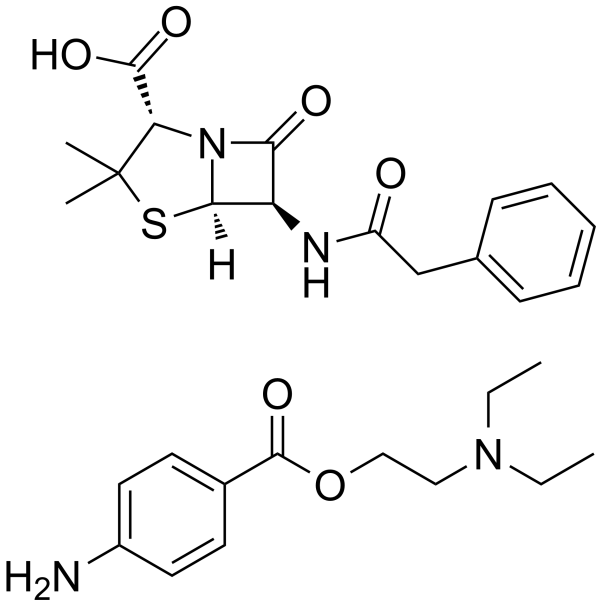 0 ImagesProcaine benzylpenicillin (Penicillin G procaine) is an antimicrobial agent. Procaine benzylpenicillin shows inhibitory activity against gram-positive bacteria and synergistic activity with Neomycin (HY-B0470). Procaine benzylpenicillin can be used in the study of bovine mastitis in animal husbandry.
-
Antistaphylococcal agent 2
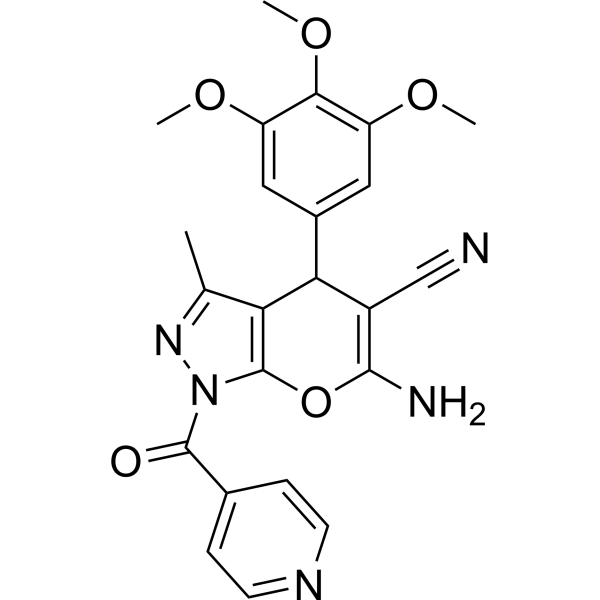 0 ImagesCat. No.: HY-139835CAS No.: 2350182-67-9Antistaphylococcal agent 2 is an antistaphylococcal therapeutic agent.
-
8-Hydroxyquinoline (Standard)
 0 Images8-Hydroxyquinoline (Standard) is the analytical standard of 8-Hydroxyquinoline. This product is intended for research and analytical applications. 8-Hydroxyquinoline (8-Quinolinol) is a lipophilic metal chelator that can be used as a fungicide .8-Hydroxyquinoline shows the MIC range of 27.56-55.11 μM (4-8 μg/mL) against the clinical isolates of Neisseria gonorrhoeae. 8-Hydroxyquinoline can bind to copper form complexes and transport copper into cells. 8-Hydroxyquinoline increases in the number of micronucleated polychromatic erythrocytes and can also make hair depigmented in mice.
-
Isobonducellin
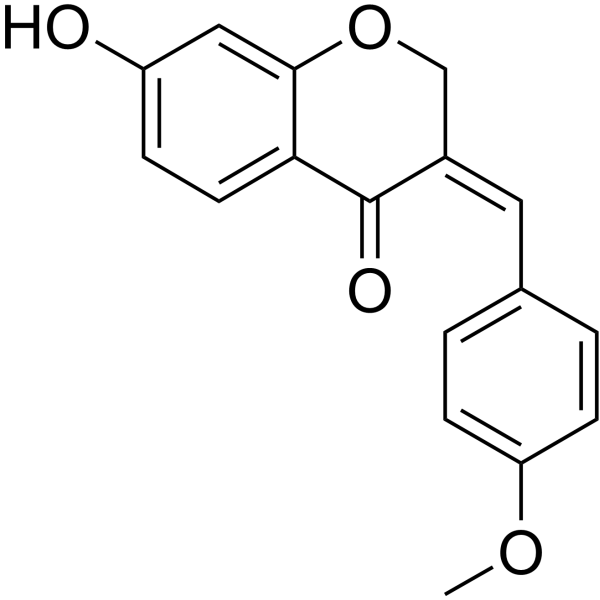 0 ImagesCat. No.: HY-N4003CAS No.: 610778-85-3Isobonducellin is a flavonoid product and shows antimicrobial activity.
-
Pigeon pea leaves extract
 0 ImagesCat. No.: HY-N20465Pigeon pea leaves extract is an extract of the leaves of the pigeon pea (Cajanus cajan (L.) Millsp) that has antibacterial, anti-inflammatory, anti-tuberculosis, antioxidant, neuroprotective, antihypertensive, antihyperglycemic and anticancer properties.
-
Psoralidin (Standard)
 0 ImagesPsoralidin (Standard) is the analytical standard of Psoralidin. This product is intended for research and analytical applications. Psoralidin is a dual inhibitor of COX-2 and 5-LOX, regulates ionizing radiation (IR)-induced pulmonary inflammation.Anti-cancer, anti-bacterial, and anti-inflammatory properties. Psoralidin significantly downregulates NOTCH1 signaling. Psoralidin also greatly induces ROS generation.
-
MsbA-IN-5
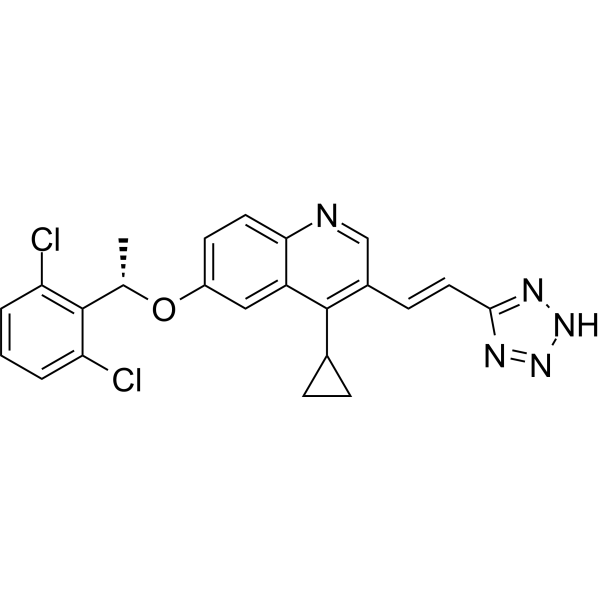 0 ImagesCat. No.: HY-144284CAS No.: 2909443-06-5MsbA-IN-5 (compound 40) is a potent and highly selective MsbA inhibitor with an IC50 value of 2 nM. MsbA-IN-5 has inhibitory activity against Escherichia coli, Klebsiella pneumoniae, and Enterobacter cloacae with MICs of 12 μM, 12 μM and 25 μM, respectively. MsbA-IN-5 can be used for researching anti-Gram-negative bacteria.
-
AFN-1252 (Standard)
 0 ImagesCat. No.: HY-16911RCAS No.: 620175-39-5Synonyms: API-1252 (Standard); Debio 1452 (Standard)Apramycin (Standard) is the analytical standard of Apramycin. This product is intended for research and analytical applications. 0
-
Antibacterial agent 290
 0 ImagesCat. No.: HY-177324CAS No.: 2163817-03-4Antibacterial agent 290 (Compound YY), a sulfonamide derivative, is an antibacterial agent. Antibacterial agent 290 has antiproliferative activity against a variety of tumor cells. Antibacterial agent 290 significantly activates the E3 Ligase Parkin auto-ubiquitinvlation with an EC50 of 0.4 μM. Antibacterial agent 290 can used for synthesis of building blocks for various supramolecular structures such as metal-organic skeletons and coordination polymers. Antibacterial agent 290 can be used for cancers, neurology disorders and infections research.
-
Lactobionic acid (Standard)
 0 ImagesLactobionic acid (Standard) is an analytical standard for lactobionic acid. This product is intended for use in research and analytical applications. Lactobionic acid is a bionic acid that can be naturally found in the Caspian Sea yogurt and chemically constituted of a gluconic acid bonded to a galactose. Lactobionic acid has antioxidant, antimicrobial, chelating, stabilizer, acidulant, and moisturizing properties. Lactobionic acid can be obtained by electrolytic methods, microbial fermentation or biocatalytic approaches. Lactobionic acid can be used in foodstuffs, to produce new functional products and against food-borne pathogens. Lactobionic acid inhibits DNA repair and protein synthesis, induction of oxidative stress and inhibition of metabolic pathways against MRSA.
-
Albofungin
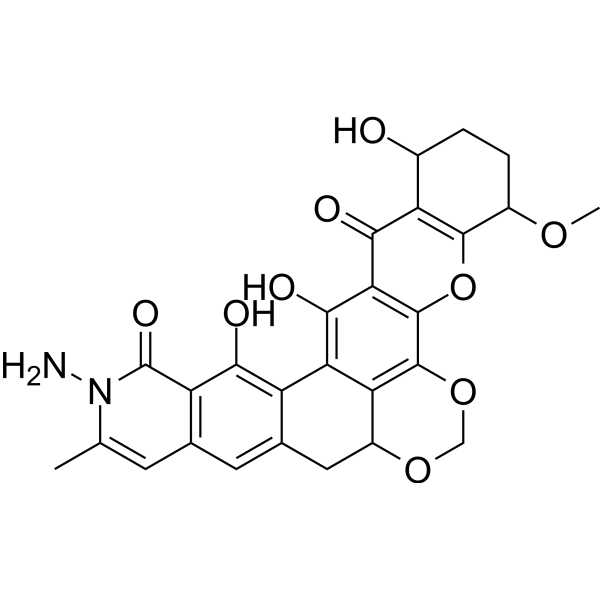 0 ImagesCat. No.: HY-119789CAS No.: 37895-35-5Albofungin (Antibiotic P-42-1) is isolated from the culture filtrate of Actinomyces tumemacerans strain INMI.P-42. Albofungin shows highly active on a wide variety of gram-positive bacteria and fungi. Albofungin shows cytotoxic to HeLa cell cultures and exhibited antitumor activity on EHRLICH ascites tumor in mice.
-
MmpL3-IN-1
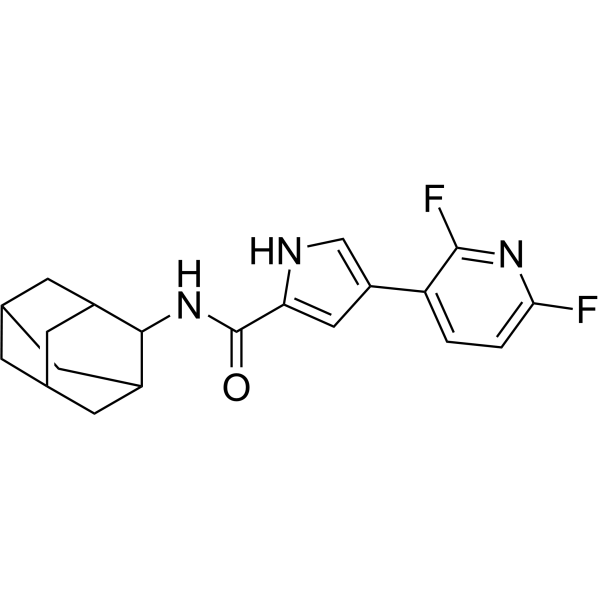 0 ImagesCat. No.: HY-150967CAS No.: 2290534-93-7MmpL3-IN-1 (compound 32) is a potent Mycobacterial membrane protein large 3 (MmpL3) inhibitor. MmpL3-IN-1 has anti-tuberculosis activity with the MIC<0.016 μg/mL in M. tuberculosis and can be used in studies of drug-resistant tuberculosis.
-
Lucidin ω-ethyl ether
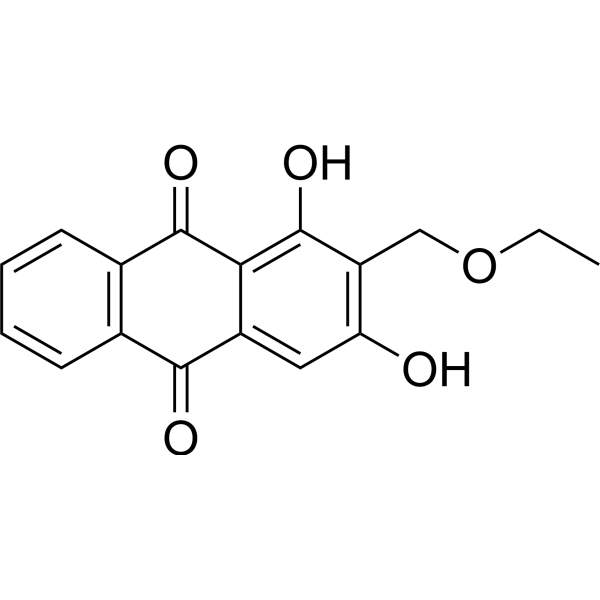 0 ImagesCat. No.: HY-130049CAS No.: 17526-17-9Lucidin ω-ethyl ether (compound 17) is an anthraquinone metabolite isolated from the root part of Prismatomeris filamentosa with some antibacterial activity against Gram-positive and Gram-negative bacteria.
-
Deferasirox (Standard)
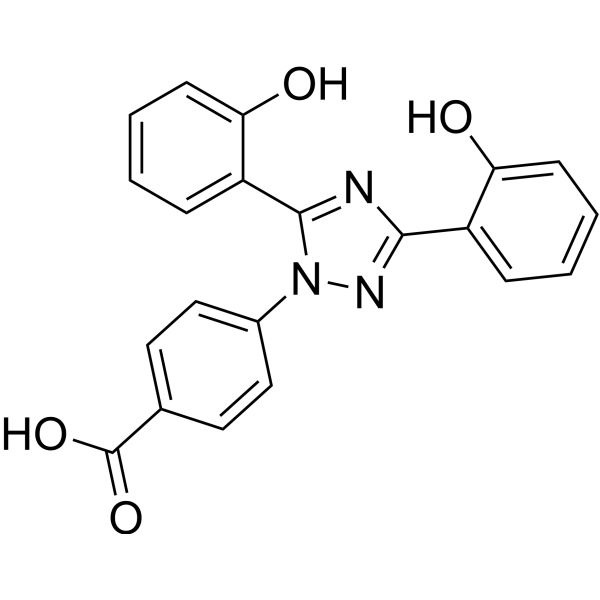 0 ImagesSynonyms: ICL 670 (Standard)Deferasirox (Standard) is the analytical standard of Deferasirox. This product is intended for research and analytical applications. Deferasirox (ICL 670) is an orally available iron chelator used for the management of transfusional iron overload.
-
Verdamicin
 0 ImagesCat. No.: HY-N21935CAS No.: 49863-48-1Verdamicin is an aminoglycoside antibiotic isolated from Micromonospora grisea, exhibiting broad-spectrum antibacterial activity against Gram-negative and Gram-positive bacteria. Verdamicin inhibits bacterial protein synthesis by binding to the 30S ribosomal subunit. Verdamicin exerts bactericidal effects against Gram-negative and Gram-positive isolates. Verdamicin can be used for research on bacterial infections.

-
G247
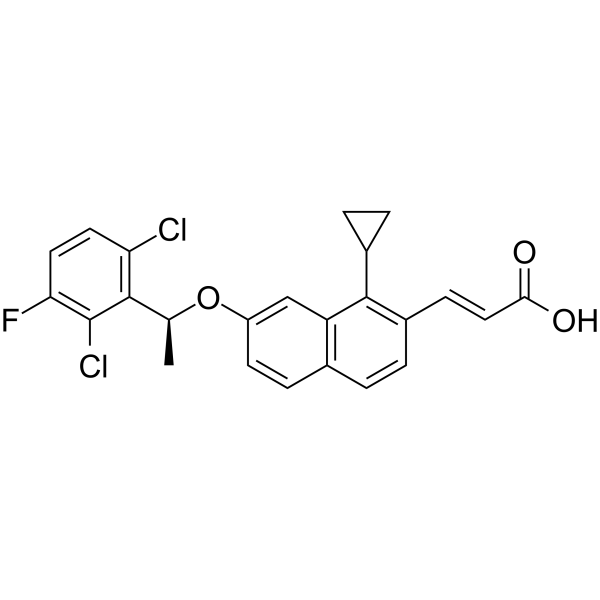 0 ImagesCat. No.: HY-145416G247 is a specific MsbA inhibitor. G247 acts as a transmembrane domains (TMDs) wedge, symmetrically increasing nucleotide-binding domains (NBDs) separation and preventing conformational transition of MsbA. G247 suppresses ATPase activity by increasing inter-NBD distance.
-
Ciprofloxacin lactate solution
 0 ImagesCat. No.: HY-FLW040298CAS No.: 97867-33-9Synonyms: Bay-09867 lactate solutionCiprofloxacin lactate solution is mainly composed of Ciprofloxacin lactate (HY-W040298). Ciprofloxacin (Bay-09867) lactate is a potent, orally active topoisomerase IV inhibitor. Ciprofloxacin lactate induces mitochondrial DNA and nuclear DNA damage and lead to mitochondrial dysfunction, ROS production. Ciprofloxacin lactate has anti-proliferative activity and induces apoptosis. Ciprofloxacin lactate is a fluoroquinolone antibiotic, exhibiting potent antibacterial activity.




