



Fungal
An antifungal agent is a drug that selectively eliminates fungal pathogens from a host with minimal toxicity to the host.
Classes: 1. Polyene Antifungal Drugs: Amphotericin, nystatin, and pimaricin interact with sterols in the cell membrane (ergosterol in fungi, cholesterol in humans) to form channels through which small molecules leak from the inside of the fungal cell to the outside. 2. Azole Antifungal Drugs: Fluconazole, itraconazole, and ketoconazole inhibit cytochrome P450-dependent enzymes (particularly C14-demethylase) involved in the biosynthesis of ergosterol, which is required for fungal cell membrane structure and function. 3. Allylamine and Morpholine Antifungal Drugs: lylamines (naftifine, terbinafine) inhibit ergosterol biosynthesis at the level of squalene epoxidase. The morpholine drug, amorolfine, inhibits the same pathway at a later step. 4. Antimetabolite Antifungal Drugs: 5-Fluorocytosine acts as an inhibitor of both DNA and RNA synthesis via the intracytoplasmic conversion of 5-fluorocytosine to 5-fluorouracil.
All Product Categories
-
Fungal Related Products (2768)
Related Products (2768)

-
Antibodies (1)
-
Related Compound Screening Libraries (1)
-
(3R,6S)-Bassiatin
 0 Images(3R,6S)-Bassiatin (Compound 5) is an enantiomer of the fungal metabolite Bassiatin (HY-165143). Bassianin is a compound isolated from fungi that has the activity of inhibiting erythrocyte membrane ATPase and causing cell lysis. Its inhibitory effect on ATPase may be due to membrane disruption.
-
Benzimidazole (Standard)
 0 ImagesBenzimidazole (Standard) is the analytical standard of Benzimidazole. This product is intended for research and analytical applications. Benzimidazole is a biochemical reagent that can be used as a biological material or organic compound for life science related research.
-
3-Hydroxyoctanoic acid-d12
 0 ImagesCat. No.: HY-W700715CAS No.: 1215622-76-63-Hydroxyoctanoic acid-d12 is the deuterated-labeled 3-Hydroxyoctanoic acid (HY-113058). 3-Hydroxyoctanoic acid is a medium-chain β-hydroxy fatty acid that possesses antibacterial, antifungal, and quorum-sensing regulatory activities. 3-Hydroxyoctanoic acid is an endogenous agonist of the human HCAR3 receptor, decreases intracellular cAMP, reduces IL-1beta secretion, increases IL-10 secretion, and decreases ROS production in macrophages. 3-Hydroxyoctanoic acid inhibits quorum-sensing-regulated pyocyanin production in Pseudomonas aeruginosa PAO1 and inhibits the yeast-to-hypha transition in Candida albicans. 3-Hydroxyoctanoic acid is used in research related to metabolism, bacterial infections, and fungal infections.
-
Pseudolaric Acid A
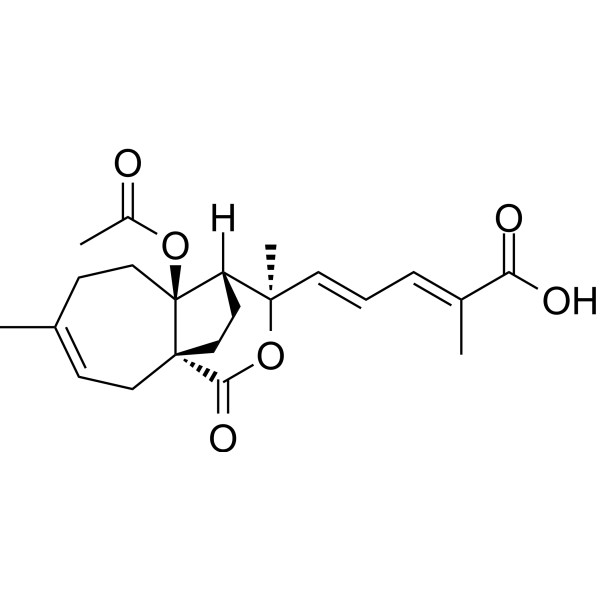 0 ImagesPseudolaric Acid A is a diterpene acid isolated from Pseudolarix kaempferi, has antifungal, cytotoxic and antifertile activities.
-
Rtt109 inhibitor 1
 0 ImagesRtt109 inhibitor 1 (Compound 1) is an inhibitor for histone acetyltransferase Rtt109 through a tight binding, uncompetitive system. Rtt109 inhibitor 1 exhibits antifungal activity through acetylation at H3K56 site.
-
Matairesinoside
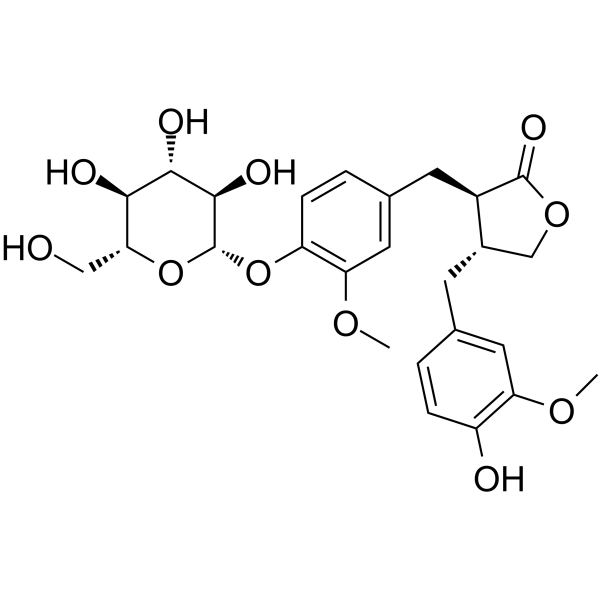 0 ImagesMatairesinoside is a lignan with antibacterial and antioxidant activities. Matairesinoside also shows virus-cell fusion inhibitory activity.
-
trans-Nerolidol (Standard)
 0 ImagesCat. No.: HY-N6635RCAS No.: 40716-66-3trans-Nerolidol (Standard) is the analytical standard of trans-Nerolidol. This product is intended for research and analytical applications. trans-Nerolidol improves the anti-proliferative effect of Doxorubicin (DOX) (HY-15142A) against intestinal cancer and breast cancer cells in vitro. trans-Nerolidol increases accumulation of DOX inside cells in vitro. trans-Nerolidol activates apoptosis in vivo.
-
Flucytosine-13C,15N2
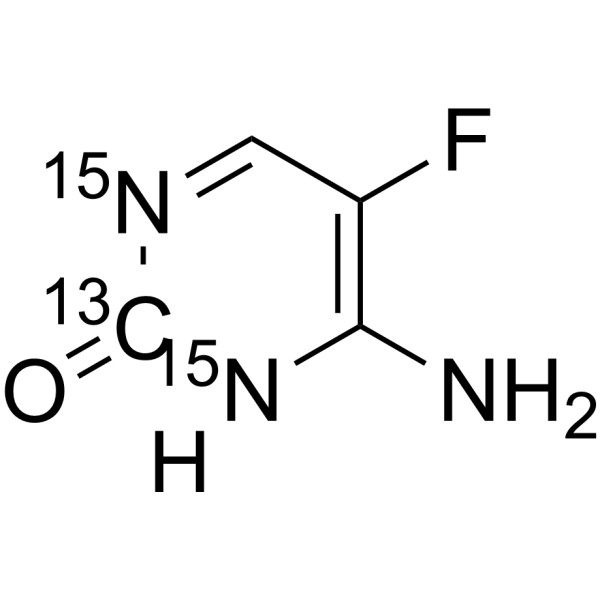 0 ImagesCat. No.: HY-B0139SCAS No.: 1216616-31-7Synonyms: 5-Fluorocytosine-13C,15N2; NSC 103805-13C,15N2; Ro 2-9915-13C,15N2Flucytosine-13C,15N2 (NSC 103805-13C,15N2; Ro 2-9915-13C,15N2) is a 13C- and 15N-labeled Flucytosine (HY-B0139).
-
Zinc oxide, 99.99% metals basis
 0 ImagesZinc oxide, 99.99% metals basis is a versatile wide-bandgap semiconductor with superior comprehensive properties. Zinc oxide, 99.99% metals basis serves as raw material for Schottky diodes, functional nanostructures, sensors, energy harvesters and photocatalysts for hydrogen production. Zinc oxide, 99.99% metals basis acts as a non-toxic antibacterial agent and selective cytotoxin against multiple bacteria, fungi and spores. Zinc oxide, 99.99% metals basis induces cancer cell death. Zinc oxide, 99.99% metals basis is applicable to drug delivery, biosensing, bioimaging and researches on cancer, microbial infections and skin diseases.
-
Tongkat Ali Extract
 0 ImagesCat. No.: HY-N13215Tongkat Ali Extract is the extract of Tongkat Ali, a testosterone modulator. Tongkat Ali Extract activates CYP17 enzyme to enhance conversion of pregnenolone and progesterone to dehydroepiandrosterone, androstenedione, and testosterone. Tongkat Ali Extract demonstrates antimalarial, antimicrobial, anticancer, and antidiabetic activity. Tongkat Ali Extract can be used for the research of diabetic and male infertility.

-
(-)-Antofine
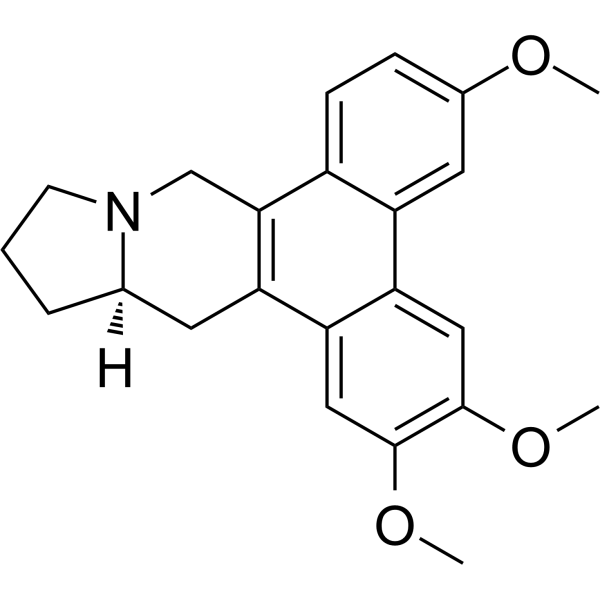 0 Images(-)-Antofine is an alkaloid, a levorotatory Antofine. Antofine is an antifungal compound.
-
Polybia-MP1
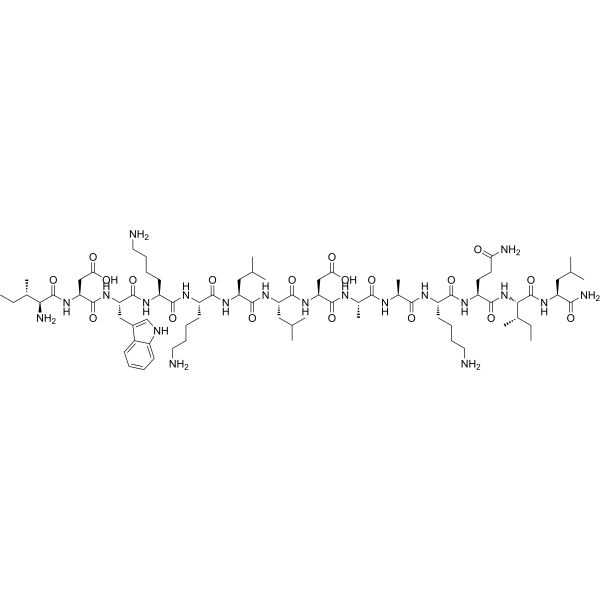 0 ImagesPolybia-MP1 is an antimicrobial peptide with antibacterial, antifungal and anticancer activities. Polybia-MP1 selectively targets cancer cells by interacting with PS and PE in the outer leaflet of cell membranes, and induces necrosis via pore formation. Polybia-MP1 exhibits antibacterial activity against Pseudomonas aeruginosa. Polybia-MP1 can be used in research related to bacterial infections, fungal infections and cancers.
-
4-Propylphenol
 0 Images4-Propylphenol is a plant-derived phenolic compound. 4-Propylphenol causes an increase in ROS within the Fusarium graminearum cells, leading to damage to the DNA and cell membranes of the mycelia, effectively inhibiting the growth of the mycelia. 4-Propylphenol also has a growth inhibitory effect on walnut pathogenic fungi (C. gloeosporioides, C. siamense, A. alternata), with its EC50 ranging from 29.11 to 31.89 mg/L, and it also inhibits spore germination, with EC50 being 55.04-71.85 mg/L. 4-Propylphenol can be used in the research of fungal diseases in walnuts and wheat Fusarium head blight.
-
Flusulfamide
 0 ImagesCat. No.: HY-121628CAS No.: 106917-52-6Flusulfamide is a sulfonanilide Fungicide that effectively inhibits the germination of resting spores of Plasmodiophora brassicae, the pathogen causing clubroot in cruciferous crops. Flusulfamide blocks the developmental process of resting spores from stage 1 to stage 2. By downregulating germination-related genes and upregulating immunophilin genes (such as PbCyp3), it induces abnormal accumulation of the PbCYP3 protein, thereby causing the spores to deplete energy in a state of continuous energy consumption without germination, and reducing their infectivity. Flusulfamide reduces soil ATP content in the early stage of application, but soil microbial biomass gradually recovers 3 days later. Flusulfamide is widely used in research on clubroot control.
-
Sedaxane
 0 ImagesSedaxane is a new broad-spectrum seed treatment fungicide. Sedaxane inhibits fungal respiration by binding to the succinate dehydrogenase complex in fungal mitochondria. Sedaxane has broad-spectrum activity against a variety of seed-borne and soil-borne fungi. Sedaxane can be used in the study of barley loose smut and barley stripe disease.
-
Flusilazole (Standard)
 0 ImagesCat. No.: HY-B2012RCAS No.: 85509-19-9Synonyms: DPX-H6573 (Standard)Flusilazole (Standard) is the analytical standard of Flusilazole. This product is intended for research and analytical applications. Flusilazole (DPX-H6573), an organosilane fungicide, has broad-spectrum antifungal effect. Flusilazole exhibits curative and preventative activities and is recommended for use in agriculture and horticulture.
-
Paclobutrazol (Standard)
 0 ImagesCat. No.: HY-B0853RCAS No.: 76738-62-0Paclobutrazol (Standard) is the analytical standard of Paclobutrazol. This product is intended for research and analytical applications. Paclobutrazol is a triazole-containing plant growth retardant that is known to inhibit the biosynthesis of gibberellins. Paclobutrazol also has antifungal activities. Paclobutrazol, transported acropetally in plants, can also suppress the synthesis of abscisic acid and induce chilling tolerance in plants. Paclobutrazol is typically used to support research on the role of gibberellins in plant biology.
-
Feneptamidoquin
 0 ImagesCat. No.: HY-183759CAS No.: 2132414-06-1Synonyms: SYN551769Feneptamidoquin (SYN551769) is a quinoline Fungicide. The combination of Feneptamidoquin and Eugenol (HY-N0337) potently inhibits mycelial growth of Botrytis cinerea. Feneptamidoquin can be used in studies related to gray mold.
-
Dermaseptin-S1
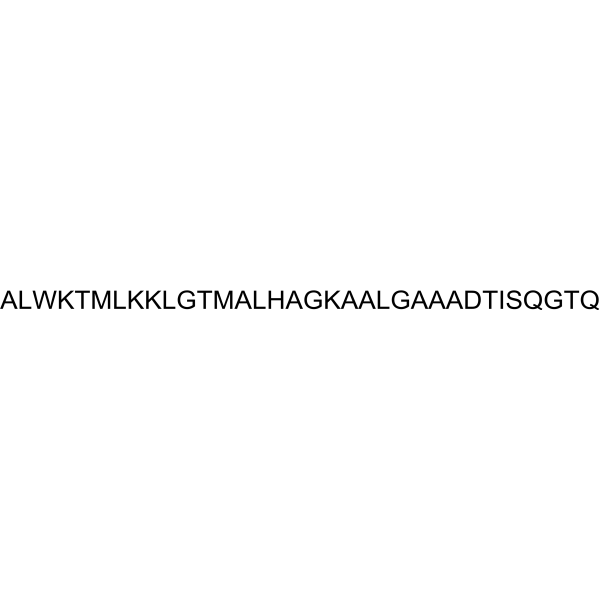 0 ImagesDermaseptin-S1 is an antimicrobial peptide derived from frog skin against filamentous fungi.




