



Fungal
An antifungal agent is a drug that selectively eliminates fungal pathogens from a host with minimal toxicity to the host.
Classes: 1. Polyene Antifungal Drugs: Amphotericin, nystatin, and pimaricin interact with sterols in the cell membrane (ergosterol in fungi, cholesterol in humans) to form channels through which small molecules leak from the inside of the fungal cell to the outside. 2. Azole Antifungal Drugs: Fluconazole, itraconazole, and ketoconazole inhibit cytochrome P450-dependent enzymes (particularly C14-demethylase) involved in the biosynthesis of ergosterol, which is required for fungal cell membrane structure and function. 3. Allylamine and Morpholine Antifungal Drugs: lylamines (naftifine, terbinafine) inhibit ergosterol biosynthesis at the level of squalene epoxidase. The morpholine drug, amorolfine, inhibits the same pathway at a later step. 4. Antimetabolite Antifungal Drugs: 5-Fluorocytosine acts as an inhibitor of both DNA and RNA synthesis via the intracytoplasmic conversion of 5-fluorocytosine to 5-fluorouracil.
All Product Categories
-
Fungal Related Products (2768)
Related Products (2768)

-
Antibodies (1)
-
Related Compound Screening Libraries (1)
-
Pedalitin
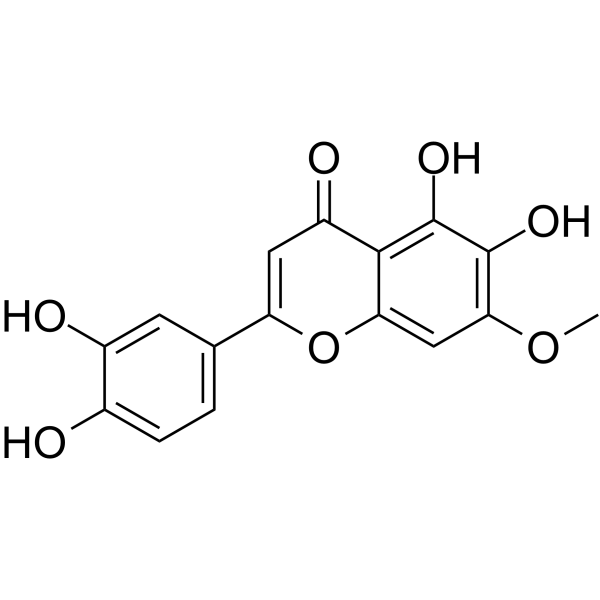 0 ImagesPedalitin is a tyrosinase and α-glucosidase inhibitor with IC50 values of 0.28 mM and 0.29 mM, respectively, and can be isolated and extracted from Rabdosia serra. Pedalitin is a xanthine oxidase (Xanthine Oxidase) (IC50 = 3.7 µM) and myeloperoxidase (MPO) (IC50 = 3.8 nM) inhibitor. Pedalitin ameliorates NAFLD by downregulating the EGFR/IRS1/AKT1/FOXO1 signaling pathway and related inflammatory and lipid metabolism factors. Pedalitin reduces the risk of urinary tract infection and stones by inhibiting the expression of the urease UreC gene in Proteus mirabilis. Pedalitin also exhibits antifungal activity, with a MIC of 3.9 mg/L against Cryptococcus neoformans. Pedalitin can be used for research on non-alcoholic fatty liver disease, chronic kidney disease, kidney stones, cryptococcosis, and abdominal pain.
-
(10E,12E)-9-Oxo-10,12-octadecadienoic acid
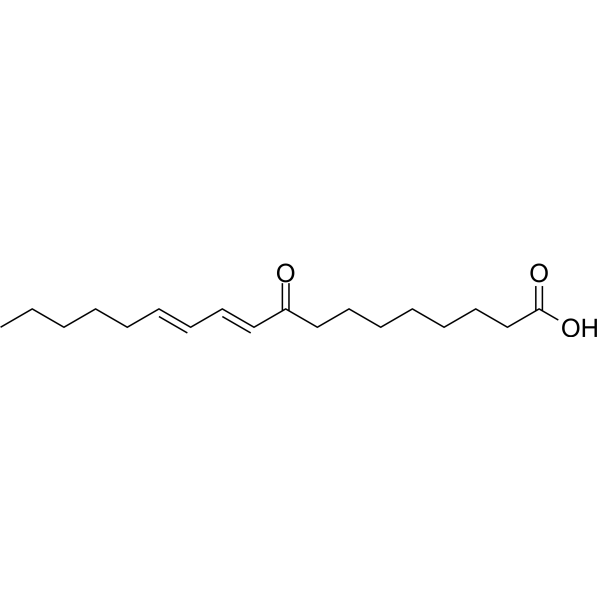 0 ImagesCat. No.: HY-N9768CAS No.: 54232-58-5Synonyms: 9-oxo-ODA(10E,12E)-9-Oxo-10,12-octadecadienoic acid (9-oxo-ODA) is a PPARα agonist that can be isolated from the basidiomycete Gomphus floccosus. (10E,12E)-9-Oxo-10,12-octadecadienoic acid enhances fatty acid oxidation through PPARα activation, thereby inhibiting triglyceride accumulation. (10E,12E)-9-Oxo-10,12-octadecadienoic acid also has antifungal (Fungal) activity.
-
Metiram
 0 ImagesCat. No.: HY-W762060CAS No.: 9006-42-2Metiram is a polymeric dithiocarbamate pesticide active as a fungicide. Metiram is widely used to protect crops such as tomatoes, potatoes, apples, grapevines, etc. Human and environmental exposure from the representative use of Metiram on potatoes is considered non-negligible. Metiram is considered necessary in the control of serious threats to plant health that cannot be suppressed by other available means, including non-chemical methods.
-
Bifonazole (Standard)
 0 ImagesSynonyms: Bay H-4502 (Standard)Bifonazole (Standard) is the analytical standard of Bifonazole. This product is intended for research and analytical applications. Bifonazole (Bay H-4502) is an imidazole antifungal agent.
-
Cyclo(Pro-dArg)
 0 ImagesCat. No.: HY-P10304CCAS No.: 181961-24-0Cyclo(Pro-dArg) is an inhibitor of chitinase. Cyclo(Pro-dArg) inhibits the cell separation of Saccharomyces cerevisiae but does not affect its growth. Cyclo(Pro-dArg) inhibits the transition of Candida albicans from yeast to filamentous morphology.
-
Iprodione (Standard)
 0 ImagesIprodione (Standard) is the analytical standard of Iprodione. This product is intended for research and analytical applications. Iprodione is an orally active diformimide fungicide. Iprodione can specifically cause oxidative damage by producing free radicals (ROS). Iprodione is also an antiandrogen agent that delays adolescent development in rats and reduces sexual behavior and reproductive ability in rats.
-
Boscalid (Standard)
 0 ImagesBoscalid (Standard) is the analytical standard of Boscalid. This product is intended for research and analytical applications. Boscalid is a succinate dehydrogenase (SDHI) inhibitor with antifungal activity. Boscalid binds to the ubiquinone-binding site of fungal mitochondrial complex II, blocks ATP production and aerobic respiration, exhibits good control efficacy against a variety of plant fungal diseases including gray mold, sclerotinia rot and powdery mildew, and is widely used for disease control in agriculture. Boscalid induces apoptosis, altered lipid metabolism, mitochondrial dysfunction, respiratory impairment, oxidative stress, ROS accumulation and neurodevelopmental disorders in zebrafish. Boscalid reduces foraging ability, shortens median death time and causes chronic toxicity in exposed honeybees. Boscalid also possesses genotoxicity, cytotoxicity, elevated mitochondrial superoxide levels and early-stage apoptosis.
-
α-Terpinene (Standard)
 0 ImagesCat. No.: HY-W020182RCAS No.: 99-86-5Synonyms: Terpilene (Standard)α-Terpinene (Standard) is the analytical standard of α-Terpinene. This product is intended for research and analytical applications. α-Terpinene (Terpilene) is a monoterpene found in the essential oils of a large variety of foods and aromatic plants such as Mentha piperita. α-Terpinene is active against Trypanosoma evansi and has the potential for trypanosomosis treatment. α-Terpinene has antioxidant and antifungal properties.
-
Natamycin (Standard)
 0 ImagesNatamycin (Standard) is the analytical standard of Natamycin. This product is intended for research and analytical applications. Natamycin (Pimaricin) is a macrolide antibiotic agent produced by several Streptomyces strains. Natamycin inhibits the growth of fungi via inhibition of amino acid and glucose transport across the plasma membrane. Natamycin is a food preservative, an antifungal agent in agriculture, and is widely used for fungal keratitis research.
-
Myclobutanil-d9
 0 ImagesCat. No.: HY-W654282Purity: 99.94%Myclobutanil-d9 is deuterium labeled Myclobutanil. Myclobutanil is a conazole class fungicide widely used as an agrichemical.
-
Triclosan-13C6
 0 ImagesCat. No.: HY-W653962CAS No.: 2726926-25-4Triclosan-13C6 is 13C labeled Triclosan. Triclosan is a broad-spectrum antibacterial agent that inhibits bacterial fatty acid synthesis at the enoyl-acyl carrier protein reductase (FabI) step. Triclosan inhibits E. coli enoyl-acyl carrier protein reductase (FabI) and FabI containing a glycine-to-valine substitution at position 93 (FabIG93V) with IC50s of 2 μM and 10 μM, respectively. Triclosan causes apoptotic effect in cultured rat neural stem cells (NSC). Triclosan exacerbates colitis and colitis-associated colorectal tumorigenesis in animal models.
-
Concanamycin C
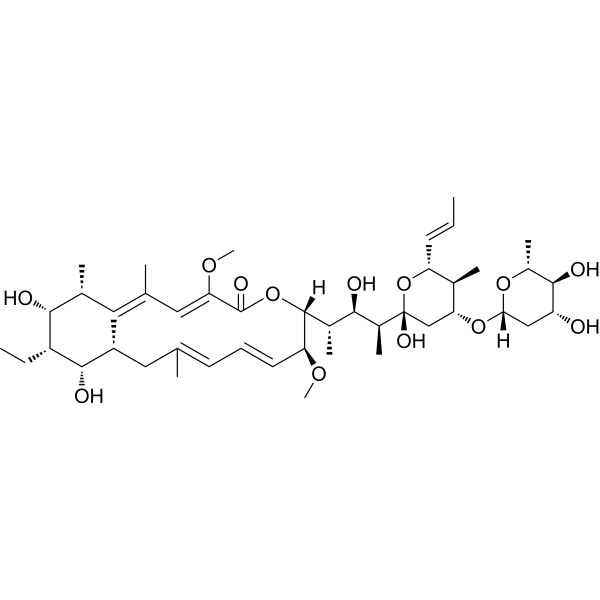 0 ImagesConcanamycin C is a macrolide antibiotic with inhibitory activity against certain fungi and yeasts, but no activity against bacteria. Concanamycin C inhibits the proliferation of mouse splenic lymphocytes. Concanamycin C exhibits acute toxicity in ddY mice. Concanamycin C can be used in studies related to fungal infections and yeast infections.
-
Bacitracin A
 0 ImagesCat. No.: HY-W587753CAS No.: 22601-59-8Bacitracin A is an antibiotic with antibacterial activity against Gram-positive bacteria. Bacitracin A forms a ternary complex with divalent metal ions and C55-isopentenyl pyrophosphate, thereby inhibiting peptidoglycan biosynthesis and cell wall synthesis. Bacitracin A induces the formation of protoplasts and L-form bacteria, alters membrane permeability, regulates metal ion transport, inhibits in vitro enzyme biosynthesis, disrupts the cytoplasmic membrane and exerts bactericidal activity. Bacitracin A can be used in studies related to bacterial infections, fungal infections and amoebic infections.
-
SDH-IN-5
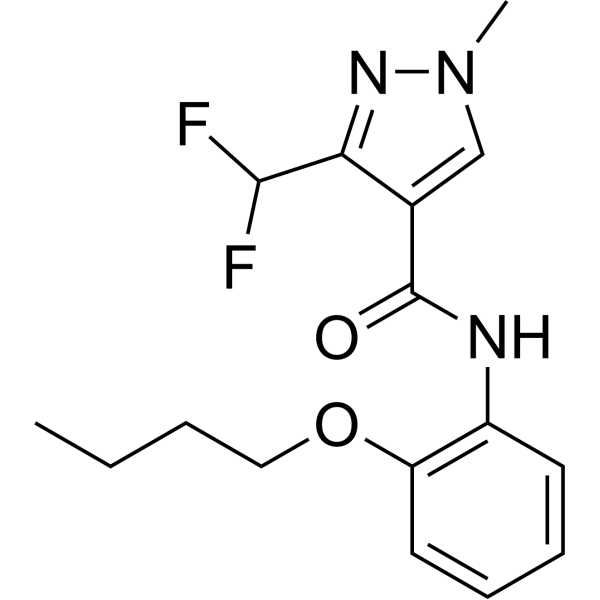 0 ImagesSDH-IN-5 (compound 7d) is a potent succinate dehydrogenase (SDH) inhibitor, with an IC50 of 3.293 μM. SDH-IN-5 is also exhibits antifungal activity, with an EC50 of 0.046 μg/mL against R. solani. SDH-IN-5 could significantly inhibit the growth of R. solani in rice leaves with excellent protective and curative efficacies.
-
Climbazole-d4
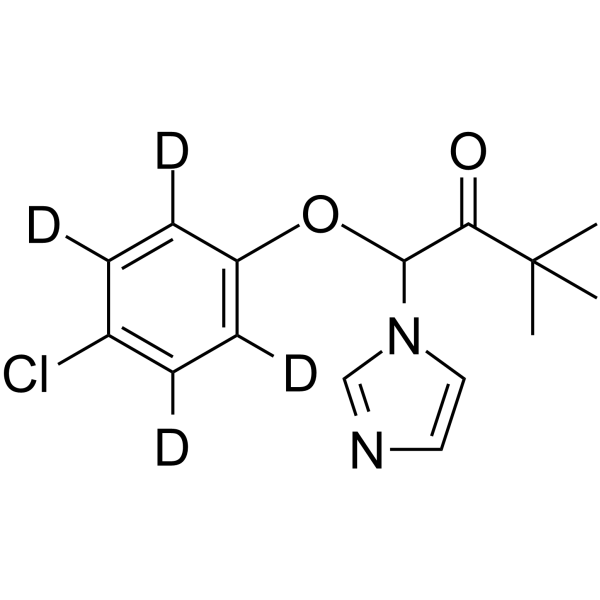 0 ImagesSynonyms: BAY-e 6975-d4Climbazole-d4 is the deuterium labeled Climbazole. Climbazole (BAY-e 6975) is a potent antifungal agent. Climbazole also is a potent inducer of rat hepatic cytochrome P450.
-
Cyproconazole (Standard)
 0 ImagesCyproconazole (Standard) is the analytical standard of Cyproconazole. This product is intended for research and analytical applications. Cyproconazole is a triazole fungicide used to protect crops, fruits and vegetables against a wide range of fungal pathogens. Cyproconazole can cause hepatocellular adenomas and carcinomas in CD-1 mice. Cyproconazole also exhibits low toxicity to zebrafish embryos and affects locomotor activity.
-
Methylxanthoxylin
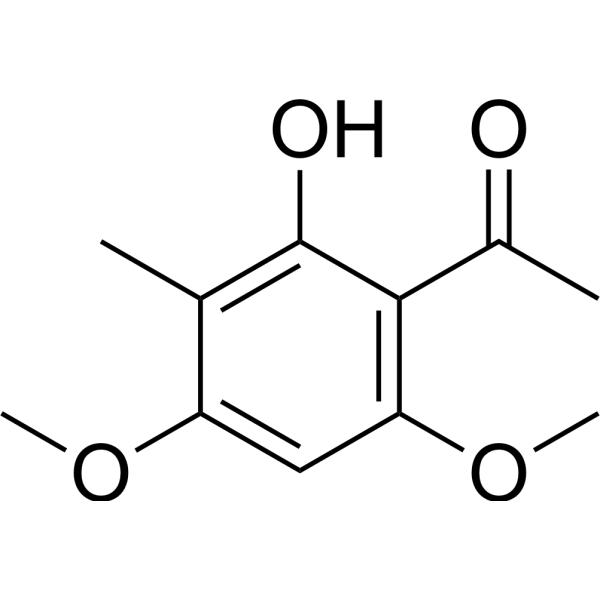 0 ImagesMethylxanthoxylin is a ketone that can be isolated from the leaves and bark of Acradenia Jianklinii. Methylxanthoxylin exhibited moderate antifungal activity against Candida albicans and Penicillium expansum.




