



P2Y6 Receptor Agonist
-
MRS2693
 0 ImagesCat. No.: HY-117356CAS No.: 93906-48-0
MRS2693 is a selective P2Y6 receptor agonist. MRS2693 exerts biological effects by activating the Gq-coupled P2Y6 receptor, the ERK1/2 pathway, and the P2RY6-PLCB3-CAMKK2-PRKAA1-ULK1 signaling cascade. MRS2693 attenuates TNFα-induced NF-κB activation, stabilizes XIAP via AKT-mediated phosphorylation, induces autophagy, and reactivates PRKAA1. MRS2693 can be used in research on diseases including skeletal muscle ischemia/reperfusion injury, TNFα-induced skeletal muscle apoptosis, chronic myelomonocytic leukemia, colorectal cancer, and dry eye disease.
-
UTPU trisodium
 0 ImagesCat. No.: HY-177726CAS No.: 401618-61-9
UTPU trisodium (Compound 19) is a selective P2Y6R agonist with an EC50 of 0.4 μM. UTPU trisodium can activate the intracellular calcium signaling pathway mediated by P2Y6. UTPU trisodium can be used for the research of inflammation.
-
Uridine 5'-diphosphate
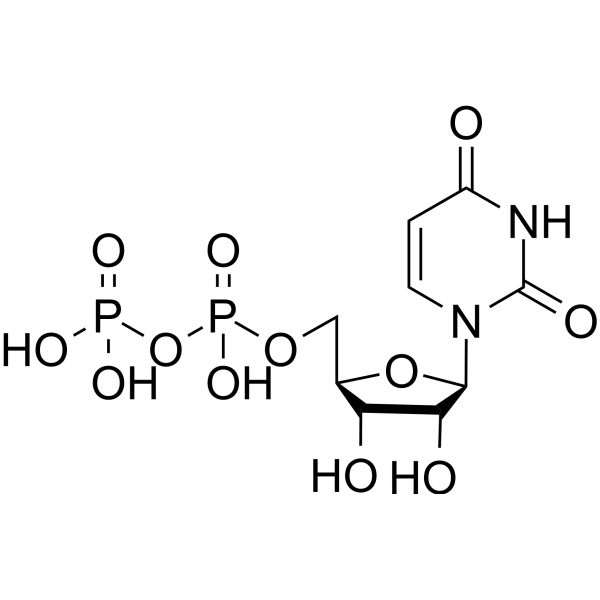 0 Images
Uridine-5'-diphosphate (UDP) is an important nucleotide made of uracil, ribose, and a pyrophosphate group. Uridine-5'-diphosphate is a potent, selective human P2Y6 receptor native agonist (EC50 = 300 nM; pEC50 = 6.52). Uridine-5'-diphosphate disodium salt, an endogenous metabolite, catalyzes the glucuronidation of a wide array of substrates and is used in nucleic acid (RNA) biosynthesis.
-
PSB 0474
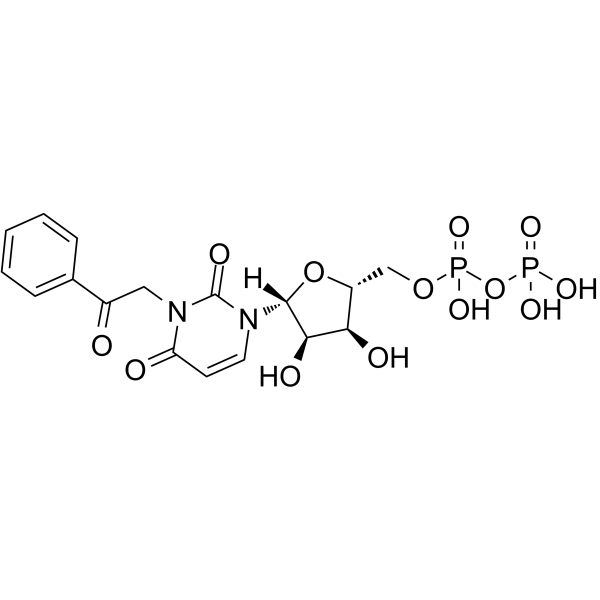 0 ImagesCat. No.: HY-108654CAS No.: 917567-60-3
PSB 0474 (3-phenacyl-UDP) is a UDP (HY-113359) analog and selective P2Y6 receptor agonist, with an EC50 value of 70 nM for the hP2Y6 receptor. PSB 0474 activates Phospholipase C-coupled receptors to increase intracellular inositol phosphate levels. PSB 0474 enhances NO release by upregulating inducible iNOS and induces Apoptosis. PSB 0474 increases micturition frequency in urine of anesthetized rats, without altering bladder contraction amplitude/duration or causing urothelial damage. PSB 0474 can be used in studies related to chronic brain inflammation.
-
MRS2693 ammonium
 0 ImagesCat. No.: HY-117356ACAS No.: 911391-37-2
MRS2693 ammonium is a selective P2Y6 receptor agonist. MRS2693 ammonium exerts biological effects by activating the Gq-coupled P2Y6 receptor, the ERK1/2 pathway, and the P2RY6-PLCB3-CAMKK2-PRKAA1-ULK1 signaling cascade. MRS2693 ammonium attenuates TNFα-induced NF-κB activation, stabilizes XIAP via AKT-mediated phosphorylation, induces autophagy, and reactivates PRKAA1. MRS2693 ammonium can be used in research on diseases including skeletal muscle ischemia/reperfusion injury, TNFα-induced skeletal muscle apoptosis, chronic myelomonocytic leukemia, colorectal cancer, and dry eye disease.
-
Uridine 5'-O-thiodiphosphate trisodium
 0 ImagesCat. No.: HY-137608ASynonyms: UDP-β-S trisodium
Uridine 5'-O-thiodiphosphate trisodium (UDP-β-S trisodium) is a P2Y6 receptor agonist with an EC50 of 25 nM. Uridine 5'-O-thiodiphosphate trisodium resists degradation by extracellular nucleotidases and stimulates the accumulation of inositol phosphates. Uridine 5'-O-thiodiphosphate trisodium stimulates contractile responses in endothelium-denuded rat mesenteric arteries. As a mitogen, Uridine 5'-O-thiodiphosphate trisodium stimulates DNA synthesis, [3H] thymidine incorporation, protein synthesis, [3H]leucine incorporation, and increases the number of vascular smooth muscle cells. Uridine 5'-O-thiodiphosphate trisodium can be used in the research of cardiovascular diseases such as atherosclerosis.
-
UMP-CP trisodium
 0 ImagesCat. No.: HY-137607A
UMP-CP trisodium (Compound 3), a nucleotide, is a P2Y14 receptor agonist with an EC50 of 160 nM for P2Y14 receptor over the P2Y6 receptor. UDP trisodium can be used for pain, diabetes, cystic fibrosis and other pulmonary diseases research.
-
5-OMe-UDP
 0 ImagesCat. No.: HY-108663CAS No.: 1207530-98-0Synonyms: 5-Methoxyuridine 5'-trihydrogen diphosphate
5-OMe-UDP (5-methoxyuridine 5'-trihydrogen diphosphate) is a P2Y6 receptor agonist (EC50=0.08 μM). 5-OMe-UDP activates the P2Y6 receptor by binding to it, which triggers signaling pathways within the cell. This activation can lead to an increase in intracellular calcium ion concentration, which in turn regulates cellular function. The methoxy groups of 5-OMe-UDP provide additional activity and selectivity, contributing to the binding of 5-OMe-UDP to the P2Y6 receptor. 5-OMe-UDP can be used to study diseases related to P2Y6 receptor function, such as diabetes, inflammatory bowel disease, Alzheimer's disease, etc.
-
Uridine 5'-O-thiodiphosphate
 0 ImagesCat. No.: HY-137608CAS No.: 221010-51-1Synonyms: UDP-β-S
Uridine 5'-O-thiodiphosphate (UDP-β-S) is a P2Y6 receptor agonist with an EC50 of 25 nM. Uridine 5'-O-thiodiphosphate resists degradation by extracellular nucleotidases and stimulates the accumulation of inositol phosphates. Uridine 5'-O-thiodiphosphate stimulates contractile responses in endothelium-denuded rat mesenteric arteries. As a mitogen, Uridine 5'-O-thiodiphosphate stimulates DNA synthesis, [3H] thymidine incorporation, protein synthesis, [3H]leucine incorporation, and increases the number of vascular smooth muscle cells. Uridine 5'-O-thiodiphosphate can be used in the research of cardiovascular diseases such as atherosclerosis.



