



PD-1/PD-L1
PD-1/Programmed death-ligand 1
Programmed death-1 (PD-1) is a cell surface receptor that functions as a T cell checkpoint and plays a central role in regulating T cell exhaustion. PD-1 is activated by the engagement of its ligands PDL-1 or PDL-2. PD-1 receptor delivers inhibitory checkpoint signals to activated T cells upon binding to its ligands PD-L1 and PD-L2 expressed on antigen-presenting cells and cancer cells, resulting in suppression of T-cell effector function and tumor immune evasion. Inhibiting the programmed cell death-1 (PD-1)/programmed cell death-ligand 1 (PD-L1) pathway is an attractive strategy for tumor immunotherapy.
PD-1 is expressed on activated T cells, B cells, monocytes, dendritic cells (DCs), regulatory T cells (Tregs), and natural killer T cells (NKT). It is a member of a family of immunoglobulin domain (Ig) co-receptors that modify the outcome of activation of the T cell receptor by an antigen-presenting cell (APC) or infected target cell. PD-L1 is widely and constitutively expressed on both hematopoietic and nonhematopoietic cells; e.g., naive T and B cells, vascular endothelial cells, and pancreatic islet cells, whereas PD-L2 is exclusively and inducibly expressed on professional APCs.
All Product Categories
-
PD-1/PD-L1 Inhibitors
(349)
View all products
-
PD-1/PD-L1 Agonists
(5)
View all products
-
PD-1/PD-L1 Antagonists
(11)
View all products
-
PD-1/PD-L1 Activators
(16)
View all products
-
PD-1/PD-L1 Modulators
(7)
View all products
-
PD-1/PD-L1 Inducers
(3)
View all products
-
PD-1/PD-L1 Degraders
(13)
View all products
-
PD-1/PD-L1 Control
(1)
View all products
-
PD-1/PD-L1 Substrates
(2)
View all products
-
PD-1/PD-L1 Ligands
(7)
View all products
-
PD-1/PD-L1 Related Products (459)
Related Products (459)

-
Antibodies (8)
-
Pumitamig (Mouse IgG2a)
 0 ImagesCat. No.: HY-P992518Pumitamig (Mouse IgG2a) is the Mouse IgG2a control antibody for Pumitamig (HY-P991097). Pumitamig (PM-8002, BNT-327) is a bispecific antibody targeting PD-L1 and VEGF-A, with immune activation and anti-angiogenic activities. By binding to PD-L1, Pumitamig restores the function of effector T cells, while neutralizing VEGF-A in the tumor microenvironment to reverse its inhibition on the infiltration and activation of immune cells and normalize tumor blood vessels. Pumitamig can also be combined with various ADCs targeting TROP2, B7H3, HER2, HER3 for the research of advanced/metastatic solid tumors, including non-small cell lung cancer, ovarian cancer, triple-negative breast cancer, cervical cancer, etc. Pumitamig also exhibits potential efficacy in "cold" tumors with low PD-L1 expression that are insensitive to immunotherapy.
-
BXY-14
 0 ImagesCat. No.: HY-181916BXY-14 is a TLR2 agonist and vaccine adjuvant. BXY-14 significantly downregulates the expression of intratumoral PD-L1 in mouse models. BXY-14 acts as a vaccine adjuvant to induce antibody responses. BXY-14 exhibits synergistic efficacy when combined with the anti-PD-L1 monoclonal antibody Atezolizumab (HY-P9904) in mouse models of melanoma, and prolongs overall survival. BXY-14 is applicable to research related to melanoma.
-
PD-1-IN-25
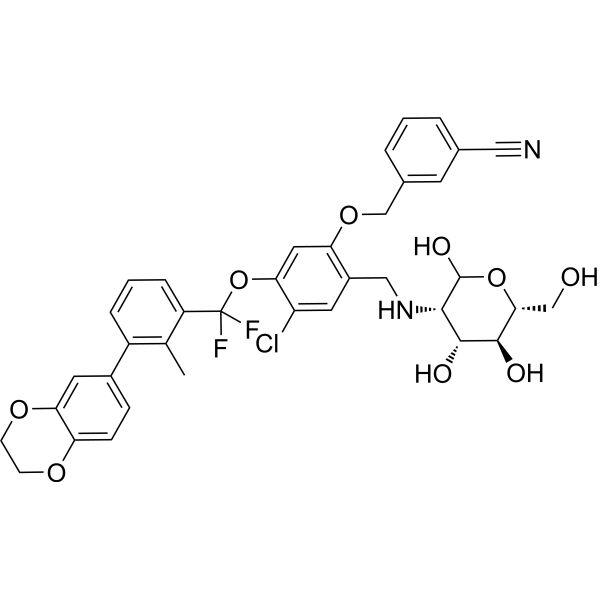 0 ImagesCat. No.: HY-157055CAS No.: 2413100-40-8PD-1-IN-25 (compound 43) is a potent PD-1/PD-L1 interaction inhibitor with an IC50 value of 10.2 nM in the HTRF assay. PD-1-IN-25 can promote CD8+ T cell activation through inhibiting PD-1/PD-L1 cellular signaling. PD-1-IN-25 delays the tumor growth.
-
BMS-142
 0 ImagesCat. No.: HY-134779CAS No.: 1675203-24-3BMS-142 is a PDL1 inhibitor (IC50 = 96.7 nM) (kd = 13.2 nM). BMS-142 can reduce the survival rate of acute T-lymphoblastic leukemia cells and ovarian cancer cells. BMS-142 can be used in research on cancers such as acute T-lymphoblastic leukemia and ovarian cancer.
-
BMS-242
 0 ImagesCat. No.: HY-120646CAS No.: 1675204-51-9BMS-242 is a small molecule PD-1/PD-L1 inhibitor with the activity of inhibiting the PD-1/PD-L1 interaction. BMS-242 can bind to the hydrophobic channel pocket between PD-L1 molecules, inhibit the PD-1/PD-L1 immune checkpoint pathway, and provide a new way for cancer inhibition.
-
VEGFR/PD-L1-IN-1
 0 ImagesCat. No.: HY-183369CAS No.: 2675913-94-5VEGFR/PD-L1-IN-1 is a VEGFR2 and PD-L1 inhibitor, with IC50 values of 0.383 μM and 134.407 pg/mL against VEGFR2 and PD-L1, respectively. VEGFR/PD-L1-IN-1 enhances the secretion of INF-γ, induces G0/G1 cell cycle arrest in cancer cells, and triggers cancer cell apoptosis. VEGFR/PD-L1-IN-1 upregulates the expression of BAX and Caspase-3, and downregulates the expression of Bcl-2. VEGFR/PD-L1-IN-1 can be used in research related to hepatocellular carcinoma, prostate cancer, and colorectal cancer.
-
EP26
 0 ImagesCat. No.: HY-159101EP26 is a potent and orally active EGFR and PD-L1 inhibitor with IC50 values of 48.6 nM, 1.77 µM, respectively. EP26 decreased the protein expression of p-EGFR. EP26 induces cell cycle arrest at G0/G1 phase. EP26 has the potential for the research of glioblastoma.
-
HDAC/HSP90-IN-2
 0 ImagesCat. No.: HY-130274CAS No.: 2244714-45-0HDAC/HSP90-IN-2 (compound 26) is a potent dual inhibitor of HDAC (IC50 = 360 nM) and HSP90 (HSP90α IC50 = 77 nM). HDAC/HSP90-IN-2 induces HSP70 expression, downregulates HSP90 client proteins, and promotes acetylation of α-tubulin and histone H3 in cancer cells. HDAC/HSP90-IN-2 reduces PD-L1 expression in IFN-γ treated H1975 cells. HDAC/HSP90-IN-2 can be used for cancer research, such as lung and colon cancer.
-
BMS-37 hydrochloride
 0 ImagesCat. No.: HY-150879ACAS No.: 2108101-94-4BMS-37 hydrochloride is a PD-1/PD-L1 immune checkpoint inhibitor with an IC50 towards the PD-L1/PD-1 complex in the range of 18 to 200 nM. BMS-37 hydrochloride shows unspecific toxicity against modified Jurkat T cells with an EC50 between 3 and 6 µM. BMS-37 hydrochloride can be used for the study of the PD-L1-induced exhaustion of T-cells or as PD-L1 ligand to synthesize PROTAC molecules.
-
PD-1/PD-L1-IN-24
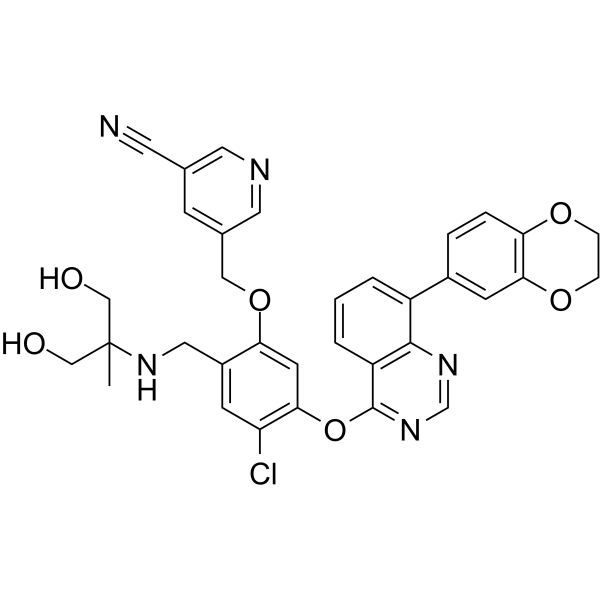 0 ImagesCat. No.: HY-144649CAS No.: 2667680-33-1PD-1/PD-L1-IN-24 is a highly potent PD-1/PD-L1 inhibitor with IC50 value of 1.57 nM. PD-1/PD-L1-IN-24 can restore T-cell function at the cellular level by significantly elevating the IFN-γ level. PD-1/PD-L1-IN-24 has low toxicity on the PBMCs.
-
PD-1/PD-L1-IN-21
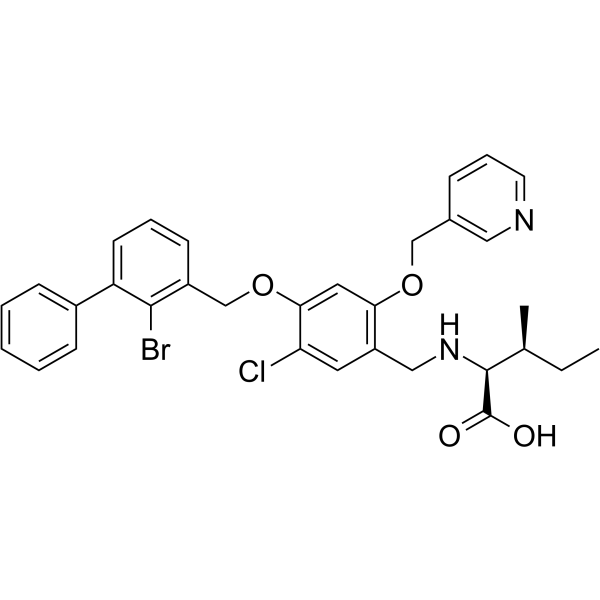 0 ImagesCat. No.: HY-145772CAS No.: 2158336-16-2PD-1/PD-L1-IN-21 (Example 22) is a small-molecule inhibitor of the PD-1/PD-L1 protein-protein interaction. PD-1/PD-L1-IN-21 blocks PD-1/PD-L1 with the IC50 of 4.99 μM. PD-1/PD-L1-IN-21 can be used for the research of cancers, infectious diseases and autoimmune diseases.
-
Sotiburafusp alfa
 0 ImagesCat. No.: HY-P990088CAS No.: 2637466-37-4Sotiburafusp alfa is a bispecific fusion protein, which is a humanized VEGFR-1 extracellular domain fragment (129-228, 1-100 in the current sequence) fused via the peptide linker 101GGSGGSGGSGGSGGS115 to the N-terminus of the heavy chain (116-564) of a humanized IgG1-kappa anti-human PD-L1 heavy chain variant L352>A, L353>A. Sotiburafusp alfa also functions as a PD-L1 inhibitor and a VEGF inhibitor.
-
CYP51/PD-L1-IN-3
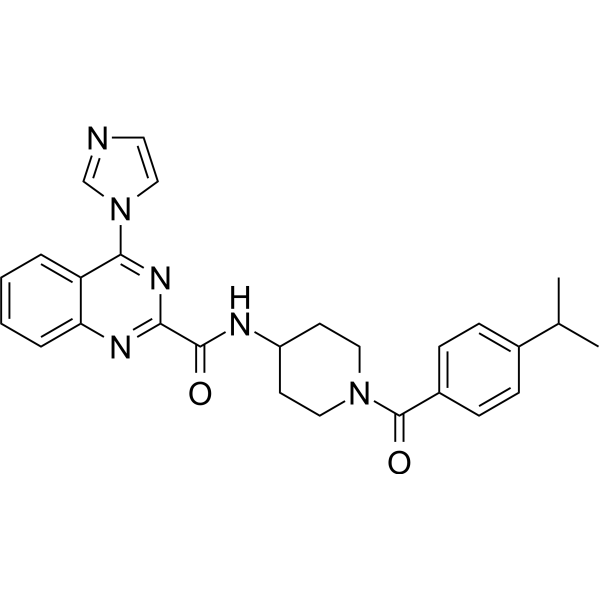 0 ImagesCat. No.: HY-156151CAS No.: 3032386-59-4CYP51/PD-L1-IN-3 (compound L21) is a quinazoline compound with antifungal activity. CYP51/PD-L1-IN-3 is a dual inhibitor of CYP51 (IC50: 0.205 μM) and PD-L1 (IC50: 0.039 μM), which can induce early apoptosis of fungal cells in the cell cycle. CYP51/PD-L1-IN-3 also significantly reduced intracellular IL-2, NLRP3, and NF-κBp65 protein levels, induced mitochondrial damage and ROS accumulation, and ultimately led to fungal lysis and death.
-
PD-1/PD-L1 inhibitory peptide C8
 0 ImagesCat. No.: HY-P10826PD-1/PD-L1 inhibitory peptide C8 is inhibits PD-1/PD-L1 interaction, promotes the activation of CD8+ and CD4+ T cells, and increases the IFN-γ secretion. PD-1/PD-L1 inhibitory peptide C8 exhibits antitumor efficacy in mouse model.
-
FAZ-053
 0 ImagesCat. No.: HY-P991356Synonyms: LAE-005FAZ-053 is a human monoclonal antibody (mAb) targeting B7-H1/PD-L1/CD274. FAZ-053 inhibits the interaction of PD-L1 with PD-1 and B7-1 on monocytes, dendritic cells, and B cells. FAZ-053 enhances interleukin 2 production. FAZ-053 can be used in advanced alveolar soft tissue sarcoma (ASPS), chordoma, and triple-negative breast cancer research.
-
HE-S2
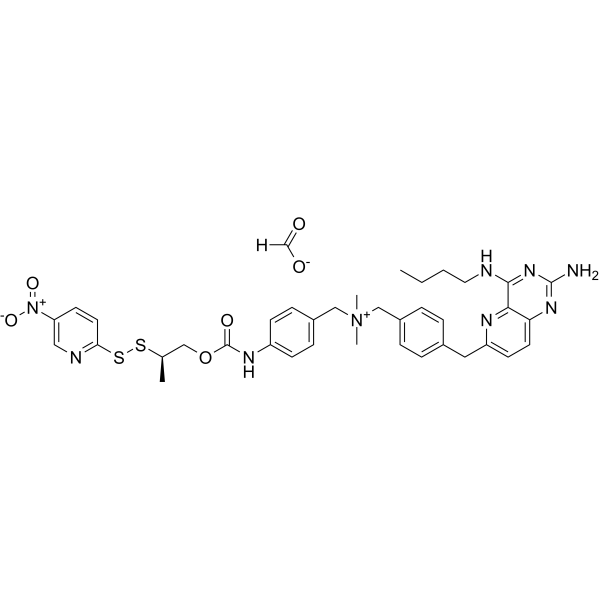 0 ImagesCat. No.: HY-144497CAS No.: 2939851-67-7HE-S2 is an antibody-drug conjugate triggering a potent antitumor immune response. HE-S2 acts by blocking the PD-1/PD-L1 interaction and activating the Toll-like receptor 7/8 (TLR7/8) signaling pathway. HE-S2 has remarkable antitumor activity.
-
IBC-Ab002
 0 ImagesCat. No.: HY-P992380IBC-Ab002 is a humanized anti-PD-L1 monoclonal antibody with a modified Fc backbone that shortens its circulating half-life. IBC-Ab002 inhibits PD-L1, triggers immune responses by blocking the PD-1/PD-L1 pathway, promotes the recruitment of myeloid-derived immune cells to the brain, enhances the clearance of toxic substances in the brain, improves neuronal function and reduces inflammation. IBC-Ab002 reduces the risk of accelerated onset of autoimmune diabetes in susceptible mice. IBC-Ab002 can be used in research related to Alzheimer's disease.
-
PD-1/PD-L1-IN-53
 0 ImagesCat. No.: HY-169190CAS No.: 3024006-29-6PD-1/PD-L1-IN-53 (compound B3) is an inhibitor targeting PD-1/PD-L1 and VISTA signaling pathways. PD-1/PD-L1-IN-53 can be used in anti-cancer research.
-
Moflerafusp alfa
 0 ImagesCat. No.: HY-P991148CAS No.: 2983848-20-8Moflerafusp alfa is a fusion protein targeting the human signal regulatory protein α (SIRPα) variant V2 D1 domain and human programmed death ligand 1 (PD-L1). Moflerafusp alfa is promising for research of various cancers.
-
(Rac)-Lartesertib
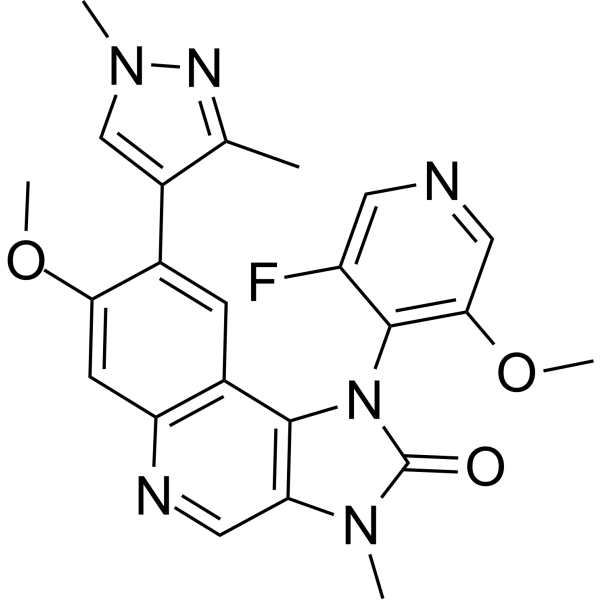 0 ImagesCat. No.: HY-150617ACAS No.: 2020089-41-0Synonyms: (Rac)-M4076; (Rac)-ATM Inhibitor-5(Rac)-Lartesertib ((Rac)-M4076) is an isoform of Lartesertib (HY-150617). Lartesertib (M4076) is an inhibitor of the serine/threonine protein kinase ATM with high potency. Lartesertib can inhibit the growth of multiple hematopoietic cell lines. Additionally, when combined with the ATR inhibitor Tuvusertib (HY-111451), Lartesertib can promote the death of tumor cells, activate the immune signaling pathway, and exhibit anti-tumor activity.




