PROTACs
PROTAC (PROteolysis-TArgeting Chimera) is a heterobifunctional nanomolecule containing two different ligands, ligand for ubiquitin E3 and ligand for target protein. The two parts are connected by linker to form a "three-unit" polymer, target protein ligand-linker-E3 ligase ligand. Building blocks of PROTAC molecules include PROTAC Linker, Ligand for Target Protein for PROTAC, Ligand for E3 Ligase, E3 Ligase Ligand-Linker Conjugate, Target Protein Ligand-Linker Conjugate, etc.
PROTACs Isoform Specific Products
All Product Categories
-
PROTACs Related Products (1355)
Related Products (1355)

-
Antibodies (1)
-
PROTACs Isoform Comparison
-
DZ-837
 0 ImagesCat. No.: HY-161989CAS No.: 3105664-95-4DZ-837 is a BCL6 PROTAC degrader with a DC50 of 557.7 nM. DZ-837 induces BCL6 ubiquitination and degradation in a CRBN-dependent manner via the ubiquitin-proteasome system. DZ-837 activates CDKN1A and CDKN1B, the downstream genes of BCL6. DZ-837 upregulates p21 and p27 proteins. DZ-837 inhibits tumor growth in a diffuse large B-cell lymphoma xenograft mouse model. DZ-837 exerts synergistic antiproliferative effects when combined with Ibrutinib (HY-10997). DZ-837 can be used in studies related to diffuse large B-cell lymphoma.
-
MD13
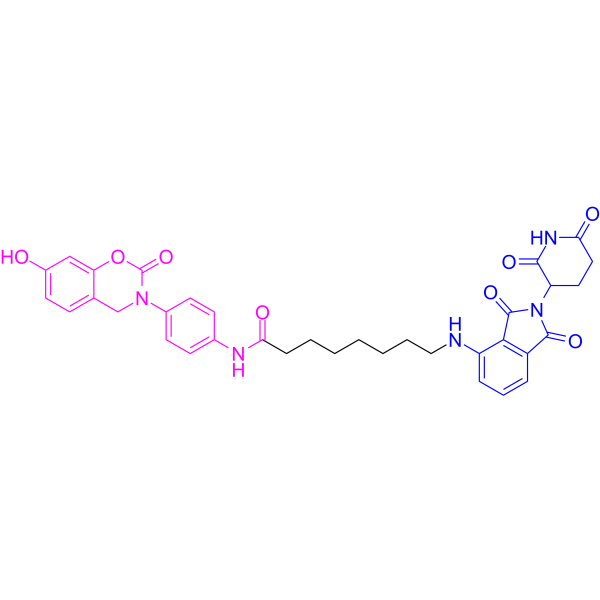 0 ImagesMD13 is a MIF PROTAC degrader with a DC50 of approximately 100 nM. MD13 induces ubiquitination and degradation of MIF by recruiting the Cereblon Cullin RING E3 ubiquitin ligase complex. MD13 inactivates the MAPK pathway and induces G2/M phase cell cycle arrest. MD13 exhibits antiproliferative effects in 3D tumor spheroid models. MD13 can be used in lung cancer-related research.
-
PROTAC EGFR degrader 4
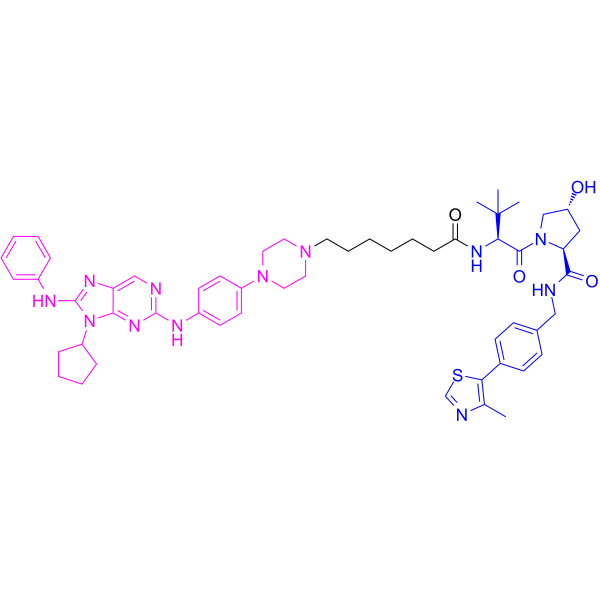 0 ImagesPROTAC EGFR degrader 4 is an EGFRdel19 and EGFRL858R/T790M degrader with anti-proliferative activity. PROTAC EGFR degrader 4 induces degradation of mutant EGFR variants via ubiquitination and autophagy. PROTAC EGFR degrader 4 suppresses EGFR pathway signal transduction. PROTAC EGFR degrader 4 induces apoptosis, arrests cell cycle, and suppresses cell colony formation in cancer cells. PROTAC EGFR degrader 4 can be used for the research of non-small cell lung cancer.
-
CW-3308
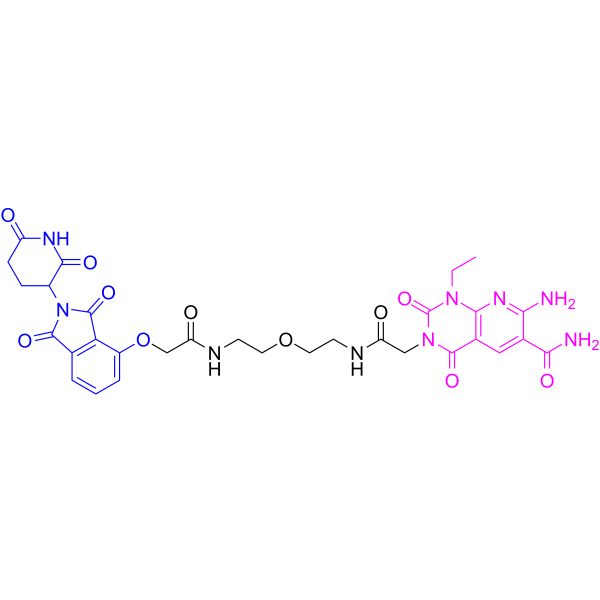
 0 ImagesCW-3308 is an orally active BRD9 PROTAC degrader with an DC50 of 92 nM. CW-3308 forms a ternary complex with BRD9 and cereblon to mediate BRD9 degradation. CW-3308 inhibits the viability of synovial sarcoma and rhabdoid tumor cells. CW-3308 reduces BRD9 protein levels in xenograft tumor tissues and suppresses tumor growth in xenograft models. CW-3308 can be used for the research of synovial sarcoma and rhabdoid tumors.
-
ARD-61
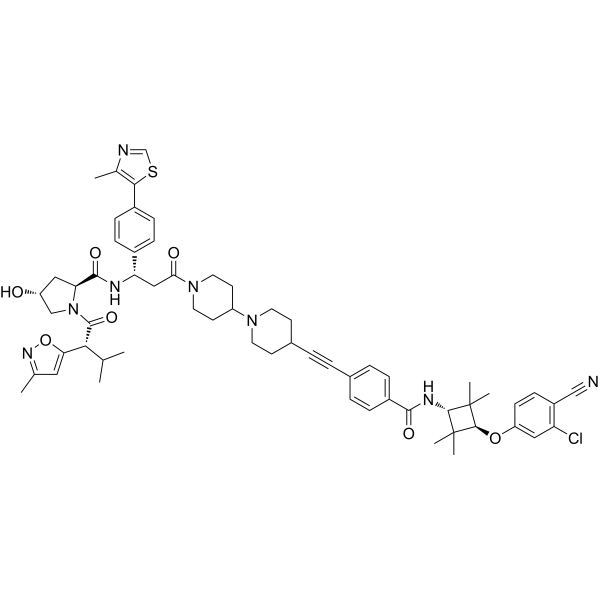 0 ImagesARD-61 is a highly potent, effective and specific PROTAC androgen receptor (AR) degrader. ARD-61 potently and effectively induces AR and progesterone receptors (PR) degradation in AR+ cancer cell lines. ARD-61 induces apoptosis and effectively induces tumor growth inhibition in the MDA-MB-453 xenograft model in mice. ARD-61 is a click chemistry reagent, it contains an Alkyne group and can undergo copper-catalyzed azide-alkyne cycloaddition (CuAAc) with molecules containing Azide groups.
-
PROTAC EGFR degrader 14
 0 ImagesCat. No.: HY-175252Purity: 99.26%PROTAC EGFR degrader 14 is a potent and selective EGFR PROTACdegrader with a DC50 of about 2.9 nM and a Dmax of 93.1% for EGFR L858R/T790M/C797S. PROTAC EGFR degrader 14 selectively induces EGFRC797S degradation through a VHL and proteasome-dependent manner and downregulated EGFR-associated transcriptome and exhibits good selectivity over EGFRWT. PROTAC EGFR degrader 14 induces cell cycle arrest and apoptosis and significantly inhibits tumor growth. PROTAC EGFR degrader 14 can be used for the study of nonsmall cell lung cancer (NSCLC).
-
PROTAC EGFR degrader 11
 0 ImagesPROTAC EGFR degrader 11 (Compound B71) is a PROTAC degrader for epidermal growth factor receptor (EGFR), with DC50 <100 nM. PROTAC EGFR degrader 11 binds CRBN-DDB1 with a Ki of 36 nM. PROTAC EGFR degrader 11 degrades EGFR, focal adhesion kinase (FAK), and RSK1, inhibits the proliferation of BaF3 wild type and EGFR mutants, with IC50 <100 nM.
-
RBN012811
 0 ImagesRBN012811 is a highly selective PROTAC-based PARP14 degrader. RBN012811 forms a ternary complex with cereblon by binding to the NAD+ site of PARP14, and mediates the specific degradation of PARP14 via the ubiquitin-proteasome pathway (IC50=10 nM). RBN012811 effectively depletes endogenous PARP14 in various cell lines and primary human macrophages, thereby downregulating IL-10 production and IFN-β mRNA levels, increasing phosphorylated STAT1 levels to enhance inflammatory signaling, and inhibiting interferon-induced ADPr condensate formation. RBN012811 also modulates viral replication, exhibiting increased HSV1 replication while reducing VSV replication. RBN012811 has important application value in research related to cancer and viral infections.
-
β-NF-JQ1
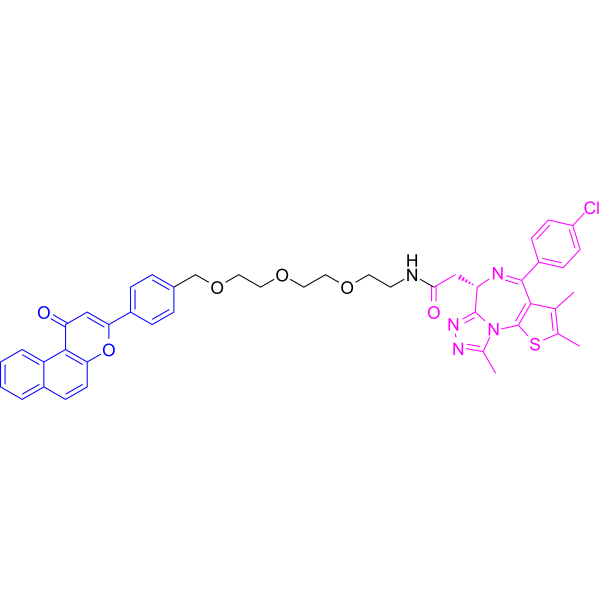 0 Imagesβ-NF-JQ1 is a BRD2/3/4 PROTAC degrader. β-NF-JQ1 recruits the AhR E3 ligase complex to BRD2, BRD3 and BRD4, induces AhR-BRD interaction, and mediates AhR-dependent degradation through the proximity effect between the target protein and AhR. β-NF-JQ1 acts as an antiproliferative and cytotoxic agent that induces anticancer activity associated with BRD protein knockdown. β-NF-JQ1 can be used for research on breast cancer and neuroblastoma.
-
(R)-Zelebrudomide
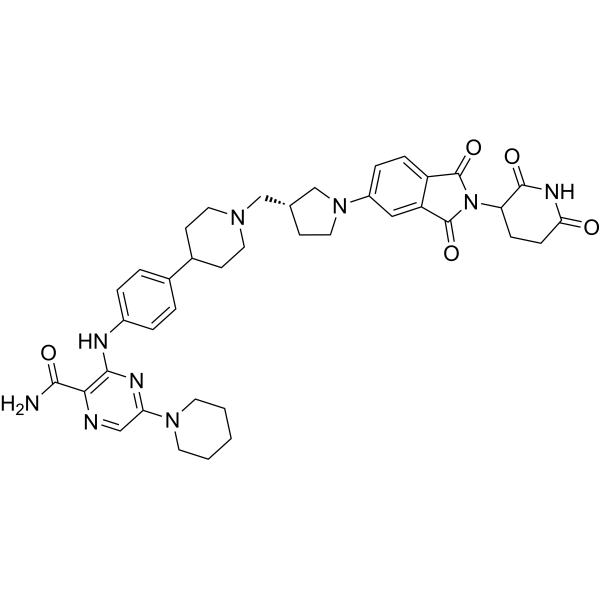 0 ImagesSynonyms: (R)-NX-2127(R)-Zelebrudomide ((R)-NX-2127) is an isomer of Zelebrudomide (HY-153220). Zelebrudomide is an orally active BTK-targeting PROTAC degrader, with DC50 values of 4.5 nM and 31 nM against wild-type BTK and BTKC481S mutant, respectively. Zelebrudomide recruits the cereblon E3 ubiquitin ligase complex to mediate the degradation of BTK. Zelebrudomide also acts as a molecular glue to bind the cereblon E3 ubiquitin ligase complex, mediating the degradation of IKZF1 and IKZF3. Zelebrudomide can be used in the research of B-cell malignancies.
-
dMCL1-2
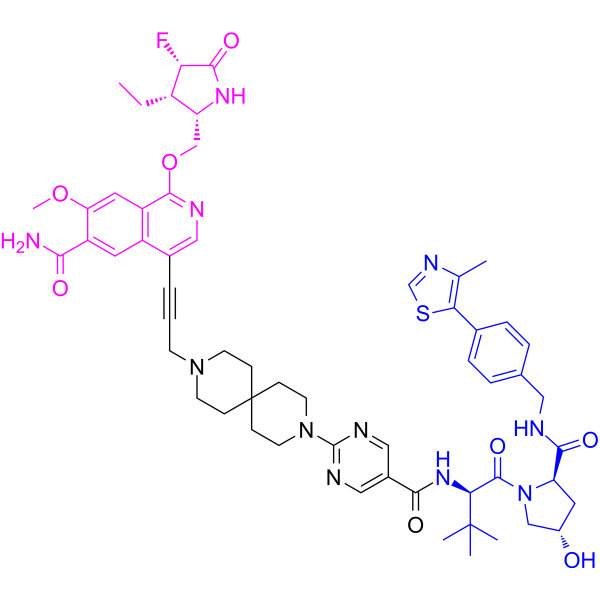
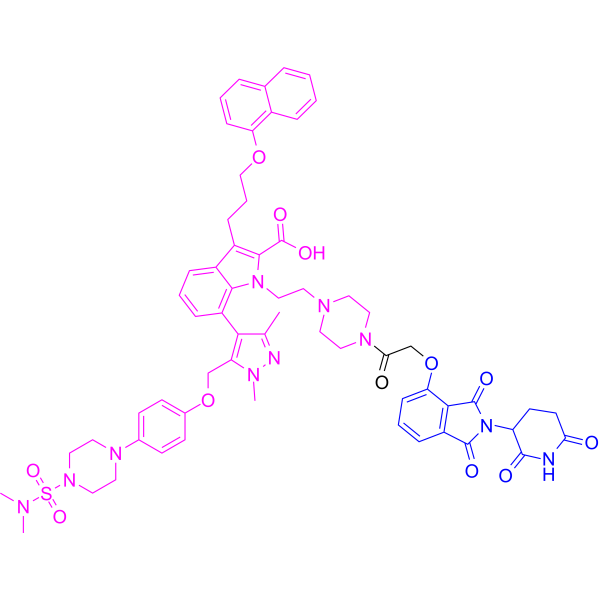 0 ImagesdMCL1-2 is a potent, selective MCL1 PROTAC degrader based on a Cereblon ligand, with a KD value of 30 nM for binding to MCL1. dMCL1-2 induces ubiquitination and degradation of MCL1. dMCL1-2 degrades MCL1, cleaves Caspase-3, and induces Apoptosis. dMCL1-2 can be used in research related to multiple myeloma.
-
GAL-02-221
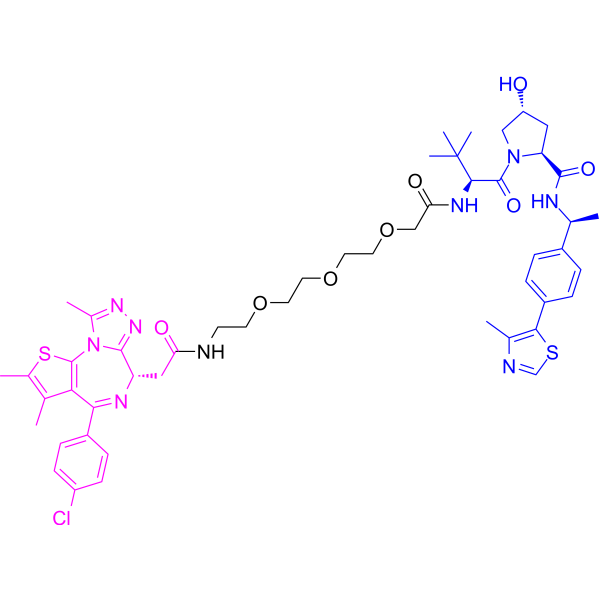 0 ImagesSynonyms: PROTAC BRD4 Degrader-5GAL-02-221 is a BRD4 PROTAC degrader with blood-brain barrier permeability, with a DC50 of 0.009 μM (Jurkat BRD4-HiBiT). GAL-02-221 induces proteasome-catalyzed BRD4 degradation, binds to VHL to trigger BRD4 ubiquitination, and recruits the VHL E3 ligase complex to participate in protein degradation. GAL-02-221 degrades BRD4 in breast cancer cells as well as mouse liver and brain tissues. GAL-02-221 is applicable to research related to breast cancer.
-
PROTAC ER Degrader-4
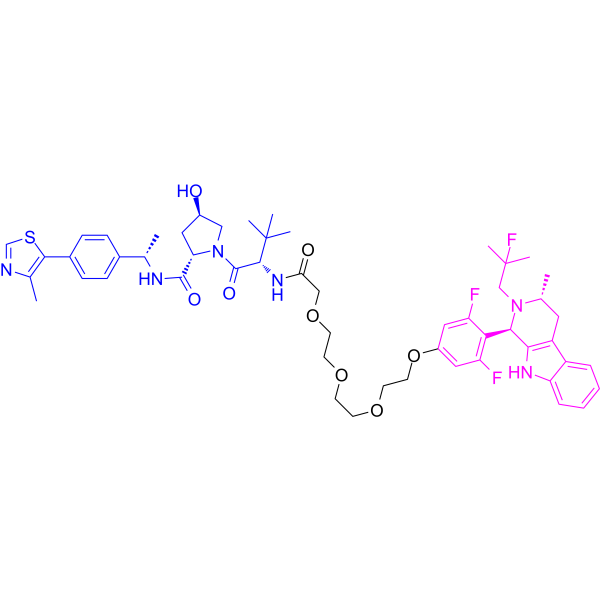 0 ImagesPROTAC ER Degrader-4 is a von Hippel-Lindau-based PROATC estrogen receptor (ER) degrader, binding to ER with an IC50 of 0.8 nM. PROTAC ER Degrader-4 induces ER degradation in MCF-7 cells with an IC50 of 0.3 nM.

-
PROTAC BTK Degrader-6
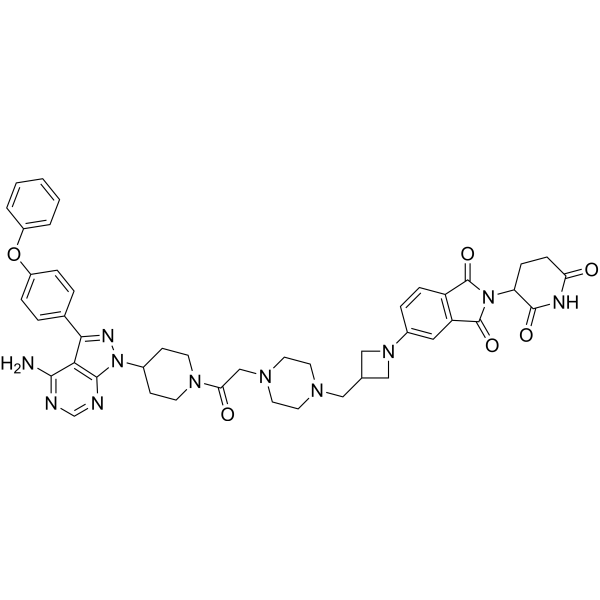 0 ImagesPROTAC BTK Degrader-6 is an orally active PROTAC-based BTK degrader with a DC50 of 3.18 nM. PROTAC BTK Degrader-6 induces BTK degradation via proteasomal degradation, ubiquitination, and CRBN ligase recruitment pathways. PROTAC BTK Degrader-6 inhibits NF-κB activation, mRNA expression of IL-1β and IL-6, as well as the secretion of pro-inflammatory cytokines. PROTAC BTK Degrader-6 reduces inflammatory responses in a zymosan-induced mouse model of peritonitis. PROTAC BTK Degrader-6 can be used in peritonitis-related research.
-
MS4322 (isomer)
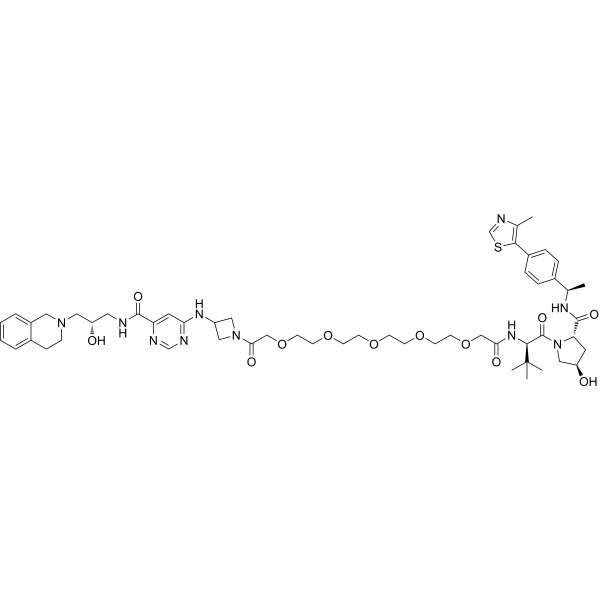 0 ImagesSynonyms: YS43-22 (isomer)MS4322 (YS43-22) isomer is an isomer of MS4322. MS4322 is a specific PRMT5 PROTAC degrader. MS4322 reduces the PRMT5 protein level with a DC50 of 1.1 μM in MCF-7 cells. MS4322 inhibits the methyltransferase activity of PRMT5 with an IC50 of 18 nM. MS4322 promotes ubiquitination and degradation of PRMT5. MS4322 can be used for the research of breast cancer, lung cancer, and hepatocellular cancer.