



SARS-CoV
SARS coronavirus
SARS-CoV is the coronavirus (CoV) that causes severe acute respiratory syndrome (SARS). CoVs are enveloped viruses with a positive-sense, single-stranded RNA and can cause health-threatening outbreaks by targeting human respiratory system, including not only SARS, but also Middle East respiratory syndrome (MERS) and SARS-CoV-2 (the cause of COVID-19).
CoVs have four main structural proteins: spike(S), membrane (M), envelope (E), and nucleocapsid (N) proteins. An S protein mediates the CoV entry into host cells by attaching to a cellular receptor (ACE2 for SARS-CoV and SARS-CoV-2, DPP4 for MERS-CoV), followed by fusion between virus and host cell membranes. Genome replication and subgenomic RNA transcription after entry carry on with the participation of many nonstructural proteins such as Mpro (main protease or 3CLpro), PLpro (papain-like protease) and RdRp (RNA-dependent RNA polymerase). Then the structural proteins are translated, assembled into mature virions, and released via vesicles by exocytosis. It is worth mentioning that a protease called TMPRSS2 (transmembrane protease, serine 2) play important roles throughout the whole life of CoVs (such as attachment, assembling and release) by cleaving S protein. All the proteins and subcellular structures participated in the life cycle of CoVs are promising targets for treatment of disease caused by CoVs.
All Product Categories
-
SARS-CoV Related Products (1208)
Related Products (1208)

-
Recombinant Proteins (196)
-
Thapsigargin (Standard)
 0 ImagesCat. No.: HY-13433RCAS No.: 67526-95-8Thapsigargin (Standard) is the analytical standard of Thapsigargin (HY-13433). This product is intended for research and analytical applications. Thapsigargin, an endoplasmic reticulum (ER) stress inducer, is an inhibitor of microsomal Ca2+-ATPase. Thapsigargin efficiently inhibits coronavirus (HCoV-229E, MERS-CoV, SARS-CoV-2) replication in different cell types.
-
P315V3
 0 ImagesCat. No.: HY-P10872P315V3 is an pan inhibitor for coronavirus, that inhibits SARS-CoV-2 prototypePT, Delta, BA.1 and BA.4 strain with IC50s of 10.9, 8.9, 8.6, and 2.7 nM. P315V3 exhibits cytotoxicity in Vero cell with CC50 of 4.3 μM. P315V3 exhibits anti-infectious efficacy in mouse models.
-
SARS-CoV-2-IN-44
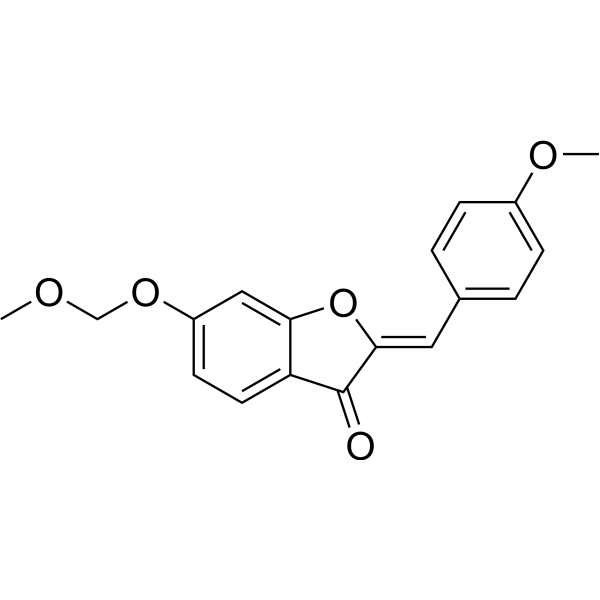 0 ImagesCat. No.: HY-155014CAS No.: 1311271-71-2SARS-CoV-2-IN-44, a inhibitor of SARS-CoV-2, inhibits viral replication, with an EC50 of 0.6μM. SARS-CoV-2-IN-44 has no evident cytotoxic effect in Calu-3 cells and can be used for antiviral research.
-
Crepidiaside B
 0 ImagesCat. No.: HY-N9664CAS No.: 101921-35-1Crepidiaside B is a plant-derived active component that can be found in Cichorium intybus. Crepidiaside B acts as a SARS-CoV-2 spike glycoprotein inhibitor and is used in research related to coronavirus disease 2019 (COVID-19).
-
CMX990
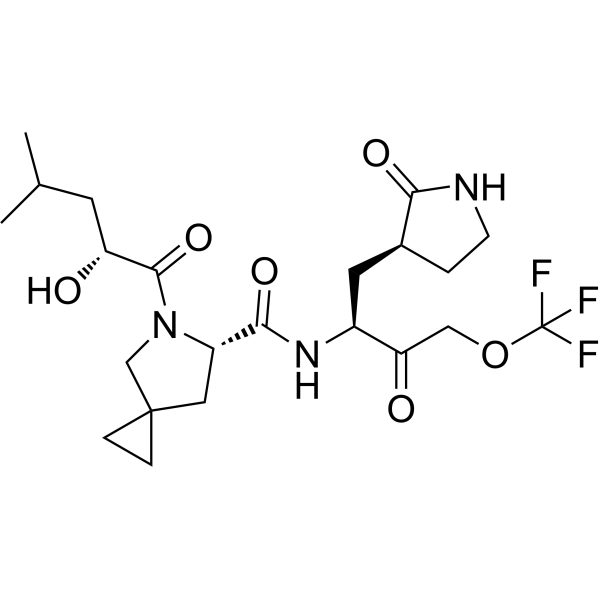 0 ImagesCat. No.: HY-149767CAS No.: 2882934-64-5CMX990 is a SARS-CoV-2 3CL protease inhibitor. The EC90s for inhibiting SARS-CoV-2 were 9.6 nM and 101 nM in human bronchial epithelial cells (HBECs) and HeLa-ACE2 cells, respectively. CMX990 has good ADME and pharmacokinetic properties.
-
Olgotrelvir
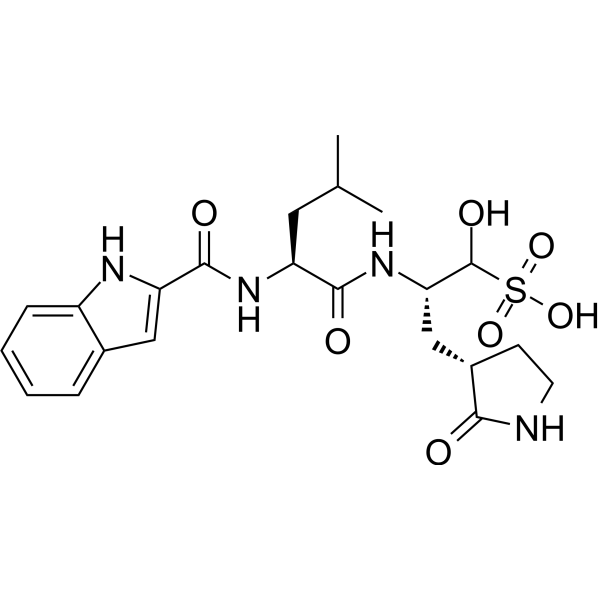 0 ImagesCat. No.: HY-156655CAS No.: 2763596-71-8Synonyms: STI-1558Olgotrelvir (STI-1558) is an orally active dual inhibitor of coronavirus main protease (Mpro) and human cell cathepsin (Cathepsin L). Olgotrelvir is readily converted to its active form, AC1115, in full blood and/or plasma. Olgotrelvir can effectively inhibit both SARS-CoV-2 replication and entry into host cells.
-
Antimicrobial agent-10
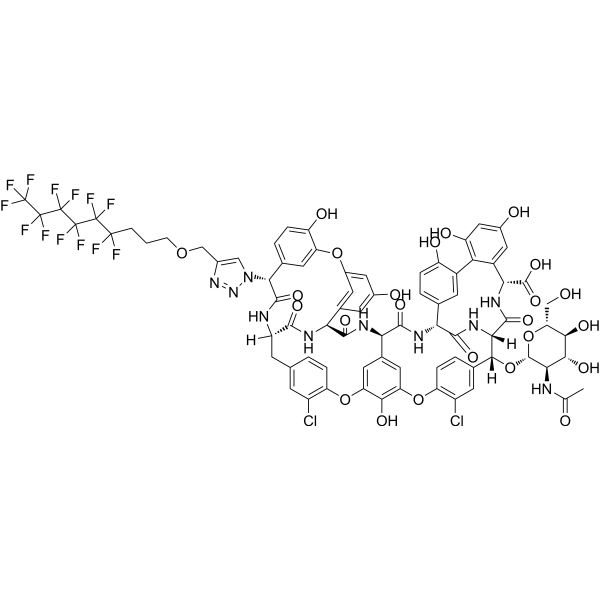 0 ImagesCat. No.: HY-151497Antimicrobial agent-10 is a SARS-CoV-2 inhibitor with outstanding antibacterial activity.
-
SARS-CoV-2 Mpro-IN-12
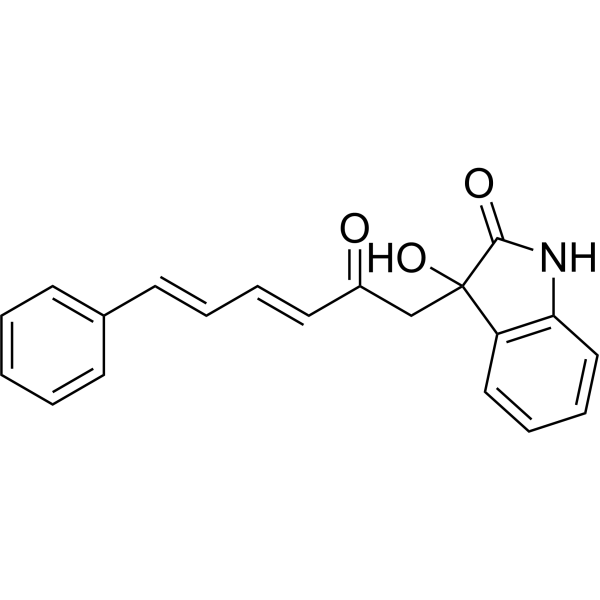 0 ImagesCat. No.: HY-156459CAS No.: 370583-15-6
-
INSCoV-600K(1)
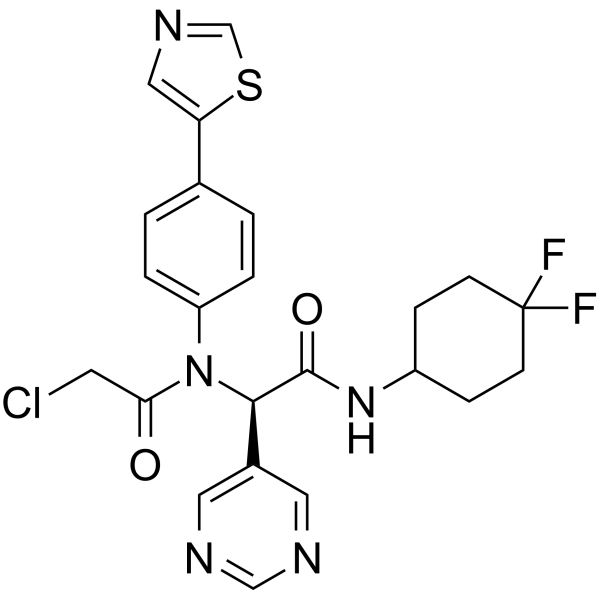 0 ImagesCat. No.: HY-144063CAS No.: 2735704-15-9INSCoV-600K(1) is a potent inhibitor of Mpro (3CLpro). Proteases (PL pro and 3CL pro) are involved with transcription and replication of the virus. INSCoV-600K(1) has the potential for the research of SARS-CoV-2 infection (extracted from patent WO2021219089A1).
-
Tubeimoside II (Standard)
 0 ImagesCat. No.: HY-N0891RCAS No.: 115810-12-3Synonyms: Tubeimoside-B (Standard)Tubeimoside II (Standard) (Tubeimoside-B (Standard)) is the analytical standard of Tubeimoside II (HY-N0891). This product is intended for research and analytical applications. Tubeimoside II is an orally active triterpenoid saponin and antiviral agent that binds to PACT/PRKRA with Kd values of 5.37 μM and 133.1 μM, respectively. Tubeimoside II inhibits oxidase-dependent EGFR activation and reduces TGF-β1-induced oxidative stress. Tubeimoside II activates the RIG-I signaling pathway and increases IFN-β secretion. Tubeimoside II suppresses TPA-induced ear edema, mouse sarcoma 180 growth, and TPA-induced skin tumor formation. Tubeimoside II exerts broad-spectrum antiviral activity against SARS-CoV-2, HCoV-OC43, and IAV-H1N1/FM1. Tubeimoside II can be used in research related to retinoblastoma, respiratory viral infections, skin tumors, and sarcoma 180.
-
TriDAP
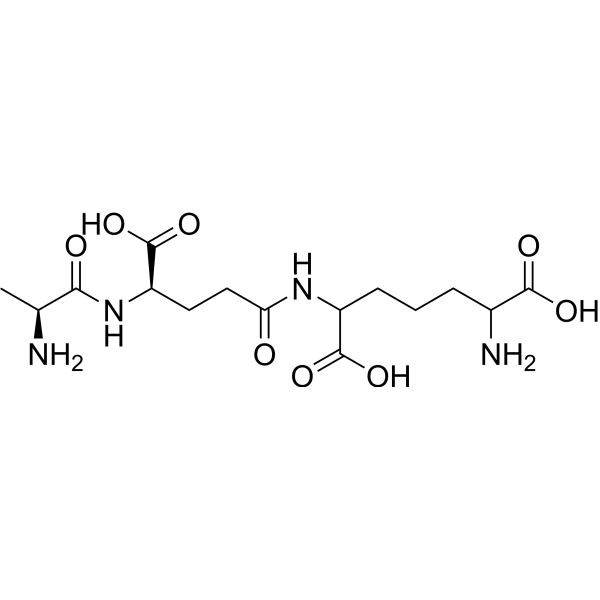 0 ImagesCat. No.: HY-P5522CAS No.: 877462-71-0Synonyms: L-Ala-γ-D-Glu-meso-diaminopimelic acidTriDAP (L-Ala-γ-D-Glu-meso-diaminopimelic acid) is a NOD1 agonist with a Kd value of 34.5 μM. TriDAP enhances the binding of NOD1-RICK, promotes RICK phosphorylation, and activates the NF-κB, TAK1, MEK/ERK, p38 and interferon response pathways. TriDAP downregulates Runx2 via increasing ubiquitination and reduces trabecular bone parameters. TriDAP decreases IκBα levels and increases p65 levels. TriDAP induces the secretion of proinflammatory mediators IL-8 and prostaglandins, triggers tissue inflammation and innate immune activation, and inhibits SARS-CoV-2 replication in lung epithelial cells. TriDAP increases the RANKL/OPG ratio in mice, reduces bone mass and enhances osteoclast activity, and inhibits new bone formation by decreasing the mineralization deposition rate in mice. TriDAP can be used in research related to pulpitis, chronic ulcerative colitis, Crohn's disease and SARS-CoV-2 infection.
-
Z-L(D-Val)G-CHN2
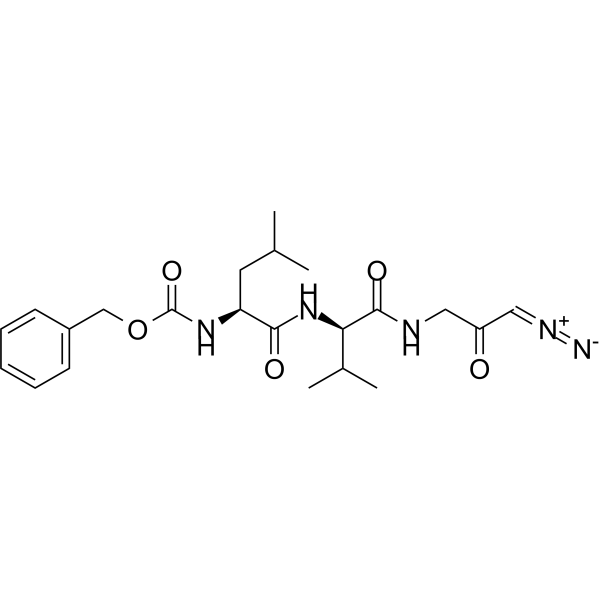 0 ImagesCat. No.: HY-108137APurity: 99.35%Z-L(D-Val)G-CHN2 is the isoform of Z-LVG-CHN2 (HY-108137). Z-LVG-CHN2 is a cell-permeable and irreversible inhibitor of cysteine proteinase. Z-LVG-CHN2 is a tripeptide derivative and mimics part of the human cysteine proteinase-binding center. Z-LVG-CHN2 displays an inhibition on HSV whereas no significant effect on poliovirus replication. Z-LVG-CHN2 effectively blocks SARS-COV-2 replication (EC50=190 nM) via inhibition of SARS-COV-2 3CL pro protease.
-
K777 tosylate
 0 ImagesCat. No.: HY-119293ACAS No.: 502960-91-0K777 tosylate is a potent, orally active and irreversible cysteine protease inhibitor. K777 tosylate is also a potent CYP3A4 inhibitor with an IC50 of 60 nM. K777 tosylate irreversibly inhibits Cruzain, the major cysteine protease of Trypansoma cruzi, and cathepsins B and L. K777 tosylate is a broad-spectrum antiviral by targeting cathepsin-mediated cell entry. K777 tosylate inhibits SARS-CoV and EBOV pseudovirus entry with IC50 values of 0.68 nM and 0.87 nM, respectively.
-
Ritonavir-13C,d3
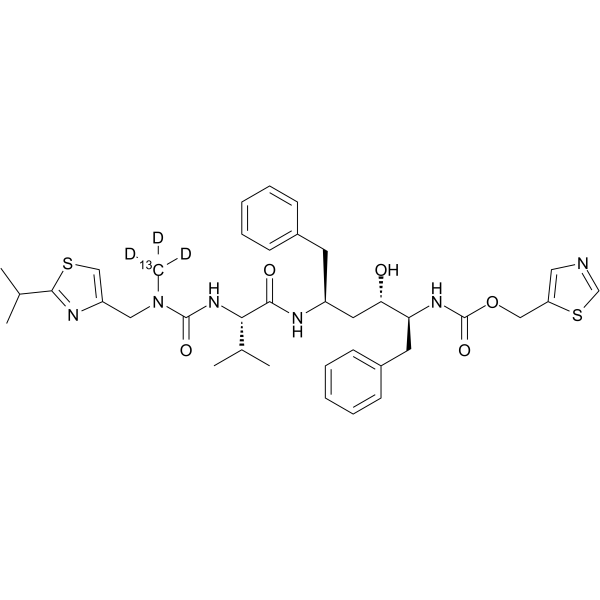 0 ImagesCat. No.: HY-90001S1CAS No.: 2937755-89-8Synonyms: ABT 538-13C,d3; RTV-13C,d3
-
INSCoV-601I(1)
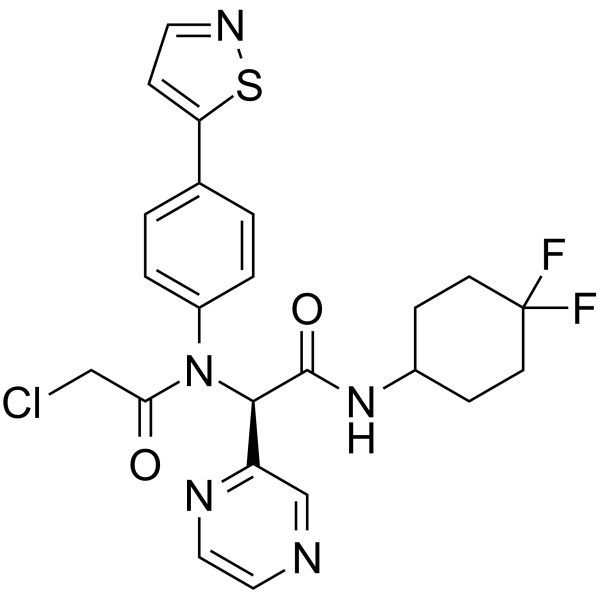 0 ImagesCat. No.: HY-144061CAS No.: 2735704-19-3INSCoV-601I(1) is a potent inhibitor of Mpro (3CLpro). Proteases (PL pro and 3CL pro) are involved with transcription and replication of the virus. INSCoV-601I(1) has the potential for the research of SARS-CoV-2 infection (extracted from patent WO2021219089A1).
-
Z-Leu-Leu-Leu-fluoromethyl ketone
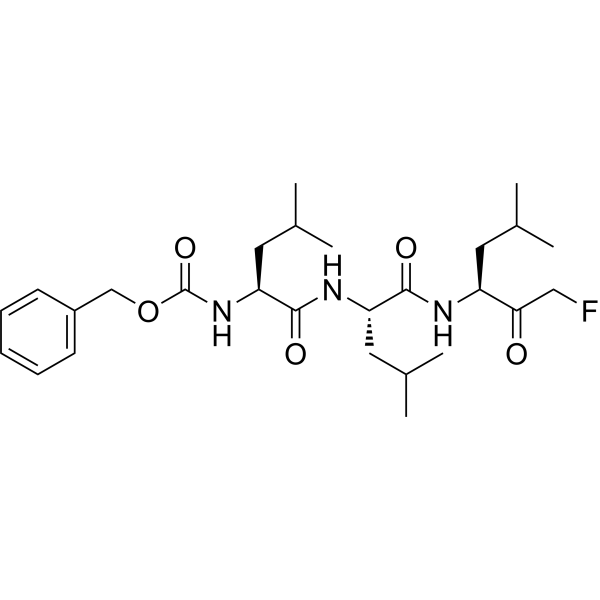 0 ImagesCat. No.: HY-P5975CAS No.: 371167-61-2Synonyms: Z-LLL-FMK

-
Fluphenazine dihydrochloride (Standard)
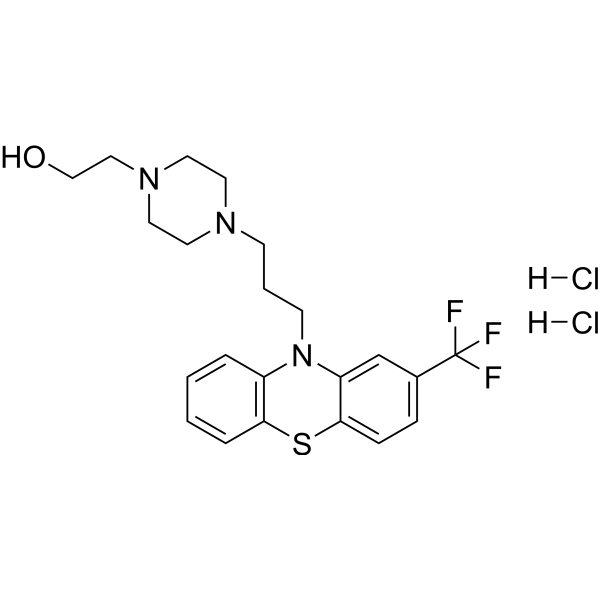 0 ImagesFluphenazine (dihydrochloride) (Standard) is the analytical standard of Fluphenazine (dihydrochloride). This product is intended for research and analytical applications. Fluphenazine dihydrochloride is a potent, orally active phenothiazine-based dopamine receptor antagonist. Fluphenazine dihydrochloride blocks neuronal voltage-gated sodium channels. Fluphenazine dihydrochloride acts primarily through antagonism of postsynaptic dopamine-2 receptors in mesolimbic, nigrostriatal, and tuberoinfundibular neural pathways. Fluphenazine dihydrochloride can antagonize Methylphenidate-induced stereotyped gnawing and inhibit climbing behaviour in mice. Fluphenazine dihydrochloride can be used for researching psychosis and painful peripheral neuropathy associated with diabetes and has potential to inhibit SARS-CoV-2.
-
SARS-CoV-2-IN-20
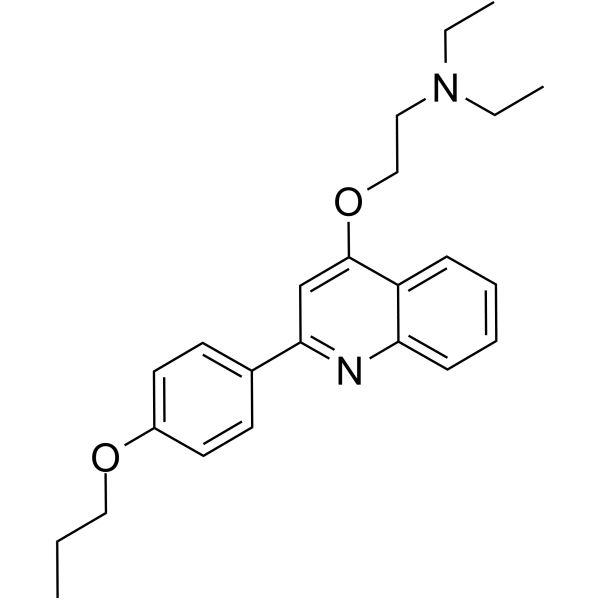 0 ImagesCat. No.: HY-146381CAS No.: 1260244-33-4SARS-CoV-2-IN-20 (Compound 1a) is a potent inhibitor of SARS-CoV-2 with an EC50 of 6.5 μM. SARS-CoV-2-IN-20 has the potential for the research of infection diseases.




