



Flavivirus
Flavivirus
Flavivirus is a group of single-stranded positive-sense RNA viruses that are mainly transmitted by arthropods such as mosquitoes and ticks. The viral particles of the Flavivirus are spherical, with a diameter of approximately 40-60 nanometers and have an envelope. The envelope is embedded with spike glycoproteins, which play a crucial role in the recognition and binding process between the virus and host cells. Flavivirus contains a variety of viruses, such as the yellow fever virus and the dengue virus, etc., which can cause a variety of serious diseases and have a significant impact on global public health security[1].
All Product Categories
-
Flavivirus Related Products (197)
Related Products (197)

-
Antibodies (1)
-
Zika virus-IN-1
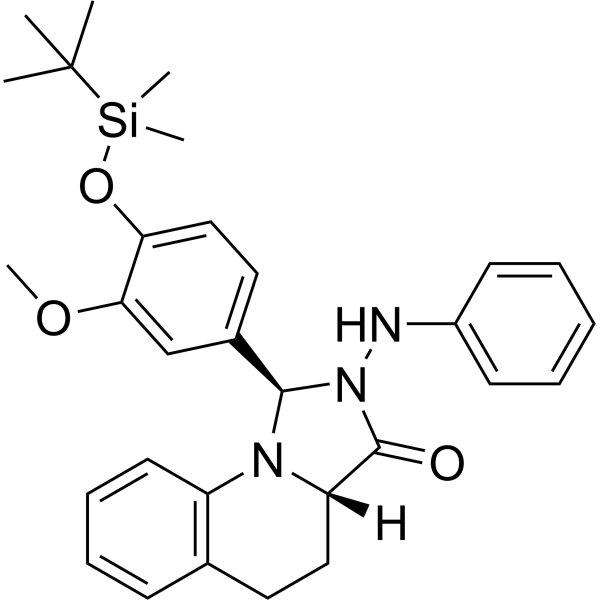 0 ImagesCat. No.: HY-146191CAS No.: 2527912-80-5Zika virus-IN-1 (Compd 2) is a Zika virus inhibitor, with an EC50 of 1.56 μM .
-
XA-E
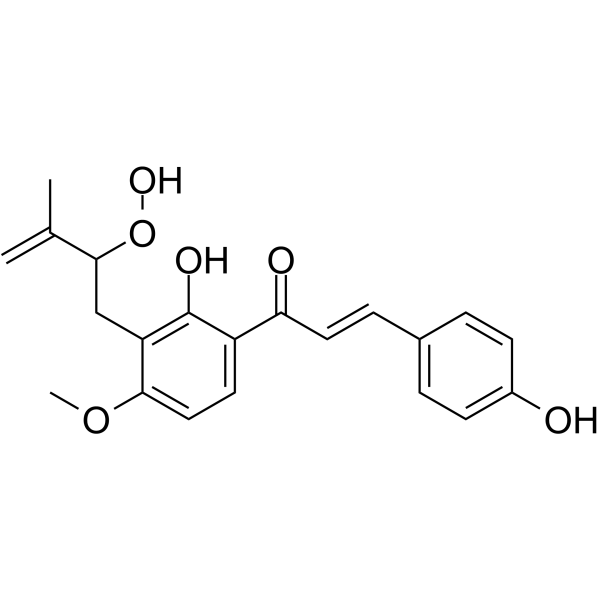 0 ImagesCat. No.: HY-115918CAS No.: 132998-84-6Synonyms: Xanthoangelol EXA-E is a compound purified from a methanol-ethyl acetate extract from A. keiskei. XA-E displays anti-ZIKV activity with an IC50 value of 22.0 µM.
-
JMX0207
 0 ImagesCat. No.: HY-184048CAS No.: 33580-97-1JMX0207 is an orally active flavivirus NS2B-NS3 protease inhibitor. JMX0207 showed an IC50-SLC of 1.3 μM for blocking NS2B-NS3 protein interaction and an IC50-pro of 8.2 μM for inhibiting protease catalytic activity.. JMX0207 directly binds viral NS3 protease at the NS2B-NS3 interface with a Kd of 1.1 μM, blocks viral polyprotein precursor processing, suppresses viral RNA replication and viral protein production. JMX0207 can be used for the study of Zika virus infection and Dengue virus infection.
-
Zika virus-IN-2
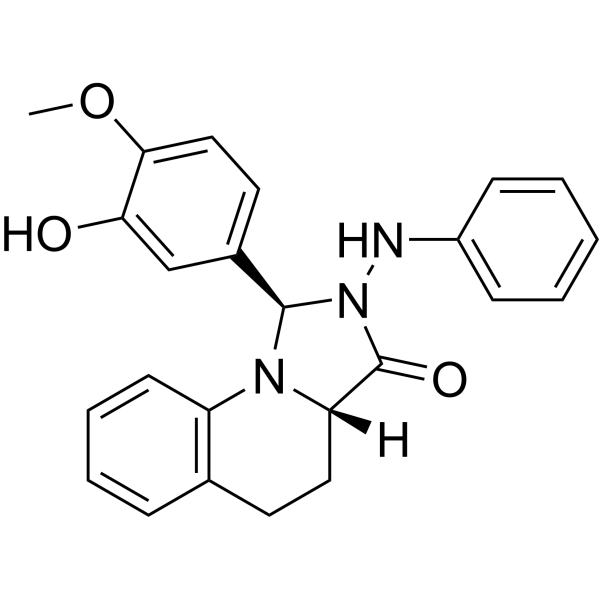 0 ImagesCat. No.: HY-146192CAS No.: 2527912-53-2Zika virus-IN-2 (Compd 3) is a Zika virus inhibitor, with an EC50 of 7.4 μM .
-
Dianemycin (Standard)
 0 ImagesCat. No.: HY-100528ARCAS No.: 35865-33-9Synonyms: Nanchangmycin free acid (Standard)4-Methoxycinnamic acid (Standard) is the analytical standard of 4-Methoxycinnamic acid. This product is intended for research and analytical applications. 4-Methoxycinnamic acid is detected as natural phenylpropanoid in A. preissii.
-
NSC-323241
 0 ImagesCat. No.: HY-176433CAS No.: 79514-43-5NSC-323241 is a potent STT3A-mediated mega protein complex assembly inhibitor. NSC-323241 disrupts he endoplasmic reticulum (ER) mega complex nucleated by STT3A during dengue virus (DENV) and Zika virus (ZIKV) infection. NSC-323241 targets the binding of STT3A subcomplex with viral nonstructural proteins (e.g., NS2B, NS3) and host translocon proteins, disrupting the formation of viral replication microenvironment. NSC-323241 is promising for research of flavivirus infection, such as dengue fever and Zika virus.
-
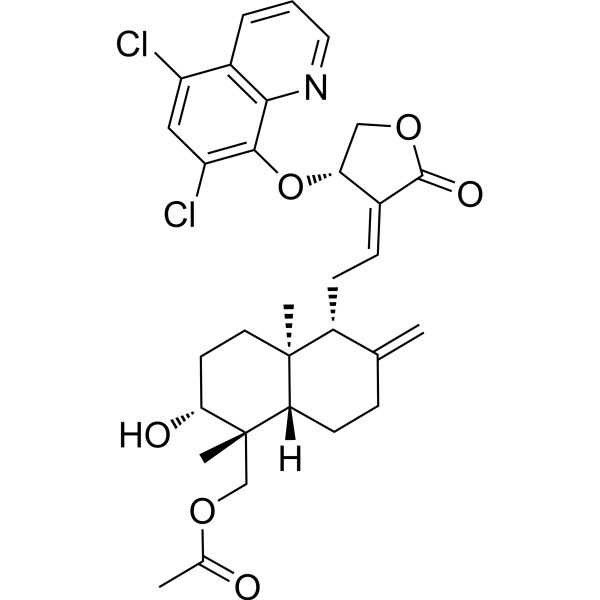
DENV-IN-10
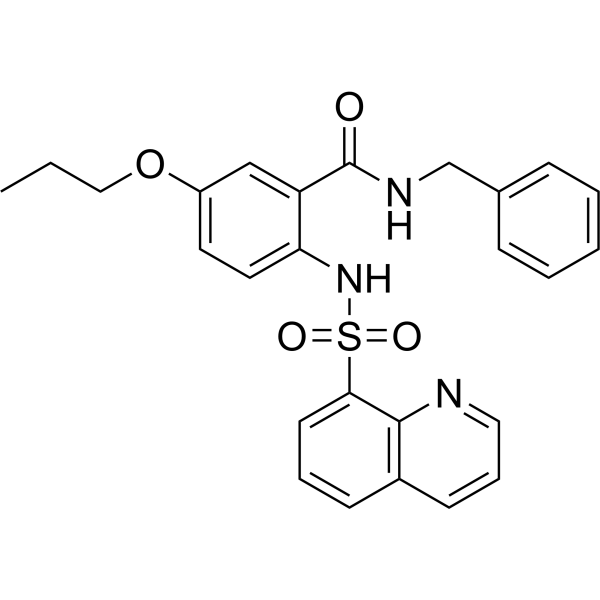 0 ImagesCat. No.: HY-149251CAS No.: 3043724-36-0DENV-IN-10 is a potent tetravalent dengue inhibitor, with EC50s of 1.36, 0.87, 0.94, and 0.95 μM against DENV-1-4 serotypes, respectively. DENV-IN-10 is a post-entry replication inhibitor that appears to be specific for cells of primate origin.


-
Antiviral agent 81
 0 ImagesCat. No.: HY-182761Antiviral agent 81 is an orally bioavailable N-acylated remdesivir derivative and RdRp inhibitor with 45.3% oral bioavailability (based on active metabolite GS-441524 exposure), plasma half-life >8 h, and reduced CYP3A4 inhibition. Antiviral agent 81 exhibits activity against Coronaviridae, Flaviviridae, and Pneumoviridae, and shows no activity against Orthomyxoviridae, Herpesviridae, and Alphaviridae. Antiviral agent 81 can be used for the research of viral infections.
-
Mycophenolic acid sodium (Standard)
 0 ImagesSynonyms: Mycophenolate sodium (Standard)Mycophenolic acid (sodium) (Standard) is the analytical standard of Mycophenolic acid (sodium). This product is intended for research and analytical applications. Mycophenolic acid sodium is a potent uncompetitive inosine monophosphate dehydrogenase (IMPDH) inhibitor with an EC50 of 0.24 μM. Mycophenolic acid sodium demonstrates antiviral effects against a wide range of RNA viruses including influenza. Mycophenolic acid sodium is an immunosuppressive agent. Antiangiogenic and antitumor effects.
-
Flaviviruses-IN-1
 0 ImagesCat. No.: HY-118012CAS No.: 392237-10-4Flaviviruses-IN-1 is an inhibitor of several viruses belonging to the Flaviviridae family, with activity to inhibit viral infection. Flaviviruses-IN-1 is able to specifically inhibit multiple viruses of the Flaviviridae family. The mechanism of action of Flaviviruses-IN-1 is related to the modulation of the host cell immune response to viral infection. Flaviviruses-IN-1 was identified as a potential candidate compound in a high-throughput screening. Flaviviruses-IN-1 provides a new strategy for inhibiting infections caused by the Flaviviridae family.
-
TYT-1
 0 ImagesCat. No.: HY-122196CAS No.: 64803-10-7TYT-1 is a sulfonamide-thiourea compound that has inhibitory activity against West Nile virus replication with a 50% effective concentration of 0.7 microM, blocking a post-entry, pre-assembly step of viral replication.
-
PS1097
 0 ImagesCat. No.: HY-186075CAS No.: 1822320-58-0PS1097 is a broad-spectrum antiviral inhibitor with a BVDV RdRp IC50 of 0.64 μM. PS1097 selectively reduces RTN3 protein levels, causes partial RTN3 mRNA reduction, and leaves other endoplasmic reticulum-resident proteins unaffected. PS1097 inhibits replication of Zika virus and multiple viruses that use the endoplasmic reticulum as a replication hub. PS1097 inhibits BVDV RdRp enzymatic activity and exerts activity against Bovine Viral Diarrhea Virus. PS1097 can be used for the research of zika virus infection, usutu virus infection, west nile virus infection, COVID-19, coxsackie b virus 5 infection, chikungunya virus infection, vaccinia virus infection.
-
Lanatoside C (Standard)
 0 ImagesLanatoside C (Standard) is the analytical standard of Lanatoside C. This product is intended for research and analytical applications. Lanatoside C is a cardiac glycoside, can be used in the treatment of congestive heart failure and cardiac arrhythmia.Lanatoside C has an IC50 of 0.19 μM for dengue virus infection in HuH-7 cells. Lanatoside C can effectively inhibit all four serotypes of dengue virus, flavivirus Kunjin, alphavirus Chikungunya, Sindbis virus and the human enterovirus 71.
-
Anti-Venezuelan equine encephalitis virus E2 protein Antibody (VEEV-57)
 0 ImagesCat. No.: HY-P991766Anti-Venezuelan equine encephalitis virus E2 protein Antibody (VEEV-57) reacts with the E2 protein of the Venezuelan equine encephalitis virus (VEEV). Anti-Venezuelan equine encephalitis virus E2 protein Antibody (VEEV-57) inhibits VEEV attachment to Vero cells, viral egress, viral fusion, and LDLRAD3-D1-Fc binding. Recommend Isotype Controls: Mouse IgG2c kappa, Isotype Control (HY-P99981).
-
DB772 free base
 0 ImagesCat. No.: HY-114621BCAS No.: 433735-90-1DB772 free base is a bovine viral diarrhoea virus (BVDV) inhibitor. DB772 free base also has anti-prion activity.
-
Cephaeline (Standard)
 0 ImagesSynonyms: (-)-Cephaeline (Standard); NSC 32944 free base (Standard)Cephaeline ((-)-Cephaeline), a desmethyl analog of Emetine, is a phenolic alkaloid in Indian Ipecac roots isolated from the Cephaelis ipecacuanha. Cephaeline exhibits potent inhibition of both Zika virus (ZIKV) and Ebola virus (EBOV) infections. Cephaeline is an inductor of histone H3 acetylation and an inhibitor of mucoepidermoid carcinoma cancer stem cells (MEC), which promotes ferroptosis by inhibiting NRF2 to exert anti-lung cancer efficacy.
-
Quinine dihydrochloride
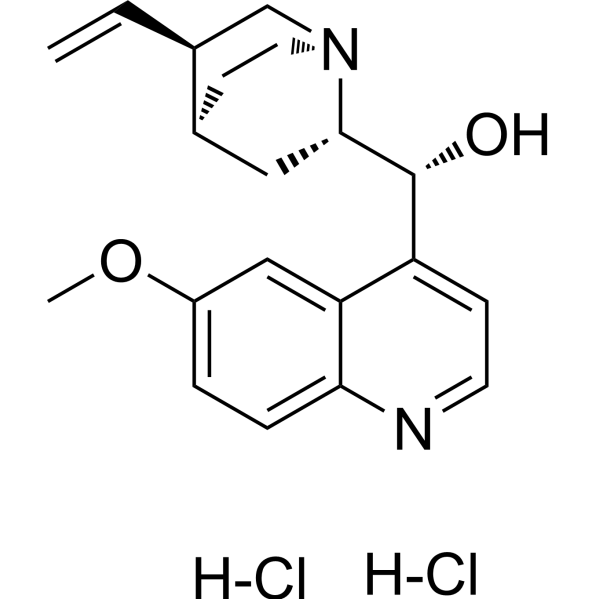 0 ImagesQuinine dihydrochloride is an orally active alkaloid extracted from cinchona bark, possessing various biological activities including antimalarial, antidengue virus (DENV), and anticancer properties. Quinine dihydrochloride is a potassium channel inhibitor that inhibits WT mouse Slo3 (KCa5.1) channel currents evoked by voltage pulses to +100 mV with an IC50 of 169 μM.




