



Reactive Oxygen Species (ROS) Activator
-
Isobavachalcone (Standard)
 0 ImagesSynonyms: Corylifolinin (Standard); Isobacachalcone (Standard)
Isobavachalcone (Standard) is the analytical standard of Isobavachalcone. This product is intended for research and analytical applications. Isobavachalcone (Corylifolinin) is derived from Psoralea corylifolia Linn. and is a potent inhibitor of Akt signaling pathway, which induces apoptosis in human cancer cells (Inhibits OVCAR-8 cell growth with an IC50 value of 7.92 μM). Isobavachalcone also induces Reactive Oxyen Species (ROS) generation in OVCAR-8 cells and has exhibit cancer anti-promotive and anti-proliferative activity.
-
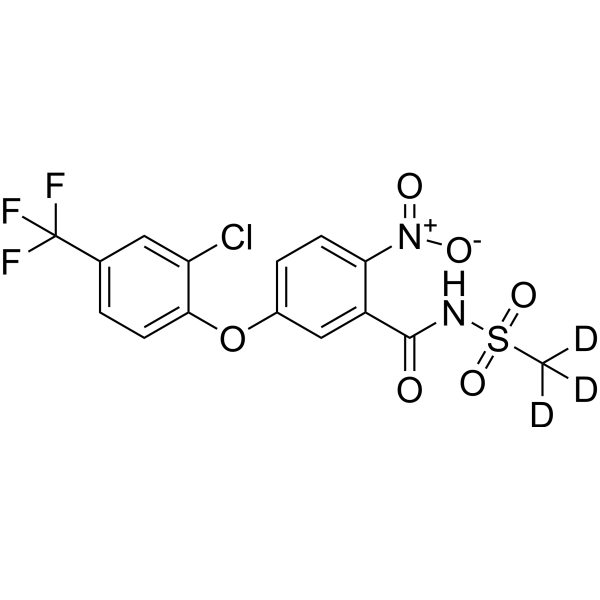
Fomesafen-d3
 0 ImagesCat. No.: HY-B2010S
Fomesafen-d3 is the deuterium-labeled Fomesafen (HY-B2010). Fomesafen is an orally active herbicide. Fomesafen inhibits protoporphyrinogen oxidase (PPO). Fomesafen induces Apoptosis and increases ROS. Fomesafen exhibits developmental toxicity, immunotoxicity, and neurotoxicity. It induces precancerous lesions in the liver and hepaturoporphyria in mice. Fomesafen is used to control broadleaf weeds in soybean fields, rubber plantations, and orchards.
-
SDH-IN-36
 0 ImagesCat. No.: HY-178495CAS No.: 261929-60-6
SDH-IN-36 (Compound 17) is a derivative of alpha-D-tocopherol. SDH-IN-36 increases ROS and induces apoptosis by inhibiting SDHC and blocking electron transfer. SDH-IN-36 can inhibit the proliferation of various tumor cells, such as SSK4 (GI50 = 0.156 µM), SSNU638 (GI50 = 0.659 µM), and SKATOIII (GI50 = 0.490 µM) cells. SDH-IN-36 can significantly inhibit tumor growth. SDH-IN-36 can be used for research on cancers such as gastric cancer.
-
5-Acetamide-Butenolide
 0 ImagesCat. No.: HY-W402074CAS No.: 16275-44-8Synonyms: Butenolide
5-Acetamide-Butenolide (Butenolide) is a mycotoxin with pro-oxidant activity, which is found in Fusarium. 5-Acetamide-Butenolide disrupts the mitochondrial membrane potential in primary neonatal rat cardiomyocytes. 5-Acetamide-Butenolide also induces the production of thiobarbituric acid reactive substances (TBARS) in isolated rat myocardial mitochondria. 5-Acetamide-Butenolide increases the production of reactive oxygen species (ROS), decreases the levels of GSH and reduces the viability of HepG2 cells.
-
STAT3-IN-51
 0 ImagesCat. No.: HY-180245
STAT3-IN-51 is a STAT3 inhibitor that directly binds to the STAT3 SH2 domain. STAT3-IN-51 induces apoptosis, ferroptosis, and immunogenic cell death (ICD) to potentiate anti-tumor immunity. STAT3-IN-51 inhibits STAT3 activation (phosphorylation, p-STAT3) and its downstream signaling. STAT3-IN-51 induces ROS generation, decreases Bcl-2 expression, disruptes mitochondrial function, suppresses GPX4 activity, and promotes lipid peroxidation. STAT3-IN-51 can be used for the study of colorectal carcinoma, breast adenocarcinoma, non-small cell lung cancer (NSCLC) and Cisplatin (HY-17394)-resistant pulmonary adenocarcinoma.
-
Tubulin polymerization-IN-82
 0 ImagesCat. No.: HY-174411CAS No.: 3067075-77-5
Tubulin polymerization-IN-82 is a tubulin inhibitor. Tubulin polymerization-IN-82 inhibits cell migration and invasion, and triggers cell apoptosis through the mitochondria and ER stress mediated pathway. Tubulin polymerization-IN-82 exhibits antitumor activity against drug resistance cancer cells, and inhibits tumor growth, can be used for liver cancer research.
-
Apoptosis inducer 51
 0 ImagesCat. No.: HY-179054
Apoptosis inducer 51 (Compound 5d) is an apoptosis inducer. Apoptosis inducer 51 exhibits strong inhibitory activity against MDA-MB-231 cells. Apoptosis inducer 51 inhibits cell invasion and migration, induces G2/M phase cell cycle arrest and cell apoptosis. Apoptosis inducer 51 causes DNA damage, ROS burst and mitochondrial membrane potential (MMP) collapse. Apoptosis inducer 51 can be used for the study of triple-negative breast cancer.
-
PBE-AMF
 0 ImagesCat. No.: HY-159515
PBE-AMF is a prodrug that activates H2O2 with anticancer activity. PBE-AMF impedes tumor proliferation by inhibiting DNA synthesis, reducing ATP levels, inducing apoptosis, and arresting the cell cycle. PBE-AMF potently and selectively inhibits the proliferation of MDA-MB-231 cells (IC50=6.4 μM) while sparing non-cancerous MCF-10A cells.
-
PIISVYWK
 0 ImagesCat. No.: HY-P11589CAS No.: 2016043-80-2
-
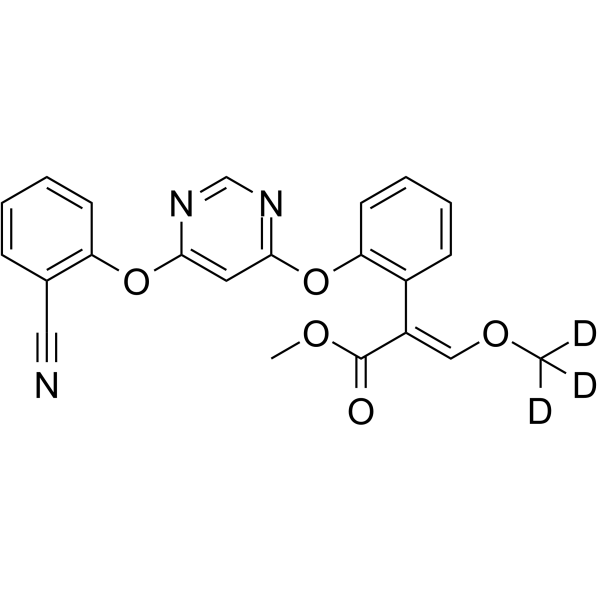
Azoxystrobin-d3
 0 ImagesCat. No.: HY-B0849S1
Azoxystrobin-d3 is deuterium labeled Azoxystrobin. Azoxystrobin is a broad-spectrum β-methoxyacrylate fungicide. Azoxystrobin inhibits mitochondrial respiration by binding to the Qo site of the cytochrome bc1 complex and inhibiting electron transfer. Azoxystrobin induces the production of reactive oxygen species (ROS) and induces cell apoptosis.
-
DZ-1-DHA
 0 ImagesCat. No.: HY-184557CAS No.: 2223036-84-6
DZ-1-DHA is a conjugate of DHA (HY-B2167) and DZ-1 dye. DZ-1-DHA mediates selective cellular uptake via binding to overexpressed OATP1A2. DZ-1-DHA induces the cleavage of Caspase-3, Caspase-8, Caspase-9 and PARP-1. DZ-1-DHA induces Apoptosis and Ferroptosis. DZ-1-DHA induces ROS production through a Fenton-like mechanism, causes mitochondrial membrane depolarization, and triggers lipid peroxidation. DZ-1-DHA can be used in studies related to colorectal cancer liver metastasis.
-
Entadamide A-CO-C12
 0 ImagesCat. No.: HY-179615
Entadamide A-CO-C12 is an Entadamide A (HY-N12125) derivative with potent anti-cancer activity, particularly against breast cancer cell lines. Entadamide A-CO-C12 promotes apoptosis, suppresses migratory ability, sphere formation, and stem-like cell populations. Entadamide A-CO-C12 inhibits tumor growth in a 4T1 mouse model. Entadamide A-CO-C12 can be used for the research of breast cancer.
-
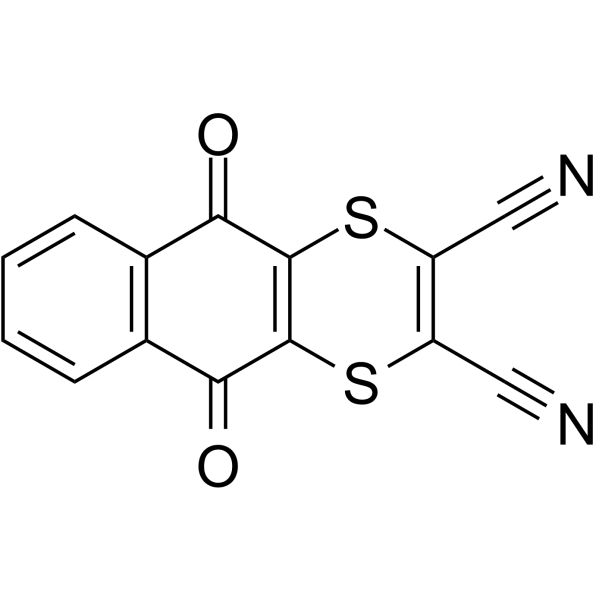
Dithianon
 0 Images
Dithianon is a broad-spectrum anthraquinone fungicide with good adherence to the surface of leaves and fruits. Dithianon is used to control several several fungal of some fruits and vegetables, as anthracnose (Colletotrichum sp., Elsinoe ampelina), mildew (Plasmopara viticola), phomopsis (Phomopsis viticola), among others.
-
PDK1-IN-5
 0 ImagesCat. No.: HY-179501
PDK1-IN-5 is a selective PDK1 inhibitor. PDK1-IN-5 activaties PDH by diminishing phosphorylation level via PDK1 inhibition. PDK1-IN-5 effectively reverses the Warburg effect and shifts cellular energy metabolism from glycolysis toward oxidative phosphorylation by increased acetyl-CoA, reduced lactate, elevated mitochondrial ROS, and subsequent induction of apoptosis. PDK1-IN-5 robustly inhibits tumor growth in vivo without inducing systemic toxicity. PDK1-IN-5 can be used for lung adenocarcinoma, human non-small cell lung adenocarcinoma and gastric colorectal.
-
Mito-DHH chloride
 0 ImagesCat. No.: HY-181525
Mito-DHH chloride is a mitochondria-targeted catechol-type diphenylhexatriene. Mito-DHH chloride rapidly accumulates in mitochondria and undergoes auto-oxidation in the alkaline mitochondrial matrix to generate ROS. Mito-DHH chloride triggers ROS-dependent reduction of ATP levels via dual inhibition of mitochondrial oxidative phosphorylation and glycolytic metabolism, and induces selective apoptosis in cancer cells. Mito-DHH chloride can be used in research related to lung cancer, liver cancer, malignant melanoma, and colon cancer.
-
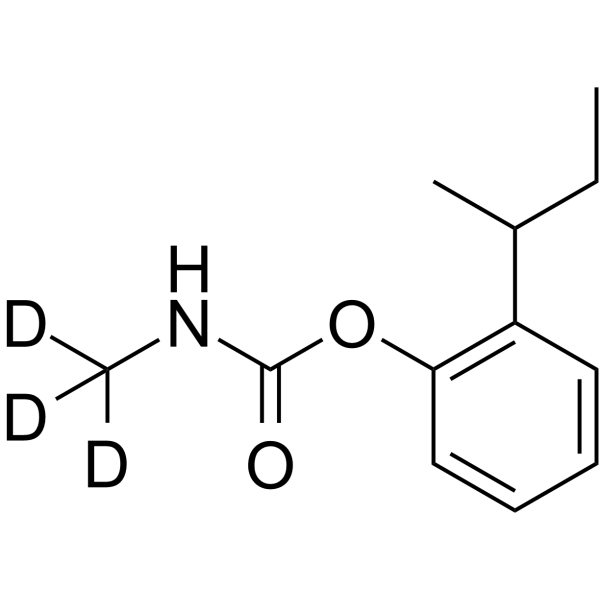
Fenobucarb-d3
 0 Images
Fenobucarb-d3 is the deuterium labeled Fenobucarb. Fenobucarb is a carbamate insecticide. Fenobucarb induces zebrafish developmental neurotoxicity through pathways involved in inflammation, oxidative stress, degeneration and apoptosis. Fenobucarb is a possible risk factor to cardiovascular and cerebrovascular systems in animals.
-
SAP 2.8 peptide
 0 ImagesCat. No.: HY-P11819CAS No.: 3100335-76-7
SAP 2.8 peptide is an antimicrobial peptide. SAP 2.8 peptide induces bacterial membrane rupture and permeabilization, triggers an increase in intracellular ROS production, and causes bacterial death. SAP 2.8 peptide inhibits bacterial biofilm formation and disrupts established biofilms. SAP 2.8 peptide reduces bacterial load in animal models. SAP 2.8 peptide can be used for research on bacterial infections, skin and soft tissue infections, and peritonitis.
-
Mollugin (Standard)
 0 Images
Mollugin (Standard) is the analytical standard of Mollugin. This product is intended for research and analytical applications. Mollugin is an orally active and potent NF-κB inhibitor. Mollugin induces S-phase arrest of HepG2 cells, and increased intracellular reactive oxygen species (ROS) levels. Mollugin induces DNA damage in HepG2 cells, as well as an increase in the expression of p-H2AX. Mollugin shows anti-cancer effect by inhibiting TNF-α-induced NF-κB activation. Mollugin enhances the osteogenic action of BMP-2 (bone morphogenetic protein 2) via the p38-Smad signaling pathway.
-
Antitumor agent-143
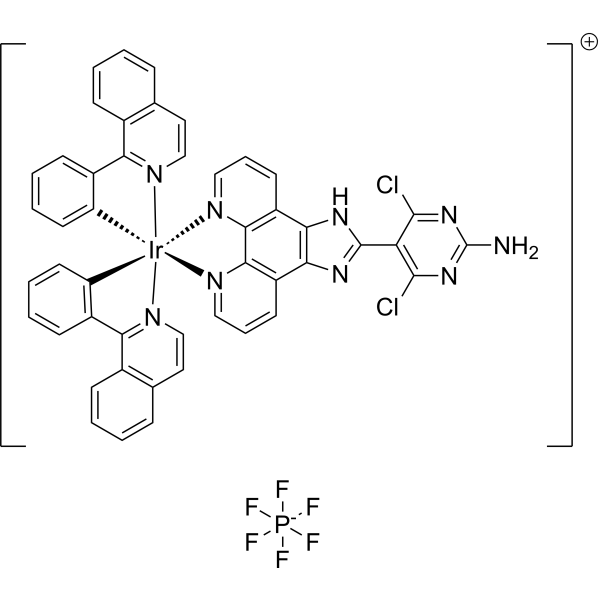 0 ImagesCat. No.: HY-161332
Antitumor agent-143 (compound 2c) is an antitumor agent that blocks cell proliferation of A549 cells during the S phase and induces an early apoptosis. Antitumor agent-143 induces cell death via ferroptosis, apoptosis by a ROS-mediated mitochondrial dysfunction pathway and GSDMD-mediated pyroptosis.
-
Tempo (Standard)
 0 Images
Tempo (Standard) is the analytical standard of Tempo. This product is intended for research and analytical applications. Tempo is a nitric oxide radical and a selective scavenger of ROS in mitochondria. Tempo is also an organocatalyst that disproportionates superoxide and oxidizes primary alcohols to aldehydes in a catalytic cycle. Tempo has mutagenic and antioxidant effects and can induceDNA strand breaks. Tempo also exerts cytotoxic and mutagenic properties in mouse lymphoma cells[4].



