



Reactive Oxygen Species (ROS) Activator
-
VEGFR-2-IN-51
 0 ImagesCat. No.: HY-159510
VEGFR-2-IN-51 (compound 19) is an orally active dual-target inhibitor of VEGFR-2 (IC50=15.33 μM) and tubulin (IC50=0.76 μM) with anti-tumor activity. VEGFR-2-IN-51 induces tumor cell apoptosis by reducing mitochondrial membrane potential and increasing reactive oxygen species (ROS) levels. VEGFR-2-IN-51 exerts anti-angiogenic effects by blocking the VEGFR-2/PI3K/AKT signaling pathway. In addition, VEGFR-2-IN-51 has significant anti-proliferative activity against the gastric cancer cell line MGC-803 (IC50=0.005 μM).
-
PT4
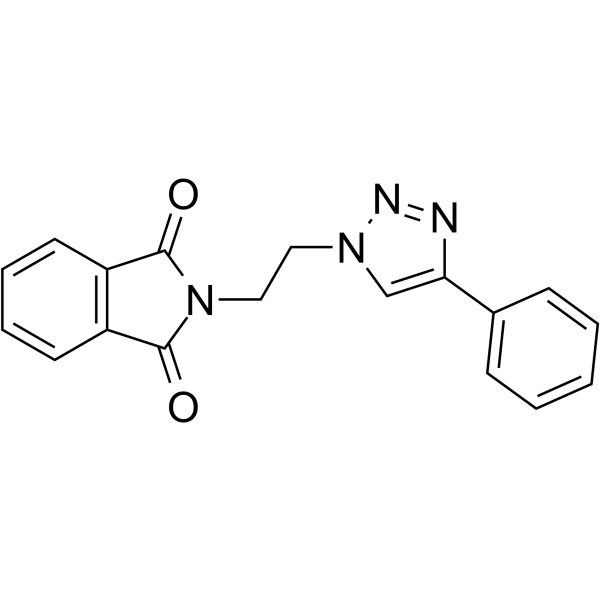 0 ImagesCat. No.: HY-146166CAS No.: 1280738-47-7
PT4 is a therapeutic agent against Cutaneous leishmaniasis (CL). PT4 is effective against both species of Leishmania, with IC50s of 125.18 and 233.18 μM for L. amazonensis and L. braziliensis, respectively. PT4 decreases of mitochondrial membrane potential and increases production of reactive oxygen species, which leads to parasite death. PT4 has a potent in vivo anti-inflammatory activity.
-
Alginate oligosaccharides
 0 ImagesCat. No.: HY-N20693Synonyms: AOS
Alginate oligosaccharides (AOS) are orally effective linear oligosaccharides with anti-inflammatory, antioxidant and antimicrobial activities. Alginate oligosaccharides inhibit the activation of NLRP3 inflammasome and NF-κB, promote nuclear translocation of Nrf2 and phosphorylation of AMPK, and reduce the enhanced functional level of TRPV1. Alginate oligosaccharides improve oxidative stress, ROS production, mitochondrial bioenergetic dysfunction and gait impairment. Alginate oligosaccharides inhibit the release of neuropeptides; alter the structure and viscoelasticity of mucin matrix; disrupt bacterial and fungal biofilms; regulate gut microbiota; and exert anti-apoptotic effects.
-
Nrf-2/HMOX-1-IN-1
 0 ImagesCat. No.: HY-184288
Nrf-2/HMOX-1-IN-1 is a Nrf-2 and HMOX-1 inhibitor, as well as a Ferroptosis inducer. Nrf-2/HMOX-1-IN-1 inhibits GPX activity and upregulates p53 gene expression. Nrf-2/HMOX-1-IN-1 increases intracellular ROS and MDA levels, reduces GSH content, and elevates intracellular iron levels simultaneously. Nrf-2/HMOX-1-IN-1 exerts selective anticancer effects against breast cancer. Nrf-2/HMOX-1-IN-1 can be used in breast cancer-related research.
-
ERK5-IN-7
 0 ImagesCat. No.: HY-181477
ERK5-IN-7 is an orally active ERK5 inhibitor with an IC50 of 403.4 nM. ERK5-IN-7 directly inhibits ERK5 kinase activity, and downregulates the phosphorylation level and total protein expression of ERK5. ERK5-IN-7 induces Apoptosis (upregulates Bax, downregulates Bcl-2, and induces Caspase-3 cleavage). ERK5-IN-7 induces ROS accumulation. ERK5-IN-7 exhibits anticancer effects against Lewis lung cancer.
-
Antibacterial agent 271
 0 ImagesCat. No.: HY-173190
Antibacterial agent 271 is an antibacterial agent with significant inhibition against Escherichia coli (MIC: 2.2 μM). Antibacterial agent 271 reduces metabolic activity by disrupting the integrity of bacterial membranes. Antibacterial agent 271 binds to DNA grooves to inhibit replication and induces accumulation of reactive oxygen species (ROS) , ultimately leading to bacterial death. Antibacterial agent 271 shows significant potential in combating bacterial infections.
-
FGFR-IN-25
 0 ImagesCat. No.: HY-181005
FGFR-IN-25 (Compound 19E) is a FGFR inhibitor (IC50s: 1.30 nM and 0.85 nM for FGFR1 and FGFR2, respectively) and radiosensitizer. FGFR-IN-25 effectively reduces the phosphorylation of FGFR1 and its key downstream effectors, pAKT and pERK. FGFR-IN-25 exerts broad-spectrum antitumor activity against gastric cancer, colorectal carcinoma, hepatocellular carcinoma, breast cancer, triple-negative breast cancer, and glioblastoma. FGFR-IN-25, when combined with radiotherapy, synergistically activates the ROS-Caspase-3-GSDME axis, downregulates PD-L1 expression, and induces immunogenic cell death (ICD). FGFR-IN-25 combined with radiotherapy improves the antitumor efficacy.
-
Microtubule-IN-15
 0 ImagesCat. No.: HY-180148
Microtubule-IN-15 (Compound 10v) is a microtubule inhibitor. Microtubule-IN-15 inhibits the polymerization of tubulin, thereby preventing the formation of the spindle apparatus in cell mitosis and blocking the cell cycle at the G2/M phase. Microtubule-IN-15 induces a decrease in mitochondrial membrane potential and a burst of reactive oxygen species (ROS), promoting tumor cell apoptosis. Microtubule-IN-15 can be used for the study of non-small cell lung cancer and liver cancer.
-
Fenobucarb (Standard)
 0 Images
Fenobucarb (Standard) is the analytical standard of Fenobucarb. This product is intended for research and analytical applications. Fenobucarb is a carbamate insecticide. Fenobucarb induces zebrafish developmental neurotoxicity through pathways involved in inflammation, oxidative stress, degeneration and apoptosis. Fenobucarb is a possible risk factor to cardiovascular and cerebrovascular systems in animals.
-
PKHB1
 0 ImagesSynonyms: txCD47
PKHB1 (txCD47) is a CD47 agonist and Thrombospondin-1 peptide mimetic. PKHB1 activates CD47 and triggers Caspase-independent, calcium-dependent cell death via mitochondrial alterations, ROS production, endoplasmic reticulum morphological changes, and dissipation of mitochondrial membrane potential. PKHB1 induces the exposure of Calreticulin, HSP70, and HSP90, thereby driving immunogenic cell death. PKHB1 promotes intratumoral CD8+ T cell infiltration and inhibits breast tumorigenesis. PKHB1 reduces HSV-1 levels and alleviates the severity of herpes simplex keratitis. PKHB1 can be used in research related to breast cancer, herpes simplex keratitis, and T-cell acute lymphoblastic leukemia.
-
Antiangiogenic agent 7
 0 ImagesCat. No.: HY-168300CAS No.: 2527888-07-7
Antiangiogenic agent 7 (Compound 1) can induce cell apoptosis, increase Reactive Oxygen Species, and inhibit the intracellular enzyme thioredoxin reductase. Antiangiogenic agent 7 has anti-cancer activity, with an IC50 of 0.08-3.5 μM against cervical cancer cells HeLa, prostate cancer cells PC-3, and non-small cell lung cancer A549. Antiangiogenic agent 7 inhibits tumor growth in mouse xenograft models.
-
Antibacterial agent 346
 0 ImagesCat. No.: HY-183751
Antibacterial agent 346 is a broad-spectrum Antibacterial agent and BsFtsZ inhibitor, with an IC50 of 69.67 μg/mL against BsFtsZ. Antibacterial agent 346 selectively binds to phosphatidylglycerol, disrupts membrane integrity, increases permeability, triggers depolarization and causes intracellular protein leakage. Antibacterial agent 346 induces intracellular ROS accumulation, which in turn triggers oxidative stress and cell death. Antibacterial agent 346 eradicates mature biofilms formed by Gram-positive and Gram-negative bacteria. Antibacterial agent 346 exhibits antibacterial activity against methicillin-resistant Staphylococcus aureus and Acinetobacter baumannii. Antibacterial agent 346 can be used in the research of bacterial infections.
-
Apoptosis inducer 50
 0 ImagesCat. No.: HY-179052
Apoptosis inducer 50 (Compound 5e) is an apoptosis inducer as well as an autophagy inducer agent. Apoptosis inducer 50 exhibits potent and selective anti-cancer activity against triple-negative breast cancer cells and metastatic colon cancer cells. Apoptosis inducer 50 upregulates the expression of pro-apoptotic proteins (Bax, Bim, cleaved Caspase-9) and downregulates the expression of the anti-apoptotic protein (BCL-XL). Apoptosis inducer 50 upregulates key autophagy markers such as Beclin-1 and ATG5, and enhances the conversion of LC3-I to LC3-II., Apoptosis inducer 50 arrests cancer cells in the G1/S phase by upregulating the expression of p21 and p27 while downregulating Cyclin D1. Apoptosis inducer 50 increases the level of ROS.
-
Tubulin-IN-61
 0 ImagesCat. No.: HY-179160
Tubulin-IN-61 is a tubulin polymerization inhibitor with an IC50 of ≤7.63 μM. Tubulin-IN-61 induces early apoptosis and triggers significant G2/M phase arrest. Tubulin-IN-61 elevates intracellular ROS levels. Tubulin-IN-61 shows high activity against MCF-7 cells with an IC50 of 5.61 μM. Tubulin-IN-61 can be used for the research of breast cancer.
-
Propoxur (Standard)
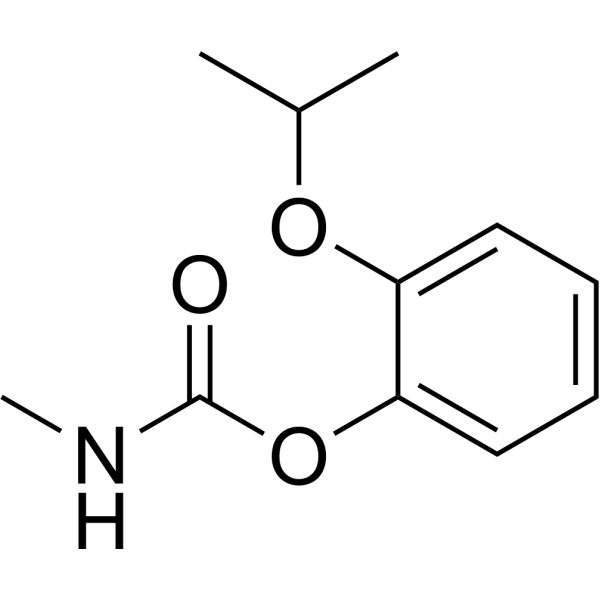 0 Images
Propoxue (Standard) is the analytical standard of Propoxue (HY-B0916). This product is intended for research and analytical applications. Propoxur is a reversible, competitive, orally active AChE inhibitor that can cross the blood-brain barrier. Propoxur inhibits AChE activity to induce neurotoxicity, while promoting MMP-2 expression and enhancing tumor cell migration and invasion by inducing intracellular ROS generation and activating the ERK/Nrf2 signaling pathway. On the one hand, Propoxur inhibits AChE, leading to acetylcholine accumulation and causing neurological dysfunction; on the other hand, it promotes Nrf2 nuclear translocation through ROS-dependent ERK1/2 phosphorylation, and upregulates MMP-2 and other invasion-related proteins. Propoxur is also a carbamate insecticide used to combat turf, forestry, and household pests.
-
7-Deacetylgedunin
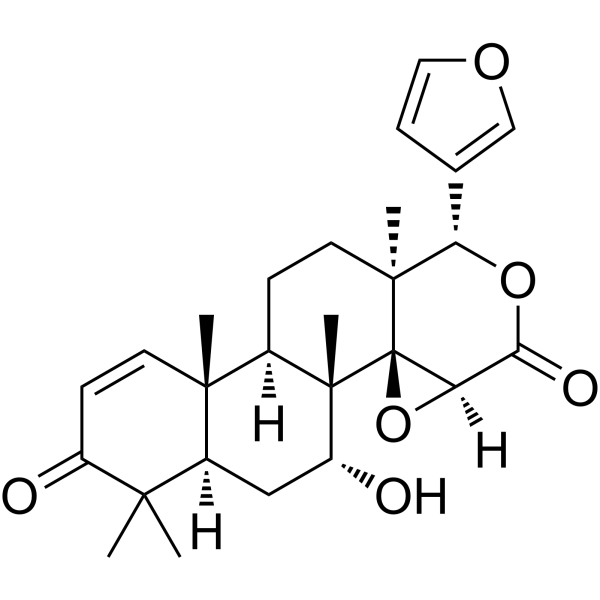 0 ImagesCat. No.: HY-124941CAS No.: 10314-90-6
7-Deacetylgedunin is an activator of Keap1/Nrf2/HO-1. 7-Deacetylgedunin alleviates mice mortality induced by LPS. 7-Deacetylgedunin inhibits Keap1 expression and suppresses macrophage proliferation. 7-Deacetylgedunin suppresses inflammation in vivo and in vitro.
-
2-Methoxyestradiol-13C,d3
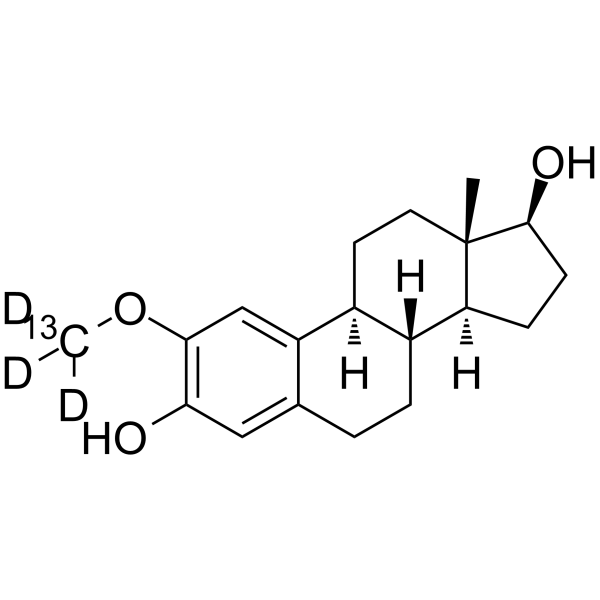 0 ImagesCat. No.: HY-12033SCAS No.: 1217470-09-1
2-Methoxyestradiol-13C,d3 is the 13C- and deuterium labeled 2-Methoxyestradiol. 2-Methoxyestradiol (2-ME2), an orally active endogenous metabolite of 17β-estradiol (E2), is an apoptosis inducer and an angiogenesis inhibitor with potent antineoplastic activity. 2-Methoxyestradiol also destablize microtubules. 2-Methoxyestradio, also a potent superoxide dismutase (SOD) inhibitor and a ROS-generating agent, induces autophagy in the transformed cell line HEK293 and the cancer cell lines U87 and HeLa.
-
TrxR2-IN-1
 0 ImagesCat. No.: HY-182324CAS No.: 3085154-16-8
TrxR2-IN-1 is a thioredoxin reductase 2 (TrxR2) inhibitor with an IC50 value of 0.83 μM. TrxR2-IN-1 accumulates in mitochondria, impairs mitochondrial function and membrane potential, increases reactive oxygen species (ROS) levels, activates ASK1-mediated caspase-dependent apoptosis (apoptosis), induces G2/M cell cycle arrest, and inhibits cancer cell migration. TrxR2-IN-1 can be used in the research of hepatocellular carcinoma.
-
Picolinafen
 0 ImagesCat. No.: HY-W711035CAS No.: 137641-05-5Synonyms: AC 900001
Picolinafen is a pyridine-class herbicide that acts as a phytoene desaturase (PDS) inhibitor. Picolinafen effectively controls broadleaf weeds and disrupts carotenoid biosynthesis. Picolinafen exhibits cytotoxicity to porcine trophectoderm (pTr) and luminal epithelial (pLE) cells. Picolinafen induces (ROS accumulation, calcium depletion, and activates (MAPK and PI3K signaling pathways, leading to decreased cell viability, increased apoptosis, impaired migration, and altered expression of implantation-related genes. Picolinafen has an LD50 value of 2.7 mg/kg in mammals and 7 μg/L in fish. Picolinafen exhibits toxic effects during zebrafish embryogenesis[1][2].
-
ZINC000002107582
 0 ImagesCat. No.: HY-183987CAS No.: 859138-65-1
ZINC000002107582 is a UVRAG binder. ZINC000002107582 induces Apoptosis, increases intracellular ROS levels, arrests the cell cycle at the S phase, and elevates the proportion of cells in the Sub G0 phase. ZINC000002107582 exhibits anticancer activity against breast cancer.



