



Reactive Oxygen Species (ROS) Activator
-
6-Methoxydihydrosanguinarine hydrochloride
 0 ImagesCat. No.: HY-N3000A
6-Methoxydihydrosanguinarine hydrochloride is an alkaloid with activity across multiple cancer cell types. 6-Methoxydihydrosanguinarine hydrochloride activates IRE1/JNK signaling, blocks Akt/mTOR and PI3K/AKT/mTOR pathways, reduces expression of Cdc25C, CyclinB1, Cdc2, YAP/TAZ, Survivin, GPX4, and EGFR, upregulates IRE1 and DR5, and activates JNK and caspases. 6-Methoxydihydrosanguinarine hydrochloride induces apoptosis, G2/M phase arrest, DNA damage, ROS generation, lipid peroxidation, ferroptosis, autophagy, and suppresses cancer cell growth. 6-Methoxydihydrosanguinarine hydrochloride disruptes the biofilm formation of Candida albicans (C. albicans). 6-Methoxydihydrosanguinarine hydrochloride can be used for the research of non-small cell lung cancer, hepatocellular carcinoma, melanoma, colon carcinoma, ovarian cancer and breast cancer.
-
Pipoxolan hydrochloride
 0 ImagesCat. No.: HY-105854CAS No.: 18174-58-8
Pipoxolan hydrochloride is an anti-spasmotic agent. Pipoxolan hydrochloride induces Apoptosis, increases intracellular ROS. Pipoxolan hydrochloride down-regulates phosphorylation JNK and p38, and then, MMP-2 and -9. Pipoxolan hydrochloride relieves smooth muscle spasms in the digestive, urinary, and gynecological systems. Pipoxolan hydrochloride also exhibits anticancer activity against leukemia, oral squamous cell carcinoma, and lung adenocarcinoma.
-
Propoxur-d7
 0 ImagesCat. No.: HY-W750153CAS No.: 2140327-65-5
Propoxur-d7 is the deuterium labeled Propoxur. Propoxur is a reversible, competitive, orally active AChE inhibitor that can cross the blood-brain barrier. Propoxur inhibits AChE activity to induce neurotoxicity, while promoting MMP-2 expression and enhancing tumor cell migration and invasion by inducing intracellular ROS generation and activating the ERK/Nrf2 signaling pathway. On the one hand, Propoxur inhibits AChE, leading to acetylcholine accumulation and causing neurological dysfunction; on the other hand, it promotes Nrf2 nuclear translocation through ROS-dependent ERK1/2 phosphorylation, and upregulates MMP-2 and other invasion-related proteins. Propoxur is also a carbamate insecticide used to combat turf, forestry, and household pests.
-
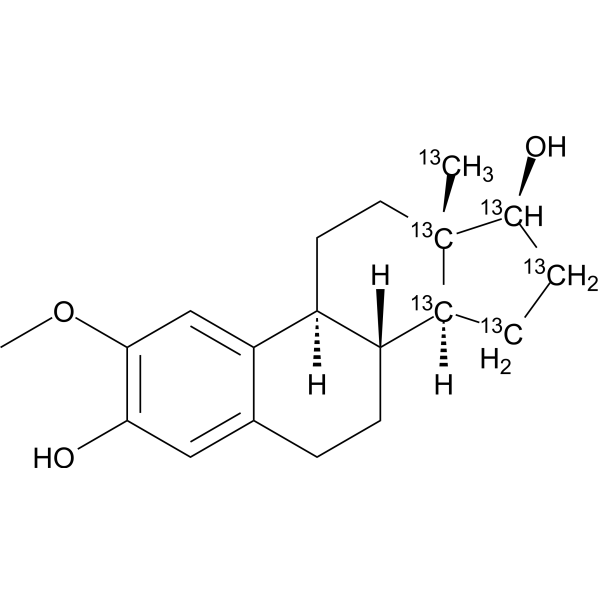
2-Methoxyestradiol-13C6
 0 ImagesCat. No.: HY-12033S1Synonyms: 2-ME2-13C6; NSC-659853-13C6
2-Methoxyestradiol-13C6 is the 13C-labeled 2-Methoxyestradiol. 2-Methoxyestradiol (2-ME2), an orally active endogenous metabolite of 17β-estradiol (E2), is an apoptosis inducer and an angiogenesis inhibitor with potent antineoplastic activity. 2-Methoxyestradiol also destablize microtubules. 2-Methoxyestradio, also a potent superoxide dismutase (SOD) inhibitor and a ROS-generating agent, induces autophagy in the transformed cell line HEK293 and the cancer cell lines U87 and HeLa.
-
PROTAC PI3K/110β degrader-2
 0 ImagesCat. No.: HY-174469CAS No.: 3070438-79-5
PROTAC PI3K/110β degrader-2 is a VHL-recruiting PI3K/110β PROTAC degrader, with DC50 values of 1.258 μM and 2.185 μM in MCF-7/ADM and A549/DDP cells, respectively. PROTAC PI3K/110β degrader-2 induces proteasomal degradation of PI3K/110β, inhibits phosphorylation of AKT and expression of Bcl-2, while suppressing the activity and expression of P-gp. It also induces endoplasmic reticulum stress and mitochondrial apoptosis via the PERK/CHOP pathway. PROTAC PI3K/110β degrader-2 exerts anti-tumor activity against multidrug-resistant cancer cells both in vitro and in vivo, and produces a synergistic effect when combined with Doxorubicin (HY-15142A) or Cisplatin (HY-17394), making it applicable for the research of multidrug-resistant cancers.
-
mTOR/GLS1-IN-1
 0 ImagesCat. No.: HY-179003
mTOR/GLS1-IN-1 (Compoud 9d) is a potent dual targeted mTOR/GLS1 inhibitor. Has anti proliferative activity against various tumor cells. mTOR/GLS1-IN-1 dose dependently induces ROS accumulation, induces autophagosome formation, and induces apoptosis. mTOR/GLS1-IN-1 can increase Fe2+, decrease GPX4, and induce ferroptosis. mTOR/GLS1-IN-1 can inhibit cell migration, invasion, and angiogenesis. mTOR/GLS1-IN-1 can be used in the research of cancer, such as breast cancer.
-
BSS-Et
 0 ImagesCat. No.: HY-184451CAS No.: 2825003-94-7
BSS-Et is a near-infrared phototheranostic agent that serves as one of the two release units of hypoxia-responsive prodrug BNNC, responsible for generating photodynamic therapy (PDT) and photothermal therapy (PTT) effects at tumor sites. BSS-Et produces reactive oxygen species and singlet oxygen upon irradiation, inducing oxidative stress and DNA damage. When combined with (R)-CR8 (HY-18340), BSS-Et enhances DNA damage and apoptosis in breast cancer cells. BSS-Et can be used in breast cancer-related research.
-
Aminoflavone
 0 ImagesCat. No.: HY-132974CAS No.: 165179-35-1Synonyms: NSC-686288
Aminoflavone is an anti-tumor agent. Aminoflavone inhibits the expression of ITGA6/SOX2 by activating the AhR-miR-125b-2-3p axis, thereby targeting breast cancer stem cells. Aminoflavone induces an increase in intracellular ROS, increases the level of oxidative DNA damage marker 8-oxodG and DNA-protein cross-links. Aminoflavone causes S-phase arrest, activates caspase-3/8/9 and induces apoptosis (apoptosis). Aminoflavone inhibits HIF-1α expression in a manner independent of AhR. Aminoflavone can be used for the study of breast cancer.
-
Antifungal agent-163
 0 ImagesCat. No.: HY-184209
Antifungal agent-163 is an antifungal agent. Antifungal agent-163 inhibits the activity of coenzyme Q-cytochrome C reductase (CoQ-Ccr), thereby disrupting electron transport in the mitochondrial respiratory chain. Antifungal agent-163 induces intracellular ROS accumulation, causes cell membrane damage, and impairs mitochondrial function in *Sublineola* cells. Antifungal agent-163 exhibits control effects against fungal plant diseases. Antifungal agent-163 can be used in the research of sorghum anthracnose.
-
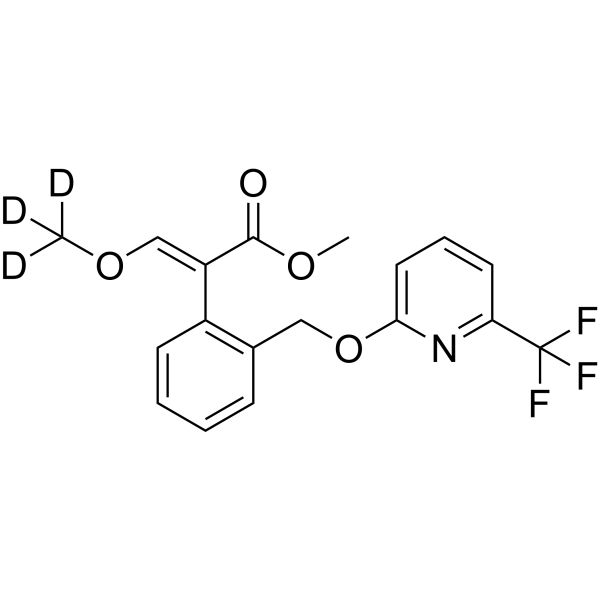
Picoxystrobin-d3
 0 ImagesCat. No.: HY-136355S
Picoxystrobin-d3 is the deuterium labeled Picoxystrobin (HY-136355). Picoxystrobin is a strobilurin fungicide. Picoxystrobin controls plant diseases by inhibiting mitochondrial respiration. Picoxystrobin is highly toxic to zebrafish embryos, causing developmental abnormalities, oxidative stress, and immunotoxicity.
-
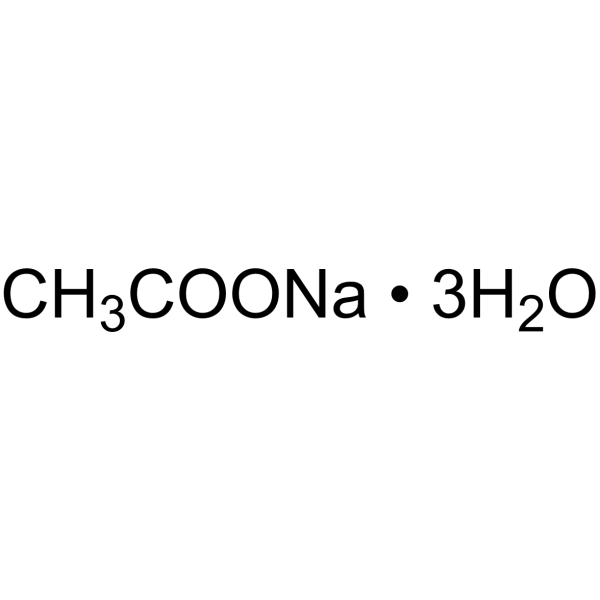
Sodium acetate trihydrate, United States Pharmacopeia (USP) Reference Standard
 0 ImagesSynonyms: Sodium acetate trihydrate (Pharmaceutical primary standard, USP)
Sodium acetate trihydrate, United States Pharmacopeia (USP) Reference Standard (Sodium acetate trihydrate (Pharmaceutical primary standard, USP)) is a carboxylic acid and short-chain fatty acid (SCFAs). Sodium acetate trihydrate activates AMPK, increases ROS, cleaved caspase 9, PPARα, downregulates SREBP-1c, ChREBP expression. Sodium acetate trihydrate exhibits antifungal activity against Saccharomyces cerevisiae W303-1A. Sodium acetate trihydrate regulates energy metabolism. Sodium acetate trihydrate has anticancer activity against gastric cancer. Sodium acetate trihydrate induces writhing reaction and ulcerative colitis. Sodium acetate trihydrate can be used in the researches for gastric cancer, ulcerative colitis, hepatic steatosis, and pain.
-
Anticancer agent 359
 0 ImagesCat. No.: HY-187687CAS No.: 2740603-37-4
Anticancer agent 359 is a ferroptosis inducer. Anticancer agent 359 inhibits the proliferation, colony formation and migration of bladder cancer cells in a concentration-dependent manner. Anticancer agent 359 induces ferroptosis by downregulating SREBP1 to inhibit FASN transcription, reducing the expression of NRF2/SLC7A11/GPX4, decreasing GSH, promoting ROS accumulation and lipid peroxidation; this effect is reversible by Ferrostatin-1 (HY-100579). Anticancer agent 359 acts synergistically with Talazoparib (HY-16106). Anticancer agent 359 inhibits tumor growth in vivo without obvious hepatotoxicity or nephrotoxicity. Anticancer agent 359 can be used in the research of bladder cancer.
-
PHGDH-IN-7
 0 ImagesCat. No.: HY-184449
PHGDH-IN-7 is an orally active Cys281-targeted covalent noncompetitive PHGDH inhibitor with an enzymatic IC50 of 0.8 μM, MST Kd of 3.4 μM, and Ki of 2.82 μM. PHGDH-IN-7 disrupts PHGDH homodimer formation. PHGDH-IN-7 blocks cellular de novo serine synthesis. PHGDH-IN-7 elevates intracellular ROS levels and inhibits DNA replication. PHGDH-IN-7 resensitizes EGFR-TKI-resistant lung adenocarcinoma cells. PHGDH-IN-7 suppresses triple-negative breast tumor growth with no obvious systemic toxicity. PHGDH-IN-7 serves as a tool compound for PHGDH-dependent tumor research.
-
HDAC8-IN-14
 0 ImagesCat. No.: HY-178380
HDAC8-IN-14, a curcuminoid derivative, is a selective HDAC8 inhibitor with a Ki of 9 nM. HDAC8-IN-14 induces the production of reactive oxygen species (ROS), disrupts mitochondrial membrane potential, and promotes apoptosis. HDAC8-IN-14 can significantly promote the accumulation of cells in the sub-G0/G1 phase, consistent with apoptotic or necrotic cell death. HDAC8-IN-14 induces upregulation of cytochrome c, cleaved caspase-3, and the pro-apoptotic protein Bak while leaving the anti-apoptotic Bcl-2 levels unaltered. HDAC8-IN-14 can be used for the study of leukemia.
-
Antitumor agent-217
 0 ImagesCat. No.: HY-183312
Antitumor agent-217 is a dual mitochondria-targeted anticancer agent. Antitumor agent-217 exhibits potent and selective antiproliferative activity against bladder cancer cell line J82 (IC50 = 6.3 μM), and inhibits colony formation and migration of J82 cells. Antitumor agent-217 accumulates in mitochondria, alters mitochondrial morphology, reduces ATP production, increases ROS generation and decreases mitochondrial membrane potential. Antitumor agent-217 induces apoptosis (Apoptosis) and ferroptosis (Ferroptosis) in bladder cancer cells. Antitumor agent-217 can be used for the research of bladder cancer.
-
JR4-187
 0 ImagesCat. No.: HY-182241CAS No.: 2446965-01-9
JR4-187 is an orally active, copper-dependent anticancer agent. JR4-187 downregulates genes involved in oxidative phosphorylation, MYC targets and E2F targets in cancer cells, while upregulates genes involved in the TNF-α signaling pathway, p53 pathway and KRAS signaling pathway, and downregulates CTR1 protein. JR4-187 induces ROS production, apoptosis, copper-dependent cytotoxicity, and exhibits selective cytotoxicity against KRAS-mutant cancer cells. JR4-187 is well tolerated in mouse models of pancreatic cancer. JR4-187 can be used in research related to cancers such as pancreatic ductal adenocarcinoma, colon cancer and rectal cancer.
-
(K(C10)GGGRrRPC)2
 0 ImagesCat. No.: HY-P11471
(K(C10)GGGRrRPC)2 (Compound (C-C10)C-C) is a dimeric lipopeptide and antibacterial agent. (K(C10)GGGRrRPC)2 enhances the accumulation of ROS, inhibits the bacterial respiratory chain dehydrogenase activity. (K(C10)GGGRrRPC)2 exhibits significant inhibition of bacterial biofilm formation. (K(C10)GGGRrRPC)2 exhibits antimicrobial activity against Acinetobacter baumannii AB1901, A. baumannii AB1902, Pseudomonas aeruginosa 25349, Staphylococcus aureus 11011, with MICs of 4 μM, 8 μM, 4 μM, and 8 μM, respectively. (K(C10)GGGRrRPC)2 shows antimicrobial efficacy against E. coli ATCC 25922.
-
PROTAC Bcl-xL degrader-4
 0 ImagesCat. No.: HY-176740CAS No.: 2930759-37-6
PROTAC Bcl-xL degrader-4 is a Bcl-xL PROTAC degrader. PROTAC Bcl-xL degrader-4 exhibits cytotoxicity against hepatocellular carcinoma cells, inhibits their migration and colony formation, and shows low cytotoxicity toward normal cells. PROTAC Bcl-xL degrader-4 induces apoptosis by reducing mitochondrial membrane potential and activating the MAPK signaling pathway. PROTAC Bcl-xL degrader-4 significantly suppresses tumor growth in xenograft tumor mouse models. PROTAC Bcl-xL degrader-4 can be used in hepatocellular carcinoma-related research.
-
TPP-Ce6
 0 ImagesCat. No.: HY-158189CAS No.: 3030629-73-0
TPP-Ce6 is a mitochondria-targeted photosensitizer formed by the ester bond conjugation of chlorophyll e6 (Ce6) with triphenylphosphine (TPP). Under light irradiation or ultrasound exposure, TPP-Ce6 generates reactive oxygen species, induces cell apoptosis, and triggers immunogenic cell death. TPP-Ce6 can serve as a component of carrier-free co-delivery systems, undergo enzyme-induced self-assembly within tumors, and modulate tumor hypoxia. TPP-Ce6 is applicable to research on breast cancer and glioblastoma.
-
Anti-MRSA agent 38
 0 ImagesCat. No.: HY-178513
Anti-MRSA agent 38 is a broad-spectrum antibacterial agent (MIC = 0.0625-2 µg/mL). Anti-MRSA agent 38 can inhibit ribosomal protein synthesis. Anti-MRSA agent 38 exerts multiple bactericidal effects by disrupting bacterial membrane structure and inducing ROS accumulation. Anti-MRSA agent 38 can selectively kill tumor cells, such as HGC-27 (IC50 = 0.86 µM), MRC-5 (IC50 = 5.52 µM), and RPC (IC50 = 6.09 µM) cells. Anti-MRSA agent 38 can be used to study infectious diseases such as bacterial infection.



