



Reactive Oxygen Species (ROS) Activator
-
Antifungal agent-165
 0 ImagesCat. No.: HY-184308CAS No.: 3123321-73-0
Antifungal agent-165 is an antifungal agent with in vitro activity against Rhizoctonia solani. Antifungal agent-165 inhibits catalase (CAT) activity, drives intracellular ROS accumulation, and induces oxidative damage. Antifungal agent-165 disrupts fungal hyphal morphology, compromises cell membrane integrity, and triggers cellular content leakage in Rhizoctonia solani. Antifungal agent-165 can be used for the research of potato black scurf disease.
-
CYP51/SE-IN-1
 0 ImagesCat. No.: HY-189445
CYP51/SE-IN-1 is a dual-target inhibitor of CYP51 and squalene epoxidase (SE), with IC50 values of 2.95 mg/L and 6.35 mg/L, respectively. CYP51/SE-IN-1 is also an Antifungal agent. CYP51/SE-IN-1 disrupts fungal cell membrane integrity, increases membrane permeability, and induces intracellular ROS accumulation. CYP51/SE-IN-1 inhibits ergosterol biosynthesis and exhibits broad-spectrum antifungal activity against plant pathogenic fungi.
-
Antifungal agent-168
 0 ImagesCat. No.: HY-184388
Antifungal agent-168 is an antifungal agent with broad-spectrum inhibitory activity against a variety of pathogenic fungi. Antifungal agent-168 interacts with β-glucan in the cell wall of Botrytis cinerea, disrupting the physiological functions of the cell wall. Antifungal agent-168 damages the hyphal cell membrane, causes electrolyte leakage, and promotes ROS release to accelerate fungal death. Antifungal agent-168 can be used in studies related to Botrytis cinerea infection.
-
Nerol-d6
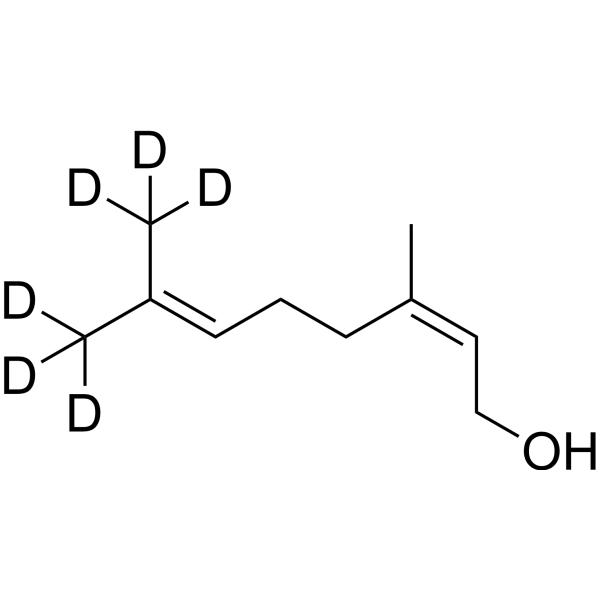 0 ImagesCat. No.: HY-N7063S1CAS No.: 66063-45-4
-
Antitrypanosomal agent 28
 0 ImagesCat. No.: HY-180158CAS No.: 2413738-47-1
Antitrypanosomal agent 28 (Compound 2a) is a trypanocidal agent. Antitrypanosomal agent 28 effectively inhibits Trypanosoma cruzi by inducing the generation of ROS and mitochondrial damage, with an IC₅₀ of 49.4 μM. Antitrypanosomal agent 28 exhibits broad-spectrum anti-tumor activity against various tumor cell lines, especially being sensitive to leukemia, colon cancer, and breast cancer. Antitrypanosomal agent 28 can be used for research on anti-cancer and anti-trypanosome activities.
-
Barakol
 0 ImagesCat. No.: HY-167825CAS No.: 24506-68-1
Barakol is an anticancer and anxiolytic agent identified in Cassia siamea. Barakol inhibits MMP-3 activity and enhances the cytotoxicity and antimetastatic effects of Doxorubicin (HY-15142) against cancer cells. Barakol induces apoptosis via reactive oxygen species (ROS) production, upregulation of the Bax/Bcl-2 protein ratio, and activation of caspase-9. Barakol exerts anxiolytic activity with diazepam-like effects, increases spontaneous longitudinal smooth muscle contraction of rat ileum in a concentration-dependent manner (EC50 = 0.3 mM), and inhibits norepinephrine-induced contraction suppression. Barakol can be used in research related to anxiety, intestinal motility, and neuroblastoma.
-
DGAT-1 inhibitor 2 (Standard)
 0 ImagesCat. No.: HY-50670RCAS No.: 942999-61-3
DGAT-1 inhibitor 2 (Standard) is the analytical standard of DGAT-1 inhibitor 2 (HY-50670). This product is intended for research and analytical applications. DGAT-1 inhibitor 2 is an orally active DGAT-1 inhibitor with IC50 values of 15 nM and 9 nM for human DGAT-1 and rat DGAT-1, respectively. DGAT-1 inhibitor 2 increases ROS concentration, GRP78, and PERK protein abundance. DGAT-1 inhibitor 2 increases SREBF1, CPT1A, and MTTP mRNA in fatty acid-treated cells. DGAT-1 inhibitor 2 improves obesity.
-
AMP423
 0 ImagesCat. No.: HY-119289CAS No.: 219501-57-2
AMP423 is an oxidation inducer and cell cycle regulator. AMP423 induces necrosis, apoptosis, and reactive oxygen species production. AMP423 induces inhibition of protein synthesis, reduction of thiol levels, and S-phase cell accumulation, and exhibits antitumor activity. AMP423 can be used in research related to multiple myeloma and follicular B-cell lymphoma.
-
Alisol B 23-acetate (Standard)
 0 ImagesSynonyms: 23-Acetylalismol B (Standard); 23-O-Acetylalisol B (Standard); Alisol B monoacetate (Standard)
Alisol B 23-acetate (Standard) is the analytical standard of Alisol B 23-acetate (HY-N0805). This product is intended for research and analytical applications. Alisol B 23-acetate is an orally active prototerpane-type triterpenoid. Alisol B 23-acetate can be isolated from Alisma orientalis. Alisol B 23-acetate induces Apoptosis, promotes ROS generation, downregulates CDK4/6, MMP-2/9, upregulates cleaved PARP, activates FXR and inhibits Syk. Alisol B 23-acetate has anti-inflammatory and hepatoprotective activities. Alisol B 23-acetate protects the kidney from ischemia-reperfusion injury. Alisol B 23-acetate has anticancer activity against ovarian cancer, colon cancer, lung cancer, and gastric cancer. Alisol B 23-acetate can be used in the study of atherosclerosis and allergic asthma.
-
Anti-MRSA agent 39
 0 ImagesCat. No.: HY-178912
Anti-MRSA agent 39 is an orally active ClpX modulator that binds Staphylococcus aureus caseinolytic protease X (SaClpX) with high affinity (Kd = 3.6 μM). Anti-MRSA agent 39 exerts antibacterial effects through temperature-dependent inhibition of cell division. Anti-MRSA agent 39 elicits profound metabolic dysregulation in methicillin-resistant Staphylococcus aureus (MRSA), manifesting as significantly reduced ATP levels, elevated reactive oxygen species (ROS), and decreased NAD+/NADH ratio, and accelerates bacterial lysis rates in MRSA ATCC 33591. Anti-MRSA agent 39 significantly increases the proportion of MRSA cells in the mitotic phase, and the cells exhibit obvious morphological abnormalities. Anti-MRSA agent 39 can be used for the study of invasive MRSA infections.
-
Antibacterial agent 237
 0 ImagesCat. No.: HY-162818
Antibacterial agent 237 (compound Ru-8) is a bacteriostatic agent for Staphylococcus aureus, with MIC of 0.78-1.56 μg/mL. Antibacterial agent 237 destroys bacterial cell membranes, changes their permeability, and induces bacteria to produce Reactive Oxygen Species, leading to bacterial death without causing drug resistance. Antibacterial agent 237 has low hemolytic toxicity to rabbit red blood cells and Raw 264.7 cells, and has significant antibacterial effects against Staphylococcus aureus in mouse skin wound infection models and Bacillus major larvae infection models.
-
Jervine hydriodide
 0 ImagesCat. No.: HY-N0836ACAS No.: 60326-37-6Synonyms: 11-Ketocyclopamine hydriodide
Jervine hydriodide (11-Ketocyclopamine hydriodide) is an orally active steroidal alkaloid and Hedgehog signaling pathway inhibitor. Jervine hydriodide can be isolated from Veratrum californicum. Jervine hydriodide regulates Wnt, inhibits the AKT/mTOR signaling pathway, and activates the AMPK signaling pathway. Jervine hydriodide induces DNA damage, Apoptosis, Autophagy, ROS production and Mitochondrial damage. Jervine hydriodide exhibits anti-cancer and anti-inflammatory activities. Jervine hydriodide reduces tumor growth rate and weight in xenograft models. Jervine hydriodide can be used in studies related to triple-negative breast cancer, nasopharyngeal carcinoma and non-small cell lung cancer.
-
Molephantin
 0 ImagesCat. No.: HY-N12531CAS No.: 50656-66-1
Molephantin is a blood-brain barrier permeable anti-glioblastoma compound. Molephantin induces ROS generation, leading to mitochondrial damage, Mitophagy flux blockage and Apoptosis induction. Molephantin can suppress the PI3K/Akt/mTOR signaling pathway. Molephantin demonstrates antitumor effects against glioblastoma.
-
Buprofezin (Standard)
 0 ImagesCat. No.: HY-B0831RCAS No.: 69327-76-0
Buprofezin (Standard) is the analytical standard of Buprofezin. This product is intended for research and analytical applications. Buprofezin is a broad-spectrum insecticide and chitin synthesis inhibitor that targets developmental stage coleopteran pests.Buprofezin promotes the conversion of energy metabolism from the aerobic tricarboxylic acid (TCA) cycle and oxidative phosphorylation to anaerobic glycolysis. Buprofezin also promotes the production of reactive oxygen species (ROS) by inhibiting cytochrome c oxidase.
-
Americanin A
 0 ImagesCat. No.: HY-N18301CAS No.: 69506-79-2
Americanin A is a Neolignan. Americanin A can be isolated from the seeds of Phytolacca americana. Americanin A activates ATM and ATR, initiating the subsequent signal transduction cascades that include Chk1, Chk2, and tumor suppressor p53. Americanin A targets selectively Skp2 for degradation and thereby stabilizes p27. Americanin A suppresses the activity of Cyclin B1 and its partner cdc2 to prevent entry into Mitosis. Americanin A induces Apoptosis by producing excessive ROS. Americanin A has anti-cancer activity against colorectal cancer.
-
Lexibulin (Standard)
 0 ImagesCat. No.: HY-10498RCAS No.: 917111-44-5Synonyms: CYT-997 (Standard)
Lexibulin (Standard) is the analytical standard of Lexibulin. This product is intended for research and analytical applications. Lexibulin (CYT-997) is a potent and orally active tubulin polymerisation inhibitor with IC50s of 10-100 nM in cancer cell lines; with potent cytotoxic and vascular disrupting activity in vitro and in vivo. Lexibulin induces cell apoptosis and induces mitochondrial ROS generation in GC cells.
-
Antibacterial agent 306
 0 ImagesCat. No.: HY-180151
Antibacterial agent 306 (Compound 8c), a lactate dehydrogenase inhibitor, is a highly effective antibacterial agent, especially effective against Gram-positive bacteria. Antibacterial agent 306 exhibits MIC against Staphylococcus aureus of as low as 1 μg/mL. Antibacterial agent 306 can not only damage membrane integrity and block the replication of DNA by intercalation, but also make reactive oxygen species (ROS) burst. Antibacterial agent 306 can be used for research on anti-multi-drug resistant bacteria.
-
Pipoxolan
 0 ImagesCat. No.: HY-105854ACAS No.: 23744-24-3
Pipoxolan is an orally active smooth muscle relaxant, anti-inflammatory agent and anticancer agent. Pipoxolan modulates PI3K/AKT signaling pathways, and reduces the levels of Ras/MEK/p-ERK, MMP-2 and MMP-9. Pipoxolan inhibits pro-inflammatory transcription factor pathways, activates Nrf2/HO-1, and suppresses the production of pro-inflammatory mediators. Pipoxolan induces ROS generation, endogenous mitochondrial Apoptosis, and G0/G1 cell cycle arrest. Pipoxolan reduces cerebral infarction size and inhibits intimal hyperplasia. Pipoxolan can be used in research related to cerebral ischemia, intimal hyperplasia, oral squamous cell carcinoma, leukemia and lung cancer.
-
Rooperol
 0 ImagesCat. No.: HY-119666CAS No.: 83644-00-2
Rooperol is a norlignan analog with antitumor, anti-inflammatory, and antioxidant activities. Rooperol induces apoptosis in CSCs through a mitochondrial-induced increase in ROS and a p53-dependent pathway, while also downregulating the expression of key stem cell regulatory factors, such as Oct4, Nanog, and Sox2, ultimately exerting its anticancer effects.
-
Antibacterial agent 119
 0 ImagesCat. No.: HY-170688CAS No.: 3105847-51-3
Antibacterial agent 119 (Compound 21 g) is an antibacterial candidate against Methicillin (HY-121544)-resistant Staphylococcus aureus (MICs less than 1 μg/mL against tested strains). Antibacterial agent 119 induces ROS production. Antibacterial agent 119 also acts on the bacterial cell membrane to cause membrane breakage. Antibacterial agent 119 exhibits potent antibacterial activity with low cytotoxicity, rapid bactericidal ability, and good in vivo antibacterial activity.



