



Torsemide
Based on 1 publication(s) in Google Scholar
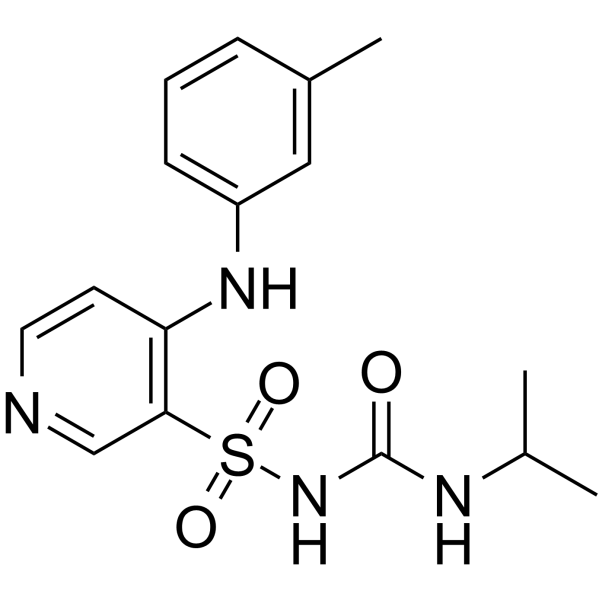
Torsemide (Torasemide) is an orally active potassium-sparing diuretic and aldosterone (HY-113313) receptor inhibitor. Torsemide produces dose-dependent diuretic and natriuretic effects without significantly increasing urinary potassium by inhibiting the binding of aldosterone to renal cytosolic receptors and inhibiting electrolyte/water reabsorption in the distal tubule and loop of Henle, and at higher doses increases plasma renin activity and aldosterone concentration. Torsemide induces renal vasoconstriction (accompanied by decreased renal blood flow and increased renal vascular resistance), maintains glomerular filtration rate under hypovolemic conditions, and inhibits angiotensin II (Angiotensin II human) (HY-13948)-induced vasoconstriction and intracellular calcium increase in vascular smooth muscle. Torsemide can be used for research on hypertension.
For research use only. We do not sell to patients.
- Purity : 99.35%
- CAS No.: 56211-40-6
- Formula: C16H20N4O3S
- Molecular Weight:348.42
-
Storage:Powder -20°C, 3 years , 4°C, 2 years ; In solvent -80°C, 2 years , -20°C, 1 year

To place orders, for customer services and technical support, please contact: MedChemExpress USA
Tel: 609-228-6898 E-mail: [email protected] [email protected]


-
 Biological Activity
-
Chemical Information
-
Solvent & Solubility
- Protocols
- Purity & Documentation
- References
-
 Help & FAQs


-
HY-17468
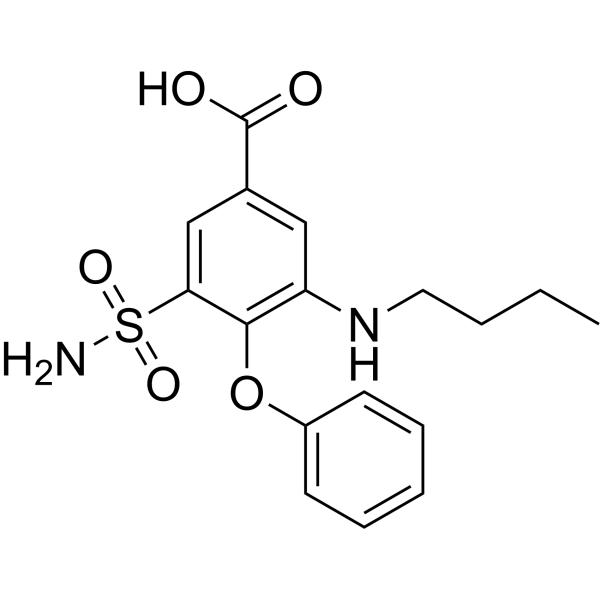
BumetanideNKCC1 Inhibitor -
HY-15206
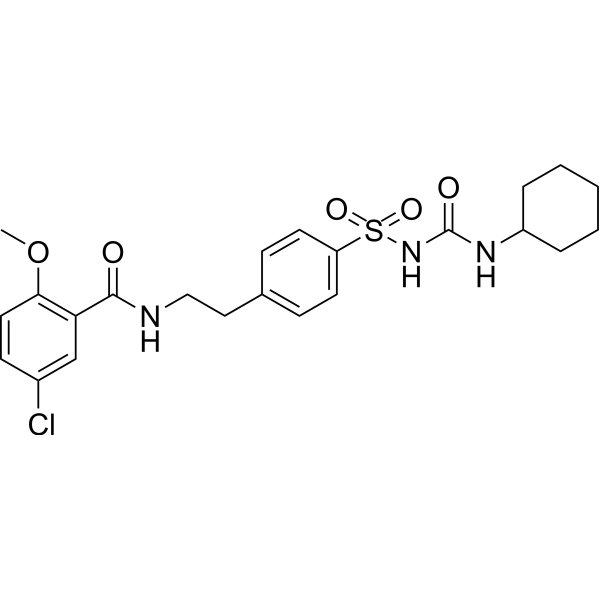
GlibenclamideKATP Inhibitor -
HY-B0247R
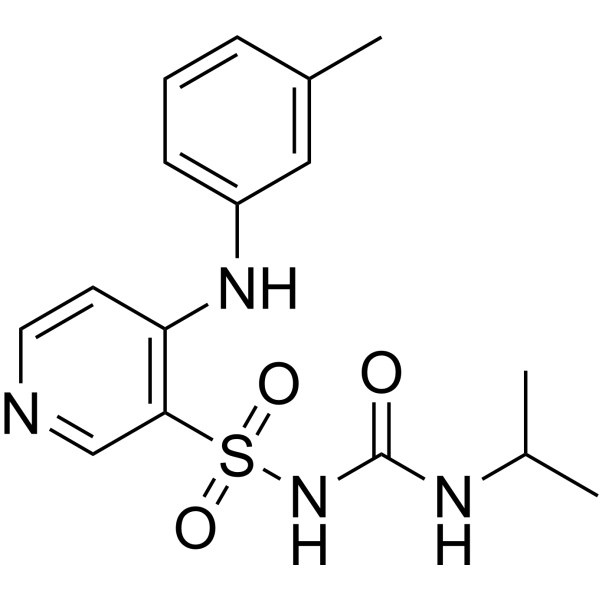
Torsemide (Standard)Reference Standard -
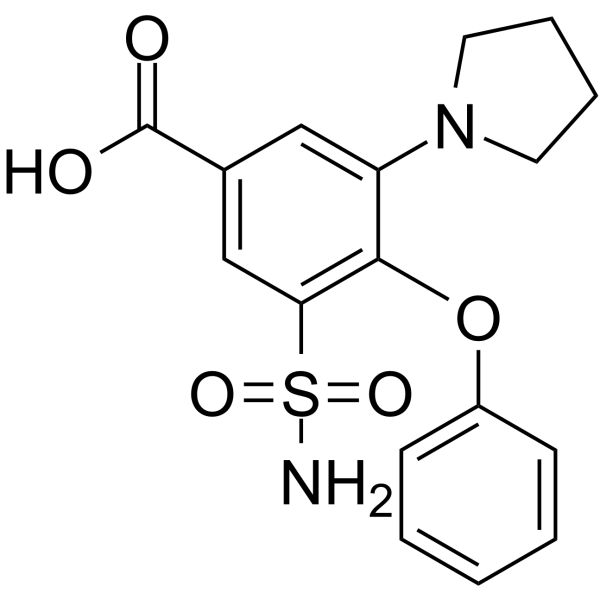
HY-119816
PiretanideDiuretic -
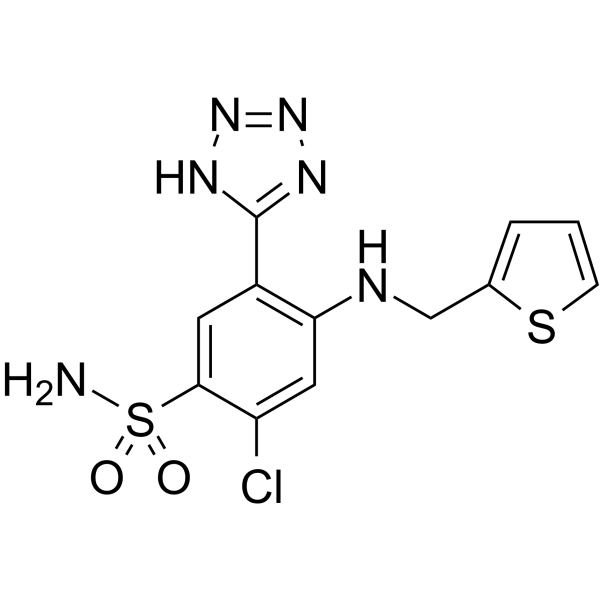
HY-107321
AzosemideNKCC1 Inhibitor -
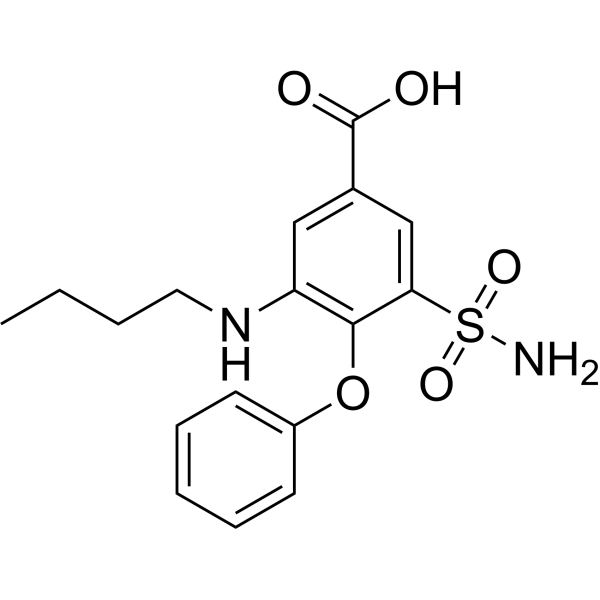
HY-17468R
Bumetanide (Standard)NKCC1 Inhibitor -
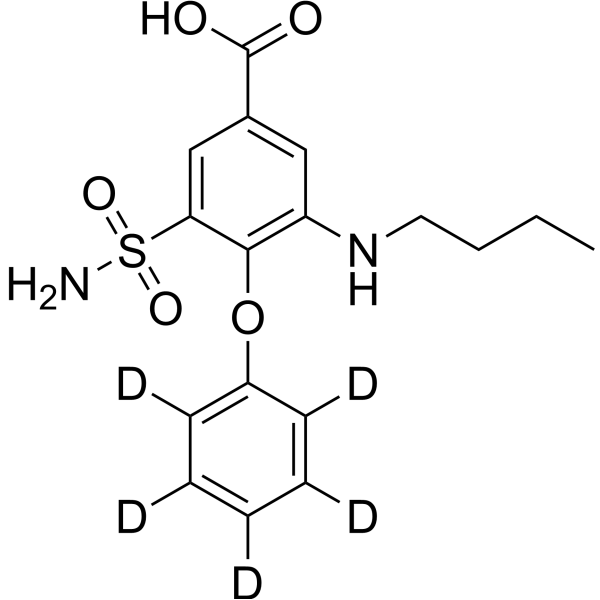
HY-17468S
Bumetanide-d5NKCC1 Inhibitor -

HY-107321R
Azosemide (Standard)NKCC1 Inhibitor -

HY-119816R
Piretanide (Standard)Diuretic


Biological Activity
Description
In Vitro
MedChemExpress (MCE) has not independently confirmed the accuracy of these methods. They are for reference only.
In Vivo
Torasemide (10 mg/kg; oral; single dose) increases plasma renin activity and aldosterone concentration in normotensive rats[1].
Torasemide (0.3-10 mg/kg; intravenous injection; single dose) inhibits the binding of aldosterone to its renal cytosolic receptors in a dose-dependent manner in vivo in adrenalectomized rats[1].
Torasemide (0.2-1.0 mg/kg; intravenous injection; single dose; 10-minute infusion; 5-minute equilibration) is a potent potassium-sparing diuretic that increases urine output and sodium excretion in healthy newborn New Zealand White rabbits while maintaining GFR and reducing RBF/increasing RVR[2].
Torasemide (1.0 mg/kg; intravenous injection; single dose; 10-minute infusion; 5-minute equilibration) still produces significant diuretic and natriuretic effects despite replacement of urinary losses, and increases GFR by 17%, while attenuating the decrease in RBF and the increase in RVR[2].
MedChemExpress (MCE) has not independently confirmed the accuracy of these methods. They are for reference only.
-
Animal Model:Wistar (male; ~200 g)[1]
-
Dosage:0.3, 1, and 3 mg/kg
-
Administration:p.o. by gavage; once
-
Result:Significantly increased urine volume and urinary sodium excretion in a dose-dependent manner, reaching approximately 3-fold versus control.
No significant effect on urinary potassium excretion was observed.
-
Animal Model:Wistar (male; ~200 g)[1]
-
Dosage:0.3, 1, and 3 mg/kg
-
Administration:p.o. by gavage; once
-
Result:Increased urinary volume 3.5-fold and urinary sodium excretion 4-fold.
-
Animal Model:Wistar (male; ~200 g)[1]
-
Dosage:10 mg/kg
-
Administration:p.o.; once
-
Result:Plasma renin activity increased 1.5-fold within 1 h.
Plasma aldosterone concentration increased at 2 h after administration.
-
Animal Model:Wistar (male; ~200 g; adrenalectomized)[1]
-
Dosage:0.3, 1, 3, and 10 mg/kg i.v., co-injected with [3H]aldosterone 2.6 × 10⁻⁹ mol/kg
-
Administration:i.v.; once
-
Result:Control receptor-bound aldosterone was 4.3 fmol/mg protein.
Caused a significant and dose-dependent inhibition in receptor-bound aldosterone in the kidney cytoplasmic fraction at 0.3, 1, 3, and 10 mg/kg i.v.
-
Animal Model:New Zealand White (5-10 days old; 80-150 g)[2]
-
Dosage:0.2 mg/kg (group 1); 1.0 mg/kg (group 2)
-
Administration:i.v.; once; 10-min infusion; 5-min equilibration
-
Result:In group 1, urine volume rose from 62 to 225 µl/kg per min.
In group 1, UNaV rose from 1.2 to 23.9 µmol/kg per min.
In group 1, FENa rose from 0.5 to 8.3%.
In group 1, UKV rose from 5.3 to 9.0 µmol/kg per min.
In group 1, GFR changed from 1.95 to 1.84 mL/kg per min.
In group 1, RBF changed from 17.0 to 14.1 mL/kg per min.
In group 1, RVR changed from 2.6 to 3.1 mmHg/mL per kg per min.
In group 1, FF changed from 15.2 to 17.6%.
In group 2, urine volume rose from 76 to 640 µl/kg per min.
In group 2, UNaV rose from 1.2 to 76.2 µmol/kg per min.
In group 2, FENa rose from 0.3 to 20.3%.
In group 2, UKV rose from 7.9 to 11.3 µmol/kg per min.
In group 2, GFR changed from 3.0 to 2.80 mL/kg per min.
In group 2, RBF changed from 24.4 to 16.9 mL/kg per min.
In group 2, RVR changed from 1.9 to 2.9 mmHg/mL per kg per min.
In group 2, FF changed from 17.2 to 23.8%.
Relative increases in groups 1 and 2 were urine volume ×3.6 and ×8.4; UNaV ×20 and ×64; FENa ×17 and ×68; UKV ×1.7 and ×1.4.
In group 2, RBF fell 31% and RVR rose 53%; GFR did not change significantly.
A mean 2.8% reduction in body weight was observed.
-
Animal Model:New Zealand White (5-10 days old; 80-150 g)[2]
-
Dosage:1.0 mg/kg (group 3)
-
Administration:i.v.; once; 10-min infusion; 5-min equilibration; Hartmann solution replacement from 5 min after infusion
-
Result:Urine volume rose from 73 to 765 µl/kg per min.
UNaV rose from 2.2 to 87.9 µmol/kg per min.
FENa rose from 0.7 to 24.0%.
UKV rose from 6.5 to 11.7 µmol/kg per min.
GFR rose from 2.41 to 2.82 mL/kg per min, a 17% increase.
RBF changed from 19.1 to 17.2 mL/kg per min.
RVR changed from 2.3 to 2.73 mmHg/mL per kg per min.
FF changed from 17.4 to 22.2%.
The RBF decrease and RVR increase were blunted compared with group 2.
UNaV increased ×40 and FENa increased ×34, versus ×64 and ×68 in group 2; the increases in urine volume and UKV were almost identical to group 2.
Clinical Trial
| NCT Number | Sponsor | Condition | Start Date |
Phase

|
|---|---|---|---|---|
| NCT01329991 | 2011-05 | PHASE1 |


Chemical Information
-
CAS No. 56211-40-6
-
Appearance Solid
-
Molecular Weight 348.42
-
Formula C16H20N4O3S
-
Color White to off-white
-
SMILES
O=S(C1=C(NC2=CC=CC(C)=C2)C=CN=C1)(NC(NC(C)C)=O)=O
-
Synonyms
Torasemide
-
Shipping
Room temperature in continental US; may vary elsewhere.
-
Storage
Powder -20°C 3 years 4°C 2 years In solvent -80°C 2 years -20°C 1 year


Publications (1)
-
Journal Impact Factor
-
Most Recent
-
EMBO J
2025 Mar;44(5):1540-1562. PMID: 39875725


Solvent & Solubility
In Vitro:
DMSO : 25 mg/mL (71.75 mM; Need ultrasonic; Hygroscopic DMSO has a significant impact on the solubility of product, please use newly opened DMSO)
Please refer to the solubility information to select the appropriate solvent. Once prepared, please aliquot and store the solution to prevent product inactivation from repeated freeze-thaw cycles.
Storage method and period of stock solution: -80°C, 2 years; -20°C, 1 year. When stored at -80°C, please use it within 2 years. When stored at -20°C, please use it within 1 year.
Concentration (start) × Volume (start) = Concentration (final) × Volume (final)
In Vivo:
Select the appropriate dissolution method based on your experimental animal and administration route.
- For the following dissolution methods, please ensure to first prepare a clear stock solution using an In Vitro approach and then sequentially add co-solvents:
- To ensure reliable experimental results, the clarified stock solution can be appropriately stored based on storage conditions. As for the working solution for In Vivo experiments, it is recommended to prepare freshly and use it on the same day.
- The percentages shown for the solvents indicate their volumetric ratio in the final prepared solution. If precipitation or phase separation occurs during preparation, heat and/or sonication can be used to aid dissolution.
Add each solvent one by one: 10% DMSO 40% PEG300 5% Tween-80 45% Saline
Solubility: ≥ 1 mg/mL (2.87 mM); Clear solution
This protocol yields a clear solution of ≥ 1 mg/mL (saturation unknown).
Taking 1 mL working solution as an example, add 100 μL DMSO stock solution (10.0 mg/mL) to 400 μL PEG300, and mix evenly; then add 50 μL Tween-80 and mix evenly; then add 450 μL Saline to adjust the volume to 1 mL.
Preparation of Saline: Dissolve 0.9 g sodium chloride in ddH₂O and dilute to 100 mL to obtain a clear Saline solution.
Add each solvent one by one: 10% DMSO 90% (20% SBE-β-CD in Saline)
Solubility: ≥ 1 mg/mL (2.87 mM); Clear solution
This protocol yields a clear solution of ≥ 1 mg/mL (saturation unknown).
Taking 1 mL working solution as an example, add 100 μL DMSO stock solution (10.0 mg/mL) to 900 μL 20% SBE-β-CD in Saline, and mix evenly.
Preparation of 20% SBE-β-CD in Saline (4°C, storage for one week): 2 g SBE-β-CD powder is dissolved in 10 mL Saline, completely dissolve until clear.
In Vivo Dissolution Calculator
Please enter the basic information of animal experiments:
-
-
-
-
Recommended: Prepare an additional quantity of animals to account for potential losses during experiments.
Please enter your animal formula composition:
-
%DMSO +
Recommended: Keep the proportion of DMSO in working solution below 2% if your animal is weak.
-
%+
-
+%Tween-80 + +
-
%Saline +
The co-solvents required include: DMSO, . All of co-solvents are available by MedChemExpress (MCE). , Tween 80. All of co-solvents are available by MedChemExpress (MCE).
Working solution concentration: 0.22 mg/mL
Method for preparing stock solution: mg drug dissolved in μL DMSO. Stock solution concentration: mg/mL.
1. Take μL DMSO stock solution;
2. Add μL .
μL , mix evenly;
3. Then add μL Tween 80, mix evenly;
4. Then add μL
Please ensure that the stock solution in the first step is dissolved to a clear state, and add co-solvents in sequence. You can use ultrasonic heating (ultrasonic cleaner, recommended frequency 20-40 kHz), vortexing, etc. to assist dissolution.


Purity & Documentation


References

Complete Stock Solution Preparation Table
Please refer to the solubility information to select the appropriate solvent. Once prepared, please aliquot and store the solution to prevent product inactivation from repeated freeze-thaw cycles.
Storage method and period of stock solution: -80°C, 2 years; -20°C, 1 year. When stored at -80°C, please use it within 2 years. When stored at -20°C, please use it within 1 year.
| Optional Solvent | Concentration Solvent Mass | 1 mg | 5 mg | 10 mg | 25 mg |
|---|---|---|---|---|---|
| DMSO | 1 mM | 2.8701 mL | 14.3505 mL | 28.7010 mL | 71.7525 mL |
| 5 mM | 0.5740 mL | 2.8701 mL | 5.7402 mL | 14.3505 mL | |
| 10 mM | 0.2870 mL | 1.4350 mL | 2.8701 mL | 7.1752 mL | |
| 15 mM | 0.1913 mL | 0.9567 mL | 1.9134 mL | 4.7835 mL | |
| 20 mM | 0.1435 mL | 0.7175 mL | 1.4350 mL | 3.5876 mL | |
| 25 mM | 0.1148 mL | 0.5740 mL | 1.1480 mL | 2.8701 mL | |
| 30 mM | 0.0957 mL | 0.4783 mL | 0.9567 mL | 2.3917 mL | |
| 40 mM | 0.0718 mL | 0.3588 mL | 0.7175 mL | 1.7938 mL | |
| 50 mM | 0.0574 mL | 0.2870 mL | 0.5740 mL | 1.4350 mL | |
| 60 mM | 0.0478 mL | 0.2392 mL | 0.4783 mL | 1.1959 mL |


Torsemide Related Classifications
HY-B0247 Related Classifications
 Powered by Bioz