



APY0201
Based on 7 publication(s) in Google Scholar
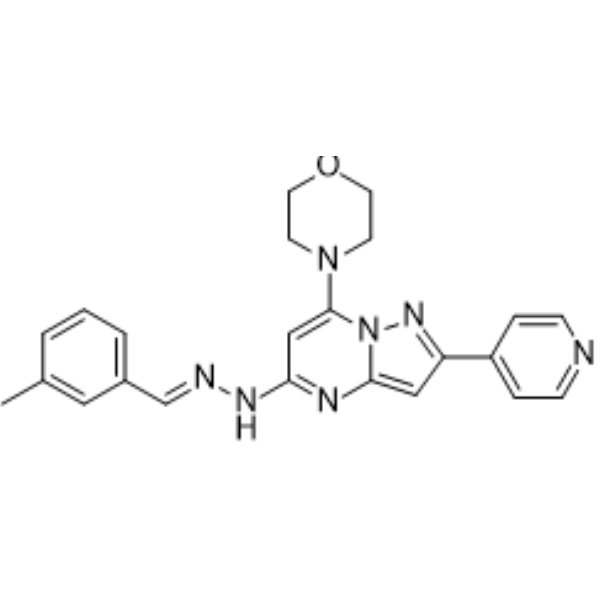
APY0201 is a potent PIKfyve inhibitor, which inhibits the conversion of PtdIns3P to PtdIns(3,5)P2 in the presence of in the presence of [33P]ATP with an IC50 of 5.2 nM. APY0201 also inhibits IL-12/IL-23 production.
Nur für Forschungszwecke. Wir verkaufen nicht an Patienten.
- Reinheit : 99.42%
- CAS. Nr.: 1232221-74-7
- Formel: C23H23N7O
- Molecular Weight:413.48
-
Speicherung:Powder -20°C, 3 years , 4°C, 2 years ; In solvent -80°C, 2 years , -20°C, 1 year

To place orders, for customer services and technical support, please contact: MedChemExpress USA
Tel: 609-228-6898 E-mail: [email protected] [email protected]


-
 Biologische Aktivität
-
Chemical Information
-
Lösungsmittel & Löslichkeit
- Reinheit & Dokumentation
- Verweise
-
 Help & FAQs


-
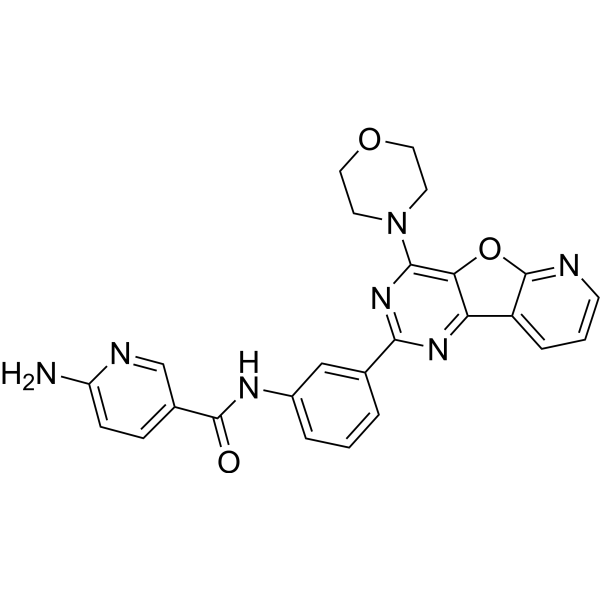
HY-13228
YM-201636 -
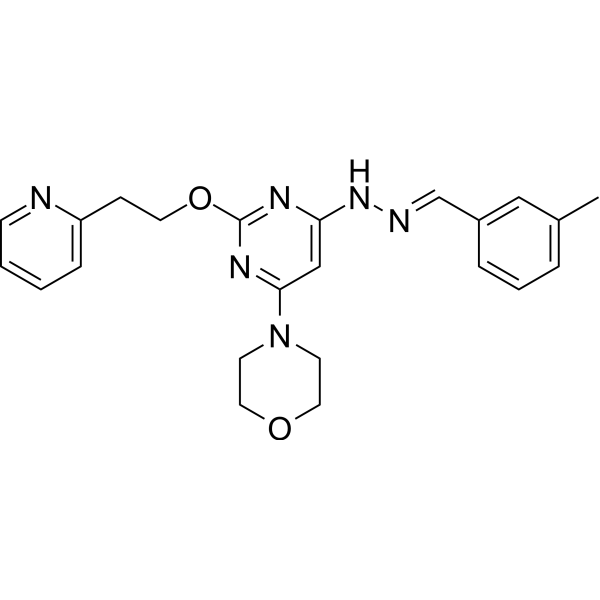
HY-14644
ApilimodIL-12/IL-23 Inhibitor -
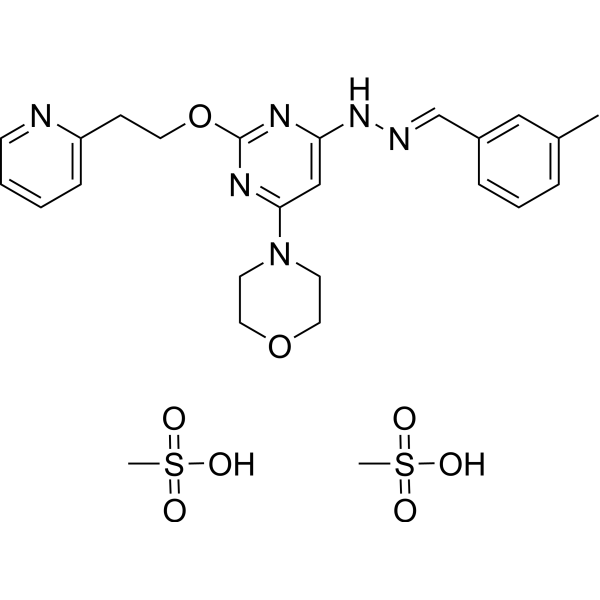
HY-14644A
Apilimod mesylateIL-12/IL-23 Inhibitor -
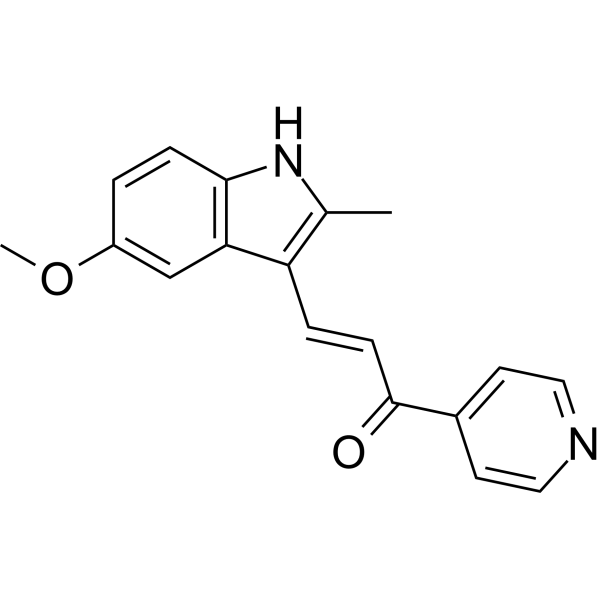
HY-119624
MOMIPPMacropinocytosis Inducer -
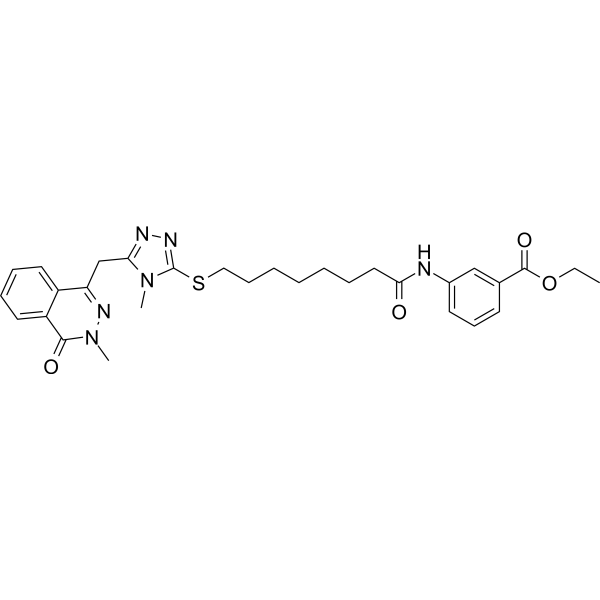
HY-102049
IL-15-IN-1IL-15 Inhibitor -
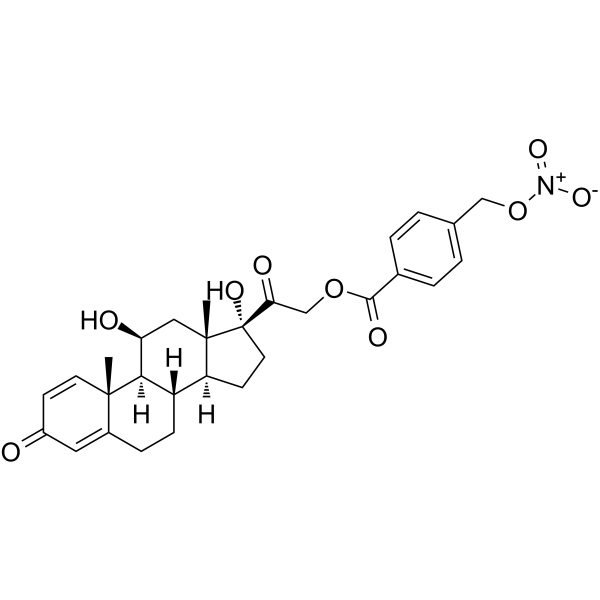
HY-101757
NO-prednisolonePrednisolone Derivative -
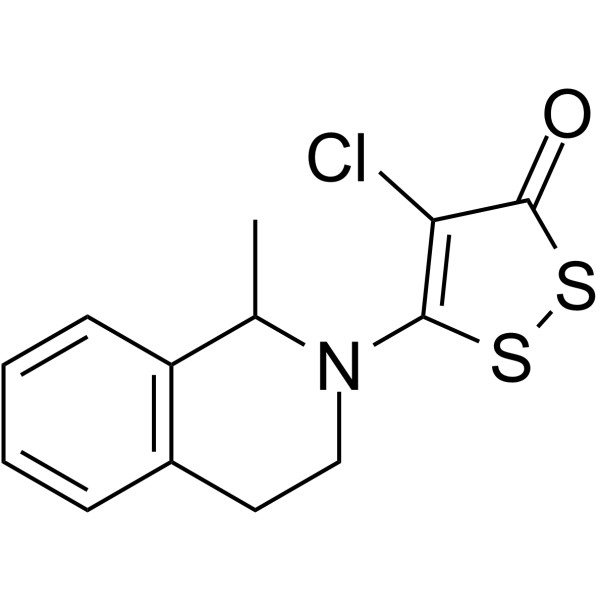
HY-101716
RP-54745 -
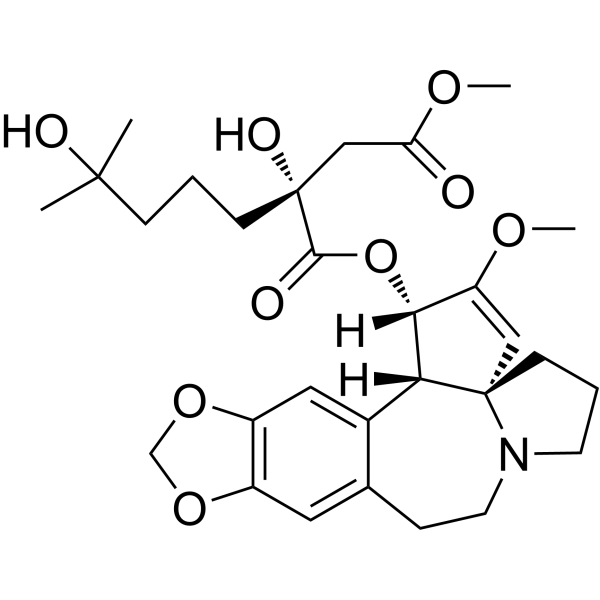
HY-14944
HomoharringtonineSTAT Inhibitor -
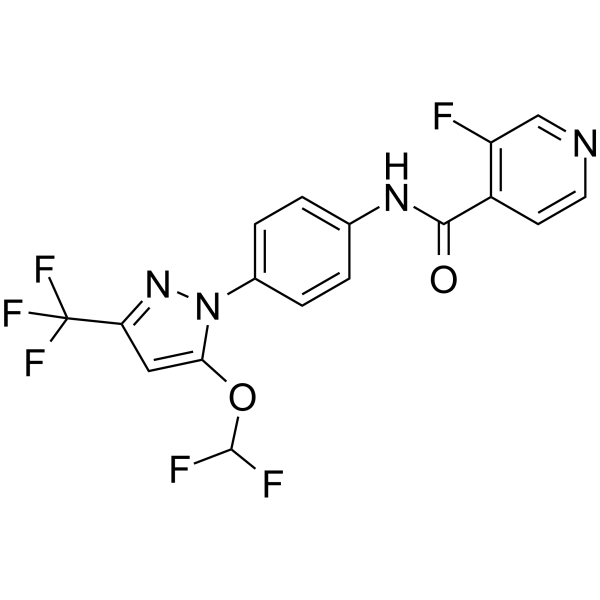
HY-112778
NFAT Transcription Factor Regulator-1Interleukin Related Inhibitor -

HY-108841
RaleukinIL-1R Antagonist -
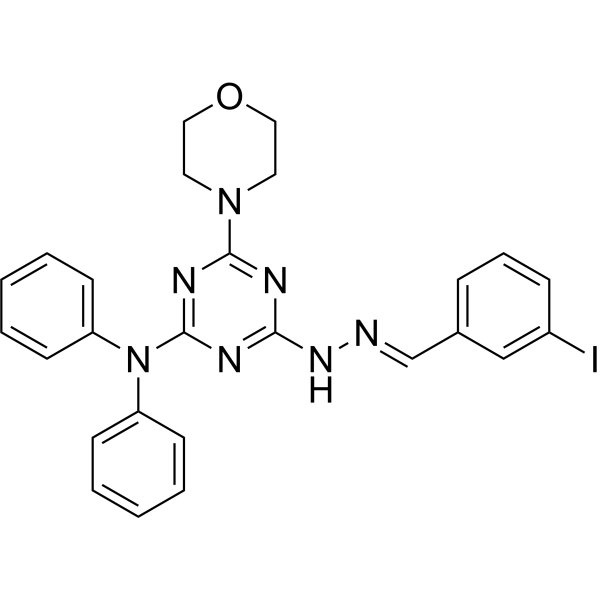
HY-118630
Vacuolin-1PIKfyve Inhibitor -
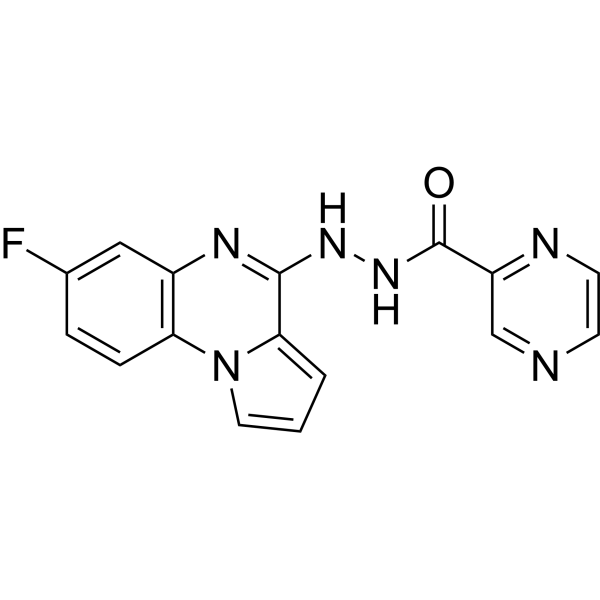
HY-15614
SC144GP130 Inhibitor
Publications Citing Use of MedChemExpress (MCE) APY0201
More- Cancer Res. 2025 Apr 15;85(8):1479-1495. [Abstract]
- Phytomedicine. 2026 May:154:158011. [Abstract]
- eGastroenterology. 2026 Mar 31;4(1):e100348. [Abstract]
- Haematologica. 2020 Jun;105(6):1641-1649. [Abstract]
- University of Veterinary Medicine Hannover. 2026.
- University of North Carolina at Chapel Hill. 2024.
- J Oncol. 2022 Jun 24:2022:7104592. [Abstract]


Biologische Aktivität
Beschreibung
IC50 & Target
[1]|
PIKfyve 5.2 nM (IC50) |
IL-12 |
IL-23 |
In Vitro
APY0201 works differently from anti-IL-12/23 antibodies and acts by inhibiting production of these proinflammatory cytokines with characteristic selectivity over other cytokines, including tumor necrosis factor-alpha (TNF-α). In stimulated thioglycollate-induced mouse peritoneal exudate cells (TG-PEC), APY0201 strongly inhibits IL-12p70 and IL-12p40 production, with IC50s of 8.4 and 16 nM, respectively. APY0201 also inhibits IL-12p40 at 99 nM in human PBMC. APY0201 shows significant selectivity for the production of IL-12p70 and IL-12p40 over TNF-α, and this selectivity is maintained across species[1].
MedChemExpress (MCE) has not independently confirmed the accuracy of these methods. They are for reference only.
In Vivo
MedChemExpress (MCE) has not independently confirmed the accuracy of these methods. They are for reference only.


Chemical Information
-
CAS. Nr. 1232221-74-7
-
Appearance Solid
-
Molecular Weight 413.48
-
Formel C23H23N7O
-
Color Light yellow to yellow
-
SMILES
CC1=CC(/C=N/NC2=NC3=CC(C4=CC=NC=C4)=NN3C(N5CCOCC5)=C2)=CC=C1
-
Versand
Room temperature in continental US; may vary elsewhere.
-
Speicherung
Powder -20°C 3 years 4°C 2 years In solvent -80°C 2 years -20°C 1 year


Publications (7)
-
Journal Impact Factor
-
Most Recent
-
Cancer Res
Concurrent Inhibition of the RAS-MAPK Pathway and PIKfyve Is a Therapeutic Strategy for Pancreatic Cancer. [Abstract]2025 Apr 15;85(8):1479-1495. PMID: 39932818 -
Phytomedicine
Targeting GRB2 with Polyphyllin H overcomes PIKFYVE inhibitor resistance in bladder cancer by blocking Akt-SREBP1-SCD1 pathway. [Abstract]2026 May:154:158011. PMID: 41795291 -
eGastroenterology
2026 Mar 31;4(1):e100348. PMID: 41948149 -
Haematologica
2020 Jun;105(6):1641-1649. PMID: 31582538 -
-
-
J Oncol
2022 Jun 24:2022:7104592. PMID: 36245991


Lösungsmittel & Löslichkeit
In Vitro:
DMSO : ≥ 35 mg/mL (84.65 mM; Hygroscopic DMSO has a significant impact on the solubility of product, please use newly opened DMSO)
* "≥" means soluble, but saturation unknown.
Please refer to the solubility information to select the appropriate solvent. Once prepared, please aliquot and store the solution to prevent product inactivation from repeated freeze-thaw cycles.
Storage method and period of stock solution: -80°C, 2 years; -20°C, 1 year. When stored at -80°C, please use it within 2 years. When stored at -20°C, please use it within 1 year.
Please refer to the solubility information to select the appropriate solvent. Once prepared, please aliquot and store the solution to prevent product inactivation from repeated freeze-thaw cycles.
Storage method and period of stock solution: -80°C, 2 years; -20°C, 1 year. When stored at -80°C, please use it within 2 years. When stored at -20°C, please use it within 1 year.
Konzentration (Stammlösung) × Volumen (Stammlösung) = Konzentration (Ziellösung) × Volumen (Ziellösung)
In Vivo:
Select the appropriate dissolution method based on your experimental animal and administration route.
- For the following dissolution methods, please ensure to first prepare a clear stock solution using an In Vitro approach and then sequentially add co-solvents:
- To ensure reliable experimental results, the clarified stock solution can be appropriately stored based on storage conditions. As for the working solution for In Vivo experiments, it is recommended to prepare freshly and use it on the same day.
- The percentages shown for the solvents indicate their volumetric ratio in the final prepared solution. If precipitation or phase separation occurs during preparation, heat and/or sonication can be used to aid dissolution.
Add each solvent one by one: 10% DMSO 40% PEG300 5% Tween-80 45% Saline
Solubility: ≥ 2 mg/mL (4.84 mM); Clear solution
This protocol yields a clear solution of ≥ 2 mg/mL (saturation unknown).
Taking 1 mL working solution as an example, add 100 μL DMSO stock solution (20.0 mg/mL) to 400 μL PEG300, and mix evenly; then add 50 μL Tween-80 and mix evenly; then add 450 μL Saline to adjust the volume to 1 mL.
Preparation of Saline: Dissolve 0.9 g sodium chloride in ddH₂O and dilute to 100 mL to obtain a clear Saline solution.
Add each solvent one by one: 10% DMSO 90% (20% SBE-β-CD in Saline)
Solubility: 2 mg/mL (4.84 mM); Suspended solution; Need ultrasonic
This protocol yields a suspended solution of 2 mg/mL. Suspended solution can be used for oral and intraperitoneal injection.
Taking 1 mL working solution as an example, add 100 μL DMSO stock solution (20.0 mg/mL) to 900 μL 20% SBE-β-CD in Saline, and mix evenly.
Preparation of 20% SBE-β-CD in Saline (4°C, storage for one week): 2 g SBE-β-CD powder is dissolved in 10 mL Saline, completely dissolve until clear.
In Vivo Dissolution Calculator
Please enter the basic information of animal experiments:
-
-
-
-
Recommended: Prepare an additional quantity of animals to account for potential losses during experiments.
Please enter your animal formula composition:
-
%DMSO +
Recommended: Keep the proportion of DMSO in working solution below 2% if your animal is weak.
-
%+
-
+%Tween-80 + +
-
%Saline +
The co-solvents required include: DMSO, . All of co-solvents are available by MedChemExpress (MCE). , Tween 80. All of co-solvents are available by MedChemExpress (MCE).
Working solution concentration: 0.22 mg/mL
Method for preparing stock solution: mg drug dissolved in μL DMSO. Stock solution concentration: mg/mL.
1. Take μL DMSO stock solution;
2. Add μL .
μL , mix evenly;
3. Then add μL Tween 80, mix evenly;
4. Then add μL
Please ensure that the stock solution in the first step is dissolved to a clear state, and add co-solvents in sequence. You can use ultrasonic heating (ultrasonic cleaner, recommended frequency 20-40 kHz), vortexing, etc. to assist dissolution.


Reinheit & Dokumentation
-
Data Sheet (274 KB)
-
SDS (583 KB)
- English - EN (583 KB)
- Français - FR (583 KB)
- Deutsch - DE (583 KB)
- Norwegian - NO (583 KB)
- Español - ES (583 KB)
- Swedish - SV (583 KB)
- Italian - IT (583 KB)
- Korean - KR (583 KB)
- Portuguese - PT (583 KB)
-
Handling Instructions (2659 KB)
Verweise


Complete Stock Solution Preparation Table
Please refer to the solubility information to select the appropriate solvent. Once prepared, please aliquot and store the solution to prevent product inactivation from repeated freeze-thaw cycles.
Storage method and period of stock solution: -80°C, 2 years; -20°C, 1 year. When stored at -80°C, please use it within 2 years. When stored at -20°C, please use it within 1 year.
| Optional Solvent | Concentration Solvent Mass | 1 mg | 5 mg | 10 mg | 25 mg |
|---|---|---|---|---|---|
| DMSO | 1 mM | 2.4185 mL | 12.0925 mL | 24.1850 mL | 60.4624 mL |
| 5 mM | 0.4837 mL | 2.4185 mL | 4.8370 mL | 12.0925 mL | |
| 10 mM | 0.2418 mL | 1.2092 mL | 2.4185 mL | 6.0462 mL | |
| 15 mM | 0.1612 mL | 0.8062 mL | 1.6123 mL | 4.0308 mL | |
| 20 mM | 0.1209 mL | 0.6046 mL | 1.2092 mL | 3.0231 mL | |
| 25 mM | 0.0967 mL | 0.4837 mL | 0.9674 mL | 2.4185 mL | |
| 30 mM | 0.0806 mL | 0.4031 mL | 0.8062 mL | 2.0154 mL | |
| 40 mM | 0.0605 mL | 0.3023 mL | 0.6046 mL | 1.5116 mL | |
| 50 mM | 0.0484 mL | 0.2418 mL | 0.4837 mL | 1.2092 mL | |
| 60 mM | 0.0403 mL | 0.2015 mL | 0.4031 mL | 1.0077 mL | |
| 80 mM | 0.0302 mL | 0.1512 mL | 0.3023 mL | 0.7558 mL |


APY0201 Related Classifications
HY-15982 Related Classifications
 Powered by Bioz