



Ipidacrine

Based on 1 Customer Validation
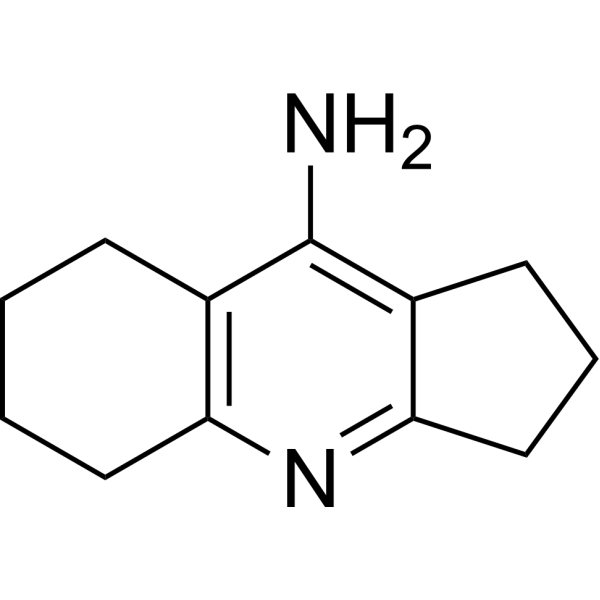
Ipidacrine is orally active and brain-penetrant AChE and BuChE inhibitors with IC50 values of 1 μM and 1.9 μM, respectively, which is also a partial agonist of M2-cholinergic receptors and a reversible cholinesterase inhibitor. Ipidacrine has a stimulating effect on neuromuscular transmission and excitation along the nerve fibres with a moderately anti-pain effect. Ipidacrine is an aminopyridines and is structurally similar to Tacrine (HY-111338). Ipidacrine is effective in various amnesia models, improves erectile function and inhibits K+ and Na+-channels in the neuronal membrane in diabetic rats. Ipidacrine is promising for research of Alzheimer’s disease, ischaemic stroke, idiopathic neuropathy of the facial nerve, diabetes mellitus-induced erectile dysfunction and other deficits in central or peripheral cholinergic deseases.
Nur für Forschungszwecke. Wir verkaufen nicht an Patienten.
- Reinheit : 99.81%
- CAS. Nr.: 62732-44-9
- Formel: C12H16N2
- Molecular Weight:188.27
-
Speicherung:
4°C, protect from light
* In solvent : -80°C, 6 months; -20°C, 1 month (protect from light)

To place orders, for customer services and technical support, please contact: MedChemExpress USA
Tel: 609-228-6898 E-mail: [email protected] [email protected]


-
 Biologische Aktivität
-
Chemical Information
-
Lösungsmittel & Löslichkeit
- Protokoll
- Reinheit & Dokumentation
- Verweise
-
 Help & FAQs


-
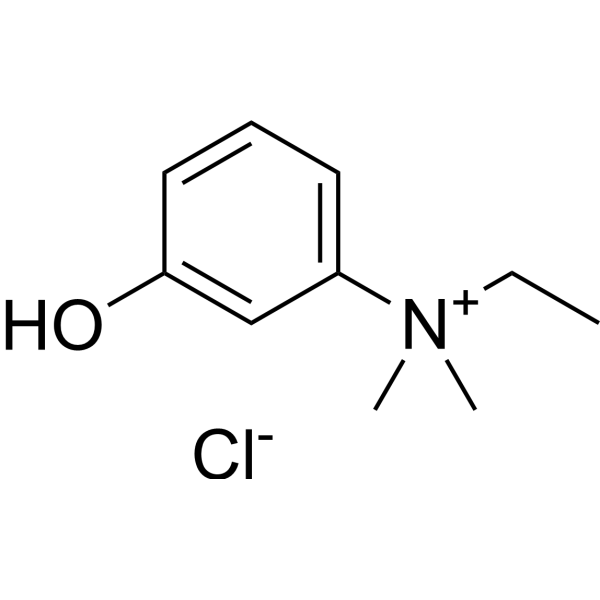
HY-B0882
Edrophonium chlorideAChE Inhibitor -

HY-W027553R
Ipidacrine (Standard)Standard of Ipidacrine -
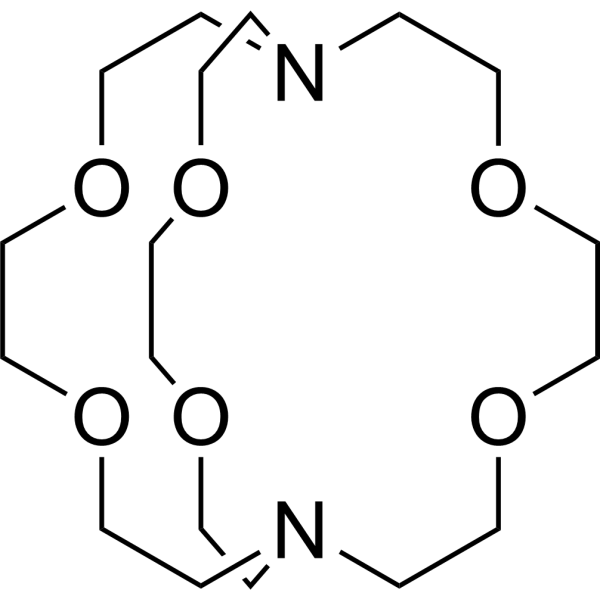
HY-W011060
Cryptand 2.2.2Metal Ion Chelator -
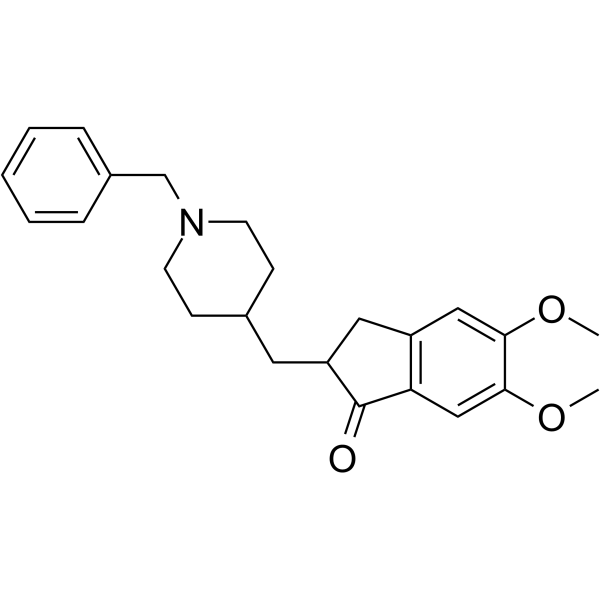
HY-14566
DonepezilSpecific AChE Inhibitor -
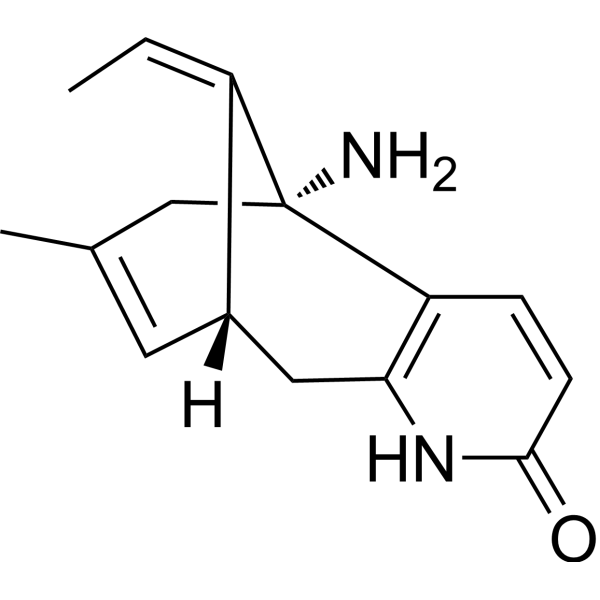
HY-17387
(-)-Huperzine AAChE/NMDA Receptor Inhibitor -
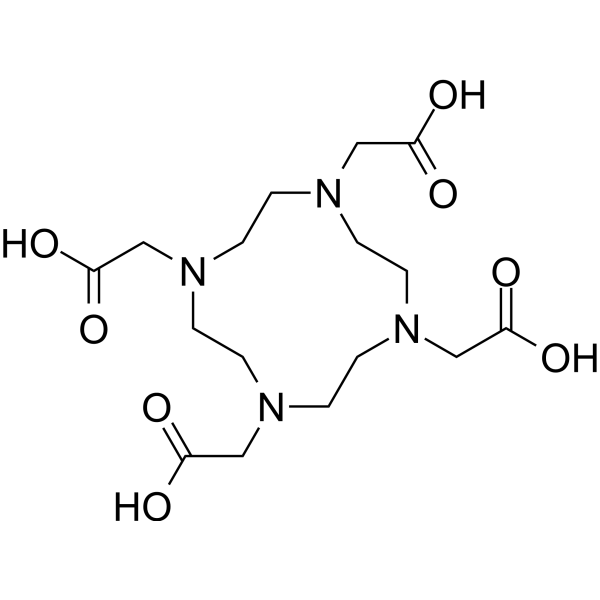
HY-W053583
TetraxetanChelating Agent -
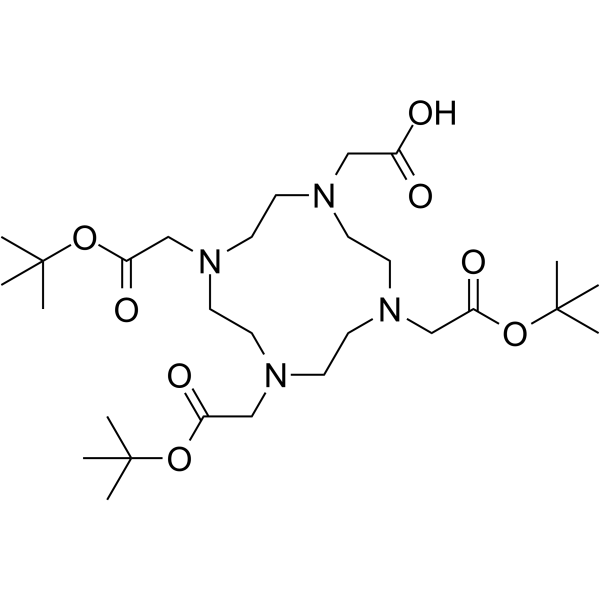
HY-W034551
DOTA-tri(t-butyl ester)DOTA-like Chelating Agent -
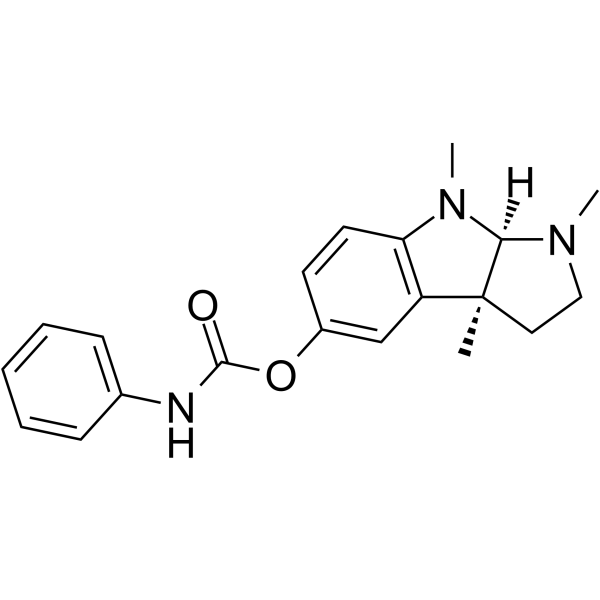
HY-103374
PhenserineAChE Inhibitor -
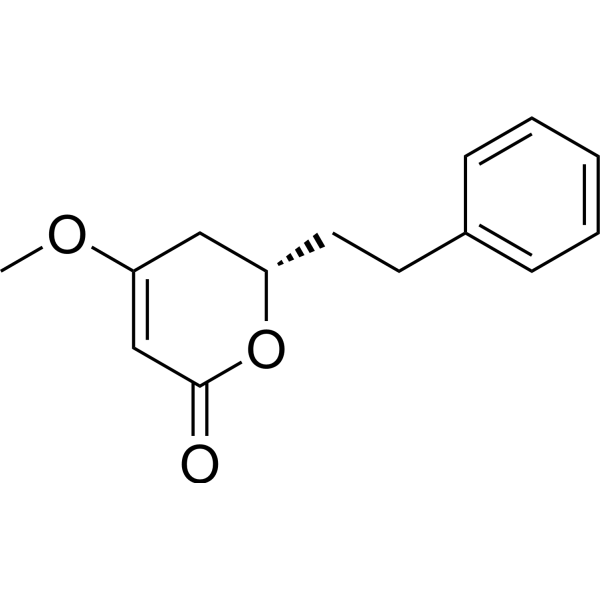
HY-N0920
DihydrokavainAnxiolytic Agent -
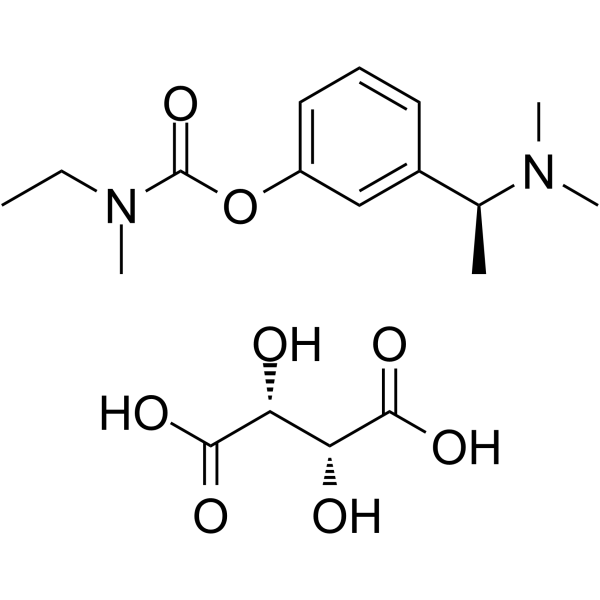
HY-11017
Rivastigmine tartrateCholinesterase Inhibitor -
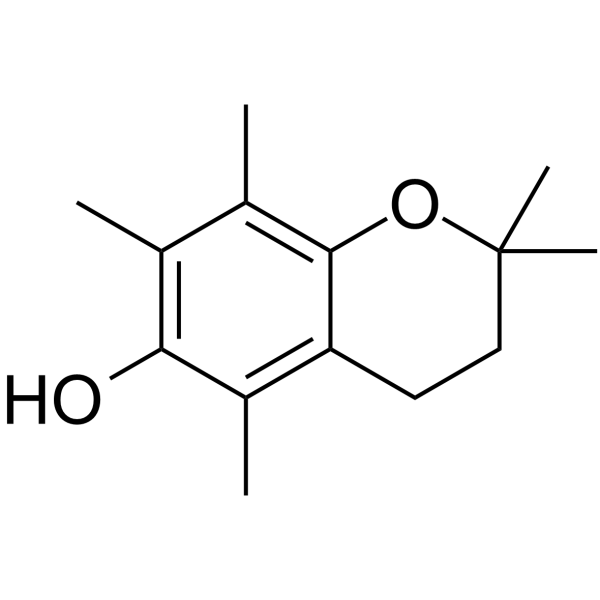
HY-111024
2,2,5,7,8-Pentamethyl-6-ChromanolAndrogen Receptor Modulator -
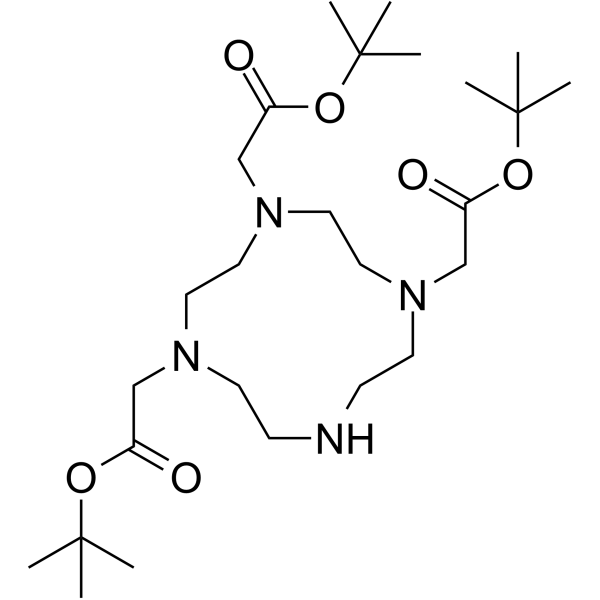
HY-12692
DO3A tert-Butyl esterCyclic Tosamide Derivative


Biologische Aktivität
Beschreibung
In Vitro
In Vivo
Ipidacrine (10 mg/kg p.o., a single dose) significantly decreases spontaneous movements, which is more selective as an antiamnesic than either Tacrine (HY-111338) and E-2020 (HY-B0034) in rats[1].
Ipidacrine (6.7 mg/kg, intragastrically, daily for 14 days) leads to statistically more efficient evolving of intracavernous pressure (ICPmax)/maxipressure (MAP) compared with control group in Streptozotocin (STZ) (HY-13753)-induced diabetic rats[3].
MedChemExpress (MCE) has not independently confirmed the accuracy of these methods. They are for reference only.
-
Animal Model:Rats[1]
-
Dosage:1 mg/kg
-
Administration:p.o., repeated and a single dose for 5 days
-
Result:The repeated administration of ipidacrine improved amnesia induced by nucleus basalis of meynert (NBM) lesions in the passive avoidance task in rats.
-
Animal Model:Rats[1]
-
Dosage:3, 10, 30 mg/kg
-
Administration:p.o., a single dose
-
Result:Decreased pupil size and increased salivation at 3 mg/kg, decreased spontaneous movements at 10 mg/kg and decreased body temperature and induced tremor at 30 mg/kg in rats.
-
Animal Model:Rats with streptozotocin (STZ) (HY-13753) induced diabetes mellitus-induced erectile dysfunction (DMED)[1]
-
Dosage:6.7 mg/kg
-
Administration:crushed, suspended in 1% starch solution and administered intragastrically daily for 14 days
-
Result:Ipidacrine was as effective as sildenafil and could significantly improve DMED symptoms.


Chemical Information
-
CAS. Nr. 62732-44-9
-
Appearance Solid
-
Molecular Weight 188.27
-
Formel C12H16N2
-
Color White to off-white
-
SMILES
NC1=C2CCCC2=NC3=C1CCCC3
-
Synonyms
NIK-247 free base; Amiridine free base
-
Versand
Room temperature in continental US; may vary elsewhere.
-
Speicherung
4°C, protect from light
* In solvent : -80°C, 6 months; -20°C, 1 month (protect from light)


Lösungsmittel & Löslichkeit
In Vitro:
DMSO : ≥ 25 mg/mL (132.79 mM; Hygroscopic DMSO has a significant impact on the solubility of product, please use newly opened DMSO)
* "≥" means soluble, but saturation unknown.
Please refer to the solubility information to select the appropriate solvent. Once prepared, please aliquot and store the solution to prevent product inactivation from repeated freeze-thaw cycles.
Storage method and period of stock solution: -80°C, 6 months; -20°C, 1 month (protect from light). When stored at -80°C, please use it within 6 months. When stored at -20°C, please use it within 1 month.
Please refer to the solubility information to select the appropriate solvent. Once prepared, please aliquot and store the solution to prevent product inactivation from repeated freeze-thaw cycles.
Storage method and period of stock solution: -80°C, 6 months; -20°C, 1 month (protect from light). When stored at -80°C, please use it within 6 months. When stored at -20°C, please use it within 1 month.
Konzentration (Stammlösung) × Volumen (Stammlösung) = Konzentration (Ziellösung) × Volumen (Ziellösung)
In Vivo:
Select the appropriate dissolution method based on your experimental animal and administration route.
- For the following dissolution methods, please ensure to first prepare a clear stock solution using an In Vitro approach and then sequentially add co-solvents:
- To ensure reliable experimental results, the clarified stock solution can be appropriately stored based on storage conditions. As for the working solution for In Vivo experiments, it is recommended to prepare freshly and use it on the same day.
- The percentages shown for the solvents indicate their volumetric ratio in the final prepared solution. If precipitation or phase separation occurs during preparation, heat and/or sonication can be used to aid dissolution.
Add each solvent one by one: 10% DMSO 40% PEG300 5% Tween-80 45% Saline
Solubility: ≥ 2.5 mg/mL (13.28 mM); Clear solution
This protocol yields a clear solution of ≥ 2.5 mg/mL (saturation unknown).
Taking 1 mL working solution as an example, add 100 μL DMSO stock solution (25.0 mg/mL) to 400 μL PEG300, and mix evenly; then add 50 μL Tween-80 and mix evenly; then add 450 μL Saline to adjust the volume to 1 mL.
Preparation of Saline: Dissolve 0.9 g sodium chloride in ddH₂O and dilute to 100 mL to obtain a clear Saline solution.
Add each solvent one by one: 10% DMSO 90% (20% SBE-β-CD in Saline)
Solubility: ≥ 2.5 mg/mL (13.28 mM); Clear solution
This protocol yields a clear solution of ≥ 2.5 mg/mL (saturation unknown).
Taking 1 mL working solution as an example, add 100 μL DMSO stock solution (25.0 mg/mL) to 900 μL 20% SBE-β-CD in Saline, and mix evenly.
Preparation of 20% SBE-β-CD in Saline (4°C, storage for one week): 2 g SBE-β-CD powder is dissolved in 10 mL Saline, completely dissolve until clear.
In Vivo Dissolution Calculator
Please enter the basic information of animal experiments:
-
-
-
-
Recommended: Prepare an additional quantity of animals to account for potential losses during experiments.
Please enter your animal formula composition:
-
%DMSO +
Recommended: Keep the proportion of DMSO in working solution below 2% if your animal is weak.
-
%+
-
+%Tween-80 + +
-
%Saline +
The co-solvents required include: DMSO, . All of co-solvents are available by MedChemExpress (MCE). , Tween 80. All of co-solvents are available by MedChemExpress (MCE).
Working solution concentration: 0.22 mg/mL
Method for preparing stock solution: mg drug dissolved in μL DMSO. Stock solution concentration: mg/mL. * In solvent : -80°C, 6 months; -20°C, 1 month (protect from light)
1. Take μL DMSO stock solution;
2. Add μL .
μL , mix evenly;
3. Then add μL Tween 80, mix evenly;
4. Then add μL
Please ensure that the stock solution in the first step is dissolved to a clear state, and add co-solvents in sequence. You can use ultrasonic heating (ultrasonic cleaner, recommended frequency 20-40 kHz), vortexing, etc. to assist dissolution.


Reinheit & Dokumentation
-
Data Sheet (292 KB)
-
SDS (393 KB)
- English - EN (393 KB)
- Français - FR (393 KB)
- Deutsch - DE (393 KB)
- Norwegian - NO (393 KB)
- Español - ES (393 KB)
- Swedish - SV (393 KB)
- Italian - IT (393 KB)
- Korean - KR (393 KB)
- Portuguese - PT (393 KB)
-
Handling Instructions (2659 KB)
Verweise


Complete Stock Solution Preparation Table
Please refer to the solubility information to select the appropriate solvent. Once prepared, please aliquot and store the solution to prevent product inactivation from repeated freeze-thaw cycles.
Storage method and period of stock solution: -80°C, 6 months; -20°C, 1 month (protect from light). When stored at -80°C, please use it within 6 months. When stored at -20°C, please use it within 1 month.
| Optional Solvent | Concentration Solvent Mass | 1 mg | 5 mg | 10 mg | 25 mg |
|---|---|---|---|---|---|
| DMSO | 1 mM | 5.3115 mL | 26.5576 mL | 53.1152 mL | 132.7880 mL |
| 5 mM | 1.0623 mL | 5.3115 mL | 10.6230 mL | 26.5576 mL | |
| 10 mM | 0.5312 mL | 2.6558 mL | 5.3115 mL | 13.2788 mL | |
| 15 mM | 0.3541 mL | 1.7705 mL | 3.5410 mL | 8.8525 mL | |
| 20 mM | 0.2656 mL | 1.3279 mL | 2.6558 mL | 6.6394 mL | |
| 25 mM | 0.2125 mL | 1.0623 mL | 2.1246 mL | 5.3115 mL | |
| 30 mM | 0.1771 mL | 0.8853 mL | 1.7705 mL | 4.4263 mL | |
| 40 mM | 0.1328 mL | 0.6639 mL | 1.3279 mL | 3.3197 mL | |
| 50 mM | 0.1062 mL | 0.5312 mL | 1.0623 mL | 2.6558 mL | |
| 60 mM | 0.0885 mL | 0.4426 mL | 0.8853 mL | 2.2131 mL | |
| 80 mM | 0.0664 mL | 0.3320 mL | 0.6639 mL | 1.6599 mL | |
| 100 mM | 0.0531 mL | 0.2656 mL | 0.5312 mL | 1.3279 mL |


Ipidacrine Related Classifications
HY-W027553 Related Classifications
 Powered by Bioz
Keywords
- Ipidacrine
- 62732-44-9
- NIK-247
- Amiridine
- NIK247
- NIK 247
- Cholinesterase (ChE)
- Potassium Channel
- Sodium Channel
- orally active
- brain-penetrant
- AChE
- BuChE
- M2-cholinergic receptors
- anti-pain effect
- K+ and Na+-channels
- Alzheimer’s disease
- ischaemic stroke
- diabetes mellitus-induced erectile dysfunction
- other deficits in central or peripheral cholinergic deseases
- Inhibitor
- inhibitor
- inhibit