



AG1557

Based on 1 Customer Validation
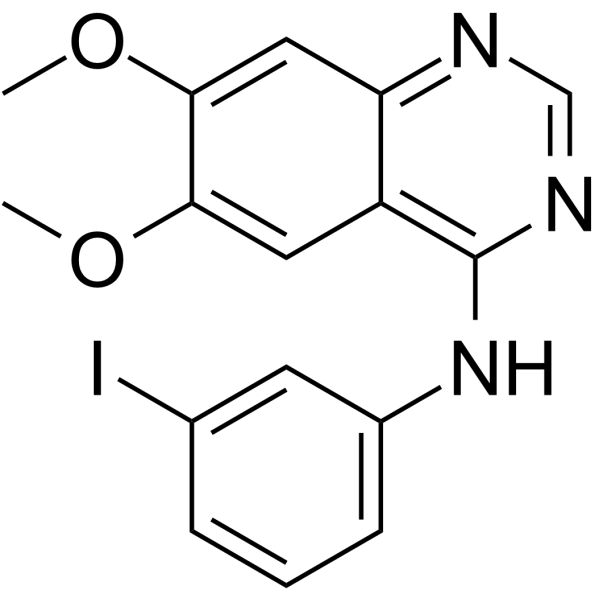
AG1557 is an IGF-1 receptor/insulin receptor inhibitor (IC50 = 55 μM and 100 μM, respectively). AG1557 inhibits IGF-1- and insulin (Insulin (human)) (HY-P0035)-stimulated receptor autophosphorylation and tyrosine kinase activity toward exogenous substrates, thereby exerting an inhibitory effect on serum-stimulated cell proliferation. AG1557 can serve as an internal standard for RP-HPLC monitoring and quantification of AG1478 (HY-13524) in plasma. AG1557 can be used for research on the IGF-1R/IR signaling pathway.
For research use only. We do not sell to patients.
- Purity : 99.54%
- CAS No.: 189290-58-2
- Formula: C16H14IN3O2
- Molecular Weight:407.21
-
Storage:Powder -20°C, 3 years , 4°C, 2 years ; In solvent -80°C, 6 months , -20°C, 1 month

To place orders, for customer services and technical support, please contact: MedChemExpress USA
Tel: 609-228-6898 E-mail: [email protected] [email protected]


-
 Biological Activity
-
Chemical Information
-
Solvent & Solubility
- Protocols
- Purity & Documentation
- References
-
 Help & FAQs


-
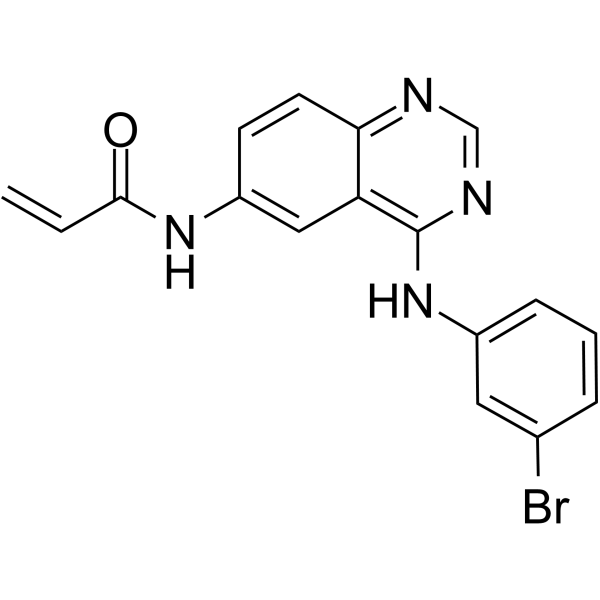
HY-13896
PD168393EGFR Tyrosine Kinase Inhibitor -
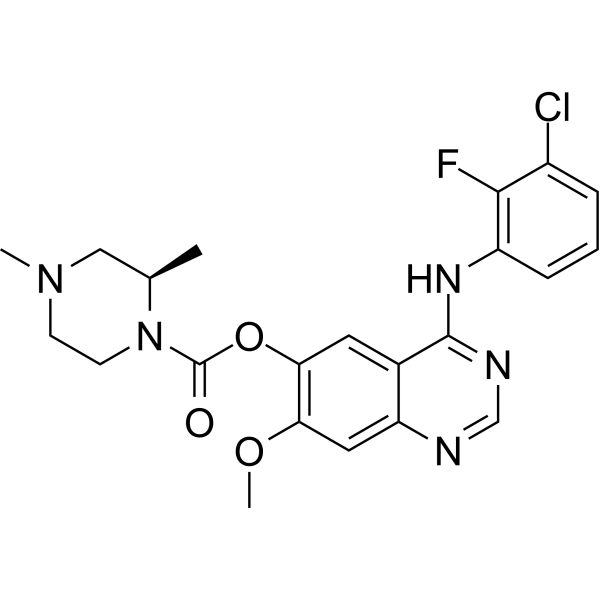
HY-18750
ZorifertinibEGFR Inhibitor -
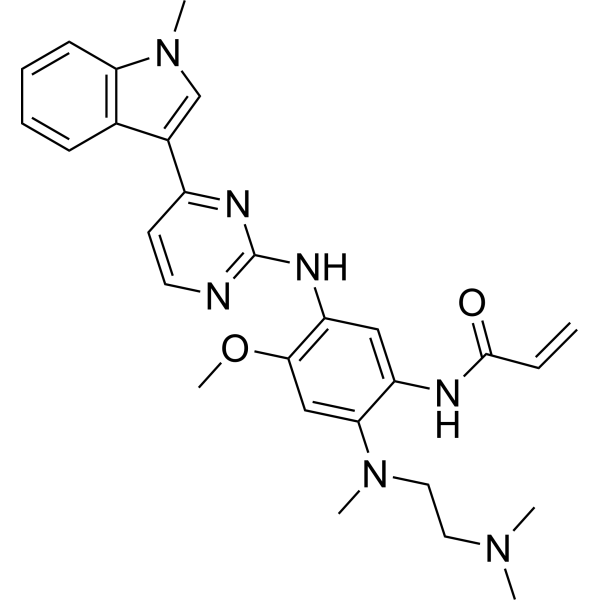
HY-15772
OsimertinibMutant-Selective EGFR Inhibitor -
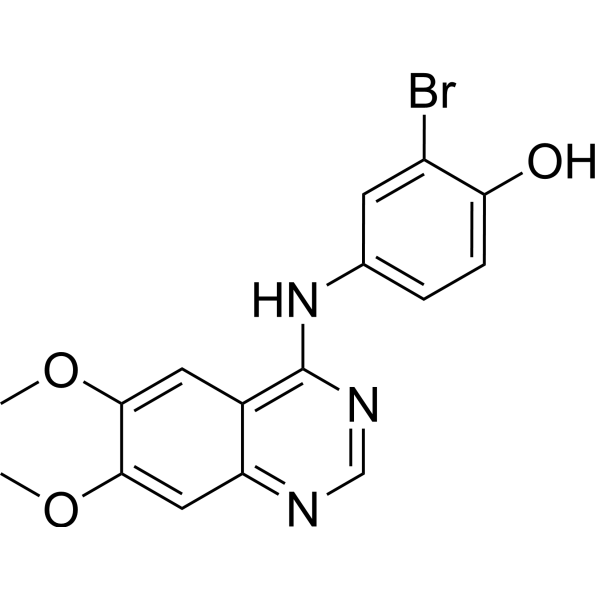
HY-13895
WHI-P154EGFR Inhibitor -
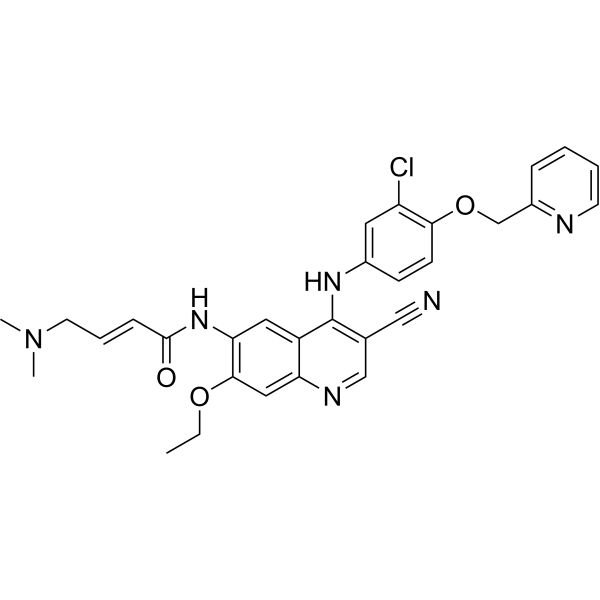
HY-32721
NeratinibHER2/EGFR Inhibitor -
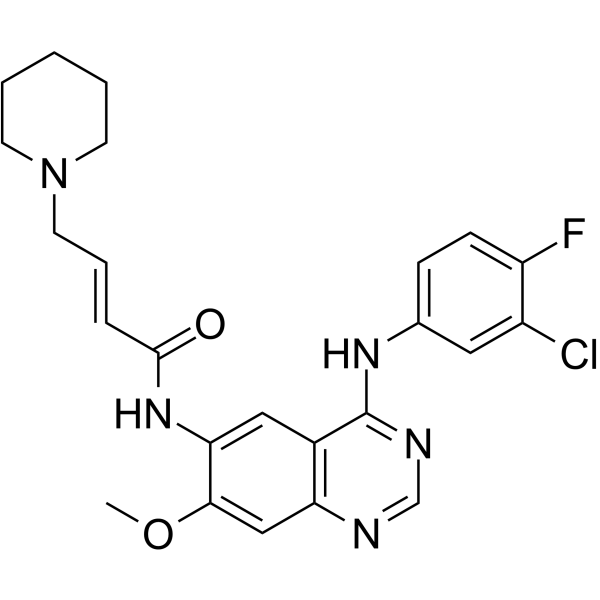
HY-13272
DacomitinibPan-ERBB Receptor Inhibitor -

HY-15772R
Osimertinib (Standard)Mutant-Selective EGFR Inhibitor -
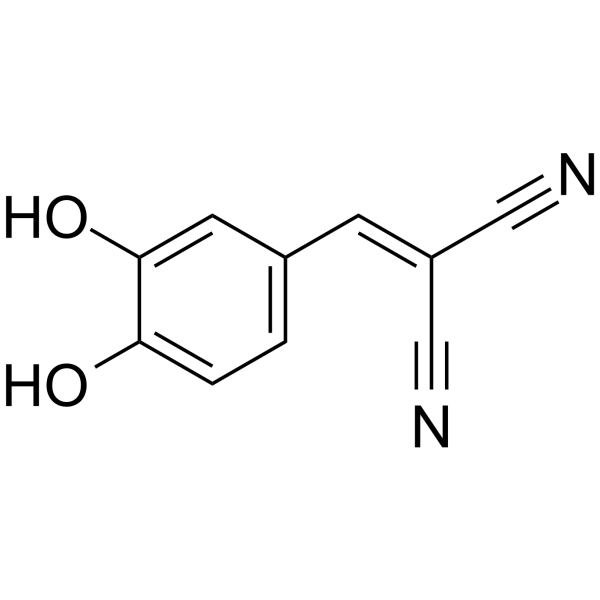
HY-15644
Tyrphostin 23EGFR Inhibitor -
HY-14346
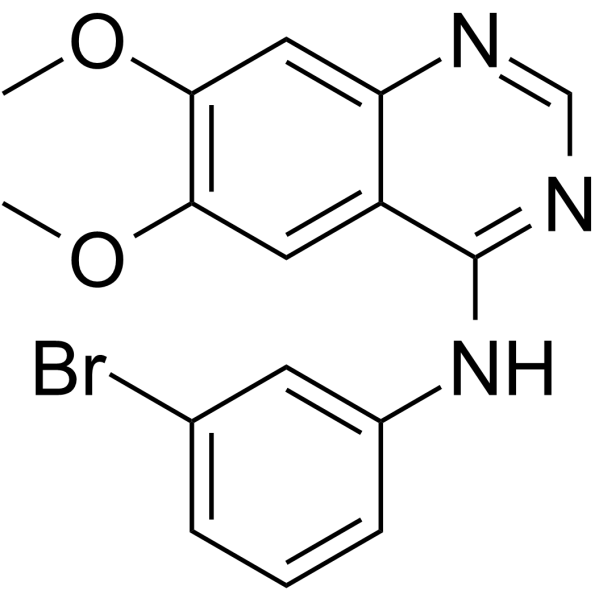
PD153035EGFR Inhibitor -
HY-19730
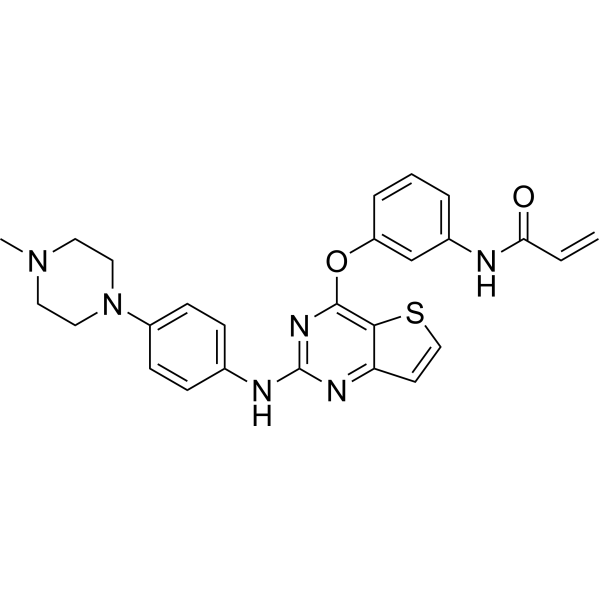
OlmutinibEGFR Tyrosine Kinase Inhibitor -

HY-32721R
Neratinib (Standard)HER2/EGFR Inhibitor -
HY-12872
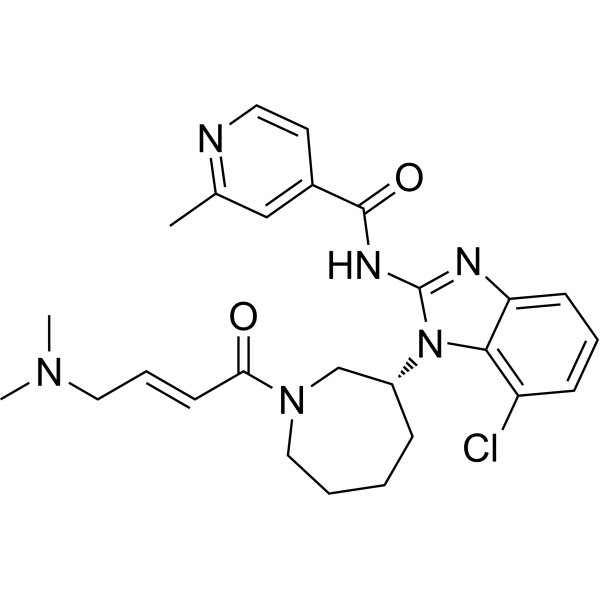
NazartinibEGFR Inhibitor


Biological Activity
Description
IC50 & Target
[2]|
IGF-1R 55 μM (IC50) |
insulin receptor 100 μM (IC50) |
Cellular Effect
|
Cell Line

|
Type | Value | Description | References |
|---|---|---|---|---|
| NIH3T3 | IC50 |
2 μM
|
Inhibition of IGF-1-stimulated proliferation of NWTc43 NIH-3T3 cells assessed by MTT assay incubated 120 hrs with medium replacement every 48 hrs.
Inhibition of IGF-1-stimulated proliferation of NWTc43 NIH-3T3 cells assessed by MTT assay incubated 120 hrs with medium replacement every 48 hrs.
|
9075698 |
| NIH3T3 | IC50 |
5.3 μM
|
Inhibition of serum-stimulated proliferation of NWTc43 NIH-3T3 cells assessed by MTT assay incubated 120 hrs with 10% FBS and medium replacement every 48 hrs.
Inhibition of serum-stimulated proliferation of NWTc43 NIH-3T3 cells assessed by MTT assay incubated 120 hrs with 10% FBS and medium replacement every 48 hrs.
|
9075698 |
| NIH3T3 | IC50 |
0.1 μM
|
Inhibition of insulin-stimulated proliferation of WT2 NIH-3T3 cells assessed by MTT assay incubated 120 hrs with medium replacement every 48 hrs.
Inhibition of insulin-stimulated proliferation of WT2 NIH-3T3 cells assessed by MTT assay incubated 120 hrs with medium replacement every 48 hrs.
|
9075698 |
| NIH3T3 | IC50 |
43 μM
|
Inhibition of IGF-1 receptor autophosphorylation in NWTc43 NIH-3T3 cells assessed by anti-phosphotyrosine immunoblotting after 1 hr preincubation and 1 min IGF-1 stimulation.
Inhibition of IGF-1 receptor autophosphorylation in NWTc43 NIH-3T3 cells assessed by anti-phosphotyrosine immunoblotting after 1 hr preincubation and 1 min IGF-1 stimulation.
|
9075698 |
| NIH3T3 | IC50 |
42 μM
|
Inhibition of insulin receptor autophosphorylation in WT2 NIH-3T3 cells assessed by anti-phosphotyrosine immunoblotting after 1 hr preincubation and 1 min insulin stimulation.
Inhibition of insulin receptor autophosphorylation in WT2 NIH-3T3 cells assessed by anti-phosphotyrosine immunoblotting after 1 hr preincubation and 1 min insulin stimulation.
|
9075698 |
In Vitro
AG1557 (0.1-5 μM; 120 h) inhibits insulin-stimulated proliferation of WT2 NIH-3T3 cells with an IC50 of 0.1 μM[2].
AG1557 (5-60 μM; 1 h preincubation) inhibits IGF-1 and insulin receptor autophosphorylation in intact NWTc43 and WT2 NIH-3T3 cells with IC50 values of 43 μM and 42 μM, respectively[2].
AG1557 (overnight at 4°C) inhibits the tyrosine kinase activity of partially purified IGF-1 and insulin receptors toward poly (Glu:Tyr) 4:1, with IC50 values of 55 μM and 100 μM, respectively[2].
MedChemExpress (MCE) has not independently confirmed the accuracy of these methods. They are for reference only.
-
Cell Line:NIH-3T3 cells overexpressing IGF-1 receptors (NWTc43) or insulin receptors (WT2)
-
Concentration:5, 10, 20, 60 μM
-
Incubation Time:1 h preincubation; 1 min stimulation with IGF-1/insulin; time-course at 0.5, 1, and 12 h
-
Result:Inhibited IGF-1 receptor autophosphorylation with an IC50 of 43 μM.
Inhibited insulin receptor autophosphorylation with an IC50 of 42 μM.
The 1-h incubation was optimal, and inhibition was transient with recovery by 12 h.
No clear preference was shown between IGF-1 and insulin receptors for autophosphorylation inhibition.
- BrdU Incorporation Assay
- Somatic Cell Culture
- CFSE Dye Dilution Proliferation Assay
- Dye Dilution Assay: Monitoring Cell Proliferation
- CCK-8/WST-8 Cell Proliferation Assay
- Protocol for Cell Cycle
- Cell Counting-Based Growth Curve Assay
- Colony Formation (Clonogenic) Assay
- Cell Viability Determination by MTT Colorimetric Assay
- Kinase activity and phosphorylation assays
- EdU Incorporation Assay (Click Chemistry-Based DNA Synthesis Measurement)
- Ki-67 Immunostaining Proliferation Assay
- PCNA Immunodetection Proliferation Assay
- Protocol for Cell Counting and Cell Density Analysis
- Research Protocol for Endocrine Diseases
- Protocol for Kinase activity and phosphorylation assays
- MTT Cell Proliferation Assay


Chemical Information
-
CAS No. 189290-58-2
-
Appearance Solid
-
Molecular Weight 407.21
-
Formula C16H14IN3O2
-
Color Off-white to gray
-
SMILES
COC1=CC2=NC=NC(NC3=CC=CC(I)=C3)=C2C=C1OC
-
Shipping
Room temperature in continental US; may vary elsewhere.
-
Storage
Powder -20°C 3 years 4°C 2 years In solvent -80°C 6 months -20°C 1 month


Solvent & Solubility
In Vitro:
DMSO : 83.33 mg/mL (204.64 mM; Need ultrasonic; Hygroscopic DMSO has a significant impact on the solubility of product, please use newly opened DMSO)
Please refer to the solubility information to select the appropriate solvent. Once prepared, please aliquot and store the solution to prevent product inactivation from repeated freeze-thaw cycles.
Storage method and period of stock solution: -80°C, 6 months; -20°C, 1 month. When stored at -80°C, please use it within 6 months. When stored at -20°C, please use it within 1 month.
Concentration (start) × Volume (start) = Concentration (final) × Volume (final)
In Vivo:
Select the appropriate dissolution method based on your experimental animal and administration route.
- For the following dissolution methods, please ensure to first prepare a clear stock solution using an In Vitro approach and then sequentially add co-solvents:
- To ensure reliable experimental results, the clarified stock solution can be appropriately stored based on storage conditions. As for the working solution for In Vivo experiments, it is recommended to prepare freshly and use it on the same day.
- The percentages shown for the solvents indicate their volumetric ratio in the final prepared solution. If precipitation or phase separation occurs during preparation, heat and/or sonication can be used to aid dissolution.
Add each solvent one by one: 10% DMSO 40% PEG300 5% Tween-80 45% Saline
Solubility: ≥ 2.08 mg/mL (5.11 mM); Clear solution
This protocol yields a clear solution of ≥ 2.08 mg/mL (saturation unknown).
Taking 1 mL working solution as an example, add 100 μL DMSO stock solution (20.8 mg/mL) to 400 μL PEG300, and mix evenly; then add 50 μL Tween-80 and mix evenly; then add 450 μL Saline to adjust the volume to 1 mL.
Preparation of Saline: Dissolve 0.9 g sodium chloride in ddH₂O and dilute to 100 mL to obtain a clear Saline solution.
Add each solvent one by one: 10% DMSO 90% (20% SBE-β-CD in Saline)
Solubility: ≥ 2.08 mg/mL (5.11 mM); Clear solution
This protocol yields a clear solution of ≥ 2.08 mg/mL (saturation unknown).
Taking 1 mL working solution as an example, add 100 μL DMSO stock solution (20.8 mg/mL) to 900 μL 20% SBE-β-CD in Saline, and mix evenly.
Preparation of 20% SBE-β-CD in Saline (4°C, storage for one week): 2 g SBE-β-CD powder is dissolved in 10 mL Saline, completely dissolve until clear.
In Vivo Dissolution Calculator
Please enter the basic information of animal experiments:
-
-
-
-
Recommended: Prepare an additional quantity of animals to account for potential losses during experiments.
Please enter your animal formula composition:
-
%DMSO +
Recommended: Keep the proportion of DMSO in working solution below 2% if your animal is weak.
-
%+
-
+%Tween-80 + +
-
%Saline +
The co-solvents required include: DMSO, . All of co-solvents are available by MedChemExpress (MCE). , Tween 80. All of co-solvents are available by MedChemExpress (MCE).
Working solution concentration: 0.22 mg/mL
Method for preparing stock solution: mg drug dissolved in μL DMSO. Stock solution concentration: mg/mL.
1. Take μL DMSO stock solution;
2. Add μL .
μL , mix evenly;
3. Then add μL Tween 80, mix evenly;
4. Then add μL
Please ensure that the stock solution in the first step is dissolved to a clear state, and add co-solvents in sequence. You can use ultrasonic heating (ultrasonic cleaner, recommended frequency 20-40 kHz), vortexing, etc. to assist dissolution.


Purity & Documentation


References

Complete Stock Solution Preparation Table
Please refer to the solubility information to select the appropriate solvent. Once prepared, please aliquot and store the solution to prevent product inactivation from repeated freeze-thaw cycles.
Storage method and period of stock solution: -80°C, 6 months; -20°C, 1 month. When stored at -80°C, please use it within 6 months. When stored at -20°C, please use it within 1 month.
| Optional Solvent | Concentration Solvent Mass | 1 mg | 5 mg | 10 mg | 25 mg |
|---|---|---|---|---|---|
| DMSO | 1 mM | 2.4557 mL | 12.2787 mL | 24.5574 mL | 61.3934 mL |
| 5 mM | 0.4911 mL | 2.4557 mL | 4.9115 mL | 12.2787 mL | |
| 10 mM | 0.2456 mL | 1.2279 mL | 2.4557 mL | 6.1393 mL | |
| 15 mM | 0.1637 mL | 0.8186 mL | 1.6372 mL | 4.0929 mL | |
| 20 mM | 0.1228 mL | 0.6139 mL | 1.2279 mL | 3.0697 mL | |
| 25 mM | 0.0982 mL | 0.4911 mL | 0.9823 mL | 2.4557 mL | |
| 30 mM | 0.0819 mL | 0.4093 mL | 0.8186 mL | 2.0464 mL | |
| 40 mM | 0.0614 mL | 0.3070 mL | 0.6139 mL | 1.5348 mL | |
| 50 mM | 0.0491 mL | 0.2456 mL | 0.4911 mL | 1.2279 mL | |
| 60 mM | 0.0409 mL | 0.2046 mL | 0.4093 mL | 1.0232 mL | |
| 80 mM | 0.0307 mL | 0.1535 mL | 0.3070 mL | 0.7674 mL | |
| 100 mM | 0.0246 mL | 0.1228 mL | 0.2456 mL | 0.6139 mL |


AG1557 Related Classifications
HY-12806 Related Classifications
 Powered by Bioz