



CIM0216
Based on 3 publication(s) in Google Scholar
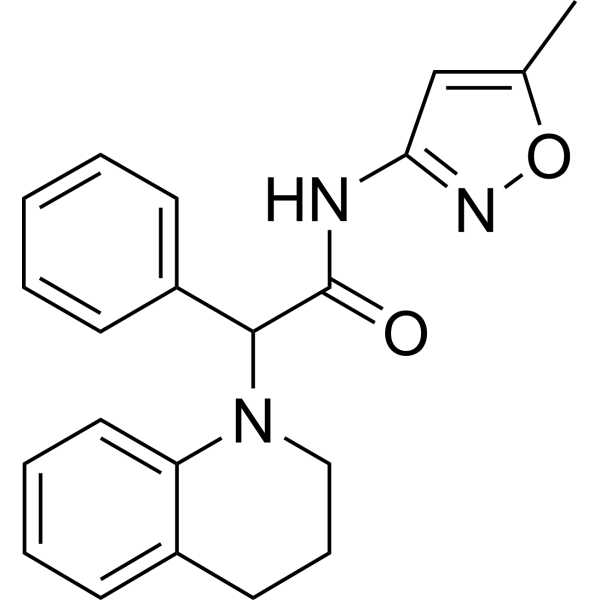
CIM0216, a synthetic TRPM3 ligand, acts as a potent and selective agonist of TRPM3. CIM0216 exhibits selectivity for TRPM3 over TRPM1, TRPM2 and TRPM4-8. CIM0216 acts in a TRPM3-dependent manner to induce pain and evoke neuropeptide release from sensory nerve terminals in vitro. CIM0216 is a powerful tool for studies of the physiological functions of TRPM3, and can be used for neurogenic inflammation research.
Nos produits utilisent uniquement pour la recherche. Nous ne vendons pas aux patients.
- Pureté : 99.94%
- CAS No.: 1031496-06-6
- Formule: C21H21N3O2
- Masse moléculaire:347.41
-
Stockage:Powder -20°C, 3 years , 4°C, 2 years ; In solvent -80°C, 6 months , -20°C, 1 month

To place orders, for customer services and technical support, please contact: MedChemExpress USA
Tel: 609-228-6898 E-mail: [email protected] [email protected]


-
 Activité biologique
-
Chemical Information
-
Solvant et solubilité
- Protocole
- Pureté et documentation
- Références
-
 Help & FAQs


-
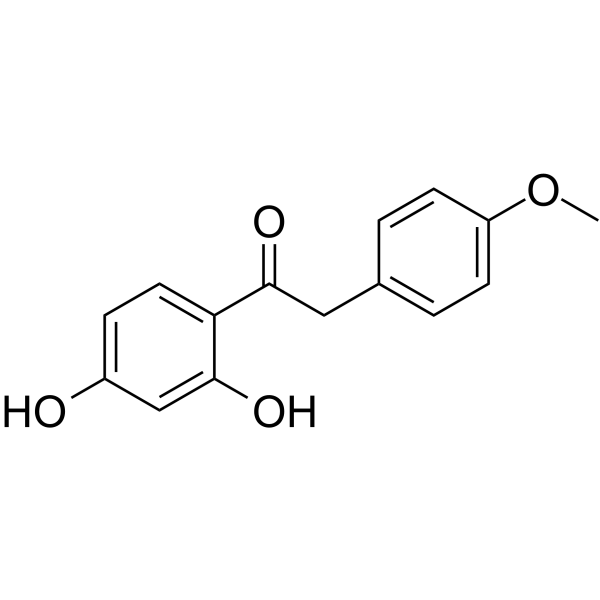
HY-108451
OnonetinTRPM3 Blocker -
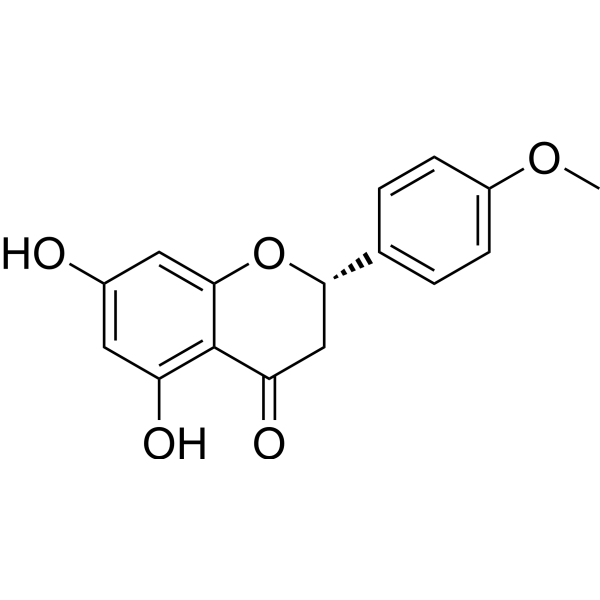
HY-N2131
IsosakuranetinNatural Product -
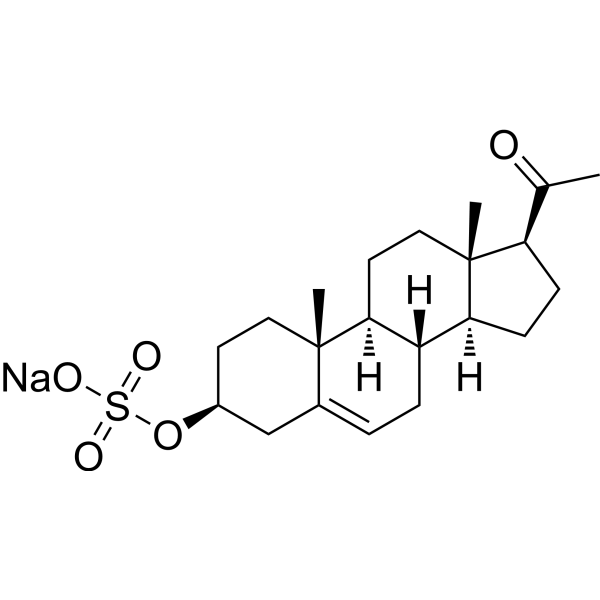
HY-110189
Pregnenolone monosulfate sodiumCB1 Receptor Inhibitor -
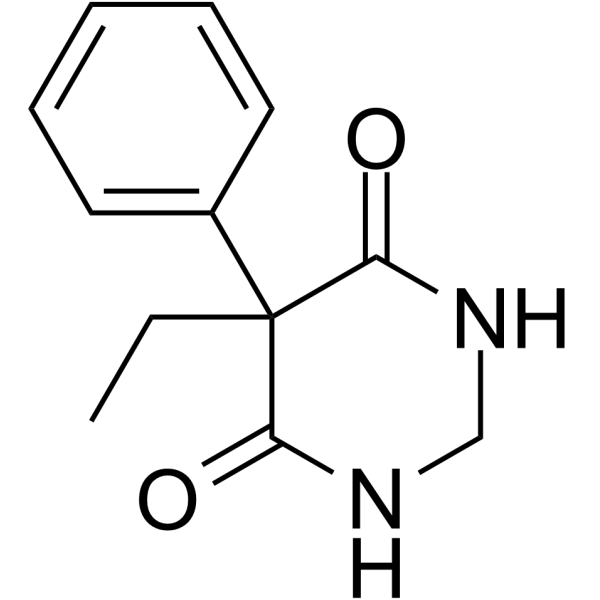
HY-B0339
PrimidoneTRPM3 Inhibitor -
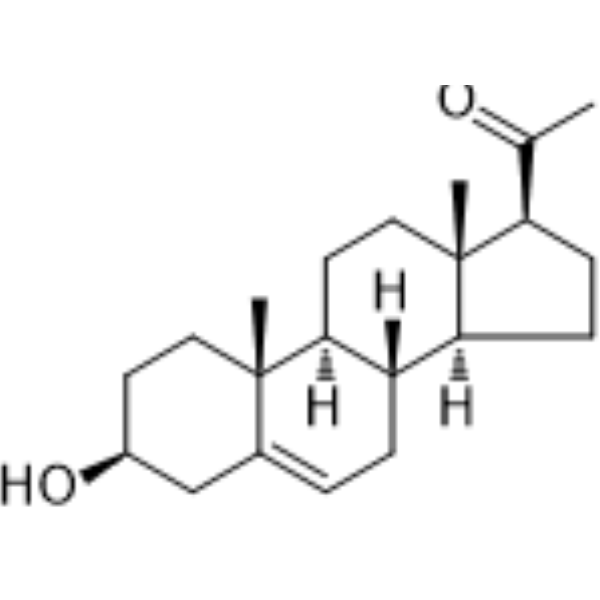
HY-B0151
PregnenoloneCB1 Inhibitor -
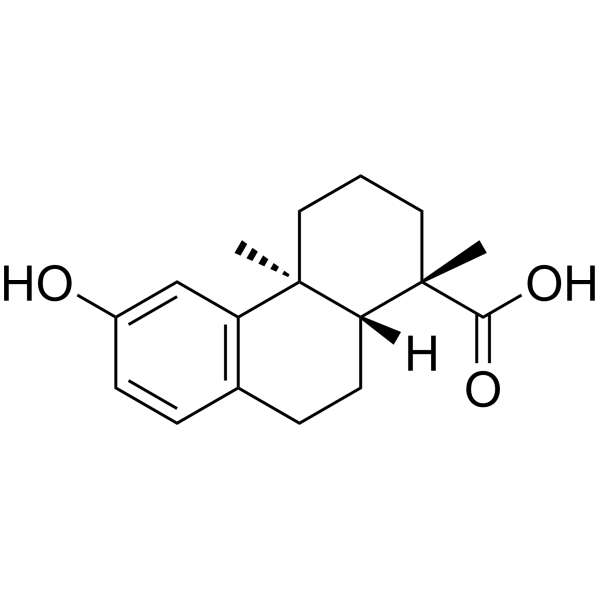
HY-N2318
Podocarpic acidTRP Channel Agonist -
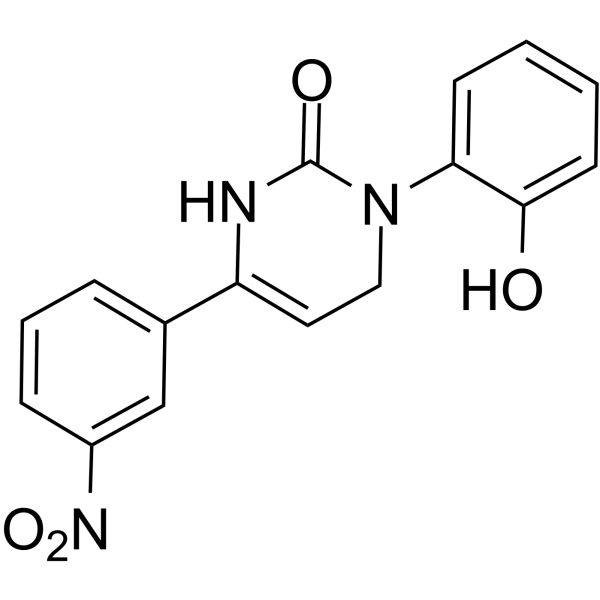
HY-11062
IcilinTRPM8 Agonist -
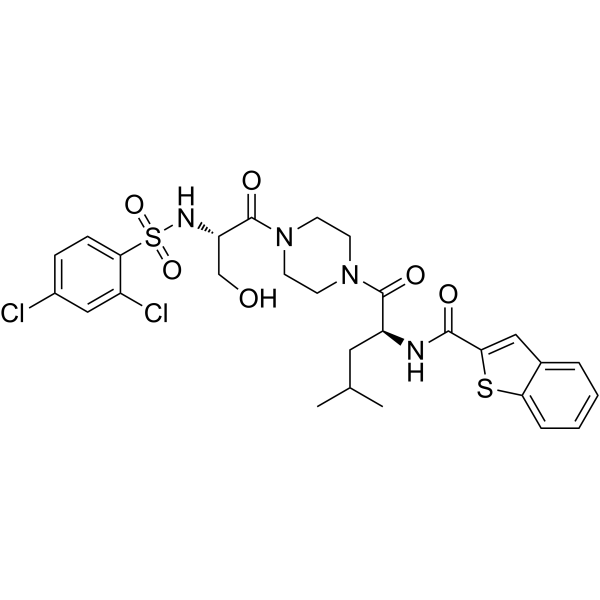
HY-19608
GSK1016790ATRPV4 Channel Agonist -
HY-K0010
Protease Inhibitor Cocktail (EDTA-Free, 100× in DMSO) -
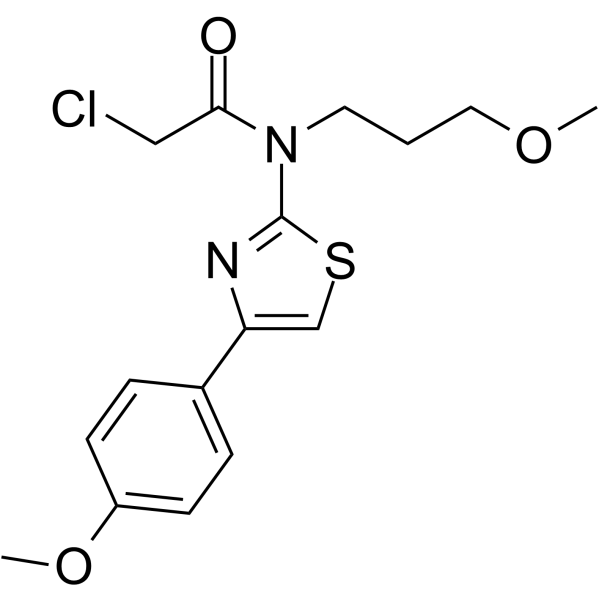
HY-111132
JT010TRPA1 Agonist -

HY-N2318R
Podocarpic acid (Standard)TRP Channel Agonist
Publications Citing Use of MedChemExpress (MCE) CIM0216
More Customer Validation & Images

-
Bio/Physico-chemical Assay
-
Bio/Physico-chemical Assay
-
Bio/Physico-chemical Assay
-
Cell Imaging/Staining
-
In Vivo Efficacy Study


Activité biologique
Description
IC50 & Target
[1]|
TRPM3 |
In Vitro
CIM0216 elicits a dose-dependent Ca2+ response [pEC50=0.77±0.1 μM] in HEK-TRPM3 cells, which is not observed in nontransfected HEK293 cells. CIM0216 induces a robust increase in intracellular Ca2+ concentration (1,145±26 nM) in single-cell FURA2-ratiometric Ca2+ imaging in HEK-TRPM3 cells. These responses are not observed in nontransfected HEK cells or in the absence of extracellular Ca2+[1]. CIM0216 (10 μM) has no stimulating/blocking effect on TRPM1, TRPM4, TRPM6, or TRPM7 currents; however, a small blocking effect of CIM0216 is observed after activation of TRPM2 (16.6% block) and TRPM5 (33.5% block). CIM0216 also has no detectable effect on human TRPV1 and TRPM8 channel activation[1].
MedChemExpress (MCE) has not independently confirmed the accuracy of these methods. They are for reference only. Further protocols information, click here.


Chemical Information
-
CAS No. 1031496-06-6
-
Appearance Solid
-
Masse moléculaire 347.41
-
Formule C21H21N3O2
-
Color White to yellow
-
SMILES
CC1=CC(NC(C(C2=CC=CC=C2)N3C4=CC=CC=C4CCC3)=O)=NO1
-
Livraison
Room temperature in continental US; may vary elsewhere.
-
Stockage
Powder -20°C 3 years 4°C 2 years In solvent -80°C 6 months -20°C 1 month


Publications (3)
-
Journal Impact Factor
-
Most Recent
-
Nat Commun
2026 Jan 8;17(1):1253. PMID: 41507162 -
EMBO J
Copine-6 is a TRPM3 escort protein controlling the sensitivity of sensory neurons to noxious heat. [Abstract]2025 Aug;44(15):4222-4251. PMID: 40537608
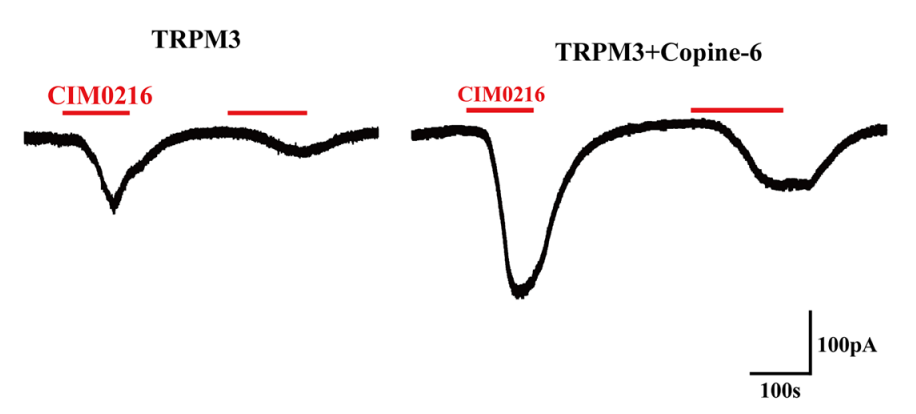
CIM0216 purchased from MedChemExpress. Usage Cited in: EMBO J. 2025 Aug;44(15):4222-4251. [Abstract]
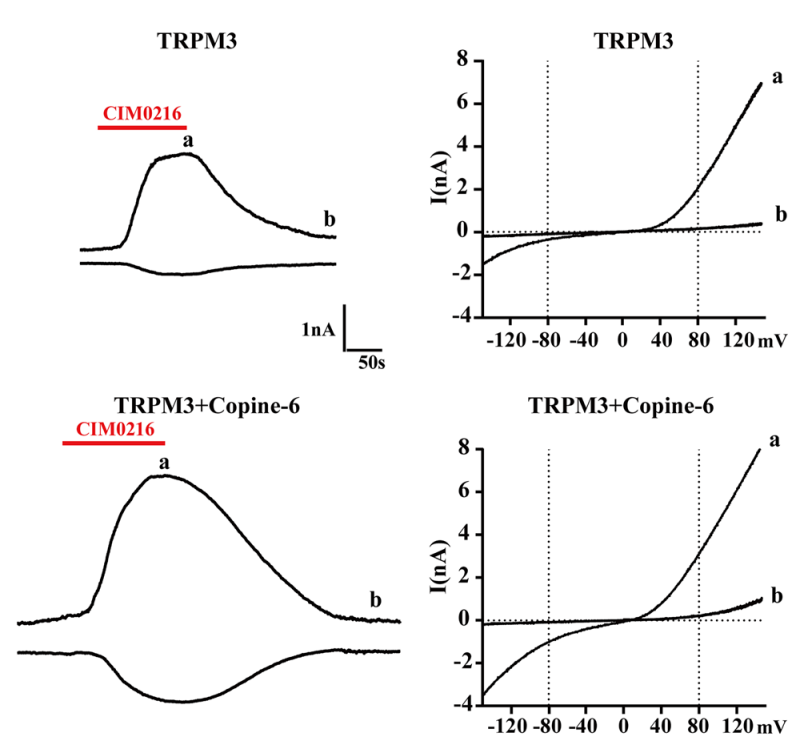
Representative currents were evoked by CIM0216 (5 μM) in CHO cells overexpressing TRPM3.
CIM0216 purchased from MedChemExpress. Usage Cited in: EMBO J. 2025 Aug;44(15):4222-4251. [Abstract]
Time course (left) and I-V relationship (right) of a whole-cell currents induced by CIM0216 (5 μM) in CHO cells expressing TRPM3 (top) or TRPM3 + Copine-6 (bottom).
CIM0216 purchased from MedChemExpress. Usage Cited in: EMBO J. 2025 Aug;44(15):4222-4251. [Abstract]
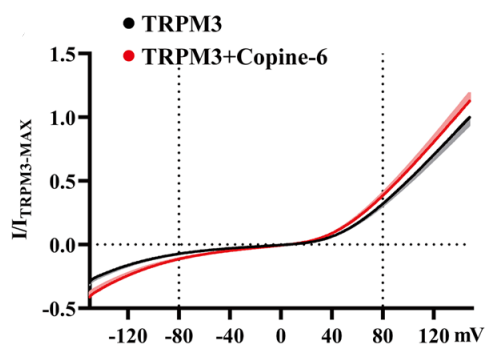
Voltage dependence of CIM0216 (5 μM)-induced currents in TRPM3-expressing CHO cells with (red) and without (black) Copine-6 co-expression.
CIM0216 purchased from MedChemExpress. Usage Cited in: EMBO J. 2025 Aug;44(15):4222-4251. [Abstract]
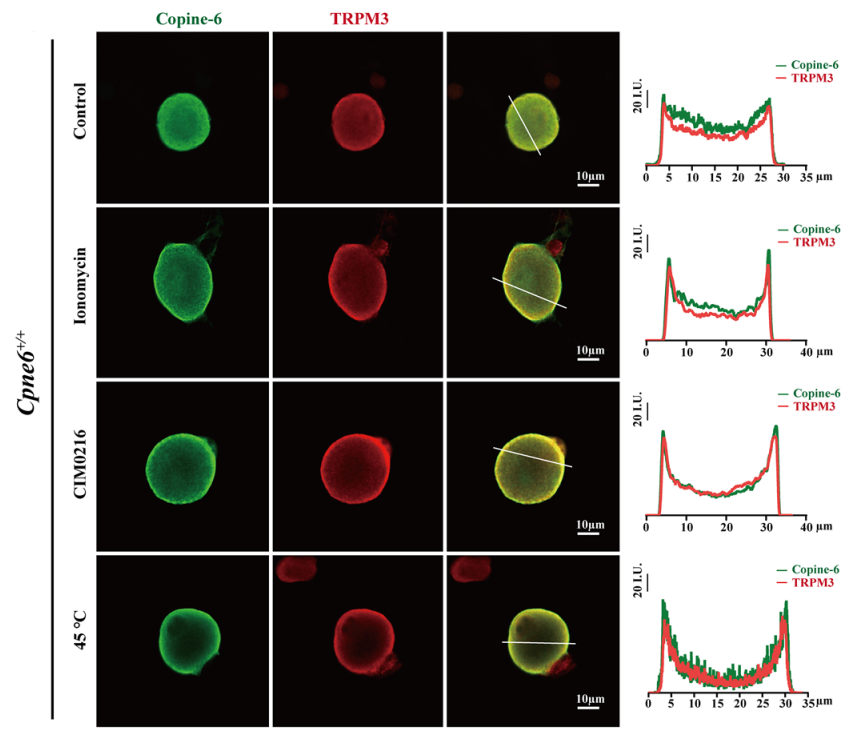
CIM0216 (5 μM; 10 min) stimulated both Copine-6 and TRPM3 translocated to the plasma membrane in DRG neurons from Cpne6+/+ mice.
CIM0216 purchased from MedChemExpress. Usage Cited in: EMBO J. 2025 Aug;44(15):4222-4251. [Abstract]
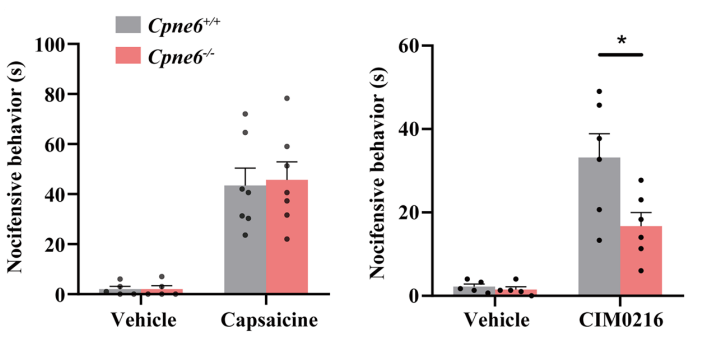
CIM0216 (10 nM; 25 μL; 2 min) induced the nocifensive behavior of Cpne6+/+ and Cpne6-/- mice.
-
Headache
TRPM3 activation causes CGRP release in trigeminal neurons: Implications for migraine mechanisms. [Abstract]2025 Oct 24. PMID: 41133435


Solvant et solubilité
In Vitro:
DMSO : 35 mg/mL (100.75 mM; Need ultrasonic and warming; Hygroscopic DMSO has a significant impact on the solubility of product, please use newly opened DMSO)
Ethanol : 17 mg/mL (48.93 mM; Need ultrasonic and warming)
Please refer to the solubility information to select the appropriate solvent. Once prepared, please aliquot and store the solution to prevent product inactivation from repeated freeze-thaw cycles.
Storage method and period of stock solution: -80°C, 6 months; -20°C, 1 month. When stored at -80°C, please use it within 6 months. When stored at -20°C, please use it within 1 month.
Please refer to the solubility information to select the appropriate solvent. Once prepared, please aliquot and store the solution to prevent product inactivation from repeated freeze-thaw cycles.
Storage method and period of stock solution: -80°C, 6 months; -20°C, 1 month. When stored at -80°C, please use it within 6 months. When stored at -20°C, please use it within 1 month.
Concentration (start) × Volume (start) = Concentration (final) × Volume (final)
In Vivo:
Select the appropriate dissolution method based on your experimental animal and administration route.
- For the following dissolution methods, please ensure to first prepare a clear stock solution using an In Vitro approach and then sequentially add co-solvents:
- To ensure reliable experimental results, the clarified stock solution can be appropriately stored based on storage conditions. As for the working solution for In Vivo experiments, it is recommended to prepare freshly and use it on the same day.
- The percentages shown for the solvents indicate their volumetric ratio in the final prepared solution. If precipitation or phase separation occurs during preparation, heat and/or sonication can be used to aid dissolution.
Add each solvent one by one: 10% DMSO 40% PEG300 5% Tween-80 45% Saline
Solubility: ≥ 2.08 mg/mL (5.99 mM); Clear solution
This protocol yields a clear solution of ≥ 2.08 mg/mL (saturation unknown).
Taking 1 mL working solution as an example, add 100 μL DMSO stock solution (20.8 mg/mL) to 400 μL PEG300, and mix evenly; then add 50 μL Tween-80 and mix evenly; then add 450 μL Saline to adjust the volume to 1 mL.
Preparation of Saline: Dissolve 0.9 g sodium chloride in ddH₂O and dilute to 100 mL to obtain a clear Saline solution.
In Vivo Dissolution Calculator
Please enter the basic information of animal experiments:
-
-
-
-
Recommended: Prepare an additional quantity of animals to account for potential losses during experiments.
Please enter your animal formula composition:
-
%DMSO +
Recommended: Keep the proportion of DMSO in working solution below 2% if your animal is weak.
-
%+
-
+%Tween-80 + +
-
%Saline +
The co-solvents required include: DMSO, . All of co-solvents are available by MedChemExpress (MCE). , Tween 80. All of co-solvents are available by MedChemExpress (MCE).
Working solution concentration: 0.22 mg/mL
Method for preparing stock solution: mg drug dissolved in μL DMSO. Stock solution concentration: mg/mL.
1. Take μL DMSO stock solution;
2. Add μL .
μL , mix evenly;
3. Then add μL Tween 80, mix evenly;
4. Then add μL
Please ensure that the stock solution in the first step is dissolved to a clear state, and add co-solvents in sequence. You can use ultrasonic heating (ultrasonic cleaner, recommended frequency 20-40 kHz), vortexing, etc. to assist dissolution.

Protocole
-
Research Protocol for Inflammation-related Diseases
The NLRP3 inflammasome is a cytosolic innate immune signaling platform that integrates priming signals and danger-signal activation to promote caspase-1 activation, maturation of IL-1β and IL-18, and gasdermin D-mediated pyroptotic cell death. The core experimental logic is to determine whether inflammatory disease phenotypes are driven by increased NLRP3 expression, ASC-containing inflammasome assembly, caspase-1 cleavage, GSDMD cleavage, and extracellular release of IL-1β/IL-18 rather than by nonspecific cell injury alone. The pathway is strongly linked to inflammation-related disease phenotypes because monosodium urate crystals activate NALP3/NLRP3 inflammasome signaling in gout-like crystal inflammation, cholesterol crystals activate NLRP3 inflammasomes in atherogenesis models, and DSS-induced intestinal inflammation has been reported to involve NLRP3 inflammasome activity. However, experimental colitis studies also show context-dependent protective effects of NLRP3 inflammasome co


Pureté et documentation
-
Fiche technique (279 KB)
-
SDS (396 KB)
- English - EN (396 KB)
- Français - FR (396 KB)
- Deutsch - DE (396 KB)
- Norwegian - NO (396 KB)
- Español - ES (396 KB)
- Swedish - SV (396 KB)
- Italian - IT (396 KB)
- Korean - KR (396 KB)
- Portuguese - PT (396 KB)
-
Instruction de manipulation (2659 KB)
Références


Complete Stock Solution Preparation Table
Please refer to the solubility information to select the appropriate solvent. Once prepared, please aliquot and store the solution to prevent product inactivation from repeated freeze-thaw cycles.
Storage method and period of stock solution: -80°C, 6 months; -20°C, 1 month. When stored at -80°C, please use it within 6 months. When stored at -20°C, please use it within 1 month.
| Optional Solvent | Concentration Solvent Mass | 1 mg | 5 mg | 10 mg | 25 mg |
|---|---|---|---|---|---|
| Ethanol / DMSO | 1 mM | 2.8784 mL | 14.3922 mL | 28.7844 mL | 71.9611 mL |
| 5 mM | 0.5757 mL | 2.8784 mL | 5.7569 mL | 14.3922 mL | |
| 10 mM | 0.2878 mL | 1.4392 mL | 2.8784 mL | 7.1961 mL | |
| 15 mM | 0.1919 mL | 0.9595 mL | 1.9190 mL | 4.7974 mL | |
| 20 mM | 0.1439 mL | 0.7196 mL | 1.4392 mL | 3.5981 mL | |
| 25 mM | 0.1151 mL | 0.5757 mL | 1.1514 mL | 2.8784 mL | |
| 30 mM | 0.0959 mL | 0.4797 mL | 0.9595 mL | 2.3987 mL | |
| 40 mM | 0.0720 mL | 0.3598 mL | 0.7196 mL | 1.7990 mL | |
| DMSO | 50 mM | 0.0576 mL | 0.2878 mL | 0.5757 mL | 1.4392 mL |
| 60 mM | 0.0480 mL | 0.2399 mL | 0.4797 mL | 1.1994 mL | |
| 80 mM | 0.0360 mL | 0.1799 mL | 0.3598 mL | 0.8995 mL | |
| 100 mM | 0.0288 mL | 0.1439 mL | 0.2878 mL | 0.7196 mL |


CIM0216 Related Classifications
HY-110220 Related Classifications
 Powered by Bioz