



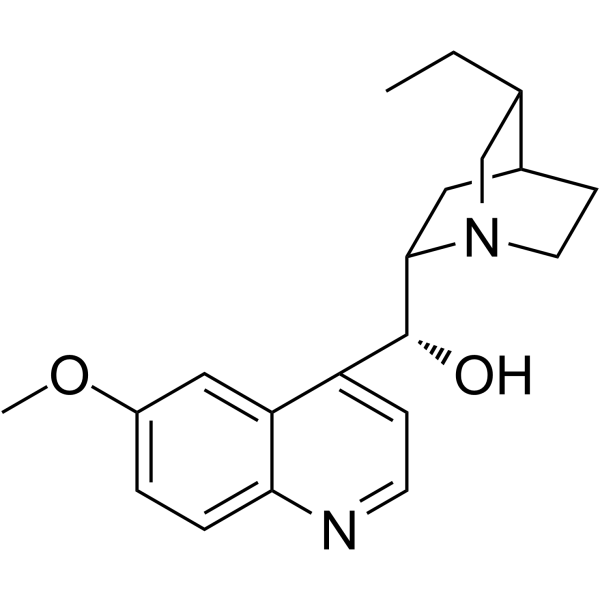
Hydroquinine

Based on 1 Customer Validation
Hydroquinine (Dihydroquinine) is an anti-bacterial agent that inhibits both Gram-positive and Gram-negative bacteria. Hydroquinine inhibits the growth of multidrug-resistant pseudomonas aeruginosa via the suppression of the arginine deiminase pathway genes. Hydroquinine inhibits Plasmodium falciparum and Plasmodium berghei. Hydroquinine displays anti-malarial and demelanizing activities. Hydroquinine effectively induces specific RND-type efflux pump systems in Pseudomonas aeruginosa, particularly the MexCD-OprJ and MexXY efflux pumps. Hydroquinine inhibits Pseudomonas aeruginosa adhesion and biofilm formation. Hydroquinine serves as a precursor for derivatives such as C9 epihydroquinine, 9-acetoxy-10,11-dihydroquinine, and 10,11-dihydroquinine monohydrochloride.
Nos produits utilisent uniquement pour la recherche. Nous ne vendons pas aux patients.
- Pureté : 99.87%
- CAS No.: 522-66-7
- Formule: C20H26N2O2
- Masse moléculaire:326.44
-
Stockage:
4°C, protect from light, stored under nitrogen
* In solvent : -80°C, 6 months; -20°C, 1 month (protect from light, stored under nitrogen)

To place orders, for customer services and technical support, please contact: MedChemExpress USA
Tel: 609-228-6898 E-mail: [email protected] [email protected]


-
 Activité biologique
-
Chemical Information
-
Solvant et solubilité
- Protocole
- Pureté et documentation
- Références
-
 Help & FAQs


-
HY-B1751
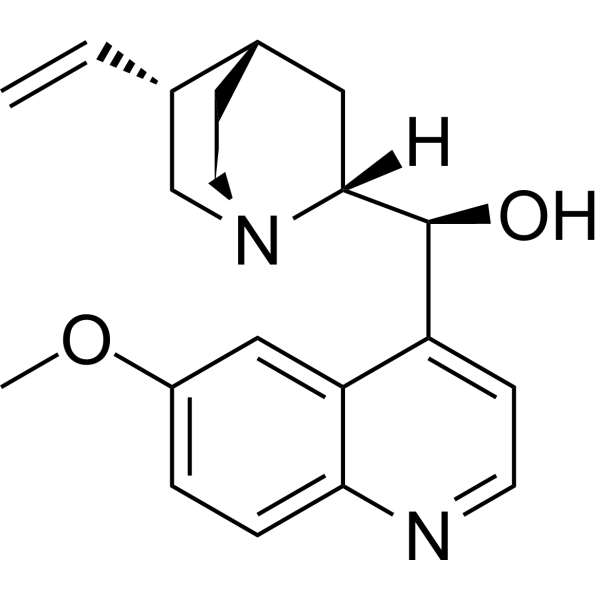
Quinidine (15% dihydroquinidine)Anti-arrythmic Agent -
HY-B1301
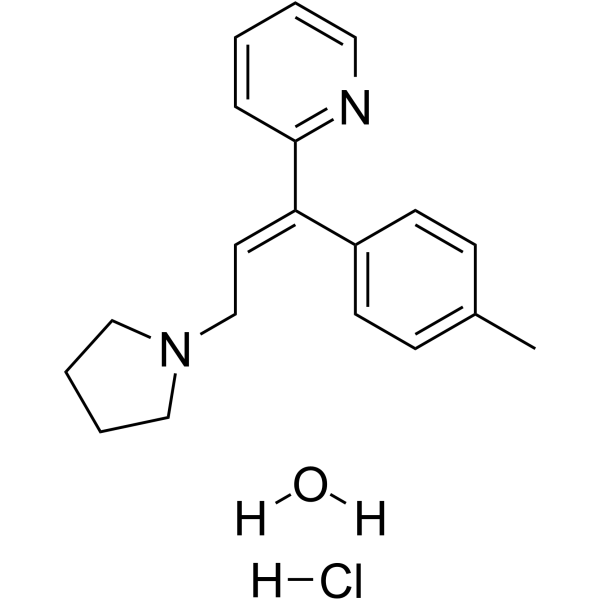
Triprolidine hydrochloride monohydrateHistamine H1 Antagonist -

HY-42034R
Hydroquinine (Standard)Anti-bacterial Agent -
HY-14885
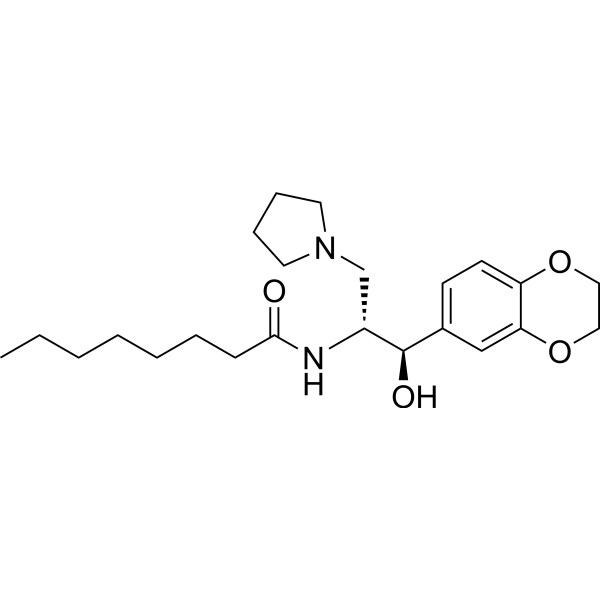
EliglustatGlucocerebroside Synthase Inhibitor -
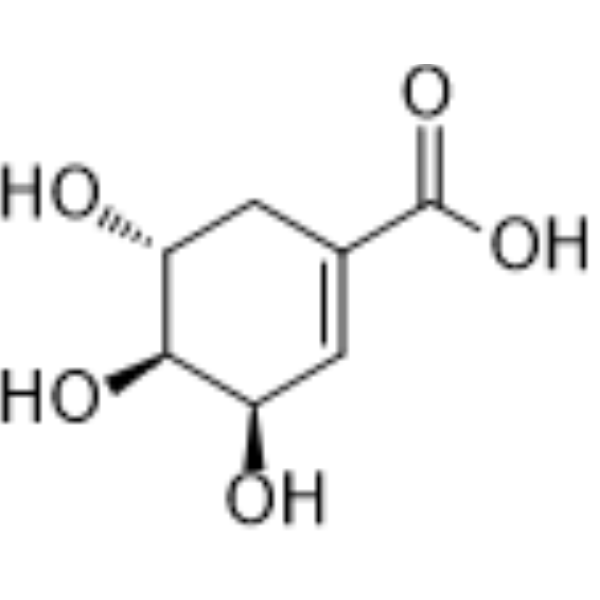
HY-N0130
Shikimic acidMetabolic Intermediate -

HY-W002502
(DHQ)2PHALBiochemical Assay Reagent -
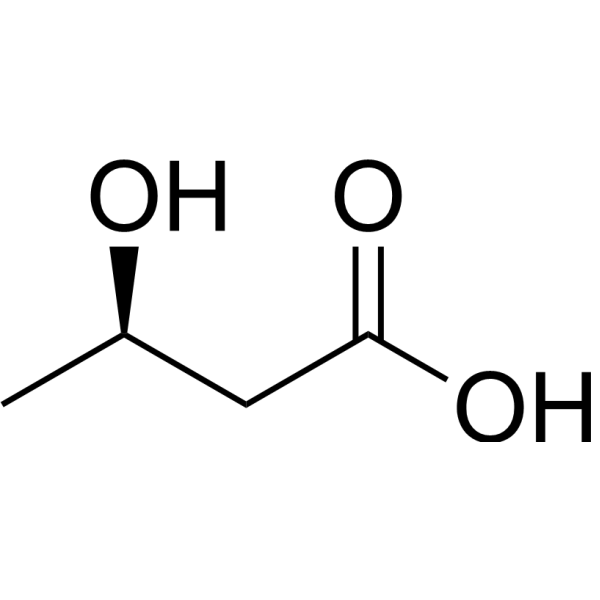
HY-W051723
(R)-3-Hydroxybutanoic acid -

HY-N0130R
Shikimic acid (Standard)Metabolic Intermediate -
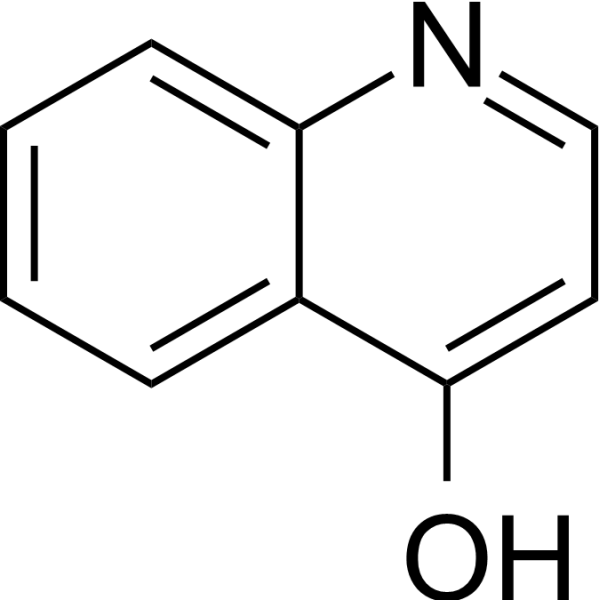
HY-59208
4-QuinolinolQuinoline Derivative -
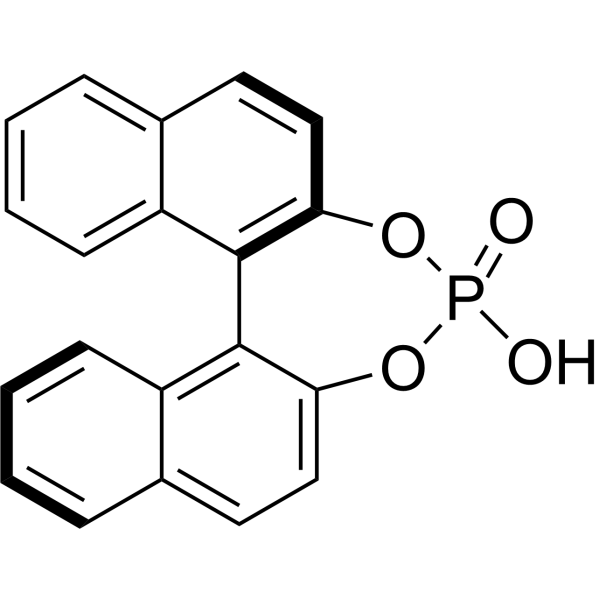
HY-I0718
(R)-1,1'-Binaphthyl-2,2'-diyl hydrogenphosphateBiochemical Reagent -

HY-W007880
(R)-D2PMPyrrolidine Analog
Voir tous les produits spécifiques à Isoform Parasite
More

Activité biologique
Description
Cellular Effect
|
Cell Line

|
Type | Value | Description | References |
|---|---|---|---|---|
| HepG2 | CC50 |
>100 μM
Compound: 4
|
Cytotoxicity against human HepG2 cells assessed as reduction in cell viability after 48 hrs by Alamar Blue assay
Cytotoxicity against human HepG2 cells assessed as reduction in cell viability after 48 hrs by Alamar Blue assay
|
[PMID: 30779564] |
| MES-SA | IC50 |
48 μM
Compound: 1; HQ
|
Cytotoxicity against human MES-SA cells assessed as cell growth inhibition incubated for 144 hrs by fluorescence microplate reader assay
Cytotoxicity against human MES-SA cells assessed as cell growth inhibition incubated for 144 hrs by fluorescence microplate reader assay
|
[PMID: 35640378] |
| MES-SA/Dx5 | IC50 |
47 μM
Compound: 1; HQ
|
Cytotoxicity against multidrug resistance human MES-SA/Dx5 cells assessed as cell growth inhibition incubated for 144 hrs by fluorescence microplate reader assay
Cytotoxicity against multidrug resistance human MES-SA/Dx5 cells assessed as cell growth inhibition incubated for 144 hrs by fluorescence microplate reader assay
|
[PMID: 35640378] |
In Vitro
Hydroquinine (0.25-10 mg/mL, 16-20 h) inhibits and kills gram-positive and gram-negative bacteria (PA-27853, PA-S1, PA-S2, PA-S3, PA-S4, PA-S5, PA-S6, S. aureus ATCC25923, S. aureus ATCC29213, E. cloacae ATCC2341, E. coli ATCC2452, E. coli ATCC25922, K. pneumoniae ATCC1705, P. aeruginosa ATCC BAA-2108 and P. aeruginosa ATCC27853) at minimum inhibitory concentration (MIC) and minimum bactericidal concentration (MBC) values of 1.25 and 5.00 mg/mL, respectively[1][2].
Hydroquinine (16-20 h) shows notable partial synergistic effects with Ceftazidime (HY-B0593) (fractional inhibitory concentration index (∑FICI) of 0.750 and 0.625 against clinical MDR P. aeruginosa strains PA-S4 and PA-S5, respectively)[1].
Hydroquinine (1.25-1.5 mg/mL, 1 h) inhibits P. aeruginosa growth through decreased expression of ADI-pathway related genes and decreased expression levels of adhesion-related genes[1][3].
Hydroquinine (0.625-5 mg/mL, 0-8 h) kills P. aeruginosa ATCC27853 and ATCC BAA-2108, achieving 20-40% killing at 0.5 × MIC, approximately 50% at MIC, and 90% at MBC after 4 hours[2].
Hydroquinine (1.25 mg/mL, 1 h) significantly upregulates RND-type efflux pump genes in P. aeruginosa ATCC27853[2].
Hydroquinine (1.25-2.5 mg/mL, 6-24 h) exhibits inhibitory activity comparable to multipurpose solutions (MPSs) and, in combination, damages cell structure while demonstrating anti-adhesion efficacy[3].
Hydroquinine (0-50 µM, 24-72 h) inhibits Toxoplasma gondii RH-RFP tachyzoite growth, with IC50 values of 0.63, 0.68, and 0.0014 µM after 24, 48, and 72 hours, respectively[4].
Hydroquinine (6.25-50 µM) inhibits tachyzoite infection and replication in a dose-dependent manner, reducing parasitophorous vacuole (PV) formation at 6.25 µM and further decreasing tachyzoite replication at 50 µM[4].
Hydroquinine (6.25-50 µM, 105 min) induces reactive oxygen species generation in Toxoplasma gondii[4].
Hydroquinine (6.25-50 µM, 8 h) causes mitochondrial membrane damage in Toxoplasma gondii but not of the host cells[4].
MedChemExpress (MCE) has not independently confirmed the accuracy of these methods. They are for reference only.
-
Cell Line:PA-27853, PA-S4 and PA-S5
-
Concentration:1.5 mg/mL
-
Incubation Time:1 h
-
Result:Decreased the mRNA expression of the arcA, arcB, arcC, and arcD genes to 0.56, 0.37, 0.51, and 0.50-fold in PA-27853, respectively.
Downregulated the mRNA expression of the arcA, arcB, arcC, and arcD genes to 0.02, 0.05, 0.53, and 0.17-fold in PA-S4, respectively.
Downregulated the mRNA expression of the arcA, arcB, arcC, and arcD genes to 0.03, 0.40, 0.07, and 0.41-fold in PA-S5, respectively.
-
Cell Line:ATCC27853
-
Concentration:1.25 mg/mL
-
Incubation Time:1 h
-
Result:Upregulated the mRNA expression of the MexC, MexD, OprJ, MexX, and MexY, with Log2-fold changes of 9.47, 6.27, 6.02, 5.26, and 4.90, respectively.
Reduced the mRNA expressions of cgrC, cheY, cheZ, fimU, and pilV genes of 0.05, 0.16, 0.17, 0.13, and 0.18-fold, respectively.


Chemical Information
-
CAS No. 522-66-7
-
Appearance Solid
-
Masse moléculaire 326.44
-
Formule C20H26N2O2
-
Color White to off-white
-
SMILES
CC[C@@H]1[C@@H]2C[C@H]([N@](C1)CC2)[C@H](O)C3=CC=NC4=CC=C(OC)C=C43
-
Synonyms
Dihydroquinine
-
Structure Classification
-
Initial Source
-
Livraison
Room temperature in continental US; may vary elsewhere.
-
Stockage
4°C, protect from light, stored under nitrogen
* In solvent : -80°C, 6 months; -20°C, 1 month (protect from light, stored under nitrogen)


Solvant et solubilité
In Vitro:
DMSO : 100 mg/mL (306.34 mM; Need ultrasonic; Hygroscopic DMSO has a significant impact on the solubility of product, please use newly opened DMSO)
H2O : < 0.1 mg/mL (insoluble)
Please refer to the solubility information to select the appropriate solvent. Once prepared, please aliquot and store the solution to prevent product inactivation from repeated freeze-thaw cycles.
Storage method and period of stock solution: -80°C, 6 months; -20°C, 1 month (protect from light, stored under nitrogen). When stored at -80°C, please use it within 6 months. When stored at -20°C, please use it within 1 month.
Please refer to the solubility information to select the appropriate solvent. Once prepared, please aliquot and store the solution to prevent product inactivation from repeated freeze-thaw cycles.
Storage method and period of stock solution: -80°C, 6 months; -20°C, 1 month (protect from light, stored under nitrogen). When stored at -80°C, please use it within 6 months. When stored at -20°C, please use it within 1 month.
Concentration (start) × Volume (start) = Concentration (final) × Volume (final)
In Vivo:
Select the appropriate dissolution method based on your experimental animal and administration route.
- For the following dissolution methods, please ensure to first prepare a clear stock solution using an In Vitro approach and then sequentially add co-solvents:
- To ensure reliable experimental results, the clarified stock solution can be appropriately stored based on storage conditions. As for the working solution for In Vivo experiments, it is recommended to prepare freshly and use it on the same day.
- The percentages shown for the solvents indicate their volumetric ratio in the final prepared solution. If precipitation or phase separation occurs during preparation, heat and/or sonication can be used to aid dissolution.
Add each solvent one by one: 10% DMSO 40% PEG300 5% Tween-80 45% Saline
Solubility: ≥ 3.25 mg/mL (9.96 mM); Clear solution
This protocol yields a clear solution of ≥ 3.25 mg/mL (saturation unknown).
Taking 1 mL working solution as an example, add 100 μL DMSO stock solution (32.5 mg/mL) to 400 μL PEG300, and mix evenly; then add 50 μL Tween-80 and mix evenly; then add 450 μL Saline to adjust the volume to 1 mL.
Preparation of Saline: Dissolve 0.9 g sodium chloride in ddH₂O and dilute to 100 mL to obtain a clear Saline solution.
Add each solvent one by one: 10% DMSO 90% (20% SBE-β-CD in Saline)
Solubility: ≥ 3.25 mg/mL (9.96 mM); Clear solution
This protocol yields a clear solution of ≥ 3.25 mg/mL (saturation unknown).
Taking 1 mL working solution as an example, add 100 μL DMSO stock solution (32.5 mg/mL) to 900 μL 20% SBE-β-CD in Saline, and mix evenly.
Preparation of 20% SBE-β-CD in Saline (4°C, storage for one week): 2 g SBE-β-CD powder is dissolved in 10 mL Saline, completely dissolve until clear.
In Vivo Dissolution Calculator
Please enter the basic information of animal experiments:
-
-
-
-
Recommended: Prepare an additional quantity of animals to account for potential losses during experiments.
Please enter your animal formula composition:
-
%DMSO +
Recommended: Keep the proportion of DMSO in working solution below 2% if your animal is weak.
-
%+
-
+%Tween-80 + +
-
%Saline +
The co-solvents required include: DMSO, . All of co-solvents are available by MedChemExpress (MCE). , Tween 80. All of co-solvents are available by MedChemExpress (MCE).
Working solution concentration: 0.22 mg/mL
Method for preparing stock solution: mg drug dissolved in μL DMSO. Stock solution concentration: mg/mL. * In solvent : -80°C, 6 months; -20°C, 1 month (protect from light, stored under nitrogen)
1. Take μL DMSO stock solution;
2. Add μL .
μL , mix evenly;
3. Then add μL Tween 80, mix evenly;
4. Then add μL
Please ensure that the stock solution in the first step is dissolved to a clear state, and add co-solvents in sequence. You can use ultrasonic heating (ultrasonic cleaner, recommended frequency 20-40 kHz), vortexing, etc. to assist dissolution.


Pureté et documentation
-
Fiche technique (295 KB)
-
SDS (558 KB)
- English - EN (558 KB)
- Français - FR (558 KB)
- Deutsch - DE (558 KB)
- Norwegian - NO (558 KB)
- Español - ES (558 KB)
- Swedish - SV (558 KB)
- Italian - IT (558 KB)
- Korean - KR (558 KB)
- Portuguese - PT (558 KB)
-
Instruction de manipulation (2659 KB)
Références
[1]. Weawsiangsang S, et al. Hydroquinine Inhibits the Growth of Multidrug-Resistant Pseudomonas aeruginosa via the Suppression of the Arginine Deiminase Pathway Genes. Int J Mol Sci. 2023 Sep 10;24(18):13914. [Content Brief]
[2]. Rattanachak N,et al. Hydroquinine Possesses Antibacterial Activity, and at Half the MIC, Induces the Overexpression of RND-Type Efflux Pumps Using Multiplex Digital PCR in Pseudomonas aeruginosa. Trop Med Infect Dis. 2022 Jul 30;7(8):156. [Content Brief]
[3]. Weawsiangsang S, et al. Hydroquinine Enhances the Efficacy of Contact Lens Solutions for Inhibiting Pseudomonas aeruginosaAdhesion and Biofilm Formation. Antibiotics (Basel). 2024 Jan 5;13(1):56. [Content Brief]
[4]. Huffman AM, et al. Inhibition of Toxoplasma gondii Growth by Dihydroquinine and Its Mechanisms of Action. Front Cell Infect Microbiol. 2022 May 11;12:852889. [Content Brief]


Complete Stock Solution Preparation Table
Please refer to the solubility information to select the appropriate solvent. Once prepared, please aliquot and store the solution to prevent product inactivation from repeated freeze-thaw cycles.
Storage method and period of stock solution: -80°C, 6 months; -20°C, 1 month (protect from light, stored under nitrogen). When stored at -80°C, please use it within 6 months. When stored at -20°C, please use it within 1 month.
| Optional Solvent | Concentration Solvent Mass | 1 mg | 5 mg | 10 mg | 25 mg |
|---|---|---|---|---|---|
| DMSO | 1 mM | 3.0634 mL | 15.3168 mL | 30.6335 mL | 76.5838 mL |
| 5 mM | 0.6127 mL | 3.0634 mL | 6.1267 mL | 15.3168 mL | |
| 10 mM | 0.3063 mL | 1.5317 mL | 3.0634 mL | 7.6584 mL | |
| 15 mM | 0.2042 mL | 1.0211 mL | 2.0422 mL | 5.1056 mL | |
| 20 mM | 0.1532 mL | 0.7658 mL | 1.5317 mL | 3.8292 mL | |
| 25 mM | 0.1225 mL | 0.6127 mL | 1.2253 mL | 3.0634 mL | |
| 30 mM | 0.1021 mL | 0.5106 mL | 1.0211 mL | 2.5528 mL | |
| 40 mM | 0.0766 mL | 0.3829 mL | 0.7658 mL | 1.9146 mL | |
| 50 mM | 0.0613 mL | 0.3063 mL | 0.6127 mL | 1.5317 mL | |
| 60 mM | 0.0511 mL | 0.2553 mL | 0.5106 mL | 1.2764 mL | |
| 80 mM | 0.0383 mL | 0.1915 mL | 0.3829 mL | 0.9573 mL | |
| 100 mM | 0.0306 mL | 0.1532 mL | 0.3063 mL | 0.7658 mL |


Hydroquinine Related Classifications
HY-42034 Related Classifications
 Powered by Bioz