



Cercosporin

Based on 1 Customer Validation
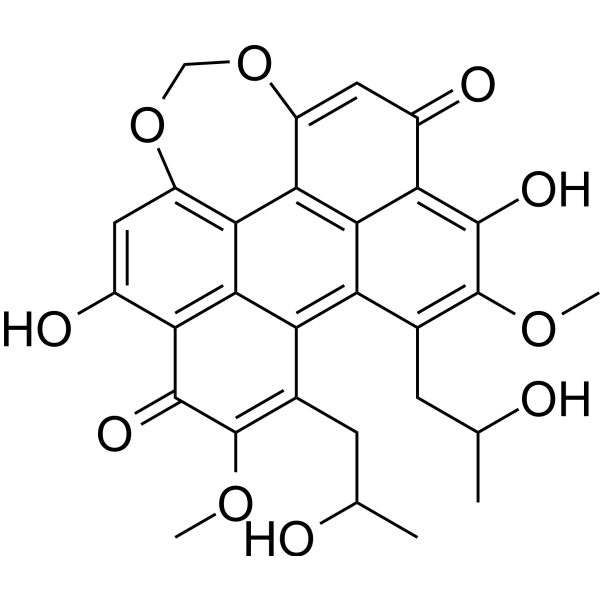
Cercosporin is produced by a plant pathogen, Pseudocercosporella capsellae. Cercosporin is a potent photosensitizer with a short activation wavelength, mostly suitable for superficial photodynamic therapy (PDT) treatments, especially when it is necessary to avoid perforations. Cercosporin contains the perylenequinone structural features necessary to PKC activity with an IC50 of 0.6-1.3 μM.
For research use only. We do not sell to patients.
- Purity : 98.90%
- CAS No.: 35082-49-6
- Formula: C29H26O10
- Molecular Weight:534.51
-
Storage:Powder -20°C, 3 years , 4°C, 2 years ; In solvent -80°C, 6 months , -20°C, 1 month

To place orders, for customer services and technical support, please contact: MedChemExpress USA
Tel: 609-228-6898 E-mail: [email protected] [email protected]


-
 Biological Activity
-
Chemical Information
-
Solvent & Solubility
- Protocols
- Purity & Documentation
- References
-
 Help & FAQs


-
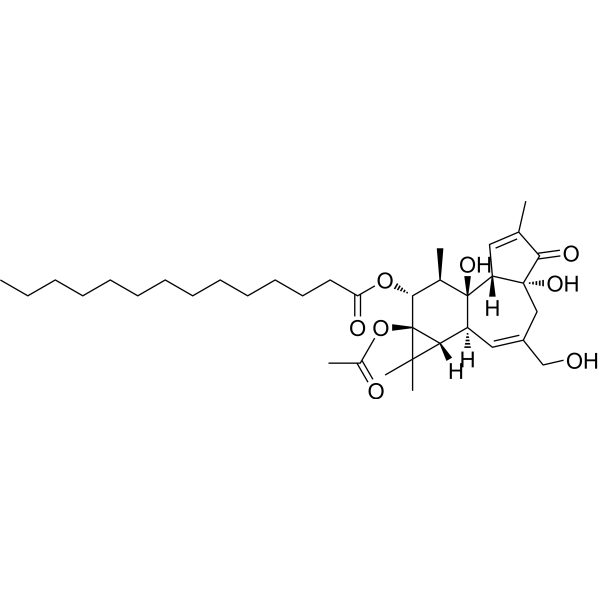
HY-18739
Phorbol 12-myristate 13-acetatePKC Activator -
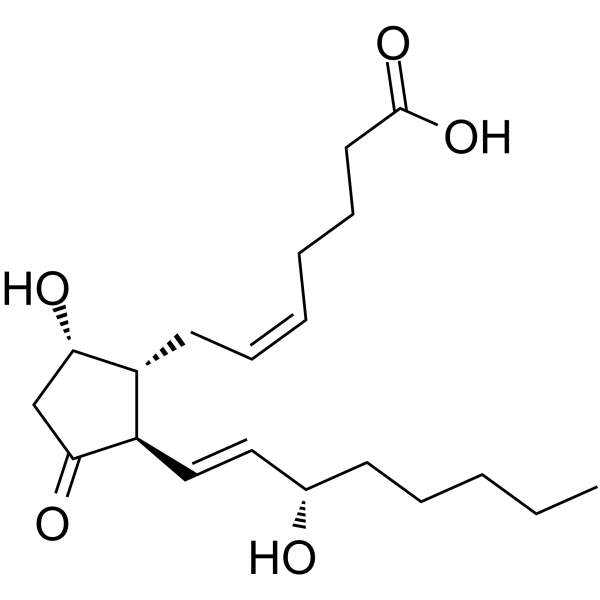
HY-101988
Prostaglandin D2Prostaglandin -
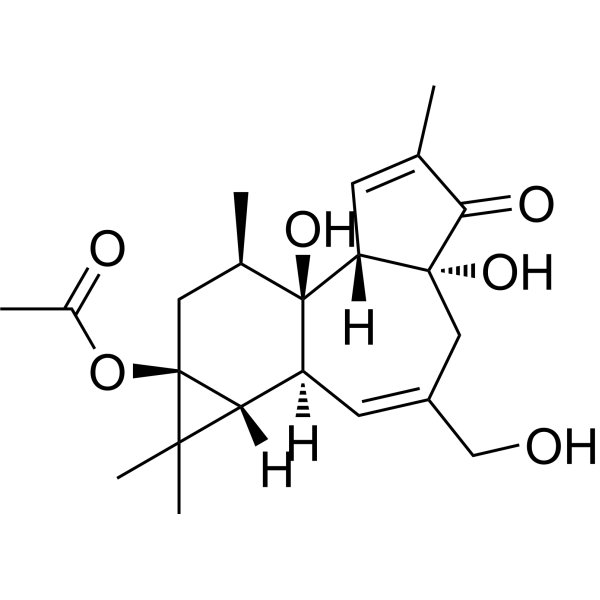
HY-107421
ProstratinPKC Activator -
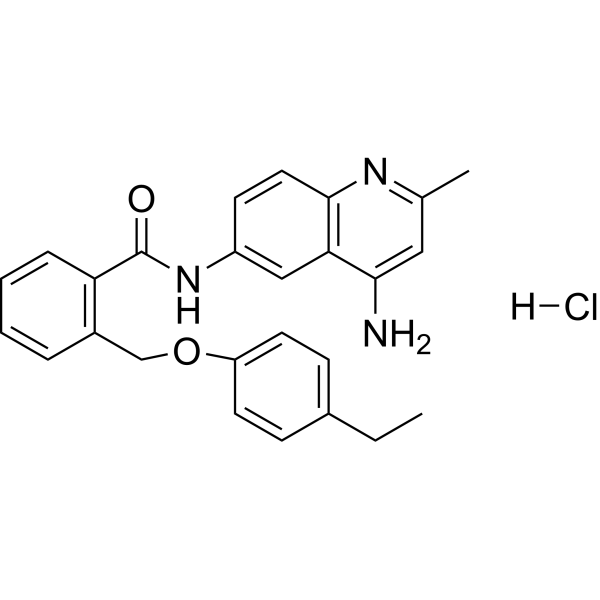
HY-13274
JTC-801Opioid Receptor Antagonist -
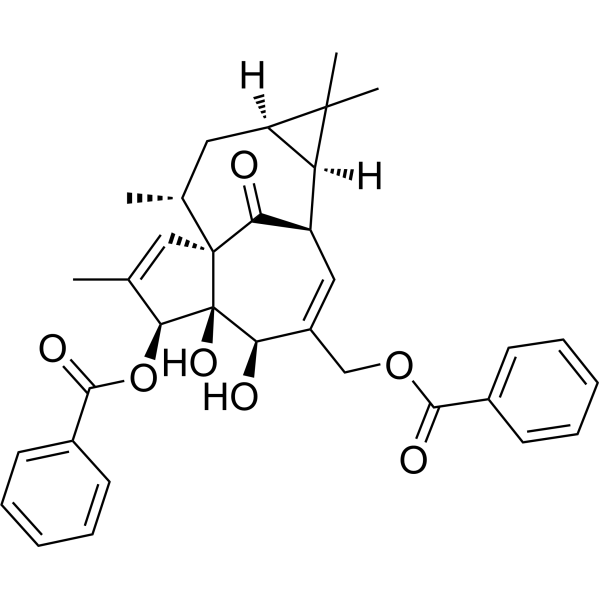
HY-137295
Ingenol 3,20-dibenzoateApoptosis Inducer -
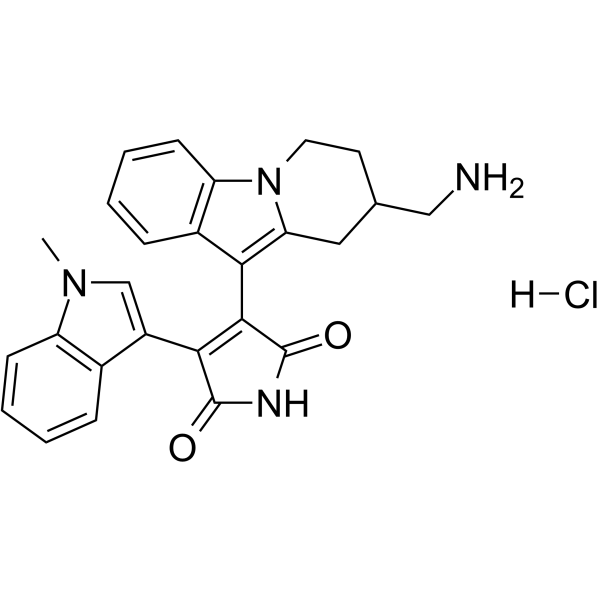
HY-108136A
Bisindolylmaleimide X hydrochloridePKC/CDK2 Inhibitor -
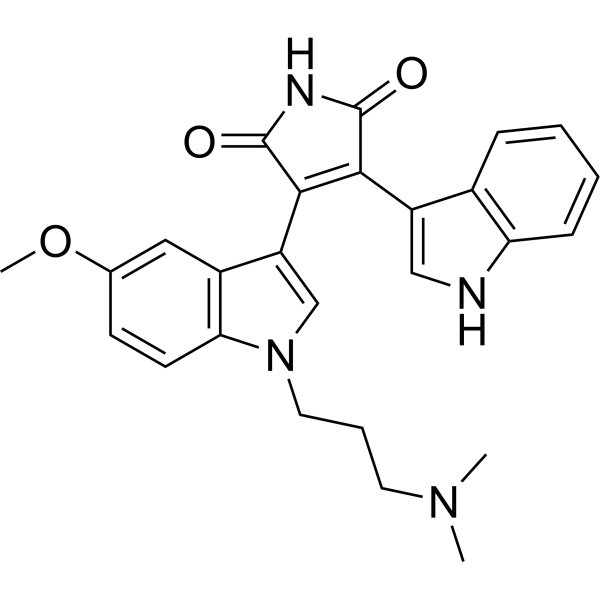
HY-13689
Go 6983PKC Inhibitor -
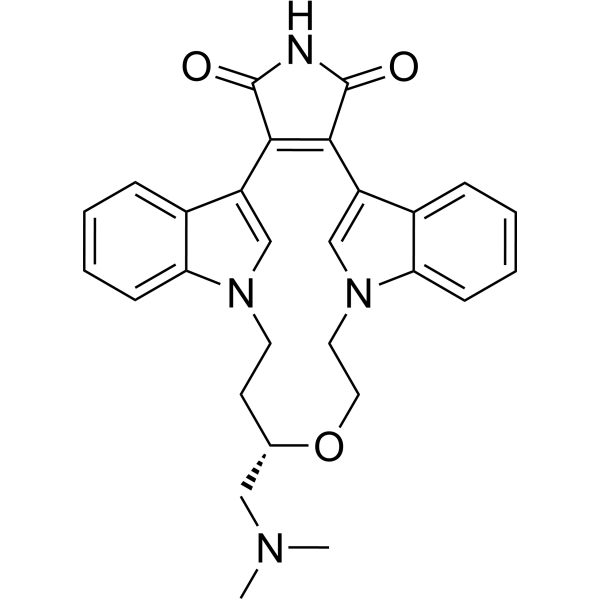
HY-10195
RuboxistaurinPKCβ Inhibitor -
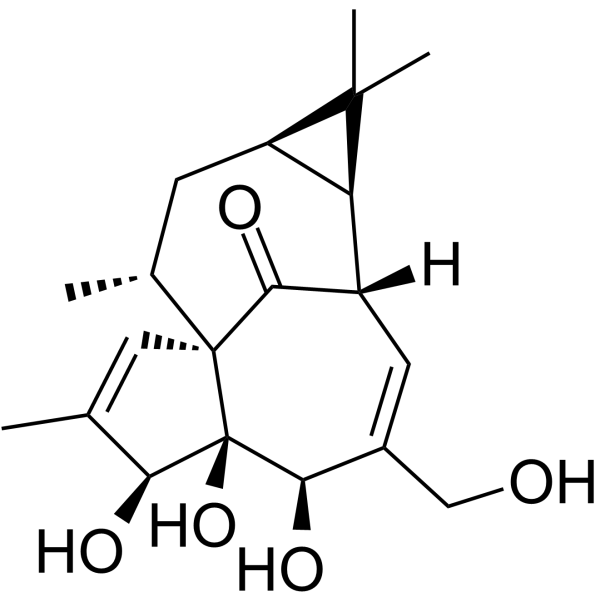
HY-N0865
IngenolPKC Activator -
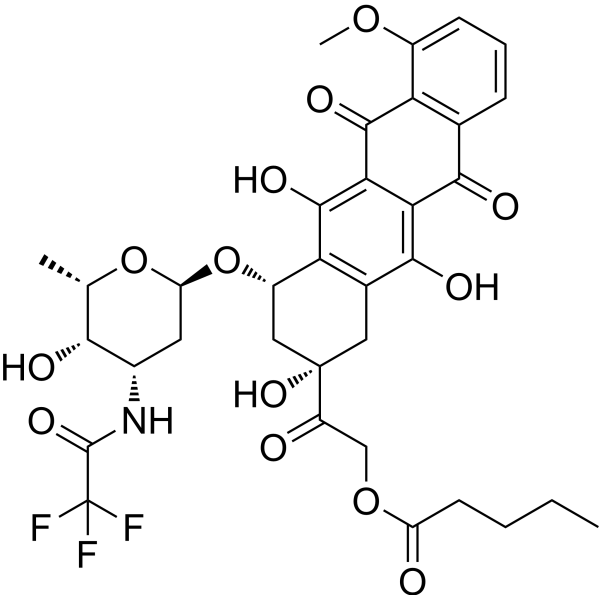
HY-13772
ValrubicinAntibiotic -
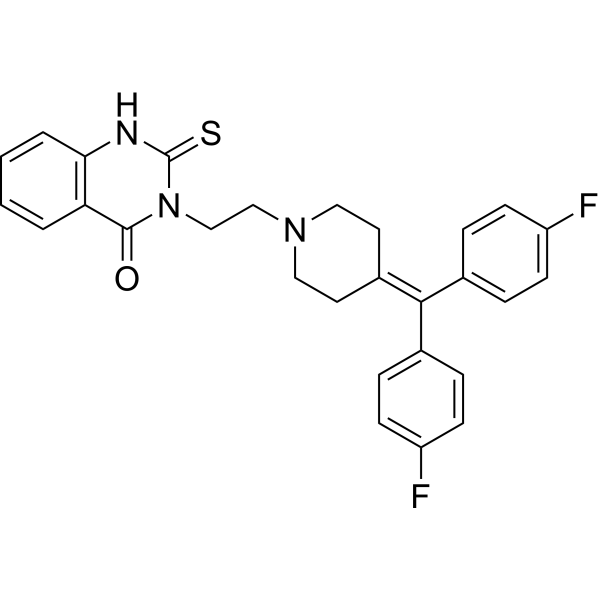
HY-108355
R59949DGK/PKC Inhibitor -
HY-112384
SafingolPKC Inhibitor


Biological Activity
Description
IC50 & Target
IC50: 0.6-1.3 μM (PKC)[2]
Cellular Effect
|
Cell Line

|
Type | Value | Description | References |
|---|---|---|---|---|
| BT-549 | IC50 |
10.8 μM
Compound: 5
|
Cytotoxicity against human BT549 cells assessed as viable cells by neutral red dye method
Cytotoxicity against human BT549 cells assessed as viable cells by neutral red dye method
|
[PMID: 22530813] |
| KB | IC50 |
7.1 μM
Compound: 5
|
Cytotoxicity against human KB cells assessed as viable cells by neutral red dye method
Cytotoxicity against human KB cells assessed as viable cells by neutral red dye method
|
[PMID: 22530813] |
| SK-MEL | IC50 |
3.6 μM
Compound: 5
|
Cytotoxicity against human SK-MEL cells assessed as viable cells by neutral red dye method
Cytotoxicity against human SK-MEL cells assessed as viable cells by neutral red dye method
|
[PMID: 22530813] |
| SK-OV-3 | IC50 |
3.7 μM
Compound: 5
|
Cytotoxicity against human SKOV3 cells assessed as viable cells by neutral red dye method
Cytotoxicity against human SKOV3 cells assessed as viable cells by neutral red dye method
|
[PMID: 22530813] |
In Vitro
Cercosporin (0.8-8.0 μM; 30 s, 60 s, 90 s, 120 s) photodynamic therapy (PDT) effect is stronger in T98G cells than in U87 or MCF7 cells, the LD50 value for the T98G cells (0.14 J cm2) is much less than the LD50 value for MCF-7 and U87 cell lines (0.26 and 0.24 J cm2, respectively)[1]. Cercosporin (0-3 μΜ; 24 hours) interplays with copper results in a synergistic cytotoxicity in MCF7 and T98G cells, that is, S(CuSO4 + Cerco) S(CuSO4) x S(Cerco), barely has an additive effect in U87 cells[1].
MedChemExpress (MCE) has not independently confirmed the accuracy of these methods. They are for reference only. Further protocols information, click here.
-
Cell Line:Human GBM cell lines, T98G and U87; Breast carcinoma cell line, MCF-7
-
Concentration:0 μM, 1 μM, 2 μM, 3 μM
-
Incubation Time:24 hours
-
Result:Exhibited a synergistic cytotoxicity with copper only in the most respiratory cell lines (MCF-7 and T98G).


Chemical Information
-
CAS No. 35082-49-6
-
Appearance Solid
-
Molecular Weight 534.51
-
Formula C29H26O10
-
Color Brown to reddish brown
-
SMILES
O=C1C=C(C(C2=C34)=C5C1=C(O)C(OC)=C(C[C@H](O)C)C5=C4C(C[C@H](O)C)=C6OC)OCOC2=CC(O)=C3C6=O
-
Synonyms
CGP049090
-
Structure Classification
-
Initial Source
Pseudocercosporella capsellae
-
Shipping
Room temperature in continental US; may vary elsewhere.
-
Storage
Powder -20°C 3 years 4°C 2 years In solvent -80°C 6 months -20°C 1 month


Solvent & Solubility
In Vitro:
DMSO : ≥ 10 mg/mL (18.71 mM; Hygroscopic DMSO has a significant impact on the solubility of product, please use newly opened DMSO)
* "≥" means soluble, but saturation unknown.
Please refer to the solubility information to select the appropriate solvent. Once prepared, please aliquot and store the solution to prevent product inactivation from repeated freeze-thaw cycles.
Storage method and period of stock solution: -80°C, 6 months; -20°C, 1 month. When stored at -80°C, please use it within 6 months. When stored at -20°C, please use it within 1 month.
Please refer to the solubility information to select the appropriate solvent. Once prepared, please aliquot and store the solution to prevent product inactivation from repeated freeze-thaw cycles.
Storage method and period of stock solution: -80°C, 6 months; -20°C, 1 month. When stored at -80°C, please use it within 6 months. When stored at -20°C, please use it within 1 month.
Concentration (start) × Volume (start) = Concentration (final) × Volume (final)

Protocols
-
Research Protocol for Infectious Diseases
Infectious-disease experiments test how pathogens interact with host barriers, innate immune receptors, inflammatory signaling, pathogen replication, and tissue injury; pattern-recognition receptors such as TLRs, RIG-I-like receptors, NOD-like receptors, and inflammasomes detect microbial molecules and activate NF-κB, interferon, and cytokine responses. The central hypothesis is that infection severity reflects the balance between pathogen burden and host response: protective inflammation restricts pathogen growth, whereas excessive or mislocalized inflammation contributes to tissue damage and disease phenotype. Unresolved questions include which host pathways are protective versus pathogenic, why some infection models fail to translate to human disease, and which combined readouts best predict clinically relevant infection outcomes.
-
Cell Cytotoxicity Assay
Cytotoxicity assays are usually based on the assessment of cell membrane damage, which can also be indirectly detected by measuring cell viability. Detection methods include MTT assay, CKK-8 assay, LDH assay and ATP assay, etc.


Purity & Documentation
-
Data Sheet (284 KB)
-
SDS (394 KB)
- English - EN (394 KB)
- Français - FR (394 KB)
- Deutsch - DE (394 KB)
- Norwegian - NO (394 KB)
- Español - ES (394 KB)
- Swedish - SV (394 KB)
- Italian - IT (394 KB)
- Korean - KR (394 KB)
- Portuguese - PT (394 KB)
-
Handling Instructions (2659 KB)
References
[1]. Mastrangelopoulou M, et al. Cytotoxic and Photocytotoxic Effects of Cercosporin on Human Tumor Cell Lines. Photochem Photobiol. 2019 Jan;95(1):387-396. [Content Brief]
[2]. Morgan BJ, et al. Design, synthesis, and investigation of protein kinase C inhibitors: total syntheses of (+)-calphostin D, (+)-phleichrome, cercosporin, and new photoactive perylenequinones. J Am Chem Soc. 2009 Jul 8;131(26):9413-25. [Content Brief]


Complete Stock Solution Preparation Table
Please refer to the solubility information to select the appropriate solvent. Once prepared, please aliquot and store the solution to prevent product inactivation from repeated freeze-thaw cycles.
Storage method and period of stock solution: -80°C, 6 months; -20°C, 1 month. When stored at -80°C, please use it within 6 months. When stored at -20°C, please use it within 1 month.
| Optional Solvent | Concentration Solvent Mass | 1 mg | 5 mg | 10 mg | 25 mg |
|---|---|---|---|---|---|
| DMSO | 1 mM | 1.8709 mL | 9.3544 mL | 18.7087 mL | 46.7718 mL |
| 5 mM | 0.3742 mL | 1.8709 mL | 3.7417 mL | 9.3544 mL | |
| 10 mM | 0.1871 mL | 0.9354 mL | 1.8709 mL | 4.6772 mL | |
| 15 mM | 0.1247 mL | 0.6236 mL | 1.2472 mL | 3.1181 mL |


Cercosporin Related Classifications
HY-N6743 Related Classifications
 Powered by Bioz