



Creatinine
Based on 6 publication(s) in Google Scholar
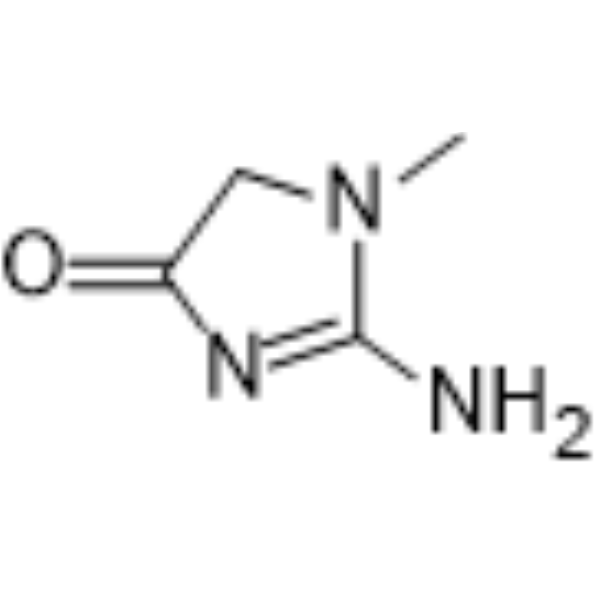
Creatinine (NSC13123) is an orally active, blood-brain barrier-permeable modulator of GABAA and NMDA receptors, with activities of antioxidation and metabolic regulation. Creatinine is generated via non-enzymatic conversion of creatine and phosphocreatine in muscle. Creatinine serum levels correlate with muscle mass, glomerular filtration rate, and extrarenal clearance, serving as an evaluation biomarker for renal function, muscle mass, and clinical outcomes, and used for perioperative renal risk assessment. In addition, Creatinine can induce specific Cryptococcus species to produce creatinine deiminase and act as their nitrogen source, while it can be secreted via renal tubules. Creatinine is widely used in research related to various diseases such as neurodegenerative diseases, psychiatric disorders, acute kidney injury, chronic kidney disease, and renal failure.
Nur für Forschungszwecke. Wir verkaufen nicht an Patienten.
- Reinheit : 99.92%
- CAS. Nr.: 60-27-5
- Formel: C4H7N3O
- Molecular Weight:113.12
-
Speicherung:Powder -20°C, 3 years , 4°C, 2 years ; In solvent -80°C, 2 years , -20°C, 1 year

To place orders, for customer services and technical support, please contact: MedChemExpress USA
Tel: 609-228-6898 E-mail: [email protected] [email protected]


-
 Biologische Aktivität
-
Chemical Information
-
Lösungsmittel & Löslichkeit
- Protokoll
- Reinheit & Dokumentation
- Verweise
-
 Help & FAQs


-
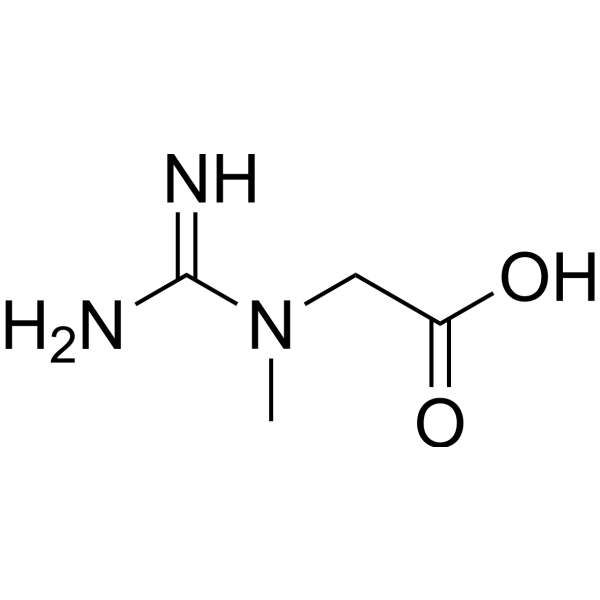
HY-W010388
CreatineEndogenous Metabolite -

HY-B0504R
Creatinine (Standard)Endogenous Metabolite -
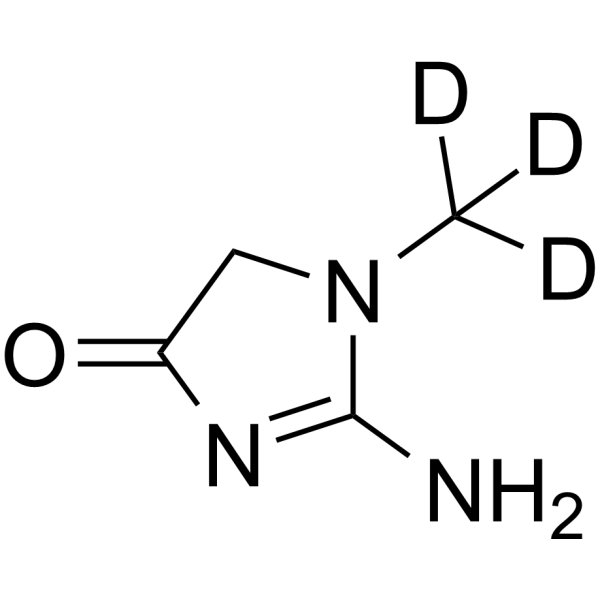
HY-B0504S
Creatinine-d3Stable Isotope -
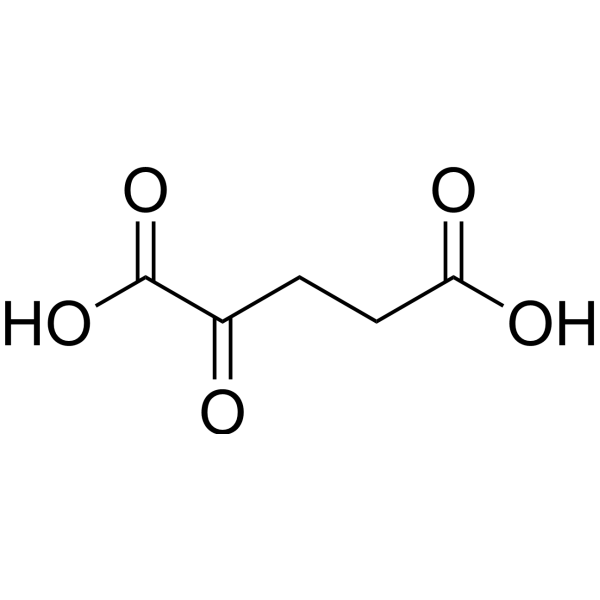
HY-W013636
2-Ketoglutaric acidKrebs Cycle Intermediate -
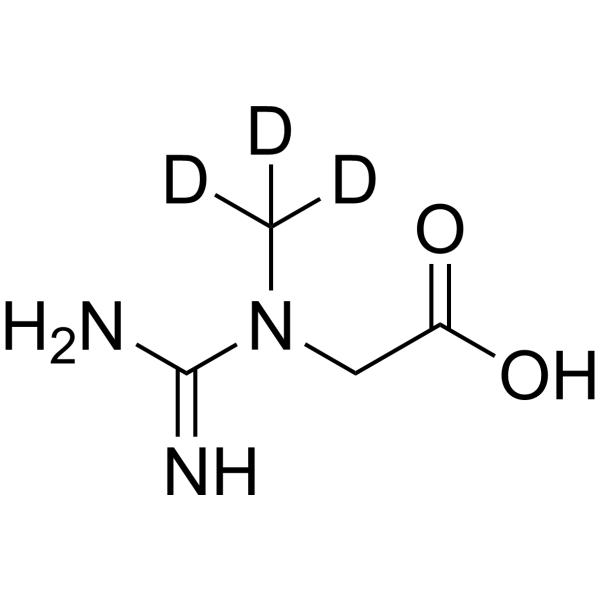
HY-W010388S1
Creatine-d3Stable Isotope -
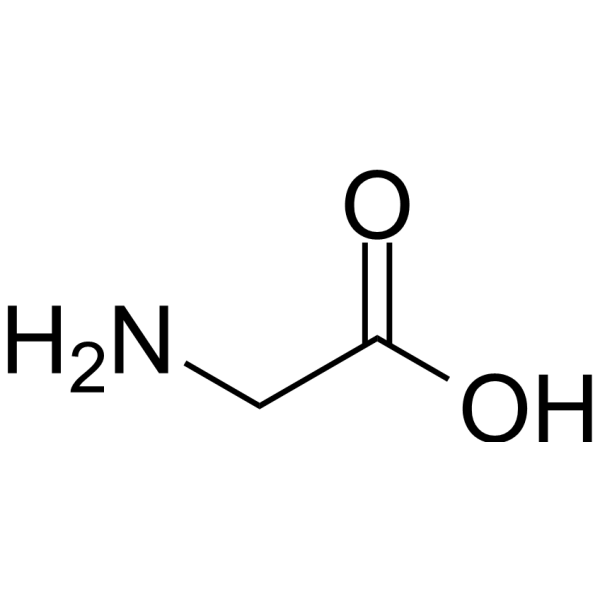
HY-Y0966
GlycineNMDAR Agonist -
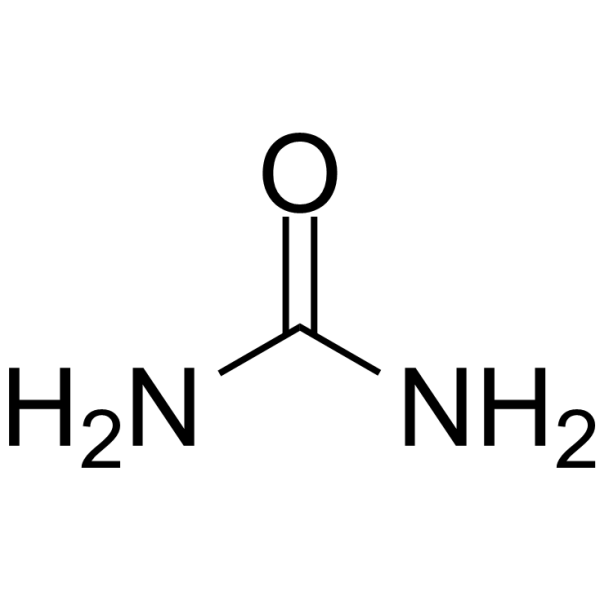
HY-Y0271
UreaProtein Denaturant -
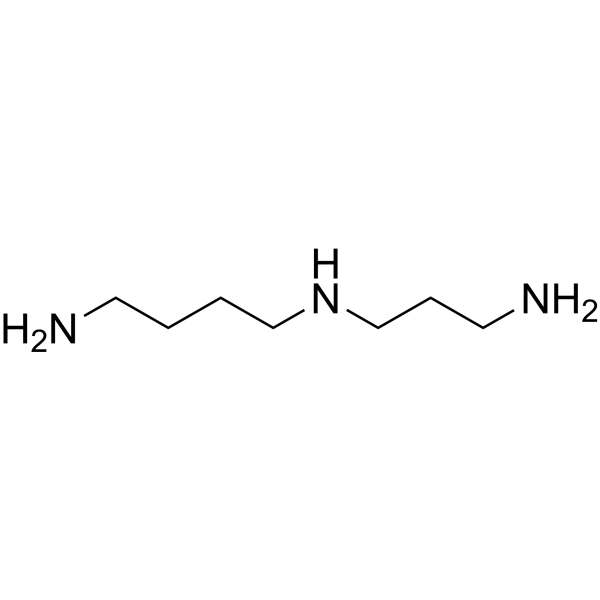
HY-B1776
SpermidinePolyamine Compound -
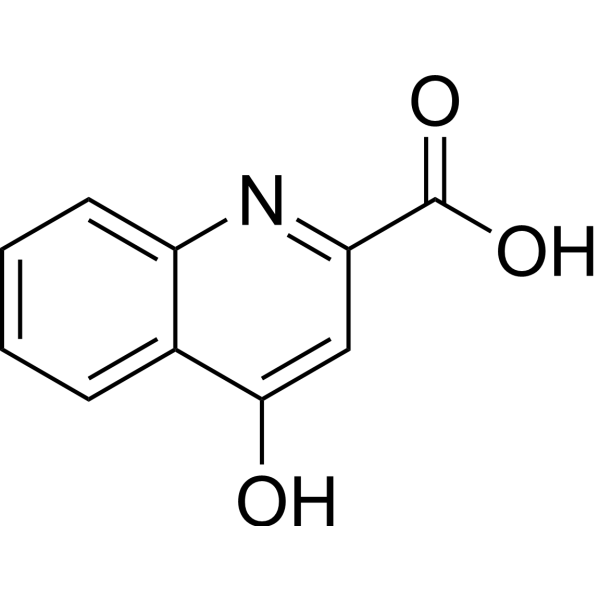
HY-100806
Kynurenic acidiGluR/α7 nAChR Antagonist -
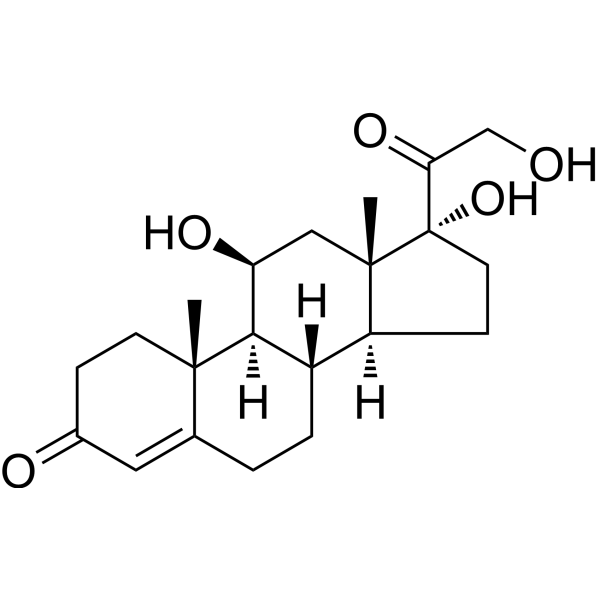
HY-N0583
HydrocortisoneGlucocorticoid Receptor Agonist -
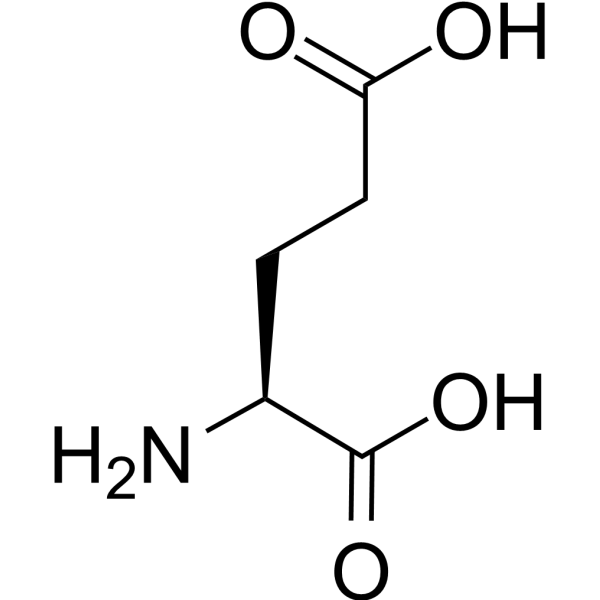
HY-14608
L-Glutamic acidGlutamate Receptors Agonist -
HY-N0455
L-ArginineeNOS Substrate
Publications Citing Use of MedChemExpress (MCE) Creatinine
MoreAlle Endogenous Metabolite Isoform-spezifische Produkte anzeigen
MoreAlle iGluR Isoform-spezifische Produkte anzeigen
More

Biologische Aktivität
Beschreibung
IC50 & Target
|
Microbial Metabolite |
Human Endogenous Metabolite |
NMDA Receptor |
In Vitro
Creatinine (20-180 μM; 24 h) induces a hypermetabolic state in primary inguinal and epididymal adipocytes by activating the futile creatine cycle. 20 μM Creatinine activates inguinal adipocytes, while 180 μM Creatinine activates both inguinal and epididymal adipocytes[1].
MedChemExpress (MCE) has not independently confirmed the accuracy of these methods. They are for reference only.
In Vivo
MedChemExpress (MCE) has not independently confirmed the accuracy of these methods. They are for reference only.
-
Animal Model:C57BL/6 wild type mouse with Chronic kidney disease (male, 8 weeks old, unilateral ureteral obstruction model)[1]
-
Dosage:0.1 g/kg
-
Administration:i.p.; daily; 7 days
-
Result:Enhanced loss of inguinal (subcutaneous) and epididymal (visceral) adipose tissues relative to UUO-only mice; increased creatine levels in both subcutaneous and visceral adipose tissues; increased the proportion of multilocular adipocytes in both subcutaneous and visceral adipose tissues; upregulated expression of Prdm16, Pgc1α, CKB, Alpl, and Cox7a genes in subcutaneous and visceral adipose tissues
Clinical Trial
| NCT Number | Sponsor | Condition | Start Date |
Phase

|
|---|---|---|---|---|
| NCT01329991 | 2011-05 | PHASE1 |


Chemical Information
-
CAS. Nr. 60-27-5
-
Appearance Solid
-
Molecular Weight 113.12
-
Formel C4H7N3O
-
Color White to off-white
-
SMILES
O=C1N=C(N)N(C)C1
-
Synonyms
NSC13123
-
Structure Classification
-
Versand
Room temperature in continental US; may vary elsewhere.
-
Speicherung
Powder -20°C 3 years 4°C 2 years In solvent -80°C 2 years -20°C 1 year


Publications (6)
-
Journal Impact Factor
-
Most Recent
-
Nature
2025 Jul;643(8070):192-200. PMID: 39695227 -
-
-
J Chromatogr B Analyt Technol Biomed Life Sci
Simultaneous determination of choline, L-carnitine, betaine, trimethylamine, trimethylamine N-oxide, and creatinine in plasma, liver, and feces of hyperlipidemic rats by UHPLC-MS/MS. [Abstract]2024 Aug 1:1243:124210. PMID: 38936270 -
Biomed Pharmacother
Pharmacokinetic profiling of ZCL-278, a cdc42 inhibitor, and its effectiveness against chronic kidney disease. [Abstract]2024 Oct:179:117329. PMID: 39180793 -


Lösungsmittel & Löslichkeit
In Vitro:
H2O : 33.33 mg/mL (294.64 mM; Need ultrasonic)
DMSO : 2.5 mg/mL (22.10 mM; Need ultrasonic; Hygroscopic DMSO has a significant impact on the solubility of product, please use newly opened DMSO)
Please refer to the solubility information to select the appropriate solvent. Once prepared, please aliquot and store the solution to prevent product inactivation from repeated freeze-thaw cycles.
Storage method and period of stock solution: -80°C, 2 years; -20°C, 1 year. When stored at -80°C, please use it within 2 years. When stored at -20°C, please use it within 1 year.
* Note: If you choose water as the stock solution, please dilute it to the working solution, then filter and sterilize it with a 0.22 μm filter before use.
Please refer to the solubility information to select the appropriate solvent. Once prepared, please aliquot and store the solution to prevent product inactivation from repeated freeze-thaw cycles.
Storage method and period of stock solution: -80°C, 2 years; -20°C, 1 year. When stored at -80°C, please use it within 2 years. When stored at -20°C, please use it within 1 year.
* Note: If you choose water as the stock solution, please dilute it to the working solution, then filter and sterilize it with a 0.22 μm filter before use.
Konzentration (Stammlösung) × Volumen (Stammlösung) = Konzentration (Ziellösung) × Volumen (Ziellösung)
In Vivo:
For the following dissolution methods, please prepare the working solution directly:
It is recommended to prepare fresh solutions and use them promptly within a short period of time.
The percentages shown for the solvents indicate their volumetric ratio in the final prepared solution. If precipitation or phase separation occurs during preparation, heat and/or sonication can be used to aid dissolution.
Add each solvent one by one: PBS
Solubility: 33.33 mg/mL (294.64 mM); Clear solution; Need ultrasonic


Reinheit & Dokumentation
-
Data Sheet (275 KB)
-
SDS (393 KB)
- English - EN (393 KB)
- Français - FR (393 KB)
- Deutsch - DE (393 KB)
- Norwegian - NO (393 KB)
- Español - ES (393 KB)
- Swedish - SV (393 KB)
- Italian - IT (393 KB)
- Korean - KR (393 KB)
- Portuguese - PT (393 KB)
-
Handling Instructions (2659 KB)
Verweise
[1]. Fang J, et al. Creatinine promotes adipose tissue wasting in chronic kidney disease via creatine and futile creatine cycle. Mol Metab. 2025;98:102191. [Content Brief]
[2]. Allen PJ, et al. Creatine metabolism and psychiatric disorders: Does creatine supplementation have therapeutic value?. Neurosci Biobehav Rev. 2012;36(5):1442-1462. [Content Brief]
[3]. Polacheck I, et al. Creatinine metabolism in Cryptococcus neoformans and Cryptococcus bacillisporus. J Bacteriol. 1980;142(1):15-20. [Content Brief]


Complete Stock Solution Preparation Table
Please refer to the solubility information to select the appropriate solvent. Once prepared, please aliquot and store the solution to prevent product inactivation from repeated freeze-thaw cycles.
Storage method and period of stock solution: -80°C, 2 years; -20°C, 1 year. When stored at -80°C, please use it within 2 years. When stored at -20°C, please use it within 1 year.
| Optional Solvent | Concentration Solvent Mass | 1 mg | 5 mg | 10 mg | 25 mg |
|---|---|---|---|---|---|
| DMSO / H2O | 1 mM | 8.8402 mL | 44.2008 mL | 88.4017 mL | 221.0042 mL |
| 5 mM | 1.7680 mL | 8.8402 mL | 17.6803 mL | 44.2008 mL | |
| 10 mM | 0.8840 mL | 4.4201 mL | 8.8402 mL | 22.1004 mL | |
| 15 mM | 0.5893 mL | 2.9467 mL | 5.8934 mL | 14.7336 mL | |
| 20 mM | 0.4420 mL | 2.2100 mL | 4.4201 mL | 11.0502 mL | |
| H2O | 25 mM | 0.3536 mL | 1.7680 mL | 3.5361 mL | 8.8402 mL |
| 30 mM | 0.2947 mL | 1.4734 mL | 2.9467 mL | 7.3668 mL | |
| 40 mM | 0.2210 mL | 1.1050 mL | 2.2100 mL | 5.5251 mL | |
| 50 mM | 0.1768 mL | 0.8840 mL | 1.7680 mL | 4.4201 mL | |
| 60 mM | 0.1473 mL | 0.7367 mL | 1.4734 mL | 3.6834 mL | |
| 80 mM | 0.1105 mL | 0.5525 mL | 1.1050 mL | 2.7626 mL | |
| 100 mM | 0.0884 mL | 0.4420 mL | 0.8840 mL | 2.2100 mL |
* Note: If you choose water as the stock solution, please dilute it to the working solution, then filter and sterilize it with a 0.22 μm filter before use.


Creatinine Related Classifications
HY-B0504 Related Classifications
 Powered by Bioz
Keywords
- Creatinine
- 60-27-5
- NSC13123
- NSC 13123
- NSC-13123
- Endogenous Metabolite
- GABA Receptor
- iGluR
- Cryptococcus bacillisporus
- creatinine deiminase
- primary epididymal adipocytes
- primary inguinal adipocytes
- GABAA receptor
- NMDA receptor
- Cryptococcus neoformans
- one-carbon metabolism
- glomerular filtration rate
- UUO-induced CKD mice
- Inhibitor
- inhibitor
- inhibit