



Nisin
Based on 5 publication(s) in Google Scholar
Nisin is a bacteriocin produced by a group of Gram-positive bacteria that belongs to Lactococcus and Streptococcus species. Nisin has antibacterial and anti-inflammatory activity.
Nos produits utilisent uniquement pour la recherche. Nous ne vendons pas aux patients.
- CAS No.: 1414-45-5
- Formule: C143H230N42O37S7
- Masse moléculaire:3354.07
-
Stockage:
Sealed storage, away from moisture and light.
Powder -80°C, 2 years , -20°C, 1 year* In solvent : -80°C, 6 months; -20°C, 1 month (sealed storage, away from moisture and light)

To place orders, for customer services and technical support, please contact: MedChemExpress USA
Tel: 609-228-6898 E-mail: [email protected] [email protected]


-
 Activité biologique
-
Chemical Information
-
Solvant et solubilité
- Protocole
- Pureté et documentation
- Références
-
 Help & FAQs


-
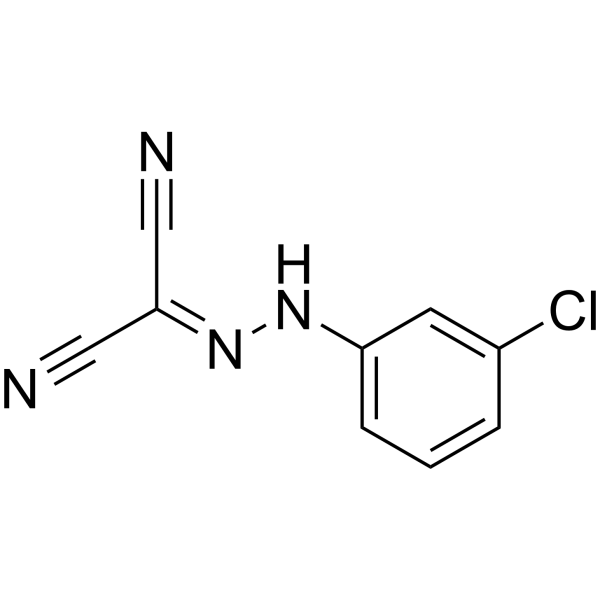
HY-100941
CCCPOXPHOS Uncoupler -
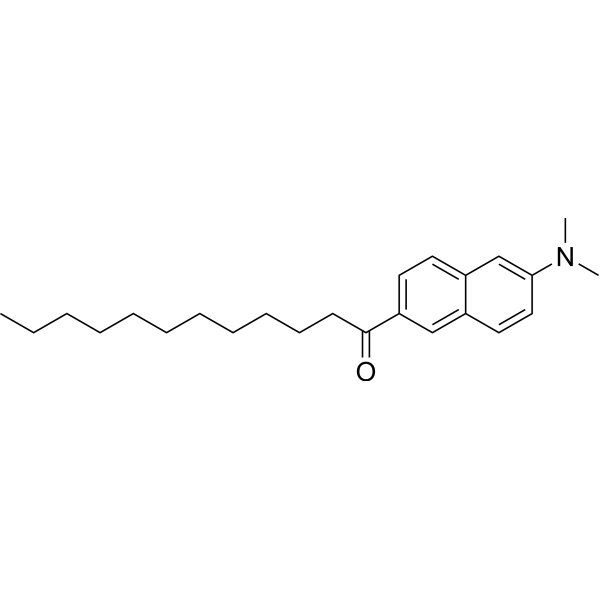
HY-D0080
LaurdanFluorescent Probe -
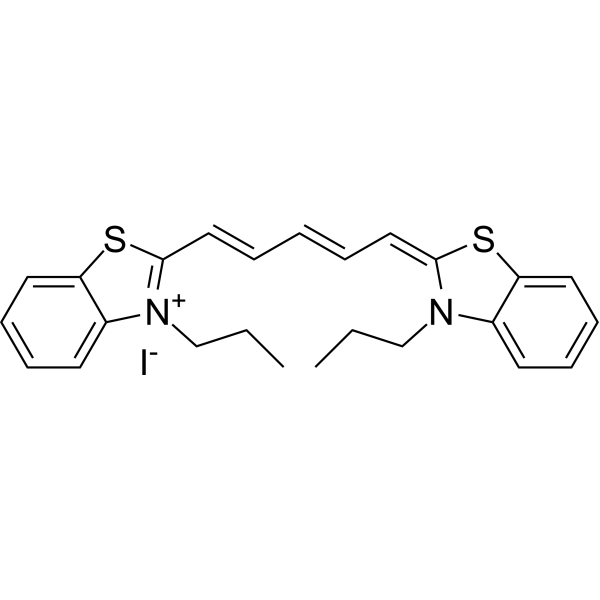
HY-D0085
DiSC3(5)Fluorescent Probe -
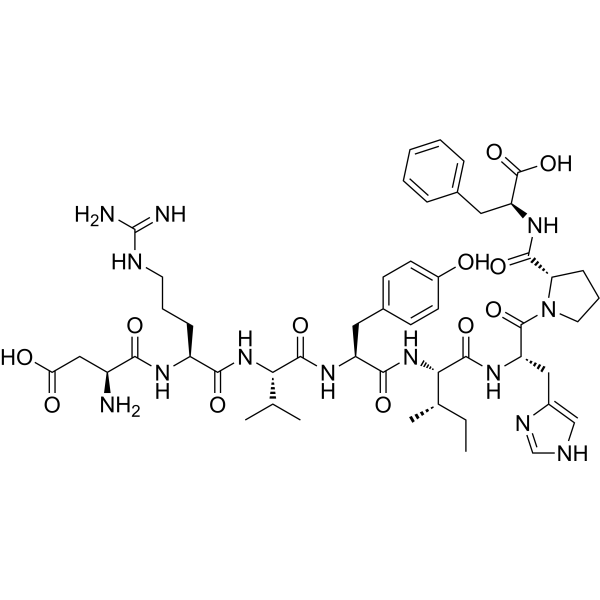
HY-13948
Angiotensin II humanVasoconstrictor -
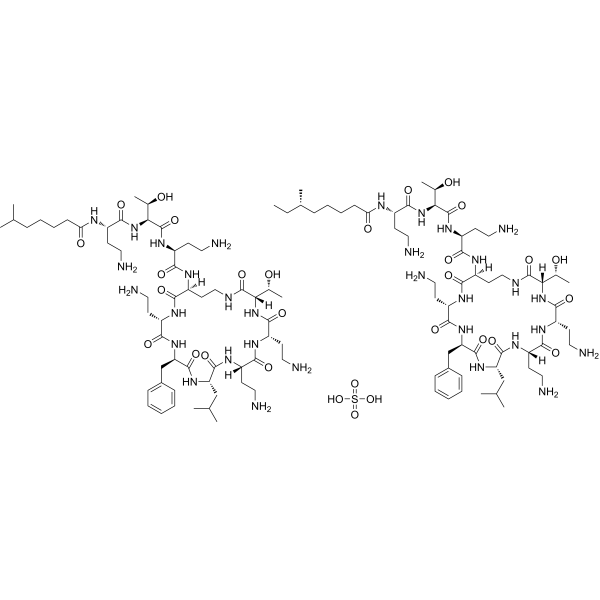
HY-A0248
Polymyxin B SulfateAntibiotic -
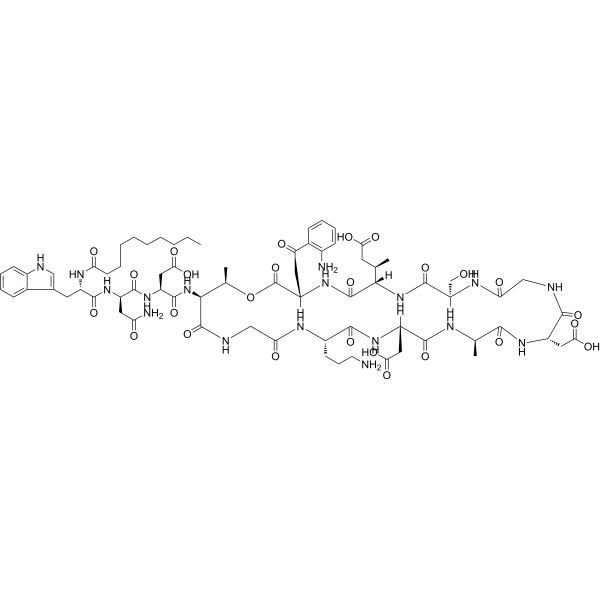
HY-B0108
DaptomycinBacterial Inhibitor -
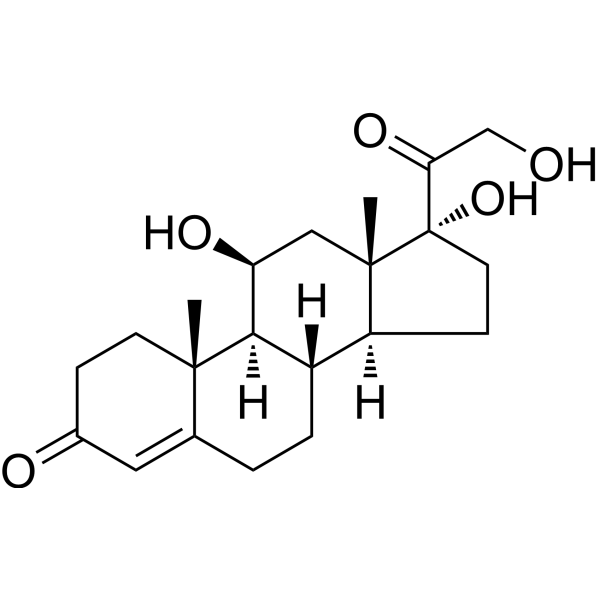
HY-N0583
HydrocortisoneGlucocorticoid Receptor Agonist -
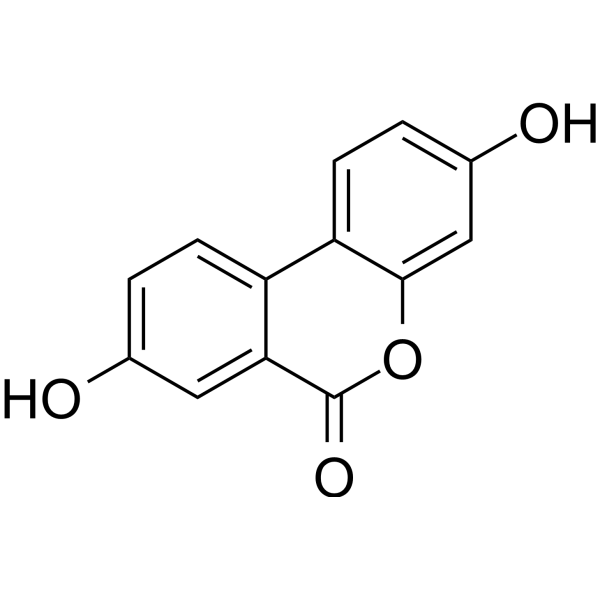
HY-100599
Urolithin AMitophagy Activator -
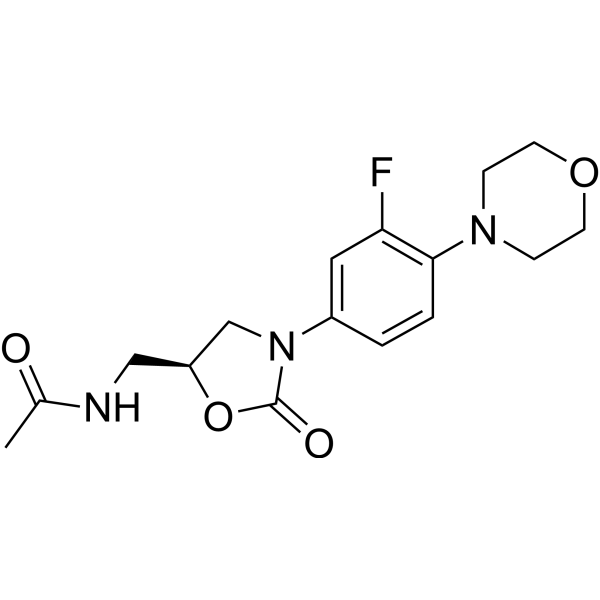
HY-10394
LinezolidAntibiotic -
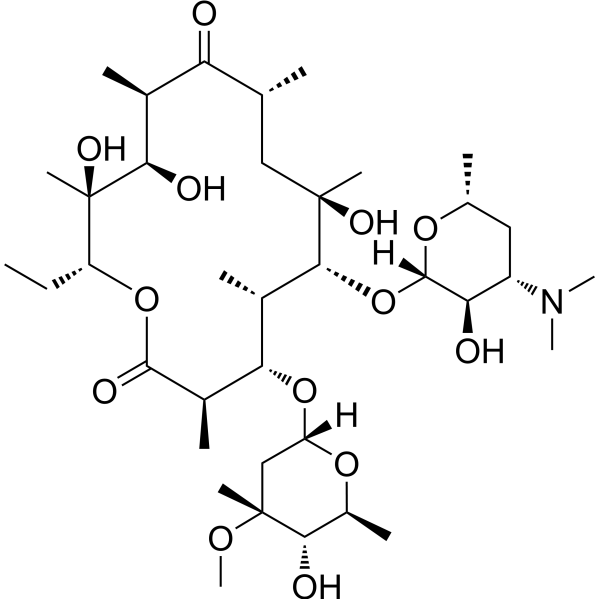
HY-B0220
ErythromycinAntibiotic -
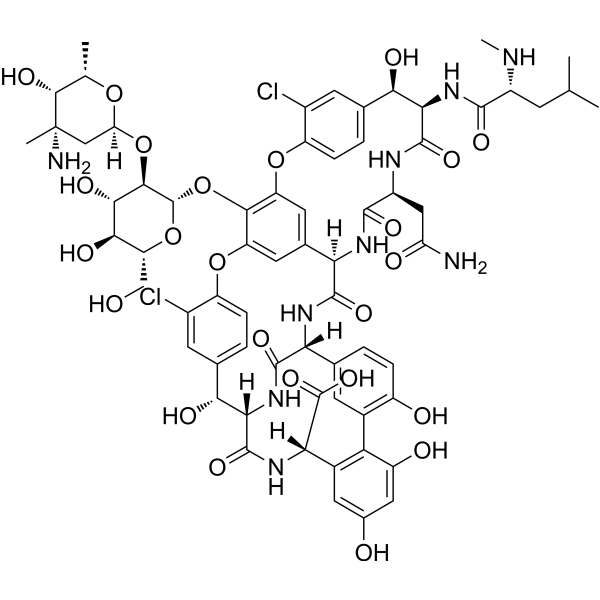
HY-B0671
VancomycinAntibiotic -
HY-D0815
Propidium IodideFluorochrome
Publications Citing Use of MedChemExpress (MCE) Nisin
More Customer Validation & Images

-
Cell Proliferation/Viability Assay
Voir tous les produits spécifiques à Isoform Antibiotic
More

Activité biologique
Description
In Vitro
Nisin (100-800 μg/mL, 36 h) inhibits HNSCC cell ballooning[1].
Nisin (500-7000 IU/mL, 24 h) induces free-living amoeba acanthamoeba cell cycle arrest[2].
MedChemExpress (MCE) has not independently confirmed the accuracy of these methods. They are for reference only.
-
Cell Line:A. castellanii trophozoites
-
Concentration:500, 1000, 2000, 3000, 4000, 6000, 7000 IU/mL
-
Incubation Time:24, 72 h
-
Result:Inhibited amebic growth in a concentration-dependent manner at 24 h.
-
Cell Line:A. castellanii trophozoites
-
Concentration:7000 IU/mL
-
Incubation Time:24 h
-
Result:Increased S phase to 13.3% and the percentage of G1 to 11.1%.
In Vivo
MedChemExpress (MCE) has not independently confirmed the accuracy of these methods. They are for reference only.
-
Animal Model:Rat uterine endometritis model[3]
-
Dosage:25 mg/kg
-
Administration:i.p. for 7 days
-
Result:Decreased the endometritis-induced increase in uterine weight, restored endometrial architecture.
Improved levels of B7-2, IFN-γ, IL-2 and IL-8.
Essai clinique
| NCT Number | Sponsor | Condition | Start Date |
Phase

|
|---|---|---|---|---|
| NCT01329991 | 2011-05 | PHASE1 |


Chemical Information
-
CAS No. 1414-45-5
-
Appearance Solid
-
Masse moléculaire 3354.07
-
Formule C143H230N42O37S7
-
Color Off-white to light brown
-
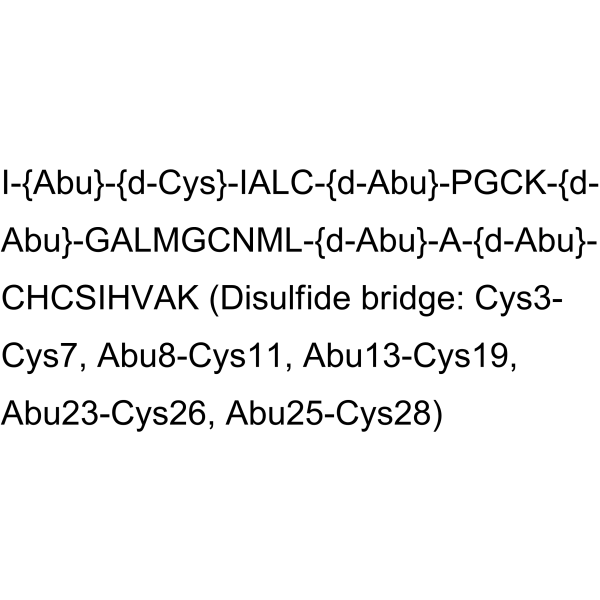
Sequence
Ile-Dhb-Ala-Ile-Dha-Leu-Ala-Abu-Pro-Gly-Ala-Lys-Abu-Gly-Ala-Leu-Met-Gly-Ala-Asn-Met-Lys-Abu-Ala-Aba-Ala-His-Ala-Ser-Ile-His-Val-Dha-Lys (Sulfide bridge: Ala3-Ala7, Abu8-Ala11, Abu13-Ala19, Abu23-Ala26, Aba25-Ala28)
-
Sequence Shortening
I-Dhb-AI-Dha-LA-Abu-PGAK-Abu-GALMGANMK-Abu-A-Aba-AHASIHV-Dha-K (Sulfide bridge: Ala3-Ala7, Abu8-Ala11, Abu13-Ala19, Abu23-Ala26, Aba25-Ala28)
-
Livraison
Room temperature in continental US; may vary elsewhere.
-
Stockage
Sealed storage, away from moisture and light
Powder -80°C 2 years -20°C 1 year * In solvent : -80°C, 6 months; -20°C, 1 month (sealed storage, away from moisture and light)


Publications (5)
-
Journal Impact Factor
-
Most Recent
-
-
J Hazard Mater
Development of transcriptional factor-based whole-cell biosensors to monitor and degrade antibiotics using mutant cells obtained via adaptive laboratory evolution. [Abstract]2024 Jul 15:473:134536. PMID: 38759406
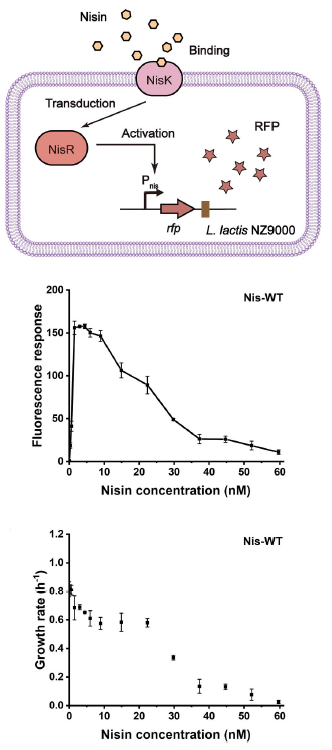
Nisin purchased from MedChemExpress. Usage Cited in: J Hazard Mater. 2024 Jul 15:473:134536. [Abstract]
Nisin (6-60 nM) greatly diminished growth and biosensor performance of L. lactis NZ9000.
-
Vaccine
Assessment of recombinant Lactobacillus vector-based expressing IFITM3 protein anti-PRV infection in mice. [Abstract]2025 Apr 30:54:127093. PMID: 40245770 -
-


Solvant et solubilité
In Vitro:
H2O : 6.67 mg/mL (1.99 mM; Need ultrasonic)
Please refer to the solubility information to select the appropriate solvent. Once prepared, please aliquot and store the solution to prevent product inactivation from repeated freeze-thaw cycles.
Storage method and period of stock solution: -80°C, 6 months; -20°C, 1 month (sealed storage, away from moisture and light). When stored at -80°C, please use it within 6 months. When stored at -20°C, please use it within 1 month.
* Note: If you choose water as the stock solution, please dilute it to the working solution, then filter and sterilize it with a 0.22 μm filter before use.
Please refer to the solubility information to select the appropriate solvent. Once prepared, please aliquot and store the solution to prevent product inactivation from repeated freeze-thaw cycles.
Storage method and period of stock solution: -80°C, 6 months; -20°C, 1 month (sealed storage, away from moisture and light). When stored at -80°C, please use it within 6 months. When stored at -20°C, please use it within 1 month.
* Note: If you choose water as the stock solution, please dilute it to the working solution, then filter and sterilize it with a 0.22 μm filter before use.
Concentration (start) × Volume (start) = Concentration (final) × Volume (final)


Pureté et documentation
-
Fiche technique (301 KB)
-
SDS (252 KB)
- English - EN (252 KB)
- Français - FR (252 KB)
- Deutsch - DE (252 KB)
- Norwegian - NO (252 KB)
- Español - ES (252 KB)
- Swedish - SV (252 KB)
- Italian - IT (252 KB)
- Korean - KR (252 KB)
- Portuguese - PT (252 KB)
-
Instruction de manipulation (2659 KB)
Références
[1]. Shin JM, et al. Biomedical applications of nisin. J Appl Microbiol. 2016 Jun;120(6):1449-65. [Content Brief]
[2]. de Carvalho Clímaco M, et al. Nisin Induces Cell-Cycle Arrest in Free-Living Amoebae Acanthamoeba castellanii. Acta Parasitol. 2022 Mar;67(1):511-517. [Content Brief]
[3]. Jia Z, et al. Nisin reduces uterine inflammation in rats by modulating concentrations of pro- and anti-inflammatory cytokines. Am J Reprod Immunol. 2019 May;81(5):e13096. [Content Brief]


Complete Stock Solution Preparation Table
Please refer to the solubility information to select the appropriate solvent. Once prepared, please aliquot and store the solution to prevent product inactivation from repeated freeze-thaw cycles.
Storage method and period of stock solution: -80°C, 6 months; -20°C, 1 month (sealed storage, away from moisture and light). When stored at -80°C, please use it within 6 months. When stored at -20°C, please use it within 1 month.
| Optional Solvent | Concentration Solvent Mass | 1 mg | 5 mg | 10 mg | 25 mg |
|---|---|---|---|---|---|
| H2O | 1 mM | 0.2981 mL | 1.4907 mL | 2.9815 mL | 7.4536 mL |
* Note: If you choose water as the stock solution, please dilute it to the working solution, then filter and sterilize it with a 0.22 μm filter before use.


Nisin Related Classifications
HY-P1607 Related Classifications
 Powered by Bioz