



Peiminine
Based on 9 publication(s) in Google Scholar
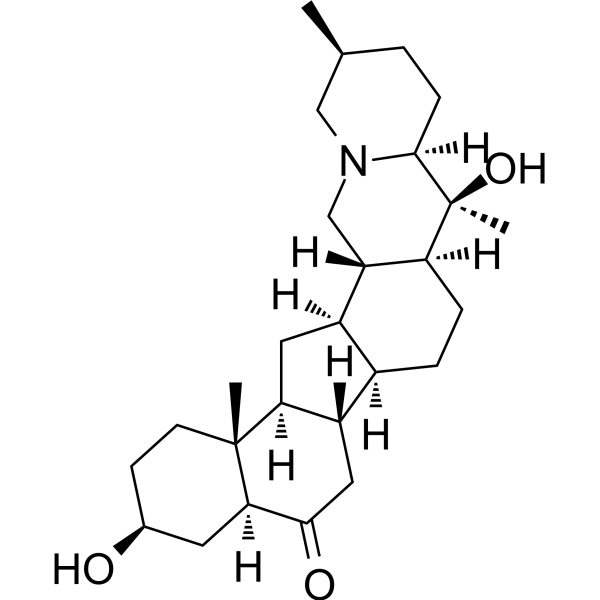
Peiminine is a compound that can be isolated from Bolbostemma paniculatum (Maxim) Franquet (Cucurbitaceae family). Peiminine can induce apoptosis in human hepatocellular carcinoma HepG2 cells through both extrinsic and intrinsic apoptotic pathways. Peiminine has anti-inflammatory, anticancer, anti-osteoporosis, cardioprotective and other activities in many animal models.
Nos produits utilisent uniquement pour la recherche. Nous ne vendons pas aux patients.
- Pureté : 99.89%
- CAS No.: 18059-10-4
- Formule: C27H43NO3
- Masse moléculaire:429.64
-
Stockage:Powder -20°C, 3 years , 4°C, 2 years ; In solvent -80°C, 2 years , -20°C, 1 year

To place orders, for customer services and technical support, please contact: MedChemExpress USA
Tel: 609-228-6898 E-mail: [email protected] [email protected]


-
 Activité biologique
-
Chemical Information
-
Solvant et solubilité
- Protocole
- Pureté et documentation
- Références
-
 Help & FAQs


-
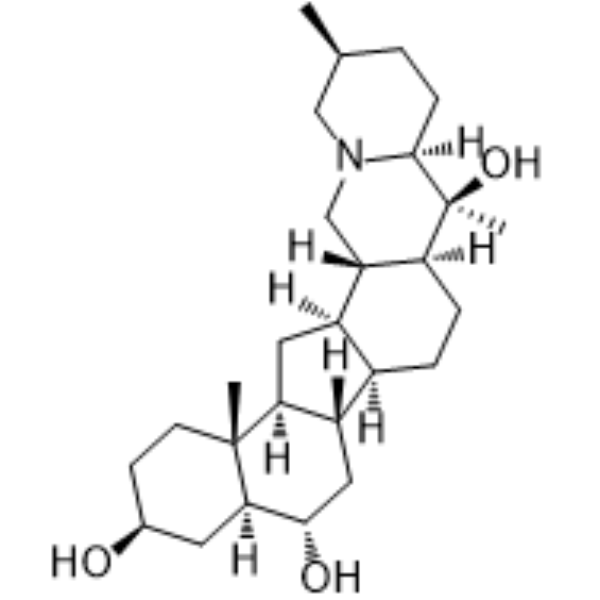
HY-N0212
PeimineAnti-Inflammatory Agent -
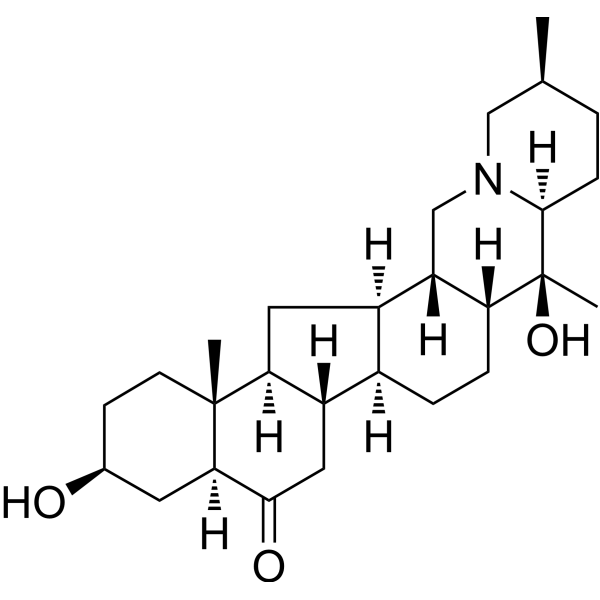
HY-N0696
SipeiminePI3K/AKT/NF-κB Inhibitor -
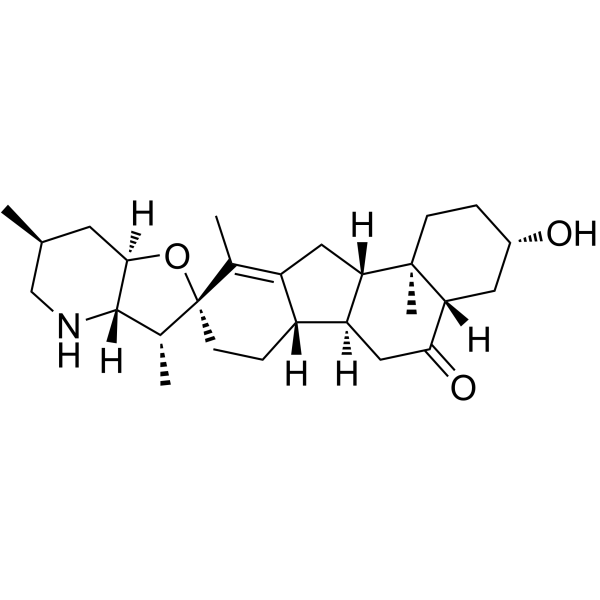
HY-N0214
PeimisineM Receptor Antagonist -

HY-N0213R
Peiminine (Standard)Anti-Inflammatory Agent -
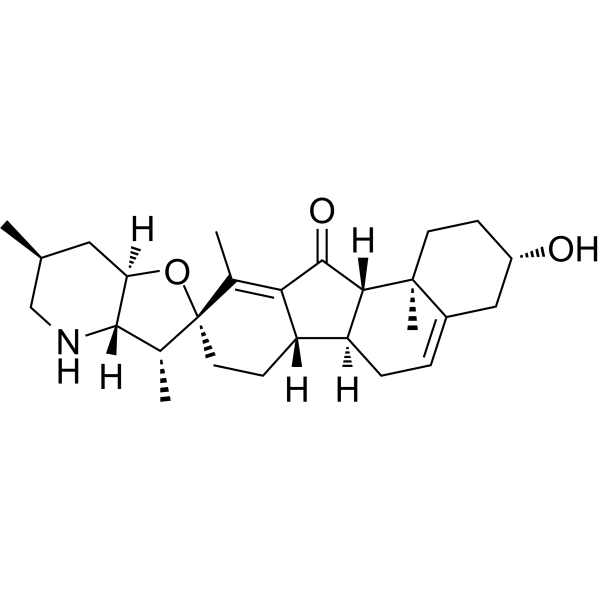
HY-N0836
JervineAnti-cancer Agent -
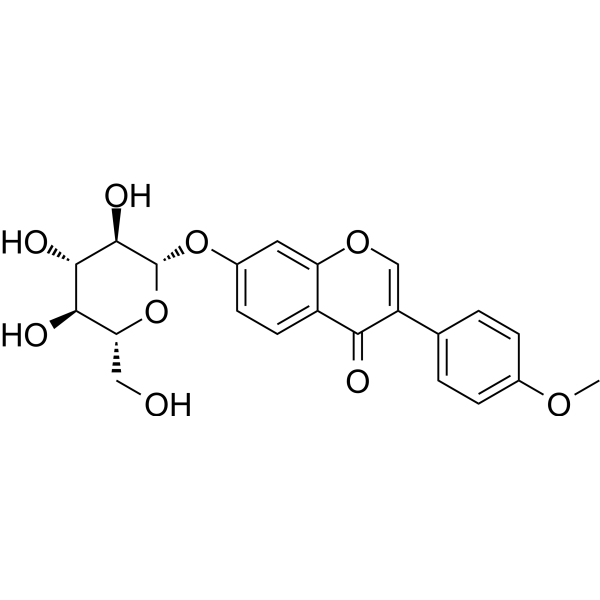
HY-N0270
OnoninIsoflavonoid -
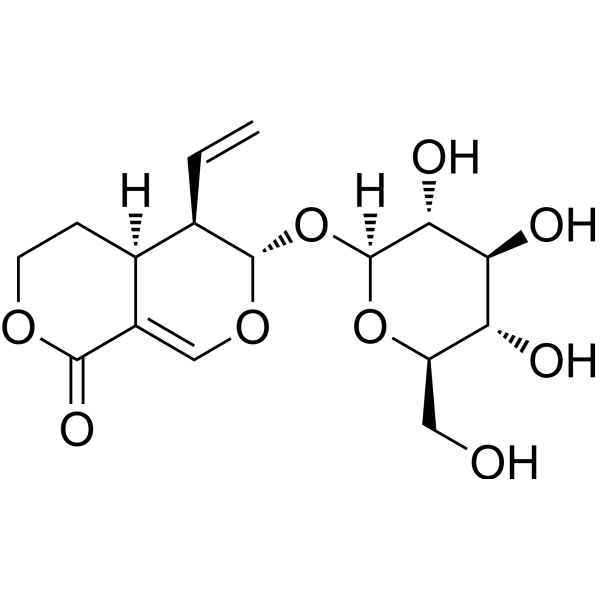
HY-N0806
SwerosideKeap1/Nrf2 Activator -
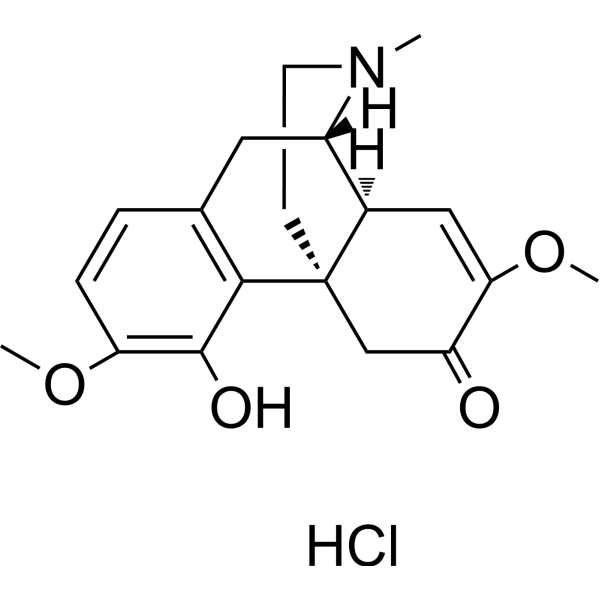
HY-15122A
Sinomenine hydrochlorideAutophagy Inducer -

HY-N0836R
Jervine (Standard)Reference Standard -

HY-N0212R
Peimine (Standard)Anti-Inflammatory Agent -

HY-N0806R
Sweroside (Standard)Keap1/Nrf2 Activator -

HY-N0270R
Ononin (Standard)Isoflavonoid
Publications Citing Use of MedChemExpress (MCE) Peiminine
More- Phytomedicine. 2023 Sep:118:154946. [Abstract]
- Antioxidants (Basel). 2024 Jan 22;13(1):131. [Abstract]
- Phytother Res. 2023 Jul;37(7):2841-2853. [Abstract]
- Molecules. 2025 Sep 25;30(19):3882. [Abstract]
- Molecules. 2025 Jan 31;30(3):623. [Abstract]
- Tissue Cell. 2024 Apr:87:102323. [Abstract]
- Fitoterapia. 2026 Sep:193:107388.
- Discov Oncol. 2025 Nov 7;16(1):2060. [Abstract]
- SSRN. 2026 Apr 14.
 Customer Validation & Images

-
Cell Proliferation/Viability Assay
-
Flow Cytometry
-
Cell Migration/Invasion Assay
-
WB
-
IF
Voir tous les produits spécifiques à Isoform Caspase
More

Activité biologique
Description
IC50 & Target
|
Caspase 3 |
Caspase-8 |
Caspase-9 |
PARP-1 |
ERK1 |
ERK2 |
Bcl-2 |
p65 |
In Vitro
Peiminine (2-6 μg/mL, 24 h) decreases the expressions of procaspase-3, procaspases-8 and -9 and increases the levels of caspase-3, 8, 9 protein in HepG2 cells[1].
Peiminine (2-14 μg/mL, 24-72 h) displays the marked cytotoxicity to HepG2, Hela, SW480 and MCF-7 cells[1].
Peiminine (2-6 μg/mL, 24 h) induces apoptosis in HepG2 cells[1].
Peiminine (2-6 μg/mL, 24 h) induces HepG2 cells arrest at the G2/M phase[1].
MedChemExpress (MCE) has not independently confirmed the accuracy of these methods. They are for reference only. Further protocols information, click here.
-
Cell Line:HepG2, Hela, SW480, MCF-7
-
Concentration:2 μg/mL, 4 μg/mL, 6 μg/mL, 8 μg/mL, 10 μg/mL, 12μg/mL, and 14 μg/mL
-
Incubation Time:24 h, 48 h, 72 h
-
Result:Exhibited a significant inhibition on the survival of HepG2, Hela, SW480 and MCF-7 cells with the IC50 values were 4.58, 4.89, 5.07 and 5.12 μg/mL at 24 h, respectively.
-
Cell Line:HepG2
-
Concentration:2 μg/mL, 4 μg/mL, 6 μg/mL, 8 μg/mL
-
Incubation Time:24 h
-
Result:Dissociated chromosome to produce DNA fragments dose-dependently.
-
Cell Line:HepG2
-
Concentration:2 μg/mL, 4 μg/mL, 6 μg/mL
-
Incubation Time:24 h
-
Result:Decreased the percentage of G1 phases from 65.15% ± 0.78 to 49.55% ± 0.17 with the increase of concentrations. Increased the percentage of G2/M phases from 17.32% ± 0.20 to 39.99% ± 0.47 with the increase of concentrations.
-
Cell Line:HepG2
-
Concentration:2 μg/mL, 4 μg/mL, 6 μg/mL
-
Incubation Time:24 h
-
Result:Reduced the expression of procaspase-3, PARP1, procaspases-8 and -9, and Bcl-2 at 2-6 μg/mL. Increased caspase-3, 8, 9, PARP1 cleaved and Bax protein levels.
In Vivo
Peiminine (10 mg/kg, Intraperitoneal injection, once every 2 days for 6 weeks) prevents bone loss and fat formation in OVX-induced rat model[3].
Peiminine (1-5 mg/kg, are applied to the dorsal skin, once daily for 16 days) inhibits serum IL-6 and TNF-α in the dinitrochlorobenzene (DNCB)-induced Allergic dermatitis animal model[4].
Peiminine (2-5 mg/kg, Intraperitoneal injection, once a day for 4 weeks) has a cardioprotective effect against myocardial infarction-induced myocardial injury and fibrosis in myocardial infarction rat model[5].
Peiminine (1-5 mg/kg, Intraperitoneal injection, single dose) can reduce the damage of inflammatory response to the body and the possibility of pulmonary edema in LPS-induced Acute lung injury model mice[6].
MedChemExpress (MCE) has not independently confirmed the accuracy of these methods. They are for reference only.
-
Animal Model:ulcerative colitis model[2]
-
Dosage:3mg/kg
-
Administration:Intraperitoneal injection (i.p.)
-
Result:Reduced inflammation, mucosal ulcers, involvement of digestive system layers, and infltration of inflammatory cells. Reduced the levels of MPO and NO generated in the rectal tissue. Reduced cell proliferation in spleen cell. Decreased the production of f IL-1β, IL-6, and TNF-α cytokines. Reduced expression levels of genes IL-1β, IL-6, TNF-α, iNOS, and COX2.
-
Animal Model:Ovariectomized (OVX) rat model[3]
-
Dosage:10 mg/kg
-
Administration:Intraperitoneal injection (i.p.)
-
Result:Alleviated the bone loss caused by surgical castration. Improved the expression of COL1A1 and β-catenin and reduced the increase expression of PPAR-γ in trabecular bone.
-
Animal Model:Allergic dermatitis model[4]
-
Dosage:1 mg/kg, 5 mg/kg
-
Administration:were applied to the dorsal skin
-
Result:Alleviated the bone loss caused by surgical castration. Improved the expression of COL1A1 and β-catenin and reduced the increase expression of PPAR-γ in trabecular bone.


Chemical Information
-
CAS No. 18059-10-4
-
Appearance Solid
-
Masse moléculaire 429.64
-
Formule C27H43NO3
-
Color White to off-white
-
SMILES
[H][C@]12[C@]3([H])CC([C@@]4([H])C[C@@H](O)CC[C@]4(C)[C@@]3([H])C[C@]([H])1[C@]5([H])CN6C[C@@H](C)CC[C@]([H])6[C@@](C)(O)[C@]([H])5CC2)=O
-
Synonyms
Verticinone; Raddeanine
-
Structure Classification
-
Initial Source
-
Livraison
Room temperature in continental US; may vary elsewhere.
-
Stockage
Powder -20°C 3 years 4°C 2 years In solvent -80°C 2 years -20°C 1 year


Publications (9)
-
Journal Impact Factor
-
Most Recent
-
Phytomedicine
Total alkaloids of Fritillaria unibracteata var. wabuensis bulbus ameliorate chronic asthma via the TRPV1/Ca2+/NFAT pathway. [Abstract]2023 Sep:118:154946. PMID: 37421766 -
Antioxidants (Basel)
2024 Jan 22;13(1):131. PMID: 38275656 -
Phytother Res
Peiminine regulates bone-fat balance by canonical Wnt/β-catenin pathway in an ovariectomized rat model. [Abstract]2023 Jul;37(7):2841-2853. PMID: 36799485 -
Molecules
hERG Channel Blockade and Antagonistic Interactions of Three Steroidal Alkaloids from Fritillaria Species. [Abstract]2025 Sep 25;30(19):3882. PMID: 41097303 -
Molecules
Metabolite Profiling and Anti-Inflammatory Activities of Fritillaria cirrhosa D. Don Bulbs Derived from Tissue Culture. [Abstract]2025 Jan 31;30(3):623. PMID: 39942727 -
Tissue Cell
Peiminine triggers ferroptosis to inhibit breast cancer growth through triggering Nrf2 signaling. [Abstract]2024 Apr:87:102323. PMID: 38412577 -
-
Discov Oncol
Peiminine suppresses prostate cancer progression by regulating cell proliferation, motility, apoptosis, and mitochondrial dysfunction. [Abstract]2025 Nov 7;16(1):2060. PMID: 41201738
Peiminine purchased from MedChemExpress. Usage Cited in: Discov Oncol. 2025 Nov 7;16(1):2060. [Abstract]
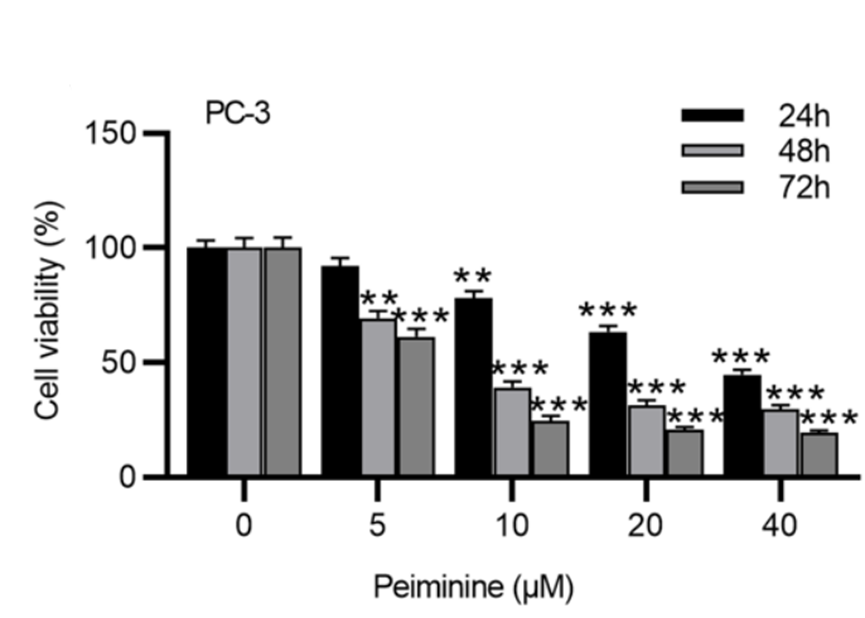
CCK-8 assay for evaluating the viability of PCa cells treated with various concentrations of Peiminine for 24, 48, or 72 h.
Peiminine purchased from MedChemExpress. Usage Cited in: Discov Oncol. 2025 Nov 7;16(1):2060. [Abstract]
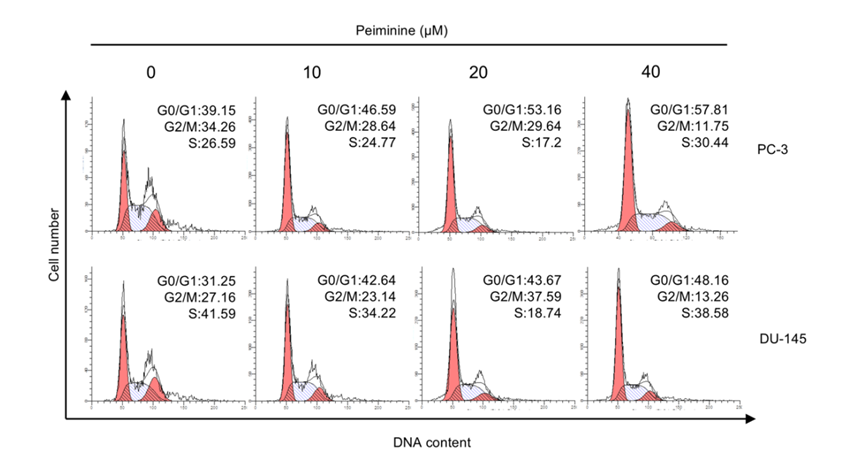
Flow cytometry analysis of cell cycle distribution of PCa cells treated with Peiminine (10, 20, 40 μM).
Peiminine purchased from MedChemExpress. Usage Cited in: Discov Oncol. 2025 Nov 7;16(1):2060. [Abstract]
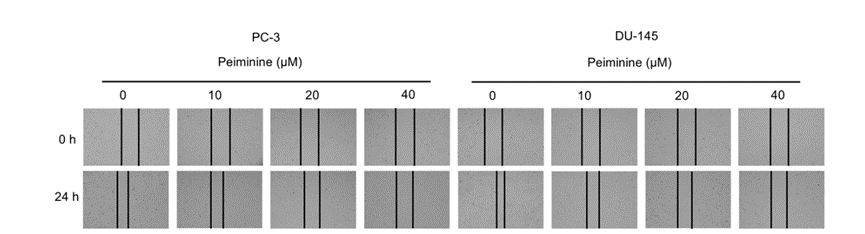
Wound healing assay for evaluating PCa cell migration treated with Peiminine (10, 20, 40 μM).
Peiminine purchased from MedChemExpress. Usage Cited in: Discov Oncol. 2025 Nov 7;16(1):2060. [Abstract]
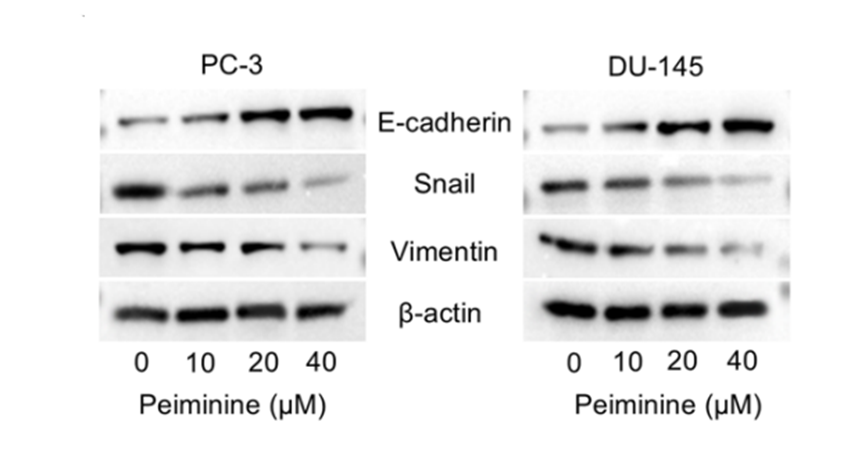
Representative images of Western blotting showing protein levels of EMT-related markers treated with Peiminine (10, 20, 40 μM).
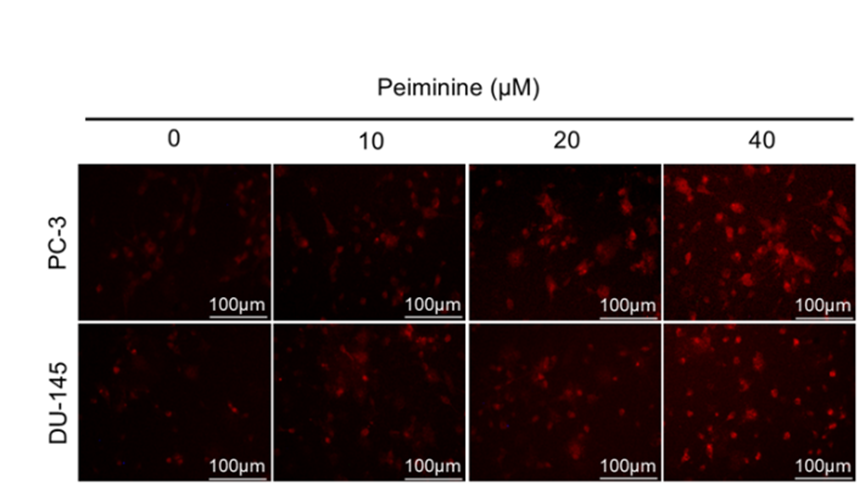
Peiminine purchased from MedChemExpress. Usage Cited in: Discov Oncol. 2025 Nov 7;16(1):2060. [Abstract]
Detection of mitochondrial ROS in PCa cells using the MitoSOX fluorescent probe treated with Peiminine (10, 20, 40 μM).
-


Solvant et solubilité
In Vitro:
DMSO : ≥ 100 mg/mL (232.75 mM; Hygroscopic DMSO has a significant impact on the solubility of product, please use newly opened DMSO)
* "≥" means soluble, but saturation unknown.
Please refer to the solubility information to select the appropriate solvent. Once prepared, please aliquot and store the solution to prevent product inactivation from repeated freeze-thaw cycles.
Storage method and period of stock solution: -80°C, 2 years; -20°C, 1 year. When stored at -80°C, please use it within 2 years. When stored at -20°C, please use it within 1 year.
Please refer to the solubility information to select the appropriate solvent. Once prepared, please aliquot and store the solution to prevent product inactivation from repeated freeze-thaw cycles.
Storage method and period of stock solution: -80°C, 2 years; -20°C, 1 year. When stored at -80°C, please use it within 2 years. When stored at -20°C, please use it within 1 year.
Concentration (start) × Volume (start) = Concentration (final) × Volume (final)
In Vivo:
Select the appropriate dissolution method based on your experimental animal and administration route.
- For the following dissolution methods, please ensure to first prepare a clear stock solution using an In Vitro approach and then sequentially add co-solvents:
- To ensure reliable experimental results, the clarified stock solution can be appropriately stored based on storage conditions. As for the working solution for In Vivo experiments, it is recommended to prepare freshly and use it on the same day.
- The percentages shown for the solvents indicate their volumetric ratio in the final prepared solution. If precipitation or phase separation occurs during preparation, heat and/or sonication can be used to aid dissolution.
Add each solvent one by one: 10% DMSO 40% PEG300 5% Tween-80 45% Saline
Solubility: ≥ 2.5 mg/mL (5.82 mM); Clear solution
This protocol yields a clear solution of ≥ 2.5 mg/mL (saturation unknown).
Taking 1 mL working solution as an example, add 100 μL DMSO stock solution (25.0 mg/mL) to 400 μL PEG300, and mix evenly; then add 50 μL Tween-80 and mix evenly; then add 450 μL Saline to adjust the volume to 1 mL.
Preparation of Saline: Dissolve 0.9 g sodium chloride in ddH₂O and dilute to 100 mL to obtain a clear Saline solution.
Add each solvent one by one: 10% DMSO 90% (20% SBE-β-CD in Saline)
Solubility: ≥ 2.5 mg/mL (5.82 mM); Clear solution
This protocol yields a clear solution of ≥ 2.5 mg/mL (saturation unknown).
Taking 1 mL working solution as an example, add 100 μL DMSO stock solution (25.0 mg/mL) to 900 μL 20% SBE-β-CD in Saline, and mix evenly.
Preparation of 20% SBE-β-CD in Saline (4°C, storage for one week): 2 g SBE-β-CD powder is dissolved in 10 mL Saline, completely dissolve until clear.
In Vivo Dissolution Calculator
Please enter the basic information of animal experiments:
-
-
-
-
Recommended: Prepare an additional quantity of animals to account for potential losses during experiments.
Please enter your animal formula composition:
-
%DMSO +
Recommended: Keep the proportion of DMSO in working solution below 2% if your animal is weak.
-
%+
-
+%Tween-80 + +
-
%Saline +
The co-solvents required include: DMSO, . All of co-solvents are available by MedChemExpress (MCE). , Tween 80. All of co-solvents are available by MedChemExpress (MCE).
Working solution concentration: 0.22 mg/mL
Method for preparing stock solution: mg drug dissolved in μL DMSO. Stock solution concentration: mg/mL.
1. Take μL DMSO stock solution;
2. Add μL .
μL , mix evenly;
3. Then add μL Tween 80, mix evenly;
4. Then add μL
Please ensure that the stock solution in the first step is dissolved to a clear state, and add co-solvents in sequence. You can use ultrasonic heating (ultrasonic cleaner, recommended frequency 20-40 kHz), vortexing, etc. to assist dissolution.

Protocole
-
Apoptosis
Apoptosis, also called programmed cell death, is generally characterized by distinct morphological characteristics.
-
TUNEL staining for apoptotic DNA fragmentation
TUNEL staining detects DNA strand breaks by using terminal deoxynucleotidyl transferase to add labeled nucleotides to exposed 3′-OH DNA termini, generating either microscopic staining in fixed cells or tissue sections, or fluorescence/cytometric signal in cell suspensions. TUNEL positivity reflects DNA fragmentation but should not be interpreted alone as definitive apoptosis, because TUNEL can also label necrotic, autolytic, mechanically damaged, or DNA-repair-associated DNA breaks.
-
Annexin V plus membrane-impermeant dye apoptosis staining
Annexin V-based apoptosis assays rely on the detection of phosphatidylserine (PS) externalization from the inner leaflet of the plasma membrane to the outer leaflet, an early biochemical hallmark of apoptosis. Fluorescently labeled Annexin V binds PS in a calcium-dependent manner, enabling identification of early apoptotic cells by flow cytometry or fluorescence microscopy. When combined with a membrane-impermeant DNA-binding dye (e. g. , propidium iodide), this approach allows discrimination between viable (Annexin V−/dye−), early apoptotic (Annexin V+/dye−), and late apoptotic or necrotic (Annexin V+/dye+) cell populations by assessing membrane integrity and PS exposure.
-
Apoptosis Solutions
Apoptosis is a regulated, generally non-lytic cell-death pathway that removes unwanted, damaged, infected, or abnormal cells through coordinated morphological changes, caspase activation, DNA fragmentation, and membrane remodeling. The intrinsic apoptosis pathway is controlled mainly by mitochondrial outer membrane permeabilization, BCL-2 family proteins, cytochrome c release, apoptosome formation, caspase-9 activation, and downstream executioner caspase-3/7 activation. The extrinsic apoptosis pathway is initiated by death receptors such as Fas, TNFR, and TRAIL receptors, which recruit adaptor proteins and activate caspase-8 before engaging executioner caspases or mitochondrial amplification through BID cleavage. Apoptosis is linked to many phenotypes, including cancer cell killing, tissue homeostasis, immune regulation, neurodegeneration, infection response, and treatment-induced cytotoxicity; unresolved questions include how apoptosis interacts with necroptosis, pyroptosis, ferroptos
-
Liver Cancer Modeling
Liver cancer can be classified into primary liver cancer and secondary liver cancer. Secondary liver cancer is the metastatic liver cancer. Primary liver cancer includes hepatocellular carcinoma (HCC), intrahepatic cholangiocarcinoma (ICC) and fibrolamellar HCC, of which HCC is the most common form, accounting for approximately 90% of primary liver cancers[1]. HCC mouse models include chemical agent-induced models, transplanted tumor models, and genetic engineered models.
-
Research Protocol for Inflammation-related Diseases
The NLRP3 inflammasome is a cytosolic innate immune signaling platform that integrates priming signals and danger-signal activation to promote caspase-1 activation, maturation of IL-1β and IL-18, and gasdermin D-mediated pyroptotic cell death. The core experimental logic is to determine whether inflammatory disease phenotypes are driven by increased NLRP3 expression, ASC-containing inflammasome assembly, caspase-1 cleavage, GSDMD cleavage, and extracellular release of IL-1β/IL-18 rather than by nonspecific cell injury alone. The pathway is strongly linked to inflammation-related disease phenotypes because monosodium urate crystals activate NALP3/NLRP3 inflammasome signaling in gout-like crystal inflammation, cholesterol crystals activate NLRP3 inflammasomes in atherogenesis models, and DSS-induced intestinal inflammation has been reported to involve NLRP3 inflammasome activity. However, experimental colitis studies also show context-dependent protective effects of NLRP3 inflammasome co


Pureté et documentation
-
Fiche technique (292 KB)
-
SDS (393 KB)
- English - EN (393 KB)
- Français - FR (393 KB)
- Deutsch - DE (393 KB)
- Norwegian - NO (393 KB)
- Español - ES (393 KB)
- Swedish - SV (393 KB)
- Italian - IT (393 KB)
- Korean - KR (393 KB)
- Portuguese - PT (393 KB)
-
Instruction de manipulation (2659 KB)
Références
[1]. Chao X, et al. The effects and mechanism of peiminine-induced apoptosis in human hepatocellular carcinoma HepG2 cells [J]. PLoS One, 2019, 14(1): e0201864. [Content Brief]
[2]. Ranjbar Bushehri M, et al. Anti-inflammatory activity of peiminine in acetic acid-induced ulcerative colitis model [J]. Inflammopharmacology, 2023: 1-9. [Content Brief]
[3]. Gu H, et al. Peiminine regulates bone-fat balance by canonical Wnt/β-catenin pathway in an ovariectomized rat mode [J]. Phytotherapy Research, 2023. [Content Brief]
[4]. Lim J M, et al. Effect of peiminine on DNCB-induced atopic dermatitis by inhibiting inflammatory cytokine expression in vivo and in vitro [J]. International immunopharmacology, 2018, 56: 135-142. [Content Brief]
[5]. Chen P, et al. Peiminine inhibits myocardial injury and fibrosis after myocardial infarction in rats by regulating mitogen-activated protein kinase pathway [J]. The Korean Journal of Physiology & Pharmacology: Official Journal of the Korean Physiological Society and the Korean Society of Pharmacology, 2022, 26(2): 87-94. [Content Brief]
[6]. Du B, et al. Peiminine attenuates acute lung injury induced by LPS through inhibiting lipid rafts formation [J]. Inflammation, 2020, 43: 1110-1119. [Content Brief]
[7]. Guo H, et al. Peiminine ameliorates bleomycin-induced acute lung injury in rats. Mol Med Rep. 2013 Apr;7(4):1103-10. [Content Brief]


Complete Stock Solution Preparation Table
Please refer to the solubility information to select the appropriate solvent. Once prepared, please aliquot and store the solution to prevent product inactivation from repeated freeze-thaw cycles.
Storage method and period of stock solution: -80°C, 2 years; -20°C, 1 year. When stored at -80°C, please use it within 2 years. When stored at -20°C, please use it within 1 year.
| Optional Solvent | Concentration Solvent Mass | 1 mg | 5 mg | 10 mg | 25 mg |
|---|---|---|---|---|---|
| DMSO | 1 mM | 2.3275 mL | 11.6376 mL | 23.2753 mL | 58.1882 mL |
| 5 mM | 0.4655 mL | 2.3275 mL | 4.6551 mL | 11.6376 mL | |
| 10 mM | 0.2328 mL | 1.1638 mL | 2.3275 mL | 5.8188 mL | |
| 15 mM | 0.1552 mL | 0.7758 mL | 1.5517 mL | 3.8792 mL | |
| 20 mM | 0.1164 mL | 0.5819 mL | 1.1638 mL | 2.9094 mL | |
| 25 mM | 0.0931 mL | 0.4655 mL | 0.9310 mL | 2.3275 mL | |
| 30 mM | 0.0776 mL | 0.3879 mL | 0.7758 mL | 1.9396 mL | |
| 40 mM | 0.0582 mL | 0.2909 mL | 0.5819 mL | 1.4547 mL | |
| 50 mM | 0.0466 mL | 0.2328 mL | 0.4655 mL | 1.1638 mL | |
| 60 mM | 0.0388 mL | 0.1940 mL | 0.3879 mL | 0.9698 mL | |
| 80 mM | 0.0291 mL | 0.1455 mL | 0.2909 mL | 0.7274 mL | |
| 100 mM | 0.0233 mL | 0.1164 mL | 0.2328 mL | 0.5819 mL |


Peiminine Related Classifications
HY-N0213 Related Classifications
 Powered by Bioz